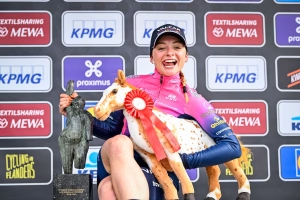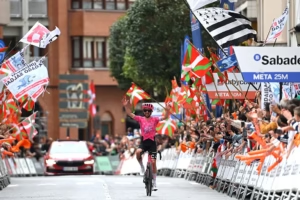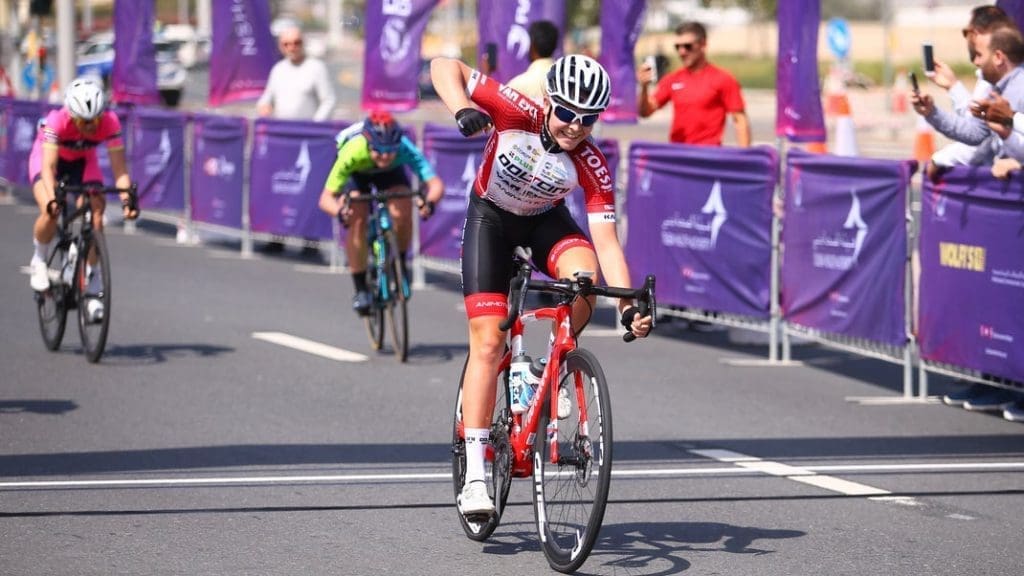
Doltcini – Van Eyck was never one of the giants of women’s cycling, but for a few years, it became a familiar and often effective part of the sport’s middle tier. The Belgian team won races, collected national titles and gave a platform to riders who needed leadership, race days or a route back into prominence. It also became wrapped up in one of the more uncomfortable stories in the modern women’s peloton, with controversy around team manager Marc Bracke eventually overshadowing much of what the team achieved on the road.
That leaves Doltcini with a complicated place in the sport’s recent history. There was a genuine sporting rise, a useful run as a stepping-stone team, and then a decline shaped as much by off-bike damage as by results.
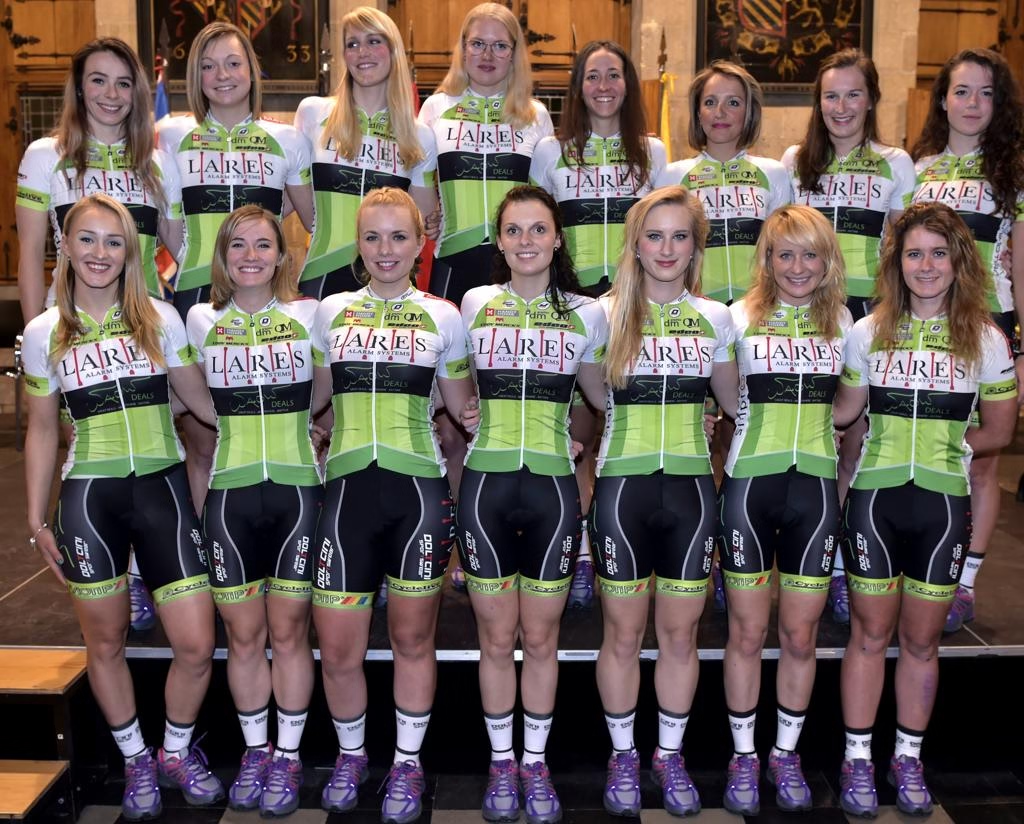
From Lares-Waowdeals to Doltcini
The team began life in 2016 as Lares-Waowdeals before developing into Doltcini – Van Eyck Sport and, later, Doltcini – Van Eyck – Proximus. It was built in the way many women’s Continental teams were at the time, with a mix of experienced riders, younger talent and riders who needed a clearer route to leadership than they might find elsewhere.
In its early form, the team was not trying to compete with the biggest operations in the sport. Instead, it worked in a more realistic space, targeting smaller stage races, Belgian one-day events and national championships. That approach gave it a clear place in the peloton. It was not glamorous, but it was useful, ambitious and often competitive.
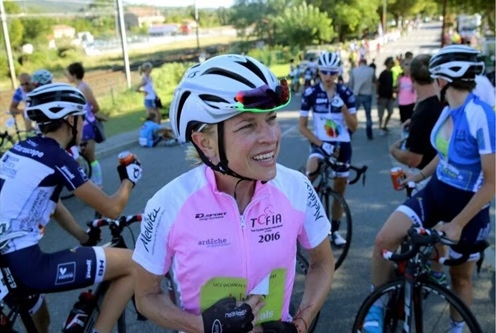
The first proper statement came in its debut year. Flavia Oliveira won stage 4 and the overall at the Tour Cycliste Féminin International de l’Ardèche, giving the team immediate credibility. A new team does not always need a huge volume of wins to be taken seriously. Sometimes it needs one result that shows there is substance behind the project. Oliveira gave them that.
The team’s best period
Doltcini’s strongest years came between 2018 and 2020. During that stretch it built the kind of record that made it a respected second-tier squad, particularly in the races where WorldTour superteams were not crowding out every opportunity.
Daniela Reis became one of the team’s standout performers. Kelly Druyts delivered sprint results. Séverine Eraud brought strength in time trials and stage races. Jesse Vandenbulcke added a Belgian title. The team did not revolve around one defining leader, which was part of its character. It was often at its best when several riders could each have a week or a race built around them.
National championships became a particular source of success. Reis won the Portuguese road race and time trial titles in both 2018 and 2019. Eraud won the French time trial title in 2019. Vandenbulcke won the Belgian road race title that same season. In 2020, Blanka Vas won the Hungarian road title, Kathrin Schweinberger took the Austrian road title, and Antri Christoforou won both Cypriot titles. Schweinberger then added another Austrian road title in the team’s final season.
Those results tell you plenty about the kind of team Doltcini was. It was not built to challenge the biggest names in the biggest races on a weekly basis. It was built to spot opportunities, place riders in races they could genuinely influence, and turn that into a useful body of results.
 Photo Credit: Getty
A stepping-stone team with real depth
One of the more interesting parts of the Doltcini story is how many recognisable names passed through the setup. Some were already established. Others were still building towards the next phase of their careers.
Flavia Oliveira gave the team one of its first major results. Daniela Reis became its most prolific winner. Kelly Druyts was a regular sprint option. Séverine Eraud offered quality against the clock and reliability in stage races. Jesse Vandenbulcke, Tetiana Riabchenko, Pascale Jeuland, Marion Sicot, Kelly Markus, Bryony van Velzen, Saartje Vandenbroucke and Mieke Docx all formed part of the team’s competitive core in its middle years.
Looking back, the later rosters have even more interest. Blanka Vas spent time at the team before becoming one of the most versatile riders in the sport across road and cyclocross. Kathrin and Christina Schweinberger were also part of the setup. Victoire Berteau, who later became French national champion, is another rider whose time there adds depth to the team’s history.
That is why Doltcini deserves to be remembered as more than just a minor Belgian Continental outfit. For several seasons, it played a real role in the structure of the women’s peloton. It offered race days, responsibility and leadership in a way that larger teams often could not.
The notable wins
The win tally was not enormous, but it was solid. More importantly, the results came in different forms.
There were stage-race victories, such as Oliveira’s success in Ardèche. There were one-day wins from riders such as Kelly Druyts. There were national titles across several countries. There was also a stage win for Nicole Steigenga at the Dubai Women’s Tour in 2020. That spread reflected the team’s identity. This was not a squad built around one type of rider or one narrow target. It found results where it could, and for a while it did that well.
Its most productive spell came when the roster had enough experience to be dependable and enough flexibility to move between sprint races, hilly one-day events and national championships without looking out of place.
The controversy around Marc Bracke
If the sporting story was one of steady growth and useful results, the off-bike story was much darker.
In 2020, allegations of sexual abuse and harassment connected to the team became public. Former riders spoke about their experiences, and the UCI opened an investigation. The focus eventually settled heavily on team manager Marc Bracke, with formal complaints from Marion Sicot and Sara Youmans leading to action from the governing body.
Later in 2020, the UCI Ethics Commission found Bracke guilty of violations of the UCI Code of Ethics. In June 2021, the UCI Disciplinary Commission handed him a three-year suspension. The case centred on requests for images of riders in underwear or bikinis, behaviour that riders described as inappropriate and abusive. Bracke denied the allegations, and there was later a separate development in France where one case related to Sicot’s complaint was dropped by a prosecutor, but the UCI sanction remained one of the defining facts of the case.
The team’s own public handling of the controversy only deepened the damage. At one point Doltcini – Van Eyck accused Sicot of exploiting the MeToo movement to justify her EPO case. It was a deeply poor response, and one that helped cement the impression of a structure more interested in protecting management than in facing what riders had described.
That episode now sits at the centre of the team’s legacy. It is impossible to write an honest history of Doltcini without it.
The decline
By the time the team reached its final phase as Doltcini – Van Eyck – Proximus, the sense of momentum had largely gone. There were still riders of quality on the roster and still some respectable results, but the project no longer looked like one that was building. The controversy around Bracke hung over the team, and the sporting side no longer had enough force to drag attention elsewhere.
Kathrin Schweinberger’s Austrian road title in 2021 was the final victory of note, but by then the larger picture had changed. The team still appeared in results, still turned up with useful riders, but it no longer felt like a team moving forward. It felt like one reaching its end.
Marc Bracke died in October 2022. By then the team was already gone from the women’s peloton.
How Doltcini should be remembered
Doltcini – Van Eyck does not fit neatly into one category. It was not simply a success story ruined at the end, and it was not just a cautionary tale with no sporting substance. It was both a functional, sometimes effective cycling team and a team whose reputation became inseparable from serious safeguarding failures.
On the road, it gave opportunities to riders who needed them. It won races, collected titles and helped several names either relaunch or build their careers. Off the road, it became part of a broader reckoning in women’s cycling around power, vulnerability and the protection of riders within small professional teams.
That tension is the real story of Doltcini. It rose through practical ambition and smart placement in the sport’s middle ground. It fell with its reputation damaged beyond repair. The results remain part of the record, but the controversy is what ultimately fixed the team in memory.
Notable wins
- 2016 Tour Cycliste Féminin International de l’Ardèche – stage 4 and overall, Flavia Oliveira
- 2018 Dwars door de Westhoek – Kelly Druyts
- 2018 Omloop van de IJsseldelta – Kelly Druyts
- 2018 Tour de Feminin – stage win, Sofie De Vuyst
- 2018 Portuguese national road race – Daniela Reis
- 2018 Portuguese national time trial – Daniela Reis
- 2019 French national time trial – Séverine Eraud
- 2019 Belgian national road race – Jesse Vandenbulcke
- 2019 Portuguese national road race – Daniela Reis
- 2019 Portuguese national time trial – Daniela Reis
- 2020 Austrian national road race – Kathrin Schweinberger
- 2020 Hungarian national road race – Blanka Vas
- 2020 Cypriot national road race – Antri Christoforou
- 2020 Cypriot national time trial – Antri Christoforou
- 2020 Dubai Women’s Tour – stage win, Nicole Steigenga
- 2021 Austrian national road race – Kathrin Schweinberger
Notable riders
- Flavia Oliveira
- Daniela Reis
- Kelly Druyts
- Séverine Eraud
- Jesse Vandenbulcke
- Tetiana Riabchenko
- Pascale Jeuland
- Marion Sicot
- Kelly Markus
- Bryony van Velzen
- Saartje Vandenbroucke
- Mieke Docx
- Victoire Berteau
- Blanka Vas
- Kathrin Schweinberger
- Christina Schweinberger
- Sofie De Vuyst
- Antri Christoforou
- Nicole Steigenga