

France is the spiritual home of road cycling: big Alpine passes that feel like Tour de France postcards, quiet vineyard lanes where you can ride for an hour and only hear tyres on tarmac, and coastal roads that make an easy spin feel like a holiday. The best part is how changeable it all is. Base yourself in a high mountain valley and you can stack long climbs back-to-back. Pick somewhere like the Loire or Burgundy and you can ride day after day with gentle gradients, café stops, and traffic-light logistics. Even the famous hotspots have layers: Alpe d’Huez is the headline, but the smaller roads around Bourg d’Oisans can be just as memorable, especially early or late in the day when the valley is cooler.
This guide is designed to help you plan quickly. Start by choosing the right base for your style of riding, then build a short list of must-do climbs and loops, and finally nail timing and practical details like transfers, bike carriage, and local riding rules. France rewards a little preparation, but it never needs overcomplicating.
Where to base yourself
- Bourg d’Oisans and Alpe d’Huez
A classic Alpine base with immediate access to long, steady climbs and high mountain loops. Great if your trip is built around ticking off iconic ascents. - Briançon and Serre-Chevalier
High altitude feel, big scenery, and several major passes within reach. A strong choice if you want quieter roads without losing the “proper mountains” experience. - Morzine and Portes du Soleil
Perfect for mixing road climbing with a resort atmosphere and plenty of infrastructure. Expect punchier gradients and lots of route variety. - Annecy and the Lake Annecy area
Ideal for combining a relaxed lake-side base with serious riding options nearby. Great for mixed groups where not everyone wants a full day of climbing. - Nice and the Côte d’Azur
Sunshine, sea views, and climbs inland when you want them. Handy airport access makes it a simple long weekend base. - French Riviera base: Menton or Monaco
A compact, high-energy base with sharp climbs and dramatic coastal riding. Best if you like early starts and structured training style days. - Argelès-Gazost and the central Pyrenees
A brilliant base for long mountain days, often with quieter roads than the Alps. Strong option for late spring and early autumn. - Bagnères-de-Luchon and the eastern Pyrenees
Another deep Pyrenean base, well suited to linking climbs and building big elevation weeks. - Vosges: Gérardmer or La Bresse
Forested climbs and rolling terrain, ideal if you want climbing without the scale (and heat) of the high mountains. - Ardèche
Quiet, scenic, and often pleasantly warm outside peak summer. A great “ride, swim, repeat” kind of trip. - Burgundy (wine routes and Voies Vertes)
Brilliant for steady days and easy logistics, especially if you want lower traffic and flexible route lengths. - Loire Valley (Loire à Vélo)
A relaxed base for long-distance path riding and gentle road loops, with plenty to do off the bike. - Dordogne and Lot
Rolling roads, river valleys, and beautiful villages. Perfect for steady endurance days and food-focused travel. - Brittany coast and inland routes
Rugged coastline, short climbs, and changing weather. Great if you enjoy punchy terrain and quieter tourism.
Best rides and climbs
Iconic climbs to build a trip around
- Alpe d’Huez from Bourg d’Oisans: the switchbacks, the history, and a climb you can pace and measure.
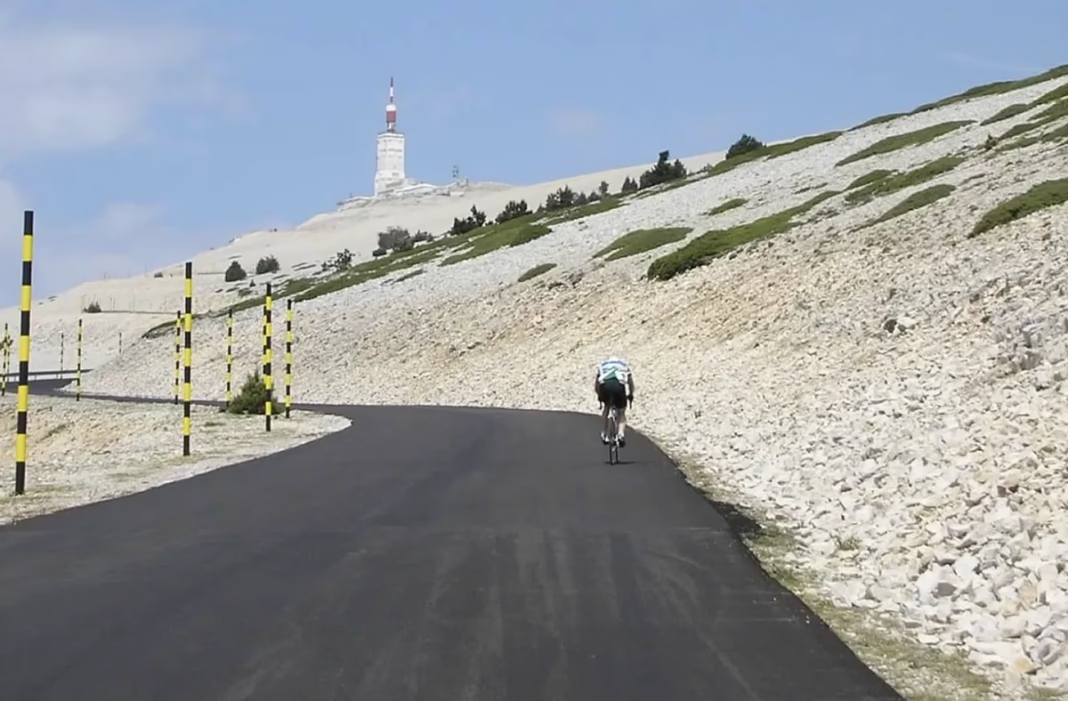
- Mont Ventoux from Bédoin, Malaucène, or Sault: three very different personalities on one mountain.
- Pyrenees big days from Argelès-Gazost or Bagnères-de-Luchon: stack two or three long climbs for a true grand tour feel.
Scenic loops and ride styles
- Nice and the Côte d’Azur: coastal endurance rides, then turn inland for quieter climbing roads.
- Annecy: lake-side spins for recovery, and tougher climbing options when you want a challenge.
- Burgundy and the Loire: steady mileage days with simple navigation and frequent resupply.
- Dordogne and Lot: rolling routes with short ramps, perfect for tempo riding rather than all-day climbing.
- Brittany: punchy, wind-exposed terrain that rewards good positioning and a flexible route plan.
When to go
- Late spring (May to June): often the sweet spot for the Alps and Pyrenees, with long daylight and manageable heat.
- Mid-summer (July to August): great conditions in the high mountains, but busy roads and higher accommodation prices in popular bases.
- Early autumn (September): quieter, still warm in many regions, and ideal for Provence, the Riviera, Dordogne, and the Loire.
- Winter and early spring: better suited to the Riviera, lower altitude Provence, and coastal riding. High passes can be closed or unpredictable.
Logistics
- Getting there: major airports make bases like Nice and the Riviera very easy. For the Alps and Pyrenees, plan for a transfer by train or car.
- Bike carriage: check airline and train bike rules early, and book any required spaces as soon as you can.
- Accommodation: if you are climbing-focused, stay close to the start of your key climbs so you are not wasting hours in valley traffic.
- Food and water: village bakeries and small supermarkets are your best friends. In hotter regions, plan bottle refills rather than hoping for fountains.
- Riding rules and safety: keep right, use lights in poor visibility, and expect mixed road surfaces in rural areas. For emergencies in France, the EU emergency number is 112.
- Navigation: download offline maps. Mountain signal can be unreliable, especially in deeper valleys.
