A cycling food tour in France works best when the route is built around places that are good to ride through as well as good to eat in. France has plenty of both: long-distance cycleways through the Loire Valley, vineyard roads around Burgundy and Alsace, quieter lanes through Provence and hillier wine country in Beaujolais.
The strongest trips are not about trying to eat a huge restaurant meal every lunchtime and then climbing straight back on the bike. They work because cafés, bakeries, markets, vineyards and regional dishes become part of the route, with enough riding between stops to make each place feel connected to the landscape around it.
For most riders, that means choosing one region rather than trying to cross the country. A week in Burgundy or the Loire Valley gives more time to ride, eat and explore than a rushed itinerary chasing famous dishes several hundred kilometres apart.
Best regions in France for a cycling food tour
| Region | Best for | Typical riding | Food to look for |
|---|---|---|---|
| Loire Valley | First touring trip and château-to-château riding | Mostly gentle, well-signposted cycle routes | Goat cheese, rillettes, river fish, pastries and Loire wines |
| Burgundy | Wine villages and food-focused short tours | Vineyard roads, canals and voies vertes | Gougères, jambon persillé, boeuf bourguignon, Époisses |
| Provence and Luberon | Markets, olive oil and warm-weather riding | Rolling lanes, greenways and longer hilly loops | Tapenade, tomatoes, olive oil, melons, candied fruit |
| Alsace | Compact village-to-village touring | Vineyard cycleway beneath the Vosges | Tarte flambée, kougelhopf, choucroute and Alsace wines |
| Beaujolais | Stronger riders who want hills with their wine country | Short steep climbs through vineyards | Charcuterie, local cheeses and Beaujolais dishes |
Loire Valley: the easiest place to start
The Loire Valley is probably the best first choice for a food-led cycling holiday because the riding is straightforward and the route infrastructure is already there. La Loire à Vélo provides around 630km of continuous signed route between Nevers and Saint-Brevin-les-Pins, with another 270km of loops and variants around the main line.
That makes it easy to build a three-day trip or a full week without inventing every road from scratch. The route passes vineyards, market towns, châteaux and villages where a bakery stop can be treated as part of the day rather than a detour.
Food varies as the route heads west, but Loire goat cheeses such as Sainte-Maure-de-Touraine, rillettes around Tours, freshwater fish and local pastries all fit naturally into the trip. The region’s white wines are an obvious part of the landscape too, although wine tastings make far more sense at the end of the riding day than halfway through it.
For a route-specific plan, ProCyclingUK has a full cyclist’s guide to the Loire Valley and Loire à Vélo.
Burgundy: the strongest food-and-wine cycling combination
Burgundy is harder to beat if food and wine are the main reason for choosing the trip. Beaune, Dijon and the villages of the Côte d’Or sit among vineyard roads that are easy to combine with traffic-free sections and canal-side riding.
The wider Tour de Bourgogne network forms a 664km circuit around the region, but there is no need to complete it. A shorter itinerary based around Beaune can link the vineyards with villages such as Meursault, Pommard and Nuits-Saint-Georges while keeping daily distances relatively modest.
Gougères are ideal café food for a cyclist: small savoury cheese pastries that are much easier to ride after than a plate of boeuf bourguignon. Jambon persillé and Époisses are more substantial regional choices for the evening, when there is no need to immediately tackle another climb.
ProCyclingUK’s Burgundy cycling guide goes further into Beaune, the vineyard roads and the region’s voies vertes.
Provence and the Luberon: markets, olive oil and warmer riding
Provence works when the food tour needs more sun and more climbing. France Vélo Tourisme’s Provence route runs for around 355km, while the signed Around the Luberon circuit is a 241km loop using quiet roads and some greenway sections.
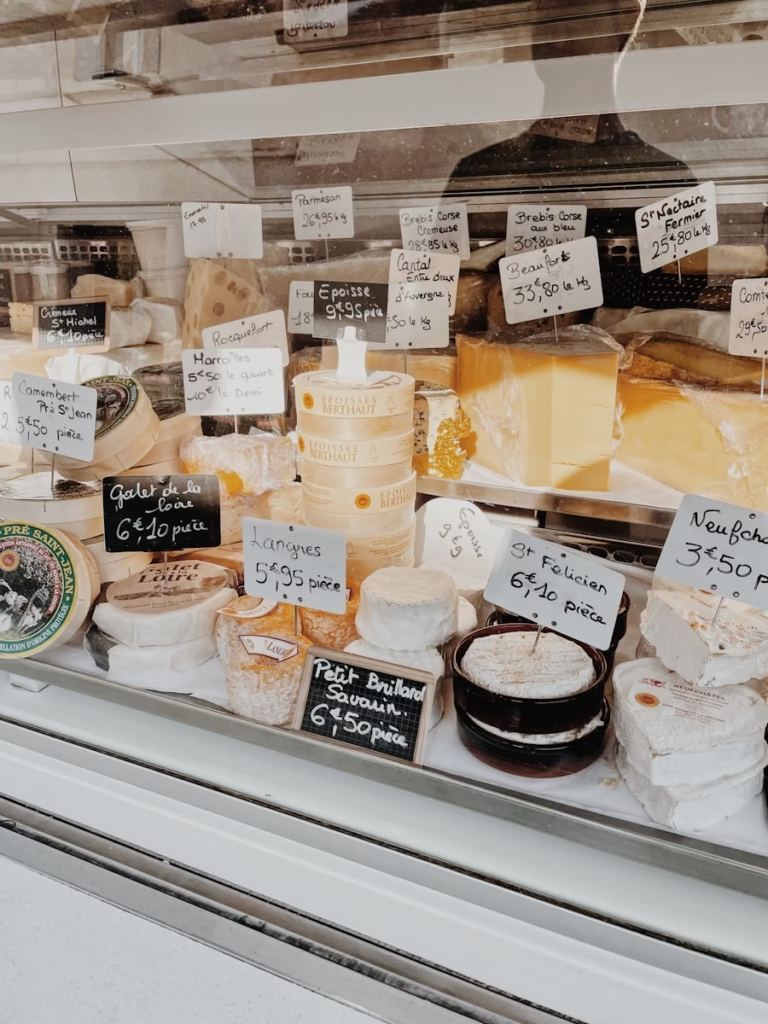
This is a different style of food trip from Burgundy. The most useful stops are often markets rather than formal tastings: tomatoes, peaches, melons, olives, fougasse and local cheese are easy to turn into a picnic without losing half the afternoon.
Apt is particularly good for a food-led itinerary. The town is known for candied fruit, while the surrounding route continues through orchards, vineyards and villages before reaching areas associated with olive oil and Cavaillon’s melons.
The downside is heat. July and August can be very hot inland, so May, June, September and early October are usually better if the trip is meant to include proper riding rather than short transfers between lunches.
Alsace: one vineyard route, lots of villages
Alsace has one of the neatest ready-made combinations of cycling and food. The Véloroute du Vignoble d’Alsace runs for about 127km between Marlenheim and Cernay, passing vineyards and villages along the foothills of the Vosges.
The riding is compact enough to leave time for stops in places such as Riquewihr, Kaysersberg and Colmar without turning every day into a race against hotel check-in. There are some hills, but the route is far less demanding than a trip built around the high Vosges climbs.
Tarte flambée is the obvious cyclist-friendly meal: thin dough with crème fraîche, onions and lardons, usually easier to deal with at lunchtime than a huge plate of choucroute. Kougelhopf works well with coffee, while the region’s Riesling and Gewürztraminer are better saved until the bike is parked.
Beaujolais: the hillier option
Beaujolais suits riders who want the food-and-wine setting but do not mind earning it. The vineyard roads north of Lyon contain repeated short climbs rather than the flatter touring character of the Loire.
The area became especially visible to cycling fans through the 2026 Tour de France Femmes, and ProCyclingUK’s guide to cycling through Beaujolais wine country covers the terrain in more detail.
How far should you ride each day?
A food-focused tour works better with shorter stages than a conventional point-to-point challenge. Around 50–80km per day gives most reasonably fit riders enough time for a market stop, lunch and an unplanned village without reaching the hotel at sunset.
Terrain changes that calculation. Sixty kilometres in Beaujolais or the Luberon can take more out of you than 90km along a flat section of the Loire, so build the itinerary around elevation as well as distance.
Keep the bigger meal for the evening. During the ride, bakeries, sandwiches, fruit and lighter regional food are much easier to digest than a long restaurant lunch with several courses.
Do not rely on sightseeing food for all your ride fuel
A croissant and coffee can be part of the fun, but a touring day still needs enough carbohydrate, fluid and sodium to keep the legs working. Carry something predictable for the sections between towns rather than assuming the next bakery will always be open.
ProCyclingUK’s guide to cycling gels, bars and drinks covers easy ride-fuel options. For hot-weather trips, Bulk’s Electrolyte Plus is one current option for replacing sodium and other electrolytes during longer days.
What bike works best for a French food tour?
A road bike is perfect for Burgundy, Alsace and much of Provence if the route stays on tarmac. A gravel or touring bike becomes more useful on longer Loire itineraries and any trip that deliberately mixes voies vertes, towpaths and quieter unsurfaced links.
Comfort matters more than outright speed. Wider tyres, sensible gearing and enough luggage space will make a week of 60–80km days more enjoyable than copying a race-bike setup designed for a few hours.
What to wear and carry
Touring clothing should work both on the bike and during frequent stops. Cargo bib shorts are useful because the leg pockets give easy access to a phone, wallet or snack without unloading luggage every time.
Le Col’s Sport Cargo Bib Shorts are designed around longer everyday rides and include side storage pockets, making them a natural fit for this kind of trip.
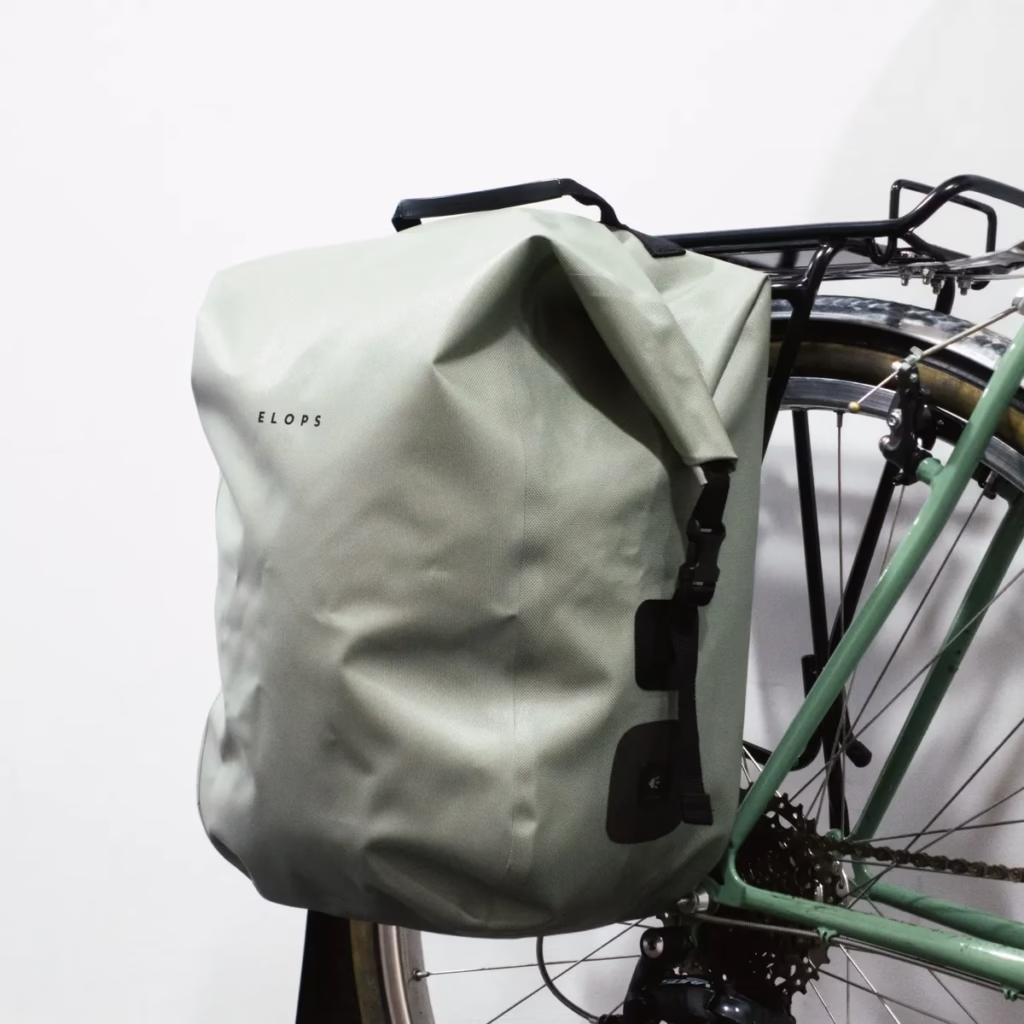
For luggage, panniers are still the easiest answer when you are carrying normal clothes and staying in hotels. Smaller bikepacking bags work well for lighter trips, but they demand more discipline when packing.
Tredz’s cycling bags and panniers range includes traditional Ortlieb-style touring luggage as well as frame, saddle and handlebar bags.
Wine tasting and cycling need a sensible order
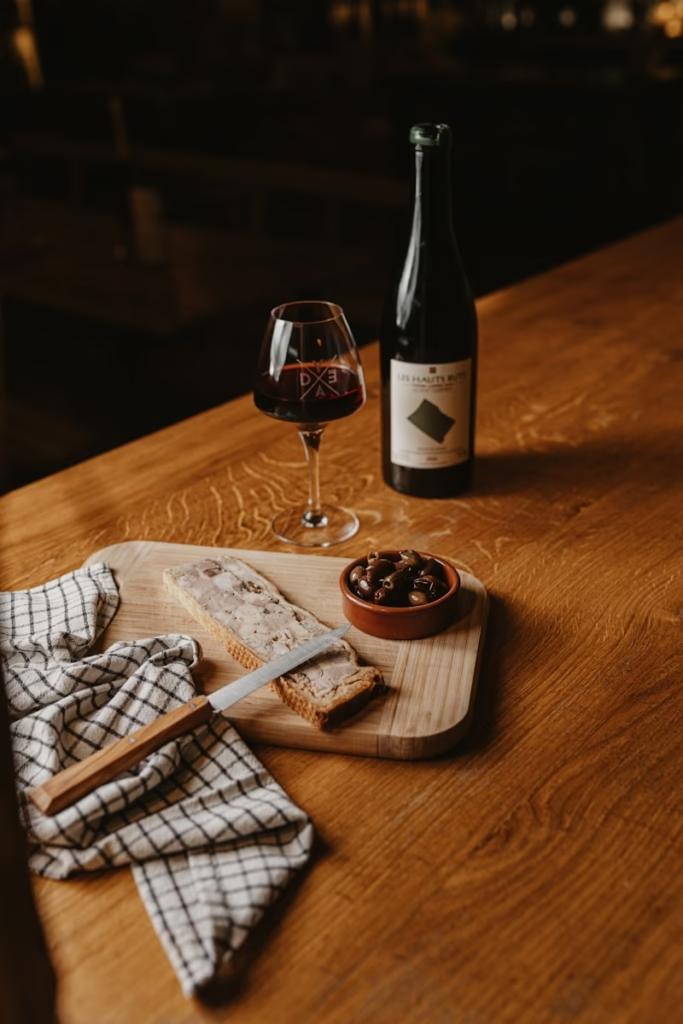
Wine is part of the reason many riders choose Burgundy, the Loire, Alsace or Beaujolais, but a tasting does not need to become a drinking session. If you are still riding afterwards, keep samples minimal or use the spittoon. The simplest option is to arrange tastings near the end of the stage, once the bike can be left at the hotel.
That also makes the food experience better. There is no benefit in compromising balance, judgement or hydration just because the route happens to pass a famous vineyard.
Best time of year for a cycling food tour in France
May, June and September are the easiest months to recommend across most regions. Days are long, restaurants and accommodation are fully open and temperatures are generally more manageable than peak summer.
September has the extra attraction of harvest season in wine regions, although that can make accommodation busier. July and August work well in northern France, but Provence and other southern regions can become hot enough that rides need to start early.
How to plan the trip
Start with the riding rather than a list of restaurants. Pick the regional cycle route, decide how much distance and climbing you want each day, then choose towns where the food gives you a reason to stop.
Book accommodation with secure bike storage where possible and avoid moving hotels every night if a two-night base creates good loops. It gives you more flexibility with weather and removes the pressure to ride simply because luggage has to reach the next town.
For more route ideas, the ProCyclingUK cycling in France hub brings together current guides to French regions, climbs and touring bases.
Which region should you choose?
Choose the Loire Valley for an easy first tour, Burgundy when food and vineyard villages are the priority, Provence for sunshine and market culture, Alsace for a compact signed wine route, and Beaujolais when you want the same food-led idea with substantially more climbing.
The best cycling food tour in France is not the one with the most famous restaurants. It is the one where the food, roads and daily distances fit together well enough that you can enjoy all three.
-
 Photo Credit: quentinphotographiebe
 -
 Photo Credit: Getty