
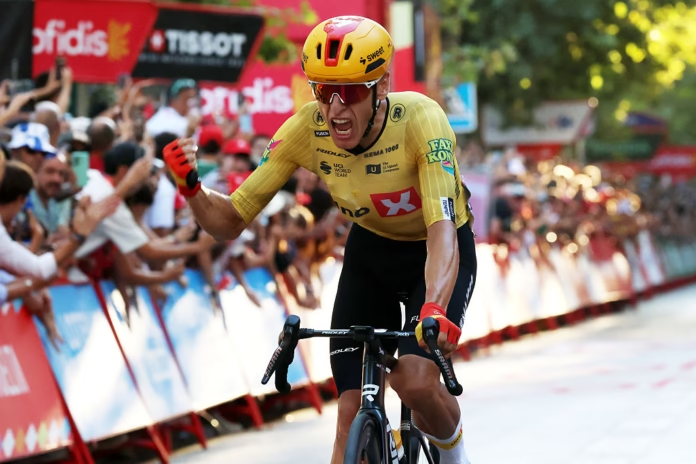
Tobias Halland Johannessen won stage 21 of the 2026 Vuelta a España in Granada, beating Alessandro Romele in a tight sprint after an aggressive final circuit around the Alhambra, while Enric Mas completed the first Grand Tour victory of his career.
Johannessen emerged from a late move with Romele, Ramses Debruyne and Axel Laurance before holding off the XDS Astana rider at the line. Debruyne finished third, with Matthew Brennan recovering from being briefly distanced on the final climb to take fourth ahead of Bastien Tronchon.
The victory was Johannessen’s first in a Grand Tour and came 24 hours after he finished second to Mikel Landa on Collado del Alguacil. Mas arrived a few minutes later alongside his Movistar teammates, completing the Vuelta 2:15 ahead of Primož Roglič and 2:44 ahead of Felix Gall.
A ceremonial start before the racing begins in Granada
The final stage followed a different pattern from the traditional procession into Madrid. The 2026 Vuelta route ended in Granada for the first time, with the race entering a demanding finishing circuit rather than finishing with a conventional flat sprint.
The opening kilometres remained largely ceremonial. Mas and Movistar posed for photographs in specially prepared red kit, while several riders reaching the end of their professional careers were given time at the front of the peloton.
Steven Kruijswijk was among those receiving a guard of honour before the start. Jesús Herrada, Pello Bilbao, Magnus Cort and David de la Cruz were also making their final Vuelta appearances.
Movistar controlled the pace as the race approached Granada. There was little interest in forming a conventional breakaway because the decisive racing was always expected to begin once the peloton reached the city circuits.
The Alhambra circuit turns the finale into a selective race
The riders crossed the finish line for the first time with just over 40 kilometres remaining before immediately beginning the climb towards the Alhambra.
That ascent changed the character of the stage. The climb lasted around two kilometres and was repeated several times, making the Granada finale much harder than a normal final-day sprint.
Van Aert had reconnoitred the circuit during a Sierra Nevada training camp and described it before the stage as considerably harder than the Montmartre circuit used at the Tour de France.
The first ascent remained controlled by Movistar. The pace began to increase on the next passage when Visma | Lease a Bike briefly moved forward before Groupama-FDJ United took responsibility.
Jordi Meeus was among the sprinters beginning to lose contact as the repeated climbing gradually reduced the group.
Tronchon starts the decisive racing with 28 kilometres remaining
The first serious attack came from Tronchon with around 28 kilometres to go.
The Groupama-FDJ United rider accelerated on the climb and immediately created a selection containing several riders capable of winning from a small group. Brennan, Thibau Nys, Valentin Paret-Peintre, Laurance, Romele, Finn Fisher-Black and Milan Vader were among those to move clear, with Léo Bisiaux joining shortly afterwards.
Johannessen also made his way into the front of the race as the stage split into several groups.
Van Aert initially missed the strongest selection and remained in the chase. Movistar had no reason to help bring the groups back together because their only priority was getting Mas safely through the point at which the general classification times would be taken.
The race for the stage and the race for red were therefore effectively separated before the final lap.
Bilbao attacks as Van Aert and Coquard are dropped
Bahrain Victorious took responsibility approaching the final climb.
Pau Miquel set the pace for Bilbao before the experienced Basque rider attacked with around nine kilometres remaining. The acceleration immediately put several riders in difficulty, with Van Aert and Bryan Coquard among those unable to stay with the front group.
Bilbao opened a useful gap and initially appeared capable of carrying the move over the climb, but Laurance responded from behind.
The Netcompany INEOS rider caught Bilbao and then went past him before the summit. Romele was leading the pursuit behind, while Brennan and Tronchon were briefly among those struggling with the pace.
Laurance could not maintain the advantage on the descent.
A group of around a dozen riders came back together before the final five kilometres, with Brennan and Tronchon regaining contact.
Brennan’s return immediately changed the tactics. After winning five stages during his first Vuelta, nobody wanted to tow him directly to another sprint.
Johannessen and Romele get clear inside the final two kilometres
The attacks continued as the front group approached the finish.
Brennan, Nys, Bilbao, Pau Martí, Johannessen, Laurance, Tronchon, Paret-Peintre, Marco Brenner, Romele, Debruyne and Jarno Widar were among the riders still involved inside the final three kilometres.
The decisive move came with around two kilometres remaining.
Johannessen, Romele, Debruyne and Laurance opened a small gap while the riders behind hesitated over who should take responsibility for the chase. Several looked towards Brennan, but Visma had little incentive to spend everything closing a move only to deliver their young sprinter into another tactical battle.
That hesitation was enough.
Laurance was unable to stay with the leading three as they entered the final kilometre, leaving Johannessen, Romele and Debruyne to contest the stage.
Johannessen beats Romele for his first Grand Tour victory
Romele was the obvious sprint threat among the three leaders.
The Italian had been one of the breakthrough riders of the Vuelta, repeatedly featuring in sprint and reduced-group finishes without managing to take a stage.
Johannessen approached the finale with a very different record. The Norwegian is better known for his climbing and had already finished second on stage 7 at Valdelinares before another second place behind Landa on the penultimate day.
He did not wait for Romele to control the sprint.
Johannessen launched first and held the XDS Astana rider on his wheel all the way to the line. Romele drew close but never managed to come alongside, giving Johannessen his first Grand Tour stage victory.
Debruyne took third, while Brennan led the next group home in fourth. Tronchon finished fifth after beginning the sequence of attacks that had broken open the race almost 30 kilometres earlier.
-
 Photo Credit: PhotoNews
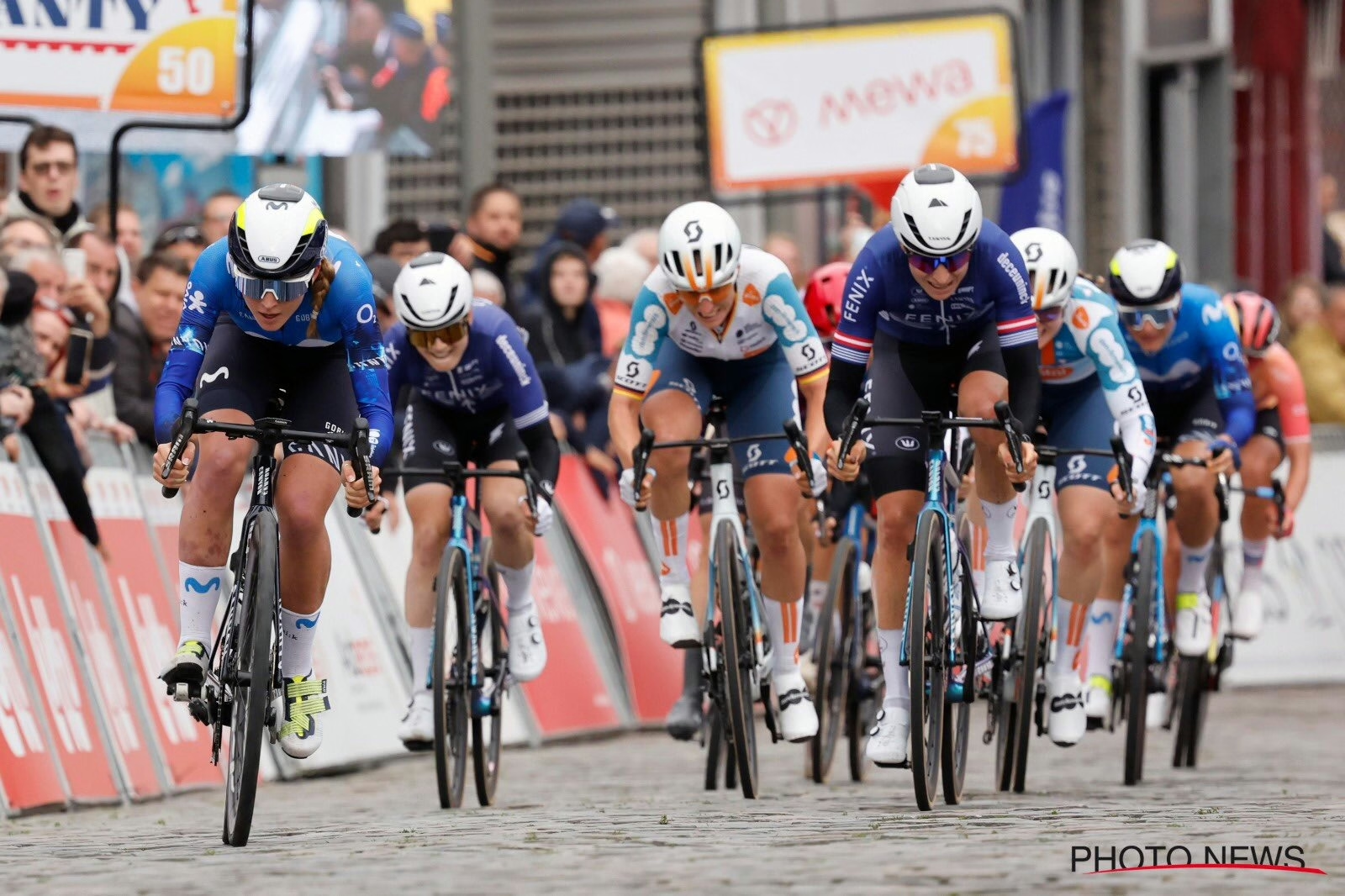
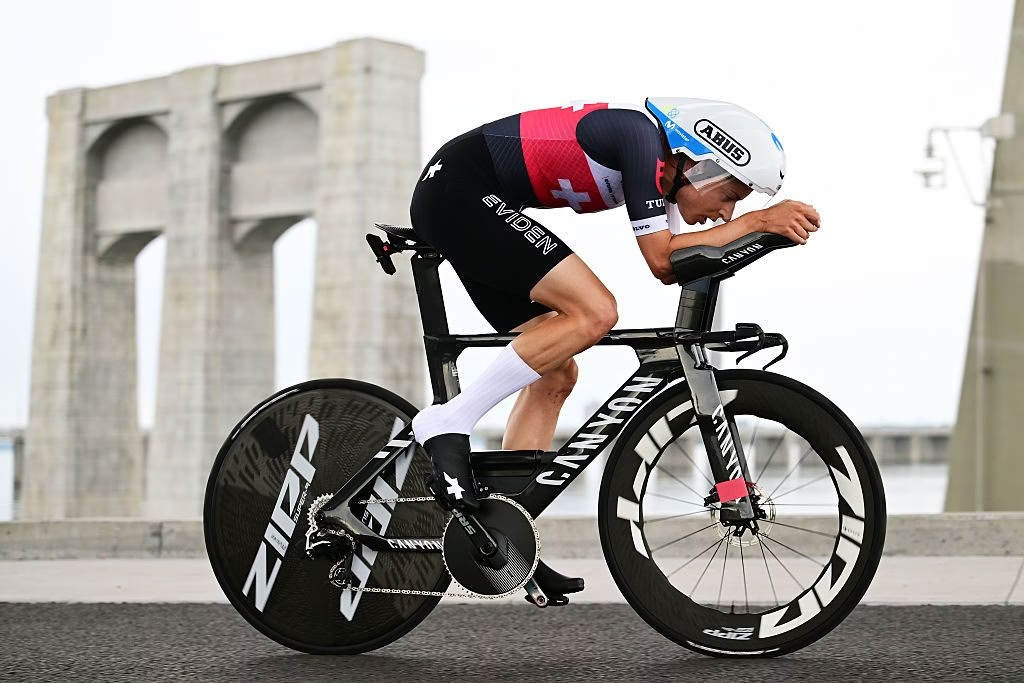
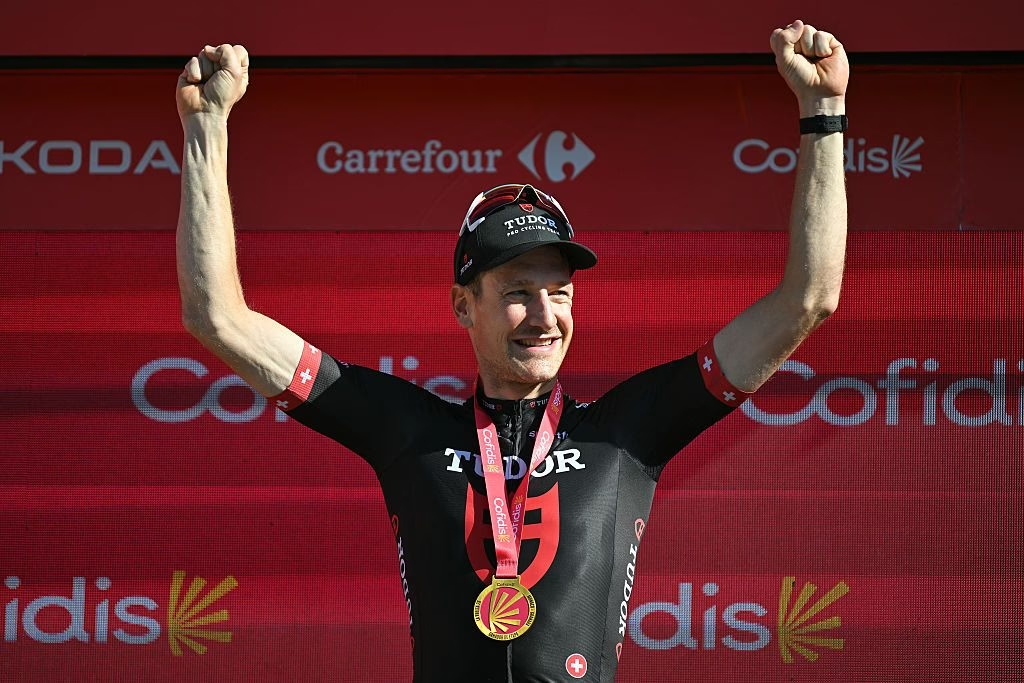
Mas crosses the line with Movistar to win the Vuelta
The main peloton arrived after the stage-winning group with the overall classification already settled.
Mas deliberately dropped back to cross the line alongside Jorge Arcas, Orluis Aular, Carlos Canal, Pablo Castrillo, Raúl García Pierna and Iván Romeo.
His final advantage remained 2:15 over Roglič, with Gall completing the podium at 2:44. Richard Carapaz finished fourth, while Sepp Kuss’s long-range ride on stage 20 had moved him into fifth ahead of Oscar Onley.
For Mas, the victory ended a career defined for years by high Grand Tour finishes without an overall win. He had previously been a regular presence on the Vuelta podium but arrived in Granada as the first Spanish winner of the race since Alberto Contador in 2014.
The race had changed dramatically when Tadej Pogačar abandoned after crashing while wearing red, but Mas still had to convert the opportunity across the remaining two weeks.
His advantage was built in the mountains and then protected through the final sequence of decisive stages. Roglič took only 33 seconds from him in the stage 18 time trial in Jerez, before Mas held firm on Peñas Blancas and then increased his advantage over the Slovenian on Collado del Alguacil.
Van Aert, Buitrago and Onley complete the classification winners
Van Aert completed the race as winner of the points classification after combining two stage victories with repeated lead-out work for Brennan.
Santiago Buitrago won the mountains classification after spending much of the race attacking on the hardest climbs, while Onley secured the white jersey as the best young rider despite dropping from fifth to sixth overall on the final mountain stage.
Decathlon CMA CGM won the teams classification.
Johannessen took the final stage after spending three weeks showing he could contribute well beyond the high mountains. Mas, meanwhile, reached Granada with the Vuelta already effectively decided and was finally able to cross a Grand Tour finish line as the overall winner.
Vuelta a España 2026 stage 21 result
| Position | Rider | Team | Time/gap |
|---|---|---|---|
| 1 | Tobias Halland Johannessen | Uno-X Mobility | 2:54:08 |
| 2 | Alessandro Romele | XDS Astana Team | same time |
| 3 | Ramses Debruyne | Alpecin-Premier Tech | same time |
| 4 | Matthew Brennan | Team Visma | Lease a Bike | same time |
| 5 | Bastien Tronchon | Groupama-FDJ United | same time |
| 6 | Pello Bilbao | Bahrain Victorious | same time |
| 7 | Finn Fisher-Black | Red Bull-BORA-hansgrohe | same time |
| 8 | Axel Laurance | Netcompany INEOS | same time |
| 9 | Pau Martí | NSN Cycling Team | same time |
| 10 | Marco Brenner | Tudor Pro Cycling Team | same time |
Vuelta a España 2026 final GC result
| Position | Rider | Team | Final time/gap |
|---|---|---|---|
| 1 | Enric Mas | Movistar | 73:52:55 |
| 2 | Primož Roglič | Red Bull-BORA-hansgrohe | +2:15 |
| 3 | Felix Gall | Decathlon CMA CGM | +2:44 |
| 4 | Richard Carapaz | EF Education-EasyPost | +6:54 |
| 5 | Sepp Kuss | Team Visma | Lease a Bike | +8:45 |
| 6 | Oscar Onley | Netcompany INEOS | +9:28 |
| 7 | Jakob Omrzel | Bahrain Victorious | +10:38 |
| 8 | Clément Berthet | Groupama-FDJ United | +11:41 |
| 9 | Cristián Rodríguez | XDS Astana Team | +11:59 |
| 10 | Harold Tejada | XDS Astana Team | +12:51 |
Main photo credit: Getty

