
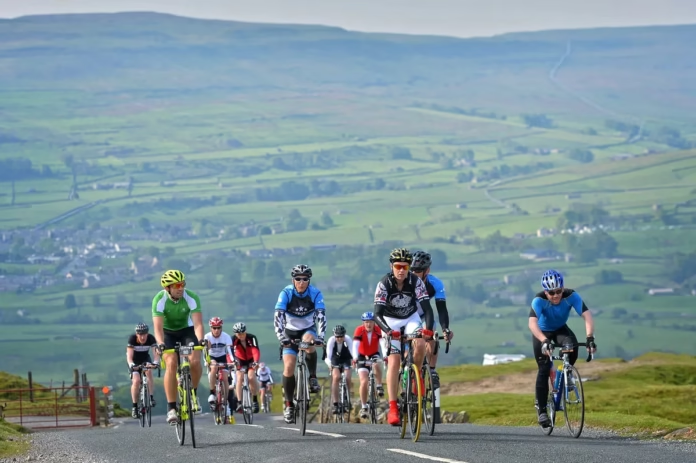
Choosing the right sportive distance is less about finding the longest route you can technically finish and more about picking a distance that matches your current fitness, experience and how much you actually want to suffer.
For a first event, the best choice is usually the route that feels challenging enough to be memorable without turning the final hour into damage limitation. That might mean 50km for one rider, 100km for another, or 100 miles for someone already used to long club rides.
The key is to look beyond distance alone. A 100km sportive with 2,000 metres of climbing can be much harder than a flat 130km route, while weather, road surface and how aggressively you ride can change the day just as much.
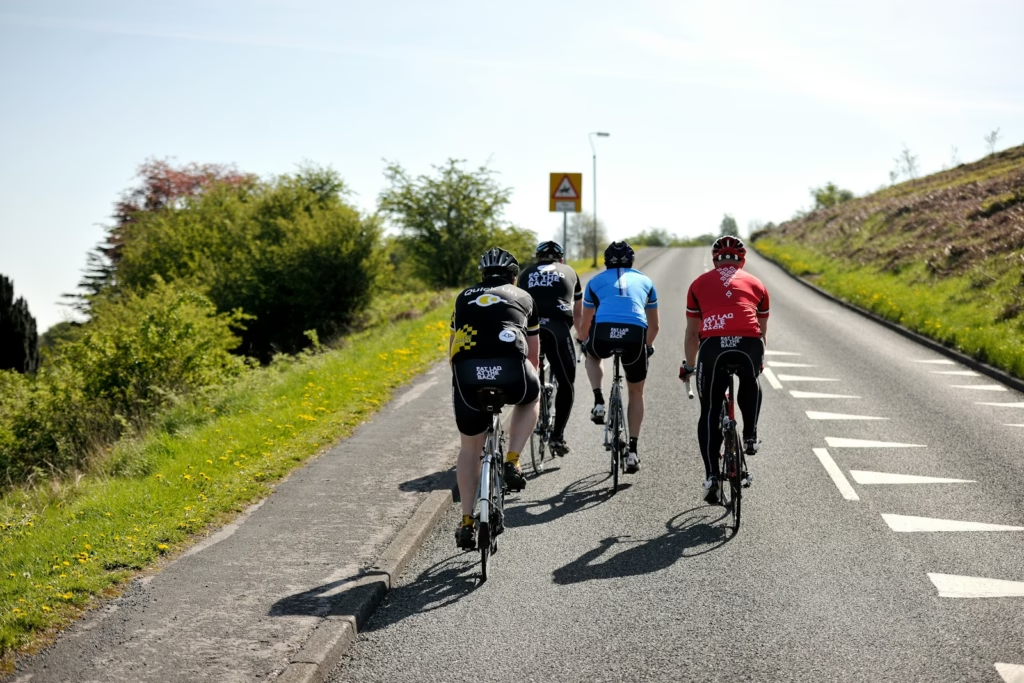
50km to 70km: the best starting point for newer riders
A shorter sportive is the sensible choice if your longest rides are currently around two hours or less, if you are relatively new to road cycling or if your main goal is simply to experience an organised event.
Distances around 50km to 70km are long enough to feel like a proper challenge without demanding months of endurance training. They also give you more margin if something goes wrong.
If the weather turns, your pacing is slightly too ambitious or you discover that you have not eaten enough, you are dealing with another hour rather than another three. For a first sportive, that can make the difference between finishing tired and finishing miserable.
Our guide to the best beginner-friendly sportives in the UK is a useful starting point if this is the sort of distance you are considering.
80km to 100km: a good target for regular recreational riders
For riders already comfortable with two to three-hour rides, 80km to 100km is often the sweet spot.
This is long enough to require proper pacing and fuelling, but still short enough that a reasonably consistent rider can prepare without completely reorganising their life around training.
A 100km sportive is also a useful milestone because it introduces most of the demands that matter on longer events. You need to eat before you feel hungry, keep the first hour under control, manage climbs rather than attacking every one, and keep pedalling comfortably after the point where your normal weekend ride might already have finished.
For many cyclists, this is the distance where a sportive starts to feel like a real endurance event.
If 100km is the target, our training plan for your first 100km ride gives you a sensible eight-week progression rather than simply asking you to keep riding farther every weekend.
100km to 130km: for riders who already have a decent base
Once you move beyond 100km, the difficulty starts increasing faster than the number on the route sheet suggests.
A 120km sportive is not simply a 100km ride with another easy 20km added on. Those final kilometres arrive after several hours of accumulated fatigue, and that is when poor pacing or fuelling earlier in the day becomes obvious.
This range suits riders who are already doing regular longer rides and can comfortably complete 80km to 100km in training.
You do not need to have ridden the full event distance beforehand, but you should know what three or four hours on the bike feels like and be confident that your position, nutrition and clothing work over that length of time.
If 100km already feels like a major expedition, 130km is probably not the sensible next step.
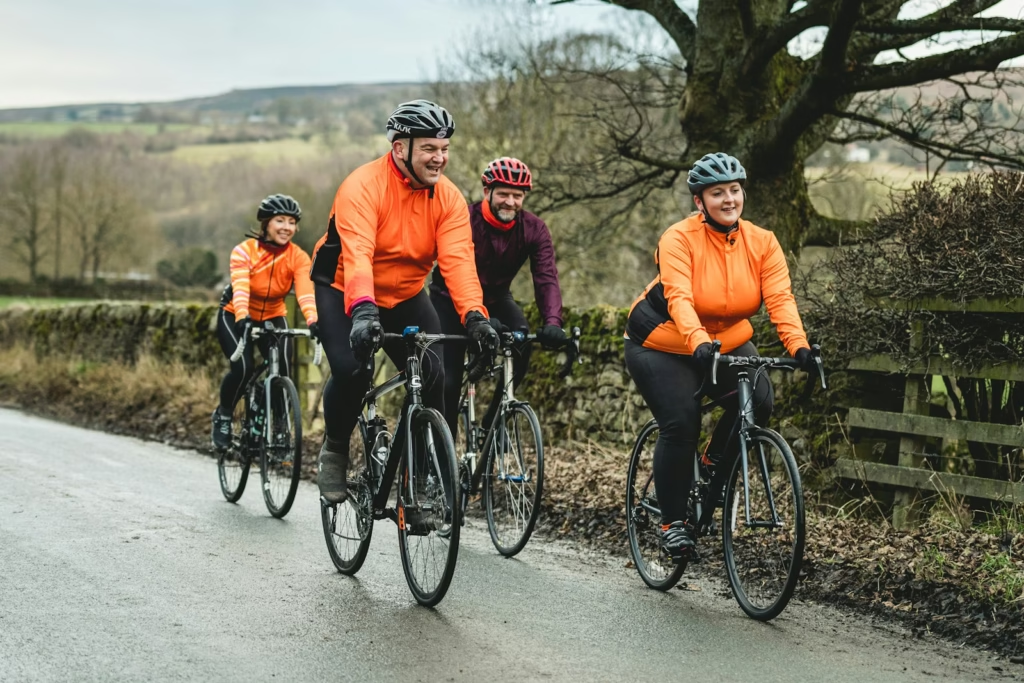
100 miles: a different kind of challenge
A century ride, 100 miles or roughly 161km, is where the event becomes as much about endurance management as cycling fitness.
You can be strong enough to ride quickly for three hours and still struggle badly over six.
The biggest challenge is not usually one climb or one section of road. It is maintaining a sensible output, continuing to eat and drink, and avoiding the temptation to turn the opening 50km into a race.
For a rider used to 100km rides, a 100-mile sportive is a logical next target.
It should still be respected.
The difference between riding 100km and 160km is substantial, particularly on a hilly course. The extra distance can mean another two or three hours of riding, and that exposes every weakness in pacing, fuelling and comfort.
If you are at that point, our guide to the best 100-mile sportives in the UK separates the more approachable first centuries from the much harder climbing-heavy options.
160km plus: choose it because you want the endurance challenge
Long sportives above 100 miles are a different category again.
At this point, the question is not simply whether your legs are strong enough. You need to know that your body can tolerate a long day in the saddle, that you can keep eating for six, seven or eight hours and that you can remain mentally engaged when the finish still feels a long way away.
These events suit experienced endurance riders more than riders simply looking for the hardest option on an entry form.
Longer is not automatically better.
If you spend the final third of the event barely turning the pedals, you probably gain less from the experience than you would from riding a shorter route properly.
Distance is only half the story
Before choosing between two route options, look at the climbing.
A flat 100km event can be relatively accessible. A 100km route containing 2,500 metres of ascent can be a serious mountain day.
The same applies to longer distances.
A rolling 160km sportive may be easier than a 120km event built around repeated steep climbs.
Elevation gain gives a better indication of difficulty when combined with distance. Once you start approaching 1,500 to 2,000 metres of climbing per 100km, the route is becoming significantly harder than a typical rolling sportive.
Above that, climbing ability and pacing become increasingly important.

Look at where the climbs come
Total elevation still does not tell the whole story.
A route with one long climb in the first half may be easier to manage than a route containing five steep climbs spread across the entire day.
Late climbs matter disproportionately.
A 10% gradient at kilometre 30 can feel manageable. The same gradient after five hours of riding can feel completely different.
When comparing sportive routes, check whether the hardest climbing comes early, late or throughout.
If you are stretching yourself with the distance, a route where the toughest climbing arrives late can turn an ambitious choice into a very difficult day.
Your longest recent ride is a useful guide
One of the simplest ways to choose is to look at what you already ride comfortably.
If your longest recent ride is 40km, jumping directly to 160km is unnecessarily ambitious.
If you regularly ride 70km to 80km and finish feeling reasonably good, a 100km sportive is a very sensible target.
If 100km rides are already normal weekend territory, 130km or 160km becomes realistic depending on the climbing.
You do not need to complete the full sportive distance in training. But the event should feel like an extension of what you already do, not an entirely different sport.
Think in hours as well as kilometres
Distance can hide how different events really are.
A strong rider may cover 100km in three hours. Another rider may need five.
That means the same sportive distance can represent two very different endurance demands.
Estimate how long you are likely to be riding rather than simply looking at kilometres.
If your expected pace is around 20km/h, a 100km sportive means roughly five hours before stops. At 25km/h, it is closer to four.
That difference matters for fuelling, comfort and training.
For first events, choosing a route that keeps you within a riding duration you already understand is often smarter than choosing based purely on the prestige of the distance.
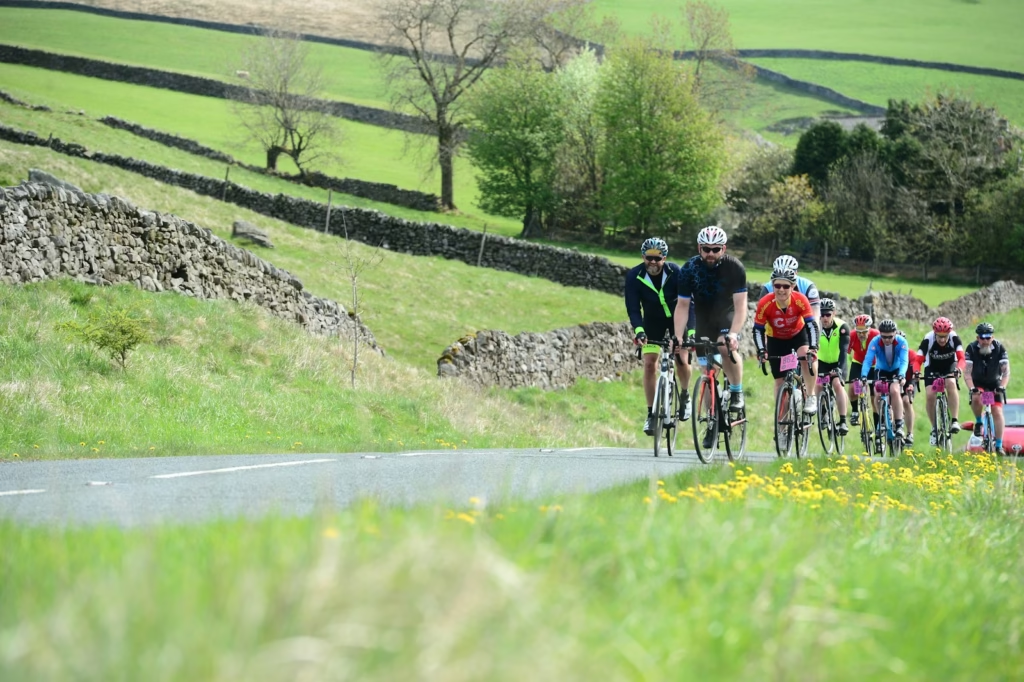
Choose the shorter route if you are unsure
Most riders worry about choosing a sportive that is too easy.
In reality, choosing one that is slightly easier than your absolute limit usually produces a better day.
You can ride harder, enjoy the climbs and stay with a group rather than simply survive. You are also far more likely to finish thinking about the next event rather than wondering why you entered this one.
There is nothing particularly satisfying about completing the longest route if the final 40km consists entirely of wishing you had chosen the medium option.
Choose the longer route when your training already supports it
The longer option makes sense when your current riding already gives you confidence that the distance is manageable.
If you are regularly riding 90km to 100km and looking at a 130km sportive, that is a sensible progression.
If you are routinely doing four-hour rides and considering your first 100 miler, the extra distance is a challenge rather than a gamble.
The distinction is important.
A sportive should stretch your endurance. It should not rely on hoping adrenaline gets you through twice the distance you normally ride.
Your first sportive should not be your hardest ever ride
For a first event, it is useful to leave some margin.
Organised events introduce things you may not encounter on a normal solo ride: crowded starts, unfamiliar roads, feeding stations, large groups, riders braking unpredictably and the temptation to go much harder than planned.
Even if the distance itself is familiar, the event can feel different.
That makes a first sportive a good time to choose a route you are confident you can complete.
Once you understand how these events work, taking on the longest option becomes much easier.
If you are still at that first-event stage, the best UK sportives to ride in 2026 includes both beginner-friendly events and harder options to build towards.
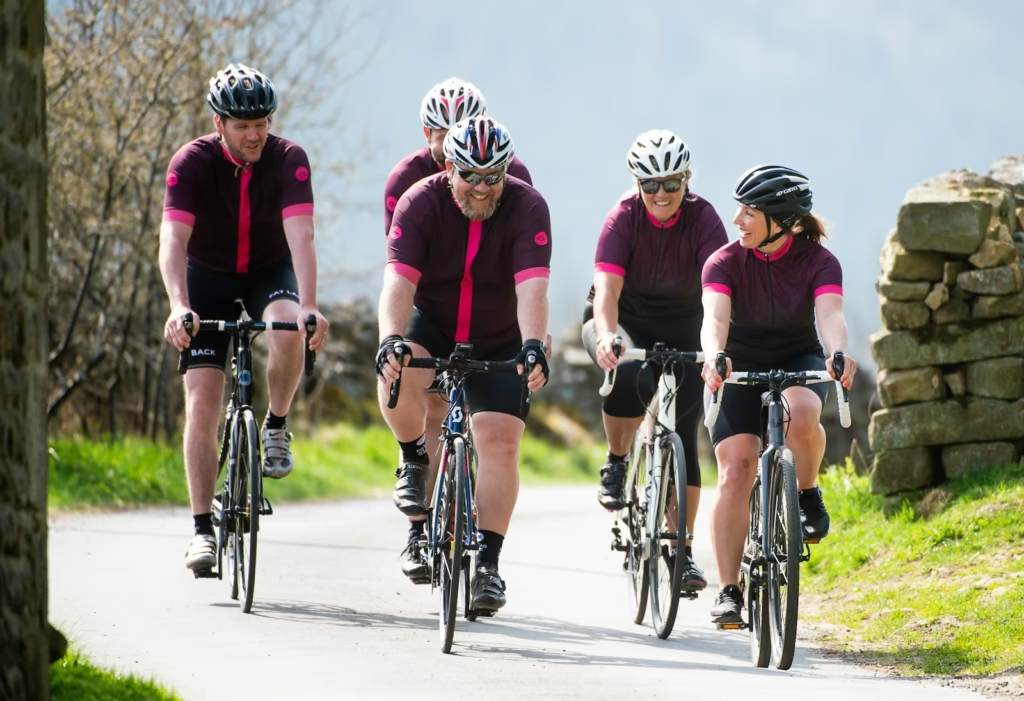
A simple sportive distance guide
If you want a quick starting point:
| Your current riding | Sensible sportive target |
|---|---|
| Mostly rides under 40km | 50km to 70km |
| Comfortable around 50km to 60km | 70km to 100km |
| Regularly riding 70km to 90km | 100km to 130km |
| Comfortable with 100km rides | 130km to 160km |
| Regular four to five-hour rides | 160km and beyond |
This is only a guide.
A mountainous route should push you towards the shorter end of the range, while a flatter sportive may allow you to choose something longer.
Which sportive distance should a beginner choose?
For most beginners, 50km to 80km is enough.
That gives you the atmosphere of an organised event and enough distance to make finishing feel meaningful without requiring advanced endurance training.
If you already ride regularly and have completed several 60km to 80km rides, there is no reason you cannot make 100km your first sportive target.
The important thing is that the distance should be a progression from your current riding rather than a leap into the unknown.
Is 100km a good first sportive?
Yes, for many riders.
A 100km sportive is challenging enough to require training and sensible fuelling but accessible enough that you do not need years of cycling experience.
If you can comfortably ride around 70km before the event and have enough time to build your endurance gradually, 100km is a realistic first target.
The exception is a particularly mountainous sportive.
Always look at the elevation profile before assuming that every 100km route carries the same difficulty.
When should you choose the 100-mile route?
Choose the 100-mile option when 100km already feels familiar.
You should have experience of rides lasting several hours and know what you need to eat and drink to keep going.
You do not need to have completed 160km beforehand. You do need enough endurance that the first 100km does not already feel like the event itself.
A good century ride is about keeping something back for the final third.
If you reach 120km feeling like you have already emptied the tank, the remaining distance becomes much harder than it needs to be.
-
 Photo Credit: Canyon SRAM (supplied media release)
 -
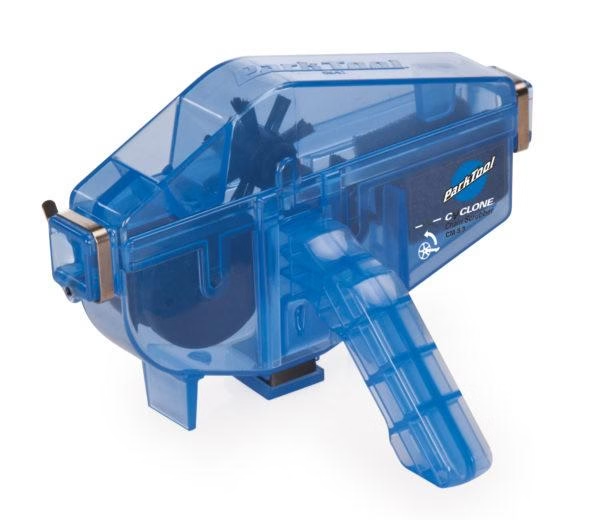
 Photo Credit: Park Tool
Fuelling becomes more important as the distance increases
A rider choosing between two sportive distances should think about how confident they are with eating and drinking on the bike as much as how strong their legs feel.
For a shorter event, a small fuelling mistake may only make the final few kilometres uncomfortable. Over five or six hours, the same mistake can ruin the day.
Longer rides reward consistency.
Start eating before you feel hungry, drink regularly and use training rides to work out what your stomach tolerates. Our simple cycling nutrition guide for beginners covers the basics without making the process more complicated than it needs to be.
If you are not yet comfortable fuelling through several hours on the bike, that is a good reason to choose the shorter distance and build from there.
The best sportive distance is the one you can actually ride well
The right sportive is not automatically the longest route offered.
It is the distance that gives you enough challenge to train for while still allowing you to enjoy the event.
For a newer rider, that may be 60km. For someone regularly riding at weekends, 100km is often the ideal target. For an experienced cyclist looking for a genuine endurance day, 100 miles or more may make much more sense.
Choose the route where the final kilometres will still involve riding your bike rather than simply trying to reach the finish.
That usually produces the better sportive.

