
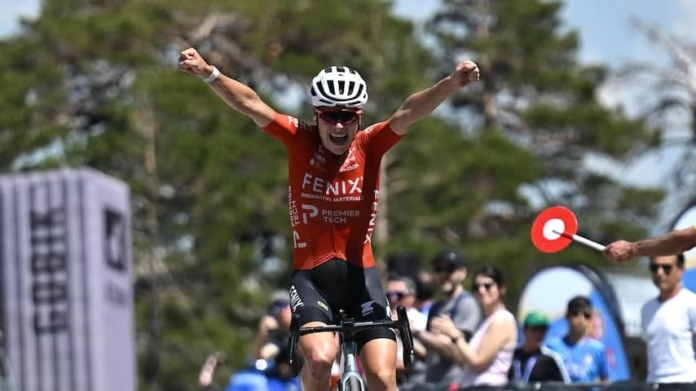
Yara Kastelijn will join Human Powered Health from Fenix-Premier Tech for the 2027 season, signing a contract through to the end of 2028 as the American team strengthens its stage-racing ambitions.
The 29-year-old Dutch rider arrives with proven success at the highest level, including a Tour de France Femmes stage victory in 2023 and overall victory at the 2026 Vuelta a Burgos Féminas.
Human Powered Health see Kastelijn as more than an experienced addition to the roster. The team want to develop her into a more consistent general classification contender, particularly in shorter stage races, while using those races as stepping stones towards bigger ambitions at the Tour de France Femmes.
“I really liked the confidence they have in me,” Kastelijn said. “It’s the trust they have in me to be a good GC contender, and I really think that I can do it in this environment.”
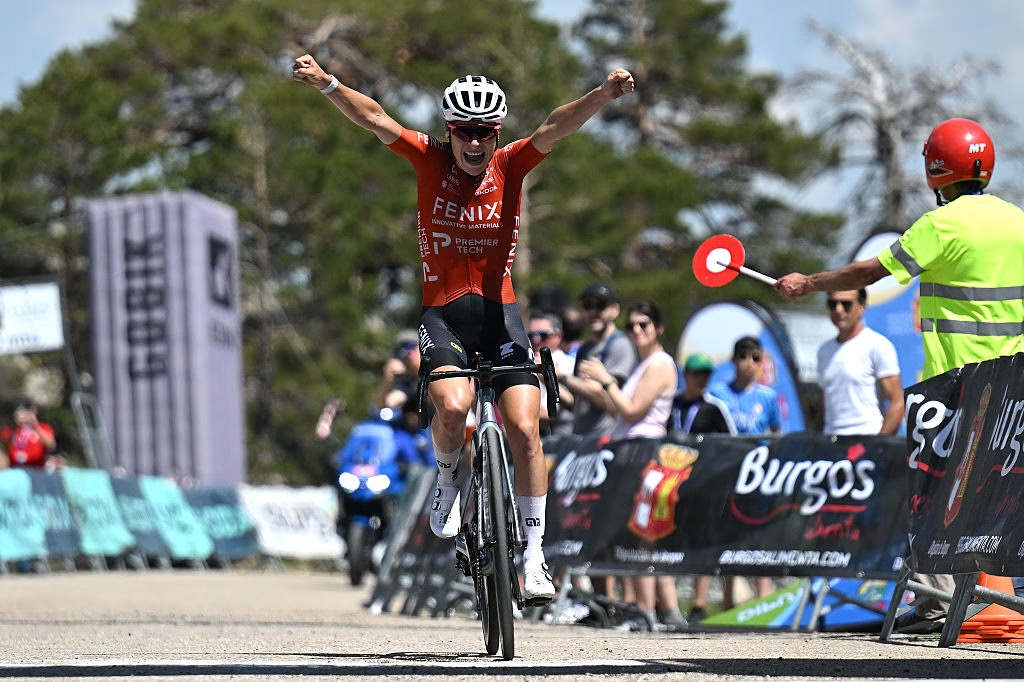 Photo Credit: Getty
Vuelta a Burgos victory changed the GC conversation
Kastelijn’s 2026 season has provided some of the strongest evidence yet that she can move beyond stage hunting and one-day racing.
Her overall victory at the Vuelta a Burgos Féminas was built around a powerful final mountain performance, where she rode clear on the decisive climb and converted her climbing strength into a major GC success.
That result appears to have shaped both her own ambitions and Human Powered Health’s view of what she could become.
General manager Ro De Jonckere described the signing as an important statement about the direction of the team.
“Signing Yara is a big statement of where we want Human Powered Health to go,” he said. “We are not looking to simply add depth to the roster; we want to add riders who can genuinely change the way we race and give us a chance to compete for the biggest results.”
Kastelijn already has the resilience required for stage racing. The challenge now is turning that into consistent overall results across a broader programme.
Human Powered Health want Kastelijn to take responsibility
The team believe Kastelijn’s value lies partly in her ability to perform across several different race types.
She remains capable of influencing difficult one-day races, but De Jonckere believes her consistency over several days is becoming increasingly important.
“Yara has already shown that she can do that,” he said. “She has the strength to be a factor in the hardest one-day races, but she also has the consistency and resilience required to fight for a GC over several days.”
That should give Kastelijn a more clearly defined leadership role than she has always had in previous seasons.
Rather than waiting for individual stage opportunities, she will be expected to protect time, manage difficult days and race with an overall classification in mind.
For Human Powered Health, that also represents a shift towards building a deeper stage-racing programme rather than relying primarily on one-day opportunities and individual stages.

The Tour de France Femmes remains the biggest target
Kastelijn’s long-term ambition is clear.
The 2027 season is intended to provide a foundation for another serious push towards the Tour de France Femmes, with smaller stage races used to develop the consistency required for a bigger GC role.
She already has one defining Tour memory.
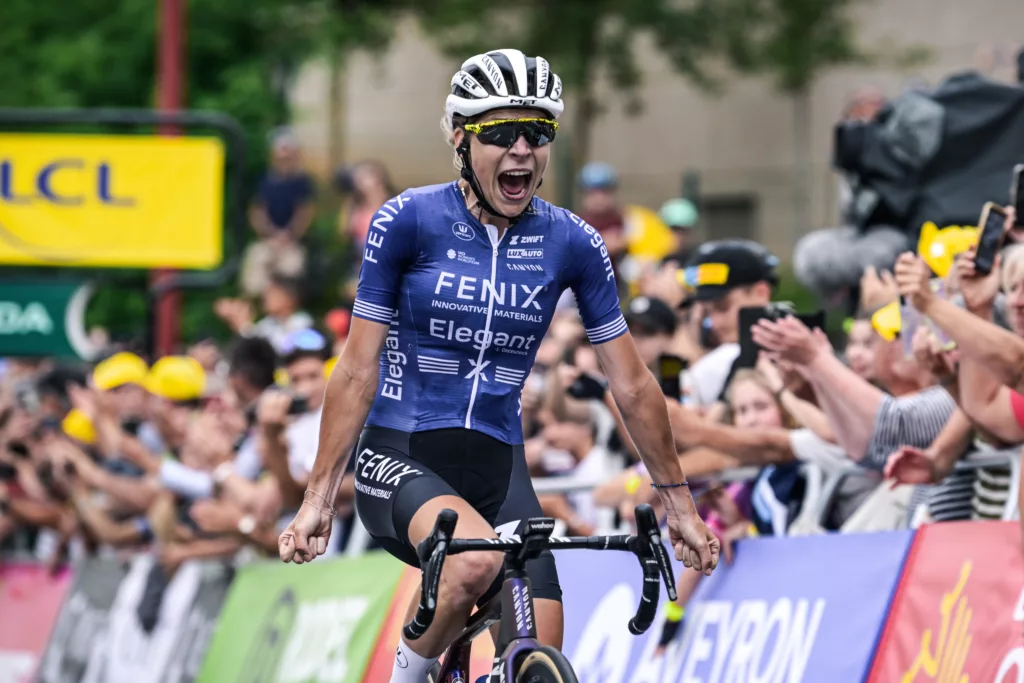
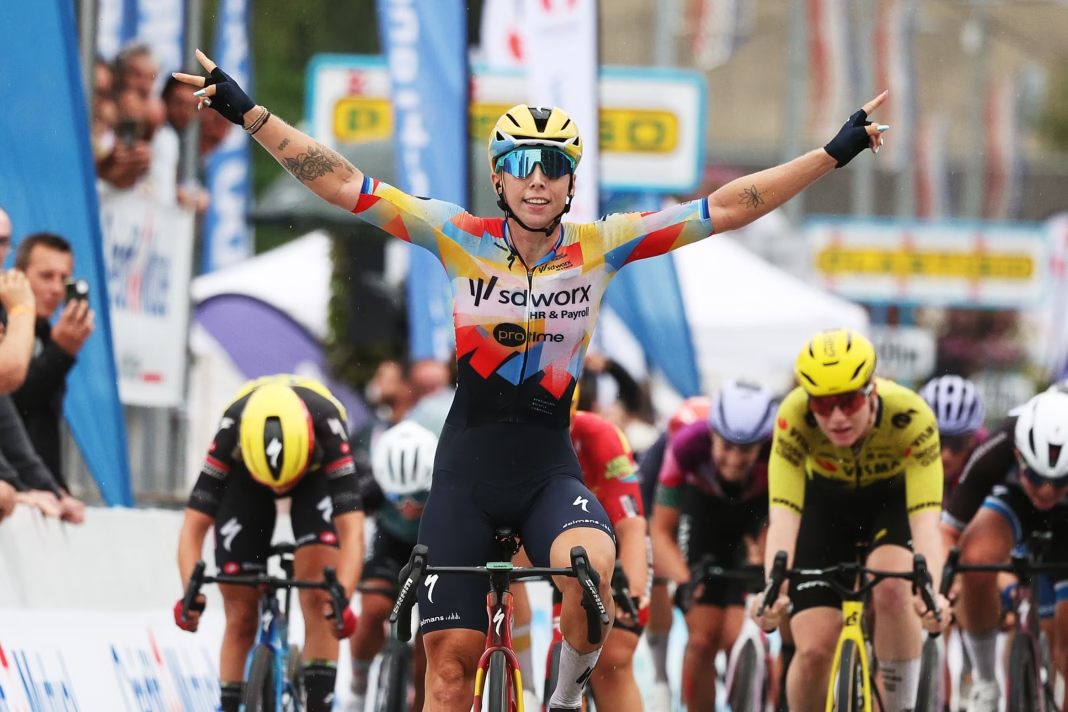
In 2023, Kastelijn won Stage 4 in Rodez after attacking from the breakaway and riding alone through the final 20km. She also wore the polka dot jersey during that edition.
“On that day, I just knew that I was so strong,” she said. “With 20K to go, I was like, ‘Okay, let’s go now,’ and nobody could follow me.”
“Winning a stage in the Tour, it’s the biggest you can do, I think.”
The next ambition is broader.
Rather than targeting one stage or the mountains classification, Kastelijn wants to see how far she can progress as an overall rider.
Human Powered Health’s performance structure was part of the attraction
The team’s Performance Lab also played an important role in Kastelijn’s decision.
She has already spent considerable time working on nutrition and understanding how her body responds to training and racing, but believes Human Powered Health can add a more scientific layer to that process.
“I’m really interested in health,” she said. “I’ve already learned a lot about my body and health from my nutritionist.”
“But the science they have there, I never had before, so it’s going to be new for me.”
For a rider attempting to become more consistent over multi-day races, that support could become particularly significant.
Stage-race progression is not simply about increasing climbing power. Recovery, fuelling and managing repeated efforts across several days can be equally decisive.
Kastelijn leaves Fenix-Premier Tech ready for something different
The transfer brings an end to an important period of Kastelijn’s career with Fenix-Premier Tech.
She leaves with significant successes behind her, most notably the Tour de France Femmes stage victory and her development into one of the stronger climbers and stage hunters in the peloton.
“I’m very grateful for everything Fenix-Premier Tech did for me,” she said. “I’m very thankful for the brothers Roodhooft and my trainer, but I’m now ready for this next step.”
The move comes at an interesting point in her career.
At 29, Kastelijn has extensive experience but should still have several strong seasons ahead. Human Powered Health are effectively betting that the best version of her may arrive after she has already accumulated years of top-level racing.
-
 Photo Credit: Getty
Cyclo-cross helped build Kastelijn’s versatility
Kastelijn’s background also helps explain why she has always been comfortable in difficult, unpredictable races.
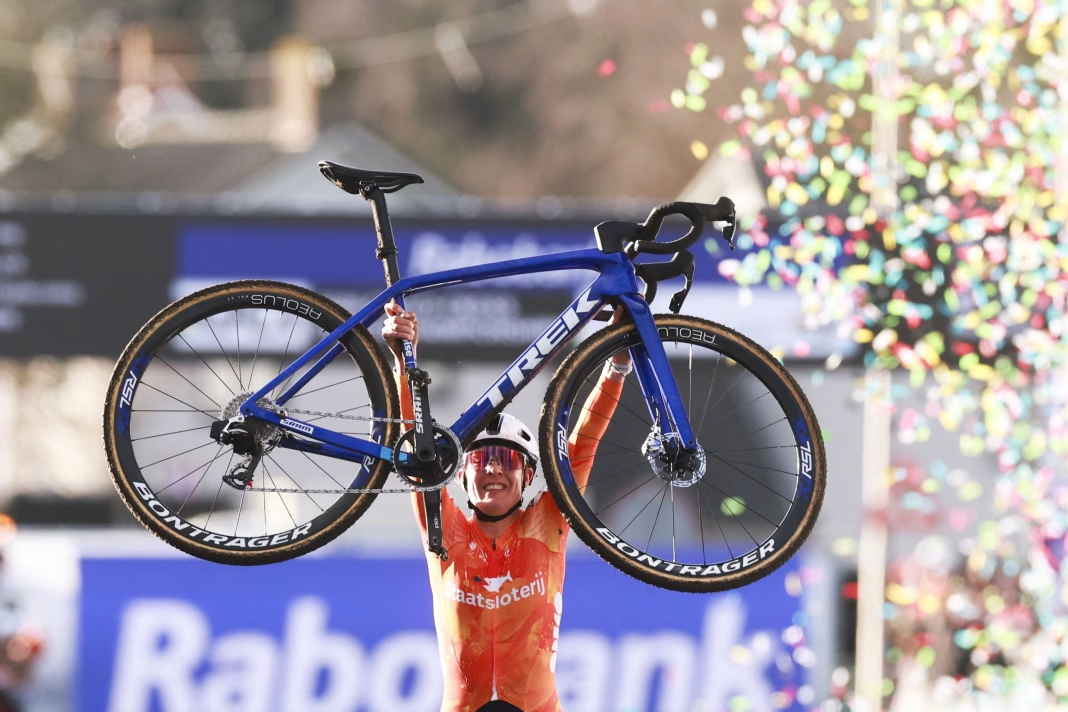
She began cycling at eight years old and developed through cyclo-cross, eventually winning six professional races and taking the European title in 2019.
That discipline helped produce the bike handling, repeated acceleration and resilience that later translated successfully to the road.
Her career has gradually shifted towards road racing, but the characteristics built through cyclo-cross remain visible whenever races become technical or attritional.
That versatility should continue to make her valuable even as Human Powered Health place greater emphasis on GC.
Human Powered Health continue an ambitious 2027 rebuild
Kastelijn is another significant addition to a Human Powered Health roster that has already been strengthened heavily for 2027.
The team have been adding both sprint speed and Classics depth, while Kastelijn gives them something different: a rider they believe can increasingly take responsibility in general classifications.
Human Powered Health have already confirmed several major additions for next season, including Marta Lach, Amalie Dideriksen, Letizia Paternoster and Quinty Ton.
That recruitment drive has come alongside the team’s wider long-term commitment, with Human Powered Health extending its backing through 2028 as the programme targets a place among the strongest teams in women’s cycling.
De Jonckere sees Kastelijn as central to that next step.
“We believe she can make a significant difference to our results,” he said. “But also to the mentality and ambition of the team.”
The move will also be tracked in ProCyclingUK’s women’s cycling transfers hub.
Human Powered Health are not simply trying to accumulate stronger individual riders. They are attempting to build a roster capable of influencing more race types and taking responsibility deeper into the biggest stage races.
Kastelijn’s task will be to turn the promise shown in Burgos into something repeatable.
If she can do that, her move could give Human Powered Health the stage-race leader they have been looking for.

