
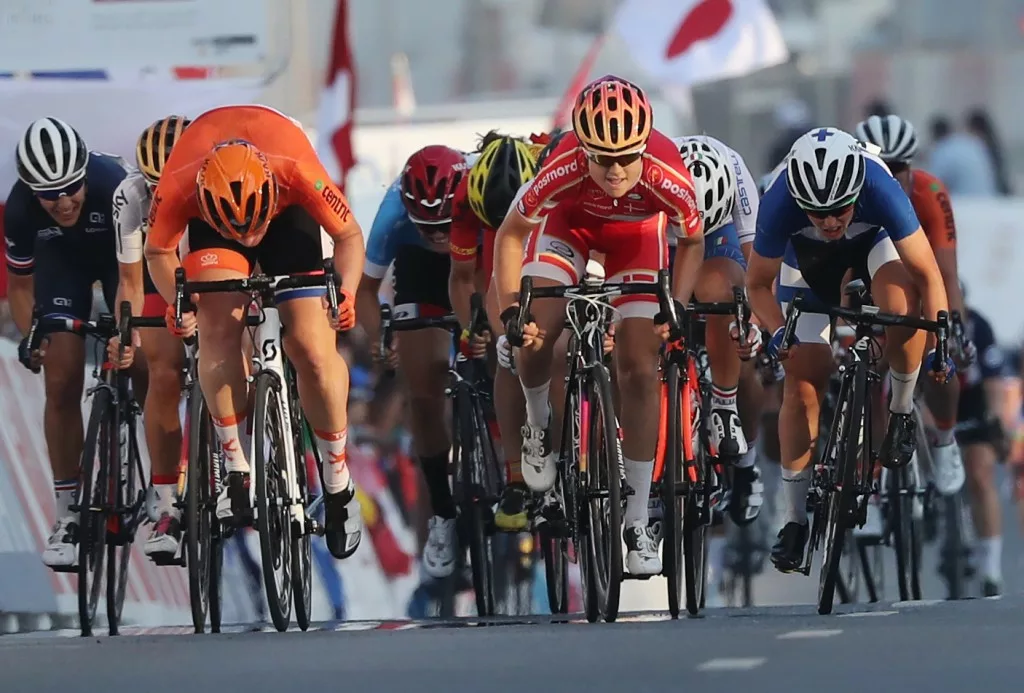
Cycling rarely moves in straight lines. It evolves in waves shaped by dominance, disruption, and reinvention. As the 2026 season approaches, the sport feels poised for another shift. Team refreshes, unpredictable racing, and a sharper alignment between men’s and women’s WorldTour structures all suggest a new phase is developing.
To understand where cycling might be heading, it helps to look back 10 and 20 years. The contrast between 2006, 2016, and the sport’s current landscape reveals how deeply the modern peloton is shaped by the eras that came before it. Each period left its own imprint, from tactics to technology to the very culture of racing.
What cycling looked like in 2006
The 2006 season remains one of the most turbulent and revealing chapters in recent cycling history. It sat in the immediate wake of the Lance Armstrong era and reflected a peloton struggling to redefine itself. Leadership structures were unstable, and teams operated without the familiar gravitational pull of a dominant Tour de France figure.
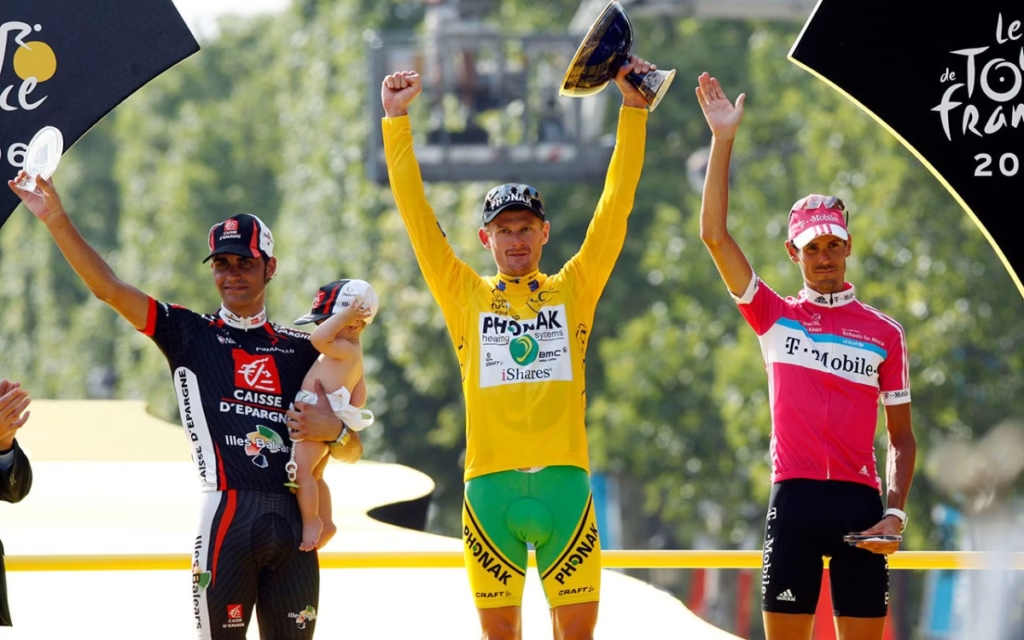
The Tour de France itself was defined by a narrative that seemed impossible even as it unfolded. Floyd Landis’s ride on stage 17 from Saint-Jean-de-Maurienne to Morzine became the defining moment of the race. After losing more than eight minutes the previous day, he launched a long-range attack on the Col des Saisies, pressed on alone across the Col de la Colombière and the Joux-Plane, and won the stage with one of the most audacious performances the Tour had seen in decades. His victory, and later disqualification for doping ahead of that long-range attack, became symbolic of an entire era’s contradictions. It also reflected the tactical freedom of the time: a solo raid from a distance could still overturn a Grand Tour.
Elsewhere, the classics season had similar unpredictability. Tom Boonen won another Flanders title with raw power and instinctive timing, while Paris-Roubaix went to Fabian Cancellara, whose solo attack in the final 20 kilometres showcased the emerging influence of stronger equipment but still relied heavily on intuition and fearlessness. These races displayed a peloton in which tactical structures existed, but riders still won by seizing the moment rather than following a rigid plan.
 Photo Credit: Getty
In women’s cycling, 2006 featured standout performances from Nicole Cooke, who won La Flèche Wallonne Féminine and dominated the season with a combination of aggression and tactical intelligence. Marianne Vos burst onto the scene as a 19-year-old, winning the World Championship road race and signalling the arrival of a generation that would reshape the sport. The talent existed, but the structures to support it were far from what they are today.
Racing during this era was defined by instinct. Power meters were present but not yet a central tactical tool. Equipment was improving but still relatively raw. Breakaways carried a genuine threat, and riders were encouraged to win through feel rather than formula. In many ways, 2006 represented the final years of cycling’s instinct-first approach.
What cycling looked like in 2016
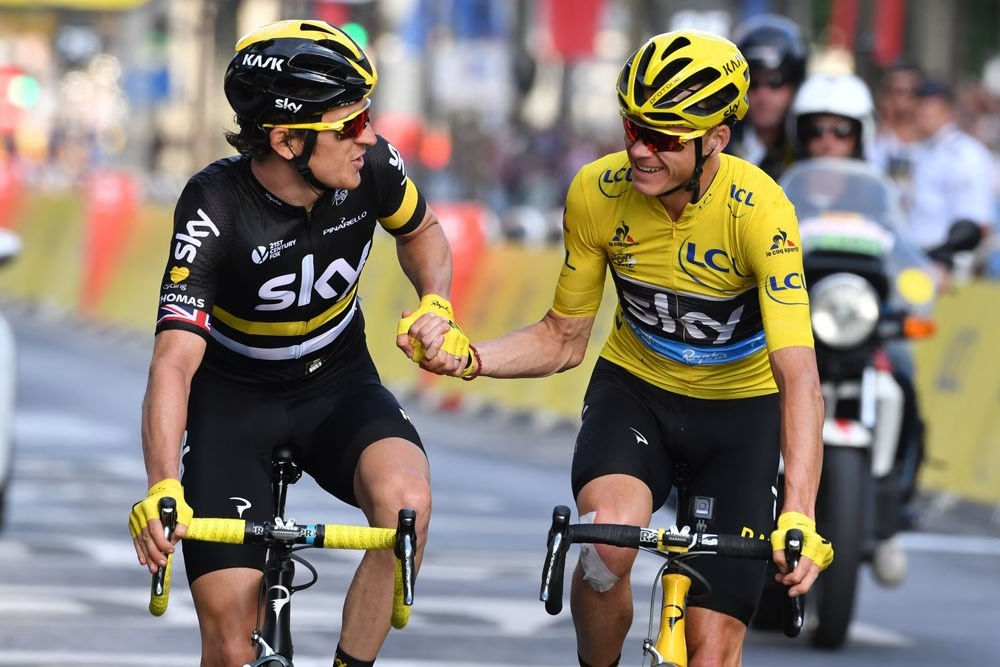
A decade later, by 2016, the sport had changed completely. Men’s racing was shaped by the peak of the Team Sky era, where altitude camps, tightly controlled pacing, and meticulous race planning defined stage racing. Chris Froome’s Tour de France win reflected this structure. Every mountain stage was approached with a plan, every climb paced by wattage, and every tactical decision evaluated through the lens of performance modelling.
Other teams were forced to adapt or be left behind. Nutrition and recovery strategies improved, aerodynamics became central to equipment development, and data literacy became essential for both riders and staff. Racing was cleaner and more predictable, but sometimes lacked the spontaneity of the previous decade.
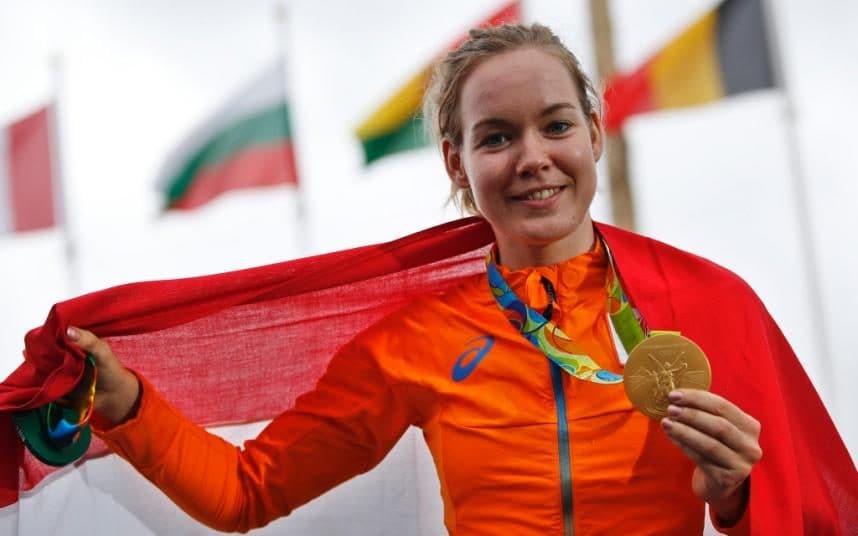
Women’s cycling in 2016 was on the brink of its modern transformation. Anna van der Breggen, Lizzie Deignan, and Megan Guarnier were reshaping the tactical sophistication of major races, while Vos, still recovering from injury, symbolised the sport’s growing professionalism. Trade teams were improving structurally, and calendar depth was expanding. Live coverage became more consistent, allowing stories and rivalries to develop across the full season.
Technological progress accelerated as bikes became more integrated, aerodynamic, and specialised. Tyre widths increased due to new research on rolling resistance, and marginal gains became a philosophy adopted across the peloton.
If 2006 was the era of instinct, 2016 was the era of control.
 Photo Credit: Getty
How those eras shaped the road to 2026
The modern peloton stepping into 2026 carries elements of both earlier periods. The rigid control of the 2010s sparked a generational backlash. Today’s top riders refuse to be confined by predictable patterns. They launch long-range attacks reminiscent of Landis, Boonen, or Cancellara, but with the physiological foundation provided by modern training.
The men’s peloton is deeper and more unpredictable than it was in 2016. Young riders graduate into WorldTour environments already accustomed to data analysis, international travel, and structured preparation. The result is a field that is stronger at every level but also more tactically expressive.
Women’s cycling has experienced an even greater transformation. The growth since 2016 has been exponential. WorldTour teams now offer multi-year development pathways, races have consistent broadcast platforms, and competitive depth has increased dramatically. Attacks form earlier, tactical variety is richer, and outcomes are less predictable. The seeds planted by riders like Cooke and Vos in the mid-2000s and nurtured through the 2010s have now fully matured.
Technologically, the sport has reached a phase of refinement rather than revolution. Disc-only platforms are stable, tyre widths sit around 28 to 30 mm, and frames push against regulatory limits. Equipment is no longer the differentiator it once was. Racing, legs, and tactics determine outcomes more than technology.
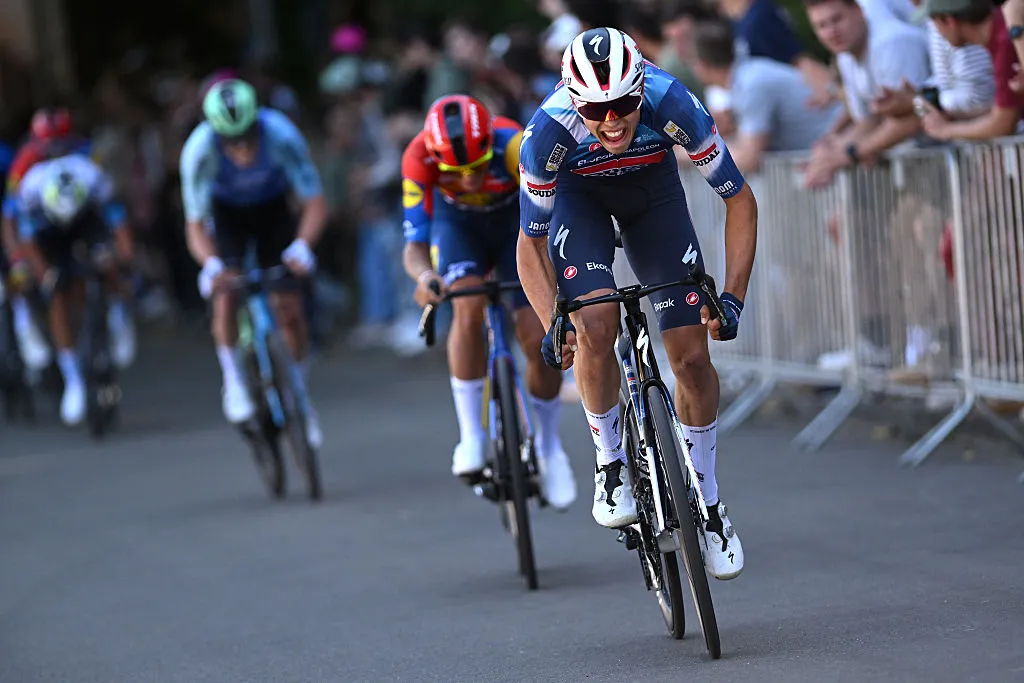 Photo Credit: Getty
What this means for 2026
Looking back 10 and 20 years provides clarity about the dynamics shaping 2026. The sport is moving into an era that blends the expressive aggression of 2006 with the refined preparation of 2016. Riders are encouraged to attack early and take risks, but they do so with a scientific understanding that earlier generations lacked.
Women’s cycling enters 2026 as a global, strategically sophisticated environment, almost unrecognisable from 2006 and far more professional than in 2016.
The technological arms race has slowed, shifting emphasis to performance rather than equipment. Teams remain highly advanced, but control no longer guarantees victory. Racing is more unpredictable, more open, and often more dramatic.
Cycling in 2026 is neither a nostalgia-driven return to the past nor a continuation of the tightly structured 2010s. It is something hybrid: instinctive yet informed, scientific yet expressive, built on the lessons of 20 years yet unafraid to overturn them.

