
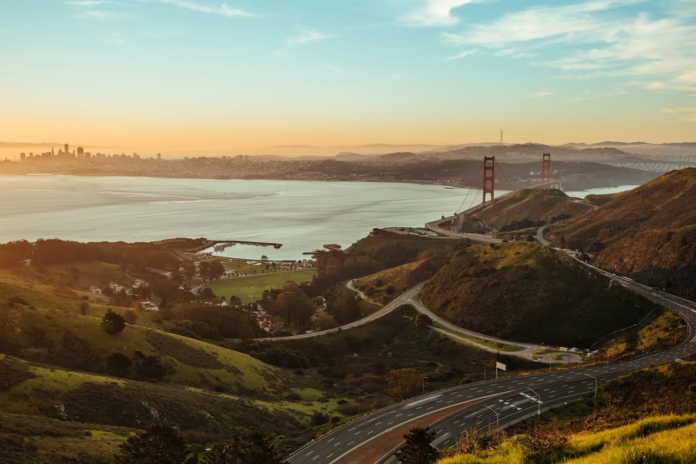
There are cycling places that feel earned slowly, one climb, one café stop, one familiar road at a time. Then there is the San Francisco Bay Area, which tends to announce itself immediately. The first glimpse of the Golden Gate Bridge, the first cold gust off the Pacific, the first time the road pitches up into the Marin Headlands and the city suddenly drops away behind you, it all feels bigger than ordinary riding. This is not subtle cycling country. It is dramatic, exposed and full of roads that make you want to keep turning the pedals just to see what the next corner reveals.
For visiting riders, the obvious image is Hawk Hill above the bridge, and that image earns its reputation. The Marin Headlands give you one of those rare cycling experiences that feels iconic and immediate at the same time. You do not need a long transfer, a hidden local climb or a week of discovery before the place starts to work. The bridge, the road, the bay and the skyline do the job almost instantly.
But the Bay Area works so well for a cycling trip because it is not just one postcard climb. It is a whole riding culture spread across very different terrain. San Francisco gives you steep urban ramps, the bridge and the quick launch into Marin. The Headlands give you views, wind and short sharp climbing. Move farther north and the roads open into Mount Tamalpais, Alpine Dam, Fairfax, redwood shade and long, more settled efforts through one of the most storied cycling counties in America.
That is what makes it worth travelling for. This is not only a place to ride through once and photograph. It is a place where the riding keeps changing shape, where one day can be all cliffside exposure and another can be woodland quiet, and where the cycling culture feels real enough to support much more than a single famous loop. If you are building a longer California trip, it also sits well alongside other west-coast style destinations, much as Asheville and the Blue Ridge Parkway or Queenstown and Central Otago offer different versions of landscape-led riding.
Why the Bay Area hits so hard on a bike
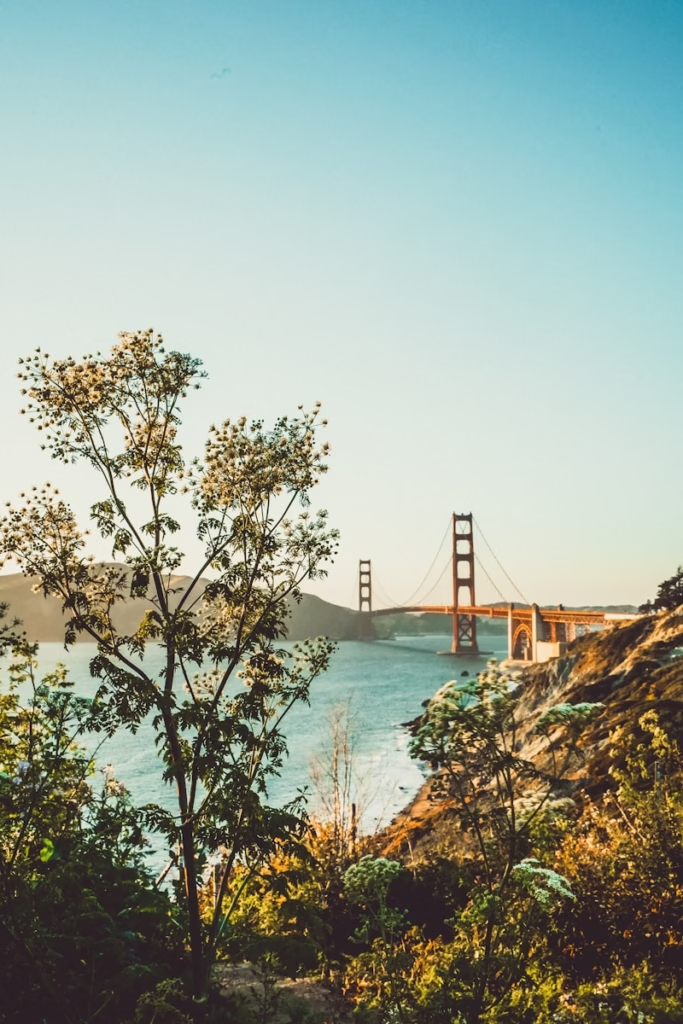
The Bay Area is one of those places where geography does most of the work. Water, fog, cliffs, redwoods, ridgelines and sudden gradients sit very close together, which means a ride changes character quickly. You can leave the city, cross the Golden Gate Bridge, turn into the Headlands and within minutes feel as if you have left urban America entirely. Then, later in the same day, you can be back among cafés and traffic with salt drying on your arms and the skyline still hanging in the background.
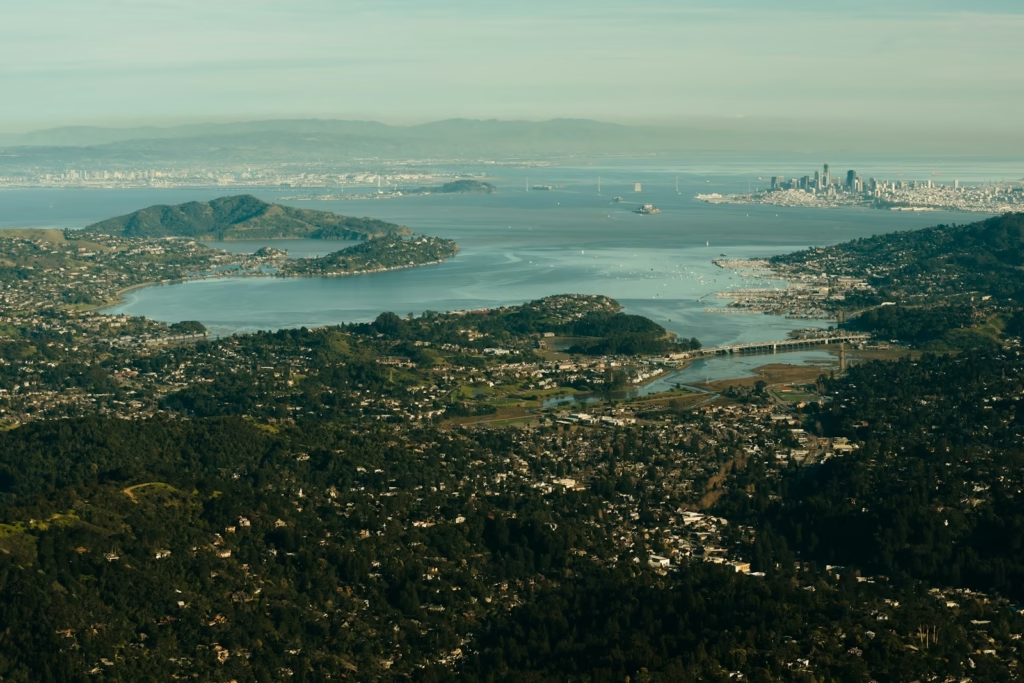
That constant change is the real draw. The Headlands are exposed and cinematic. Mount Tam is more wooded and expansive. Alpine Dam brings quieter roads and a deeper Marin feeling, running through towns and into the watershed and redwood-lined sections that make the county feel much bigger than it first appears on a map.
For a cycling trip, that matters more than simple route stats. You are not coming here only to tick off one climb. You are coming because the area can give you several different days without forcing repetition. One ride can be a short, sharp bridge and Headlands loop. Another can be a long Mount Tam day. Another can head towards Alpine Dam and back through Fairfax. The region keeps giving you different textures of effort.
The Marin Headlands are the quickest route to the Bay Area magic
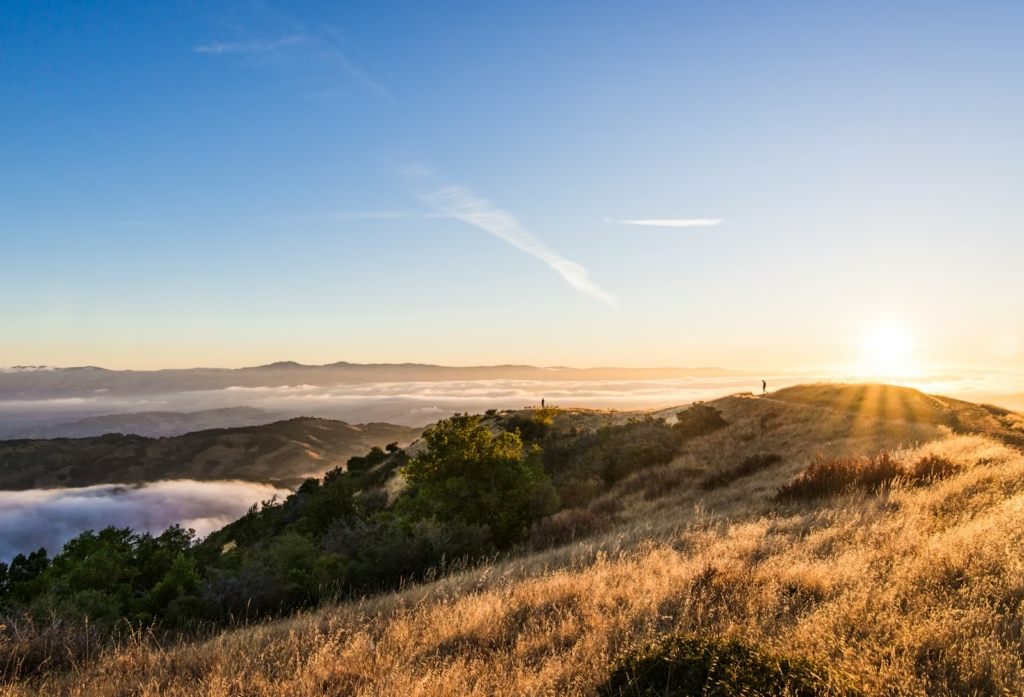
If you only have one ride in the Bay Area, the Marin Headlands are the clearest answer. They deliver the thing people imagine when they think of cycling north of San Francisco: the bridge behind you, the road curling up into ochre and green hills, and the city appearing across the water in a way that feels almost too perfectly arranged.
The classic rhythm is simple enough. Cross the Golden Gate Bridge, start climbing on Conzelman Road, and let the view keep widening behind you. Hawk Hill is the famous target, but the whole upper Headlands section matters because the landscape opens and folds constantly. One bend gives you the bridge. The next gives you the Pacific. Another gives you the city spread out under a wash of light or fog.
What makes the Headlands so effective for visitors is that the reward arrives quickly. You do not need a five-hour ride before the landscape starts giving something back. That makes it ideal after travel, ideal for a first morning in town, and ideal for anyone trying to fit memorable riding into a shorter trip.
Hawk Hill is the famous one, but the roads around it make the day
Hawk Hill gets the photographs, but the roads around it are what turn the view into a real ride. Conzelman Road is the obvious route upward, and Bunker Road gives the Headlands more depth once you start dropping and looping around. Together they create a ride that feels far richer than its distance suggests.
That matters because the Headlands should be ridden as more than a photo stop. The road shapes are part of the appeal: quick rises, exposed bends, fast descents and that constant visual relationship with the bridge, the bay and the city. It is short-form cycling, in a way. Not shallow, but compressed. Everything arrives close together.
There is also a practical note here. Access and closures can change around the bridge and lower Conzelman area, so it is worth checking current park notices before you ride, especially if you are trying to build a very specific loop. Like any popular cycling destination, this is at its best when you let a little route flexibility into the day rather than forcing it too rigidly.
Mount Tam and Alpine Dam give Marin its deeper character
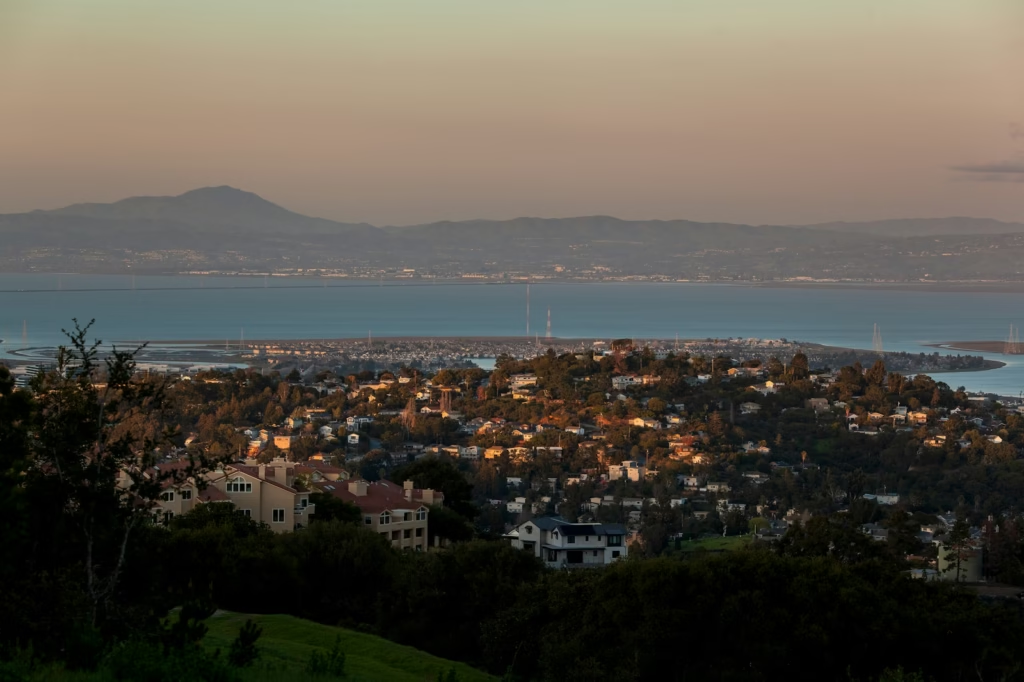
The Headlands are the immediate hit. Mount Tamalpais and Alpine Dam are where the region starts to feel deeper. This is the part of Marin that has shaped the county’s cycling reputation for decades: longer climbs, redwood shade, reservoirs, small towns with proper post-ride life, and roads that feel made for riders even when they are hard.
The Alpine Dam loop is one of the clearest examples. It climbs through the Mount Tam watershed past lakes, woodland and long quieter stretches that make the county feel less like an extension of San Francisco and more like a cycling world in its own right. It is the sort of ride that settles as it goes on. The city feeling disappears, the traffic drops, and the day starts to revolve around the next climb and the next change of light through the trees.
Mount Tam itself is the larger presence behind all this. It gives Marin its scale and its gravity. The Bay Area has many different ways to ride, but once you are on Tam roads the trip starts to feel less like a city add-on and more like a proper cycling destination in its own right. If your taste in travel riding leans towards places where scenery and serious effort sit naturally together, it belongs in the same wider conversation as Andermatt and the central Swiss passes or Sierra Nevada and Granada, even if the landscape and scale are very different.
The Bay Area is good because the riding days can stay compact
One of the easiest mistakes with a destination like this is to assume that every great ride must be epic. The Bay Area resists that in a useful way. You can build a very memorable day without committing to huge mileage. Bridge, Headlands and back can be enough. A Fairfax to Alpine Dam day can feel complete without being vast. That compactness is one of the region’s great strengths.
It also makes the area very good for mixed trips. If you are travelling with someone who is not riding, or if you want the journey to feel like more than a training camp, the Bay cooperates. San Francisco can absorb afternoons and evenings easily. Marin’s towns, especially around Mill Valley and Fairfax, give rides a softer landing. You can ride hard in the morning and still have a proper day left afterwards.
That flexibility is part of why the Bay Area works so well for visitors. It gives you famous roads, but it does not force you into one model of travel. Short trip, long weekend, work trip with an early-morning ride, or a full cycling-focused week, it can hold all of them.
You do need to respect the roads
This is not a place to romanticise too blindly. The Bay Area is spectacular, but it is still a real road environment. Wind can be strong. Fog can change visibility and temperature quickly. Headlands roads are exposed. Some approach roads are busy. The bridge itself can be crowded depending on time and tourist flow. Marin roads can be narrow in places, and weekend popularity means you will often be sharing the space with plenty of other cyclists.
That does not reduce the appeal. It just means the area works best for riders who are comfortable in real conditions rather than polished resort-style riding. Early starts help. Layering matters. A bit of route planning goes a long way. The same landscape that makes the area beautiful also creates quick weather changes and moments when the day feels much colder or more exposed than the postcard version suggested.
It is also worth watching current trail and road access if you are mixing road and dirt. The area keeps evolving for cyclists, but that also means some sections may not ride exactly the way an older route file suggests. A bit of pragmatism helps here. The Bay rewards riders who plan just enough without trying to over-control every turn.
Who this destination suits best
The Bay Area and Marin Headlands suit riders who like visual drama, varied road character and a mixture of effort styles. If your ideal trip is one giant climb after another in remote mountain country, there are more purely alpine places. If you like riding that shifts between city edge, ocean air, military roads, redwoods, reservoirs and classic Californian climbs, this is very hard to beat.
It also suits riders who enjoy cycling culture rather than just cycling terrain. Marin still carries enormous symbolic weight in American riding. The county’s long relationship with bikes helps keep that identity alive, and for visitors there is a certain pleasure in feeling that history under the ride rather than only reading about it afterwards.
Most of all, it suits riders who want memorable days rather than tidy stats. The Bay Area tends to stay in the mind as images and sensations first: the bridge half in mist, the snap of cold wind at the top of Hawk Hill, the darker quiet of redwood sections inland, the late-afternoon return to the city with tired legs and the whole bay slowly brightening under you.
-
 Photo Credit: Gaetan Flamme


Practical information
Location
The riding centres on San Francisco, the Golden Gate Bridge, the Marin Headlands and wider Marin County, including Mill Valley, Fairfax, Alpine Dam and Mount Tamalpais. The Headlands sit immediately north of the bridge, which is one reason the area feels so instantly accessible for visiting riders.
Riding
The classic first ride is bridge to Hawk Hill and the Marin Headlands. Beyond that, signature Marin options include the Alpine Dam loop, Mount Tam routes and coastal variations that link climbing, descents and watershed roads. This is a region that works best when you combine an obvious first ride with at least one deeper inland day.
When to go
Conditions can be good across much of the year, but you should expect variation. Fog, wind and temperature swings are part of the Bay Area riding experience. Autumn and spring often offer especially good balance, while summer can still feel surprisingly cool around the bridge and Headlands because of marine air.
Accommodation
Staying in San Francisco gives easy access to the bridge and city life. Staying in Marin, especially around Mill Valley, Sausalito or Fairfax, can make the riding feel calmer and reduce the urban approach. The right choice depends on whether the trip is primarily about riding or a wider city-and-cycling mix.
Watch-outs
Check current park and road notices before riding the Headlands, especially around Conzelman access and bridge-adjacent areas. Traffic, fog, wind and tourist volume can all change the feel of a route quickly. It is a destination that rewards preparation, but not overcomplication.
Why this part of California belongs on a cyclist’s list
The San Francisco Bay Area and Marin Headlands belong on a cyclist’s list because very few places give so much so quickly. The iconic view is real. The roads under it are real too. And beyond the famous first climb there is enough deeper riding in Marin to keep the trip from becoming a novelty.
That is the real strength of the destination. It gives you one of cycling’s great visual openings, then backs it up with proper riding. Hawk Hill, Bunker Road, Alpine Dam, Mount Tam, Fairfax, coastal air, redwood shade, all of it feels connected rather than scattered. You are not visiting one famous photo spot. You are stepping into a region that understands what makes a bike ride stay with someone.
For a travelling cyclist, that is enough to make the Bay Area more than a famous backdrop. It becomes a place you can actually ride into, through and beyond, which is the only test that really matters.

