
Vuelta a Burgos Feminas has become one of the key fixtures in the Spanish women’s calendar, but it is still a relatively young race by the standards of the sport. The women’s event began in 2015 as a national-level race, later moved up through UCI classification, and has been part of the Women’s WorldTour since 2021.
That timeline matters because it mirrors the wider growth of modern women’s cycling. Vuelta a Burgos Feminas did not emerge as a long-established stage race with decades of mythology behind it. It grew alongside the sport’s more recent expansion, as Spain developed a stronger block of major women’s races that now includes Itzulia Women and La Vuelta Femenina.
 Photo Credit: Vuelta a Burgos
The early years: a national race finding its place
The race began in 2015, when Belén López won the inaugural edition. Mavi García took victory in 2016, Eider Merino won in 2017 and Beatriu Gómez followed in 2018. Those first editions were held at national level rather than as part of the top international calendar, but they established the foundations of what the race would become.
Those early winners also tell you something about the race’s first identity. Burgos was immediately useful for Spanish riders and domestic teams, giving them a meaningful home-stage race before the event grew into a much larger target for the full international peloton.
The jump to international level
In 2019, the race stepped up to UCI 2.1 status. That was an important moment because it moved Vuelta a Burgos Feminas from a national event into a more serious international stage race. Stine Borgli won that first internationally classified edition, which gave the race a different kind of visibility straight away.
The next year should have been an important stage in that development, but the 2020 edition was cancelled because of the COVID-19 pandemic. That interrupted the race’s momentum, though in practice it only delayed its rise rather than stopping it.
Women’s WorldTour status changed the race
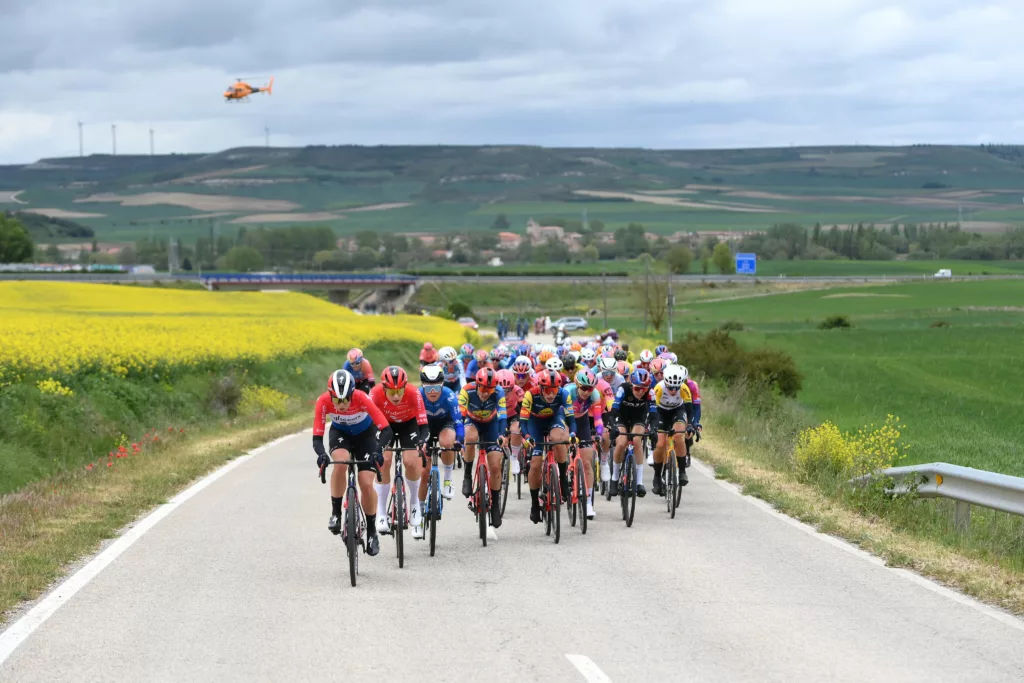
The biggest step came in 2021, when Vuelta a Burgos Feminas joined the Women’s WorldTour. That moved it into the top tier of women’s stage racing and immediately changed its place in the season. It was no longer simply a useful Spanish race. It had become one of the most important stage races in the sport outside the Grand Tour-level spotlight.
Anna van der Breggen won that first Women’s WorldTour edition in 2021, which gave the new era of the race instant credibility. Juliette Labous then won in 2022, before Demi Vollering took the overall title in 2023. That sequence of winners helped define Burgos as a race for serious stage-race talent rather than a transitional calendar stop.
Recent winners have strengthened its identity
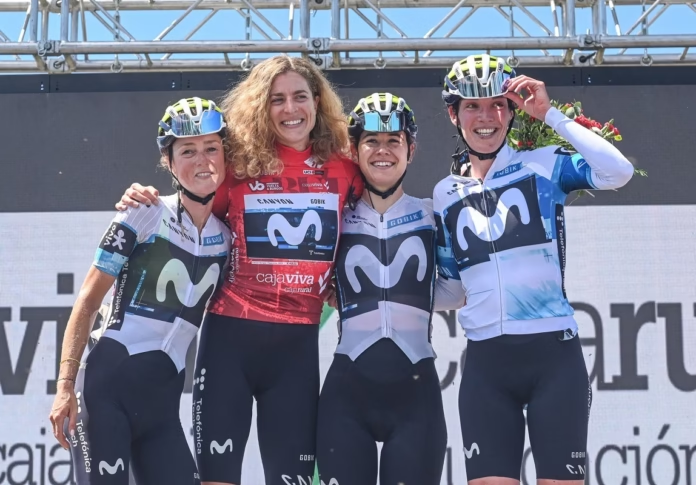
Elisa Longo Borghini won the 2024 edition, adding another major name to the honours list and reinforcing the race’s growing status in the women’s calendar. In 2025, Marlen Reusser won the overall after taking control of the race on the queen stage to Picón Blanco and then sealing the title in the final time trial.
The 2025 edition was especially revealing because it showed how the race continues to evolve. That year’s route included an individual time trial for the first time, which added another dimension to the overall battle and underlined that Vuelta a Burgos Feminas is no longer a fixed-format race. It is still growing into its own shape.

Why the race matters now
Vuelta a Burgos Feminas matters because it fills an important place in the women’s season. It comes in May, sits inside a strong Spanish racing block, and usually offers a combination of sprint opportunities, climbing stages and enough general classification pressure to attract serious contenders.
It also has a useful sporting identity. Burgos is not only about one summit finish or one time trial. It tends to test several kinds of rider across four days, which is one reason its winners include Labous, Vollering, Longo Borghini and Reusser rather than one narrow rider type. That range gives the race real value in the calendar.
It also sits naturally within a broader Spanish run of races that helps shape the middle of the season. Alongside La Vuelta Femenina, Itzulia Women and races like Clásica Féminas de Navarra, it gives Spain a much stronger and more coherent role in modern women’s racing than it once had.
-
 Photo Credit: A.S.O./Billy Ceusters

Past winners of Vuelta a Burgos Feminas
- 2015 – Belén López
- 2016 – Mavi García
- 2017 – Eider Merino
- 2018 – Beatriu Gómez
- 2019 – Stine Borgli
- 2020 – cancelled
- 2021 – Anna van der Breggen
- 2022 – Juliette Labous
- 2023 – Demi Vollering
- 2024 – Elisa Longo Borghini
- 2025 – Marlen Reusser
How Vuelta a Burgos Feminas should be remembered so far
Vuelta a Burgos Feminas is still young enough to be evolving, but that is part of its interest. It began as a Spanish national race, grew quickly into an international event, and is now firmly established as a Women’s WorldTour stage race. That is a rapid rise by any standard.
Its history so far is really the history of modern women’s cycling in miniature: fast growth, stronger fields, bigger status and a route identity that keeps expanding. It may not yet have the historical weight of the Giro d’Italia Women or the modern visibility of the Tour de France Femmes, but it has already become one of the races that helps shape the season rather than merely sit inside it.
That is probably the clearest way to read its short history. Vuelta a Burgos Feminas is not important because it is old. It is important because it arrived at the right time, kept growing, and now sits at the centre of a much stronger modern calendar.

