
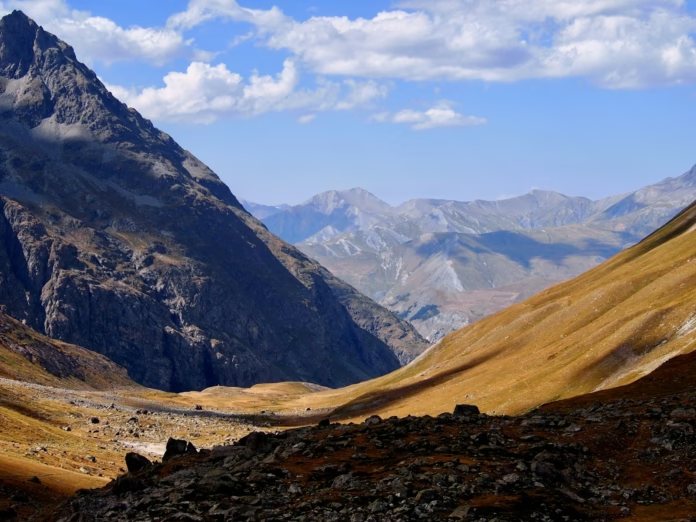
Briançon feels like a cycling town before you have even unpacked the bike. The road rises almost everywhere, the mountains sit close enough to make the sky feel smaller, and the town itself has that slightly weathered Alpine confidence of somewhere that has seen riders arrive with grand plans and leave with quiet legs.
It is not a soft introduction to the Alps. Briançon and Serre-Chevalier sit high, open and exposed, with the kind of thin mountain light that makes every ridge look sharper than it should. In the morning, the air can be cool even when the valley is already bright. By afternoon, the stone walls radiate heat, the cafés fill with walkers and cyclists, and the high roads above the Guisane valley begin to glow in that dry southern-Alps way, all pale rock, dark pine and distant snow.
As a cycling base, it is hard to overstate how much is packed into a small area. From Briançon, you can ride towards the Col d’Izoard, the Col du Galibier, the Col du Lautaret, the Col du Granon, Montgenèvre, the Vallée de la Clarée and the high roads towards Italy. Serre-Chevalier spreads along the valley through villages such as Chantemerle, Villeneuve and Le Monêtier-les-Bains, giving the whole place a useful rhythm. You can stay in town, roll out of the door, and be climbing towards one of the most famous roads in cycling history before your legs have fully accepted what is happening.
For riders building an Alpine trip, this is one of the great advantages of Briançon. It does not feel like a single-climb destination. It feels like a high-mountain workshop, where each day asks a slightly different question. One ride is long and historic. Another is steep and exposed. Another is gentler, following the valley road towards the Lautaret before turning into something much more serious. The climbs are famous, but the place is not only about ticking names from a list. The atmosphere comes from how close everything feels, how quickly the roads leave the ordinary behind, and how naturally the landscape turns a training ride into something more memorable.
Why Briançon and Serre-Chevalier work so well as a cycling base
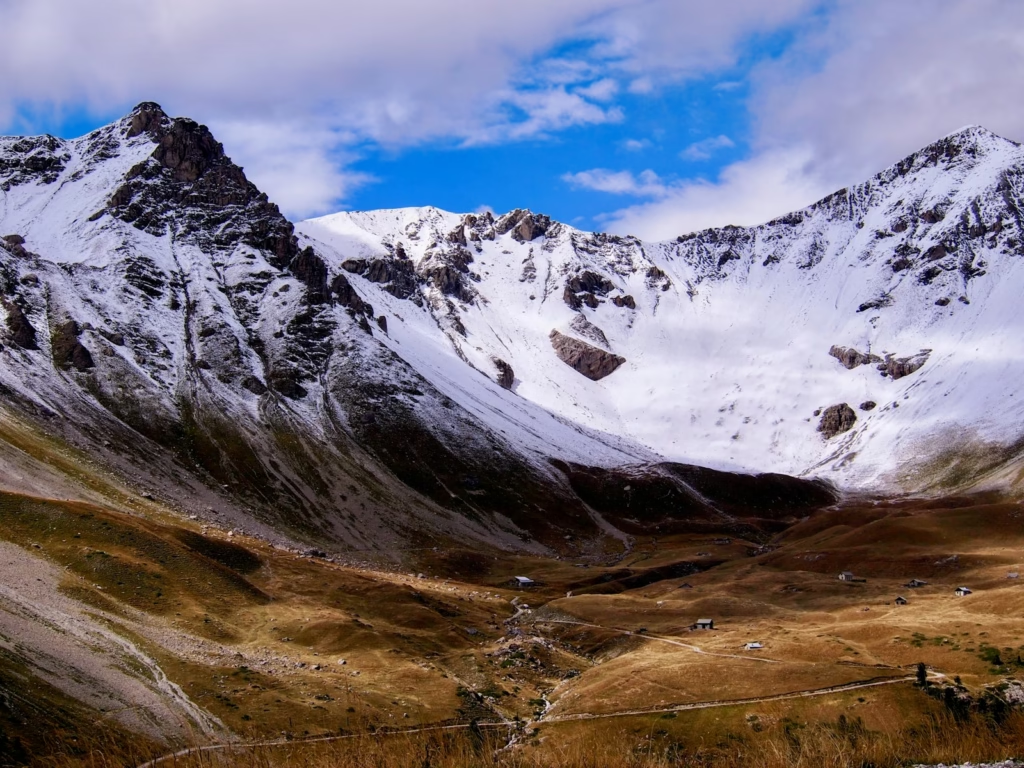
Briançon is one of those bases that gives a rider options without asking for much compromise. You can ride from the door, choose between giant Tour de France cols or smaller valley loops, and adapt the day depending on weather, legs and ambition. That flexibility is important in the high Alps. Plans made over coffee in the morning can look very different once the wind is blowing near 2,000 metres.
The altitude also shapes the riding. Briançon sits at around 1,300 metres, which means even a “valley” day begins higher than many mountain towns finish. The air is clean and dry, the sun can feel strong, and the temperature can change quickly once you leave the shelter of town. On a good day, that gives the riding a clarity that is hard to match. Colours sharpen. The sound of tyres on tarmac seems louder. The smell of pine, hot dust and meadow grass follows you up the road.
Serre-Chevalier adds a slightly more relaxed layer to the base. The villages along the valley feel more resort-like than Briançon’s fortified old town, but that can be useful. There are cafés, bakeries, bike-friendly hotels, ski-resort infrastructure and easier access to the roads towards the Lautaret and Galibier. Staying further up the valley can shorten the approach to some of the bigger northern routes, while Briançon gives a better town feel, more evening life and immediate access towards the Izoard, Montgenèvre and Italy.
For a wider comparison with other cycling destinations, it fits naturally alongside classic high-mountain bases covered in ProCyclingUK’s cycling travel guides. It has the altitude and grandeur of the Alps, but with a drier, brighter southern feel than many of the wetter northern valleys.
The Col d’Izoard from Briançon
The Col d’Izoard is the climb that gives Briançon much of its cycling mythology. From the town, the northern side climbs steadily towards Cervières before the road becomes more serious, curling higher into a landscape that grows increasingly bare and dramatic. It is a climb that changes character as it rises. The lower slopes feel like a proper Alpine road, with trees, villages and manageable gradients. Higher up, it becomes something more exposed and cinematic.
The final kilometres towards the summit are where the Izoard begins to feel like the Izoard. The road narrows in spirit, even when it does not physically narrow much, and the mountains begin to crowd the view. The gradient is not always savage, but it has enough weight to make you settle into the effort. You climb with the sense that the road has been doing this to cyclists for generations.
What makes the Izoard special is not only the summit sign or the Tour de France history. It is the mood. The climb has a starkness that lingers. On a hot day, the pale rock and open slopes can make the upper section feel almost bleached by the sun. On a cooler day, the same road can feel remote and slightly severe. Either way, it has presence.
The descent back towards Briançon is one of the rewards. It is fast enough to enjoy but varied enough to keep you alert, with wide views and bends that remind you that this is still a serious mountain. For the fuller Izoard experience, looping the southern side through the Casse Déserte adds another layer. That side has the famous lunar landscape, all broken rock and strange towers of stone, but it also makes the ride much longer and more demanding. From Briançon, even the simple out-and-back is enough to feel like a proper Alpine day.
The Col du Galibier and Col du Lautaret
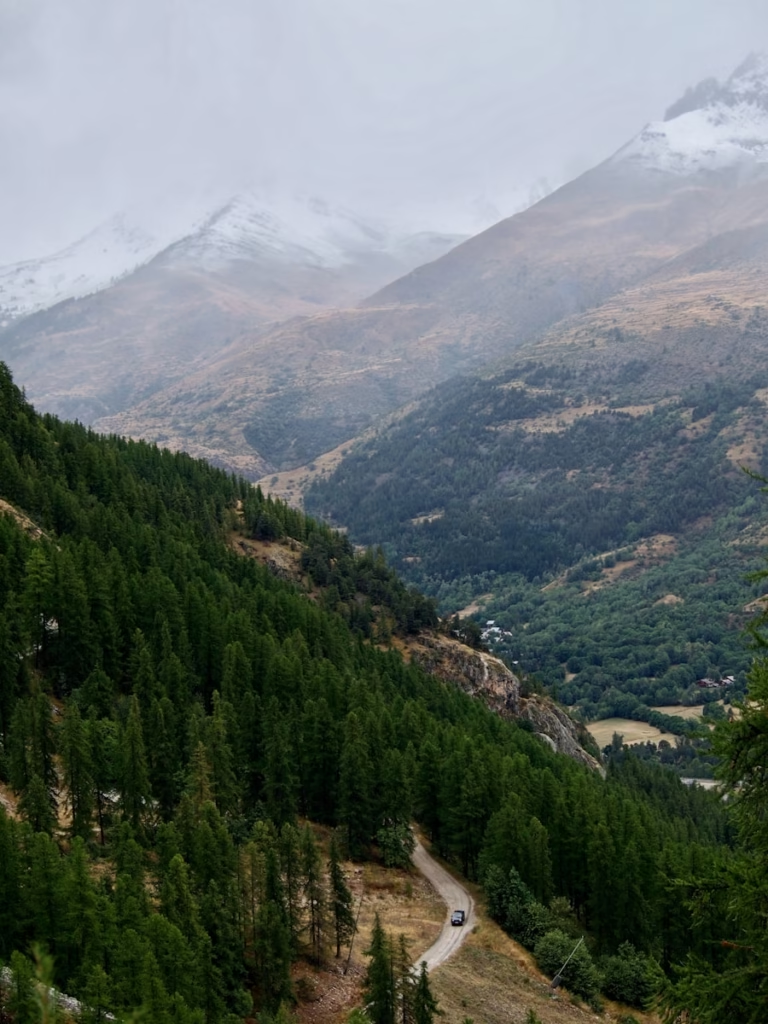
Riding the Galibier from Briançon is not just a climb, it is a journey up the Guisane valley. The road leaves the town and heads through Serre-Chevalier, passing ski villages, river bends, meadows and high peaks before reaching the Col du Lautaret. For a long time, the gradient is not brutal. The challenge is the length, the altitude and the sense that the mountain is slowly drawing you in.
This is where Serre-Chevalier becomes more than a place name on a map. The valley gives the ride its rhythm. Chantemerle, Villeneuve and Le Monêtier-les-Bains pass by as useful markers, each one slightly higher, each one nudging you further away from the everyday world. The road is busier than some of the smaller climbs, especially in summer, but it also has that great Alpine artery feeling. Motorbikes, campervans, cyclists, hikers and locals all seem to be moving through the same corridor between valleys.
The Lautaret is a proper climb in itself, topping out at over 2,000 metres, but the Galibier is where the mood changes. From the Lautaret, the final section lifts towards one of the great high passes of European cycling. The road becomes more open, the air thinner, and the views broader. Snow can linger high into the season, and even in summer the summit can feel raw if the wind is up.
From Briançon, the Galibier is long rather than vicious at first, but the final section has enough bite to make the summit feel earned. It is the sort of climb where pacing matters. Go too hard through the valley and the last kilometres will feel very different. Ride it well, and there is a wonderful slow-build quality to the day, as if the landscape is gradually turning up the volume until the final hairpins.
This is also one of the best reasons to base yourself in Serre-Chevalier rather than further away. You can ride one of cycling’s most famous climbs without spending half the day on transfers. The Galibier is still huge, still exposed and still weather-dependent, but it feels accessible in a way that makes it possible to plan properly around it.
The Col du Granon: short, steep and unforgiving
If the Galibier is a long Alpine conversation, the Col du Granon is more of an argument. It rises directly from the Serre-Chevalier side of the valley and wastes very little time becoming serious. The climb is around 11.5km long, but the average gradient is steep enough to make every kilometre count. There are no easy illusions here. Once the road starts rising properly, it keeps asking for effort.
The Granon has become much more widely known since its recent Tour de France return, but it still feels different from the bigger through-passes. It is a dead-end road, which changes the atmosphere completely. You are not climbing to cross into another valley. You are climbing because the road goes up, and because the summit view is worth the trouble.
That gives the Granon a rawer feeling. Traffic is usually lighter than on the Lautaret road, but the gradient makes up for any sense of peace. The climb looks down across Serre-Chevalier and the Briançon valley, and the higher you go, the more the view opens. It is beautiful in the way hard climbs often are, not comforting exactly, but clarifying. The valley falls away, the ski slopes and ridges begin to align, and the scale of the place becomes obvious.
For most riders, the Granon is not a recovery-day climb. It is a headline effort. Because it is shorter than the Galibier or an Izoard loop, it can look manageable on paper, but the gradient changes the calculation. It suits a day when you want one hard objective rather than a long roaming route. Start steady, take water, respect the heat, and do not assume the summit will arrive quickly just because the distance is modest.
Montgenèvre and the Italian border
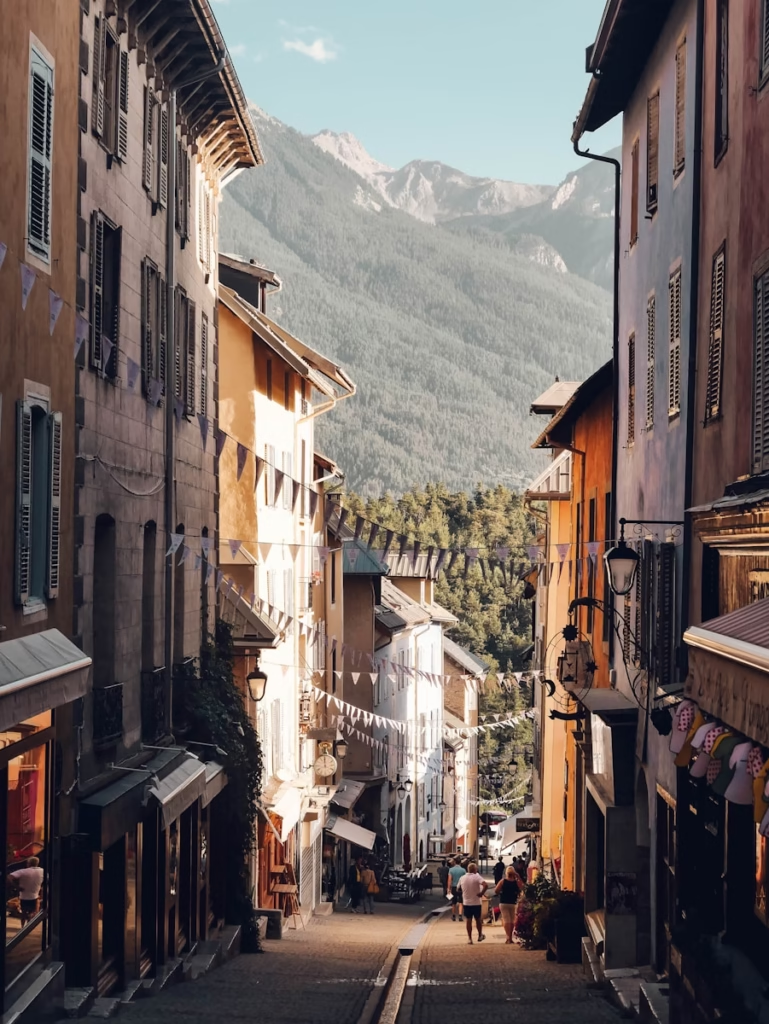
One of Briançon’s quieter strengths is how naturally it opens towards Italy. The road to Montgenèvre climbs east from town, taking you towards the border and into a different mood. It is not as famous as the Galibier or Izoard, but it is useful, scenic and historically rich. The gradients are generally more forgiving, which makes it a good option when you want climbing without committing to a monster day.
Montgenèvre also gives a different sense of place. The road has the feel of a border crossing, of movement between cultures and valleys. There are ski lifts, wide mountain views and a less dramatic but still satisfying rhythm. For riders who like building loops, it can be combined with Italian roads, though that needs more planning and awareness of traffic, weather and distance.
As part of a week in Briançon, this side of the valley matters because not every ride needs to be a famous col. Some of the best cycling trips work because they mix the grand days with the quieter ones. A Montgenèvre ride can give the legs a break from the sheer intensity of the Izoard, Granon or Galibier while still keeping the feeling of riding in high mountains.
The Vallée de la Clarée and quieter roads
The Vallée de la Clarée is the softer counterpoint to the giant cols. North-east of Briançon, it leads towards Névache through a valley that feels more pastoral, more hidden and less dominated by cycling’s biggest names. The riding can still be tough, but the atmosphere is calmer. The road follows water, trees and meadows rather than constantly pointing towards a summit board.
This is the kind of ride that gives a trip texture. After a huge day on the Galibier or Izoard, the Clarée can feel like a reset. The air smells of pine and cold streams, the villages are smaller, and the road has more of a wandering quality. It is not empty, particularly in summer, but it feels less performative than the famous climbs. You are not riding towards a monument of the Tour de France. You are riding into a valley because it is beautiful.
For many riders, these quieter roads are what turn Briançon from a box-ticking destination into somewhere worth returning to. The famous cols bring you here. The side valleys make you linger.
The roads and surfaces around Briançon
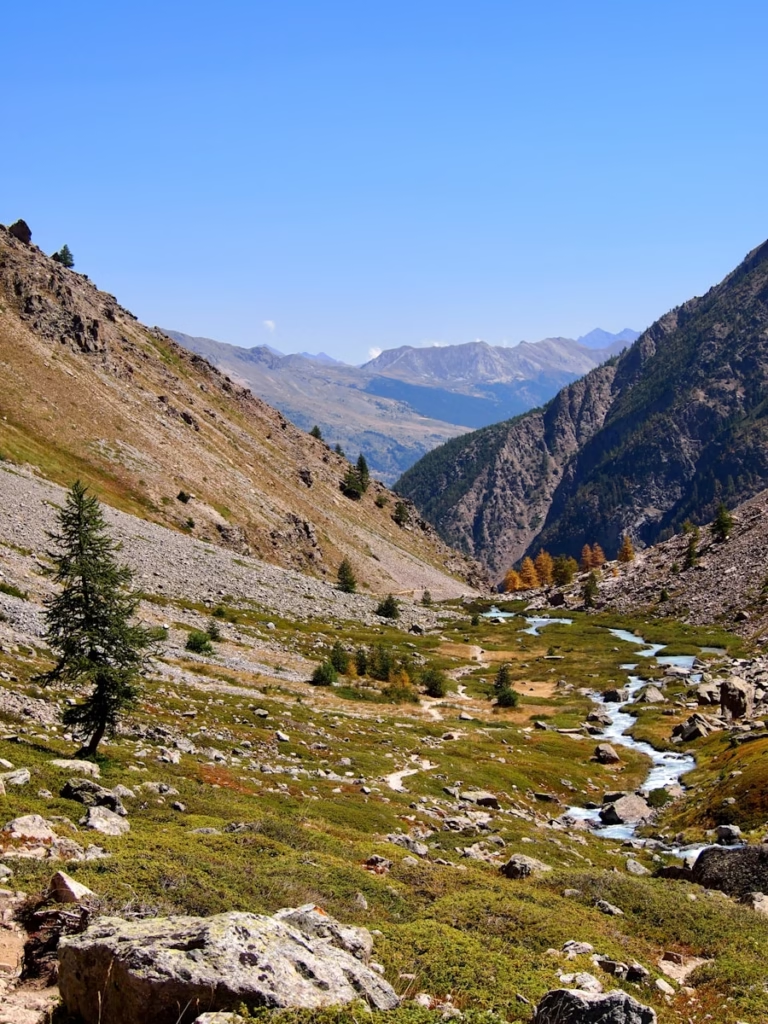
The road quality around Briançon and Serre-Chevalier is generally good, especially on the main Alpine passes, but the riding environment changes constantly. The Lautaret road can be busy, particularly in peak summer, because it is an important connection as well as a cycling route. The Izoard and Granon tend to feel more like dedicated climbing days, while smaller valley roads can be quieter but occasionally rougher, narrower or more exposed to debris.
Descending requires respect. These are proper mountain roads, with changing surfaces, tunnels, animals, heat shimmer, cold patches and traffic all possible on the same day. The descents from the Izoard and Galibier can be exhilarating, but they are not places to switch off. The Granon descent is steeper and more technical in feel, especially because the road asks for regular braking and concentration.
Gearing is worth thinking about before the trip. Compact or semi-compact chainsets with generous climbing gears make sense for most riders, especially if the Granon is on the list. The climbs are long, the altitude is real, and fatigue accumulates over a week. There is no shame in bringing easier gears to the Alps. In fact, it is often the difference between enjoying the final climb of the day and simply surviving it.
What the riding feels like
The riding around Briançon has a particular texture. It is dry, bright and high. The mountains feel close but not always lush. Compared with the greener northern Alps, this part of the French Alps can feel more austere, with sharper light, paler rock and long exposed sections where shade comes and goes quickly.
Early mornings are often the best time to ride. The valley is quieter, the heat has not yet settled, and the mountains have that calm blue-grey look before the sun fully takes over. You hear the river before the traffic, smell bread from bakeries in the villages, and feel the coolness of the road through the tyres. Then, as the climb rises, the day opens out. Jackets come off. Bottles empty faster. The peaks begin to dominate everything.
By late afternoon, Briançon has a different mood. Riders roll back into town dusty and salt-marked, the old streets fill with the slow movement of people who have spent the day outside, and the light catches the fortifications above the valley. There is a satisfying tiredness to it. You can sit with a drink, look up at the roads you have just ridden, and feel the strange Alpine combination of exhaustion and restlessness. Even after a hard day, the next climb is already there in your head.
How Briançon compares with other Alpine cycling bases
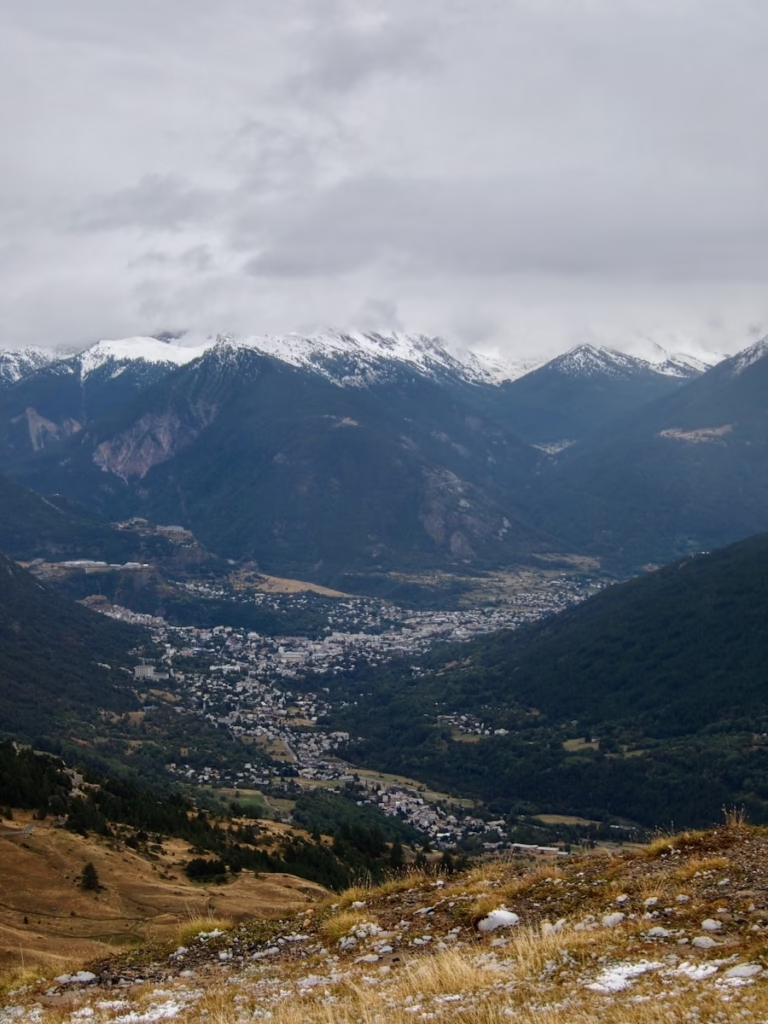
Briançon is not quite like Bourg d’Oisans, where Alpe d’Huez dominates the conversation. It is not as polished or lake-side picturesque as Annecy, and it does not have the same rolling Mediterranean softness as Girona or the Costa Brava. Its appeal is more direct. It is high, historic, practical and surrounded by serious roads.
That makes it especially good for riders who want a proper climbing week. If your ideal trip is built around major cols, early starts, big breakfasts, long descents and evenings spent comparing routes over dinner, Briançon works beautifully. It is less suitable if you want flat recovery riding, gentle café loops or a destination where the cycling can remain casual all week.
Compared with places such as the Girona and Costa Brava cycling region, Briançon is more severe and less socially polished, but that is part of the attraction. It feels like a mountain base first and a lifestyle destination second. The roads are the reason to come. Everything else supports that.
When to ride in Briançon and Serre-Chevalier
The main road-cycling season usually runs from late spring into early autumn, but the highest passes dictate the real window. The Galibier is a very high pass, and snow can linger or return outside the core summer months. The Lautaret is more dependable, but the final section to the Galibier is far more seasonal. Before planning a trip around specific high cols, it is important to check local pass openings and weather conditions.
June can be beautiful, with long days, snow still visible high on the mountains and slightly quieter roads, but some high passes may still be uncertain depending on the year. July and August bring the most reliable access, but also more heat, more traffic and more visitors. September can be superb, with cooler temperatures and calmer roads, though the days are shorter and weather can turn more quickly.
Heat is worth taking seriously. Because Briançon sits high, it can be tempting to assume the temperatures will stay gentle, but the sun can be fierce on exposed climbs. Carry enough water, know where you can refill, and remember that a valley temperature does not tell the whole story. The summit may be cold and windy even when the lower slopes are hot.
Who Briançon is best for
Briançon and Serre-Chevalier are best for riders who enjoy climbing and are comfortable with real mountain terrain. You do not need to be racing fit, but you need to be honest about the demands. The climbs are long, the altitude adds weight, and the descents require concentration. A good level of endurance matters more than raw speed.
It is also a strong destination for riders who love cycling history. The Izoard and Galibier are not just scenic climbs. They carry decades of Tour de France memory, from old black-and-white suffering to modern GC battles. Even if you are not trying to recreate any specific race moment, you feel that history in the road. The names have weight because the climbs deserve it.
For mixed groups, Serre-Chevalier can work well because there is more than road cycling on offer. Walking, mountain biking, thermal baths, ski-resort infrastructure and valley villages give non-riding partners or easier-day riders something to do. Briançon itself also has enough history and character to fill time away from the bike, especially around the fortified old town.

Practical information
Location
Briançon sits in the Hautes-Alpes in south-eastern France, close to the Italian border. Serre-Chevalier is the valley and ski area stretching north-west from Briançon through a chain of villages including Chantemerle, Villeneuve and Le Monêtier-les-Bains. The area is high, mountainous and well placed for the Col d’Izoard, Col du Galibier, Col du Lautaret, Col du Granon and Montgenèvre.
Riding
The riding is heavily climb-focused. Expect long ascents, high-altitude passes, fast descents and changeable weather. The main classic climbs are accessible directly from Briançon or the Serre-Chevalier valley, but even shorter rides can become demanding because the valley already sits at altitude. Sensible gearing, good brakes, layered clothing and careful route planning are all important.
When to go
Late June to September is the most reliable period for riding the highest cols, although exact pass openings depend on snow and weather. July and August offer the best chance of full access but bring more traffic and heat. June and September can be quieter and more atmospheric, but require more flexibility.
Accommodation
Briançon is best if you want a proper town base with restaurants, shops, history and easier access to the Izoard and Montgenèvre. Serre-Chevalier villages are useful if you want a more resort-style stay and quicker access towards the Lautaret and Galibier. Bike-friendly hotels and apartments are common in the valley, but it is worth checking storage, laundry options and breakfast times if you plan early starts.
Bike hire and support
The area is used to cyclists, especially in summer, so bike shops, hire options and mechanical support are available, though availability can vary by village and season. Booking hire bikes in advance is sensible during peak months. If bringing your own bike, check gearing and brake pads before travelling, because the climbs and descents are demanding enough to expose any weakness quickly.
Why Briançon and Serre-Chevalier deserve a place on your riding list
Briançon and Serre-Chevalier deserve their reputation because they combine convenience with scale. Many cycling destinations have one famous climb. This valley has several, and they are not minor names. The Izoard, Galibier, Lautaret and Granon are all close enough to shape a single week, yet different enough to avoid repetition.
The real appeal, though, is the atmosphere between the climbs. It is the way Briançon’s old stone catches the evening light. It is the sound of the river in the Guisane valley before the day has fully warmed. It is the moment on the Izoard when the landscape becomes harsher, or on the Galibier when the road finally leaves the Lautaret and points towards the high world above. It is the first steep ramps of the Granon, where the valley drops away and the ride becomes very simple: keep turning the pedals, keep breathing, keep looking up only when you are ready.
There are easier places to ride. There are softer, flatter, more forgiving cycling bases. Briançon is not trying to be any of those. Its appeal is that it feels serious without being joyless, historic without being trapped in the past, and beautiful in a way that is sometimes sharp rather than comfortable. For riders who want the Alps to feel like the Alps, with big names, big climbs and a landscape that stays in the legs as much as the memory, Briançon and Serre-Chevalier are hard to beat.

