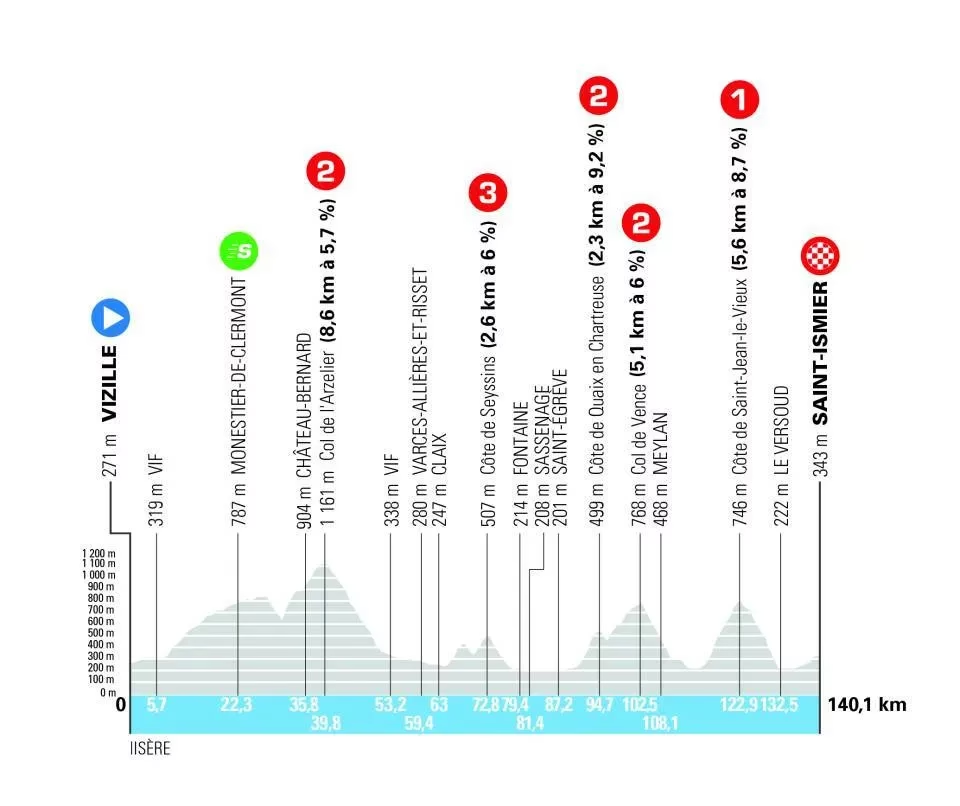
The Tour Auvergne – Rhône-Alpes 2026 begins on Sunday, 7th June, with a stage that removes any idea of a gentle opening day. Stage 1 runs from Vizille to Saint-Ismier over 146.2km, with close to 3,000 metres of climbing and five categorised climbs packed into a route that gives the puncheurs, climbers and ambitious GC riders an immediate chance to test each other.
This is the first edition of the race under the Tour Auvergne – Rhône-Alpes name, but the sporting role remains familiar. The old Critérium du Dauphiné slot still makes this one of the key June tests before the Tour de France, and the 2026 route leans heavily into that identity with a team time trial and three summit finishes later in the week.
Stage 1 is not the decisive stage of the race on paper, but it can still matter. The Côte de Rousset comes with around 21km remaining and is hard enough to split the field if a team decides to apply real pressure. A reduced sprint, a late attack or a small group finish all look more realistic than a full bunch sprint.
For wider context, our Tour Auvergne – Rhône-Alpes 2026 full route guide breaks down the complete eight-stage route, while our full start list for Tour Auvergne – Rhône-Alpes 2026 tracks the confirmed field.
What is the route for Tour Auvergne – Rhône-Alpes 2026 stage 1?
Stage 1 takes the riders from Vizille to Saint-Ismier over 146.2km. It is a short stage by WorldTour stage-race standards, but the climbing makes it far more difficult than the distance alone suggests.
The route includes the Col de l’Arzelier, Côte de Seyssins, Côte de Quaix-en-Chartreuse, Col de Vence and Côte de Rousset. That gives the day a proper rhythm of repeated climbing rather than one isolated obstacle. The hardest and most important section should be the Côte de Rousset, listed at 8.2km at 7.6 per cent, with around 21km left to race.
That placement is important. The climb is close enough to the finish to shape the result, but far enough out that a solo attacker or small group still has to commit after the summit. It should encourage racing from riders who can climb well and then keep speed on the descent and run-in to Saint-Ismier.
Why stage 1 is harder than a normal opener
Opening stages often begin with a sprint, a flat run-in or a nervous but manageable day for the GC teams. This one is different. Almost 3,000 metres of climbing on day one means riders who arrive undercooked could be exposed immediately.
The route also gives teams several chances to raise the pressure before the final climb. The earlier ascents may not decide the winner directly, but they can thin support, soften up the peloton and make the Côte de Rousset more selective. By the time the race reaches the final major climb, some riders will already have spent too much energy just staying in position.
That matters in a race with a team time trial on stage 3 and major summit finishes later in the week. GC contenders will not want to lose time before the race has properly settled. Stage 1 may not decide the overall winner, but it can decide who starts the week calmly and who is already chasing.
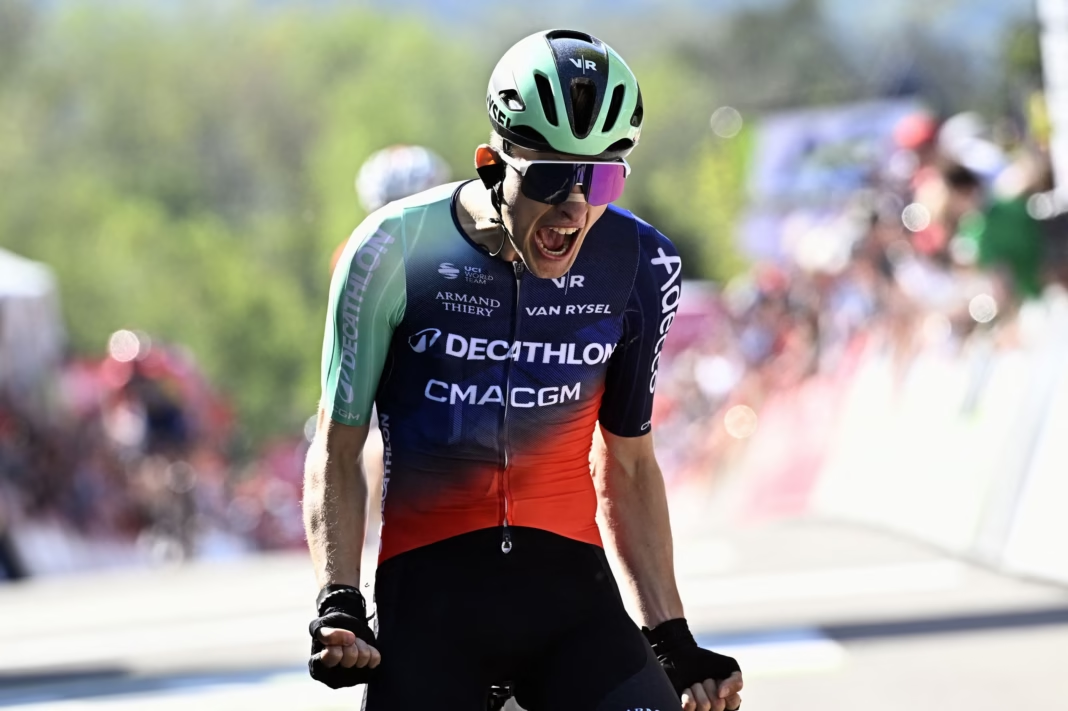
Could the GC riders attack on stage 1?
A major GC attack is possible, but it depends on how aggressively the leading teams want to race. The final weekend is brutal, with Crest-Voland, Grand Colombier and Plateau de Solaison still to come, so some contenders may prefer not to spend too much energy on the first day.
The problem is that the route may not allow complete restraint. If a team sets a hard pace on the Côte de Rousset, the GC riders will have to respond. A gap of 10 or 15 seconds on stage 1 may not seem decisive, but in a one-week race with a team time trial and several mountain stages, those early margins can shape tactics.
Paul Seixas, Isaac del Toro, João Almeida, Juan Ayuso, Matteo Jorgenson, Oscar Onley, Carlos Rodríguez and Santiago Buitrago all have reasons to stay alert. None needs to win the race on stage 1, but all need to avoid being caught behind if the climb splits the front group.
Why Paul Seixas will draw attention immediately
Paul Seixas starts the race as one of the major home storylines. The French rider is still young, but his climbing ability and rapid progression mean he will be watched closely from the first climb of the opening stage.
Stage 1 is not a pure summit finish, which may actually suit him as a way into the race. He does not need to carry the burden of one decisive climb to the line. Instead, he can follow the strongest on the Côte de Rousset, test where his rivals are, and see whether a reduced group finish gives him an opportunity.
The bigger question is expectation. A race like this, on French roads, in June, with the Tour de France looming, brings attention quickly. If Seixas looks comfortable on day one, that will only grow. If he loses time, the narrative changes just as fast.
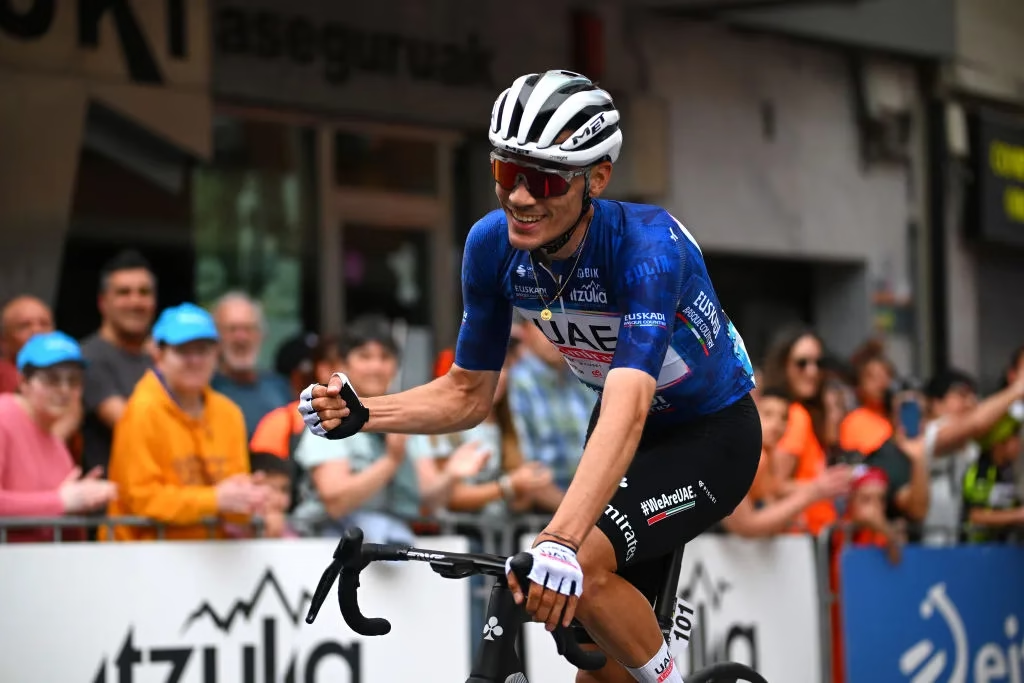
UAE Team Emirates-XRG have options from the start
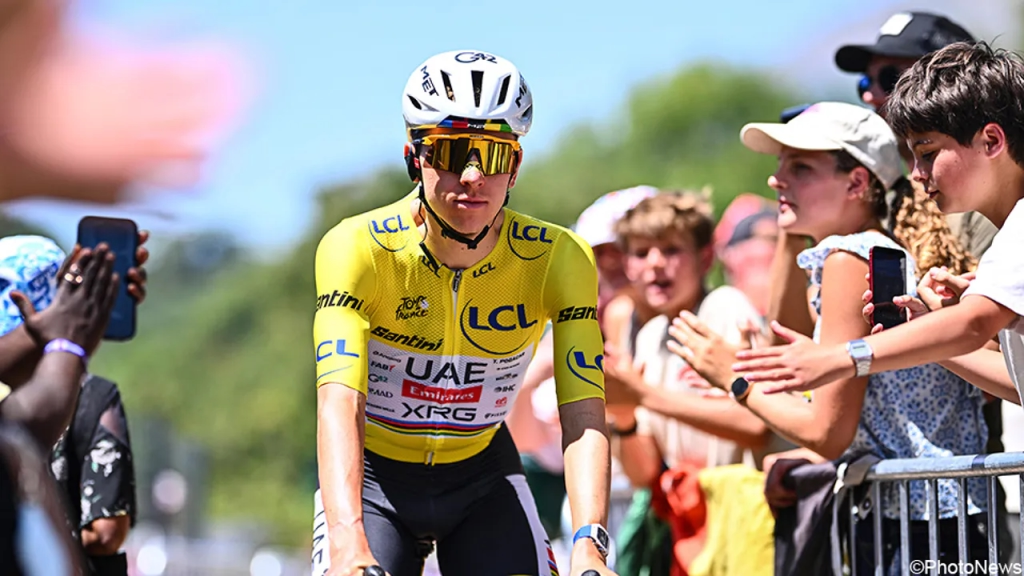
UAE Team Emirates-XRG arrive with Isaac del Toro and João Almeida giving them two strong GC cards. Stage 1 is exactly the sort of day where that depth can matter. The team do not have to commit everything to one rider immediately, and they can use the climbs to apply pressure without taking excessive risk.
Del Toro’s punch and climbing sharpness make him dangerous if the Côte de Rousset creates a reduced selection. Almeida, by contrast, is often at his best when a race becomes controlled, attritional and hard to break open. Between them, UAE have the flexibility to follow moves, discourage attacks or make the final climb uncomfortable for others.
That team strength also matters before the stage 3 team time trial. UAE will want to reach Perreux with their leaders well placed and confident. Losing time on stage 1 would be avoidable damage. Gaining a little would be an ideal start.
Lidl-Trek and Team Visma | Lease a Bike need clean positioning
Lidl-Trek’s Juan Ayuso and Mattias Skjelmose both have the kind of profile that can suit a sharp opening stage. Ayuso has the climbing level to follow the best, while Skjelmose is dangerous in reduced groups and hard hilly finishes. The team’s challenge will be keeping both in position before the Côte de Rousset.
Team Visma | Lease a Bike have Matteo Jorgenson as a natural rider to watch on this terrain. He can climb, handle technical racing and use a hard stage without needing the finish to be a pure summit test. Wout van Aert also changes the way the team can race. If the stage comes down to a reduced sprint from a group of climbers and all-rounders, he becomes a dangerous option.
The key for both teams is avoiding a passive opening. Stage 1 is not long enough for riders to ease into the race, and the final climb is hard enough to punish poor position. Being near the front before the Côte de Rousset may be just as important as having the strongest legs on the climb itself.
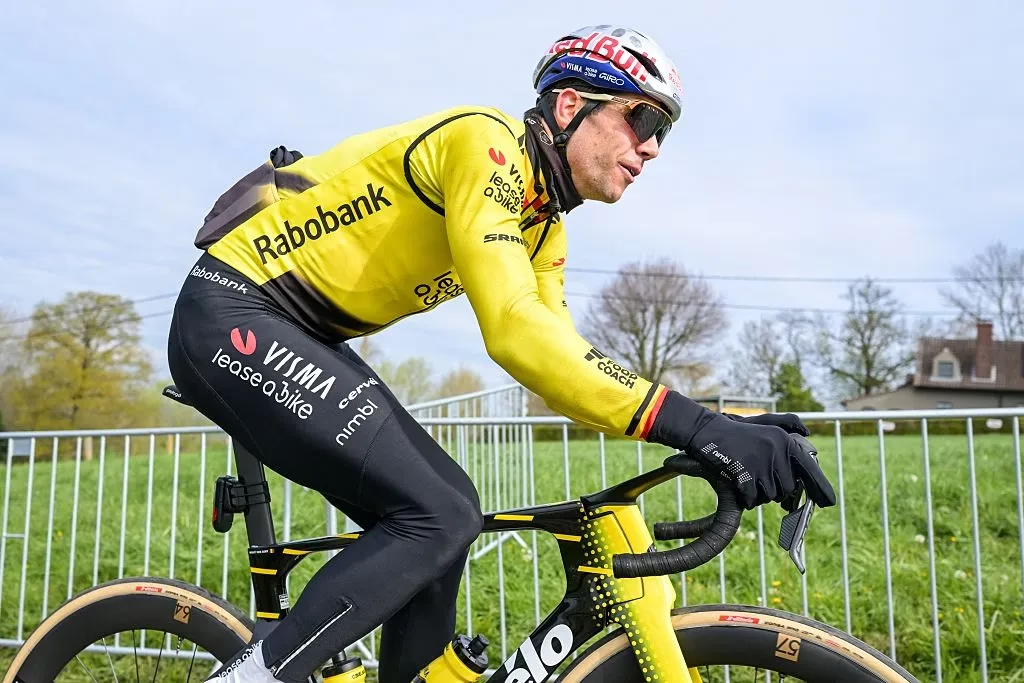
Could Wout van Aert win stage 1?
Stage 1 is difficult, but it is not impossible for Wout van Aert if he is climbing well. The Côte de Rousset is the clear obstacle, and an 8.2km climb at 7.6 per cent is serious enough to remove many fast finishers. But if Van Aert survives with the front group, he would immediately become one of the most dangerous riders in Saint-Ismier.
That possibility changes the tactical picture. Teams with pure climbers may not want to bring him to the finish. If Van Aert is still present over the top, rivals may have to attack again on the descent or run-in rather than wait for a sprint.
For Team Visma | Lease a Bike, that gives options. They can protect Jorgenson’s GC position while still keeping Van Aert as a stage-winning threat. That kind of dual role can be useful on a day where the finish is selective, but not necessarily selective enough to guarantee a climber wins.
What type of rider can win stage 1?
The winner needs to be more than a sprinter and slightly more versatile than a pure climber. Stage 1 suits a punchy all-rounder who can survive repeated climbs, handle a hard final ascent and still have speed or aggression left after the descent.
A small group sprint is a very realistic outcome. If 15 to 30 riders come over the Côte de Rousset together or regroup before Saint-Ismier, the fastest finisher from that selection will have a major chance. That brings riders like Van Aert, Michael Matthews and Toms Skujiņš into the conversation if they are present and well positioned.
A solo or late attacking win is also plausible. The final climb is hard enough to launch from, and the run-in gives riders a chance to use momentum if the group behind hesitates. Ben Healy, Julian Alaphilippe, Santiago Buitrago or an aggressive GC outsider could all see stage 1 as a chance to take the first leader’s jersey before the race settles into a more predictable pattern.
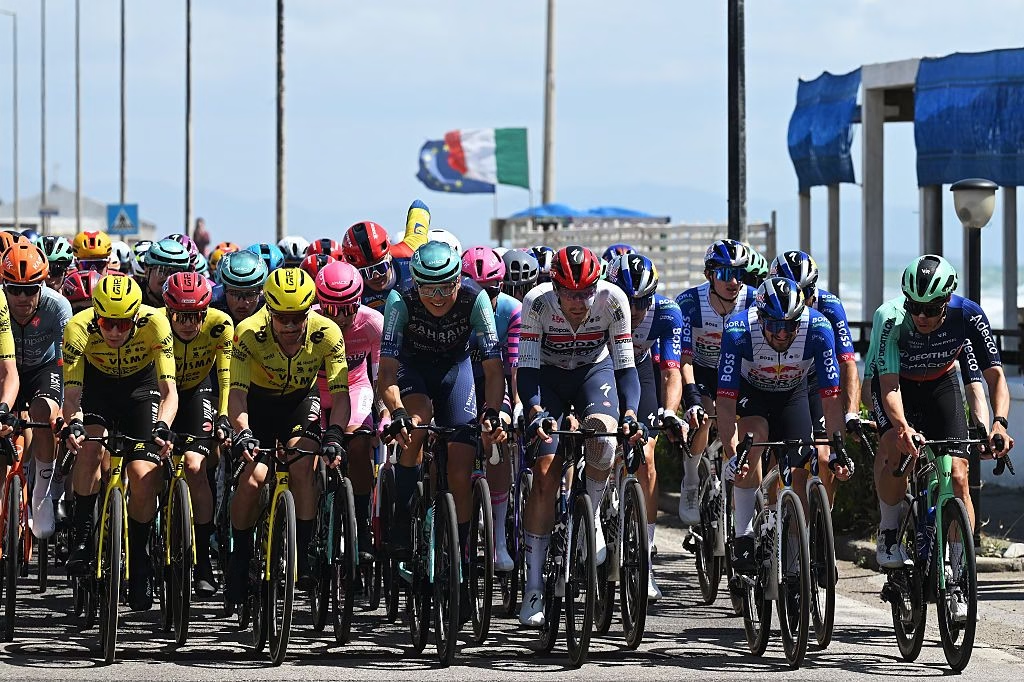
Could the breakaway survive?
A breakaway win is possible, but stage 1 is a difficult day for the early move. The first leader’s jersey is available, the route is selective, and several teams will believe they have a realistic stage winner. That usually makes control more likely.
The breakaway’s best chance is if the GC teams hesitate and the sprint teams decide the stage is too hard to chase fully. A strong group with climbers and all-rounders could build a gap before the final climbs, then try to survive over the Côte de Rousset.
The problem is motivation behind. With the race only beginning, teams have energy and ambition. The stage is short enough for chasing to remain realistic, and the final climb gives the peloton a natural place to bring the race back. A late move from a reduced group looks more likely than a classic early breakaway victory.
Where will stage 1 be decided?
The Côte de Rousset is the obvious decisive point. At 8.2km and 7.6 per cent, it is hard enough to thin the peloton properly and close enough to the finish to make attacks meaningful.
The summit will not be the end of the race, though. The descent and run-in to Saint-Ismier should be tactically important. If a small group goes clear on the climb, cooperation after the summit will decide whether it stays away. If a larger group reforms, the final kilometres become about positioning and timing.
The first stage could therefore be decided in three phases: the selection on the Côte de Rousset, the chase or cooperation after the summit, and the sprint or final attack in Saint-Ismier. The strongest climber may not automatically win. The smartest finisher from the right group might.

What comes next after stage 1?
Stage 2 takes the riders from Saint-Martin-le-Vinoux to Le Puy-en-Velay over 234.3km, the longest stage of the race. It is another hilly day, and its length could make it even more draining than the profile suggests.
Stage 3 then brings a 28.4km team time trial around Perreux. That stage could create meaningful GC gaps before the final mountain block even begins, especially between teams with strong collective engines and those built more narrowly around climbers.
That makes stage 1 part of a difficult opening sequence. The race begins with climbing, follows it with endurance, then tests team structure against the clock. Any rider who thought the Tour Auvergne – Rhône-Alpes would wait until the final weekend to become serious will be corrected quickly.
Tour Auvergne – Rhône-Alpes 2026 stage 1 prediction
Stage 1 should produce a selective finish rather than a full bunch sprint. The Côte de Rousset is too hard and too close to the finish for the pure sprinters to survive comfortably, but the run-in to Saint-Ismier may still allow a reduced group to contest the win.
The GC favourites should be present, but they may not want to spend everything on day one. That opens the door for a punchy all-rounder or a fast finisher who can survive the final climb. Van Aert is an obvious candidate if he makes it over the Côte de Rousset with the front group, while Healy, Matthews, Skujiņš and Alaphilippe all fit the shape of the day.
Prediction: Wout van Aert to win from a reduced group in Saint-Ismier, with the main GC contenders finishing close together but the first selection of the race already made.