
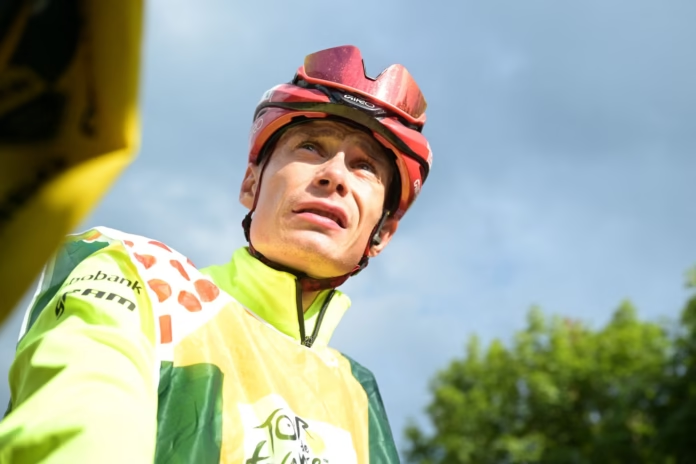
Jonas Vingegaard has undergone successful surgery on the fractured collarbone that ended his Tour de France 2026 challenge.
The Team Visma | Lease a Bike leader returned to Denmark following his stage 15 crash and underwent surgery on Tuesday. Sports director Marc Reef confirmed the positive outcome on Wednesday, describing the procedure as relatively straightforward.
“It went well. They did what they had to,” Reef told Danish broadcaster TV 2 Sport. “It wasn’t the most complicated operation you can have. Everything went well.”
Vingegaard suffered a fractured collarbone and multiple abrasions when he crashed with around 20km remaining on the road to Plateau de Solaison. He briefly attempted to continue before leaving the race in an ambulance.
The full circumstances are covered in our explainer on why Jonas Vingegaard abandoned the Tour de France.
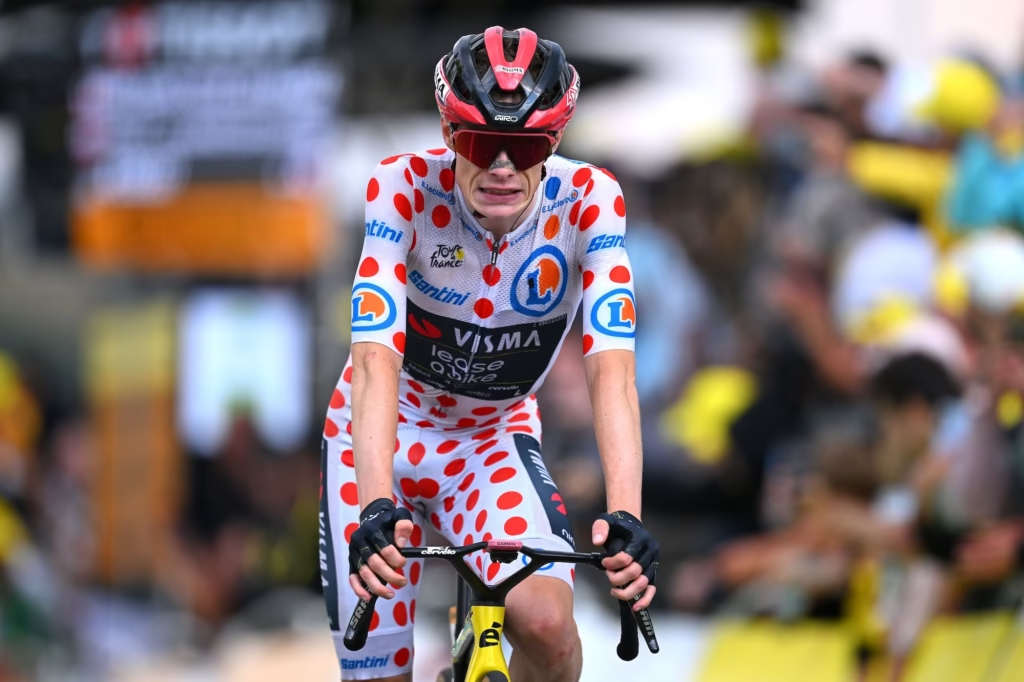
When will Jonas Vingegaard race again?
Vingegaard’s remaining 2026 programme has not been decided.
Team Visma | Lease a Bike intend to wait until after the Tour before discussing whether he should return later this season. Reef also acknowledged that Vingegaard has already completed a demanding campaign after winning the Giro d’Italia and preparing for another challenge for yellow.
A professional cyclist can often resume light indoor riding relatively quickly after successful collarbone surgery. Returning to outdoor training and racing takes longer because another crash could damage the healing bone.
The exact recovery timeline will depend on:
- The position and severity of the fracture
- How the bone was stabilised
- The healing of the surgical wound
- Vingegaard’s pain and shoulder movement
- The risk involved in returning to the peloton
- How much fitness he loses during recovery
The uncomplicated nature of the operation is encouraging, but Team Visma | Lease a Bike have not given a target date.
Could Vingegaard ride the 2026 Vuelta a España?
A Vuelta a España appearance appears unlikely.
The race begins in Monaco on 22 August, giving Vingegaard only around a month between surgery and the start of another three-week Grand Tour.
That would leave very little time to recover, return to outdoor riding and rebuild the condition needed to race at Grand Tour level.
Vingegaard has also already completed the Giro-Tour double this season. Asking him to prepare for a third Grand Tour after surgery would carry a significant physical and psychological cost.
The team have not formally ruled out the Vuelta, but there is currently no indication that it forms part of his recovery plan.
Being medically capable of racing would not necessarily mean he was ready to lead a Grand Tour.
Could Vingegaard target the World Championships?
The 2026 World Championships offer a more realistic possibility.
The road championships take place in Montréal from 20 to 27 September, giving Vingegaard approximately two months to recover. The elite men’s road race uses a demanding course around Mount Royal that should favour climbers and strong one-day riders.
That timeline is possible rather than certain.
Vingegaard would need to recover without complications, return to full outdoor training and build enough form to justify travelling to Canada. Denmark would also need to select him, while the rider may prefer to end his season and focus on a complete recovery.
The World Championships or an autumn race such as Il Lombardia are more plausible targets than the Vuelta if he does return in 2026.
What does a fractured collarbone mean for a professional cyclist?
Collarbone fractures are among the most common injuries in professional cycling because riders often land directly on the shoulder during a crash.
Surgery usually stabilises the bone with a plate and screws. That can allow controlled movement and indoor training to resume relatively quickly, but the fracture still needs time to heal.
Professional riders can maintain much of their cardiovascular fitness on an indoor trainer. The greater problem is safety.
A cyclist may be able to pedal indoors before being ready to brake forcefully, handle a bicycle outdoors or protect the shoulder in another fall. Racing inside a peloton introduces another level of risk.
Vingegaard’s return will therefore depend more on the stability of the fracture than on how quickly he can begin turning the pedals again.
Did the 2am anti-doping test contribute to Vingegaard’s crash?
Vingegaard was woken at around 2am for an anti-doping test before stage 15.
He later said it took approximately 40 minutes to return to sleep and acknowledged feeling tired, but stopped short of directly blaming the disturbed night for his crash.
Tadej Pogačar was also woken for an early-hours test and suggested the disrupted recovery may have contributed to the circumstances around Vingegaard’s accident.
There is no evidence establishing a direct connection.
The crash occurred during a complicated section after the peloton exited a roundabout, with sudden braking and several riders falling. Vingegaard declined to speculate over whether fatigue had played a role.
The testing rules and controversy are explained in why Pogačar and Vingegaard were woken for anti-doping tests before stage 15.
-
 Photo Credit: A.S.O./Billy Ceusters
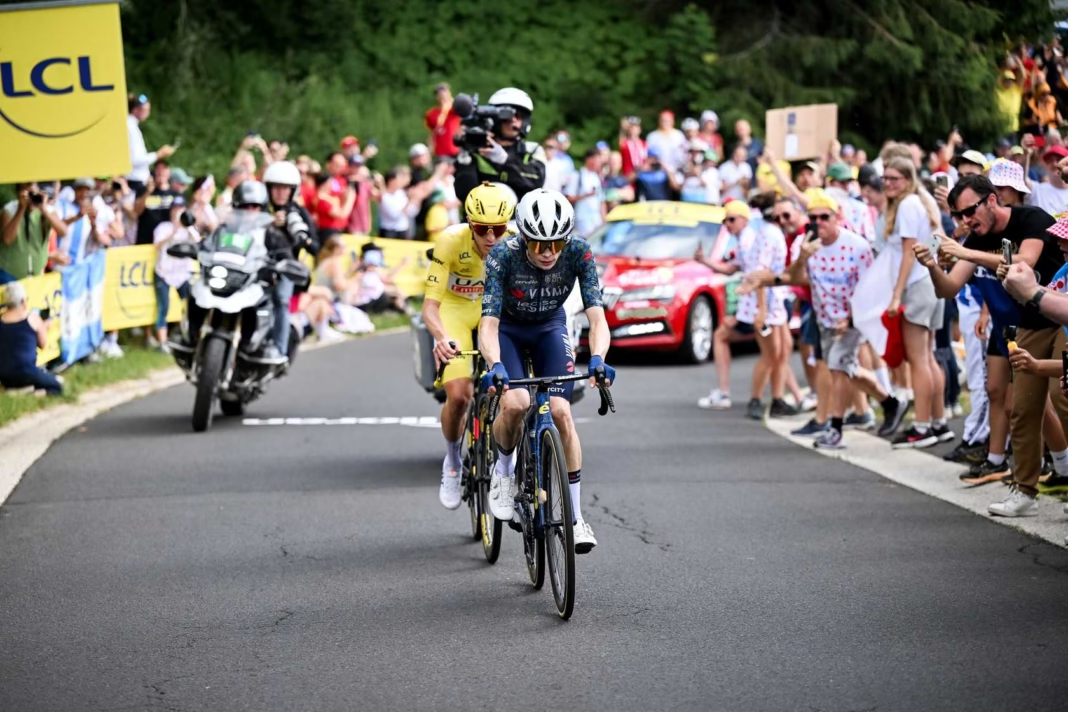
Vingegaard may not race again in 2026
The successful operation is the most important immediate development.
Vingegaard can begin his rehabilitation without the complication of a more difficult procedure. A return at the World Championships or during the autumn remains possible if the fracture heals quickly.
The Vuelta is much harder to envisage.
With the Giro already won and his Tour ended by injury, Team Visma | Lease a Bike have little reason to rush their leader back before his collarbone is fully stable.
The team’s priorities for the remainder of the Tour are covered in what Visma | Lease a Bike can do now Jonas Vingegaard is out.
Vingegaard’s withdrawal is also included in the live Tour de France 2026 abandonment list.
For now, the answer to when Vingegaard will race again remains open.
The encouraging part is that the first major step in his recovery has gone to plan.

