

Visma-Lease a Bike began the 2026 Tour de France with one central objective: find a way to beat Tadej Pogačar.
That plan ended beside a roundabout in Bonneville.
Jonas Vingegaard crashed with approximately 20km remaining on Stage 15 and was unable to continue. Medical examinations confirmed a fractured right collarbone and multiple abrasions, with surgery recommended. The full circumstances are covered in our explainer on why Jonas Vingegaard abandoned the Tour de France.
He had started the day second overall, 4:30 behind Pogačar. His withdrawal removed the rider around whom Visma’s entire Tour had been constructed.
The team now enters the second rest day without its leader and without a realistic general classification objective. The riders who spent two weeks protecting Vingegaard must find a different reason to race through the final week.
That does not mean Visma’s Tour is over.
Sepp Kuss, Matteo Jorgenson, Victor Campenaerts, Bruno Armirail, Edoardo Affini, Per Strand Hagenes and Davide Piganzoli remain in the race. They can now pursue stage victories, breakaways and mountain points instead of measuring every effort against what Vingegaard may need later.
The difficult part is changing mentality quickly enough to make that freedom count.
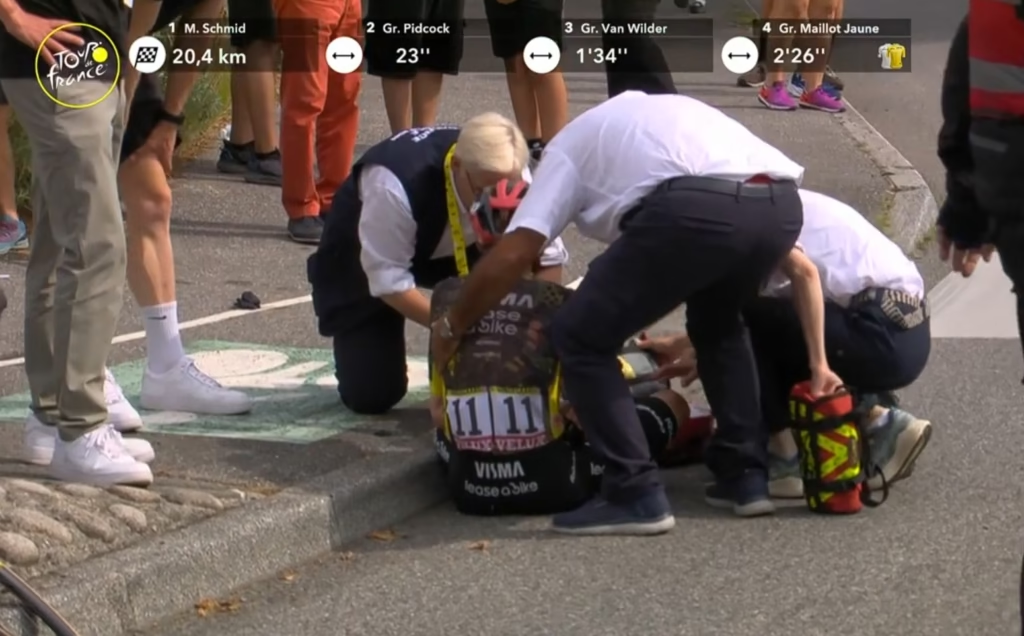
Visma’s Tour changed in one corner
Until Vingegaard crashed, every Visma decision was connected to the yellow jersey.
The team controlled breakaways when a dangerous general classification rider escaped. It placed riders around Vingegaard before climbs, collected bottles for him and used Kuss, Jorgenson, Armirail and Campenaerts to increase the pace before his attacks.
Even when another Visma rider entered a breakaway, the move served the larger plan.
A teammate ahead could provide support later in the stage. A hard pace could weaken Pogačar’s domestiques. A tactical attack could force UAE Team Emirates-XRG to respond.
Those priorities have disappeared.
Visma no longer needs to protect a position near the top of the general classification. It does not need to preserve several riders for the final climb or worry about leaving Vingegaard isolated.
The team can race more aggressively, but it must first decide who is physically and mentally capable of doing so.
The contrast with the original strategy is clear in our Tour de France 2026 team-by-team guide, where Visma’s squad was built almost entirely around supporting Vingegaard’s challenge.
Sepp Kuss must recover before becoming the obvious stage hunter
Kuss is the natural rider to lead Visma in the mountains.
He is a Vuelta a España winner, a proven Grand Tour stage winner and one of the strongest pure climbers in the remaining team. The final week contains three major mountain stages, including Orcières-Merlette and consecutive finishes at Alpe d’Huez.
On paper, those stages are ideal for him.
The immediate problem is his condition after Stage 15.
Kuss was brought down in the same crash as Vingegaard. He was able to remount and finish, but surviving the stage does not guarantee that he escaped without pain, stiffness or deeper fatigue.
The second rest day therefore becomes particularly important.
Visma must assess whether Kuss can attack during the final week or whether the crash has left him better suited to finishing the race conservatively.
There is little value in sending him into the first major Alpine breakaway simply because he is the team’s most recognisable remaining climber. He needs enough strength to survive the early battle, contribute to the move and still compete on the final ascent.
If Kuss is healthy, Visma should allow him to choose one or two mountain stages rather than asking him to attack every day.
His climbing level and potential value in the final week were already clear before the race, with Kuss included among the best climbers at the Tour de France 2026.
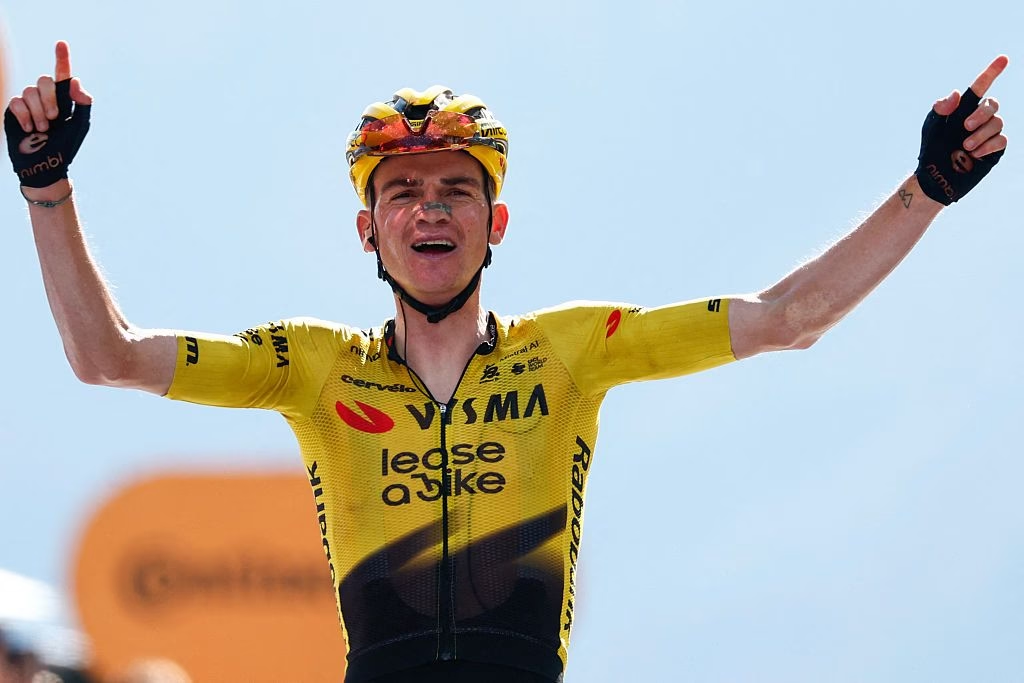
Stage 18 may be the first major opportunity
Stage 16 is a 26.1km individual time trial from Évian-les-Bains to Thonon-les-Bains, followed by a flatter Stage 17 from Chambéry to Voiron.
The mountain race then resumes with Stage 18 to Orcières-Merlette.
That sequence gives Kuss time to recover.
He can ride the time trial without taking unnecessary risks, pass through Stage 17 with the peloton and target the following day.
Orcières-Merlette offers a different challenge from the extreme gradients of Plateau de Solaison. The stage contains enough climbing for a strong breakaway to form, but the final ascent is also manageable enough for tactical racing rather than a simple contest of watts per kilogram.
Kuss would need to enter the move early.
Pogačar’s UAE team is unlikely to control every mountain breakaway now that the Slovenian holds a substantial lead. That should create more room for riders who no longer threaten the general classification.
Kuss’s time losses may now become an advantage.
The farther he sits from the yellow jersey, the easier it becomes for UAE and the podium teams to allow him up the road.
The role of Orcières-Merlette within the final mountain block is covered in our Tour de France 2026 Alps guide.
The double Alpe d’Huez finish is Visma’s biggest chance
Stages 19 and 20 both finish at Alpe d’Huez, but they should not be treated as interchangeable opportunities.
Stage 19 is short and likely to be raced aggressively from the start. Its compact format may make it difficult for a conventional early breakaway to establish a large advantage.
Stage 20 is longer and forms the Tour’s final mountain showdown. It includes the Col de la Croix de Fer, Col du Télégraphe, Col du Galibier, Col de Sarenne and one final ascent of Alpe d’Huez.
Visma should avoid waiting until the final climb on either day.
Kuss is unlikely to beat Pogačar, Evenepoel and the other leading GC riders from the favourites’ group if they contest the stage directly. His route to victory is through anticipation.
That may mean entering a large breakaway, attacking before the lower slopes of Alpe d’Huez or using a teammate already placed further up the road.
Stage 20 is particularly suited to that approach.
The Galibier can create a breakaway containing genuine climbers. The Col de Sarenne adds altitude and another major effort before the race reaches Alpe d’Huez. A rider who arrives at the final climb with several minutes can still believe in victory.
Visma now has no reason to keep Kuss beside a protected leader.
It should use that freedom.
The scale of the final test is examined in our Tour de France 2026 queen stage guide.
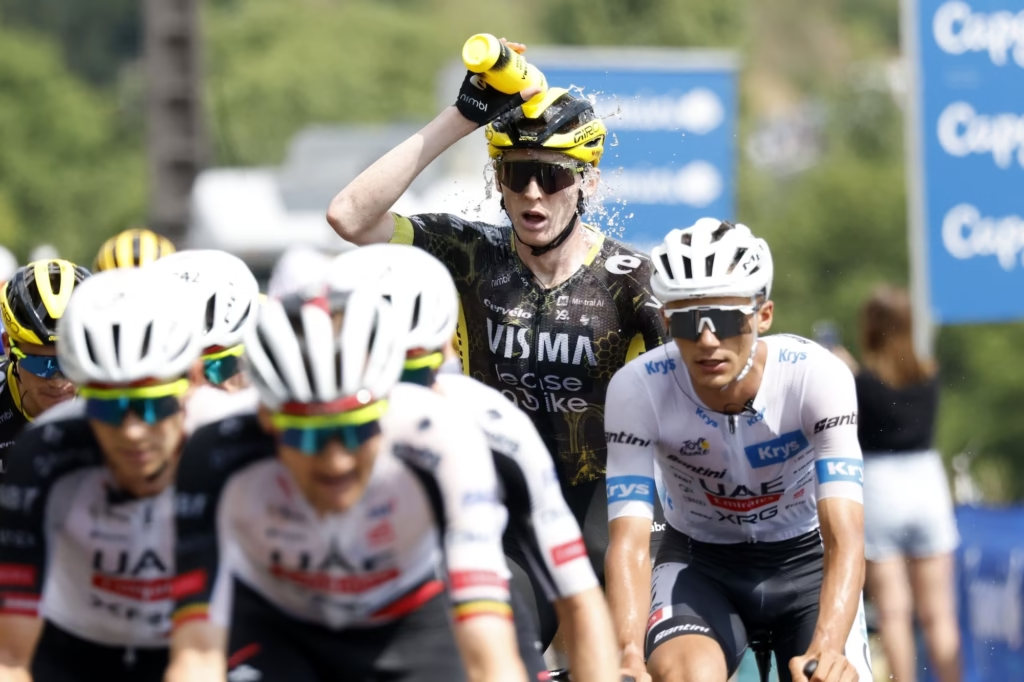
Matteo Jorgenson can stop riding like a domestique
Jorgenson arrived at the Tour as one of Vingegaard’s most important support riders.
His responsibilities included controlling breakaways, maintaining position on rolling terrain and surviving deep enough into mountain stages to support Vingegaard before Kuss took over.
That role has limited his personal opportunities.
With Vingegaard gone, Jorgenson can become one of Visma’s principal stage hunters.
His best chance may not come on the steepest summit finish.
Jorgenson is a versatile rider rather than a pure climber. He can perform on rolling terrain, handle long breakaways and contribute significant power on flatter roads.
Stage 17 to Voiron may therefore be particularly attractive.
The stage should offer the surviving sprinters one of their final opportunities, but the third week often produces less predictable racing. Some fast riders have abandoned, others are fatigued and teams without a victory become increasingly desperate to enter moves.
Jorgenson could also target Stage 18 from a breakaway, especially if Kuss is still recovering.
The important change is that he no longer needs to measure every effort against what Vingegaard might require later.
His tactical range and original support role are explored in our Matteo Jorgenson Tour de France 2026 profile.
Visma can use more than one rider in the breakaway
The team’s strongest tactical option is to place several riders in the same move.
A single Visma rider in a large breakaway can be marked or isolated. Two or three riders create alternatives.
Kuss can save energy while Campenaerts or Armirail works on the flatter roads. Jorgenson can attack before the final climb, forcing rival stage hunters to chase. Piganzoli can follow climbing moves while a more experienced teammate waits behind.
The aim should not be to reproduce the mountain train previously built for Vingegaard.
A breakaway is less controlled.
Riders from different teams have conflicting interests, cooperation can disappear quickly and teammates must sometimes attack one another’s groups rather than maintaining a steady pace.
Visma should embrace that uncertainty.
Its advantage is depth. It still has riders suited to time trials, flat escapes, transitional stages and major climbs.
Sending only one rider forward would waste that range.
Our guide to what a breakaway is at the Tour de France explains why numbers, cooperation and the composition of the move can matter as much as individual strength.
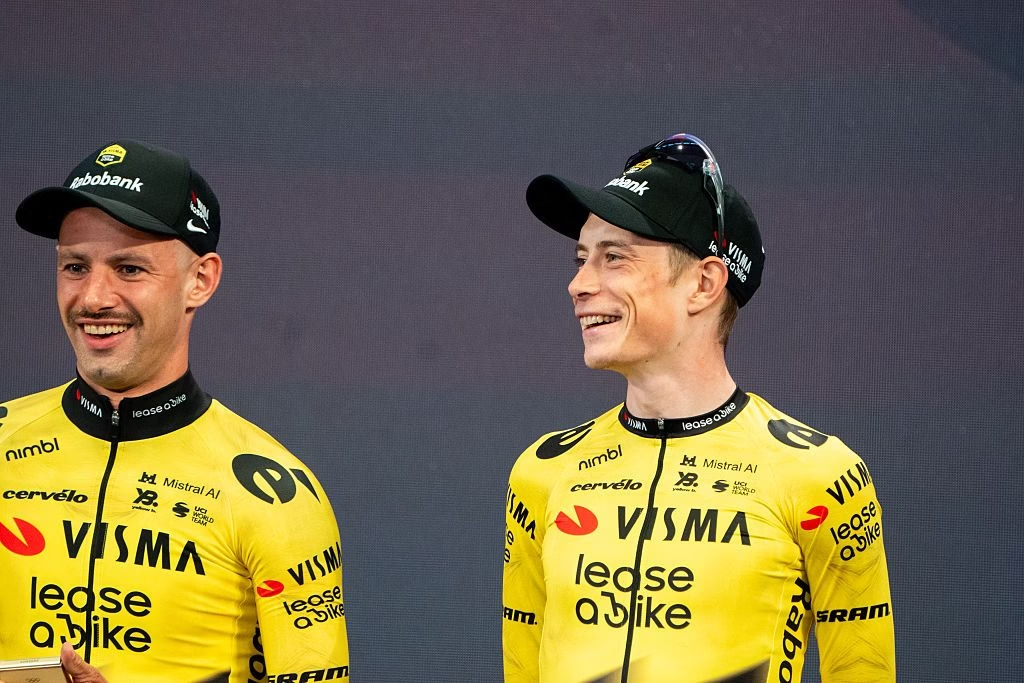
Victor Campenaerts can target the transition stages
Campenaerts becomes more valuable as an individual attacker now that the GC campaign is over.
He has spent much of the Tour using his power to position Vingegaard, control gaps and increase the pace before climbs. Those efforts rarely create a personal result, but they make him an ideal breakaway rider when released from domestique duties.
Stage 17 appears to offer his clearest opportunity.
A flatter stage will attract the surviving sprint teams, but the third week often creates less predictable racing. Some sprinters are missing, lead-out trains are weakened and the willingness to control a long escape declines as fatigue accumulates.
Campenaerts can exploit that situation.
He can attack from distance, contribute heavily to a breakaway and use late tactical moves rather than relying on a sprint.
He may also be useful as a satellite rider during the mountain stages.
Sending Campenaerts ahead gives Kuss or Jorgenson someone capable of pacing valleys and transitional roads if they bridge across later.
Bruno Armirail should have freedom against the clock and from breakaways
Stage 16 gives Armirail an immediate chance to ride for himself.
The Frenchman is an accomplished time triallist and no longer needs to conserve energy for controlling the following day on behalf of Vingegaard.
Winning the stage remains difficult with Remco Evenepoel among the favourites, but Armirail can target a strong placing and establish the tone for Visma’s reset.
The time trial also has symbolic value.
Visma cannot change its entire tactical identity during a recovery day. Stage 16 provides a simple objective that requires no complicated team plan: every rider completes the course at their own level, with Armirail and Jorgenson given permission to pursue the best result possible.
The likely contenders and characteristics of the stage are covered in our Tour de France 2026 Stage 16 preview.
Armirail can then return to the breakaway strategy during the remaining road stages.
He is particularly useful in moves that need power across valleys and false flats. He may not be the rider expected to win on Alpe d’Huez, but he can help put a teammate into position to do so.
 Photo Credit: Getty
Davide Piganzoli can race for experience and opportunity
Piganzoli’s role changes more subtly.
The young Italian began the Tour as a climbing domestique and development rider within a team focused on Vingegaard. He was not expected to carry the burden of producing a headline result.
That should remain true.
Visma can give him freedom without turning him into an emergency team leader.
Piganzoli can enter a mountain breakaway, test himself against experienced stage hunters and learn how a Grand Tour changes when a protected GC structure disappears.
He may also have an opportunity to improve his position in the young rider classification, although the leading white jersey contenders are competing near the top of the general classification.
A stage result is the more realistic objective.
Even failing to win could provide useful experience. Racing for position in a major Alpine breakaway is different from riding tempo for a leader and then dropping away once the job is complete.
Edoardo Affini and Per Strand Hagenes need realistic objectives
Not every remaining Visma rider should be expected to win a stage.
Affini can target the Stage 16 time trial and support breakaway formation on flatter days. He is also valuable for keeping teammates near the front before decisive roads.
Hagenes can look for transitional opportunities, particularly if Stage 17 becomes more selective than the sprinters expect.
Both riders can contribute to a successful final week without appearing on the podium.
A domestique helping Kuss enter the right breakaway, closing a dangerous move or pacing a teammate through a valley may be essential to a stage victory.
The difference is that those efforts now serve a flexible plan rather than one overriding yellow jersey objective.
The importance of riders whose work rarely appears in the result sheet is covered in our feature on the Tour de France domestiques who could decide the race.
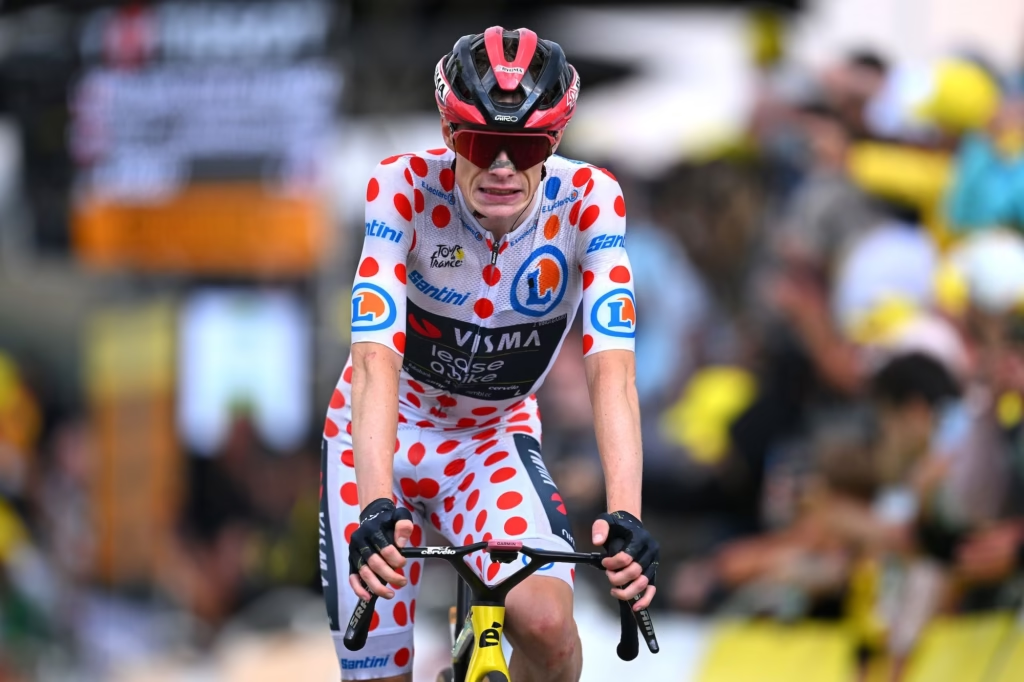
Is the mountains classification still realistic?
The polka-dot jersey offers an appealing replacement objective, but Visma should be cautious.
Vingegaard had accumulated 35 mountains points before his withdrawal, placing him among the leading riders in the classification. Those points can no longer contribute to a jersey challenge because he is out of the race.
Kuss and Jorgenson would therefore need to begin from their own existing totals.
The final week offers substantial points, especially across the Alpine stages. A rider collecting maximum points from a major breakaway could climb rapidly through the standings.
However, Pogačar leads the classification and is likely to add more points simply by contesting summit finishes. Valentin Paret-Peintre, Richard Carapaz and other established breakaway climbers also begin with stronger positions.
Visma should view polka dots as a possible consequence of stage hunting rather than a separate campaign.
Kuss should not chase an early minor climb if doing so harms his chance of winning the stage. If he reaches the front of the mountains competition through successful breakaways, the team can reconsider.
The stage result must come first.
The scoring system and likely contenders are covered in our Tour de France 2026 climbers and polka-dot jersey guide.
Protecting morale matters as much as changing tactics
Vingegaard’s withdrawal is not a normal change of leader.
The entire Tour project was built around him.
Training camps, altitude schedules, equipment choices and rider selection were designed to give him the best possible chance of defeating Pogačar. His teammates spent two weeks carrying out jobs that only made sense because he remained capable of winning the Tour.
Losing that objective so suddenly creates an emotional vacuum.
The team must give riders time to process what happened.
Immediately demanding that everyone celebrate their new freedom would ignore the reality that Vingegaard is a teammate and friend who left the race in an ambulance.
The second rest day should therefore combine tactical planning with a psychological reset.
The sports directors need to establish smaller, achievable goals:
- Produce a competitive Stage 16 time trial
- Place more than one rider in suitable breakaways
- Give Kuss time to recover before targeting the mountains
- Race aggressively on at least one Alpe d’Huez stage
- Reach Paris with a sense that the team responded rather than collapsed
Those objectives provide structure without pretending that a stage victory would replace losing a possible Tour podium.
 Photo Credit: Getty
Visma should not appoint a replacement GC leader
The temptation may be to identify the highest-placed remaining rider and rebuild the team around protecting their general classification position.
That would be a mistake unless someone is unexpectedly close to a meaningful result.
A distant top-20 or top-30 finish offers less value than a stage victory or several serious breakaway attempts.
Jorgenson, Kuss and Piganzoli should be allowed to lose more time if doing so helps them enter later moves.
Being far behind on GC is useful for stage hunters because the yellow jersey team is more willing to let them escape.
Trying to preserve an unimportant position would leave Visma trapped between two strategies.
The team would no longer be competing for yellow but would still be riding as though every second mattered.
A clean tactical break is better.
The team classification should not become a distraction
Visma also needs to decide how much it values the team classification.
Lidl-Trek and UAE Team Emirates-XRG have held stronger positions, while Visma’s overall standing was damaged by Vingegaard’s withdrawal.
Chasing the team prize would require three riders to finish consistently near the front each day.
That could conflict directly with stage hunting.
A rider in the breakaway may need to stop working to wait for teammates. A climber may be asked to preserve time rather than attack. Domestiques could be required to finish together when they would otherwise save energy.
Unless Visma remains unexpectedly close to the lead, the classification should be ignored.
The final week should be about winning, not defending a minor position.
Paris still matters even without Vingegaard
Reaching Paris with the remaining seven riders would have value.
The Tour is Visma’s biggest annual project, and finishing it together after losing the leader would demonstrate resilience.
That does not mean riding passively.
The team can attack throughout the Alps while still making collective survival part of the plan.
Affini, Campenaerts and Hagenes will need support through the mountain stages. Kuss and Jorgenson may be asked to help them manage the time limit if their own attacks fail.
The final stage to Paris then provides a chance to close the race as a unit.
There may be no yellow jersey to celebrate, but the team can still show that Vingegaard’s crash did not dissolve its organisation.
The full sequence of remaining stages can be found in our Tour de France 2026 full route guide.
-
 Photo Credit: SWPix.com
What does a Tour team look like when its leader is gone?
It becomes less predictable.
Before Stage 15, every rival knew what Visma wanted. The team would protect Vingegaard, control dangerous moves and make the race as hard as possible before he attacked Pogačar.
Now there is no single Visma plan to neutralise.
Kuss can attack in the mountains. Jorgenson can enter a long breakaway. Campenaerts can move on flatter terrain. Armirail can target the time trial. Piganzoli can follow younger climbers.
That freedom may make Visma more visible during the final week, even though it is no longer competing for the Tour itself.
The team has lost its most important rider and its central objective.
It has also lost the tactical restrictions that came with protecting him.
Visma cannot rescue the Tour, but it can rescue the final week
Nothing Visma does from Stage 16 onwards will make Vingegaard’s withdrawal unimportant.
A stage victory will not replace a possible podium or answer the question of whether he could have challenged Pogačar in the Alps.
The team’s task is narrower.
It must prevent one crash from defining every remaining day.
That means allowing Kuss to recover before targeting a mountain stage, freeing Jorgenson and Campenaerts to attack, using Armirail against the clock and giving Piganzoli room to learn.
The mountains classification can become an objective if the race develops naturally, but it should not distract from stage victories.
Above all, Visma must change its mentality.
For two weeks, success meant keeping Vingegaard safe and creating opportunities for him to beat Pogačar.
For the final week, success means finding opportunities wherever they appear and giving every remaining rider permission to use them.
Visma-Lease a Bike can no longer win the 2026 Tour de France.
It can still refuse to disappear from it.

