
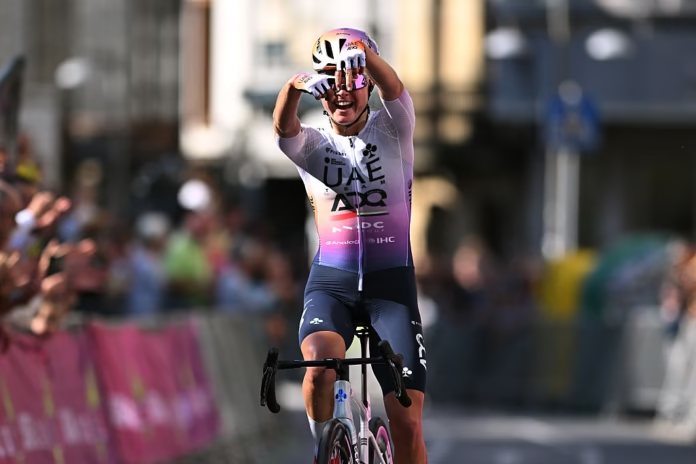
The Tour Féminin International des Pyrénées 2026 begins with a stage that looks manageable on paper but could still shape the race before the Tourmalet. Stage 1 takes the riders from Saint-Jean-de-Luz to Mourenx over 118.6km, moving from the Basque coast into Béarn on a rolling route that should suit puncheurs, strong finishers and GC riders who want to stay out of trouble.
This is not the queen stage. That comes on stage 2, when the race heads over the Col du Tourmalet on the road to Bagnères-de-Bigorre. But stage 1 is still important because the Tour Féminin International des Pyrénées is only three days long. There is no time to recover from a careless split, a late crash or poor positioning before the mountains.
The opening stage should be the best chance for faster riders and puncheurs, but it is unlikely to be a straightforward sprint. The rolling terrain, the pressure of the first leader’s jersey and the short format should make the finale tense. Teams with GC leaders will want safety. Teams without a Tourmalet favourite will see this as their best opportunity to win a stage.
For the wider picture, see our Tour Féminin International des Pyrénées 2026 full route guide, full start list for Tour Féminin International des Pyrénées 2026 and Tour Féminin International des Pyrénées 2026 contenders preview. UK viewers can also use our guide on how to watch Tour Féminin International des Pyrénées 2026 in the UK.
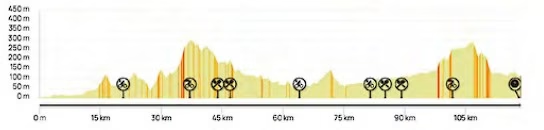
Tour Féminin International des Pyrénées 2026 stage 1 route
Stage 1 runs from Saint-Jean-de-Luz to Mourenx, taking the race inland from the Atlantic coast towards the Pyrenean foothills. It is the least mountainous day of the race, but that should not be confused with an easy stage.
The route is rolling rather than flat, with enough elevation changes to make positioning important. The early part of the day should be nervous as teams try to settle into the race, while the middle section gives attackers a chance to test how much control the bigger teams are willing to take on. The finale into Mourenx should suit a reduced sprint if the race comes back together, but a late move cannot be dismissed.
Key stage 1 details:
- Date: Friday, 12th June
- Route: Saint-Jean-de-Luz to Mourenx
- Distance: 118.6km
- Neutralised start: 10:30 BST
- Official start: around 10:39 BST
- Expected finish: 13:42-14:02 BST
The stage should set the first general classification order, but the more important outcome may be who avoids losing time. With the Tourmalet waiting on stage 2, the GC riders need to arrive in Mourenx safely, close to the front and without wasting too much energy.
Why stage 1 matters
The temptation is to treat stage 1 as the warm-up before the Tourmalet, but that would be a mistake. In a three-day race, the opening stage can decide who is still calm and who is already chasing.
For Paula Blasi, Usoa Ostolaza and Juliette Berthet, the main objective is clear: avoid trouble and reach stage 2 in the front part of the classification. None of them need to win in Mourenx, but none can afford to be caught behind a split or crash. The opening stage is about positioning, focus and making sure the race remains theirs to contest on the Tourmalet.
For riders such as Sofia Bertizzolo, Marie Le Net, Victoire Berteau, Martina Alzini and Eline Jansen, stage 1 is much more than a holding day. This may be their best chance of a stage win. If the finish comes down to a reduced group, they have the speed and race craft to take advantage while the pure climbers keep their focus on stage 2.
The stage also matters for bonus seconds and the first leader’s jersey. A rider who wins in Mourenx may not be the strongest climber in the race, but she will start stage 2 with the jersey, confidence and a small buffer. In a short race, that can still change how teams ride.
How the race could unfold
The first hour should be nervous. The field is large, the race is short, and everyone knows that the second stage will be decisive. That often creates two competing instincts: GC teams want control, while smaller teams know stage 1 is their best opportunity.
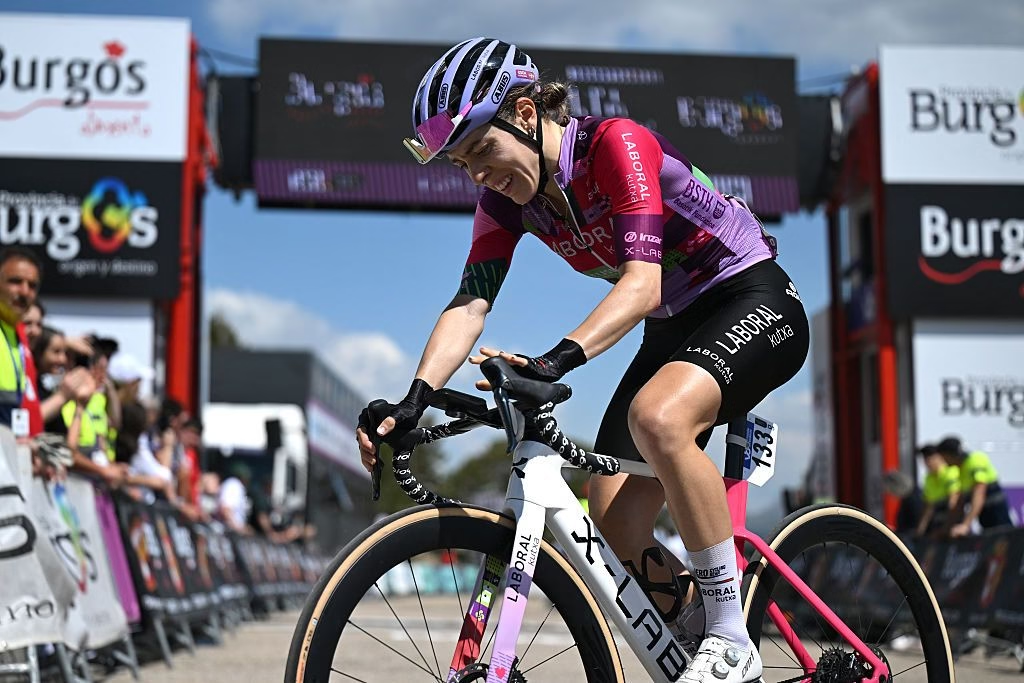
A breakaway is likely to go early, but the composition will matter. If the move is made up of riders far from the GC favourites, it may be allowed some space. If a dangerous rider or strong team representative gets up the road, UAE Team ADQ, Laboral Kutxa-Fundación Euskadi, FDJ United-SUEZ or Cofidis Women Team may have to react sooner.
The middle of the stage should decide whether the breakaway has a realistic chance. If the peloton allows the gap to grow, a committed group could make the finale awkward. If the bigger teams keep the advantage manageable, the race should come back together for a reduced sprint or late attacking finish.
The final kilometres into Mourenx should be tense because different teams will want different outcomes. GC squads will want their leaders safe. Sprint and puncheur teams will want position. Smaller teams may try to anticipate the sprint with a late move. That combination makes the stage more open than a standard bunch finish.
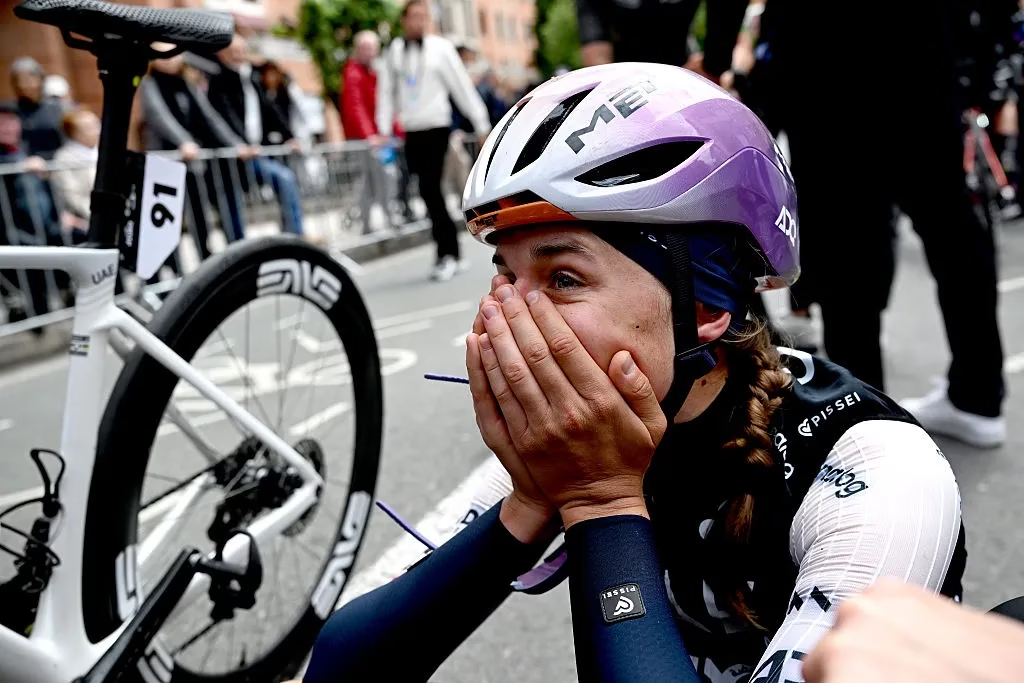 Photo Credit: Getty
GC riders to watch
Paula Blasi starts the race as the leading overall pick. Her Vuelta Femenina success earlier this year changed the way she has to be judged, and UAE Team ADQ have enough depth to protect her properly before the Tourmalet. Stage 1 is not the day she needs to win, but it is the day she needs to keep clean.
Usoa Ostolaza brings the strongest race record. Two overall wins, two stage victories and two podiums from three starts make her the benchmark for the Tour Féminin International des Pyrénées. Laboral Kutxa-Fundación Euskadi will want to keep the opening day controlled enough for her to reach stage 2 without complication.
Juliette Berthet is the steady podium contender. FDJ United-SUEZ have a versatile team around her, and stage 1 gives them several cards to play. Berthet herself should be focused on safety, while riders such as Bertizzolo and Le Net can give the team stage options.
Dominika Wlodarczyk is also important for UAE Team ADQ. She gives the team a second GC rider and may allow them to race with more freedom if the finale becomes selective. Julie Bego and Karolina Perekitko should also be protected by Cofidis Women Team and Mayenne-Monbana-Mypie respectively, with both riders aiming to reach the Tourmalet still in contention.

Stage 1 favourites
Stage 1 looks more suited to puncheurs and fast finishers than pure climbers. The Tourmalet contenders should be present near the front, but the finish in Mourenx may reward a rider with more speed from a reduced group.
Sofia Bertizzolo is one of the clearest options. FDJ United-SUEZ have Berthet for the GC, but Bertizzolo gives them a rider who can target the opener if the race comes back together. She has the speed for a reduced sprint and enough toughness to handle a rolling day.
Marie Le Net gives FDJ another route to the stage. If the finale is more selective, she can be used aggressively, either to soften the race or to follow moves. That gives FDJ one of the strongest stage 1 tactical positions.
Victoire Berteau and Martina Alzini make Cofidis Women Team interesting. Berteau can handle hard racing and may be useful if the stage becomes attacking, while Alzini offers finishing speed if the front group remains large. With Bego protected for the GC, Cofidis have a good balance between stage ambition and overall caution.
Eline Jansen should also be watched. VolkerWessels Cycling Team may not control the race, but Jansen has the profile to make the most of a reduced finish. If the stronger teams hesitate, she is one of the riders who can turn stage 1 into an opportunity.
Paula Blasi is not the obvious pick for a sprint finish, but she remains dangerous if the finale becomes harder than expected. The same applies to Ostolaza, Wlodarczyk and Berthet, who may not need to chase the stage but could take advantage if the race becomes selective.
Outside chances
Sidney Swierenga is one of the most interesting development riders in the race. Liv AlUla Jayco Women’s Continental Team are unlikely to control the stage, but Swierenga has enough stage-race promise to be relevant if the opening day becomes selective. If she is positioned well late on, she could start the race with a useful GC result.
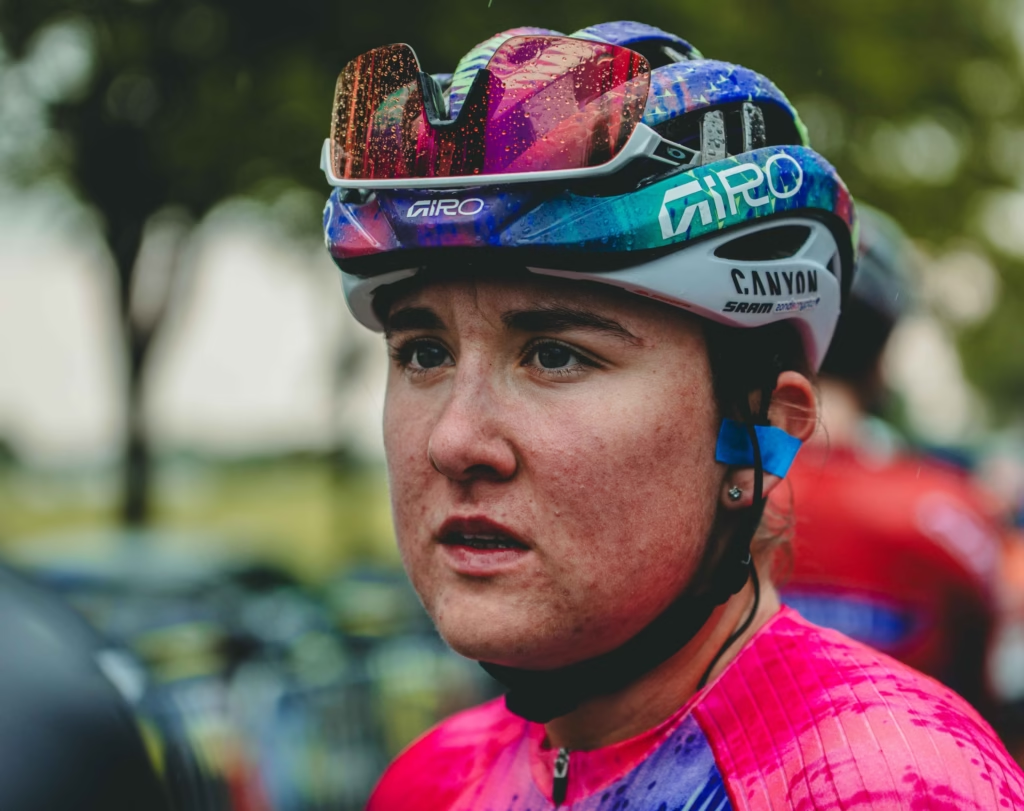
Emily Dixon gives Canyon SRAM Generation a strong option for a hard opening day. Her 2026 form has already shown that she can win and race aggressively, and stage 1 may be a better chance for her than the Tourmalet if the finish favours riders who can handle climbs but still sprint from a reduced group.
Clémence Latimier is worth watching for Ma Petite Entreprise. She is unlikely to be among the biggest favourites, but a rolling opener gives her a chance to stay in the front half of the race and look for a result if the final group is reduced.
Yuliia Biriukova also deserves attention. Her previous record in this race makes her useful for Laboral Kutxa-Fundación Euskadi, and she could become an option if the team wants to protect Ostolaza while still keeping another rider near the front.
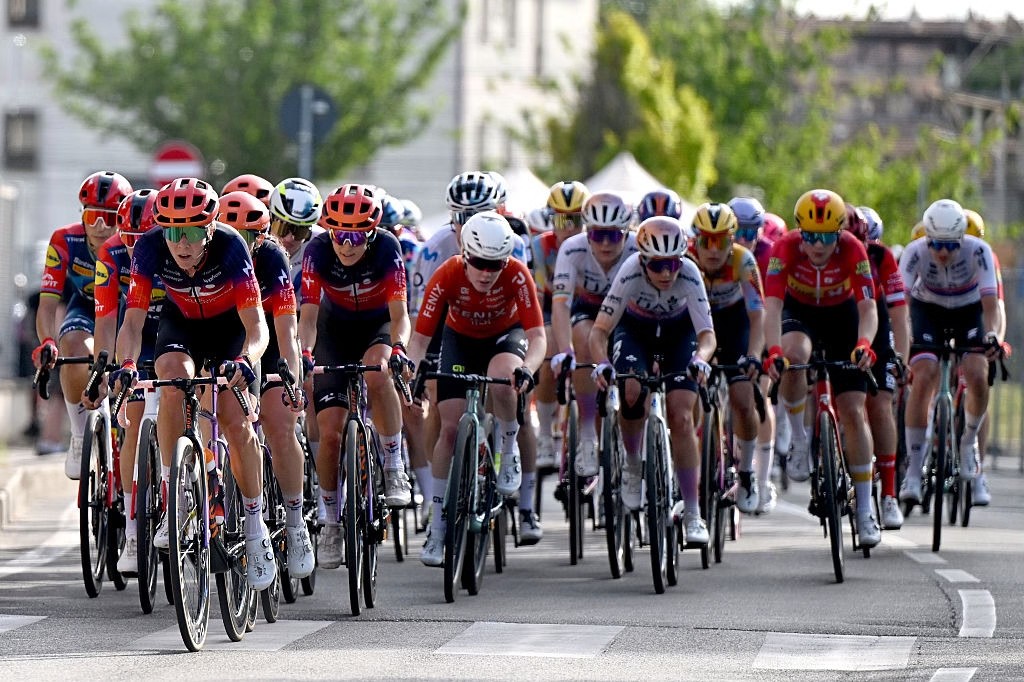 Photo Credit: Getty
Can the breakaway survive?
A breakaway can survive, but it will need the peloton to hesitate. Stage 1 is the best opportunity for smaller teams to get ahead of the favourites, and that should make the opening hour aggressive.
The problem for the break is that several teams have stage-winning options. FDJ United-SUEZ, Cofidis Women Team, VolkerWessels Cycling Team and UAE Team ADQ all have reasons to keep the race close, while Laboral Kutxa-Fundación Euskadi will want to make sure no serious GC threat gains time before the Tourmalet.
The best chance for the breakaway is if it contains no direct GC danger and the bigger teams decide to save energy for stage 2. If the front group is still within reach late on, the peloton should bring it back. If the chase becomes disorganised, the stage could become much more open.
A reduced sprint feels slightly more likely than a breakaway win, but stage 1 is not predictable enough to rule out late attacks.
Stage 1 prediction
Stage 1 should be a controlled but nervous opener. The GC favourites will want safety before the Tourmalet, but the stage hunters will know this is their best chance of the race. That should make the final 30km more aggressive than the profile might suggest.
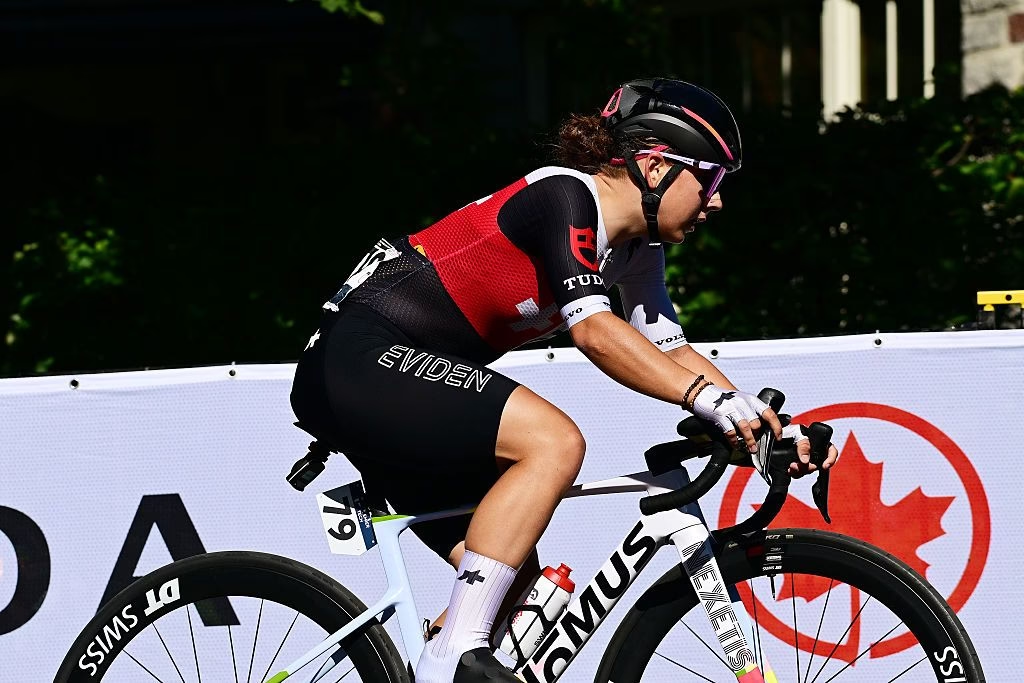
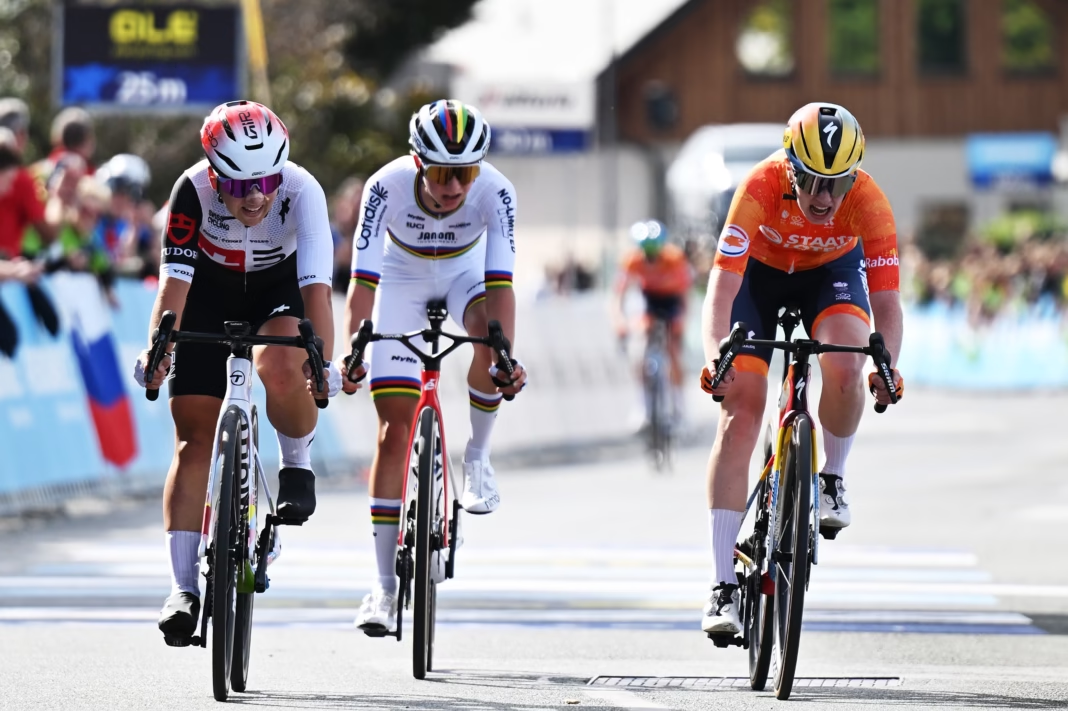
FDJ United-SUEZ look particularly well placed because they have Berthet for GC and several riders who can target the stage. If the race comes back together in Mourenx, Sofia Bertizzolo has the speed and toughness to win from a reduced group. Victoire Berteau, Martina Alzini, Eline Jansen and Marie Le Net should all be close, while Blasi and Ostolaza will be more focused on avoiding trouble before stage 2.
Prediction: Sofia Bertizzolo
Riders to watch on stage 1
- Sofia Bertizzolo
- Marie Le Net
- Victoire Berteau
- Martina Alzini
- Eline Jansen
- Paula Blasi
- Usoa Ostolaza
- Dominika Wlodarczyk
- Juliette Berthet
- Julie Bego
- Sidney Swierenga
- Emily Dixon
- Clémence Latimier

