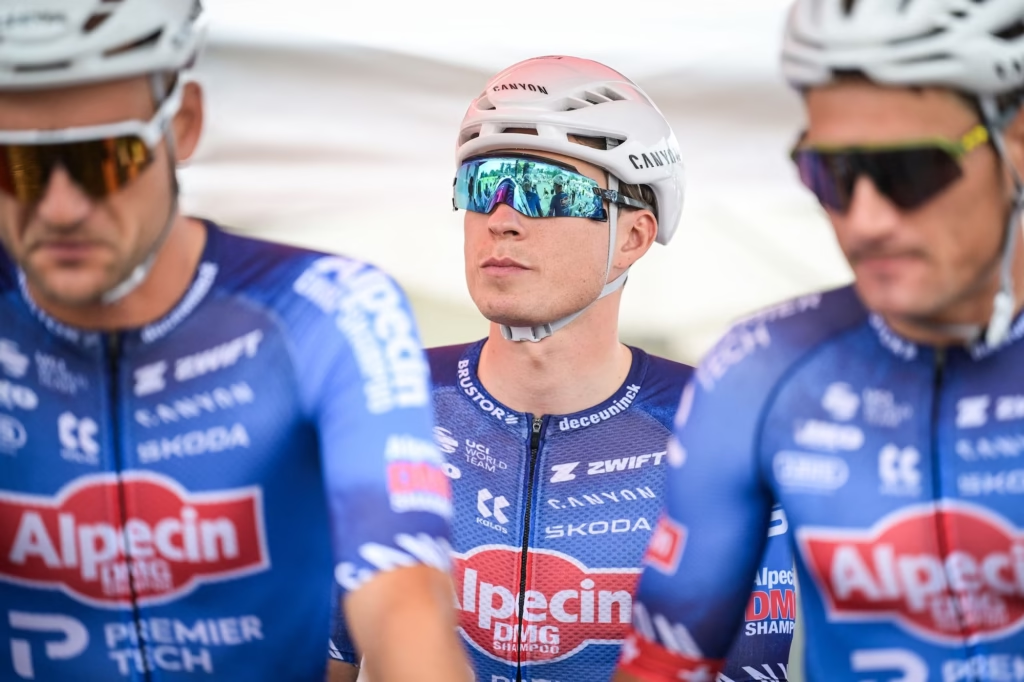
Jasper Philipsen is not out of the sprint picture. That is the first point to make. He is still there in the finales. Alpecin-Premier Tech are still present at the sharp end. The train has not disappeared, and Philipsen has not suddenly become anonymous. The problem is more awkward than that. He is close enough to look like a contender, but not clean enough to win.
That is a dangerous place for a Tour de France sprinter. Olav Kooij already has Pau. Tim Merlier has Bordeaux. Biniam Girmay is placing. Mads Pedersen is still scoring heavily in green. Philipsen, meanwhile, is still waiting for the sprint that makes the race feel like his again.
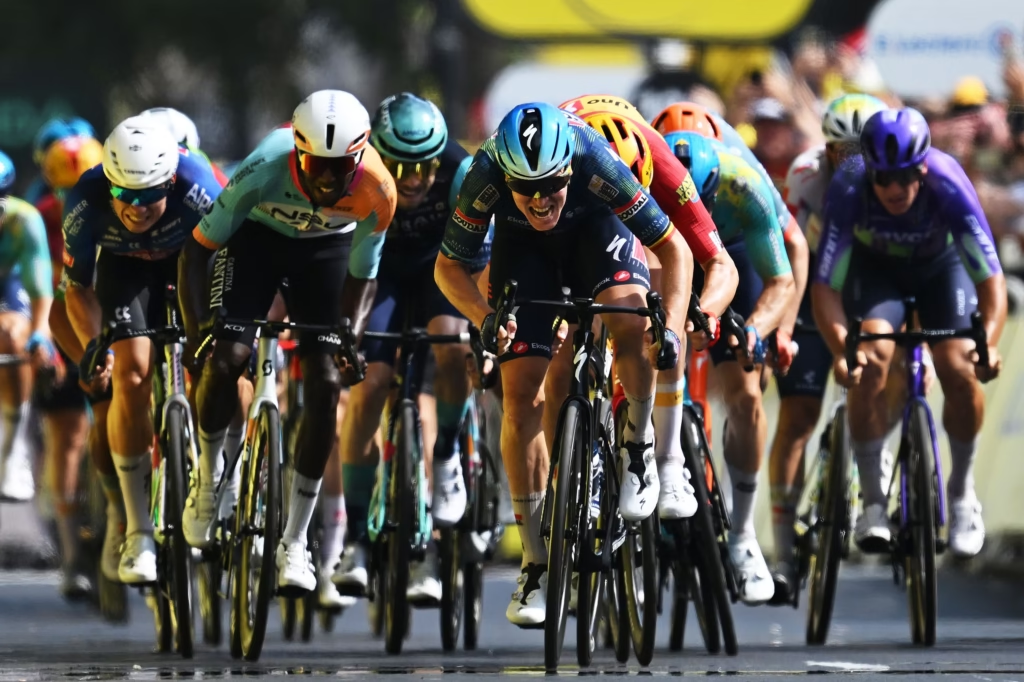
In Bordeaux on stage 7, Alpecin-Premier Tech tried to set up the finish, but the timing went wrong and Philipsen ended up fifth behind Merlier, Søren Wærenskjold, Girmay and Max Kanter. That makes the next sprint more than just another opportunity. For Philipsen and Alpecin-Premier Tech, Bergerac becomes a credibility day.
Our Tour de France 2026 sprinters guide set Philipsen up as one of the obvious names in the stage-win and green jersey battle. The question now is whether the speed is being wasted by the process around it.
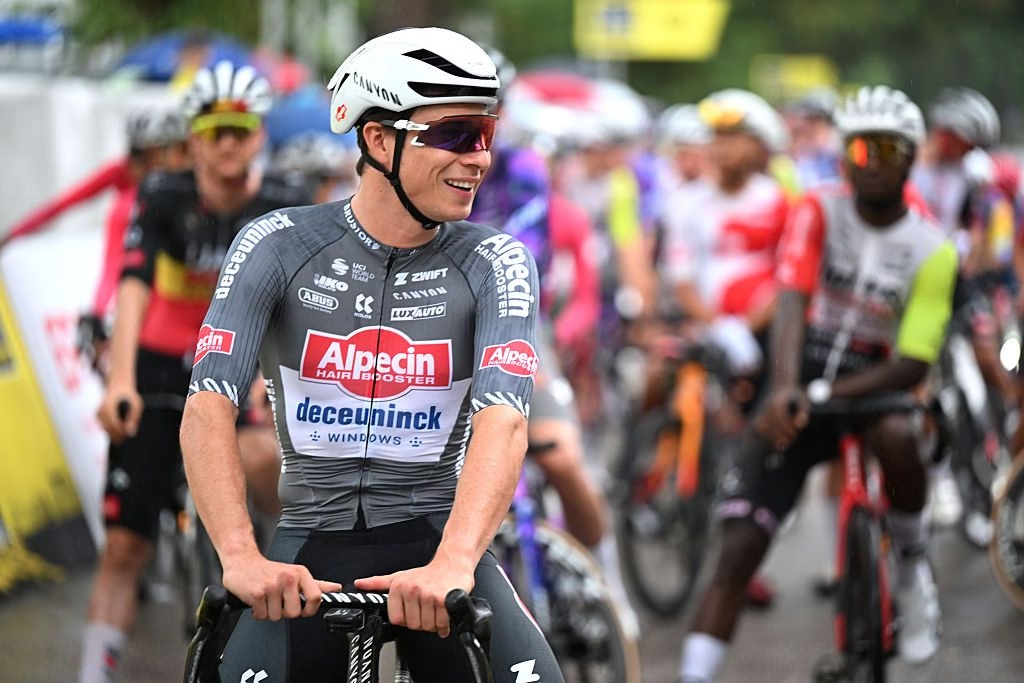 Photo Credit: Getty
The issue is not invisibility, it is conversion
Philipsen’s problem is not that he cannot reach the front.
That would be easier to diagnose. If he was consistently boxed in at 1km to go, dropped by his lead-out, or absent from the top 10, the conclusion would be simple: either the legs are missing or the team structure is failing.
Instead, he is in the right area but not turning that into wins.
That matters because elite sprinting is a ruthless economy. Fifth place in Bordeaux is still a strong result in most normal contexts. In the Tour, for a rider of Philipsen’s status, on a day shaped for sprinters, after his team worked to set him up, it feels like a missed chance.
A fifth place does not end a sprint campaign. But it can reveal where the campaign is wobbling.
Bordeaux exposed the problem
Stage 7 was not supposed to be a complicated stage. The route from Hagetmau to Bordeaux was 175.1km and built towards a bunch finish. The breakaway was caught, the GC teams had little reason to interfere, and the sprinters had their clearest chance since Pau. The stage 7 report told the story of a classic Bordeaux sprint day, with Merlier timing his finish best.
That is why the result matters.
Alpecin-Premier Tech had numbers near the front. Philipsen was not stranded. But the final few hundred metres did not land. He was there early, then faded as Merlier surged through late for the stage win.
That tells us the issue is not basic speed over an entire stage. It is timing, position and momentum in the final sprint. Philipsen was there. He just was not there in the right way.
The legs are probably not the main problem
There is no obvious sign that Philipsen’s legs have gone.
If he was badly off form, he would likely be missing the decisive part of the sprint altogether. He would be losing the wheel earlier, struggling to hold position, or fading before the sprint opened. That is not the pattern.
The problem is subtler. Sprinting is not only a top-speed contest. It is about arriving at the launch point with the right amount of energy, from the right wheel, at the right moment. A rider can be fast enough to win and still lose badly if the final 500 metres are mistimed.
Bordeaux looked like that kind of defeat.
Philipsen had the speed to be in the conversation. He did not have the clean runway to finish the sentence.
A lead-out that is visible but not decisive
Alpecin-Premier Tech’s lead-out is not absent. That is almost part of the frustration.
A weak lead-out vanishes before the race-winning moment. Alpecin are still visible, still working, still trying to impose a shape on the final kilometres. But the train is not yet delivering Philipsen into the decisive position.
That distinction matters. It is not enough to be seen at the front. A lead-out has to control the final without overexposing the sprinter. It has to hold position without launching too early. It has to keep enough force for the last 700 metres, not just the road into the last kilometre.
In Bordeaux, that chain broke somewhere. Philipsen came into view, but not with the final surge that wins Tour stages.
Merlier’s victory made that even more uncomfortable for Alpecin. He found his moment without needing a perfect full-train finish. Philipsen had a visible train and still did not win.
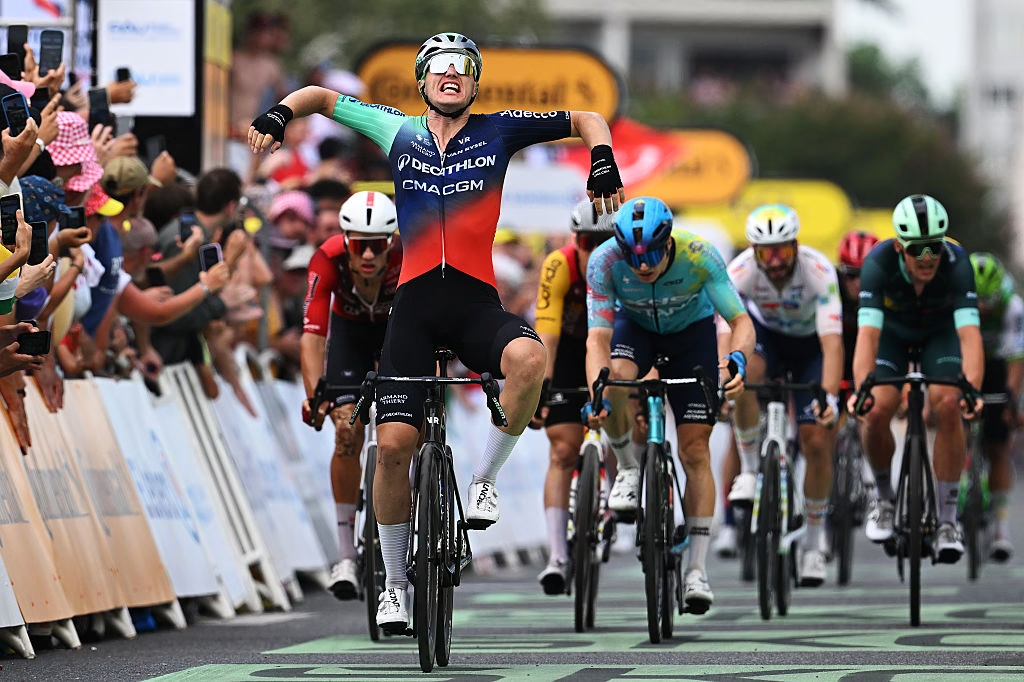 Photo Credit: Getty
Kooij has changed the sprint conversation
Before the race, Kooij could be treated as a major threat, but still one with something to prove at Tour level. That changed in Pau.
His stage 5 win gave the sprint field a new reference point. It was not just a breakthrough result. It altered the hierarchy. Kooij no longer has to be described as a rider who might win at the Tour. He already has.
That has consequences for Philipsen.
Kooij’s win means Philipsen is no longer only being compared with Merlier, Pedersen and Girmay. He is also being compared with a younger sprinter who has already converted. That changes the pressure around every sprint.
Our piece on why Olav Kooij’s Pau win changes the Tour de France sprint picture covered that shift. Bordeaux then pushed the point further, because the next clear sprint did not go to Philipsen
Merlier has become the speed benchmark
Right now, Merlier is the pure-speed reference point.
That does not mean he will be the fastest man on every day. Tour sprints rarely work like that. Wind, road furniture, fatigue, team positioning and timing all change the final. But Merlier has done the most important thing a sprinter can do: he has won.
He was third in Pau, then won in Bordeaux. That is a strong response. It shows that his speed is there, and that his timing can still be decisive even when the finale is messy. That is now the standard Philipsen is chasing.
Not because Philipsen lacks the talent to beat him. He does not. But the Tour does not reward reputation. It rewards the rider who gets the sprint right today. So far, Merlier has done that. Philipsen has not.
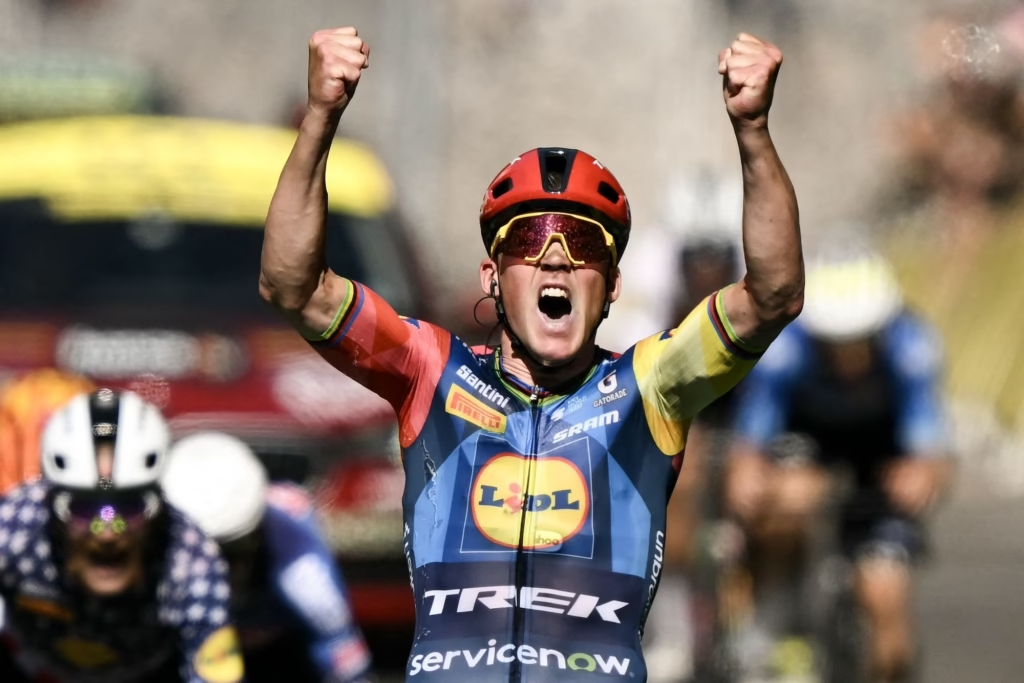 Photo Credit: Getty
Girmay and Pedersen are tightening the margins
The sprint picture is not only about stage wins.
Girmay is placing. Pedersen is scoring. That makes Philipsen’s missed chances more expensive.
Girmay’s third place in Bordeaux matters because he is not simply hanging around the race. He is collecting points and staying relevant in the fast finishes. Pedersen’s case is different again. He does not need to dominate pure bunch sprints if he can keep taking points across intermediate sprints, reduced finishes and harder days.
That puts Philipsen under pressure from both sides.
Merlier and Kooij are taking wins. Girmay is building consistency. Pedersen is shaping the green jersey contest through volume. Philipsen is still looking for the result that changes the story.
Our analysis of whether Mads Pedersen can win green at the Tour de France 2026 explains why this type of steady scoring can be so dangerous for the purer sprinters.
Green is starting to move without him
The green jersey battle does not wait for Philipsen to click.
That is the uncomfortable part. Every sprint day that goes elsewhere creates two losses. There is the missed stage win, then there are the points that other riders bank instead. If Pedersen scores, Girmay places, Merlier wins and Kooij takes another big finish, Philipsen’s path back becomes narrower.
A rider can still rescue a points campaign with a run of wins. Philipsen has the ability to do that. But the number of clean sprint days at a Tour is limited, and the route will not keep offering straightforward finishes forever.
That is why Bordeaux was a warning. It was not a catastrophic result. It was a missed opportunity on the kind of day Philipsen needs to use.
The longer that pattern continues, the more green becomes a secondary battle for him rather than a central target.
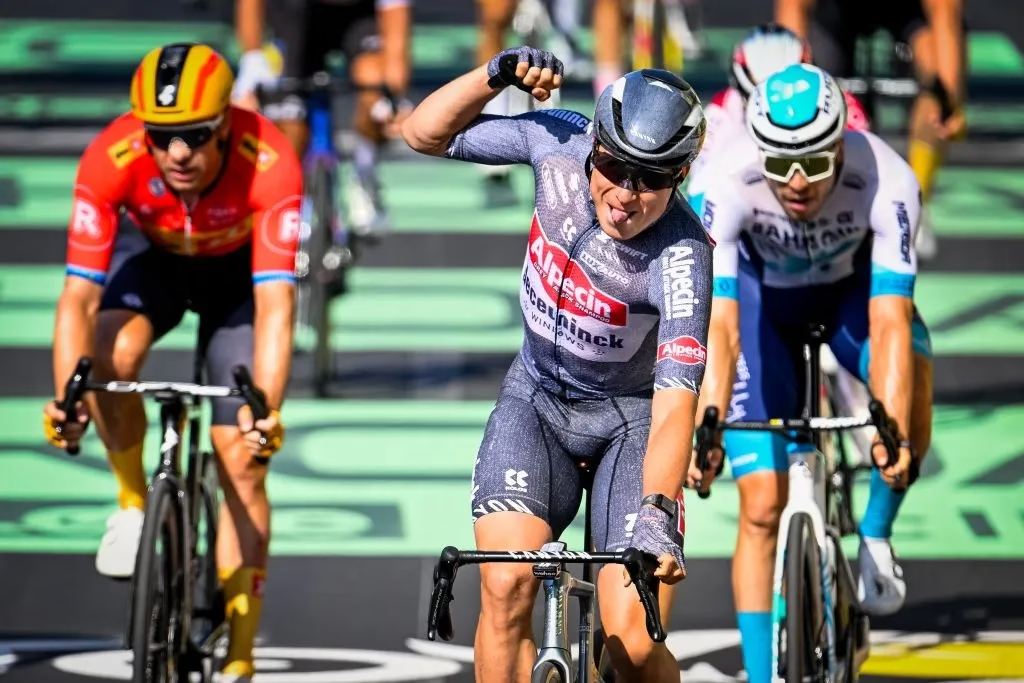 Photo Credit: Getty
Bergerac is no longer just another sprint
Stage 8 to Bergerac is now loaded with meaning for Alpecin-Premier Tech.
On paper, it is another sprint chance. In reality, it is a test of whether the process can be fixed quickly. The Tour de France 2026 stage 8 preview shows why the stage should still favour the fast men despite two category 4 climbs in the second half.
That makes it dangerous for Philipsen in narrative terms.
If he wins, Bordeaux becomes a poorly timed sprint rather than a deeper issue. If he runs second or third after a cleaner launch, the direction of travel improves. If he is again put near the front and again fails to finish it off, the questions get louder.
Bergerac is not must-win in a mathematical sense. But it is close to must-correct.
What Alpecin need to change
The fix is probably not dramatic.
Alpecin do not need to rebuild Philipsen’s sprint from scratch. They need to simplify the final. That means preserving enough riders for the final kilometre, avoiding an early launch, and making sure Philipsen is accelerating through the line rather than defending a position too soon.
They may also need to let other teams carry more of the burden. When a team tries too hard to control a sprint, it can become exposed before the decisive moment. That is especially risky when there are several teams with fast riders and overlapping ambitions.
The key is not just power. It is patience.
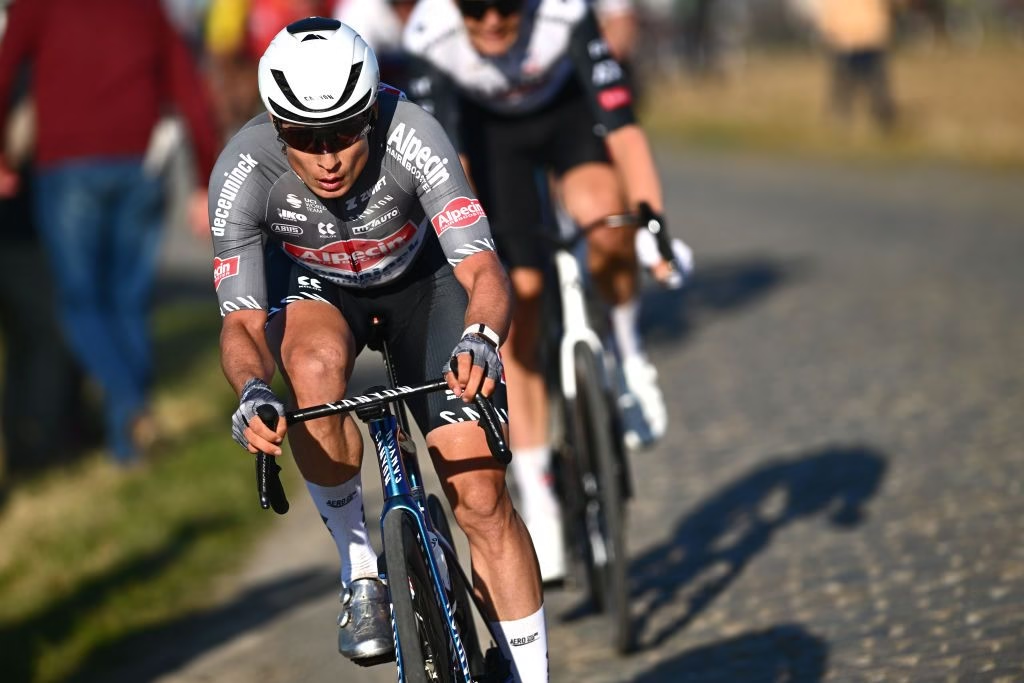
Philipsen’s best wins usually come when he is delivered late, with momentum, and with just enough room to open fully. So far, this Tour has not given him that exact finish.
Pressure can distort the final kilometre
Sprint pressure is different from GC pressure.
A GC rider can sometimes turn a bad day into a controlled loss. A sprinter cannot really do that. There are only so many sprint stages, and every missed one becomes public evidence.
That can distort decision-making. A rider who feels he must win may launch half a second too early. A team that feels it must dominate may burn riders before the right moment. A lead-out under pressure may try to control the road instead of reading it.
That may be part of the Philipsen problem now. The need for a win can start to shape the sprint before the sprint has properly begun.
Bergerac matters because a win would release that pressure. Another miss would add to it.
Not a crisis, but not noise either
This is not a crisis yet. A crisis would be Philipsen missing the front entirely, repeatedly losing his train, arguing publicly with teammates, or showing no finishing speed. That is not where the race is. But it is not nothing.
In Tour sprinting, “nearly” has a short shelf life. The route moves on. The mountains return. Teams lose riders. Heat and fatigue accumulate. A sprinter can go from waiting for his day to realising his best chances have passed.
Philipsen is still close enough to turn this around immediately. That is why the next sprint is so important.
The concern is not that he cannot win. The concern is that others are already doing it.
-
 Photo Credit: Getty
The verdict from the first sprint week
What is going wrong for Jasper Philipsen is not one clean failure.
His legs do not look obviously empty. Alpecin-Premier Tech are not missing from the finales. His positioning is not disastrous. But the final sequence is not working. The launch is not clean enough. The lead-out is not decisive enough. The sprint is not arriving with the force and timing needed to beat Merlier, Kooij, Girmay and the other fast men.
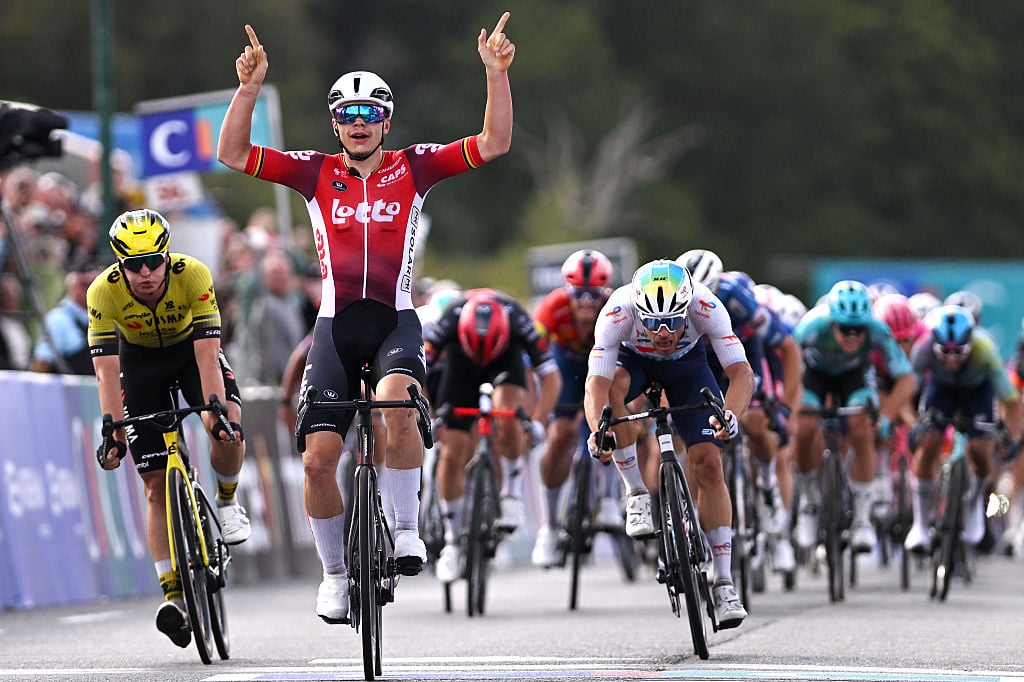
That is why Bordeaux mattered. It was the kind of stage where Philipsen and Alpecin should have imposed themselves. Instead, Merlier took the win, Wærenskjold and Girmay made the podium, Kanter finished fourth, and Philipsen was left fifth.
The response now has to be immediate.
If Philipsen wins in Bergerac, the story resets. If he misses again, it becomes harder to dismiss this as early-race noise. Kooij has already changed the hierarchy. Merlier has set the speed benchmark. Girmay is scoring. Pedersen is still building green.
Philipsen does not need to prove he belongs in the sprint field.
He needs to prove he can still own it.
FAQs
What is going wrong for Jasper Philipsen at the Tour de France?
Philipsen’s main issue appears to be sprint execution rather than a simple lack of speed. He is still present in the finales, but his lead-out timing, positioning and launch have not yet aligned well enough for a stage win.
Where did Jasper Philipsen finish in Bordeaux?
Philipsen finished fifth on stage 7 in Bordeaux. Tim Merlier won the stage ahead of Søren Wærenskjold and Biniam Girmay.
Did Alpecin-Premier Tech get the lead-out wrong?
In Bordeaux, Alpecin-Premier Tech tried to set up Philipsen, but the timing did not work. Philipsen was in the race-winning area, then faded as Merlier came through late.
Has Olav Kooij changed the Tour sprint hierarchy?
Yes. Kooij’s Pau win made him a proven Tour stage winner in this race, not just a possible threat. That puts more pressure on Philipsen and the established sprinters.
Is Tim Merlier now the fastest sprinter at the Tour?
At the moment, Merlier has the strongest claim because he won the clear Bordeaux sprint after finishing third in Pau. Philipsen can still challenge that, but he needs to convert soon.
Can Jasper Philipsen still win the green jersey?
Yes, but it is getting harder. Pedersen is scoring consistently, Girmay is placing, and both Merlier and Kooij have stage wins. Philipsen needs big points quickly before the sprint chances start to run out.
Why does Bergerac matter so much for Philipsen?
Bergerac is another sprint-friendly stage. A win would reset Philipsen’s Tour. Another mistimed finish would increase the pressure on both him and Alpecin-Premier Tech.