

Usoa Ostolaza is reportedly close to joining FDJ-Suez next season, completing a rapid rise from a relatively late arrival in cycling to a proven stage-race contender.
The 28-year-old has developed into the clear leader of Laboral Kutxa, but is expected to move to the French Women’s WorldTeam unless negotiations change at a late stage.
It would place Ostolaza alongside Demi Vollering in one of the strongest stage-racing squads in the women’s peloton, while leaving Laboral Kutxa without the rider who has delivered many of its most significant results.

Ostolaza’s results have earned a WorldTour move
This is not a transfer based on potential alone.
Ostolaza won the Spanish road race title in 2024 and claimed overall victory at the Tour Féminin International des Pyrénées in both 2024 and 2025. Those performances established her as a strong climber, but her results in 2026 have shown she can also compete consistently at Women’s WorldTour level.
She finished fourth overall at La Vuelta Femenina, seventh at Itzulia Women and third at the Vuelta a Burgos Feminas. Taken together, those results place her firmly among the strongest stage racers outside the established group of Grand Tour favourites.
Ostolaza is no longer a rider simply capable of producing an occasional result on familiar Spanish roads. She has become a genuine general classification option across difficult, multi-day races.
A move to FDJ-Suez is therefore a logical next step.

A different role alongside Demi Vollering
Ostolaza has carried considerable responsibility at Laboral Kutxa. She has been the team’s strongest climber, its main stage-race leader and the most visible example of its development as an increasingly competitive professional team.
Her role at FDJ-Suez would be different.
With Vollering established as one of the sport’s leading Grand Tour and Classics riders, Ostolaza would not automatically arrive as the team’s first option at the biggest races. She could instead become an important mountain domestique, a second tactical card and a protected leader at selected stage races.
That would not diminish her position. The strongest teams increasingly need several riders capable of remaining in contention deep into decisive mountain stages.
Ostolaza could support Vollering at the Tour de France Femmes and La Vuelta Femenina while still receiving opportunities in races where FDJ-Suez require greater leadership depth.
Her climbing ability, consistency and experience of carrying a team already make her suited to that role.

An unconventional route into professional cycling
Ostolaza’s progression has been particularly striking because she did not follow the usual junior development pathway.
She moved towards cycling after a shoulder injury affected her swimming, having previously competed in duathlon and triathlon. Laboral Kutxa noticed her after she began racing in the Torneo Euskaldun, beginning a development process that has taken her from regional competition to the upper end of the professional peloton.
At 28, Ostolaza is approaching what would normally be considered a rider’s peak years. However, she still has relatively limited experience in elite road racing compared with many of her rivals.
FDJ-Suez may believe there is further improvement available once she enters a deeper squad with greater performance support and fewer demands to lead at every suitable race.

Laboral Kutxa face a major loss
For Laboral Kutxa, Ostolaza’s departure would remove both their strongest rider and the central figure in the team’s recent development.
Her results have given the Basque structure greater visibility and helped demonstrate that it can develop riders capable of competing against the best teams in the world.
That success also creates a familiar problem. Once a rider reaches Ostolaza’s level, teams with larger budgets, stronger support structures and more ambitious Grand Tour programmes become difficult to resist.
Laboral Kutxa are reportedly preparing for the future by signing Maite Urteaga from Eulen-Amenabar. Urteaga has won the Torneo Euskaldun and dominated the Gipuzkoako Itzulia, making her one of the most promising riders in the Basque development system.
She should not be expected to replace Ostolaza immediately, but her progression would continue the local pathway that helped produce Ostolaza.
-
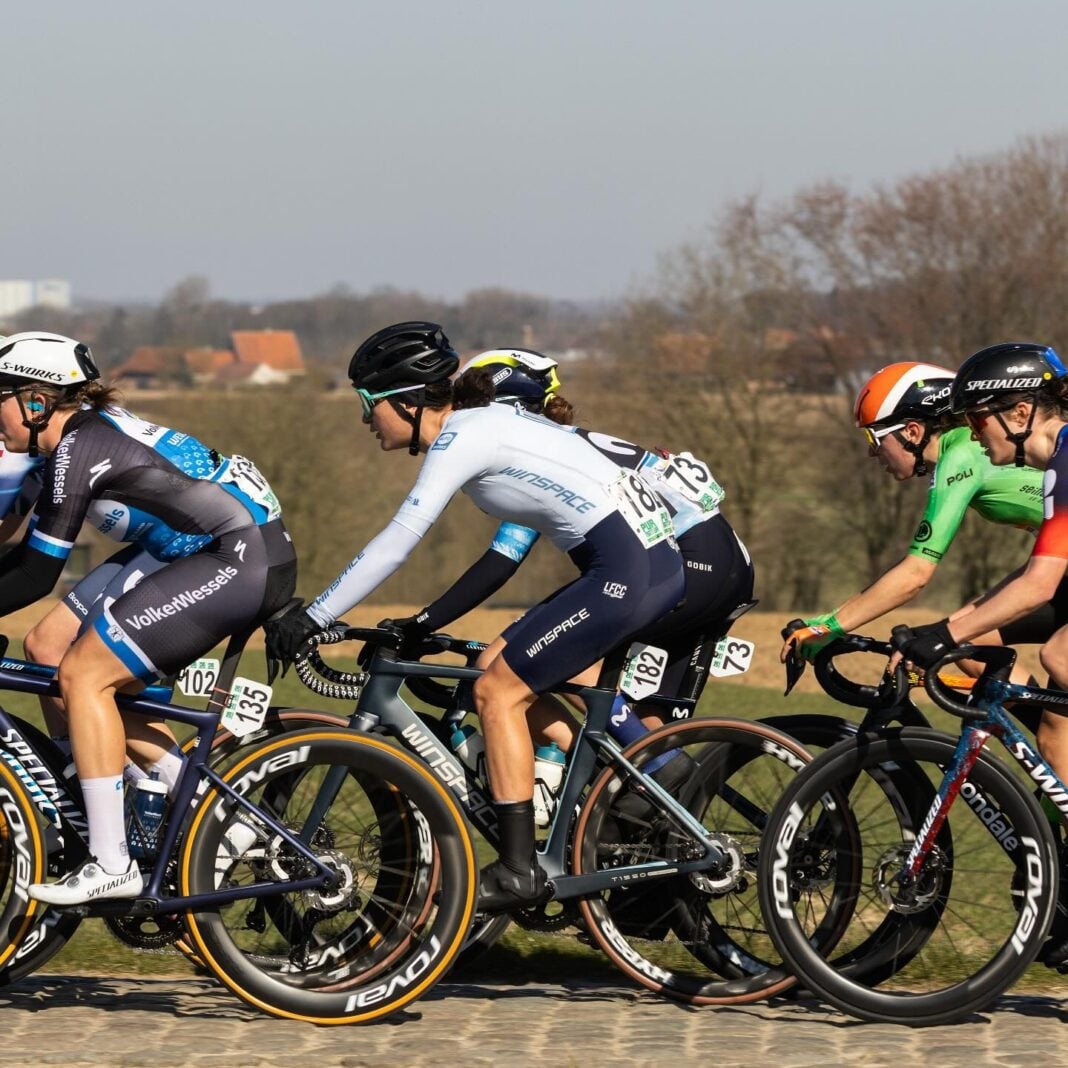
 Photo Credit: quentinphotographiebe
 -
 Photo Credit: Getty


A transfer that reflects Ostolaza’s new status
Ostolaza has moved beyond being described as a surprise performer.
Her Spanish title and two victories at the Tour Féminin International des Pyrénées showed her climbing ability. Her performances at La Vuelta, Itzulia and Burgos have now confirmed that she can contend consistently across higher-level stage races.
FDJ-Suez would be signing a rider who can strengthen Vollering’s support group, provide an alternative leadership option and target results of her own.
Laboral Kutxa would lose the defining rider of its recent rise, but the transfer would also validate the development work behind her progress.
For Ostolaza, it would be a deserved opportunity to discover how far her unconventional career can go inside one of the strongest teams in women’s cycling.

