
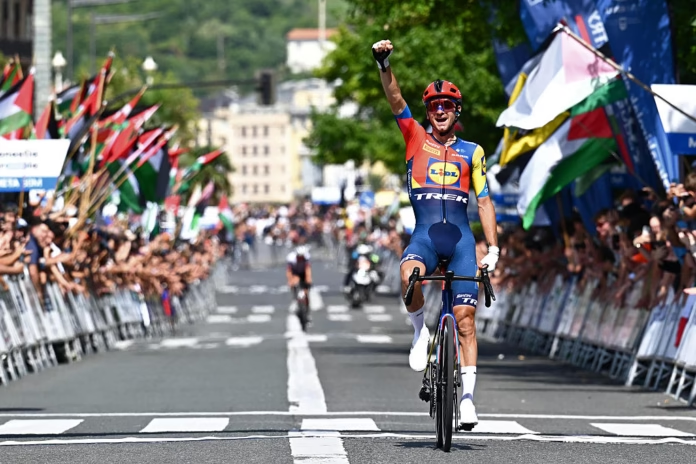
The Donostia San Sebastian Klasikoa is one of those races that explains itself through the road.
It is not a Monument, but it often feels closer to that level than most one-day races below cycling’s five sacred names. It has history, terrain, identity and a finish that usually rewards more than pure speed. To win in San Sebastian, a rider generally needs climbing legs, timing, nerve and enough punch left after the Basque Country has spent more than 200 kilometres grinding them down.
The race began in 1981 and quickly became the great summer one-day test for riders coming out of the Tour de France. Its place on the calendar has always been part of its character. The Tour has ended, the legs are still sharp, fatigue is still in the system, and the peloton arrives in Gipuzkoa for something that looks simple on paper but rarely rides that way.
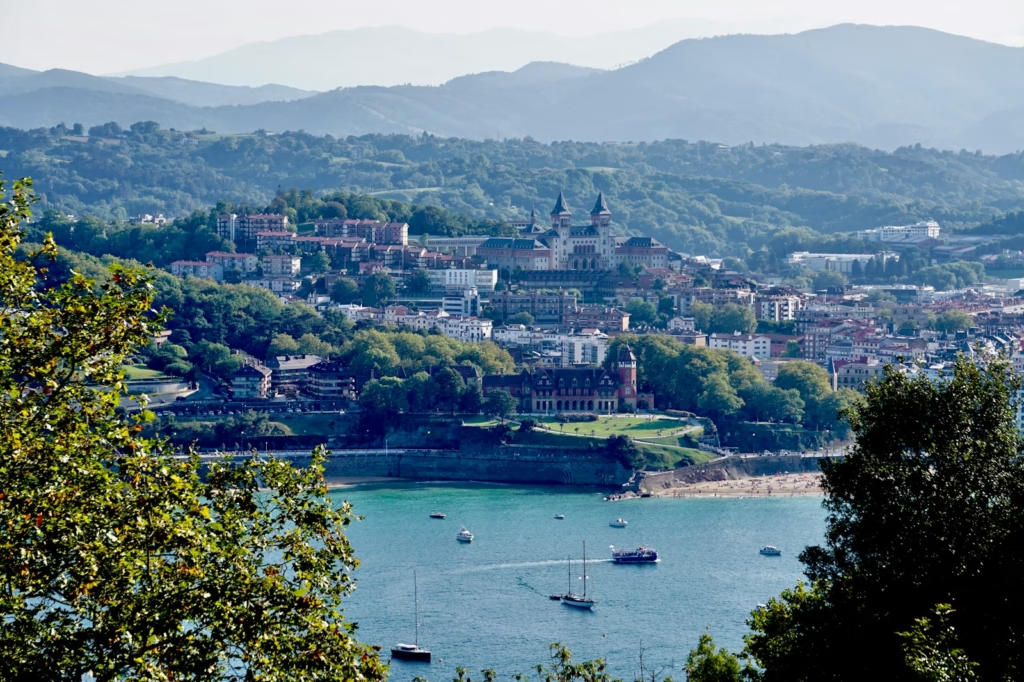
San Sebastian is a Classic built around repetition: the city, the coast, the Basque climbs, the crowds, the final selection. But it has also changed with the sport around it. The climbs have shifted, the final has been reworked, the race has moved through cycling’s World Cup, ProTour and WorldTour eras, and the list of winners has become a roll-call of riders who could hurt a race without needing a three-week platform.
For more on the region’s cycling identity, our guide to why Basque Country works so well for a cycling trip explains why San Sebastián and Bilbao have become such strong bases for riding and race watching.

A Basque Classic from the start
The first edition was held in 1981, giving Spain a one-day race with genuine international weight at a time when the sport’s biggest single-day prestige was still concentrated elsewhere.
San Sebastian gave the Basque Country a different kind of showcase. The region already had a deep cycling culture, but the Klasikoa created an annual event that could sit alongside the biggest stage-race stories rather than being swallowed by them. It also gave climbers and aggressive all-rounders a one-day target that suited them better than the flatter spring Classics.
The race’s early identity was shaped by its geography. San Sebastian was not only the host city. It became the race’s emotional anchor. The route could change, but the basic shape remained familiar: leave the city, push into Basque terrain, climb, descend, repeat, then return for a finale that rarely forgave hesitation.
That is why the Klasikoa has always felt different from a generic summer race. It is tied to place, not just date.
Marino Lejarreta gave it an immediate local legend
The first great name in the race’s history was Marino Lejarreta.
Lejarreta won the first two editions in 1981 and 1982, then added a third victory in 1987. That made him the original ruler of the race and gave the Klasikoa something every young event needs: a home-region story with genuine sporting credibility.
Lejarreta was not just a local rider picking up a local race. He was a Grand Tour winner, a major Basque figure and a rider with the climbing range to make San Sebastian feel like a natural extension of his talents.
His three wins still matter because they shaped how the race was understood. This was not a race for pure sprinters. It was a race for riders who could climb, read hard terrain and still finish the job after repeated efforts.
That basic identity has never really gone away.
The race found its place below the Monuments
The Donostia San Sebastian Klasikoa has often been described as one of the most prestigious one-day races outside the Monuments.
That is partly because of the winners. It is also because of the type of rider the race rewards. A San Sebastian winner often looks like a rider who could win Liège-Bastogne-Liège, contend in Lombardia, climb well in a Grand Tour or attack from distance in a hilly Classic.
The race does not have the cobbled mythology of Paris-Roubaix or the scale of Milan-San Remo. It does not have Flanders’ bergs or Lombardia’s autumn weight. But it has its own logic: a hard Basque one-day race, usually close to the Tour, with climbs that make the race selective without turning it into a pure mountain stage.
That space has been valuable. It gives the calendar a bridge between the Tour’s three-week exhaustion and the late-season hilly Classics. Riders can carry Tour form into San Sebastian, but they still have to race it properly. Reputation is not enough.
Jaizkibel became the race’s great landmark
No climb is more closely associated with the Klasikoa than Jaizkibel.
The climb has been central to the race’s personality for years, even as the final structure has changed. It gives the route weight and recognisable difficulty. It is not the steepest or most explosive climb in world cycling, but in the context of San Sebastian it works because of where it sits and what it does to the bunch.
Jaizkibel has often served as a sorting mechanism. It reduces the peloton, tests the legs of riders coming from the Tour and sets up the tactical phase before the race returns towards San Sebastian.
That is the beauty of the Klasikoa. It is not usually decided by one isolated climb in the way a summit finish is. Instead, the climbs create a chain of pressure. Jaizkibel hurts riders. Later climbs expose them. The final kilometres punish anyone who has spent too much too early.
For a race that needed a recognisable symbol, Jaizkibel became the right one.
The finish kept evolving
The early image of the Klasikoa was built around long-distance selection and a return to San Sebastian. Over time, the final changed as organisers looked for a harder, more decisive ending.
The arrival of steeper late climbs, especially the Murgil-Tontorra, changed the race’s final rhythm. It gave the Klasikoa a sharper modern finale, one where the decisive attack could come much closer to the finish. That made the race more television-friendly and often more explosive.
The trade-off is obvious. A very hard late climb can concentrate the action and reduce the importance of earlier phases. But in San Sebastian, the balance has generally worked. The earlier climbs still matter because they soften the race. The final climb then gives the strongest riders a place to finish the job.
That has helped the race stay relevant in the modern calendar. It is still recognisably the Klasikoa, but it has adapted to the demands of contemporary one-day racing.
Indurain’s win linked the race to Spain’s biggest era
Miguel Indurain won the Klasikoa in 1990, just before his Tour de France dominance began.
That victory is useful historically because it links San Sebastian to Spain’s biggest modern cycling era. Indurain would soon become a five-time Tour de France winner and the defining Grand Tour rider of the early 1990s, but his San Sebastian win sits just before that full transformation.
It also shows the type of rider the race could reward. Indurain is remembered most for time trials, control and Grand Tour dominance, but he was also powerful enough to impose himself on difficult one-day terrain. San Sebastian has always had room for riders like that: not necessarily pure puncheurs, not necessarily pure climbers, but elite riders with depth.
His win did not define the race in the way Lejarreta’s three victories did, but it added heavyweight status to the palmarès.
The 1990s and 2000s gave it international weight
As the race matured, its winners became increasingly international.
The 1990s and 2000s brought victories for riders such as Claudio Chiappucci, Gianni Bugno, Lance Armstrong, Francesco Casagrande, Laurent Jalabert, Paolo Bettini and Leonardo Bertagnolli. Some names carry more complicated legacies than others, but taken as a racing list it shows how quickly San Sebastian became a target for major riders.
Jalabert won twice, in 2001 and 2002. Bettini won in 2003. The pattern was clear: this was a race for riders with climbing ability, finishing punch and tactical sense.
Those years also placed the Klasikoa inside the wider story of professional cycling’s most unstable era. The race was prestigious enough to attract the stars, but like the rest of the sport, it cannot be separated from the period’s credibility problems. Its history includes great racing, but it also sits inside the same difficult context as the Grand Tours, Ardennes Classics and other one-day races of the time.
That does not make the race less important. It makes its history more real.
The WorldTour years made it a fixed summer reference point
The Klasikoa’s modern importance is partly built on its place in the top tier.
As professional cycling moved through the World Cup, ProTour and WorldTour structures, San Sebastian remained a major one-day event with international relevance. It became a fixed summer reference point: the first major one-day race after the Tour de France and a natural target for riders who had left the Tour with form rather than exhaustion.
That position is one of the race’s greatest strengths.
Some riders arrive from the Tour with three weeks of racing in their legs and one final effort still available. Others skip the Tour and use San Sebastian as a major objective in its own right. That creates an unusual field: Grand Tour riders, climbers, Classics specialists, puncheurs and stage hunters all meeting on terrain that gives most of them at least a theoretical route to victory.
The result is often racing that feels less predictable than a pure sprinters’ Classic or a pure climbing race.
The same WorldTour structure now shapes how both the men’s and women’s calendars are understood. Our explainer on what the Women’s WorldTour is gives the parallel context for the top level of the women’s sport.
Remco Evenepoel turned it into his personal launchpad
Remco Evenepoel has become one of the defining modern figures in the race.
His 2019 victory was extraordinary because of his age and the manner of the win. Still a teenager, he attacked from distance and rode away to one of the most startling one-day victories of the modern era. It was the day San Sebastian became a global announcement rather than just another line on his early palmarès.
He then returned to win again in 2022 and 2023, making himself a three-time winner and joining Lejarreta on the race’s all-time record mark.
Evenepoel’s relationship with the Klasikoa says a lot about the race. It rewards riders who can attack early, sustain power, climb, descend and finish alone. It is not only a race for waiting until the last kilometre. If a rider has the engine and confidence, San Sebastian can still be broken open.
That is why Evenepoel’s wins feel so fitting. The race gave him a stage, and he used it in exactly the way it invites: attack, commit, and make everyone else chase.
Recent winners show the race still has range
The recent palmarès has kept the Klasikoa feeling modern.
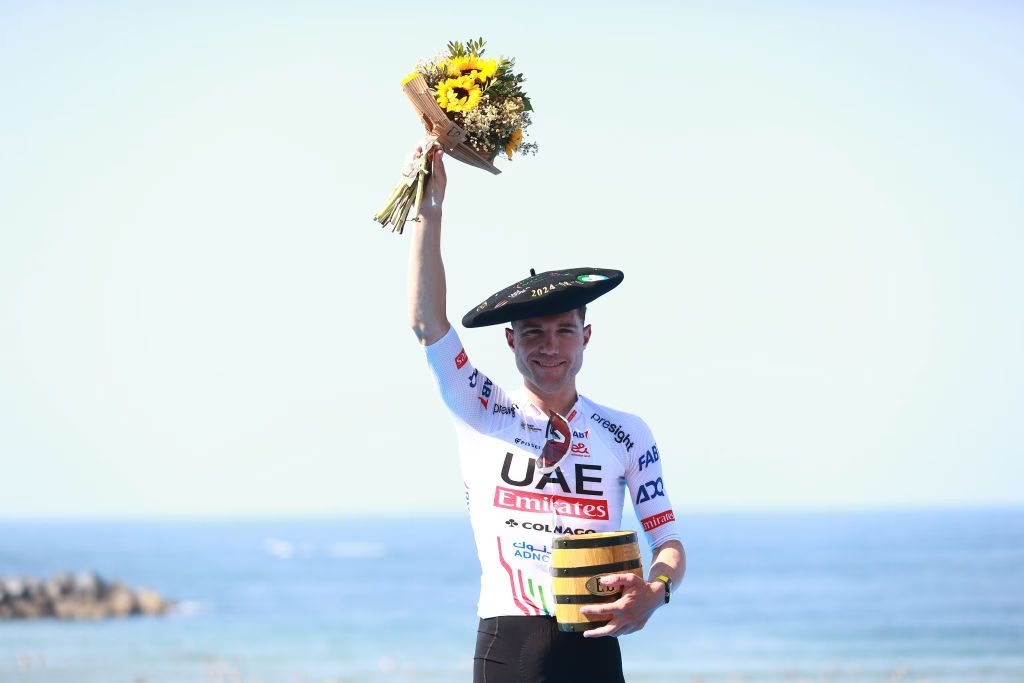
Neilson Powless won in 2021, becoming the first American winner of the race. Evenepoel took back-to-back victories in 2022 and 2023. Marc Hirschi won in 2024, adding another punchy, explosive winner to the list. Giulio Ciccone then won in 2025, attacking on the final Murgil-Tontorra climb and holding off the chase into San Sebastian.
That run shows the range of the race. Powless brought opportunism and resilience. Evenepoel brought long-range power. Hirschi brought punch and timing. Ciccone brought climbing sharpness and a late-race attack.
The race can still produce different types of winner, but almost all of them share the same essentials. They have to climb, read the moment and finish with conviction.
The women’s race was brief but important
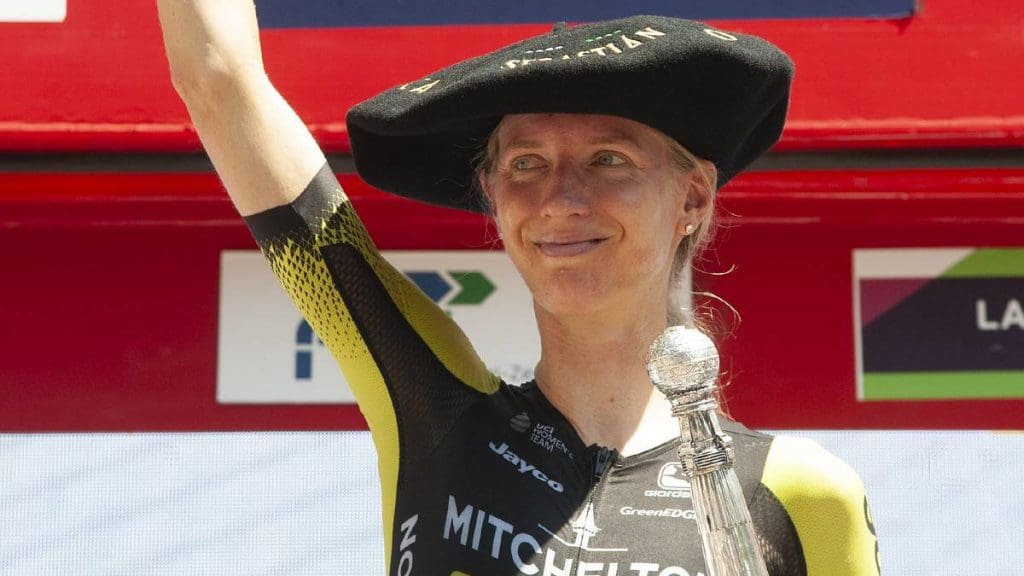
The women’s Donostia San Sebastian Klasikoa was held in 2019 and 2021, with Lucy Kennedy winning the first edition and Annemiek van Vleuten winning the second.
Its short life matters because it showed there was space for a women’s race built around the same Basque one-day identity. The 2019 women’s edition used a route that included Jaizkibel, giving it a direct link to the character of the men’s event.
The race did not continue as a standalone fixture after 2021, with the women’s Basque calendar shifting towards Itzulia Women from 2022. That gave the region a stage race rather than a one-day Klasikoa, and it has become an important part of the Women’s WorldTour.
There is still a slight sense of unfinished business. A women’s San Sebastian Classic had the right terrain, the right host city and the right place in the calendar to become more than a side event. Its replacement by Itzulia Women gave riders a bigger stage-race platform, but it also meant the women’s peloton lost a distinctive one-day Basque Classic.
That link has not completely disappeared. Itzulia Women 2026 stage 3 starts and finishes in Donostia, using a route with a clear San Sebastian-style feel. Our Itzulia Women 2026 full route guide also shows how the Basque women’s race now carries some of that same terrain and identity.
Why the Klasikoa matters to Basque cycling
The Klasikoa is not just a race that happens in the Basque Country. It is part of how the region expresses its cycling culture.
Basque fans give races a different feeling. The roadside presence, the flags, the noise and the knowledge of the sport make the Klasikoa feel rooted. This is not a race imported into a neutral backdrop. It belongs to the place.
That matters because cycling has lost some of its local texture as teams and calendars have become more global. San Sebastian still feels specific. The city, the climbs, the coast and the Basque crowd all help protect the race from becoming just another WorldTour date.
It is also important because Spain does not have many one-day races with comparable international weight. The Vuelta a España remains the country’s Grand Tour, but San Sebastian is its great one-day calling card. The region’s stage-race history runs deeper still, as shown by our brief history of Itzulia Basque Country.
The race’s identity in one sentence
The Donostia San Sebastian Klasikoa is the summer Classic for riders who can climb like stage racers, attack like Classics riders and still have enough nerve left to finish the job in the Basque Country.
That is why it has lasted.
It is not the longest Classic. It is not the oldest. It is not a Monument. But it has always had a clear sporting argument. The route is hard enough to matter, selective enough to create a real winner and familiar enough to carry memory from one edition to the next.
A race does not need to be ancient to feel historic. It needs to produce recognisable patterns and meaningful winners. San Sebastian has done that since 1981.
-
 Photo Credit: Getty


Winners who shaped the race
| Rider | Why they matter |
|---|---|
| Marino Lejarreta | First great figure of the race, three-time winner and Basque icon |
| Miguel Indurain | Linked the race to Spain’s greatest Grand Tour era |
| Laurent Jalabert | Back-to-back winner in 2001 and 2002 |
| Paolo Bettini | Perfect example of the punchy Classics rider suited to San Sebastian |
| Remco Evenepoel | Modern three-time winner and long-range attacking symbol |
| Neilson Powless | First American winner, showing the race’s global reach |
| Marc Hirschi | Modern puncheur winner in 2024 |
| Giulio Ciccone | 2025 winner after a decisive late climb attack |
The legacy of San Sebastian
The Donostia San Sebastian Klasikoa has never needed to pretend to be a Monument.
Its strength is that it knows what it is. A hard Basque one-day race. A summer test. A Tour de France aftershock. A race for climbers with punch, puncheurs with endurance and Grand Tour riders who still have one more explosive effort left.
That clarity has carried it through more than four decades.
From Lejarreta’s early Basque dominance to Evenepoel’s modern long-range attacks, the Klasikoa has repeatedly found winners who fit its terrain. Its history is not built on one dynasty, but on a consistent idea: the road out of San Sebastian will eventually find out who still has strength, courage and timing.
That is why the race remains one of cycling’s most respected one-day prizes outside the Monuments. Not because it tries to be something else, but because it has become very good at being itself.

