
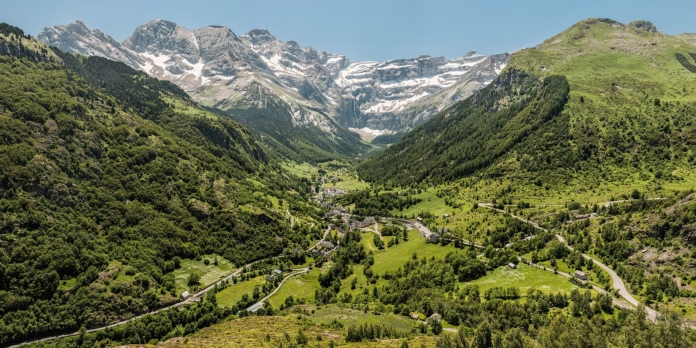
Gavarnie-Gèdre is a mountain commune in the Hautes-Pyrénées department of south-west France, deep in the French Pyrenees near the Spanish border. In Tour de France terms, it is the stage 6 summit finish after the Col d’Aspin and Col du Tourmalet, with riders climbing towards the famous Cirque de Gavarnie at the end of the first major mountain day of the 2026 race.
It is not a familiar Tour finish in the way Alpe d’Huez, Luz Ardiden or Hautacam are familiar. That is exactly why it stands out. The finish name looks like a remote mountain village because that is what it is: a small Pyrenean destination known more for hiking, UNESCO scenery and high-mountain tourism than for repeated Tour de France set-pieces.
Stage 6 of the 2026 Tour runs 186.2km from Pau to Gavarnie-Gèdre, with 4,100m of climbing and a final category 2 climb after the Tourmalet. For the broader race context, see our Tour de France 2026 stage 6 preview and our Tour de France 2026 Pyrenees guide.
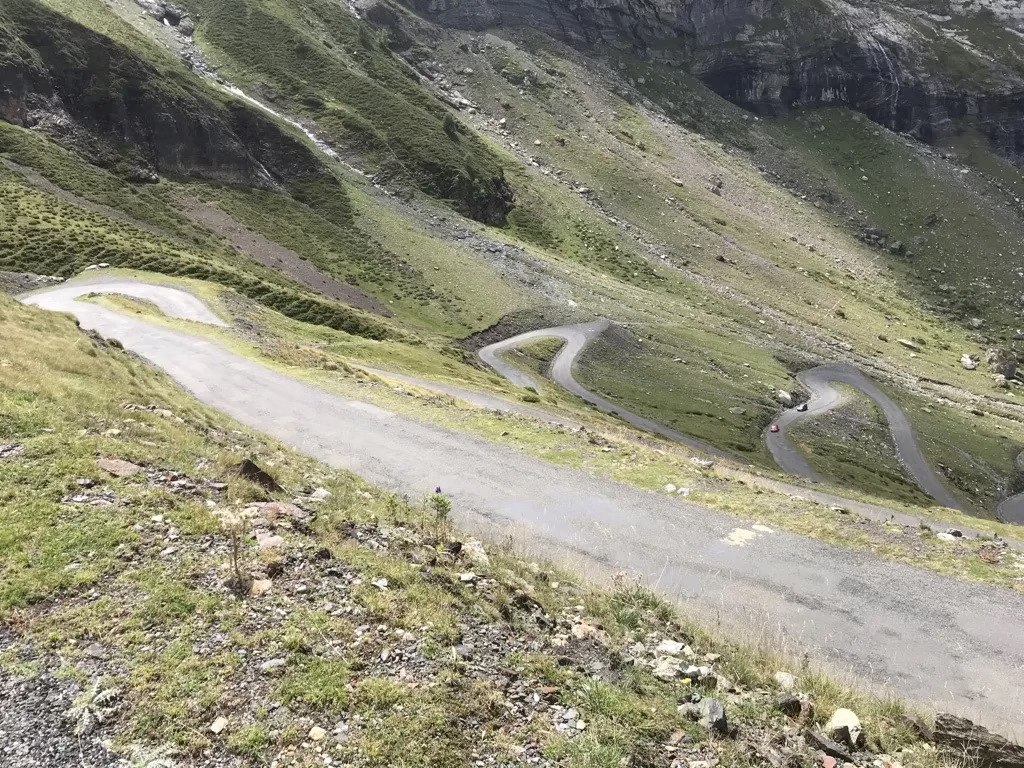
Quick answer: where is Gavarnie-Gèdre?
Gavarnie-Gèdre is in the Hautes-Pyrénées, in the Occitanie region of France. It sits in the high Pyrenees, close to the Cirque de Gavarnie and the French-Spanish border. In the 2026 Tour de France, it hosts the stage 6 summit finish after riders climb the Col d’Aspin and Col du Tourmalet.
| Detail | Gavarnie-Gèdre |
|---|---|
| Country | France |
| Region | Occitanie |
| Department | Hautes-Pyrénées |
| Mountain range | Pyrenees |
| Tour stage | Stage 6, Pau to Gavarnie-Gèdre |
| Finish type | Category 2 summit finish |
| Final climb | 18.7km at around 4% |
| Key nearby landmark | Cirque de Gavarnie |
| Why it matters | Long uphill finish after the Tourmalet |
Why has the Tour de France gone to Gavarnie-Gèdre?
The Tour has gone to Gavarnie-Gèdre because it gives the race something slightly different from a standard Pyrenean summit finish.
It is not simply a wall at the end of the stage. It is a long approach into a spectacular high-mountain setting, with the final climb coming after two more famous Pyrenean ascents. The location also lets the Tour use the Tourmalet without finishing on it, which creates a more complicated tactical stage.
That matters because the Tourmalet is the climb every casual viewer recognises. Gavarnie-Gèdre is the finish that decides what the Tourmalet means. If the favourites attack on the Tourmalet, they still have more than 38km to manage before the line. If they wait for Gavarnie-Gèdre, they risk leaving the stage to the breakaway and reducing the chance of major GC damage.
That tension is the point of the stage. It is why the finish also appears in our Tour de France 2026 summit finishes guide.
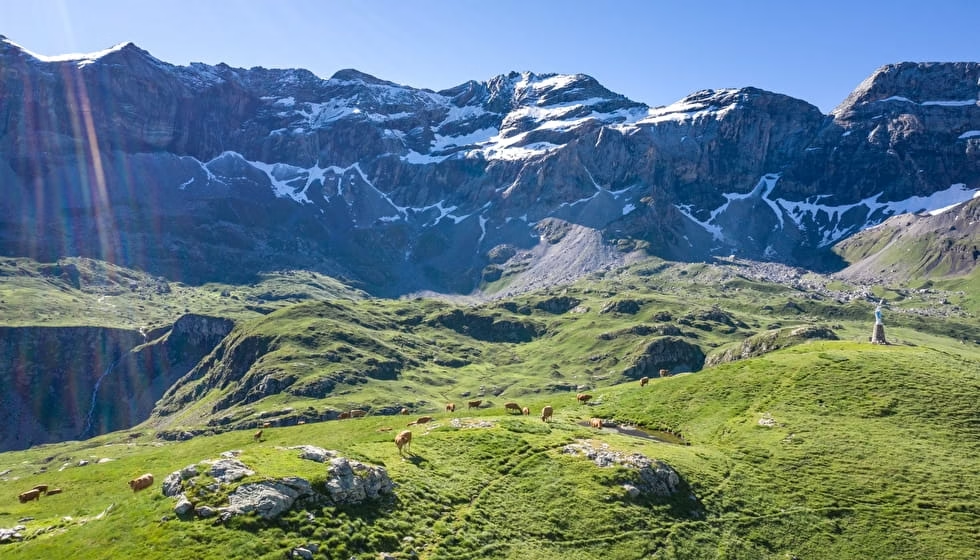
What is the Cirque de Gavarnie?
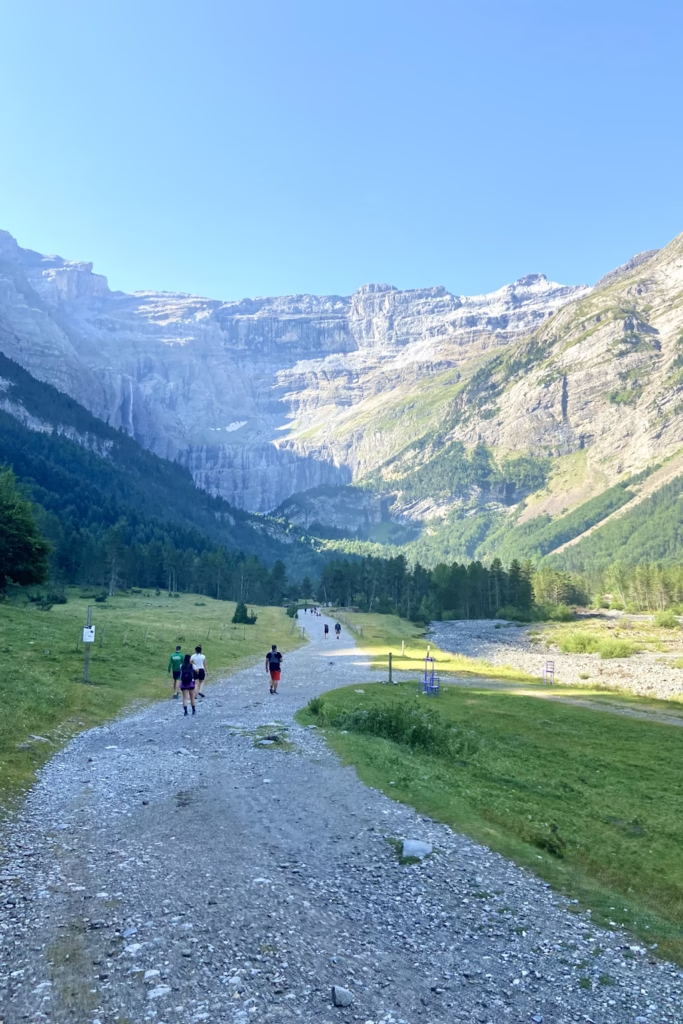
The Cirque de Gavarnie is the natural landmark that gives the finish much of its identity.
It is a vast glacial amphitheatre in the Pyrenees, close to the French-Spanish border. For cycling fans, the key point is simple. Gavarnie-Gèdre is not just a name on a route map. It is a finish in one of the most dramatic landscapes in the French Pyrenees.
That makes it useful for the Tour. It offers a new place, a memorable visual setting and a mountain finish that does not need to copy the standard formula of a very steep final ascent.
Is Gavarnie-Gèdre the same as the Tourmalet?
No. Gavarnie-Gèdre and the Col du Tourmalet are different places, and they serve different roles on stage 6.
The Tourmalet is the famous hors catégorie climb earlier in the finale. It is long, steep and historically central to the Tour de France. Gavarnie-Gèdre is the summit finish that comes after the Tourmalet. It is the place where the stage ends, but it is not the hardest climb on the route.
| Feature | Col du Tourmalet | Gavarnie-Gèdre |
|---|---|---|
| Role on stage 6 | Main high-mountain climb | Summit finish |
| Category | Hors catégorie | Category 2 |
| Length | 17.1km | 18.7km |
| Average gradient | 7.3% | Around 4% |
| Race function | Selection and pressure | Final time gaps and stage result |
| Tactical problem | Hard enough to attack | Far enough after Tourmalet to complicate attacks |
The Tourmalet is where the strongest climbers can put the race under stress. Gavarnie-Gèdre is where those decisions have to be finished off.
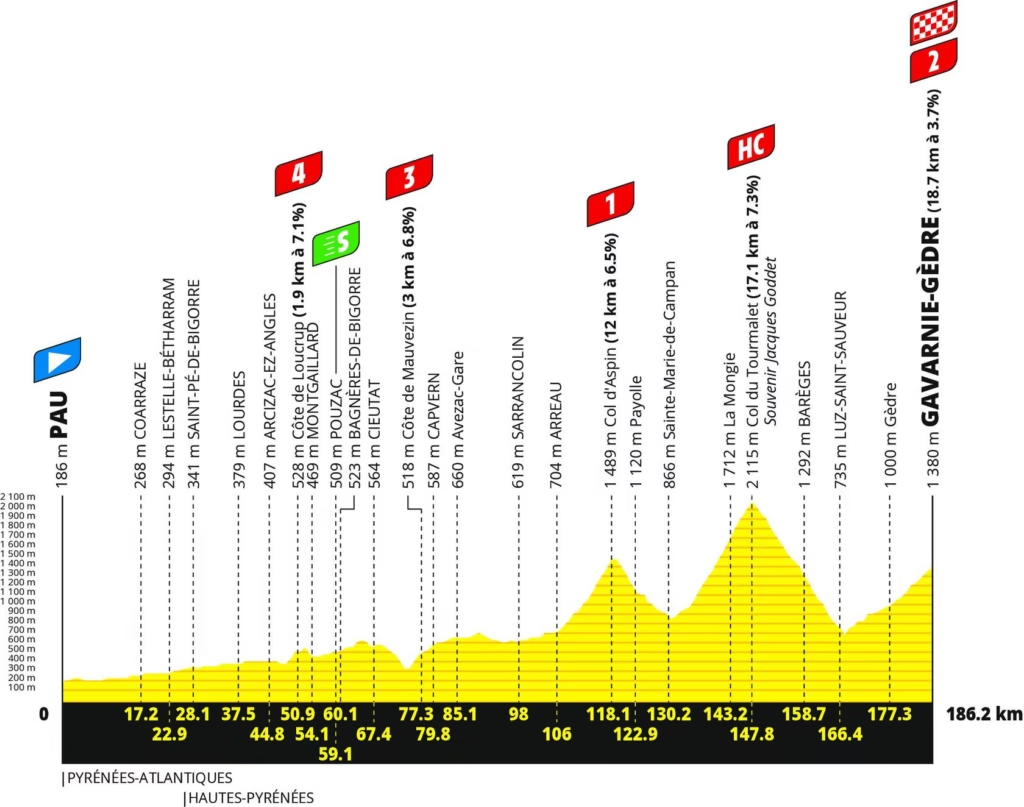
What is the Gavarnie-Gèdre climb profile?
The final climb to Gavarnie-Gèdre is long rather than vicious.
At 18.7km and roughly 4%, it is not a classic wall-like summit finish. The average gradient suggests a road that drags uphill for a long time, with rolling and irregular sections rather than one long, savage ramp.
That makes the finish awkward to read. A climb like this may not create massive gaps by itself if the favourites arrive together at the bottom. Drafting can still matter. Team support can still matter. Riders who are already tired can still recover slightly on easier gradients.
But after the Aspin and Tourmalet, a long 18.7km rise becomes much harder than it looks on a profile. The stage is not asking riders to sprint up a steep finish from fresh. It is asking them to climb for nearly 19km after the Tourmalet has already stripped away support.
That is why the climb is more dangerous than its average gradient suggests.
Why does the finish matter tactically?
Gavarnie-Gèdre matters because it comes after the Tourmalet, not because it is harder than the Tourmalet.
If the stage finished at the top of the Tourmalet, the tactical picture would be more obvious. The favourites would climb, attack, and the summit would decide the day. By putting Gavarnie-Gèdre after the Tourmalet, the race creates a longer chain of decisions.
A rider attacking on the Tourmalet has to consider:
| Problem | Why it matters |
|---|---|
| Distance after the Tourmalet | The summit is still 38.4km from the finish |
| Descent risk | Attacking early means handling the descent under pressure |
| Valley and transition roads | A solo rider or small group can be chased |
| Final climb profile | Gavarnie-Gèdre is long but not steep enough to guarantee separation |
| Team support | Isolated leaders may be exposed before the final climb |
| Heat and fatigue | The stage’s effort continues long after the hardest climb |
That is why a long climb after the Tourmalet is tactically awkward. The Tourmalet is hard enough to blow the race apart, but the finish is far enough away to make early aggression risky.
For more on how this affects the race lead, see our analysis of the stage 6 Tourmalet yellow jersey test.
Why not just finish on the Tourmalet?
A Tourmalet summit finish would be more straightforward, but not necessarily more interesting.
Finishing after the Tourmalet gives the race a different shape. It forces teams to decide whether they want to attack early, control the descent, use teammates across the transition and then finish the job on a gentler but longer climb.
That can produce a more subtle stage. It may reduce the chance of a simple final-kilometre shootout. It can also increase the chance of a breakaway win, because the GC teams may decide that chasing all day in the heat, over the Aspin and Tourmalet, is not worth the cost.
The finish at Gavarnie-Gèdre therefore adds uncertainty. It asks whether the favourites are willing to race before the final climb, and whether the yellow jersey can survive a stage where the hardest moment may come well before the finish line.
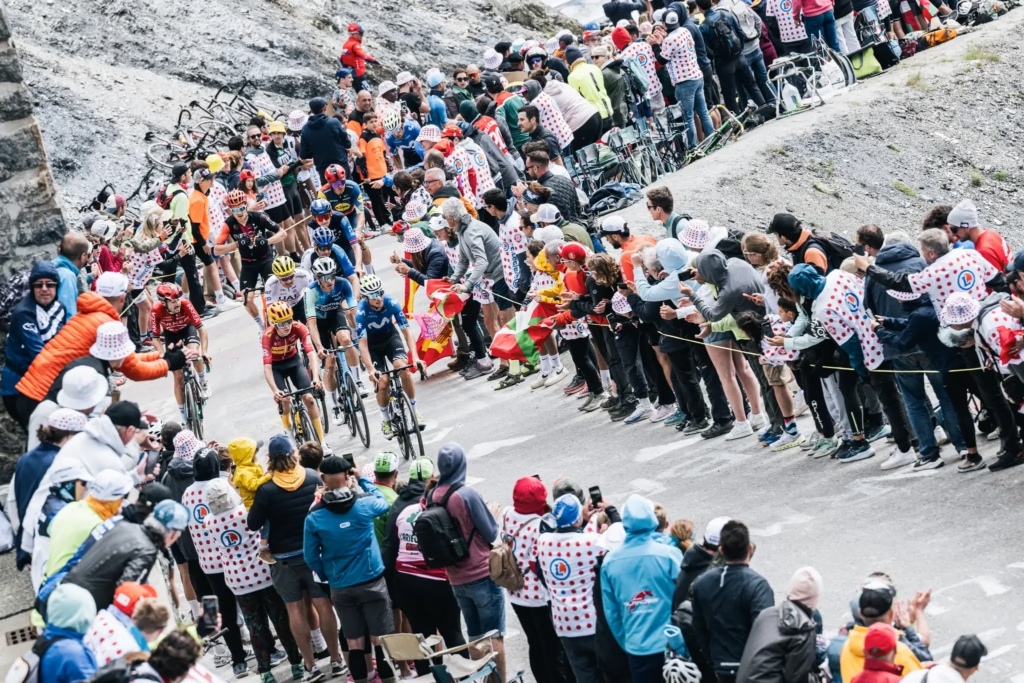
How does Gavarnie-Gèdre compare with other Pyrenean finishes?
Gavarnie-Gèdre is different from the Tour’s more familiar Pyrenean summit finishes because it is less about a brutally steep final ramp and more about cumulative fatigue.
Hautacam, Luz Ardiden and Plateau de Beille are associated with more direct high-mountain showdowns. They are climbs where the final ascent itself can be the whole story. Gavarnie-Gèdre, by contrast, depends heavily on what happens before it.
That does not make it easy. It makes it less predictable.
If the pace is soft over the Tourmalet, Gavarnie-Gèdre may become a long final drag where only small gaps appear. If the Tourmalet is raced hard, the same finish becomes a place where weakened riders can crack completely.
The profile is therefore conditional. The final climb is shaped by the violence of the climb before it.
Our ranking of the Tour de France 2026 mountain stages by difficulty explains why stage 6 is one of the key climbing days of the race.
What sort of rider does Gavarnie-Gèdre suit?
Gavarnie-Gèdre suits durable climbers rather than pure explosive puncheurs.
The final climb is long enough that riders need real endurance, but not steep enough to guarantee that a short acceleration will immediately decide the stage. A rider who can climb steadily, recover after the Tourmalet and still produce a strong final 15 minutes should be well suited.
It could suit:
| Rider type | Why |
|---|---|
| Breakaway climber | Can survive the Tourmalet and hold on during the long finish |
| GC diesel climber | Can use sustained pressure rather than one sharp attack |
| Strong team leader | Benefits if teammates survive into the final climb |
| Heat-resistant rider | Can pace effort better after several hours in high temperatures |
| Polka-dot contender | Can target points over the Aspin, Tourmalet and finish |
It is less ideal for a rider who needs a steep final kilometre to make the difference. The gradient does not scream one explosive attack. The whole stage needs to be softened first.
That also makes it a possible breakaway day if the GC teams hesitate. Our guide to the Tour de France 2026 route’s best days for breakaways explains where this kind of stage fits into the race.
Why does the finish matter for the 2026 Tour?
Gavarnie-Gèdre matters in 2026 because it arrives at a strange moment in the race.
Torstein Træen moved into yellow on stage 4 after the breakaway gained significant time. After stage 5, Tadej Pogačar and Jonas Vingegaard were still level with each other at 7:53 behind Træen. That means stage 6 is not just a mountain stage. It is the first real test of whether the new yellow jersey can survive when the race reaches its first major Pyrenean finish.
The finish therefore has two jobs. It can shape the stage result, possibly from a breakaway. It can also show whether the GC favourites want to take back time immediately, or whether they are content to test each other without forcing a full early showdown.
Our GC and jerseys after Tour de France 2026 stage 5 update covers the standings before the Gavarnie-Gèdre stage, while our explainer on why Pogačar and Vingegaard are 7:53 down sets up the unusual GC picture.
Can fans visit Gavarnie-Gèdre?
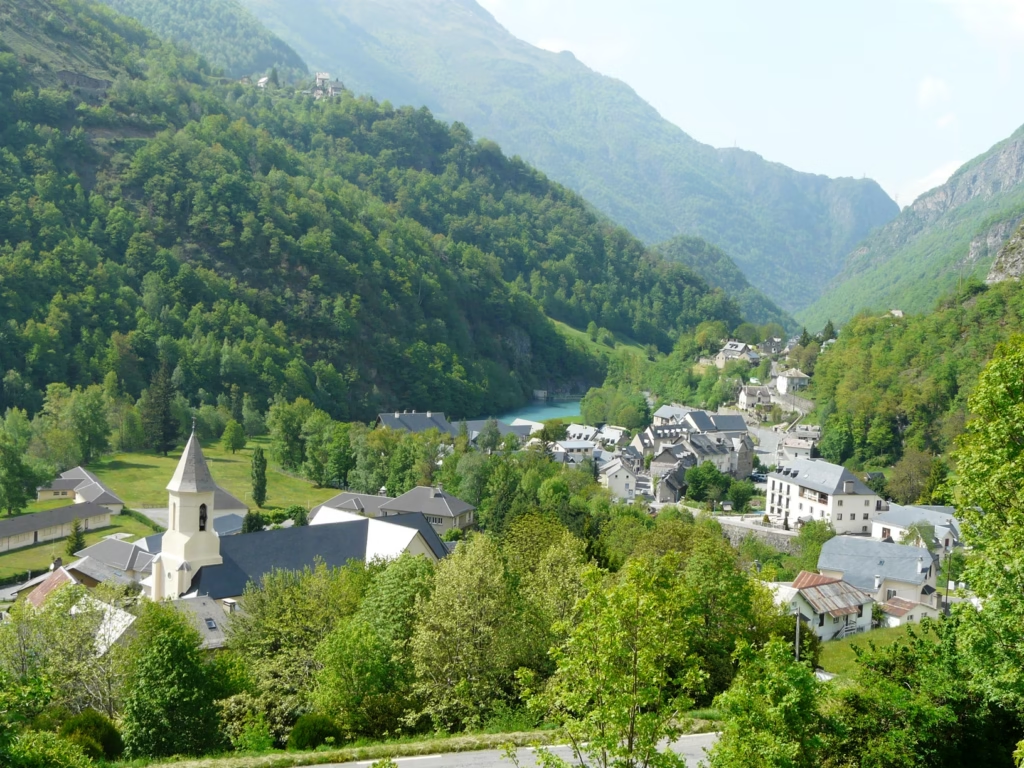
Yes, Gavarnie-Gèdre is a major mountain tourism destination, especially for hiking, nature and visits to the Cirque de Gavarnie.
For cycling fans, it is worth understanding that this is not a big city finish. It is a high-mountain destination with protected landscapes, narrow access roads and seasonal tourism pressures. On Tour day, that makes logistics more complicated than a normal town finish.
Anyone following the race live should also be aware of the viewing timings, because the finish comes after a long mountain stage rather than a short final climb. Our Tour de France 2026 stage 6 live viewing and start time update explains when the race is expected to reach the key climbs and the finish.
What should viewers look for on the climb?
The most important thing to watch is not the start of the Gavarnie-Gèdre climb. It is how many riders are still there by the time the race reaches it.
If a GC group of 20 or more riders starts the final climb together, the finish may be controlled and tactical. If the Tourmalet has already reduced the race to small groups, Gavarnie-Gèdre becomes a survival climb. Riders who were dropped on the Tourmalet may lose more time on the long final drag.
Watch for:
| Signal | What it means |
|---|---|
| UAE or Visma pacing hard on the Tourmalet | GC favourites may want to expose Træen early |
| Breakaway still clear after the Tourmalet | Stage win could go up the road |
| Isolated yellow jersey | Træen may have to manage the final climb alone |
| Small GC group at the foot | The Tourmalet has already done real damage |
| Riders attacking low on Gavarnie-Gèdre | They may think the gradient is manageable enough to sustain a long move |
| No attack until late | Favourites may be waiting for steeper or more decisive stages later |
That is why Gavarnie-Gèdre is a useful finish. It may not look savage, but it reveals the tactical consequences of the Tourmalet.
For the wider GC pattern, see our guide to the Tour de France 2026 route’s best days for GC attacks.
-
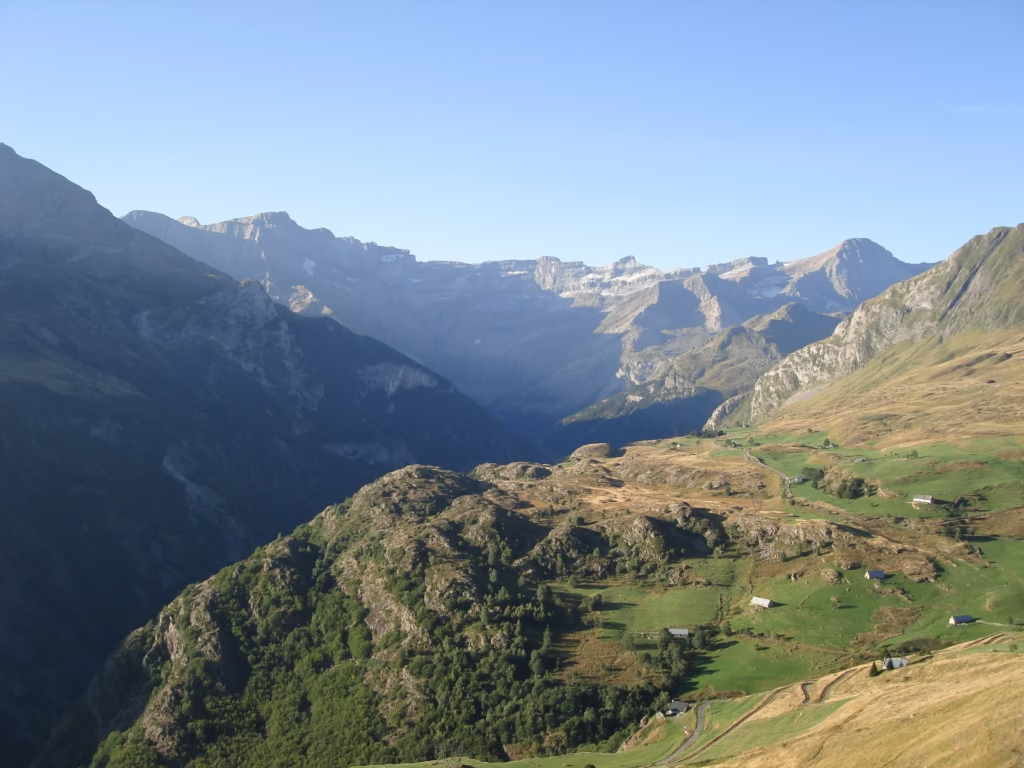
 Photo Credit: Cs-wolves / Wikimedia Commons, CC BY-SA 4.0
Gavarnie-Gèdre in one sentence
Gavarnie-Gèdre is a remote Pyrenean mountain finish near the Cirque de Gavarnie, used by the 2026 Tour de France as a long category 2 summit finish after the Col du Tourmalet, making it tactically awkward rather than simply brutally steep.
FAQs
Where is Gavarnie-Gèdre?
Gavarnie-Gèdre is in the Hautes-Pyrénées department of south-west France, in the Occitanie region, in the French Pyrenees near the Spanish border.
Is Gavarnie-Gèdre in the Pyrenees?
Yes. Gavarnie-Gèdre is in the high Pyrenees and is closely linked with the Cirque de Gavarnie and the Pyrenees National Park area.
What stage of the Tour de France finishes in Gavarnie-Gèdre?
Stage 6 of the 2026 Tour de France finishes in Gavarnie-Gèdre after a 186.2km route from Pau.
Is Gavarnie-Gèdre the same as the Tourmalet?
No. The Col du Tourmalet is the famous hors catégorie climb before the finish. Gavarnie-Gèdre is the final category 2 summit finish that comes after the Tourmalet.
How hard is the Gavarnie-Gèdre climb?
The final climb is 18.7km at around 4%. It is not as steep as the Tourmalet, but it comes late in a hard mountain stage, which makes it much more demanding.
Why is Gavarnie-Gèdre tactically awkward?
It comes after the Tourmalet. Riders who attack on the Tourmalet still have a descent, a transition and the long final climb to handle before the finish. That makes early moves risky but potentially very damaging.
Why does the Gavarnie-Gèdre finish matter?
It is the first major summit finish test of the 2026 Tour and comes at a point where the yellow jersey situation is still unusual after the stage 4 breakaway. It can decide the stage and show whether the GC favourites are ready to attack early in the race.

