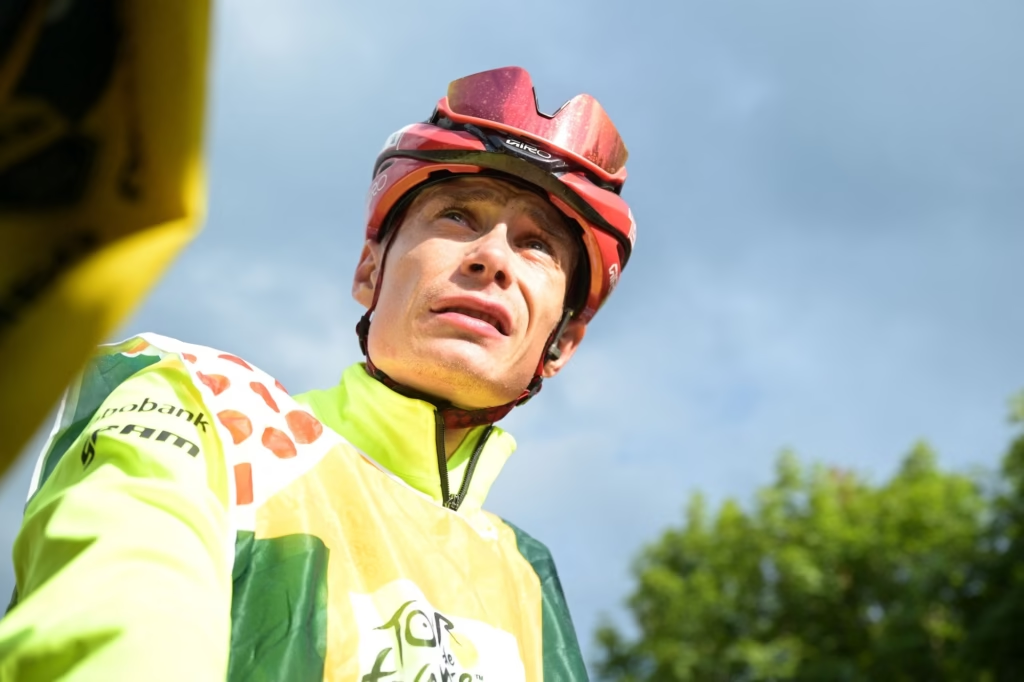
Jonas Vingegaard’s 2026 Tour de France ended instantly when he fractured his collarbone in a crash during Stage 15.
The Team Visma-Lease a Bike leader fell with approximately 20km remaining on the road to Plateau de Solaison. Hospital examinations confirmed a broken collarbone and multiple abrasions, with the team saying surgery was required. Vingegaard had been second overall at the time of the crash.
The incident and his immediate withdrawal are covered in our explainer on why Jonas Vingegaard abandoned the Tour de France.
A broken collarbone is one of cycling’s most familiar injuries. Professional riders have sometimes returned remarkably quickly after surgery, but that should not make it sound minor.
The fracture immediately ended Vingegaard’s Tour and could affect the rest of his season. Exactly how long he needs will depend on the location and severity of the break, the surgery, his response to rehabilitation and when his medical team considers it safe for him to race again.
This is a cycling-context explainer rather than medical advice. Only Vingegaard’s doctors and Visma-Lease a Bike can provide an individual prognosis.
What happened to Jonas Vingegaard?
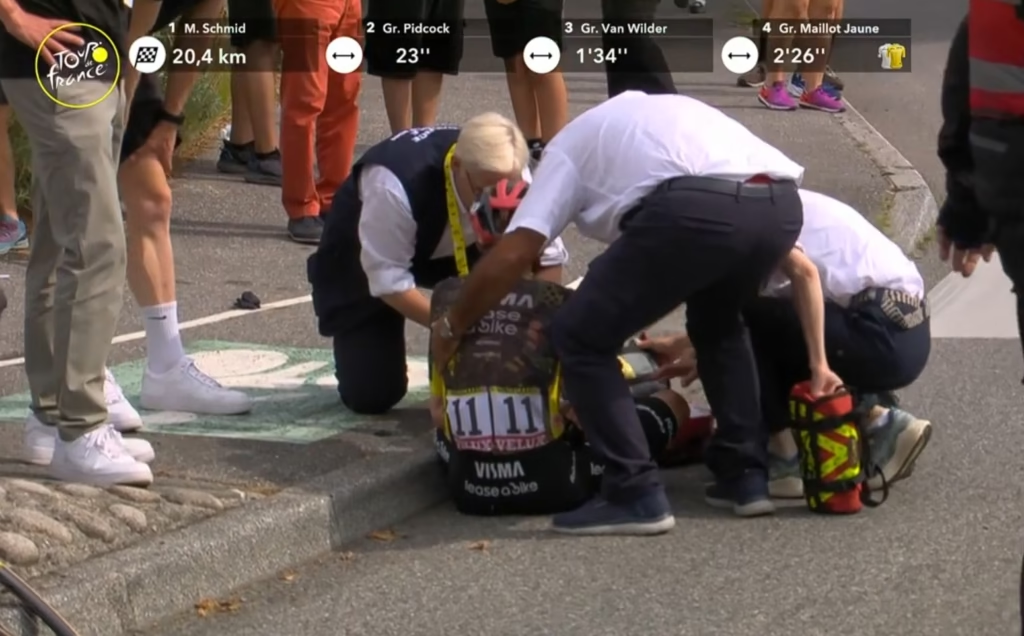
Vingegaard crashed near a kerb during the closing kilometres of Stage 15 from Champagnole to Plateau de Solaison.
Sepp Kuss, Isaac del Toro and Brandon McNulty were also caught in the incident, but all three continued.
Vingegaard remained on the ground before being helped into an ambulance with his right arm supported. He was taken to hospital, where examinations identified a fractured collarbone and several abrasions.
Visma-Lease a Bike subsequently confirmed that surgery was required.
The injury ended his Tour while he was second overall, 4:30 behind Tadej Pogačar at the start of the stage. Remco Evenepoel moved into second place after Vingegaard’s withdrawal.
Vingegaard is also included in our live list of riders who have abandoned the 2026 Tour de France.
How serious is a broken collarbone?
The seriousness of a collarbone fracture varies considerably.
Some fractures remain relatively well aligned and can be managed without surgery. Others are displaced, shortened, broken into several pieces or positioned in a way that makes surgical fixation the preferred option.
The confirmation that Vingegaard requires surgery suggests the injury needs active stabilisation rather than only a sling and time.
That does not automatically mean he faces a prolonged absence from professional cycling.
Collarbone operations are common in elite sport, and many riders return successfully. The important unknowns include:
- Where the collarbone is fractured
- How far the broken sections have moved
- Whether the fracture is clean or fragmented
- Whether surrounding nerves, blood vessels or soft tissue are affected
- The type of surgical fixation used
- How quickly the wound and bone begin healing
- Whether he experiences complications
- When he can safely tolerate road-racing risk again
The abrasions may also influence the first part of his recovery, particularly if they are extensive or located where clothing and movement repeatedly irritate them.
Why collarbone fractures are so common in cycling
The collarbone connects the shoulder to the centre of the chest and helps support the position of the arm.
When a cyclist crashes, the impact is often absorbed through the shoulder, upper arm or an outstretched hand. That force can travel into the clavicle and cause it to fracture.
Road cyclists are particularly exposed because of the way they fall.
Their feet may initially remain connected to the pedals, their hands begin on the handlebars and they have very little protective material between the shoulder and the road.
A rider travelling inside a peloton may also have no space to roll away from the impact.
The collarbone can therefore take much of the force when the upper body strikes the ground.
It is one of the reasons a rider can stand up after a crash with apparently normal movement in their legs but still be completely unable to continue.
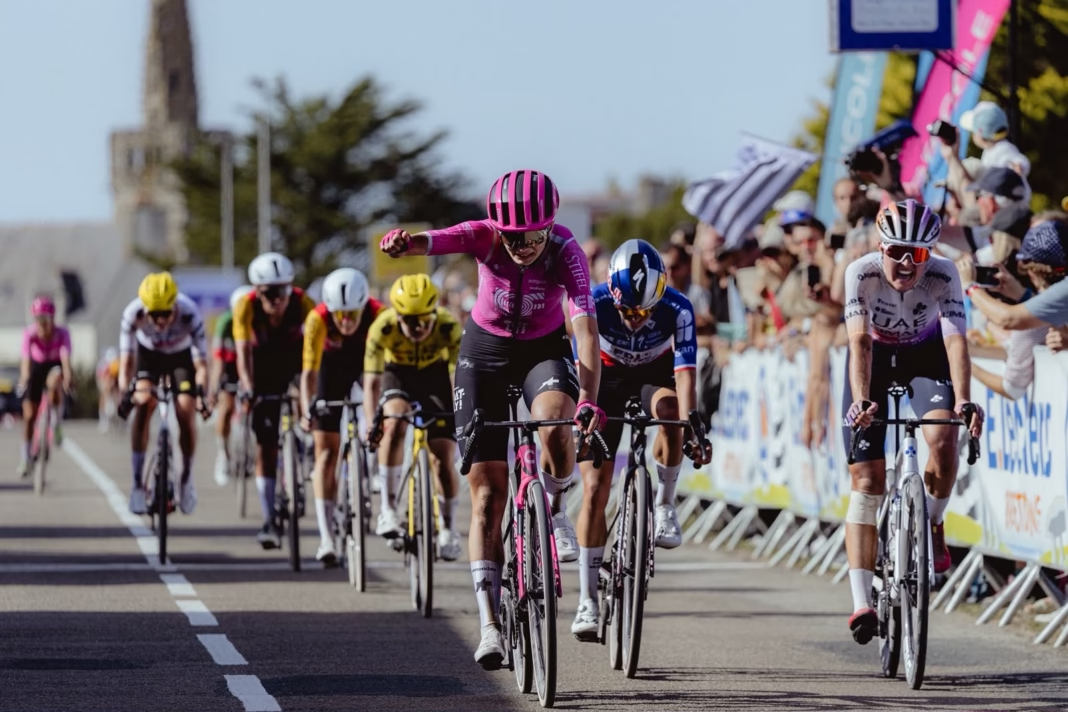
Recent examples include Lauren Dickson’s collarbone fracture at the Tour de Suisse Women and Marianne Vos leaving La Vuelta Femenina with the same injury.
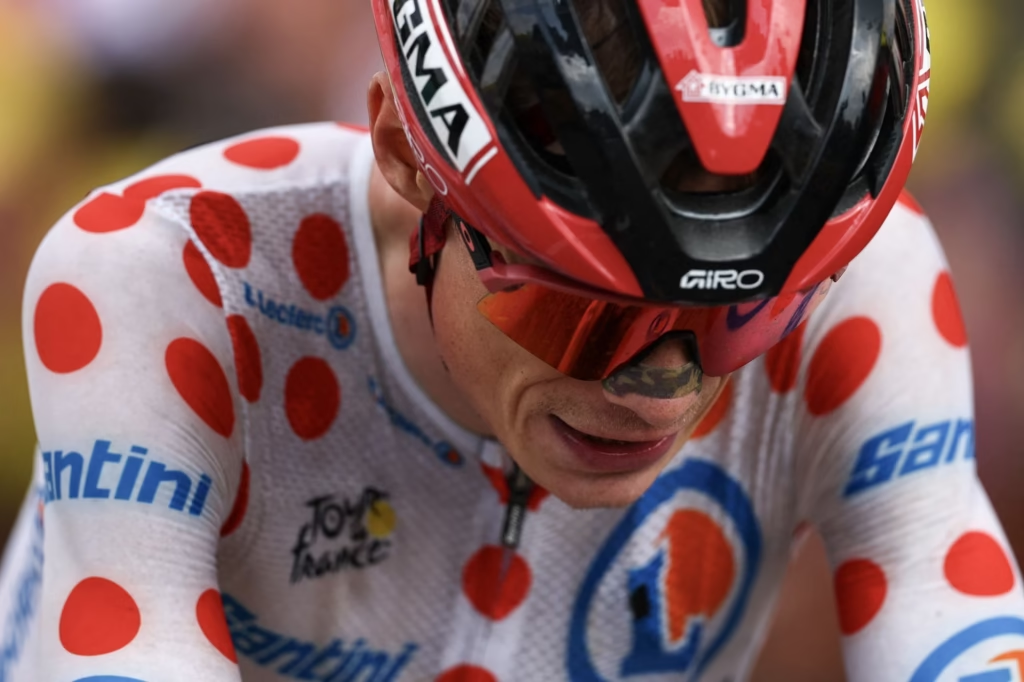 Photo Credit: Getty
Why a collarbone fracture usually ends a Grand Tour immediately
A rider with a fractured collarbone cannot realistically continue racing through a Grand Tour.
The injury affects much more than the ability to tolerate pain.
Professional cyclists need their upper body to:
- Control the handlebars
- Brake safely
- Steer through corners
- Support their weight on the bike
- Absorb vibrations and road impacts
- Pull against the bars while climbing or sprinting
- React quickly during another crash or sudden movement
Even riding in a straight line would place stress through the shoulder and collarbone.
A Grand Tour also offers no meaningful recovery period. The rider would face another stage the following day, followed by repeated hours on the bike and the constant possibility of further contact or another fall.
Continuing could worsen the fracture, increase displacement or cause additional injury.
Once the fracture was confirmed, Vingegaard’s withdrawal was unavoidable regardless of his position in the general classification.
What does collarbone surgery usually involve?
Surgical treatment commonly involves returning the bone to a more suitable position and holding it in place with a plate and screws.
The purpose is to stabilise the fracture and create the conditions for the bone to heal.
For an elite cyclist, stable fixation can also allow rehabilitation and controlled indoor training to begin earlier than might be possible with an unstable fracture.
That does not mean the bone is healed immediately.
The metalwork holds the collarbone in position while biological healing takes place. The rider still needs time for the surgical wound to settle, inflammation to reduce and the bone to rebuild across the fracture.
Early movement or indoor riding may be possible before a safe return to road racing.
Those are very different milestones.
Why cyclists sometimes return quickly after surgery
Professional riders have several advantages during rehabilitation.
They normally have immediate access to specialist surgeons, physiotherapists, team doctors, nutritionists and carefully controlled training equipment.
Their fitness before the injury is exceptionally high, and a stationary bike allows them to maintain some cardiovascular conditioning without the same crash risk as outdoor riding.
Cycling also does not require the same repeated overhead arm movement as sports such as swimming, tennis or throwing events.
That can allow a rider to resume some training before they are ready for full upper-body loading.
Professional cycling has produced some unusually fast returns. Jonas Abrahamsen, for example, started the 2025 Tour de France only nine days after fracturing his collarbone, although the position of the break helped make that exceptional comeback possible.
His case is covered in our report on Abrahamsen’s rapid return after a collarbone fracture.
That example should not be treated as a normal timetable for Vingegaard.
Some riders return quickly. Others require several months.
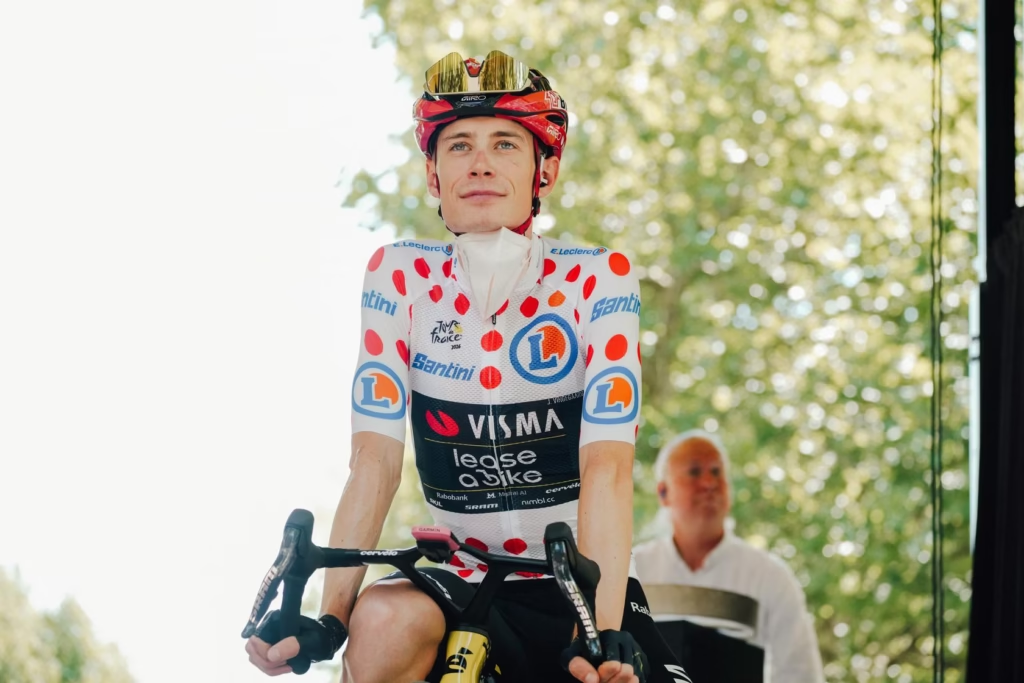
Training again is not the same as racing again
Recovery from a collarbone fracture contains several different stages.
Vingegaard may be able to begin light indoor riding relatively early because it places less demand on the injured shoulder and removes the risk of another crash.
He may then progress towards:
- Longer indoor sessions
- Greater training intensity
- Strength and mobility work
- Riding outdoors on controlled roads
- Training with teammates
- Descending and cornering at race speed
- Full competition
The transition from indoor training to outdoor racing is one of the most important.
A rider may be physically capable of producing power while still lacking the shoulder strength, movement or confidence needed to handle a bike safely in a peloton.
Returning to competition also means accepting the possibility of landing on the same shoulder again.
Medical clearance will therefore involve more than whether Vingegaard can complete a training session without pain.
How long does a collarbone fracture take to heal?
There is no reliable timetable without knowing the exact details of the fracture and operation.
General recovery is normally measured in weeks rather than days. Full sporting clearance depends on evidence that the fracture is healing, the shoulder has regained movement and strength, and the athlete can perform safely without unacceptable risk.
Elite cyclists sometimes return more quickly than the general population.
Those rapid returns attract attention precisely because they are unusual.
One rider’s comeback should not be used to predict another’s. The fracture pattern, surgery, training role and acceptable level of risk may all be different.
Why recovery timelines vary so much
Two riders can both be described as having a broken collarbone while facing very different recoveries.
A straightforward fracture held securely by a plate may allow relatively rapid progression.
A more complicated fracture can require longer protection and closer monitoring.
Recovery can also be affected by:
- The severity and location of the fracture
- Whether the bone was displaced
- The quality of fixation achieved during surgery
- Wound healing
- Pain and inflammation
- Shoulder mobility
- Muscle loss around the injured side
- Sleep and nutrition
- Additional injuries from the crash
- The rider’s confidence outdoors
- The demands of the race they hope to enter
The final point matters in cycling.
Being able to start a short, controlled race is not the same as being ready to lead a Grand Tour over three weeks.
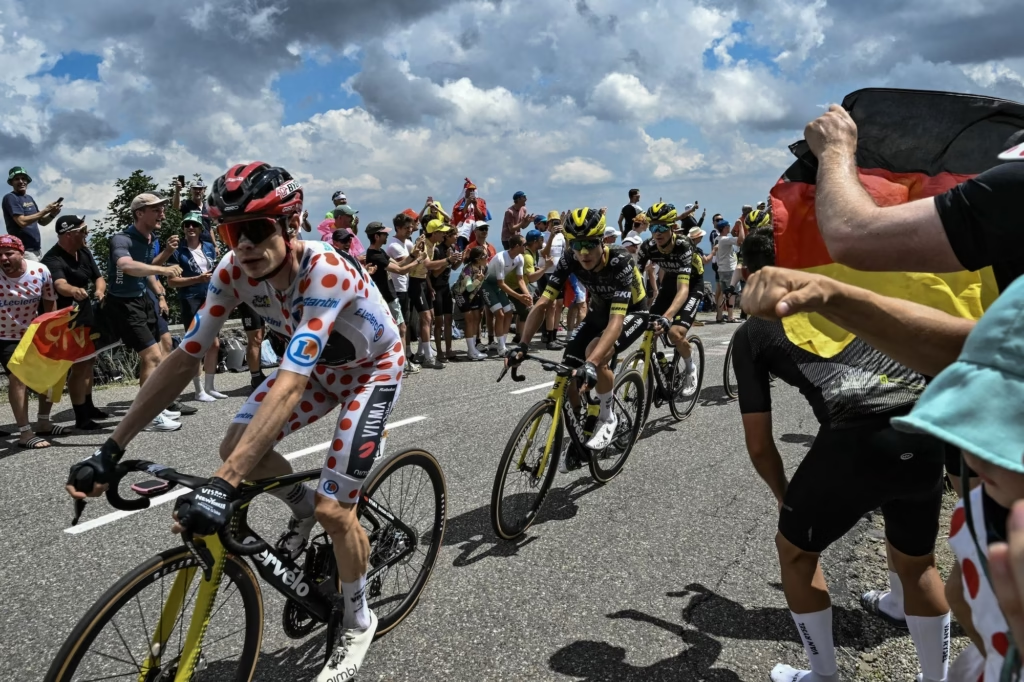
What will happen immediately after surgery?
The first priority will be allowing Vingegaard to recover from the operation and ensuring that the fracture remains stable.
Visma’s medical staff will then begin assessing movement, discomfort and the condition of the surgical wound.
Training is likely to be reintroduced gradually.
Indoor riding is especially useful because the bike can be positioned to minimise unnecessary shoulder movement. The effort can also be stopped immediately if discomfort increases.
The team can maintain parts of Vingegaard’s aerobic fitness while avoiding traffic, corners and the risk of falling.
Rehabilitation will also focus on restoring shoulder movement and strength.
The exact order and timing will be determined by his medical team.
Will Vingegaard lose all his Tour fitness?
No, but he will inevitably lose some race-specific condition.
Vingegaard reached Stage 15 after more than two weeks of Grand Tour racing. His cardiovascular fitness will not disappear immediately.
A relatively early return to indoor training could help maintain much of that base.
What he will lose is continuity.
Surgery, rest and reduced training interrupt the progression that would normally carry a rider from the Tour into their next objective.
He may also need to avoid very hard efforts initially, depending on pain, healing and the stability of his position on the bike.
Even after his power returns, he may need time to recover descending confidence, bunch positioning and the ability to absorb repeated road vibration.
Those factors are difficult to reproduce indoors.
Could Vingegaard still race the 2026 Vuelta a España?
The Vuelta begins on 22 August, only 34 days after Vingegaard’s Stage 15 crash.
That creates a very tight recovery window.
Previous professional cycling cases show that returning within five weeks can be possible after successful surgery. They do not show that every rider will be ready to contest a Grand Tour on that schedule.
Starting the Vuelta would require Vingegaard to move through surgery, wound healing, rehabilitation, outdoor training and race preparation in little more than a month.
Visma would also need to decide what it wanted from him.
There is a substantial difference between being medically capable of starting and being prepared to challenge for the red jersey.
A rushed return could leave him underprepared for a race containing repeated mountain stages, high-speed descents and three weeks of accumulated fatigue.
His participation should therefore remain uncertain until the team provides a formal plan.
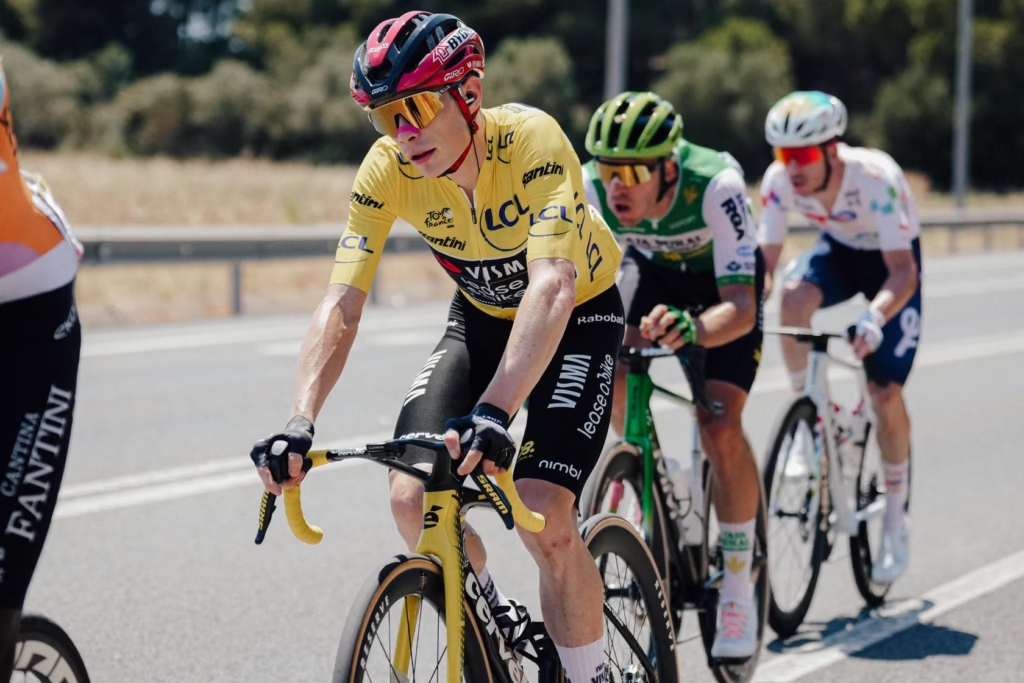 Photo Credit: A.S.O./Pauline Ballet
Could he return later in the season instead?
A later return may provide more realistic preparation time, but it is too early to identify a specific race.
Visma will first need information from the operation and early rehabilitation.
If healing progresses smoothly, the team can decide whether to aim for a late-season stage race, selected one-day races or no further competition in 2026.
The decision will not depend only on whether Vingegaard can ride.
His team must consider:
- Whether he can train at full intensity
- Whether he has enough preparation for the target race
- Whether returning provides a meaningful sporting benefit
- Whether another crash would carry an unacceptable risk
- How the injury affects his longer-term planning
- Whether rest would be more valuable before the 2027 season
Vingegaard has already completed the Giro d’Italia and most of the Tour in 2026. Even without another race, he has accumulated a substantial competitive workload.
That may reduce the pressure to force a rapid return.
Would the Vuelta be used as a recovery race?
A Grand Tour is not a rehabilitation event.
Even riders without general classification ambitions must manage long stages, high-speed descents, crashes, heat, transfers and accumulated fatigue.
Vingegaard could theoretically start without targeting the overall victory, but that would still require a high level of preparation.
There would be little time to ease into the race.
Visma would need confidence that Vingegaard could handle the workload rather than hoping that he would gain fitness while competing.
Could the plate cause future problems?
Many athletes race successfully with a plate remaining in place.
Some experience irritation from straps, clothing or pressure around the shoulder. Others notice little once the fracture has healed.
In some cases, the plate is removed at a later date, but that is not automatic and would be a separate medical decision.
For cyclists, pressure from bib straps, backpack straps and sleeping position can be relevant. The low body fat of elite riders can also make metalwork more noticeable beneath the skin.
None of those possibilities can be assumed in Vingegaard’s case.
The immediate objective is stable healing and a safe return to training.
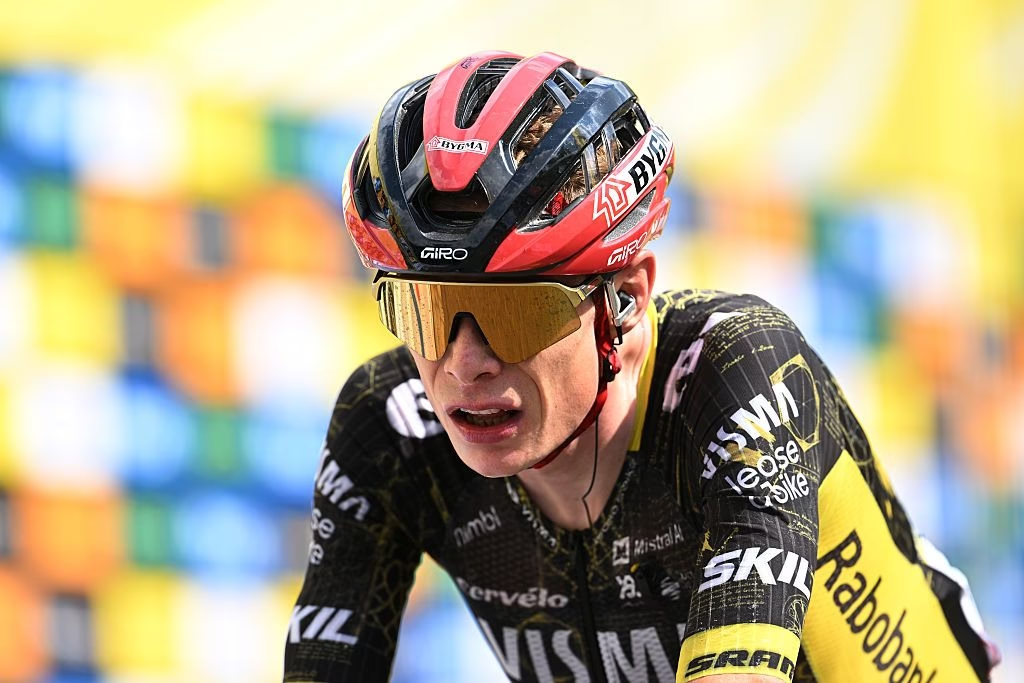
Is Vingegaard likely to make a full recovery?
Most athletes return successfully after collarbone fractures, including those treated surgically.
That provides grounds for optimism.
It does not provide an exact date.
Vingegaard’s long-term outlook will become clearer after surgery and follow-up imaging. The team will want to see that the fracture is healing correctly and that he is regaining normal shoulder function.
The abrasions should heal more quickly than the bone, although they may make the first days uncomfortable.
Unless Visma announces additional damage or complications, there is no current reason to assume the fracture will threaten his career.
Vingegaard has also recovered from a much more serious crash before. He suffered a broken collarbone, fractured ribs and a punctured lung at the 2024 Itzulia Basque Country before returning for that year’s Tour de France.
The pressure surrounding that recovery was covered in our report on Vingegaard’s race to regain fitness for the 2024 Tour.
That experience does not make his current injury predictable, but it does show that he and Visma have previously managed a complicated return from trauma.
The psychological recovery also matters
Vingegaard has experienced serious crashes before.
Returning to indoor training may be physically straightforward compared with regaining complete confidence in a peloton or on a fast descent.
Elite riders often appear fearless, but crash recovery can involve hesitation, altered positioning and greater awareness of risk.
That does not necessarily produce a lasting problem.
It is simply another part of rehabilitation that cannot be measured by an X-ray.
Vingegaard may feel ready immediately. He may require several outdoor sessions before his normal instincts return.
The team will need to assess that alongside the physical recovery.
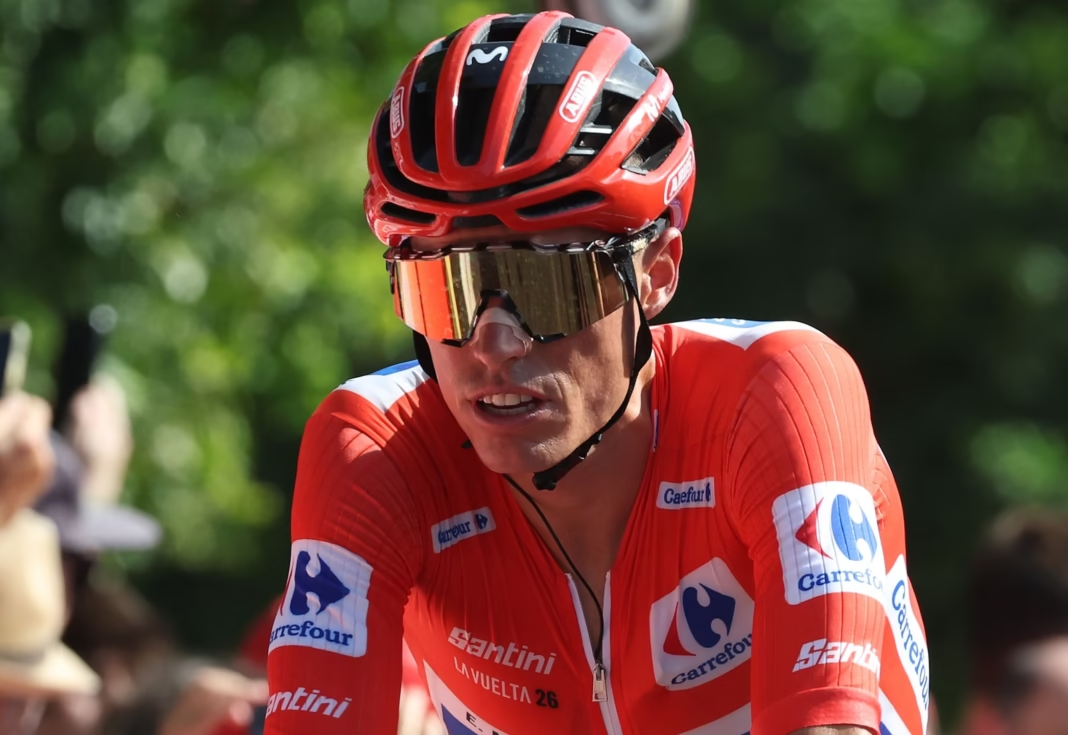
What does the injury mean for Visma-Lease a Bike?
In the immediate term, it ends Visma’s general classification campaign at the Tour.
The team must now switch from supporting Vingegaard to chasing stages with Sepp Kuss, Matteo Jorgenson and its remaining riders.
The tactical consequences are covered in our analysis of what Visma-Lease a Bike can do now Vingegaard is out of the Tour.
Beyond July, Visma must reconsider the second half of its season.
Any plan involving Vingegaard will remain provisional until the team knows how the operation has gone and how quickly he can resume training.
The team has little reason to announce a return date immediately.
Doing so would create an artificial deadline before the medical picture is clear.
A more likely process is a series of updates:
- Confirmation that surgery has been completed
- An initial recovery assessment
- A return to indoor training
- A return to outdoor riding
- A decision on whether he will race again in 2026
Each step matters more than an early prediction.
What happens next for Jonas Vingegaard?
Vingegaard will undergo surgery to stabilise the fractured collarbone.
He will then begin a staged rehabilitation process focused first on healing and movement, followed by indoor training, outdoor riding and eventually a return to racing if he is cleared.
His Tour de France was over as soon as the fracture occurred.
The rest of his season is less certain.
The Vuelta begins less than five weeks after the crash, making it an ambitious target rather than an obvious next race. A later return may be possible, but Visma does not need to decide that before it knows how Vingegaard responds to surgery.
Collarbone fractures are common in professional cycling because riders frequently land directly on the shoulder.
They are also serious enough to end a Grand Tour immediately.
The encouraging part is that elite cyclists usually return.
The unanswered question is not whether Vingegaard can ride again, but how quickly he can do so safely and at the level required to compete for cycling’s biggest races.