
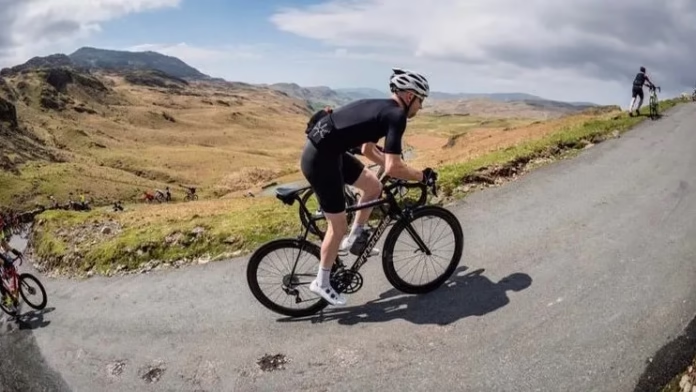
Riding 100 miles is one of the biggest milestones in recreational cycling, but it does not require elite fitness. The challenge is building enough endurance to spend six, seven or eight hours on the bike while still pacing, eating and drinking properly.
For most riders who can already complete 40 to 50 miles comfortably, 10 to 12 weeks of structured preparation is enough. If your longest rides are much shorter, allow more time rather than trying to force rapid increases in distance.
The most important ingredients are consistent weekly riding, one gradually increasing long ride and enough recovery to absorb the training.
Start from a realistic base
You do not need to be capable of riding close to 100 miles before beginning the plan.
A sensible starting point is being comfortable with regular 25 to 40-mile rides and able to cycle two or three times each week without needing several days to recover.
If 20 miles still feels like a major ride, start with something closer to our training plan for your first 100km ride before moving towards a full century.
The biggest gains come from consistency. One enormous weekend ride followed by a week of exhaustion is less useful than several weeks of manageable training.
Make the long ride your key session
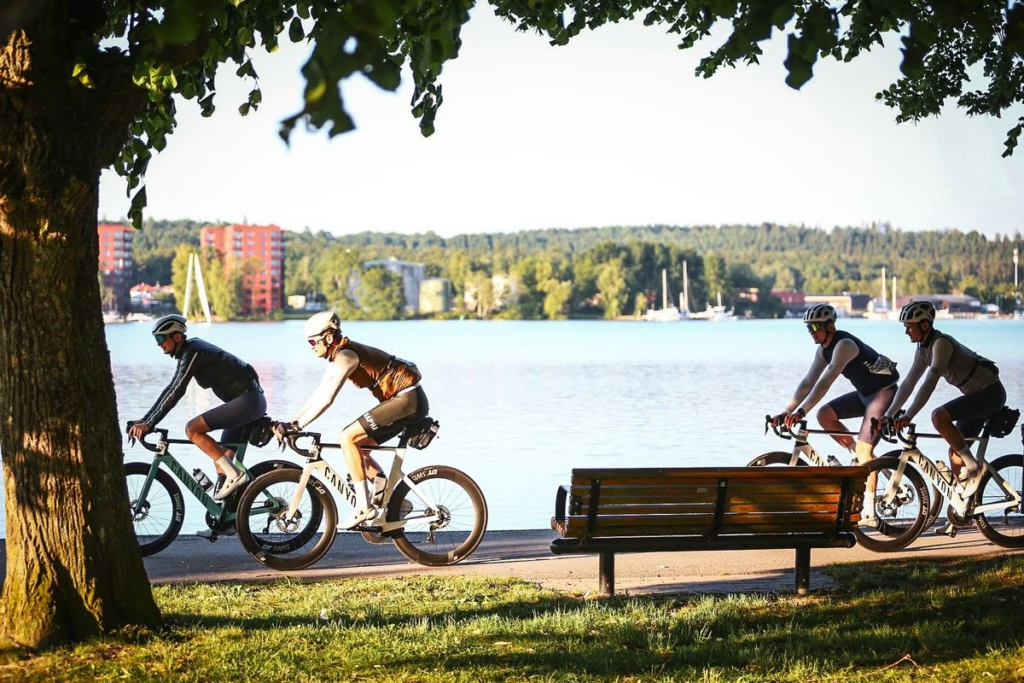
The long ride should anchor your week.
Start from a distance you can already ride comfortably and gradually extend it. You might move from 45 miles towards 60, 70 and eventually 75 to 85 miles during the final part of the plan.
A simple progression could look like this:
| Week | Long ride |
|---|---|
| 1 | 45 miles |
| 2 | 50 miles |
| 3 | 55 miles |
| 4 | 40 miles |
| 5 | 60 miles |
| 6 | 65 miles |
| 7 | 70 miles |
| 8 | 50 miles |
| 9 | 75 miles |
| 10 | 80-85 miles |
| 11 | 55-60 miles |
| 12 | 100-mile sportive |
The easier weeks are deliberate. Training improves when the body has time to recover rather than simply accumulating fatigue.
You do not need to ride 100 miles in training
Completing the full distance beforehand is not essential.
If you can ride 75 to 85 miles comfortably, fuel properly throughout and still function well in the final hour, the additional distance on event day is normally manageable.
A full century in training can be useful for experienced riders, but for someone preparing for their first one it may create more fatigue than fitness.
The objective is to arrive at the sportive fresh enough to use the endurance you have built.
Our guide to the best 100-mile sportives in the UK also shows how much the challenge varies according to terrain. A rolling century and a mountainous 100-mile event can require very different preparation.
Add two or three shorter rides during the week
One long ride is not enough on its own.
Shorter sessions improve aerobic fitness and allow you to build weekly volume without making every ride a major endurance test.
A straightforward week could include:
- Easy endurance ride: 45 to 75 minutes at a comfortable pace.
- Harder session: hills, tempo work or intervals for around 60 to 90 minutes.
- Optional steady ride: useful if you are recovering well.
- Long ride: gradually building towards 75 to 85 miles.
Three rides per week can be enough for a first 100-mile sportive. Four allows you to spread the workload more evenly.
Most of those miles should still feel relatively easy.
 Photo Credit: Thomas Lovelock for Prudential Ride London
Keep most rides controlled
Training for a century does not mean riding hard every time.
Most of your weekly volume should be at an intensity where you can speak in sentences and feel as though you could continue for a long time.
Harder riding still has value. Hills and tempo sessions improve fitness so that your eventual sportive pace becomes easier relative to your maximum effort.
The mistake is turning the long ride into a race every weekend.
You should usually finish endurance training tired but not destroyed.
That lets you train again a few days later rather than spending half the week recovering.
Match your training to the sportive terrain
Distance alone does not determine how hard a 100-mile sportive will be.
A flatter route may mainly test endurance and fuelling. A century containing 2,000 to 3,000 metres of climbing adds repeated muscular fatigue and makes pacing much more important.
If your event is hilly, make climbing part of the training.
Regularly ride longer gradients and practise using easier gears rather than attacking every hill. The aim is to find an effort you can repeat after four, five or six hours of riding.
A rider capable of 80 flat miles is not automatically prepared for a mountainous century.
When choosing an event, our best beginner-friendly sportives in the UK can help separate more accessible routes from events where the climbing becomes a major part of the challenge.
Learn to pace the first half conservatively
Poor pacing ruins more centuries than a lack of speed.
The opening hour should feel almost too easy.
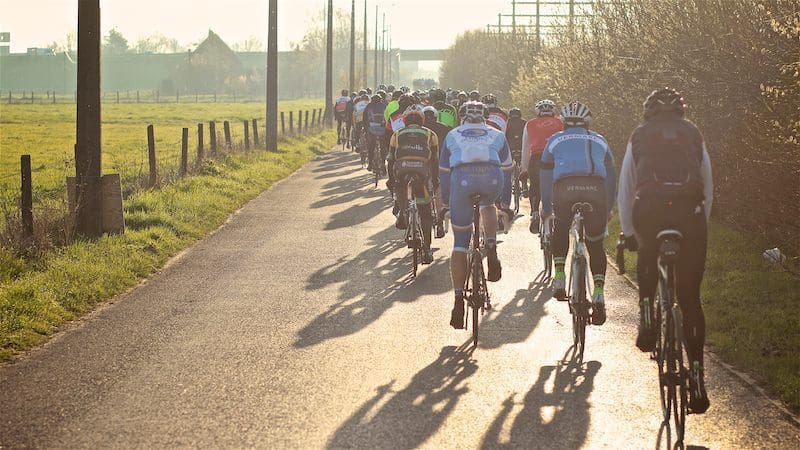
Fresh legs, adrenaline and faster groups can make it tempting to ride harder than planned, particularly when everyone around you appears to be pushing on.
The problem arrives much later.
Repeatedly going too hard on early climbs or following groups above your sustainable pace can leave you struggling from mile 70 onwards.
Use faster riders when the pace feels comfortable, but do not treat every group passing you as one you need to follow.
The final 25 miles are where conservative pacing pays back everything you gave away early.

Practise eating before you need to
Fuelling needs to be trained alongside your legs.
A 100-mile ride is too long to rely on breakfast and one feed stop, so use long training rides to practise eating regularly while cycling.
For many recreational riders, roughly 40 to 60g of carbohydrate per hour is a useful starting point for long rides, with higher intakes possible for riders who have trained their stomach to tolerate them.
That carbohydrate can come from bars, bananas, sandwiches, gels, sweets or drink mix.
Our beginner’s guide to fuelling rides covers how to build a simple strategy without relying entirely on expensive sports nutrition.
The important habit is eating early.
Waiting until you feel hungry or weak usually means you have already fallen behind.
Practise hydration in different conditions
There is no perfect bottle-per-hour number that works in every situation.
Temperature, intensity and individual sweat rate all change how much fluid you need.
Use training rides to learn what works for you in cool conditions, hot weather and on hillier routes. Electrolytes can be useful on longer or warmer rides, particularly if you sweat heavily.
Do not introduce a completely new drink mix on the morning of the sportive.
By event day, your fuelling and hydration should feel routine.
Use the longest rides as dress rehearsals
Your final big training rides should test more than fitness.
Wear the shorts and shoes you intend to use.
Carry the same food.
Use the same bottles and saddle bag.
Make sure your bike remains comfortable after five or six hours.
Small problems become much larger over a century. Hand numbness, saddle discomfort, neck pain or poor shoe fit can turn into the limiting factor long before your cardiovascular fitness does.
The first sportive checklist is useful for checking the practical details before the event.
Know how to deal with simple mechanical problems
A puncture can end a sportive just as effectively as tired legs if you cannot fix it.
At minimum, know how to replace or repair a tube, use your pump or inflator and deal with a dropped chain.
Carry the equipment you need rather than relying completely on event support.
Most sportives provide some mechanical assistance, but that does not mean help will be standing beside you when something goes wrong.
Basic self-sufficiency makes a long event much less stressful.
Back-to-back riding can build durability
Occasional back-to-back rides can help prepare for the feeling of cycling on tired legs.
That might mean 30 to 40 miles on Saturday followed by 55 to 65 miles on Sunday.
The second ride teaches you to maintain good pacing and fuelling when you are not completely fresh.
It is useful, but not essential.
Do not add it every weekend. Back-to-back training creates more fatigue and only works if you leave enough time to recover afterwards.
-
 Photo Credit: Getty
Taper before the sportive
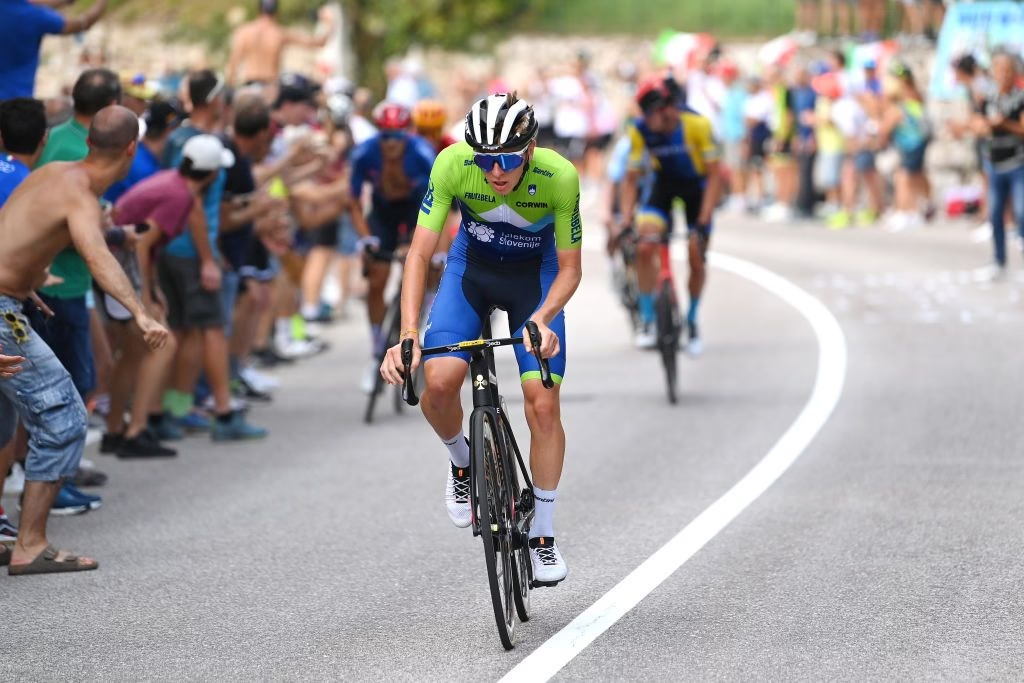
Your biggest training ride should normally come around two weeks before the event.
After that, reduce the volume.
The final week can contain a couple of short rides with a few harder efforts to keep the legs responsive, but there is no benefit in squeezing in another 80-mile day because you are worried you have not done enough.
Fitness does not disappear because you ride less for a few days.
Fatigue does.
That is exactly what you want.
A simple 12-week approach
For someone already comfortable riding around 40 miles, preparation can be divided into four straightforward blocks.
Weeks 1-4: build consistency and bring the long ride towards 50 to 55 miles.
Weeks 5-8: increase endurance towards 65 to 70 miles and include regular hills or tempo riding.
Weeks 9-10: complete the biggest rides of around 75 to 85 miles while practising your full event fuelling strategy.
Weeks 11-12: reduce the volume and arrive rested.
You do not need a complicated training programme.
You need enough weeks of steady riding for long hours on the bike to become normal.
The goal is to still be riding well at mile 80
Your first 100-mile sportive is not really decided by how strong you feel at mile 20.
Almost everyone feels good then.
The preparation shows later.
If you have built your endurance gradually, paced the opening hours sensibly and eaten consistently, the final quarter should still feel like cycling rather than survival.
That is what successful century training is designed to achieve.
Build the distance steadily, practise the practical details and arrive rested. The extra miles on event day are much easier when everything before them has become familiar.

