
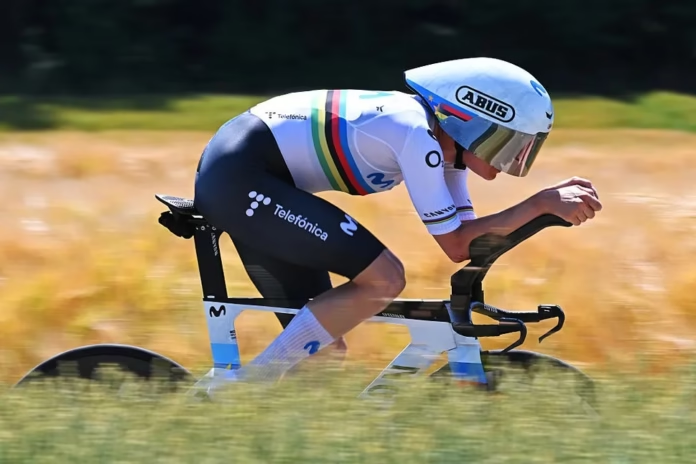
The Tour de France Femmes reaches its first major general classification test on Tuesday with a 21km individual time trial into Dijon. Before that, the contenders must negotiate a hot and tactically awkward Stage 3 across the Jura.
The Col de la Faucille begins almost immediately, four categorised climbs are spread across the 156.5km route to Poligny and temperatures near the Geneva start are expected to reach approximately 36°C. Every GC rider must therefore balance the seconds available today against the energy required tomorrow.
For Demi Vollering and Marlen Reusser, Stage 3 is primarily about reaching the finish safely without wasting their strongest weapon. Pauline Ferrand-Prévot and Kasia Niewiadoma-Phinney have slightly more reason to search for gains before Dijon, but neither can afford an expensive long-range attack.
SD Worx-Protime face the most complicated decision. Lorena Wiebes leads the race, but defending yellow across the Jura could require a chase that compromises the riders they need later in the Tour.
Why the Dijon time trial matters
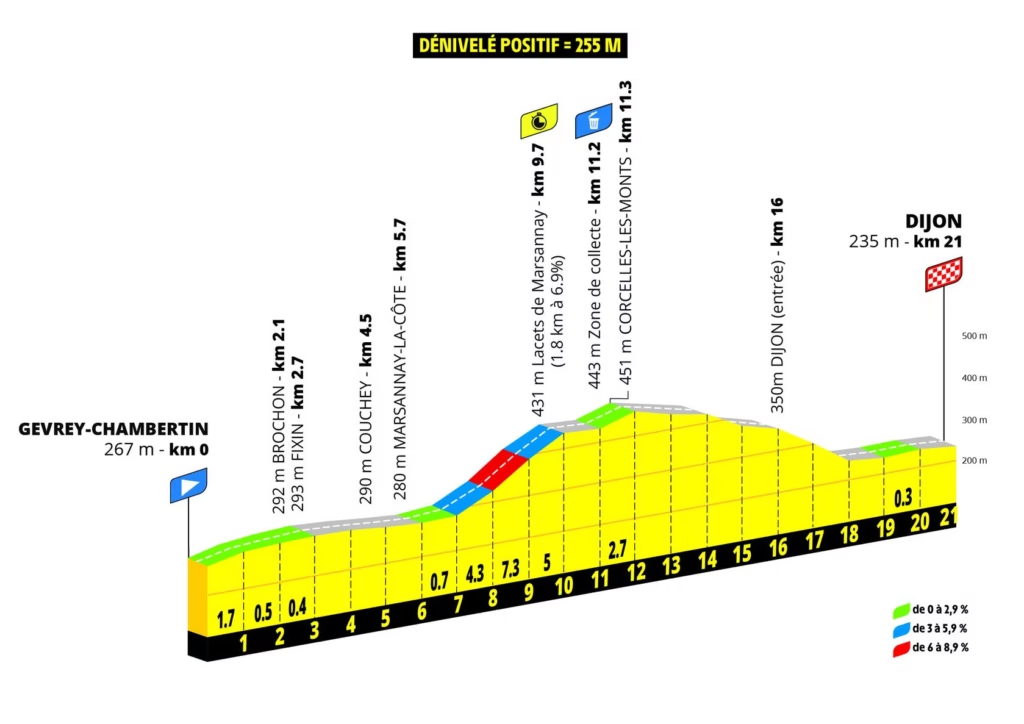
Stage 4 covers 21km from Gevrey-Chambertin to Dijon and should produce the first substantial gaps between the leading contenders.
The route is not a completely flat test for pure specialists. Its opening half contains climbing before a faster run towards Dijon, rewarding riders capable of managing their effort across changing terrain.
Reusser is the clearest specialist among the GC favourites, while Vollering should also expect to gain time on several lighter climbers. Ferrand-Prévot, Elisa Longo Borghini, Antonia Niedermaier and Anna van der Breggen should remain competitive, but the margins could still extend well beyond the handful of seconds currently separating the leaders.
Our Tour de France Femmes 2026 time trial contenders guide examines which riders are best equipped for Dijon and where the largest GC gains may appear.
That makes the energy spent in Poligny particularly important. A five-second bonus today has limited value if the effort required to earn it costs 20 seconds tomorrow.
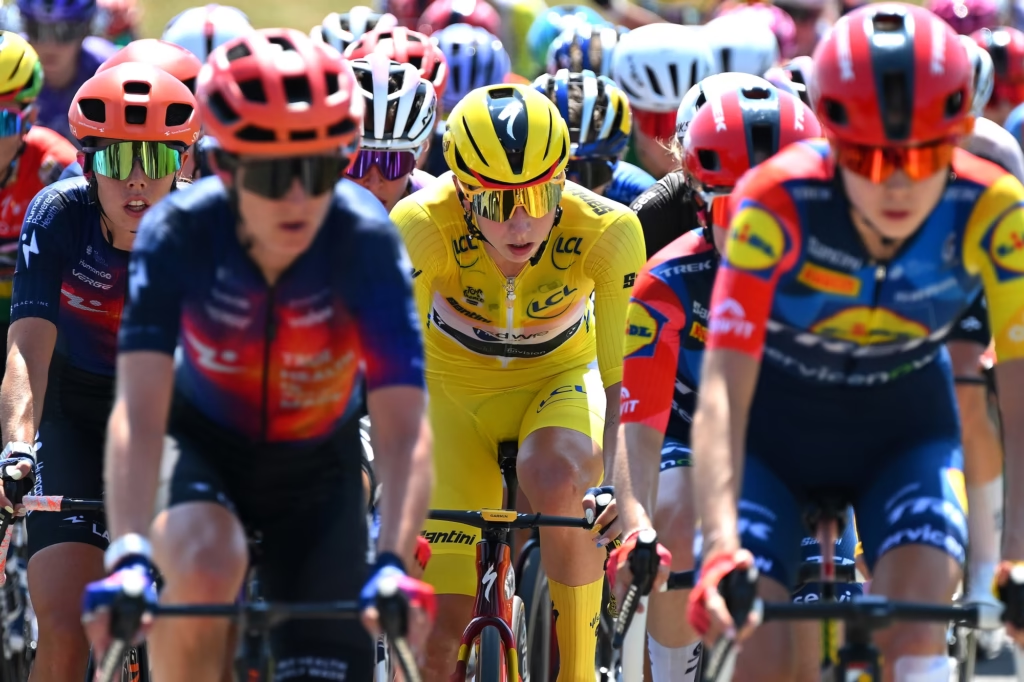
How hard should SD Worx defend yellow or should they not bother?
Wiebes starts Stage 3 with a 14-second advantage over Kim Le Court-Pienaar and 16 seconds over Vollering after winning both opening stages.
The Col de la Faucille is likely to distance her if the strongest teams maintain a serious pace. SD Worx-Protime must then decide whether to use Kopecky, Van der Breggen and the rest of the squad to bring her back.
Defending yellow carries obvious value. Wiebes has controlled the opening weekend and taking the jersey into Dijon would extend a near-perfect start to the Tour.
The potential cost is considerable. A pursuit beginning inside the opening 25km could continue for much of the afternoon, with repeated climbing and extreme heat increasing the price of every turn on the front.
The rational approach is to defend only while the gap remains manageable. If Wiebes reaches the summit close enough for an organised regrouping, SD Worx can help close the difference. If she loses several minutes and other teams refuse to contribute, sacrificing the entire squad would make little sense.
Two stage victories already represent an exceptional return. Losing yellow on Stage 3 would not erase that success.
Vollering can afford to wait
Vollering begins the stage third overall, 16 seconds behind Wiebes and four seconds ahead of most of her principal GC rivals.
There is little reason for her to attack on the Col de la Faucille. A long move would expose her to the heat, separate her from teammates and force her to work for more than 100km before a time trial expected to suit her.
FDJ United-Suez can still make the opening climb difficult through their supporting riders. A strong tempo could remove Wiebes and reduce the peloton without requiring Vollering to make a personal attack.
The late Côte de Chaux-Champagny and nearby bonus point provide a more efficient opportunity. Vollering can follow the main moves, contest the available seconds and use her speed if a reduced group reaches Poligny.
Her ideal stage is hard enough to remove the sprinters but controlled enough that she arrives with most of her energy intact. The broader tactical possibilities are covered in the Tour de France Femmes 2026 Stage 3 preview.
 Photo Credit: Getty
Reusser’s priority is freshness
No rider has a clearer reason to conserve energy than Reusser.
The Movistar leader remains only four seconds behind Vollering after recovering from her Stage 1 crash and finishing safely in Geneva. Dijon gives her the opportunity to take control of the Tour before the race reaches its longest climbs.
Stage 3 should therefore be approached defensively. Reusser needs to remain with the main GC group, stay well supplied in the heat and avoid contributing to attacks or chases that offer little long-term value.
Movistar can place another rider in dangerous moves and allow Reusser to follow rather than drive the race herself. She does not need finish bonuses in Poligny nearly as much as she needs fresh legs in Gevrey-Chambertin.
A small gain today would be irrelevant if the effort weakens her strongest stage tomorrow.
Ferrand-Prévot has more reason to test the race
Ferrand-Prévot begins Stage 3 at 20 seconds, level with Niewiadoma-Phinney, Longo Borghini and Reusser but four seconds behind Vollering.
The Dijon course should not be disastrous for her. She is technically strong and capable of producing sustained power, but Vollering and Reusser can still reasonably expect to gain time.
That gives Ferrand-Prévot more incentive to look for seconds in Poligny, although not from the opening climb.
An attack on the Col de la Faucille would be expensive and difficult to sustain over the remaining distance. A late move on the Côte de Chaux-Champagny is more realistic, particularly if Visma | Lease a Bike have already placed Marion Bunel or Sarah van Dam ahead.
The team also have Marianne Vos as a stage option from a reduced group. Ferrand-Prévot does not need to chase every move personally or turn Stage 3 into a direct GC battle.
A few bonus seconds would be useful. Reaching Dijon without unnecessary fatigue remains more important.
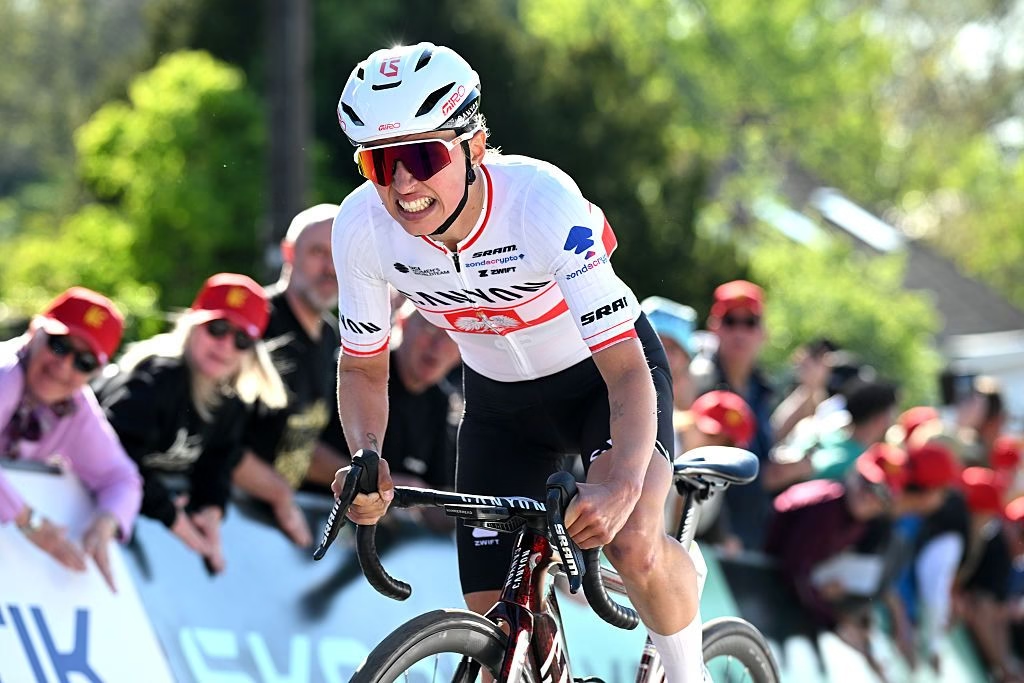 Photo Credit: Getty
Niewiadoma-Phinney cannot be completely passive
Niewiadoma-Phinney faces a slightly different equation because she is likely to concede time to the strongest specialists in Dijon.
That creates an argument for making Stage 3 difficult, but not necessarily through a long individual attack. Canyon SRAM can use the Col de la Faucille to thin the race and increase the accumulated fatigue carried by Vollering and Reusser.
Niewiadoma-Phinney’s best opportunity should arrive in the final 25km. The Côte de Chaux-Champagny suits her ability to produce repeated climbing accelerations, while the bonus point offers a direct reward if she can create a small gap.
She does not need to recover her likely time-trial deficit in advance. She does need to avoid allowing Vollering and Reusser to reach Dijon having spent the entire day protected and untested.
The Tour de France Femmes time bonuses guide explains how much can be gained at the late bonus point and stage finish.
Longo Borghini can use UAE’s depth
Longo Borghini has one of the strongest teams for this tactical situation.
UAE Team L’IMAD can use Paula Blasi, Maëva Squiban, Silvia Persico, Mavi García and Dominika Włodarczyk in different roles without immediately exposing their principal leader.
Squiban or Persico can enter an early breakaway, while García can help maintain a demanding pace on the climbs. Blasi can follow young-rider moves and remain a second GC option.
That depth means Longo Borghini does not need to attack simply because the terrain suits her. She can follow Vollering, Ferrand-Prévot and Niewiadoma-Phinney before considering a late counter if those riders begin watching one another.
Longo Borghini should perform well in Dijon, even if she does not match Reusser. Her objective today is to prevent stronger time triallists gaining additional seconds without spending more energy than necessary.
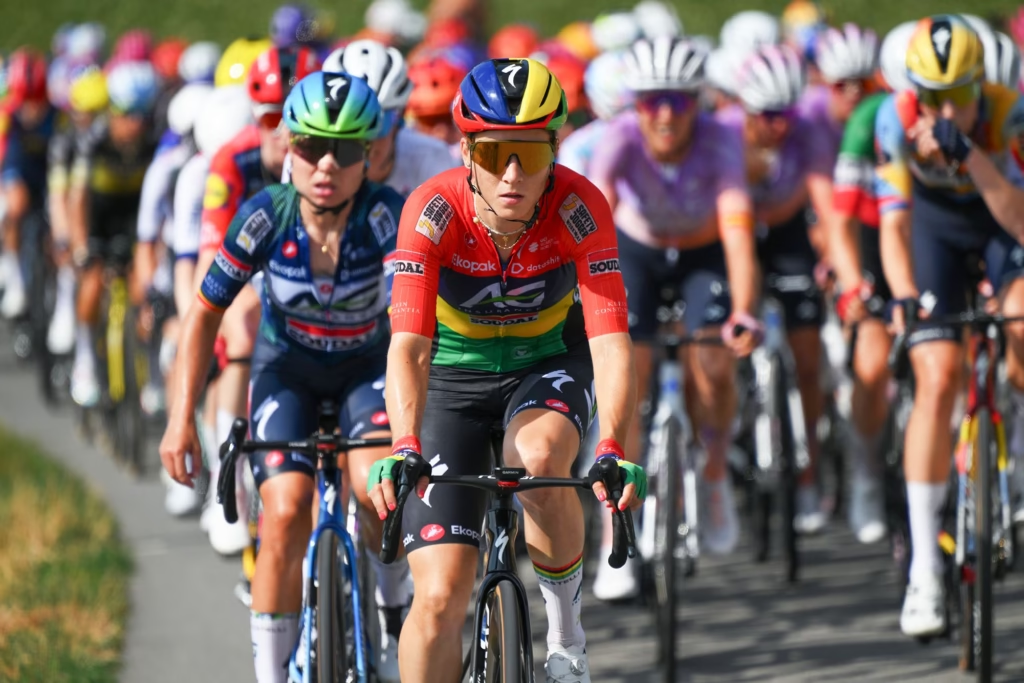
Le Court-Pienaar has the clearest route to yellow
Le Court-Pienaar begins only 14 seconds behind Wiebes and has enough climbing strength to remain with the main selection on the Col de la Faucille.
She is therefore the most obvious candidate to take yellow if SD Worx decide not to defend it.
Her finishing speed provides several routes towards the jersey. She can follow the leading group, collect seconds at the late bonus point or contest a reduced sprint without needing to attack from long range.
AG Insurance-Soudal should avoid making her responsible for controlling the stage simply because she is second overall. The team can use Justine Ghekiere and Urška Žigart in the hills while keeping Le Court-Pienaar protected.
Yellow would bring additional obligations, but an opportunity to lead the Tour is too significant to reject if it arrives through normal race positioning.
The current margins are detailed in the GC and jerseys standings after Tour de France Femmes Stage 2.
The white jersey contenders are already thinking about Dijon
Paula Blasi, Isabella Holmgren and Antonia Niedermaier remain level on time in the young rider classification.
Niedermaier is the strongest established time triallist of the three and has little reason to attack today. Holmgren should also be comfortable on the rolling Dijon course and can allow Lidl-Trek’s stage hunters to race more aggressively.
Blasi has greater reason to search for seconds before Tuesday. She can use UAE’s strength to remain protected before following late attacks or contesting the bonus point.
The white jersey may not change hands in Poligny, but Stage 3 can still establish who begins the time trial under the greatest pressure.

A breakaway could suit almost everyone
The simplest way for the main favourites to save energy is to allow a non-threatening breakaway to contest Stage 3.
That removes the need to chase for the victory, absorbs the finish bonuses and allows the leading teams to concentrate on positioning, cooling and avoiding crashes.
SD Worx may be particularly willing to let a group take the available seconds if doing so makes Wiebes’ yellow jersey easier to defend. Vollering, Reusser and Ferrand-Prévot would also benefit from avoiding a prolonged stage-winning chase.
The difficulty is agreeing which riders are safe to release. A group containing riders several minutes down presents little danger. A move involving someone close enough to threaten yellow or the top ten could force teams to work anyway.
The Col de la Faucille is an ideal launch point for a large, strong breakaway, but it may take time before every team accepts its composition.
What each contender needs from Stage 3
Lorena Wiebes: Limit her losses on the Col de la Faucille without requiring SD Worx-Protime to exhaust the entire team.
Kim Le Court-Pienaar: Follow the leading group and take yellow if the opportunity comes without a long-range effort.
Demi Vollering: Remain protected, avoid unnecessary attacks and consider only efficient late gains.
Marlen Reusser: Reach Poligny safely, hydrated and as fresh as possible.
Pauline Ferrand-Prévot: Save energy early before looking for a realistic late opportunity.
Kasia Niewiadoma-Phinney: Encourage a demanding race and attack late rather than waiting passively for Dijon.
Elisa Longo Borghini: Use UAE Team L’IMAD’s depth and avoid being drawn into unnecessary work.
Stage 3 cannot decide the Tour, but it can compromise the time trial before the first rider reaches the Dijon start ramp.
Vollering and Reusser can afford to wait. Ferrand-Prévot and Niewiadoma-Phinney have more reason to be ambitious. Wiebes and SD Worx-Protime must decide whether yellow remains worth defending or has become an expensive distraction.
The rider who appears least aggressive in Poligny may be the one best positioned to take control of the race 24 hours later.

