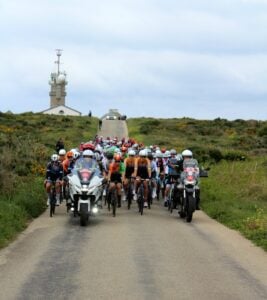
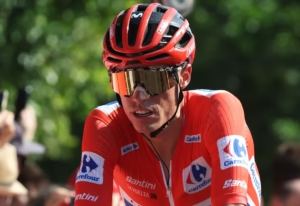
Malmedy is one of those cycling bases that makes more sense with every hour you spend riding from it. The town sits on the edge of the Hautes Fagnes, or High Fens, with steep Ardennes climbs in one direction, the highest roads in Belgium in another and the familiar Liège-Bastogne-Liège country around Stavelot and Spa within easy reach.
It is not a destination built around one famous climb. The appeal comes from the density of good roads. You can leave the centre of Malmedy and be climbing almost immediately, spend an hour crossing open plateau roads near Signal de Botrange, descend through forests towards Robertville, or turn south-west for the steeper ramps around Stavelot and Trois-Ponts.
For riders who like the Belgian Classics but want a trip that feels more like a proper climbing holiday than a cobbled pilgrimage, Malmedy is one of the strongest options in the country.
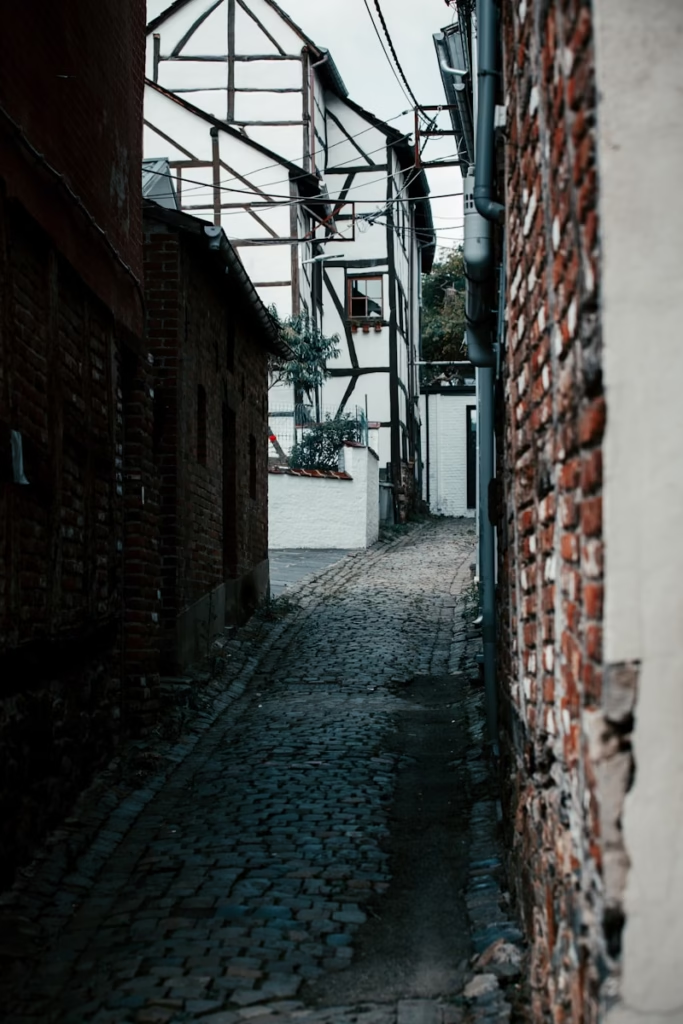
Cycling in Malmedy & Hautes Fagnes at a glance
Country: Belgium
Region: Wallonia, Liège province
Best base: Malmedy
Terrain: Short steep climbs, rolling high plateau, forest roads and river valleys
Highest nearby point: Signal de Botrange, 694m
Best suited to: Strong recreational riders, Classics fans and riders who enjoy repeated climbing
Useful nearby areas: Stavelot, Spa, Robertville, Waimes and Trois-Ponts
Typical ride length: 60-150km depending on the loop
Why Malmedy works so well as a cycling base
Malmedy’s biggest advantage is location. It sits where several different versions of Belgian cycling meet. To the north and east, the roads rise towards the High Fens plateau and Signal de Botrange. To the west, Spa and the Liège Classics terrain are close enough for long loops. To the south, Stavelot, Wanne and the Amblève valley bring steeper, more concentrated Ardennes climbing.
That variety means you do not need to repeat the same signature route every day. A three or four-day trip can include a high plateau endurance ride, a short day built around the hardest local climbs, a Liège-Bastogne-Liège-inspired loop and a steadier recovery ride on the RAVeL network.
If you want a wider introduction to the region, ProCyclingUK’s guide to cycling in Liège and Spa covers the western side of the Ardennes Classics landscape. Malmedy works particularly well as the more climbing-focused companion base.
The Hautes Fagnes changes the character of the riding
The High Fens is one of the most distinctive landscapes in Belgium. The plateau is known for peat bogs, heathland, forest and exposed roads that feel very different from the sheltered valleys below. Signal de Botrange, at 694 metres, is the highest natural point in Belgium.
The number itself is modest compared with the Alps, but altitude is not really the point. You normally reach the plateau through a sequence of shorter climbs, and once on top the weather and exposure can become part of the difficulty. A mild day in Malmedy can feel noticeably cooler and windier around Botrange.
That makes clothing choices more important than the elevation figure suggests. A packable rain jacket or gilet is sensible even when the forecast looks stable, particularly in spring and autumn.
Signal de Botrange: riding to the roof of Belgium
Signal de Botrange is an obvious target for a first ride. The summit area itself is not reached by one iconic, uninterrupted climb. Instead, the interest comes from the roads that rise out of Malmedy and neighbouring villages towards the plateau.
Once you are up, the scenery opens dramatically. Forest gives way to the broad High Fens landscape, with long sightlines and very little of the urban density associated with much of Belgium. On a quiet morning it can feel surprisingly remote.
A good endurance loop can combine Malmedy, Botrange, the Robertville area and Waimes before returning to town. Malmedy tourism’s own Fens and Lakes road route is 144km with 1,581 metres of climbing, which gives a useful indication of what a full day in the area can look like.
Côte de la Ferme Libert: the climb above town
If Botrange represents the open, steady side of Malmedy riding, the Côte de la Ferme Libert represents the opposite. The climb sits directly above the town and is short, steep and immediately serious.
When Liège-Bastogne-Liège used it in 2017, the race measured the climb at roughly 1.2km averaging 12.1%. The gradient is enough to make it feel more like a concentrated Ardennes wall than a conventional road climb. Local riders have long regarded it as one of the hardest ramps in the area.
It is perfect for a shorter day when you want intensity without riding for five hours. The wider Malmedy climbing route promoted by the local tourist office covers 70km with 1,259 metres of ascent, so it is easy to build a compact ride with a lot of vertical gain.
Ride south for Stavelot, Wanne and the old Liège roads
Stavelot is close enough to make the classic Ardennes climbs part of a Malmedy trip rather than a separate destination. The roads around Wanne, Stockeu and the Haute-Levée have appeared repeatedly in the history of Liège-Bastogne-Liège and remain some of the best-known cycling roads in eastern Belgium.
Stockeu is the climb that tends to leave the strongest impression. It is short, brutally steep and historically associated with Eddy Merckx and the older Liège route. Wanne is longer and more rhythmical, while the Haute-Levée adds another sustained effort when the legs are already carrying fatigue.
ProCyclingUK’s history of Liège-Bastogne-Liège explains why these roads carry so much weight within the sport. Riding them from Malmedy makes the race feel less like a collection of isolated named climbs and more like one continuous Ardennes landscape.
Robertville and the quieter eastern roads
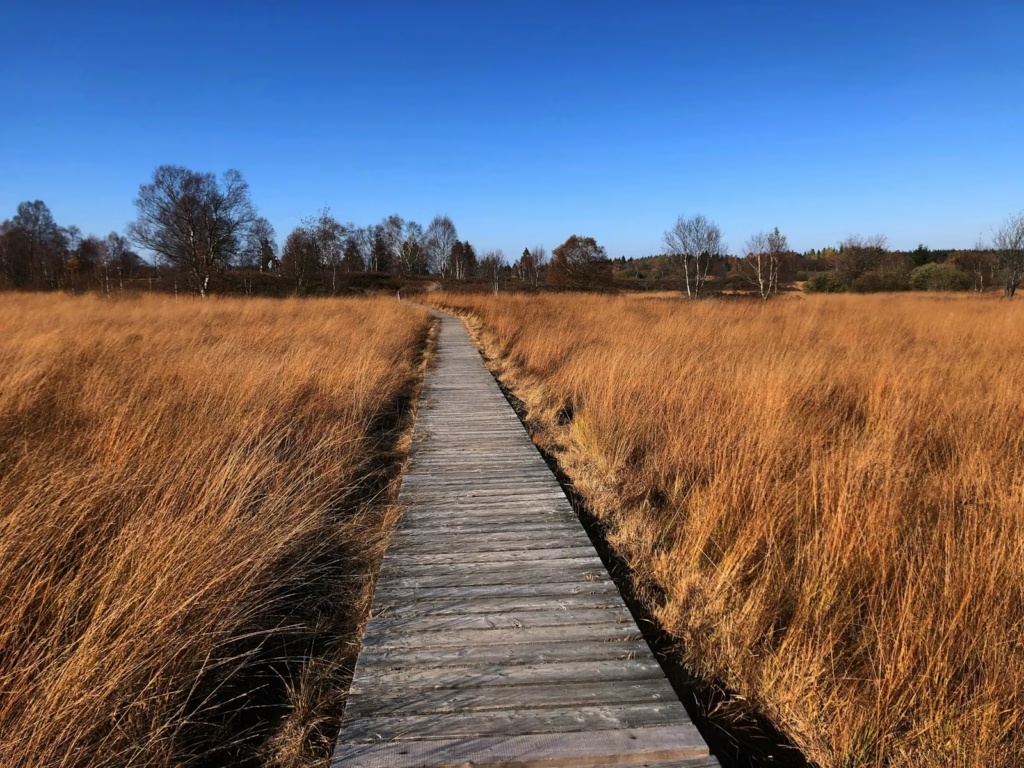
Not every ride needs to chase race history. Heading east from Malmedy towards Robertville and Waimes gives you quieter roads, forest, reservoir scenery and a more relaxed way into the High Fens.
Robertville works particularly well on a day when the main objective is distance rather than steep climbing. The terrain still rolls constantly, but it is easier to settle into a rhythm. From there you can extend north towards Botrange or continue east before looping back through the plateau.
The network of smaller roads is one reason Malmedy rewards riders who are comfortable planning their own routes. The famous climbs are useful anchors, but some of the best sections are the connecting roads between them.
What the roads are like
Road quality varies. Main routes are generally straightforward, while smaller Ardennes lanes can be rougher, patched or dirty after poor weather. Forest roads can hold moisture for longer than exposed sections, and debris is more common in autumn.
A modern road bike is ideal, but this is not a place where ultra-narrow tyres make much sense. Wider road tyres give more comfort and confidence on imperfect surfaces without costing anything meaningful on the climbs. Sensible gearing matters even more. The hardest ramps are steep enough that a compact chainset and a generous cassette will make the trip much more enjoyable.
The weather is part of the challenge
Eastern Belgium is green for a reason. Rain can arrive quickly, cloud can settle on the plateau and temperatures around the High Fens can be noticeably lower than in the valleys. Even in summer, a long descent after getting wet can become uncomfortable.
Late spring through early autumn gives the best chance of long riding days, but there is no month when you can completely ignore the forecast. The most reliable strategy is to plan two versions of each day: a longer plateau route for stable conditions and a shorter valley or RAVeL option if the weather closes in.
September 2026 High Fens access note
A fire affected part of the High Fens nature reserve in August 2026. At the time of writing in September, official East Belgium information says most cycling routes outside the closed plateau sections remain accessible and the full Vennbahn route is open, but some areas of the High Fens are still subject to restrictions.
Conditions can change, particularly during dry weather when nature-reserve access may also be restricted for fire risk. Check the latest local access information before committing to a route across the plateau.
Using the RAVeL for recovery days and connections
Belgium’s RAVeL network gives the trip a useful easier option. These traffic-free or low-traffic routes are ideal when you want to spin the legs after a hard day, avoid a busy road connection or simply ride without thinking about gradients for a while.
They are also useful for arriving without a car. Malmedy’s tourist office recommends taking the train to Trois-Ponts and then cycling roughly 15km to Malmedy via the RAVeL. For a rider travelling with a bike, that makes the town more accessible than its lack of an active mainline railway station might suggest.
How many days do you need?
Three riding days is enough to understand the area. Four gives you more flexibility if the weather is poor.
Day one: Malmedy, Robertville and Signal de Botrange for an introduction to the High Fens.
Day two: a harder Ardennes loop through Stavelot with Wanne, Stockeu and surrounding climbs.
Day three: the Malmedy climbs, including Ferme Libert, with a shorter afternoon or recovery spin.
Day four: a longer Spa or Liège-focused loop if the legs and weather cooperate.
Who will enjoy riding in Malmedy most?
Malmedy suits riders who enjoy repeated climbing more than riders looking for one enormous ascent. The day accumulates difficulty through constant changes of gradient. A 100km route can contain enough climbing to feel much harder than the distance suggests.
Classics fans will get the most immediate connection because the roads around Stavelot and Spa are so familiar from racing. Strong recreational riders will appreciate the variety, while anyone training for a hilly sportive can build a very demanding block without needing Alpine-length climbs.
It is less suitable if your ideal cycling holiday means flat café rides every day. Easier routes exist, particularly on the RAVeL, but the reason to choose Malmedy is that the hills begin almost as soon as you leave town.
Cycling in Malmedy & Hautes Fagnes FAQ
Is Malmedy good for road cycling?
Yes. It is one of the best bases in eastern Belgium for road riders because the High Fens, Stavelot climbs, Spa and quieter Ardennes roads are all within practical riding distance.
What is the hardest climb near Malmedy?
The Côte de la Ferme Libert is one of the obvious candidates. It is around 1.2km at roughly 12% and rises directly above Malmedy. Stockeu near Stavelot is another famously severe option within a longer loop.
Can you ride to Signal de Botrange from Malmedy?
Yes. Signal de Botrange is a natural target for a road ride from Malmedy and can be combined with Robertville, Waimes or a longer High Fens loop.
Can you visit Malmedy for cycling without a car?
It is possible. One practical option is to travel by train to Trois-Ponts and then ride around 15km to Malmedy on the RAVeL connection.