South Africa’s Garden Route is one of the country’s most varied areas to explore by bike. Running broadly east from Mossel Bay towards Storms River, it combines coastal roads, lagoons, indigenous forest, rolling hills and some of South Africa’s best-known mountain-bike terrain.
It is very different from riding around Cape Town and the Winelands. There is no single famous climb to build the trip around. The appeal is the journey itself, moving between coastal towns and finding quieter roads, gravel tracks and forest trails along the way.
That distinction matters when planning a trip. The Garden Route is not one continuous, purpose-built cycle route. The N2 connects the main towns, but it is also the region’s principal road artery and carries fast-moving traffic. Shoulder width varies and some sections are much less pleasant to ride than others.
The better approach is to use the N2 only where necessary and build the rest of the trip around quieter regional roads, forestry tracks and established cycling routes. A gravel bike gives the most freedom, although there is enough good road and mountain-bike riding to design a trip specifically around either discipline.
The Garden Route also fits naturally into a longer South African cycling trip. ProCyclingUK’s Rest of the World cycling travel guide brings together the Garden Route with other long-haul riding destinations and practical planning ideas.
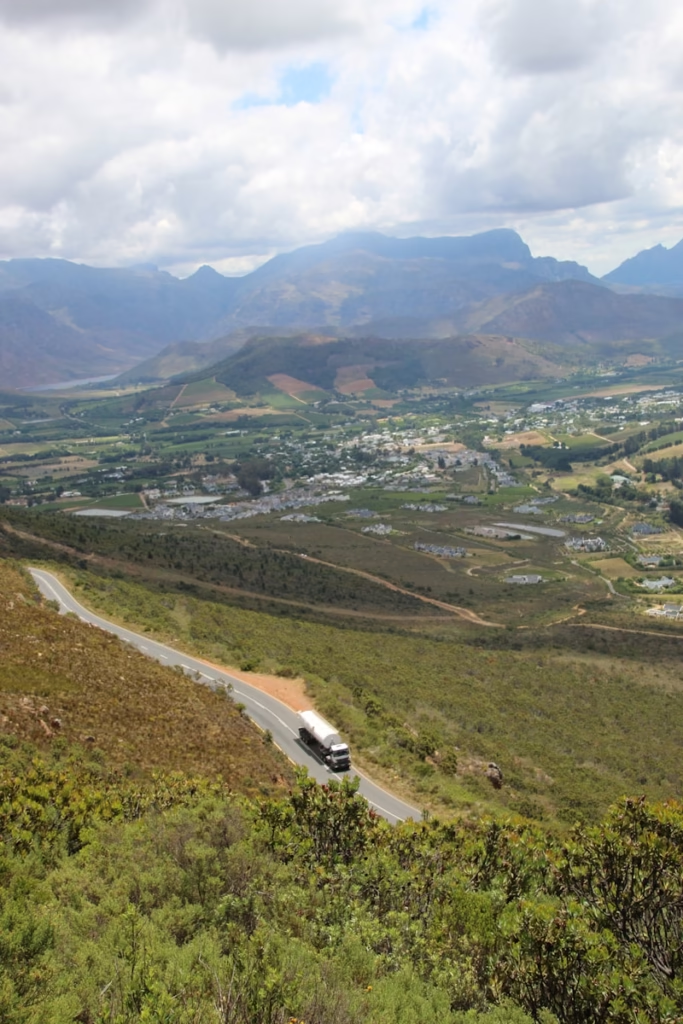
When to cycle the Garden Route
The Garden Route has a relatively mild coastal climate and riding is possible throughout the year, but conditions can change quickly.
Spring and autumn are generally the easiest seasons for a multi-day trip. Temperatures are comfortable for longer rides and the main holiday towns are quieter than during the South African summer peak.
Summer brings long days and warm weather but also stronger sunshine, busier coastal roads and the possibility of significant wind. Winter can still produce excellent riding days, although mornings are cooler and periods of heavy rain are more likely to disrupt forest and gravel routes.
Rain is possible at any time of year. The landscape is green for a reason, and unsealed roads can change quickly after sustained wet weather. Carry a lightweight waterproof even when the forecast looks settled and check trail conditions before committing to a remote off-road section.
Five to seven riding days works well for a point-to-point trip from Mossel Bay towards Storms River. Add extra time if you want to spend full days on the mountain-bike trails around Knysna and Harkerville rather than simply passing through.
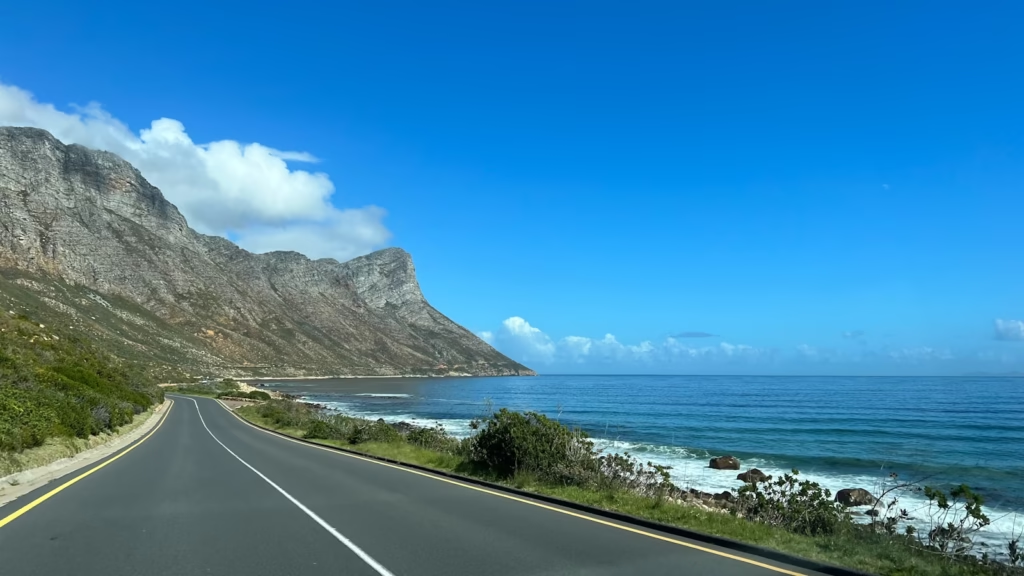
A Garden Route cycling itinerary from west to east
Mossel Bay to George
Mossel Bay makes a practical western starting point. There is a large choice of accommodation and enough local riding to make it worth arriving a day before beginning the point-to-point journey.
The direct journey towards George highlights the main planning problem on the Garden Route. The N2 is convenient but not always enjoyable on a bicycle, particularly when traffic is heavy. It is worth studying local alternatives in advance rather than simply allowing a navigation app to choose the quickest road.
George is the main service centre on the western side of the Garden Route and a sensible place to deal with any mechanical problems before heading further east. It also opens up a very different type of riding towards the Outeniqua Mountains.
Montagu Pass is the obvious detour for experienced gravel riders. The historic pass climbs north from George on an old road through the mountains towards the interior. The surface can be rough and conditions vary, so it is better treated as a dedicated gravel or mountain-bike ride than casually added to a loaded road-bike itinerary.
Check local road conditions before setting out. Mountain passes and forestry routes can be affected by heavy rain, erosion or temporary closures.
George to Wilderness and Sedgefield
East of George, the scenery changes quickly. Wilderness sits between forest, lakes and the Indian Ocean, and this is where the trip begins to feel more like the Garden Route people imagine before arriving.
The main road remains busy in places, so this is another section where route choice matters more than simply following the shortest line on the map. Starting early helps, both for traffic and because coastal wind often becomes more noticeable later in the day.
Wilderness works well as an overnight stop or as a base for an additional day. The surrounding Garden Route National Park contains forest roads and trails, while the lake system around Wilderness and Sedgefield gives the road riding a different character from the more exposed coastline further west.
Continuing towards Sedgefield keeps the distances manageable and leaves time for detours rather than turning every day into a transfer between hotels.
Sedgefield to Knysna
Knysna is one of the strongest bases on the whole route.
The approach brings thicker forest, repeated short climbs and views towards the lagoon. There is no single major ascent, but the constant rolling terrain adds up and can make a relatively short day harder than the distance suggests.
Knysna has the practical advantages needed on a multi-day cycling trip, including a wide choice of accommodation, supermarkets, cafés and access to bike services. It also sits close to some of the region’s best off-road riding.
This is a good place to schedule a rest day if the trip has already included several long stages. For mountain bikers, however, a so-called rest day can easily become another substantial ride through the forest.
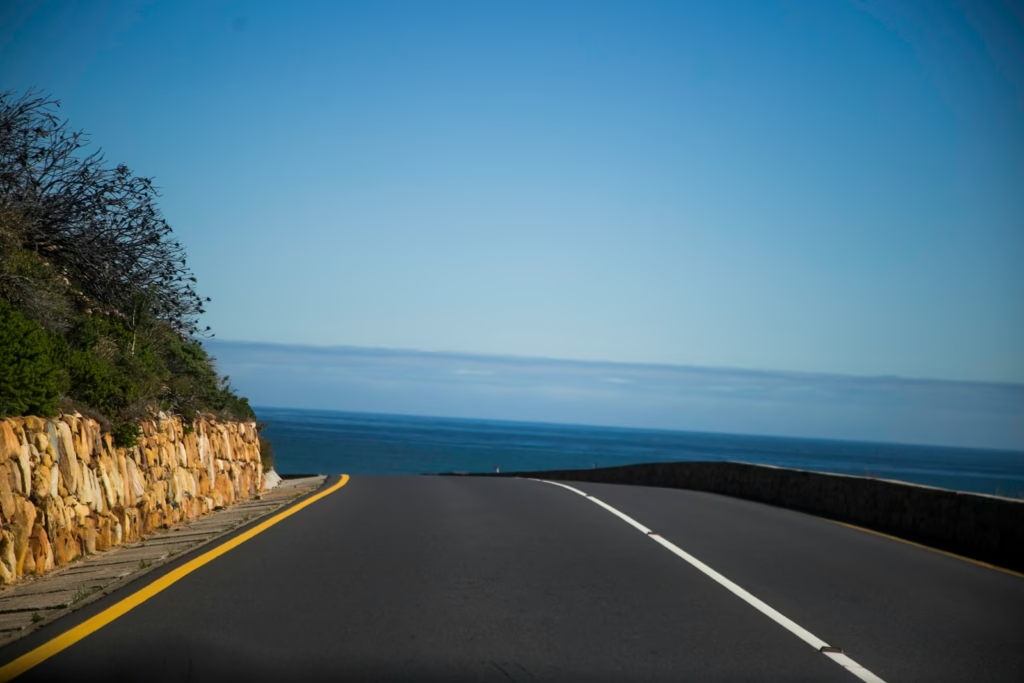
Knysna to Plettenberg Bay
The direct distance between Knysna and Plettenberg Bay is modest, but this is one section where taking the direct route misses much of the reason for bringing a bike.
Harkerville sits between the two towns and contains a network of official mountain-bike routes through indigenous forest, fynbos and plantation roads. The routes range from shorter, relatively straightforward loops to the much harder Red Route, which includes technical singletrack and coastal scenery.
Day permits are required for cycling routes within the relevant sections of Garden Route National Park, so check the current SANParks access arrangements before riding. Trails can also close temporarily after severe weather.
A gravel rider does not need to seek out the most technical trails to make Harkerville worthwhile. There are enough forest roads and easier tracks to add an off-road element without turning the day into a full mountain-bike session.
Plettenberg Bay itself is another useful overnight base. Traffic becomes heavier close to town, particularly during holiday periods, so quieter approaches are worth planning before leaving Knysna.
Plettenberg Bay to Storms River
The final section towards Storms River takes the journey into the Tsitsikamma landscape, where dense forest reaches towards a much more rugged coastline.
This is also one of the stages that requires the most care on the road. The N2 is a major transport corridor and avoiding it completely is difficult on a straightforward point-to-point itinerary. Heavy vehicles, fast traffic and changing shoulder conditions mean this is not a section to approach casually.
Use strong front and rear daytime lights, avoid riding in poor visibility and leave enough time that there is no pressure to finish after dark.
Storms River Village makes a natural end point. By then the trip has moved from the more open western Garden Route through lakes, forest and the hillier eastern section, without requiring every day to follow exactly the same style of riding.
There is little need to immediately turn around and start another long stage. Tsitsikamma is one of the best places on the route to put the bike away for a day and explore on foot or by kayak.
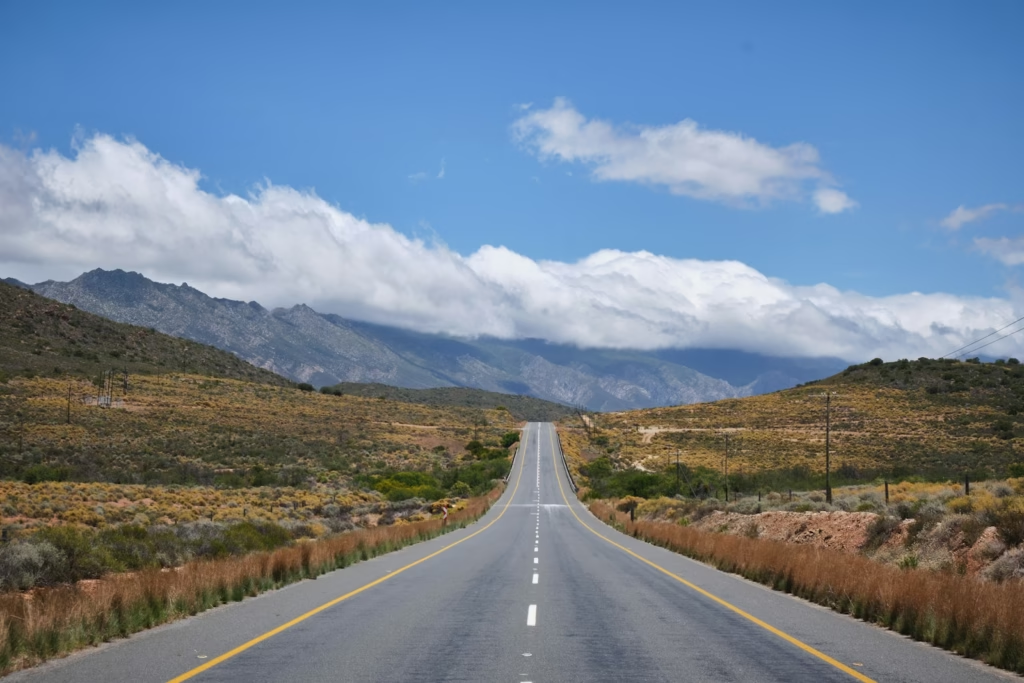
Road bike, gravel bike or mountain bike?
A road bike works if the trip is being planned primarily around tarmac. Wider tyres make sense because road surfaces and shoulders are not uniformly smooth. Around 28mm should be treated as a practical minimum for a loaded trip, with 30mm or 32mm giving more comfort and margin on poorer surfaces.
A gravel bike is the most adaptable choice. It remains efficient on paved roads while opening up forestry tracks, easier mountain-bike routes and historic roads such as Montagu Pass.
A mountain bike makes sense if Harkerville, Knysna and the forest trail networks are the main reason for the trip. A hardtail is enough for many of the established routes, although stronger riders deliberately targeting the more technical trails may prefer a trail bike.
Whichever bike you choose, do not assume that a road appearing on a digital map will necessarily be suitable. Forestry roads can become muddy, heavily corrugated or washed out, while access may be controlled by SANParks, forestry operators or private landowners.
Safety and practical planning
- Do not build the entire trip around the N2. It is often the simplest line between towns, but it is a major road and conditions for cyclists vary significantly.
- Use lights during the day. A bright rear light is particularly worthwhile on busier connecting sections and in poor visibility.
- Start early. Roads are generally quieter, temperatures lower and coastal winds often less developed.
- Carry enough food and water. Forest and gravel detours can take you well away from shops and cafés.
- Download offline maps. Mobile reception can become unreliable once you move away from the towns and main roads.
- Expect more climbing than the map suggests. The Garden Route is characterised by repeated shorter rises rather than one obvious mountain pass.
- Check current trail access. SANParks cycling areas may require permits and weather can lead to temporary closures.
- Plan secure bike storage. Confirm that accommodation can keep bicycles somewhere locked and preferably indoors.
- Watch for animals. Baboons, wildlife and livestock can all appear on quieter roads and trails.
- Carry a waterproof layer. Weather around the forested coastal belt can change quickly.
There is a real road-safety consideration here rather than a generic warning attached to every travel guide. Local transport planning has specifically identified cycling safety on the N2 as an issue, so the safest Garden Route itinerary is not necessarily the most direct one.
A luggage-transfer service or support vehicle can simplify the trip considerably, particularly if you want to spend more time riding gravel and trails without carrying a full touring setup. Independent riders should keep the daily distances conservative enough to allow for route changes, bad weather or an unexpectedly slow forest section.


What to pack for the Garden Route
For a week-long trip, two or three riding jerseys, arm warmers, a lightweight waterproof, gloves, sunglasses and strong sun protection will cover most conditions. Temperatures can change noticeably between the coast, forest and higher ground, so an extra layer is worth carrying even when the day starts warm.
Bring a spare derailleur hanger for your specific bike, along with inner tubes or a tubeless repair kit, tyre plugs, chain links, brake pads and a reliable pump. These are particularly important if the itinerary includes Montagu Pass or more remote forest routes, where a simple mechanical problem can become a long walk.
Two large bottles should be the minimum carrying capacity for longer stages, with additional water for remote gravel days. A compact first-aid kit, charged phone, GPS computer and power bank are also sensible additions.
Why the Garden Route works so well by bike
The Garden Route is not the place to come looking for a perfectly signed cycleway between each town. Planning takes more work than that, particularly when deciding how much of the N2 you are comfortable using.
What it offers in return is variety.
A single trip can include coastal road riding, a rough historic mountain pass, lagoon-side kilometres, indigenous forest and proper mountain-bike trails. Knysna and Plettenberg Bay work as cycling bases in their own right, while Mossel Bay to Storms River gives the whole week a natural direction rather than a series of disconnected day rides.
It also works well as the second half of a longer South African trip after riding around Cape Town and the Winelands. The riding is different enough that the two regions do not feel repetitive.
For more destination guides and practical advice on building cycling trips abroad, see ProCyclingUK’s Travel and Riding Abroad hub.