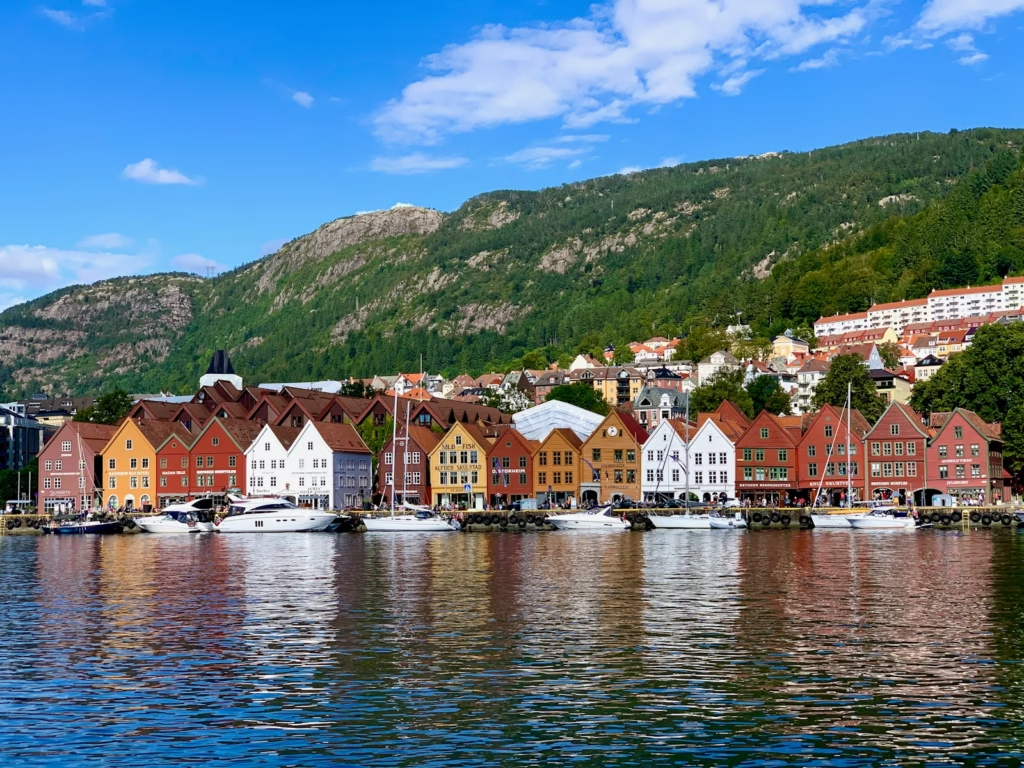
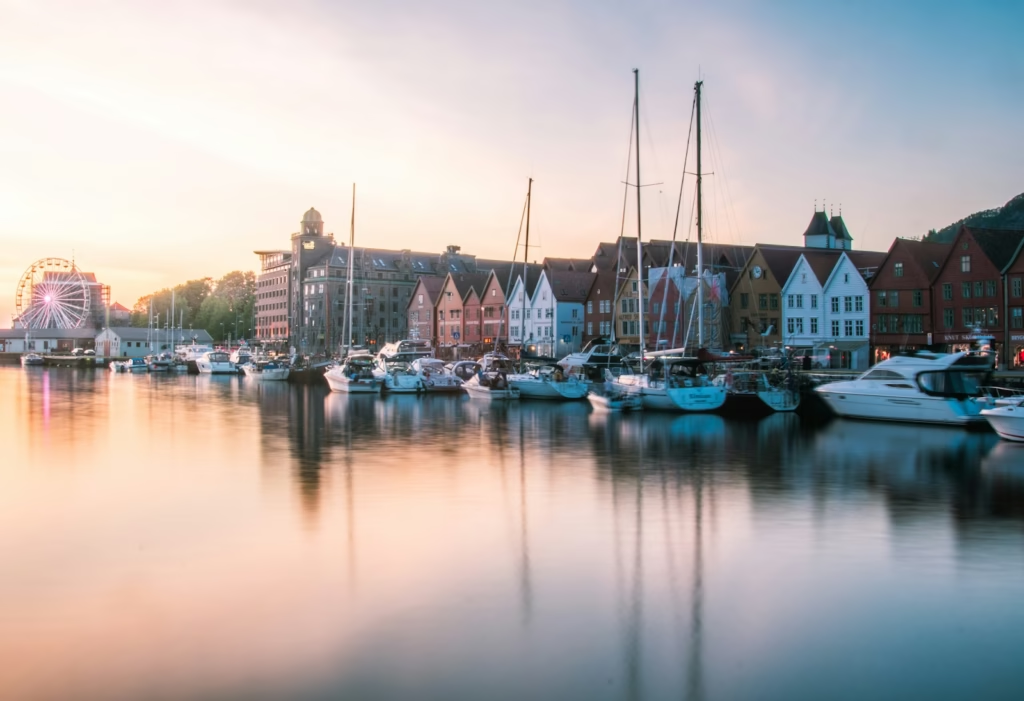
Bergen is not the obvious place to choose if your first priority is guaranteed sunshine and uncomplicated road riding. It rains, the fjords turn short-looking routes into long detours, and a road that appears perfect on a map can end abruptly at a tunnel you cannot safely use on a bike. That sounds like a poor sales pitch until you actually look at what sits around the city.
Western Norway gives cyclists something very few European destinations can copy. A ride can begin beside a harbour, climb through wet forest, cross a fjord by ferry, disappear onto a quiet road beneath a rock wall and finish with a train journey back to Bergen. The infrastructure is not built around one famous climb. It is a network of roads, railways, ferries and old construction tracks that rewards riders who are willing to plan properly.
For that reason Bergen works best as a gateway rather than a single-base cycling resort. You can ride locally, but the real value comes from using the city to reach Voss, Hardanger, Flåm and the high routes around the Bergen Railway. ProCyclingUK’s Cycling in Rest of Europe hub is useful if you are comparing western Norway with other European riding destinations.
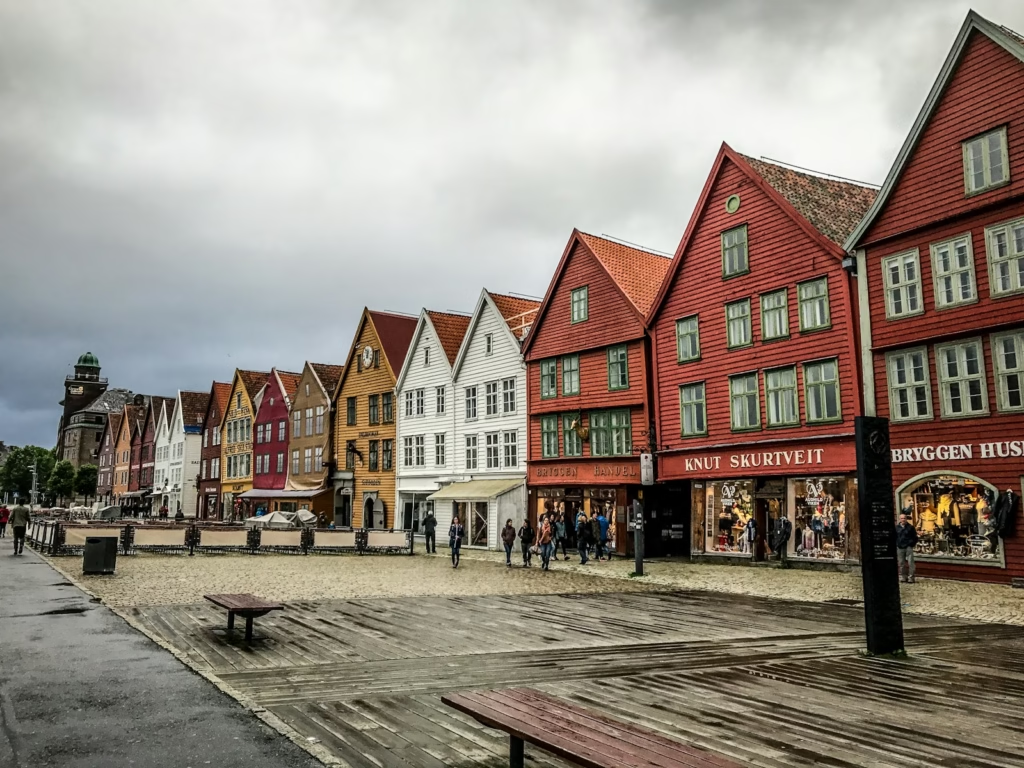
Bergen itself is better for bikes than its geography suggests
The first surprise is that Bergen has enough cycling infrastructure to make an urban warm-up day worthwhile. The Fyllingsdalen tunnel is the most obvious example. Opened in 2023, the 2.9km tunnel between Fyllingsdalen and Kristianborg was built for walking and cycling and gives riders a traffic-free route straight through the mountain. Bergen municipality describes it as the world’s longest purpose-built pedestrian and cycle tunnel.
It is more useful than a novelty photo suggests. The tunnel creates a clean connection between parts of the city that would otherwise require a climb or a busier road route, and it is permanently cool inside at around seven degrees. On a wet Bergen morning, that combination of dry tarmac and separated infrastructure is genuinely practical.
The hills start almost immediately once you leave the main cycle routes. Bergen is ringed by steep terrain, so even a short local ride can collect a surprising amount of climbing. These are not the long, regular gradients of the Alps. They tend to be shorter, sharper and less predictable, which makes low gearing more useful than the profile might imply.
Voss is the easiest way to turn Bergen into a bigger riding base
Voss changes the scale of the trip. The Bergen Railway reaches the town in roughly an hour and a quarter, putting you much closer to the high ground without needing a car. That makes it possible to stay in Bergen and start a ride somewhere completely different, or to split the holiday between the city and Voss.
The rail connection matters because loop routes are not always the smartest way to ride around fjords. A 40km gap on the map may require a huge road detour around the water, while a train or ferry can turn the same area into a clean point-to-point day. Western Norway rewards riders who treat public transport as part of the route rather than something used only at the start and end of the holiday.
Voss also gives you a more rural base with easier access to quieter valleys and mountain roads. If Bergen feels too urban for a full week, two or three nights in Voss makes the trip much more cycling-led without sacrificing the transport connection.
Rallarvegen is the ride that justifies bringing a gravel bike
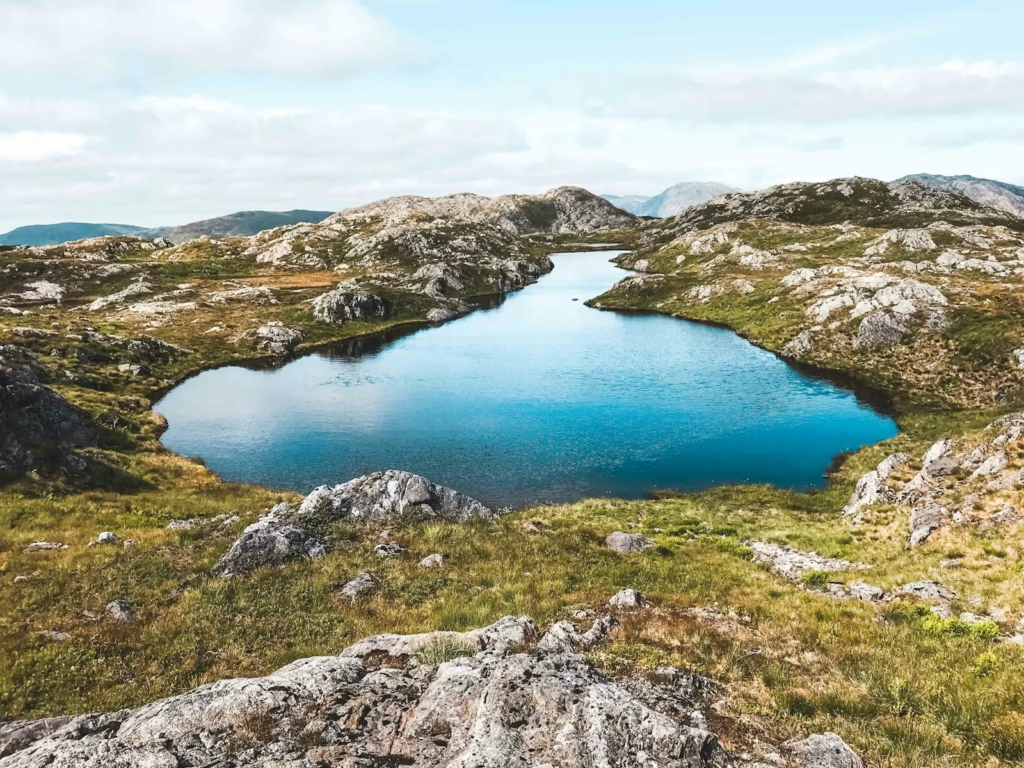
Rallarvegen is the famous route in this part of Norway and the one that changes the answer to the question of which bike to bring. The historic construction road was built alongside the Bergen Railway and runs through high mountain terrain between Haugastøl, Finse, Myrdal and the western valleys. The complete classic route is around 82km, although many visitors start at Finse rather than riding the whole thing.
Finse sits at 1,222 metres and is reached by train rather than road, which gives the ride a sense of occasion before the first pedal stroke. From there the route crosses exposed mountain terrain before dropping towards Myrdal and, on the best-known variation, down to Flåm. It is gravel, not smooth road, and conditions matter far more than the calendar suggests.
Snow often remains on the high sections into summer. Local cycling information typically treats mid-July to mid-September as the main period for bike transport and straightforward access, but even then the weather can change quickly. This is not a route to attempt with a light waterproof and the assumption that a Norwegian July behaves like a French July.
The most popular section also contains a long descent, so braking and tyre choice deserve attention. A gravel bike with 40mm or wider tyres is a much more sensible tool than a road bike, while a lightweight mountain bike works perfectly well. Riders who are confident on mixed surfaces will find it technically manageable in normal conditions, but the high-mountain setting raises the consequences of being badly prepared.
Hardangerfjord is where the road bike earns its place
Hardanger is the stronger choice for a road-focused day. The fjord lies east of Bergen and can be reached by road and public transport, with quiet side roads, orchards, steep valley walls and water constantly shaping the route. It looks like straightforward road-cycling country until you remember that tunnels and bridges decide where a bicycle can actually go.
The Hardanger Bridge is a useful example of infrastructure working in the cyclist’s favour. The bridge itself has a dedicated path for pedestrians and bikes and is free to cross on a bicycle. The approaches include lit tunnels built for non-motorised users, which allows riders to cross the fjord without mixing with the main traffic lanes.
From Vallavik, the road towards Tjoflot gives a quieter fjord option, but even here route knowledge matters. Local tourism information warns of an unlit tunnel of roughly 500 metres on Fv 302. Good front and rear lights are not optional. Another route towards Ulvik includes the 790-metre Torgilsberg tunnel without a separate bike path. Western Norway is full of these small details that determine whether a line on a map is a good ride.
The reward is a style of road riding that feels very different from the Alps. The road does not simply climb away from a valley and descend the other side. It follows the water, cuts through rock, rises over headlands and repeatedly changes direction. Average speeds can be modest even when the legs are good because there is always another reason to slow down.
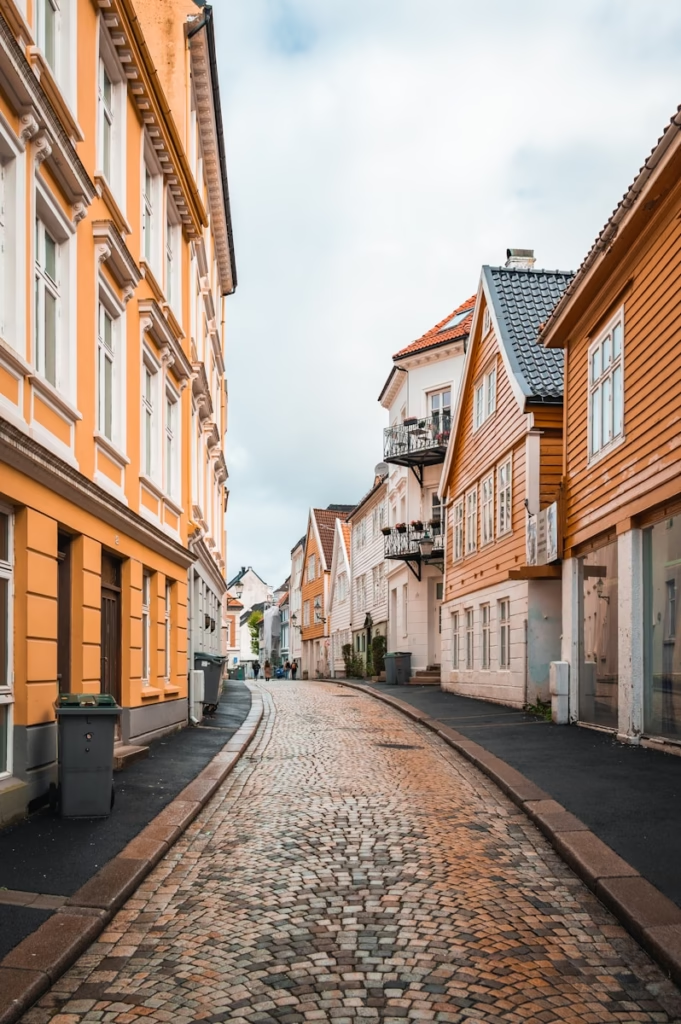
Flåm can be built into a bike-and-rail day
Flåm is tourist-heavy, but the approach from the mountains remains one of the most memorable ways to use a bike in the region. Myrdal station sits high above the fjord, and the old road down the Flåm valley gives riders a dramatic descent through waterfalls, steep-sided valley scenery and the lower farms before reaching the water.
This is another route where the railway does the difficult logistical work. From Bergen or Voss you can travel towards Myrdal, ride down and then use rail, boat or a pre-planned transfer to continue the day. That makes it possible to experience the high mountain scenery without spending half the holiday climbing the same access road simply to reach it.
The weather is not background noise
Bergen’s rainfall is famous enough to become a cliché, but cyclists cannot treat it as one. Wet roads, tunnel entrances and long descents change braking distances, while the temperature difference between Bergen, Voss and the high plateau can be substantial. A ride that begins at 15 degrees beside the fjord can feel much colder once the wind and altitude arrive.
A proper waterproof shell belongs in the pocket even when the morning looks stable. Warm gloves and a thin insulating layer are also worth carrying on any ride that uses the railway to gain altitude. On Rallarvegen, being slightly overdressed at the start is a much better problem than discovering that a weather front has arrived while you are exposed above the tree line.
Summer is the easiest period for a cycling-first trip. June brings long daylight but can still leave snow on the highest routes, July and August offer the widest choice, and September can be excellent at lower altitude while becoming less reliable in the mountains. The sensible approach is to plan one or two high-route days and keep flexible lower options for poor weather rather than locking every day into a fixed itinerary.
Tunnels are the detail that can ruin a badly planned route
This deserves its own section because western Norway is not a place to trust a generic cycling map blindly. Some tunnels have dedicated bike alternatives, some permit cyclists but are unpleasant, and others are prohibited. A route that looks ideal on a laptop can become impossible when the only road disappears into several kilometres of motor-traffic tunnel.
Check each significant tunnel individually before the ride, particularly around Hardanger and on roads linking the fjord communities. Carry powerful lights even if the route appears to avoid tunnels because short unlit sections still exist. Reflective kit is more useful here than it is on many European cycling holidays.
Ferries create the opposite problem. They often make routes possible, but missing the last sailing can turn a tidy ride into a very long evening. Download current timetables, build in margin and remember that seasonal schedules can change outside the main summer period.
Which bike should you take to Bergen and the western fjords?
If Rallarvegen is non-negotiable, take a gravel bike. It is the most versatile option for the trip and still works well on the paved roads around Bergen, Voss and Hardanger. Fit proper all-weather tyres rather than chasing minimum rolling resistance, and use gearing that will cope with short steep ramps when luggage is attached.
A road bike makes more sense if the holiday is built around Hardanger and paved fjord routes. Disc brakes are particularly valuable in this climate, as are tyres with enough volume to remain predictable on wet surfaces. There is little advantage in bringing an aggressively geared race setup when the roads and weather constantly interrupt rhythm.
A mountain bike is only necessary if technical trail riding is part of the plan. For the classic tourist routes, a gravel bike covers more ground and integrates better with trains and point-to-point days.
Where should you base yourself?
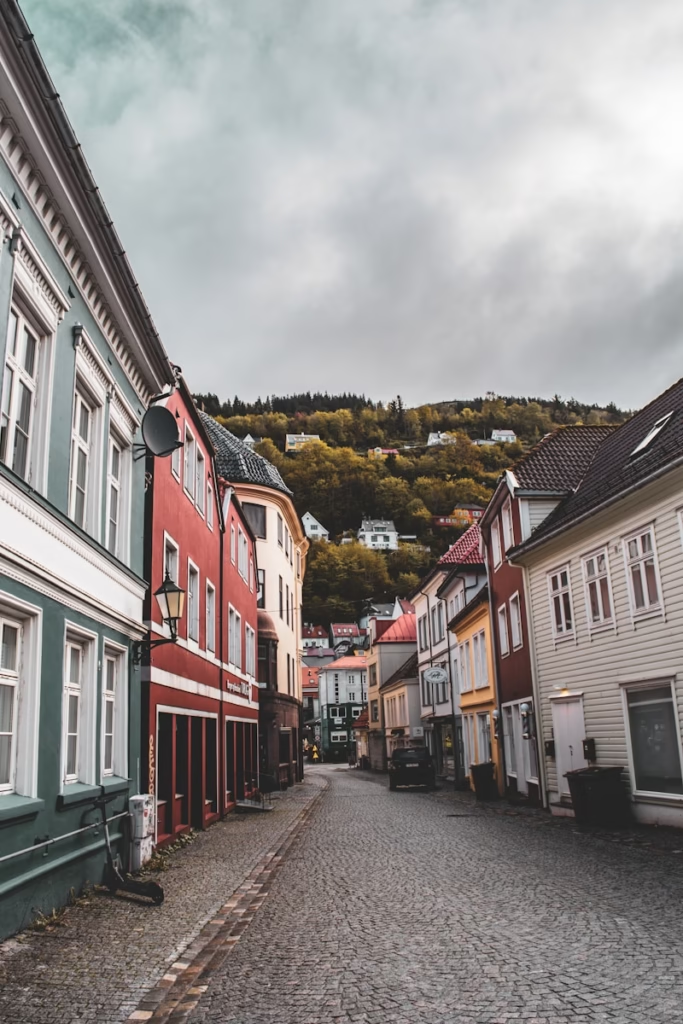
Bergen is best for the first and last nights, particularly if you are flying in with a bike box. It gives you bike shops, transport, restaurants and a straightforward recovery day before committing to more remote riding. The local cycle infrastructure also means you can still ride if the weather closes the mountains.
Voss is the more practical cycling base for the middle of the trip. It is closer to the mountain routes, connected directly by rail and easier for riders who want to wake up and be on quieter roads quickly. Hardanger deserves at least one overnight if road riding is the main objective, because repeatedly returning to Bergen wastes time that could be spent on the bike.
Flåm works better as an end point than a long-term road base for most cyclists. It is useful in an itinerary built around Rallarvegen, Myrdal and the fjord transport network, but the geography constrains the number of straightforward road loops.



A five-day cycling plan from Bergen
Use the first day for Bergen itself. Ride the Fyllingsdalen tunnel, explore the city’s cycle routes and add a few local hills. It is a low-risk way to check the bike after travel and understand how quickly the weather can change between the harbour and higher ground.
On day two, take the train to Voss and ride from there. Keep the route flexible rather than chasing one famous road. The value of Voss is access to quieter valleys and the ability to return by train if conditions deteriorate.
Day three should be the road-bike showcase in Hardanger. Use a route that crosses the Hardanger Bridge or follows one of the quieter fjord arms, with tunnel checks completed the night before. This is the day to accept a low average speed and stop trying to turn the landscape into a training metric.
Keep day four for Rallarvegen if the high route is open and the forecast is stable. Take the railway towards Finse or Haugastøl, ride the gravel and build the return around Myrdal or Flåm. If the weather is poor, swap this day with a lower route. The mountains will still be there tomorrow.
Finish with another lower-altitude ride from Bergen or Voss, or use Flåm as the end of a point-to-point day before returning by public transport. A trip structured this way gives you city infrastructure, gravel, fjord roads and high mountain scenery without betting the entire holiday on four consecutive days of Norwegian sunshine.
How the western fjords compare with the Alps
If your ideal cycling holiday is a list of famous cols, western Norway is a less tidy proposition than cycling in Tirol or the high roads around Salzburg and the Grossglockner. There are fewer iconic summit signs and more logistical decisions.
That is also the appeal. Bergen and the western fjords make the journey part of the ride. Trains replace transfer vans, ferries replace bridges, gravel railway roads replace closed mountain passes and the weather can rewrite the plan before breakfast. It asks more from the rider than simply downloading a famous climb, but the best days feel less like completing a route and more like moving through a landscape that happens to work extraordinarily well by bike.
For more destination ideas, ProCyclingUK’s Travel and Riding Abroad hub brings together the wider collection of cycling travel guides.