
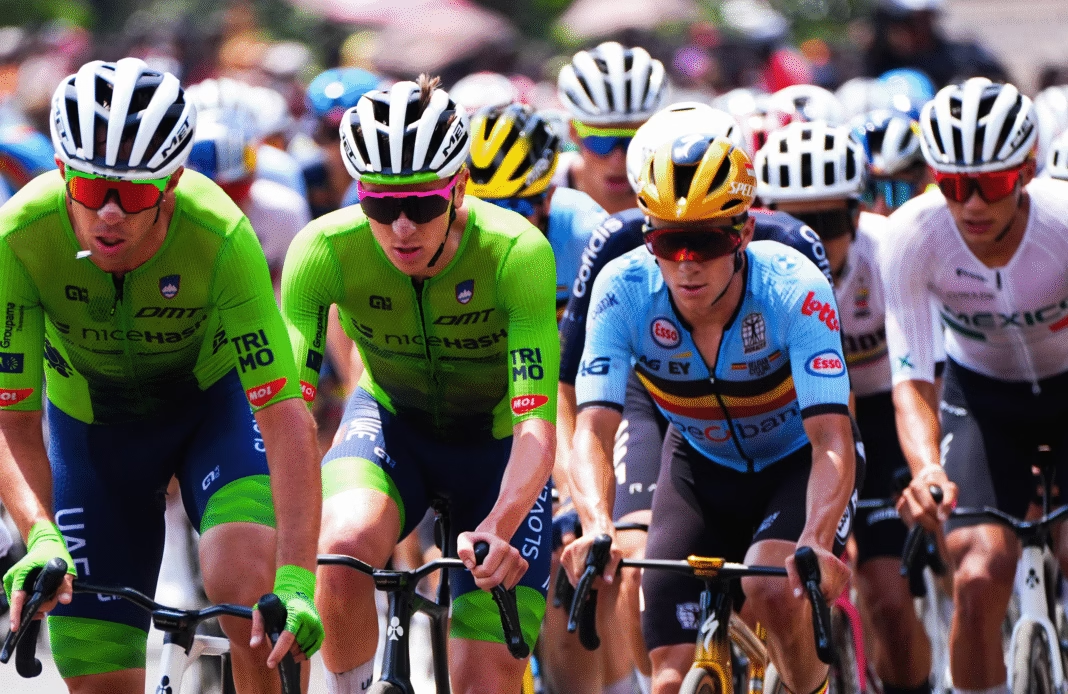
The 2026 UEC Road European Championships move to Slovenia from 2nd-7th October 2026, with the elite men, elite women and both under-23 road races all built around the same decisive finishing circuit near Šenčur.
The defining feature is the climb to Možjanca. It is only 2.1km long, but averages 10.2% and reaches 15.8%, while the road continues over rolling terrain after the steepest section rather than offering an immediate chance to recover.
The elite men’s race tackles that circuit five times after an 85.8km approach from Ljubljana. The elite women ride the same opening route before completing two laps, while the men’s U23 race has a shorter run-in followed by three circuits. The women’s U23 event is different: it starts in Šenčur and consists of four laps of the circuit from the outset.
That gives the four championships noticeably different rhythms despite sharing the same decisive roads. The elite men face repeated attrition across 196.3km, while the women’s U23 race packs four ascents of Možjanca into just 88.4km. The 2026 European Championships start lists show the riders preparing for those four very different tests.
2026 European Championships road race routes at a glance
| Race | Date | Distance | Elevation gain | Finishing circuit |
|---|---|---|---|---|
| Women U23 | Friday 2 October | 88.4km | 1,616m | 4 laps |
| Men U23 | Friday 2 October | 141.9km | 1,698m | 3 laps after 75.6km |
| Women Elite | Saturday 3 October | 130km | 1,359m | 2 laps after 85.8km |
| Men Elite | Sunday 4 October | 196.3km | 2,571m | 5 laps after 85.8km |
The Možjanca climb will decide the European titles
All four road races converge on a 22.1km circuit around Šenčur with 367 metres of climbing per lap. The early part rises gradually through Olševek towards Tupaliče before a sharp right-hand turn sends the race onto Možjanca.
The numbers make it far more than a token circuit climb. Možjanca measures 2.1km at 10.2%, with pitches reaching 15.8%. The hardest gradients are short enough to encourage explosive attacks but long enough for gaps to become substantial, particularly after several laps.
Reaching the apparent summit does not end the difficulty. A narrow rolling road continues towards Štefanja Gora, so riders who have gone deep on the climb cannot immediately sit up and recover. Positioning over the crest could be almost as important as the climbing itself.
A technical descent then drops towards the lower station of the Krvavec cable car before the course reaches a much faster valley section. By the time the race passes Strmol Castle there are just over seven kilometres left to the line in Šenčur. The final passage over Možjanca therefore comes roughly 13km from the finish, leaving enough distance for a chase but not much room for hesitation.
Men’s elite road race route: 196.3km and five ascents of Možjanca
Sunday 4 October, 12:30 local time | Ljubljana to Šenčur | 196.3km | 2,571m climbing
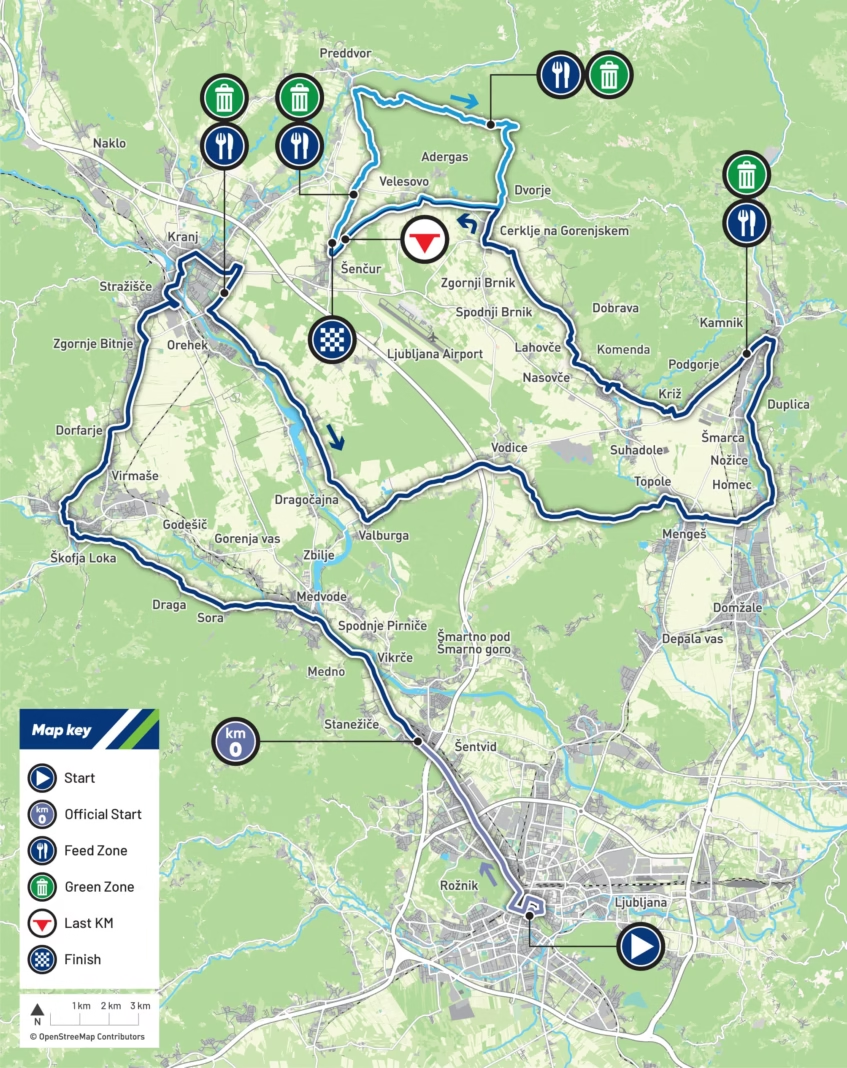
The elite men start on Kongresni trg in central Ljubljana. A 9km neutralised section takes the peloton through the city centre, including the Triple Bridge, before kilometre zero in Šentvid.
The first 85.8km are comparatively gentle. The route heads through Škofja Loka and Kranj, crosses towards Volčji Potok and Kamnik, then continues via Komenda and Cerklje na Gorenjskem before reaching Šenčur. This opening section gives teams time to establish a breakaway, but it does not contribute much of the race’s decisive climbing.
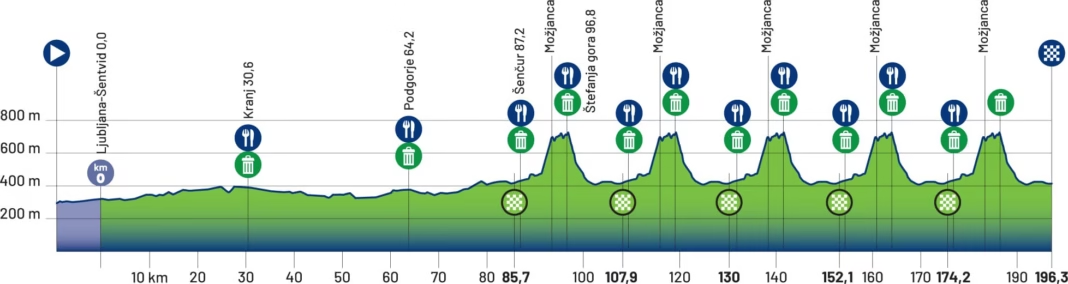
The complexion changes once the race enters the 22.1km circuit. Five laps mean five repetitions of Možjanca and more than 1,800 metres of climbing are packed into the closing section alone.
That repetition should matter more than the total elevation figure. An isolated 2.1km climb would suit a broad group of riders; the fifth ascent after almost 180km is a different test. The steep gradients favour climbers and puncheurs, while the rolling crest and technical descent reward riders comfortable continuing an attack after the main climbing effort.
The final 13km also create a tactical dilemma. A lone rider or small group can use the technical descent and fast valley roads to defend a gap, but a larger chase still has enough distance to organise before Šenčur. Teams with several riders left after the final climb will have options that an isolated favourite may not. Slovenia’s home interest is also tied to Tadej Pogačar’s recovery, with our latest update on his Vuelta crash and return to racing covering the injury context behind his European Championships selection.
Women’s elite road race route: 130km with two decisive finishing laps
Saturday 3 October, 13:30 local time | Ljubljana to Šenčur | 130km | 1,359m climbing
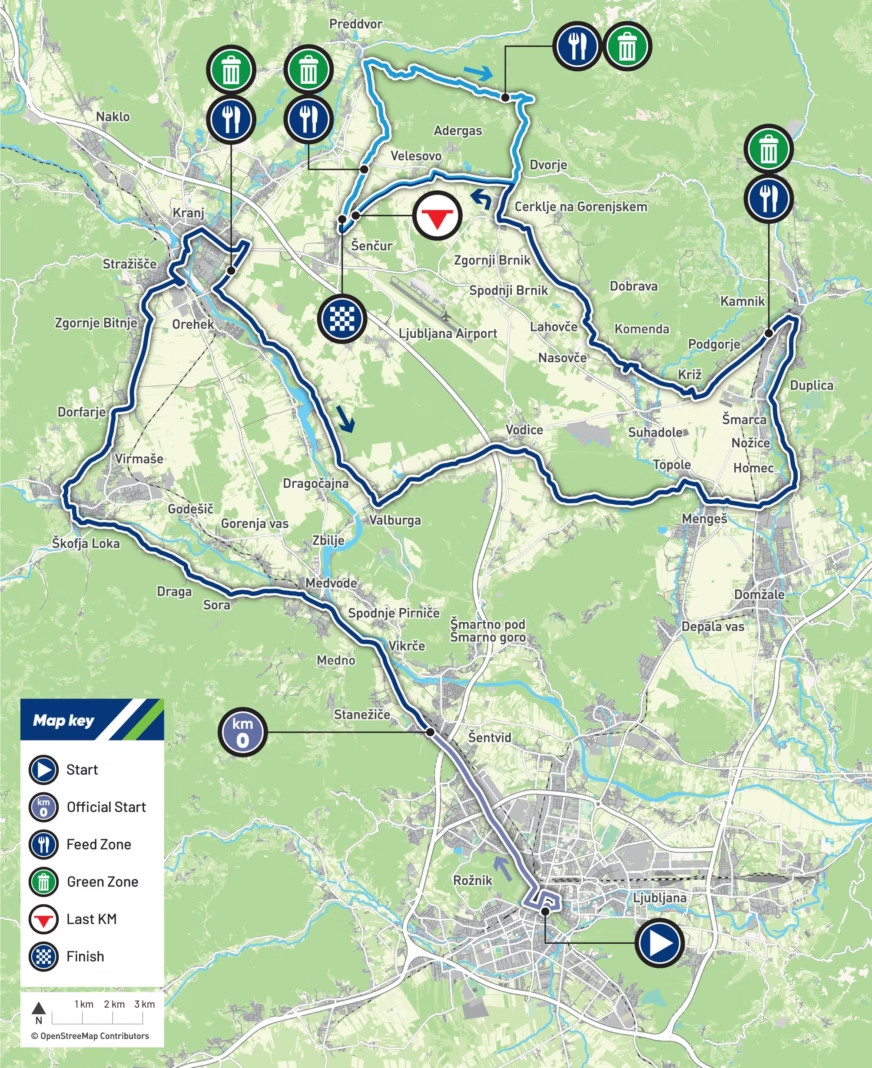
The elite women’s race follows the same 85.8km approach from Ljubljana as the men’s event, including the neutralised ride through the capital and the long transition north towards Šenčur.
The major difference is the number of finishing laps. The women complete two circuits rather than five, producing a 130km race with 1,359 metres of climbing.
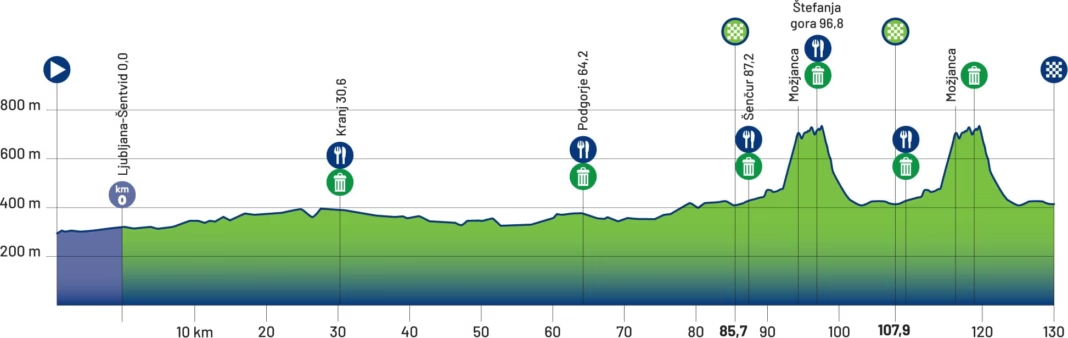
With only two ascents of Možjanca, the first passage should already carry tactical importance. Teams cannot rely on four earlier laps to soften the field, and riders who want a selective race may need to increase the pressure as soon as the circuit begins.
The last lap is designed for repeated attacks rather than one simple uphill finish. The climb can split the group, the rolling road after the summit makes regrouping awkward and the descent offers another place for a committed rider to extend a lead. Anyone waiting for a conventional sprint in Šenčur will need enough teammates to control all three phases.
Men’s U23 road race route: a shorter run-in and three laps
Friday 2 October, 13:30 local time | Ljubljana to Šenčur | 141.9km | 1,698m climbing
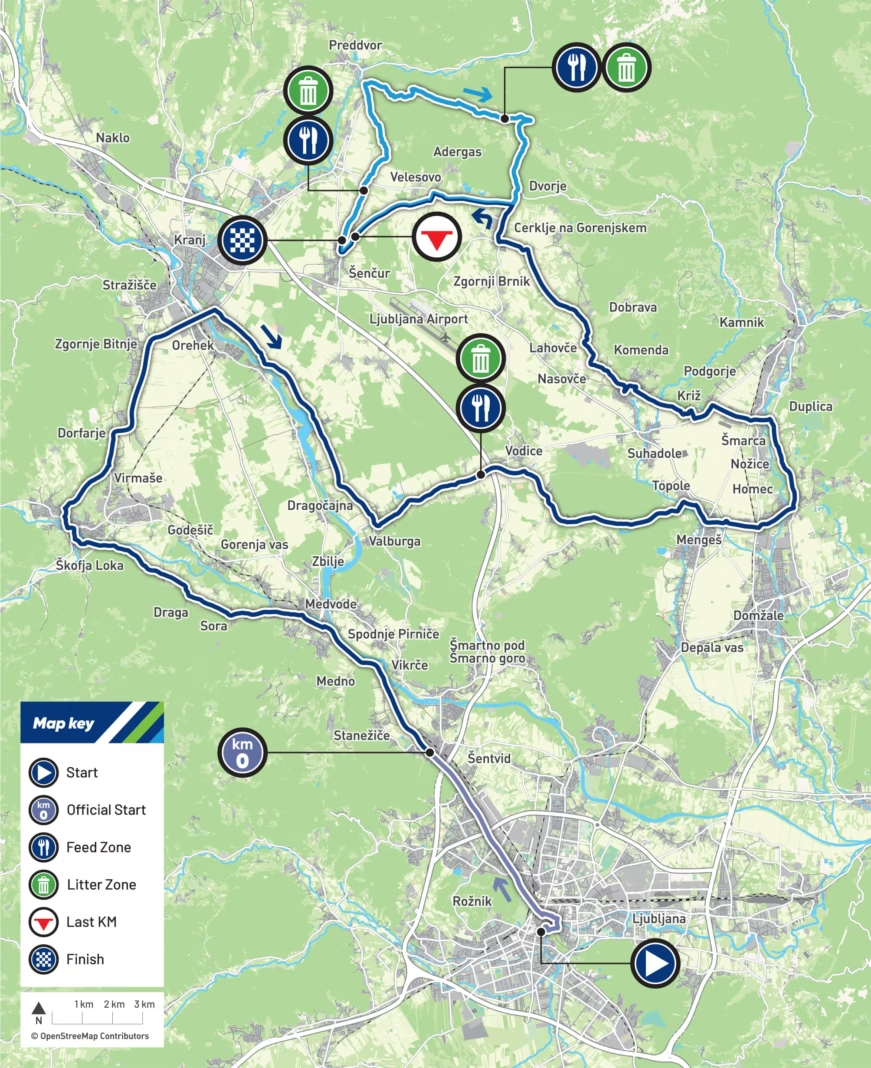
The men’s U23 championship also starts in Ljubljana but reaches the circuit sooner. After the same 9km neutralised opening through the centre of the capital, the race has 75.6km before the finishing laps begin.
The route again heads north through Škofja Loka and towards Kranj before crossing to the eastern side of the course and approaching Šenčur through the Cerklje area.
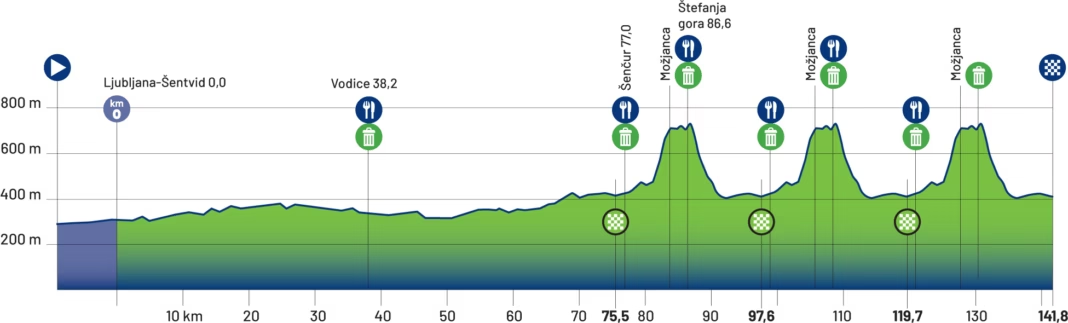
Three full laps follow, giving the U23 men three ascents of Možjanca and 1,698 metres of total climbing across 141.9km.
The distance is shorter than the elite men’s race, but the final 66km are still severe. There is enough repetition for the first circuit to expose riders who are struggling, while two further passages leave ample scope for attacks before the final lap. U23 racing also tends to be less controlled than elite championships, which could make the first Možjanca ascent more important than it appears on paper.
Women’s U23 road race route: four laps and no long run-in
Friday 2 October, 09:00 local time | Šenčur to Šenčur | 88.4km | 1,616m climbing
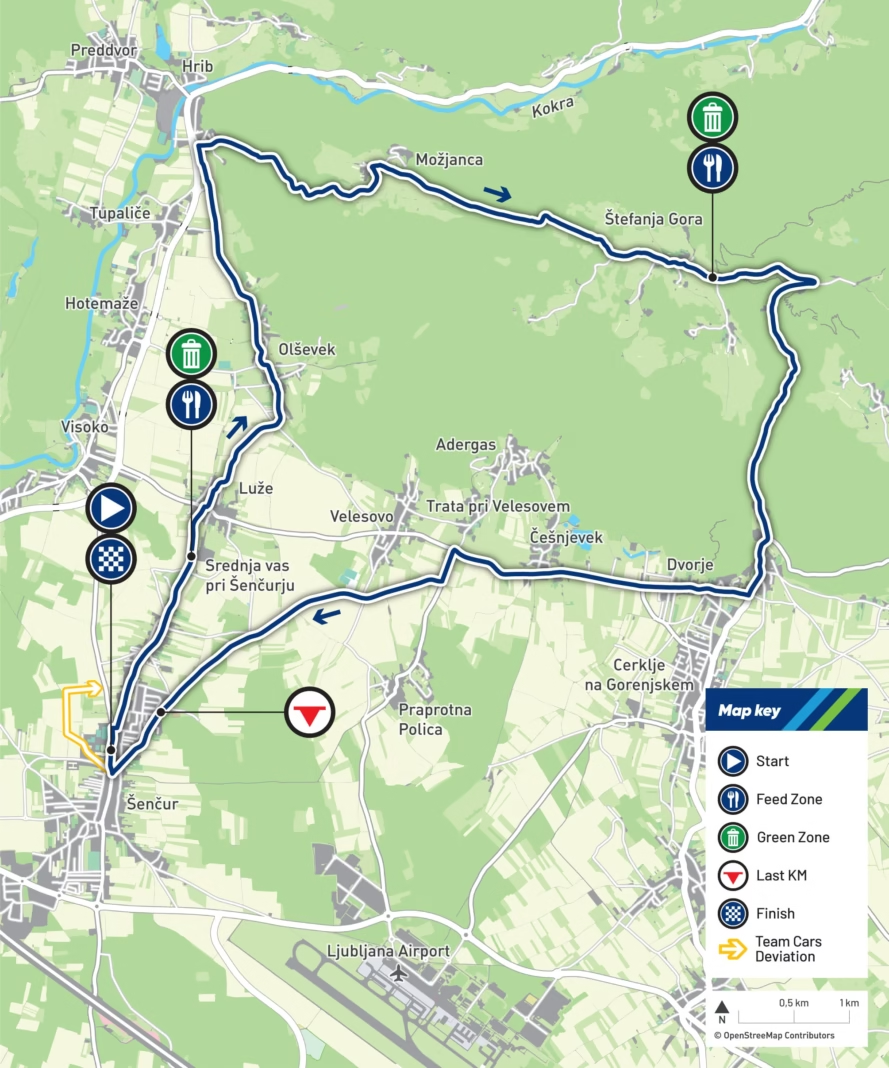
The women’s U23 race is the outlier among the four championships. There is no long approach from Ljubljana and no extended flat section before the main climbing starts.
Instead, the riders begin in Šenčur and complete four laps of the 22.1km circuit. Možjanca therefore arrives on the opening lap and returns three more times in a race measuring only 88.4km.
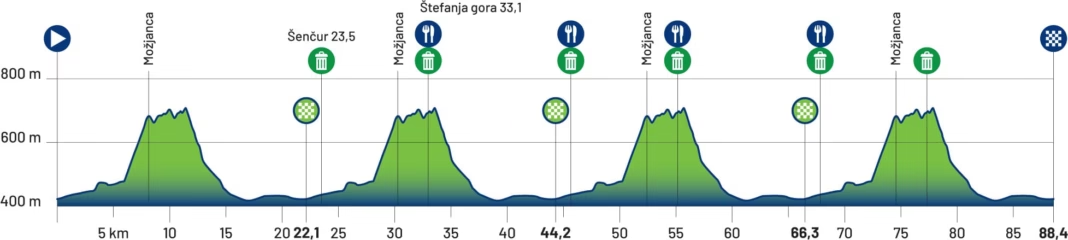
The result is the most concentrated climbing test of the four races. Its 1,616 metres of elevation gain are squeezed into less than 90km, with virtually no long opening phase in which the bunch can settle.
That could make the women’s U23 event aggressive from the start. A rider caught badly positioned on the first approach to Možjanca has far less time to recover than in the elite races, while four steep ascents should steadily reduce the value of pure sprint speed.
What type of rider does the Slovenia course favour?
The route is hilly rather than mountainous. There is no long Alpine ascent, but Možjanca is steep enough to create decisive gaps and repeated often enough to punish heavier riders.
That points towards climbers with acceleration, Ardennes-style puncheurs and strong all-rounders rather than pure sprinters. The ability to descend and continue riding hard after the summit will matter too, because the course does not end at the top of the climb.
A reduced sprint remains possible, especially in the elite women’s race with only two finishing laps, but reaching Šenčur in a sizeable group will require cooperation after the final ascent. The more fragmented the race becomes over Možjanca, the harder that chase will be to organise.
Why the four races should play out differently
The elite men have the longest accumulation of fatigue, with five circuits at the end of nearly 200km. Their race is the most likely to become an elimination contest before the final lap.
The elite women have fewer opportunities to use Možjanca, which places greater value on timing. Waiting too long could leave a fast rival within reach, while attacking on the penultimate passage risks committing to a long move.
The men’s U23 route sits between those two extremes, combining a meaningful approach from Ljubljana with three finishing laps. The women’s U23 race is the most intense from the opening kilometres, with four circuits and almost no neutral terrain between the start and the first serious climbing.

Different distances aside, every road champion in Slovenia will have to solve the same final problem: how to get over Možjanca with enough strength left to defend the gap, make the chase or win in Šenčur.

