
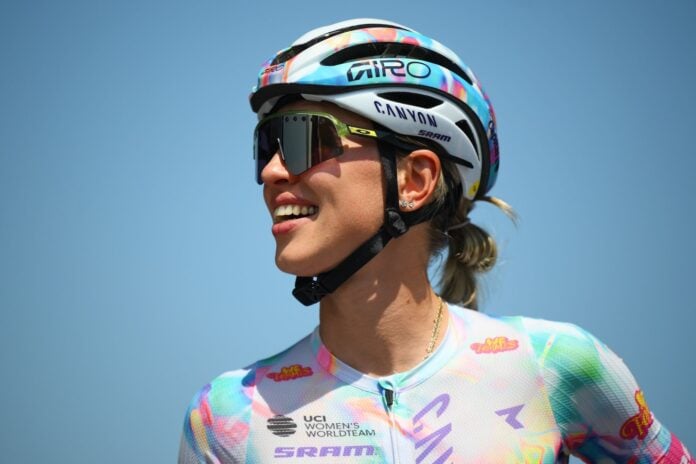
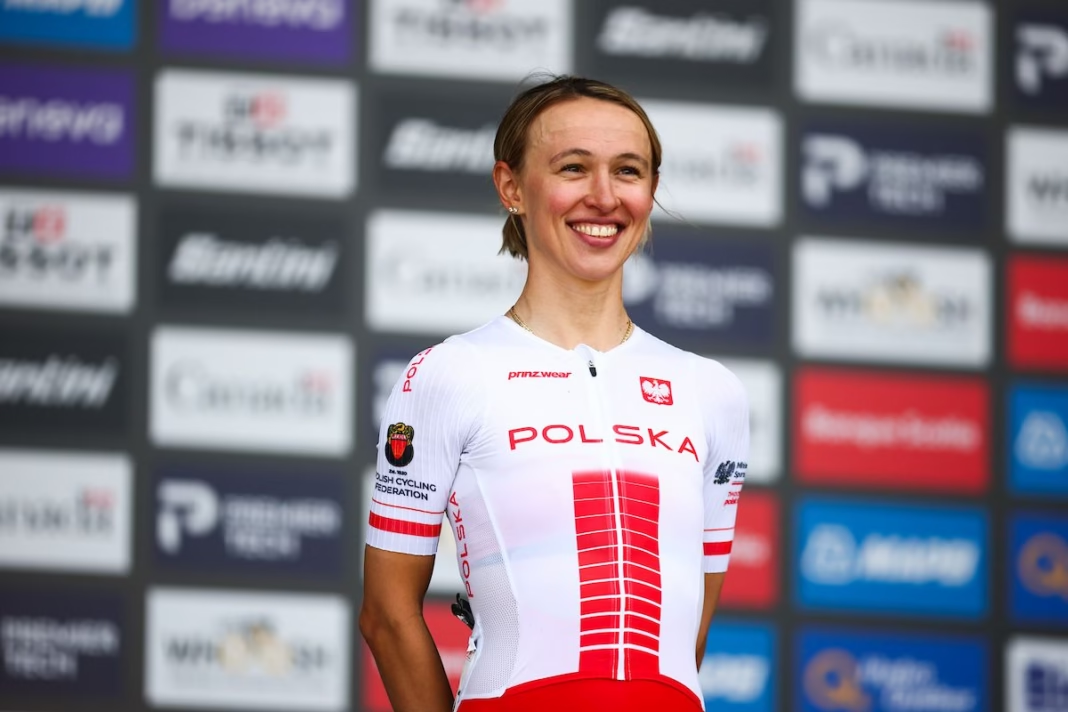
Kasia Niewiadoma-Phinney’s move to Lidl-Trek for 2027 is more interesting than simply placing another major name on an already strong roster. Look at the team Lidl-Trek are assembling around her and there is a clear argument that she will arrive in an environment better equipped to separate her different objectives rather than asking the same core group of riders to cover everything.
The two-year deal taking Niewiadoma-Phinney through 2028 gives Lidl-Trek a proven Tour de France Femmes winner and one of the most consistent climbers and Ardennes riders of her generation. Yet the more important part of the transfer may be who is already there.
Assuming Elisa Balsamo, Lucinda Brand and Lauretta Hanson remain after their current contracts expire, with Amanda Spratt retiring, Lidl-Trek are heading towards 2027 with a squad that can build very different teams for the Tour, the Ardennes, the cobbled Classics and sprint races without continually forcing Niewiadoma-Phinney to compromise.
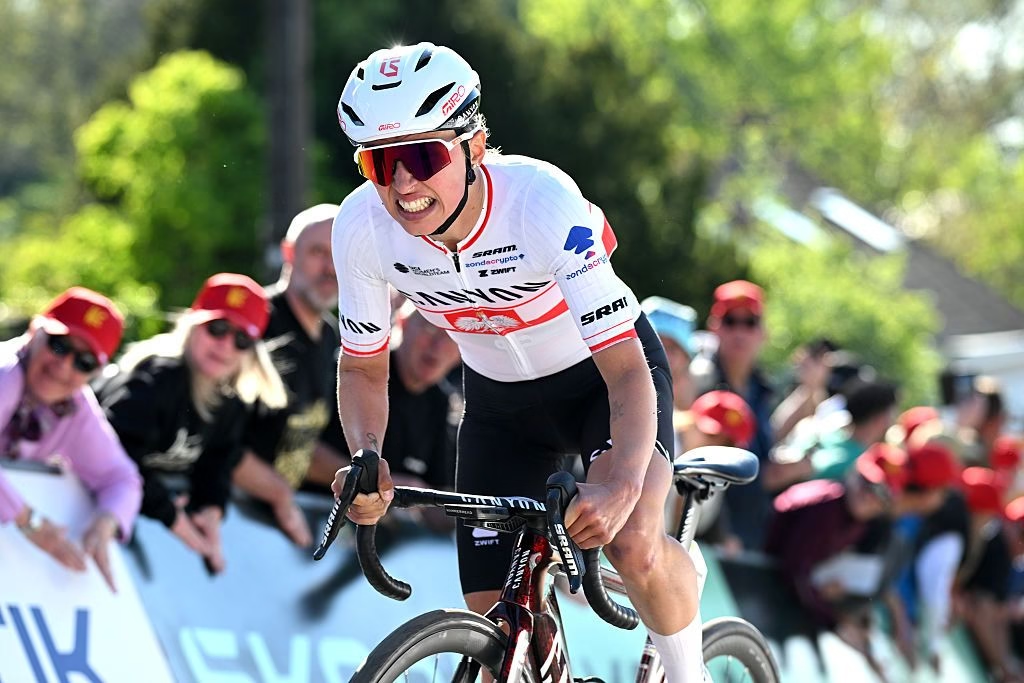 Photo Credit: Getty
Lidl-Trek can give Niewiadoma a genuine mountain support structure
The obvious place to start is the Grand Tours.
Niewiadoma-Phinney does not need another rider capable of winning the same race in exactly the same way. What she needs is a group capable of keeping multiple riders around her deep into difficult stages, especially when Demi Vollering and other GC rivals still have teammates available.
Lidl-Trek already have that structure.
Gaia Realini remains one of the clearest pure climbing options in the squad. Niamh Fisher-Black was originally recruited with Grand Tour ambitions of her own and gives Lidl-Trek another rider who can survive serious mountain stages rather than disappearing once the race reaches the decisive climbs.
Ricarda Bauernfeind adds another strong climbing presence. Riejanne Markus brings more range, particularly on rolling stages, time trials and transitional terrain where a GC leader can lose time without ever reaching the main mountain.
That combination matters.
A Tour selection built around Niewiadoma-Phinney could still include Realini and Fisher-Black without leaving Lidl-Trek short elsewhere. Bauernfeind and Markus give the team further depth, while Anna Henderson, Emma Norsgaard or Lauretta Hanson can cover the less glamorous work before the mountains arrive.
The result is that Niewiadoma-Phinney does not necessarily have to be isolated when Vollering makes the first serious acceleration.
That has value even if none of those riders is individually expected to beat Vollering. One teammate surviving another five kilometres can change whether Niewiadoma-Phinney has to close an attack herself, whether she can wait for someone else to work, and whether Lidl-Trek can place a rider up the road before a major climb.
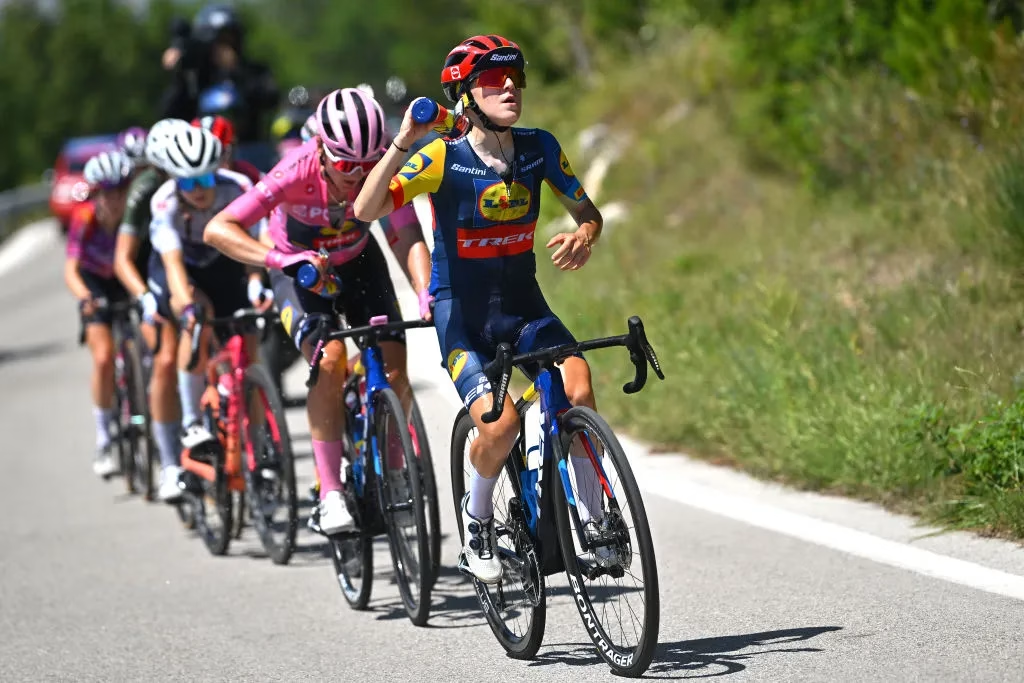 Photo Credit: Getty
Fisher-Black and Realini do not have to become domestiques every week
There is an important balancing act here.
Lidl-Trek should not turn Fisher-Black and Realini into permanent support riders simply because Niewiadoma-Phinney has arrived. Both have their own ambitions and both are good enough to lead at major stage races.
The size of the 2027 squad allows the team to rotate those responsibilities.
Niewiadoma-Phinney can target the Tour de France Femmes while Fisher-Black or Realini takes greater responsibility at the Giro or Vuelta. Alternatively, one can support Niewiadoma at the Tour while the other is protected elsewhere.
That is much healthier than treating every mountainous stage race as preparation for one leader.
It also gives Lidl-Trek protection against crashes, illness and loss of form. A Grand Tour programme built around only one GC rider is fragile. Lidl-Trek potentially have three riders capable of starting a major stage race with legitimate overall ambitions.
Niewiadoma-Phinney simply becomes the most accomplished of them.
The arrival of Blanka Vas changes the Ardennes picture
The signing of Blanka Vas from SD Worx-Protime is particularly useful for Niewiadoma-Phinney.
Vas is not a like-for-like climbing lieutenant. She is much more valuable than that in the Classics because rivals cannot afford to ignore her.
Amstel Gold Race, La Flèche Wallonne and Liège-Bastogne-Liège are races where Niewiadoma-Phinney has spent years entering the final kilometres as one of the obvious riders everybody watches. Lidl-Trek can now make that situation less comfortable for their rivals.
Send Vas up the road and Vollering’s team has a decision to make. Use Markus aggressively and another country or trade team has to chase. Let Fisher-Black attack before the final climb and suddenly Niewiadoma-Phinney is no longer required to create every decisive move herself.
That is one of the more appealing features of the 2027 squad.
Niewiadoma-Phinney has always been willing to race aggressively. Lidl-Trek can potentially give her more opportunities to race selectively instead.
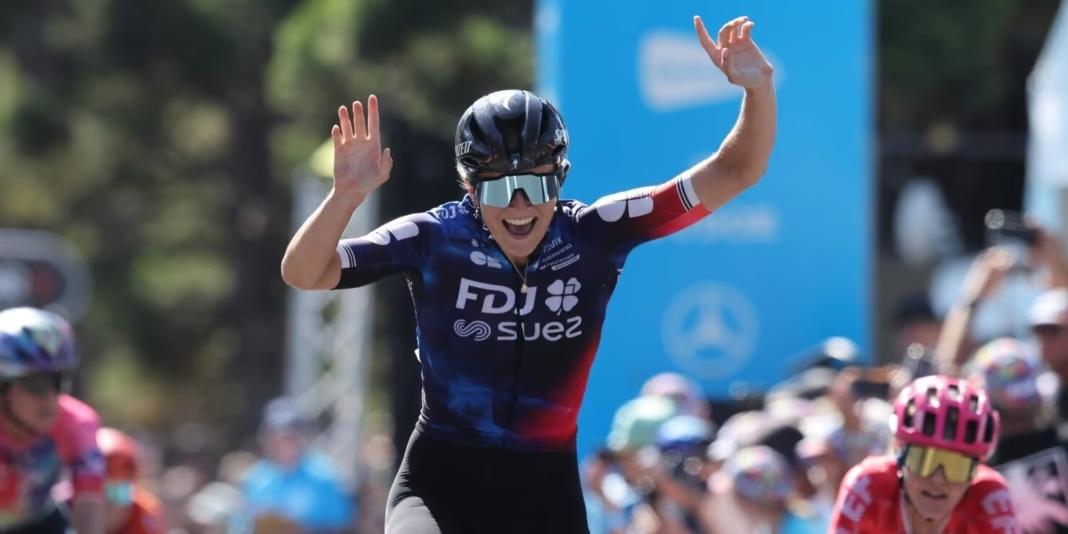 Photo Credit: Cor Vos
A stronger sprint group indirectly helps Niewiadoma too
Some of Lidl-Trek’s biggest transfer activity has nothing obvious to do with GC racing.
Ally Wollaston arrives from FDJ United-SUEZ, Arlenis Sierra has been recruited from Movistar and Elisa Balsamo is assumed here to remain with the team. Clara Copponi, Emma Norsgaard and Anna Henderson add further strength around the faster races.
The Wollaston signing gives Lidl-Trek another rider capable of winning reduced or conventional sprints. Sierra was specifically brought in to reinforce that area of the team and strengthen Balsamo’s lead-out.
That sounds separate from Niewiadoma-Phinney’s programme, but it helps.
Lidl-Trek no longer need their GC riders to justify an entire race programme themselves. Balsamo, Wollaston, Copponi and Norsgaard can chase wins on flatter stages. Niewiadoma-Phinney can ride conservatively through those days without the team needing her to manufacture opportunities.
At the Tour, that becomes especially useful.
A team can take a sprinter and a GC leader without either role becoming tokenistic if the roster is deep enough to support both. Lidl-Trek are moving towards that point.
The loss of Shirin van Anrooij is easier to absorb than it first appears
Shirin van Anrooij leaving for Canyon SRAM removes one of Lidl-Trek’s best young all-round riders.
It is a significant loss. She could climb, ride the cobbles, time trial and contribute across a huge range of races.
But Lidl-Trek have not tried to replace her with one rider.
Instead, the workload has been spread across several signings.
Vas brings high-level Classics ability. Wollaston adds finishing speed. Sierra contributes experience and sprint support. Julia Kopecky arrives as another younger rider with room to develop, having signed through 2028. Niewiadoma-Phinney raises the ceiling of the climbing and GC group.
That is a more expensive solution than finding another Van Anrooij, but probably a stronger one.
 Photo Credit: Getty
Spratt’s retirement creates space rather than a hole
Amanda Spratt retiring removes a hugely experienced rider from Lidl-Trek’s climbing group, but the timing of Niewiadoma-Phinney’s arrival means the team does not enter 2027 desperately searching for someone to replace her results.
The more noticeable loss may be experience.
That is where retaining Brand and Hanson would become important.
Brand understands how to control major Classics and has spent years working inside strong team structures. Hanson provides the kind of road captaincy and workload that allows leaders to remain protected without burning through more valuable climbing support.
Niewiadoma-Phinney herself also arrives with more than a decade at WorldTour level.
So while Spratt’s retirement closes one chapter, Lidl-Trek are not becoming a younger and less experienced squad overnight. They are redistributing that experience.
The biggest gain may be tactical rather than physical
Niewiadoma-Phinney does not need Lidl-Trek to make her a better climber.
She has already won the Tour de France Femmes, won on Mont Ventoux and repeatedly gone head-to-head with the best GC riders in the sport.
The harder question is how Lidl-Trek can improve the circumstances around those performances.
That is where the 2027 recruitment starts to make sense.
Realini and Fisher-Black can remain deep into mountain stages. Markus and Bauernfeind add another layer before them. Vas can attack races Niewiadoma-Phinney would otherwise have to animate herself. Balsamo and Wollaston mean the team can chase sprint victories without reshaping the whole roster around the GC leader.
Henderson, Norsgaard, Brand, Hanson and Sierra give Lidl-Trek riders capable of controlling the kilometres where Grand Tours are rarely won but can very easily be lost.
There is no guarantee that turns second place into first. Vollering remains an exceptionally difficult rider to beat when a race reaches the steepest climbs.
But Niewiadoma-Phinney’s next step probably does not depend on finding another level of raw climbing ability.
It depends on reaching the decisive part of those races having spent less energy, with more teammates still present and more tactical options available before she has to respond herself.
Lidl-Trek’s 2027 squad increasingly looks designed to give her exactly that.

