Brittany is one of the best regions in France for a cycling trip that does not depend on famous mountains. The appeal is instead built around variety: rugged coast roads, fishing ports, short steep ramps, exposed headlands, canal towpaths and an inland network of greenways and quiet lanes that can turn a week on the bike into several completely different kinds of ride.
It is also a region where the map can mislead you. Coastal routes often look flat until the road starts dropping into every inlet and climbing back out again, while central Brittany has enough short hills to make a long day unexpectedly hard. The distances are manageable, but the wind, constant changes of gradient and rougher lanes can add more fatigue than the elevation total suggests.
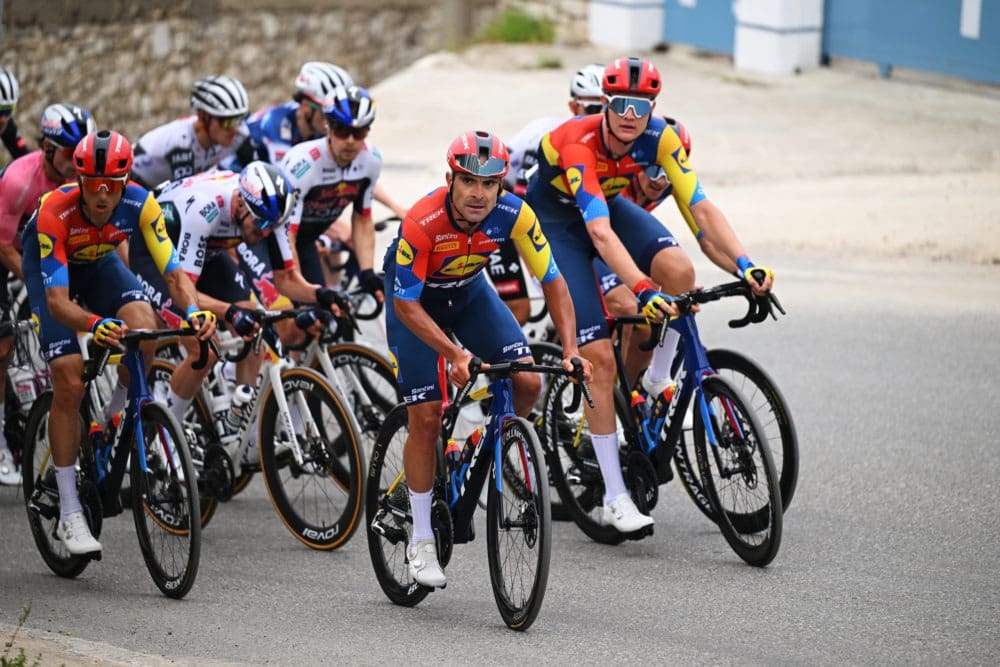
For touring riders, Brittany has a strong signed network of véloroutes and greenways. For road cyclists, the same region offers quiet back roads around Plouay, Finistère and the north coast where the riding feels closer to a spring Classic than a conventional French cycling holiday.
Brittany cycling at a glance
- Best for: coastal touring, rolling road riding, traffic-free canal routes and mixed cycling holidays
- Best road bases: Saint-Malo, Morlaix, Quimper, Lorient and Vannes
- Best touring routes: La Vélomaritime, La Vélodyssée and the Nantes-Brest Canal
- Terrain: rolling rather than mountainous, with frequent short climbs near the coast
- Bike: endurance road bike for paved routes, gravel or touring bike for greenways and towpaths
- Tyres: 30-35mm gives the most flexibility, although 28mm is workable for road-only trips
- Best months: May, June and September for quieter roads and manageable temperatures
- Main challenge: wind and accumulated short climbs rather than sustained mountain passes
Saint-Malo, Cap Fréhel and Erquy: the strongest introduction to the north coast
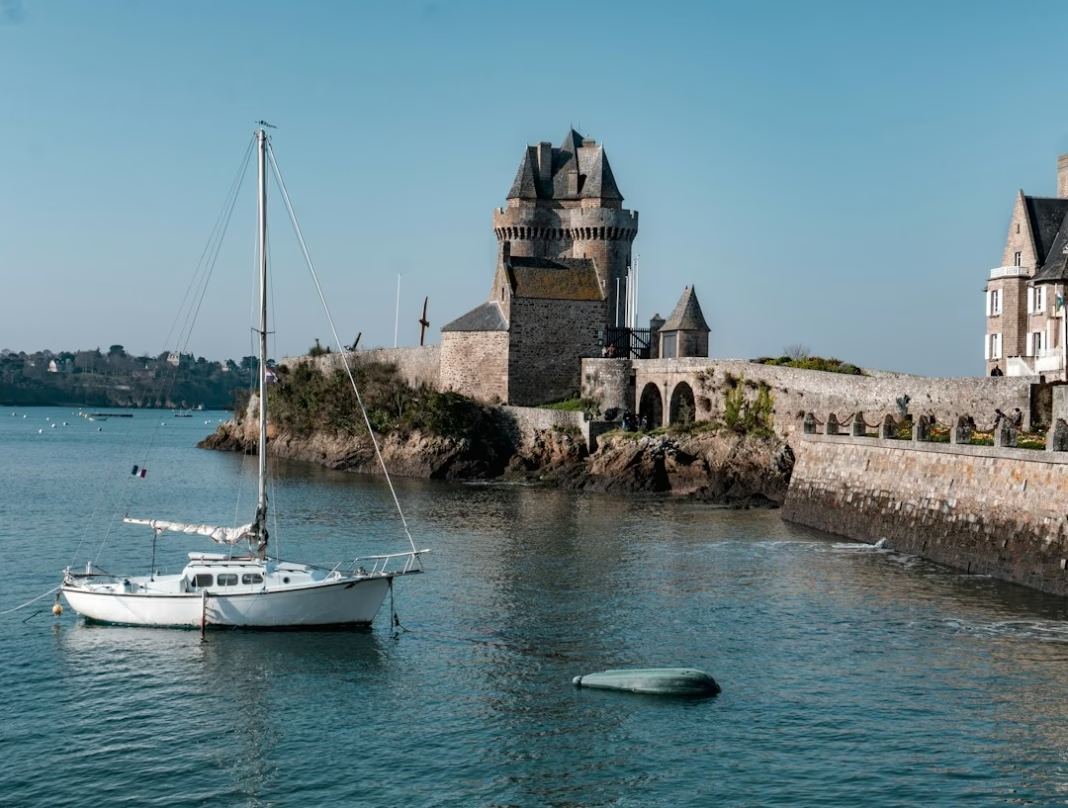
Saint-Malo is the easiest place to understand why Brittany works so well by bike. The fortified old town is useful as a start or finish rather than somewhere to ride through at speed, while the roads west towards Dinard, Saint-Lunaire and Cap Fréhel quickly become more open and scenic.
La Vélomaritime runs through this part of Brittany as part of EuroVelo 4. The Breton section continues for more than 400km between the Mont-Saint-Michel area and Roscoff, linking Saint-Malo, Dinard, Cap Fréhel, the Bay of Saint-Brieuc, the Pink Granite Coast and Morlaix. It is an obvious backbone for a multi-day coastal ride.
The route is not always a pure road-cycling line. Some sections use greenways or quieter shared roads, and stronger riders may prefer to build parallel road loops rather than follow every official turn. The advantage is that the signed route gives a reliable direction of travel while the surrounding road network offers plenty of options to increase distance or pace.
Cap Fréhel and Erquy are particularly good on an endurance road bike. Neither area has long climbs, but the headlands repeatedly rise away from sea level before dropping back towards beaches and small ports. A 90km day can feel much harder than the profile suggests because there is very little steady rhythm.
The Pink Granite Coast is better for scenery than speed
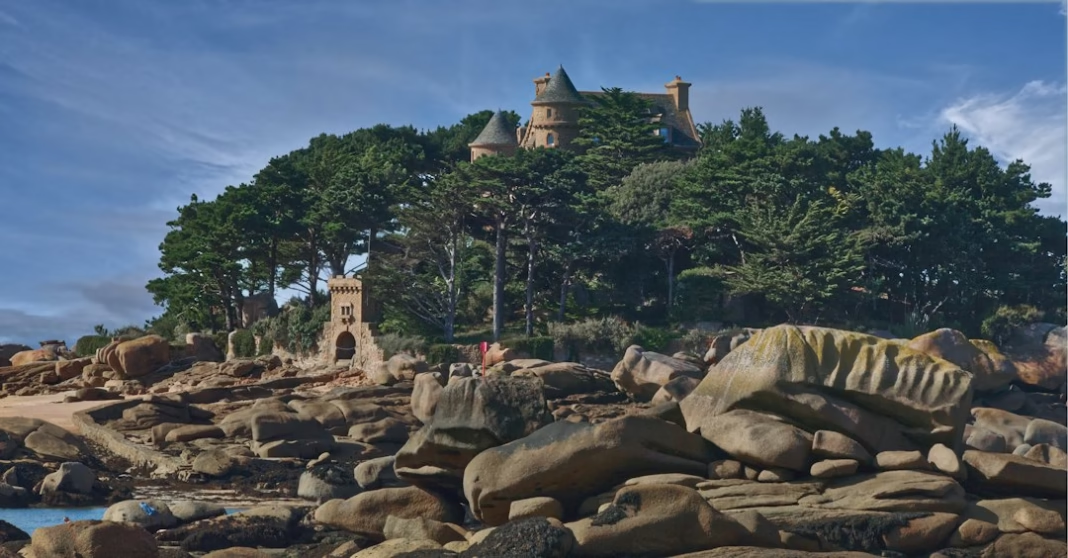
Further west, the Côte de Granit Rose around Perros-Guirec, Trégastel and Ploumanac’h is one of Brittany’s most recognisable coastal areas. It is also a place where route choice matters. The most scenic roads are not necessarily the best roads for maintaining a high average speed, especially in summer when the villages and beach approaches become busier.
For a road ride, it makes sense to use the coast for the visual part of the day and then turn inland onto quieter lanes for the faster return. That also avoids repeatedly using the same narrow coastal stretches when pedestrian and tourist traffic is at its highest.
Morlaix works well as a base if you want to mix this coast with more serious inland riding. The town sits close to the northern end of several long-distance routes and gives easy access towards both Roscoff and the hills further south.
Finistère gives Brittany its wildest road riding
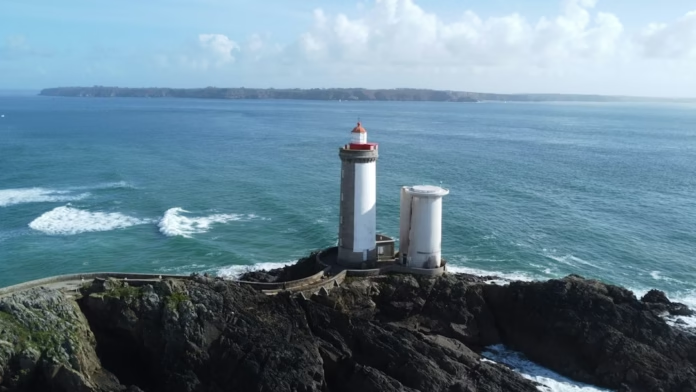
Western Brittany is where the cycling becomes rougher around the edges. Finistère has fewer long coastal tourist strips and more roads that repeatedly climb away from small harbours, cross exposed farmland and then return to the sea. The wind is rarely irrelevant.
The Pointe du Raz area is a good example. The landscape is dramatic but the riding is defined by repeated short climbs and narrow lanes rather than one major ascent. The local racing scene uses the same character of road, with the Pointe du Raz Ladies Classic built around exposed coastal roads and ribinoù-style sectors in Finistère.
Quimper is probably the most practical base for riders who want this part of Brittany without moving hotels every night. From there, routes can head towards Douarnenez and the Crozon side of the region, south towards Concarneau or west towards the wilder roads around Audierne.
The trade-off is weather. Western Finistère catches Atlantic systems first, so even in summer a long day can include strong wind and showers. That is part of the character rather than a reason to avoid the region, but it makes carrying a proper lightweight waterproof more useful than relying on a perfect forecast.
Lorient and Plouay are the best base for race-style road riding
For riders who want the most recognisably Breton road-cycling terrain, Lorient and Plouay are hard to beat. The area is not mountainous, but the roads rarely stay flat for long. Short climbs, narrow lanes and constant changes in direction create exactly the sort of rolling terrain that has shaped the Bretagne Classic and the women’s Classic Lorient Agglomération.
Our 2026 Bretagne Classic route guide shows how the local roads work in a race setting. For everyday riding, the same landscape is easier to enjoy because you can leave out the busiest race approaches and stitch together quieter lanes through the Morbihan countryside.
Lorient is the better practical base because it has more accommodation, transport and food options. Plouay makes more sense if the trip is mainly about riding and you want to leave the door straight onto quiet country roads.
This is also a useful area for stronger riders travelling with someone who wants easier cycling. The Blavet valley and river routes provide gentler alternatives, while the harder road loops can head inland and repeatedly climb away from the water.
The Gulf of Morbihan and Quiberon are the best southern coastal options
Southern Brittany feels different from Finistère. The coast around Vannes and the Gulf of Morbihan is more sheltered, the towns are closer together and there are more obvious leisure-cycling routes. It is a good choice for a mixed holiday where riding is important but not the only reason for travelling.
Vannes is the strongest base. From there you can ride around parts of the gulf, use quiet roads towards Auray or build longer loops towards the Rhuys peninsula. The terrain is still rolling, but there are fewer exposed headlands than on the north and west coasts.
Quiberon is scenic but more constrained. The peninsula is narrow and the main road can become busy in high season, so early starts matter. It works better as one destination within a wider Morbihan trip than as the sole base for a week of serious road riding.
The Nantes-Brest Canal is the easiest inland route
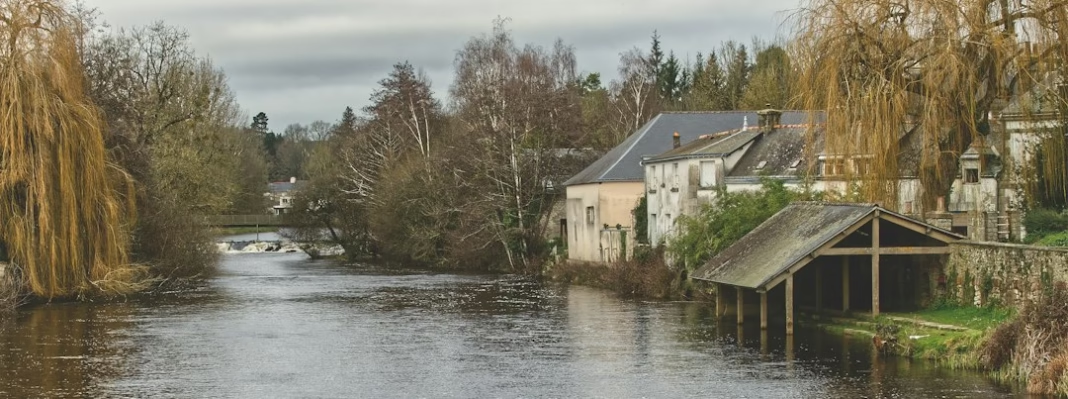
The Nantes-Brest Canal is the obvious answer if the coast sounds too exposed or if the trip is built around steady touring rather than road training. The canal runs for roughly 360km, with around 390km of practical cycling route when following the full corridor and its towpaths.
Much of the Breton section forms part of La Vélodyssée, the French section of EuroVelo 1. From Roscoff south through central Brittany towards Nantes, the route uses traffic-free or low-traffic sections, canal towpaths and former railway alignments.
The canal is not fast road-bike terrain throughout. Surfaces vary, especially after rain, and narrow racing tyres make less sense here than on the coast. A gravel, trekking or touring bike with 32-40mm tyres is a better choice if the plan is to follow the route without constantly checking the surface ahead.
For a shorter trip, Pontivy, Josselin and Redon make useful staging points. Josselin is the most obvious overnight stop visually, while Pontivy is well placed for riders combining the canal with the Blavet and central Brittany.
Central Brittany is hillier than the coast-focused guides suggest
The interior is often overlooked because Brittany is sold through its shoreline, but the Monts d’Arrée and the roads around Huelgoat, Carhaix and Guerlédan offer some of the best riding for cyclists who actually want elevation.
Nothing here resembles the Alps. The climbs are short and modest in absolute altitude, but the roads can stack them together quickly. The Monts d’Arrée in particular feel much more exposed than their height suggests, with open moorland and wind making a long loop harder than the numbers on a route-planning app might imply.
Route 6 between Carhaix and Saint-Méen-le-Grand runs for roughly 120km through inland Brittany and is one of the easier ways to connect the centre of the region. Route 8 crosses from Saint-Brieuc towards Lorient over roughly 200km, using quiet roads, the Rigole d’Hilvern and later the Blavet corridor.
These inland routes are especially useful in poor coastal weather. If the wind is strong enough to make exposed headlands unpleasant, a day on the canal or sheltered greenways can keep the trip moving without turning it into survival riding.
Coast or inland: which is better?
| Area | Best for | Riding character |
|---|---|---|
| Saint-Malo and north coast | First visits and coastal touring | Rolling roads, headlands, strong scenery |
| Finistère | Harder road rides and exposed coastal terrain | Short climbs, wind, narrow lanes |
| Lorient and Plouay | Race-style road riding | Repeated ramps, quiet back roads |
| Gulf of Morbihan | Mixed cycling holidays | Gentler coastal loops and small towns |
| Nantes-Brest Canal | Touring and traffic-free mileage | Flat towpaths and greenways |
| Central Brittany | Quieter riding and more elevation | Rolling inland roads, moorland and forests |
If you have only three or four days, choose one base rather than trying to ride the whole peninsula. Saint-Malo works for the north coast, Quimper for Finistère, Lorient for faster road riding and Vannes for a broader holiday with cycling built around it.
For a week, splitting the trip between coast and inland makes more sense. Three days near Saint-Malo or Morlaix followed by several days around the canal or Plouay will show more of Brittany than simply following one shoreline until the scenery blurs together.
What bike works best in Brittany?
An endurance road bike is the best choice for a road-focused trip. The gradients are rarely extreme, so compact gearing is enough, but wide tyres are valuable on rougher lanes. A 30-32mm setup is a good compromise between speed and comfort.
A gravel bike makes more sense if you want the freedom to switch between quiet roads, towpaths and greenways without rerouting around every unsealed section. That flexibility is particularly useful on La Vélodyssée and the inland network.
Pure race bikes work perfectly well on the main roads, but they are the least versatile option for a region where the best route may involve a rough lane, canal section or former railway path. Unless the trip is built around fast road loops, slightly wider tyres and lower gearing make more sense than chasing minimal weight.
Wind matters more than temperature
Brittany’s climate is oceanic, so the weather can change quickly without becoming particularly hot or cold. May, June and September usually offer the best balance for cyclists: enough daylight for long rides, fewer visitors than the height of summer and temperatures that suit steady riding.
July and August bring the most reliable holiday weather but also more traffic around the obvious coastal resorts. Early starts help, particularly around Saint-Malo, Quiberon and the Pink Granite Coast.
Wind is the bigger issue. A 100km coastal loop can feel easy in one direction and disproportionately hard on the return. Plan circular routes with the forecast rather than assuming average speed from distance and elevation alone. On exposed headlands, a strong crosswind can also make handling more tiring than the profile suggests.
Getting around without a car
Brittany is practical enough to visit by train and ferry, although bicycle rules vary by service and season. Rennes is the main rail gateway, with useful onward connections towards Saint-Malo, Brest, Quimper, Lorient and Vannes. Roscoff and Saint-Malo also make obvious entry points for riders arriving from the UK by ferry when seasonal services line up with the trip.
Rail is most useful for point-to-point touring rather than daily riding. Bike reservations and spaces can be restricted on some French services, so check the specific train before treating it as a guaranteed bailout option.
For a fixed-base holiday, a car is useful but not essential if the hotel is in one of the larger towns. The bigger question is secure bike storage. Ask before booking rather than assuming a hotel describing itself as cycle-friendly has indoor storage suitable for an expensive road bike.
A five-day Brittany cycling trip
A compact first trip can start with two nights in Saint-Malo. Use the first day for a moderate loop through Dinard and the Rance area, then make the second a longer ride towards Cap Fréhel and Erquy. That gives one day of accessible coastal riding and one day where the repeated short climbs begin to show the region’s harder side.
Move west or south for the remaining three days. Lorient is the better choice if the priority is road riding, with one Plouay-style loop, one longer inland ride and an easier Blavet day. For a more relaxed trip, use Vannes instead and combine the Gulf of Morbihan with a Quiberon or Auray loop.
If touring matters more than road training, ignore that plan entirely and use the Nantes-Brest Canal as the centre of the trip. The point of Brittany is that the same region can support both approaches without forcing you onto mountain roads or busy national routes.
Why Brittany works so well for cyclists
Brittany is not a destination built around one climb or one bucket-list road. Its strength is that there is always another kind of riding within reach. A hard day on the Finistère coast can be followed by a sheltered canal route. A fast loop around Plouay can sit next to a slower touring day through small inland towns.
That makes it a stronger cycling holiday destination than the elevation numbers suggest. The region rewards riders who enjoy distance, changing road texture, wind, short climbs and the feeling of moving between very different landscapes over the course of one ride.
For another French trip built around long-distance riding rather than major mountains, ProCyclingUK’s cyclist’s guide to the Loire Valley is the obvious comparison. More destination guides are available in the cycling travel hub.