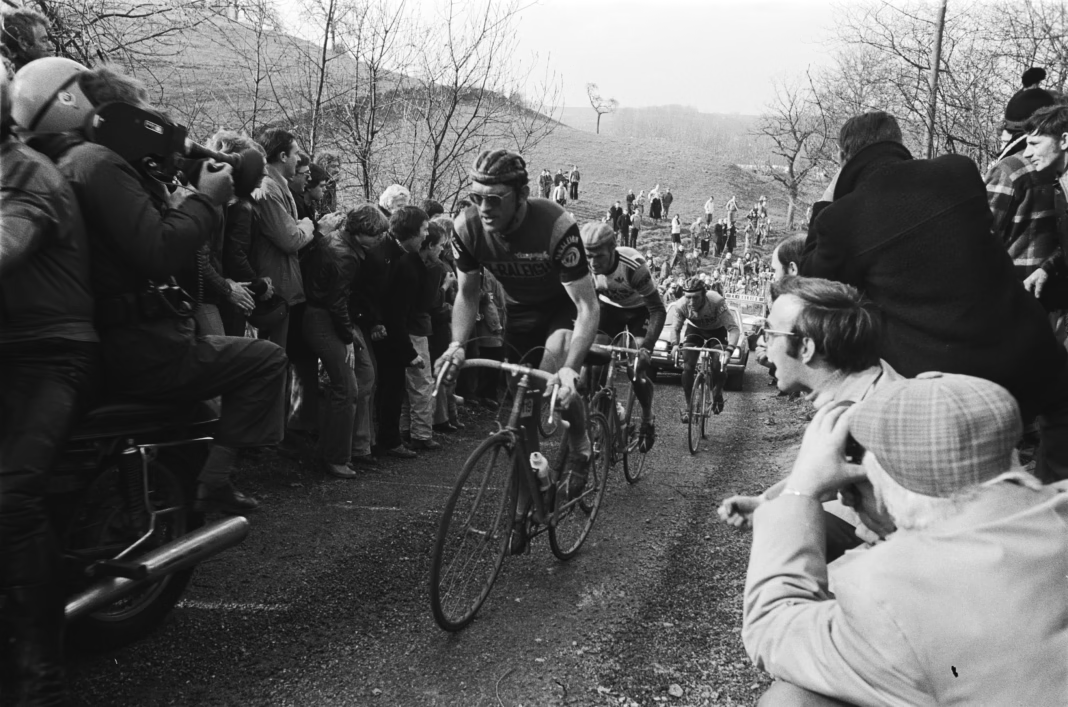
Walter Godefroot belonged to a generation of Belgian riders for whom the biggest one-day races were every bit as important as the Tour de France. His record reflects that breadth: two Tours of Flanders, Paris-Roubaix, Liège-Bastogne-Liège, Gent-Wevelgem, two Belgian road titles, ten Tour de France stage wins and the green jersey in 1970.
Those results would make almost any rider the defining Belgian of an era. Godefroot had the misfortune of reaching his peak at almost exactly the same time as Eddy Merckx, whose dominance can make the achievements of everyone around him look smaller than they were. Godefroot still found ways to win the races that mattered, often by combining the strength to survive a hard Classic with the finishing speed to settle what remained.
His later life added another layer. Godefroot became one of the most recognisable managers in professional cycling, most notably during Team Telekom’s rise in the 1990s. That period brought Tour de France victories, a huge expansion of cycling’s popularity in Germany and, later, a difficult reckoning with the doping culture of the era. His story therefore sits across two very different versions of the sport.
From Ghent to an Olympic medal
Godefroot was born in Ghent on 2 July 1943. Cycling was already deeply rooted in Flanders, but the competition for places among Belgium’s best riders was severe. The country produced sprinters, cobbled specialists and championship riders in numbers that made domestic racing almost as important as the international calendar.
Before turning professional, Godefroot had already established himself internationally. At the 1964 Tokyo Olympic Games he won bronze in the amateur road race, finishing behind Italy’s Mario Zanin and Denmark’s Kjell Rodian. It was a tightly packed finish and a major result for a 21-year-old still on the amateur side of the sport.
He turned professional in 1965 and immediately won the Belgian road championship. That result placed him directly into the country’s top tier just as Merckx was also beginning his professional career. Their paths would cross repeatedly over the next decade, but Godefroot was never simply a supporting character in somebody else’s story.
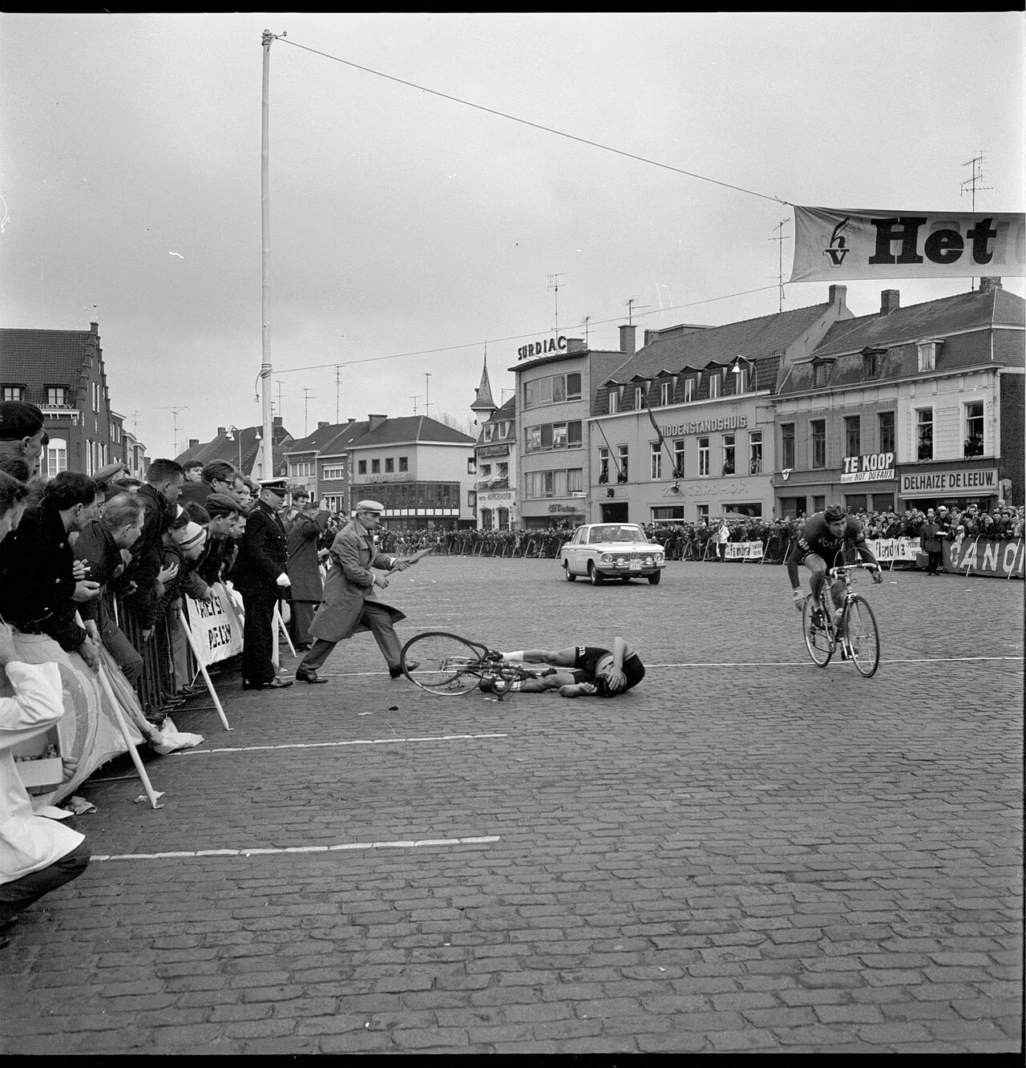
An image from Dwars door België in 1966 captures the physical side of those early years. Godefroot, wearing the Belgian champion’s jersey, slid across the finish after crashing in Waregem. It was an era in which road furniture, crowd barriers and racing conditions offered little protection, and Godefroot’s ability to keep returning to the front became part of his reputation.
A Classics rider with a sprinter’s finish
Godefroot’s first Monument victory came at Liège-Bastogne-Liège in 1967. It was an important early sign that he was more than a fast finisher. Liège demanded repeated climbing, distance and the ability to keep producing efforts deep into the race, characteristics that would continue to separate him from pure sprinters.
The following season was even stronger. He won the Tour of Flanders and Gent-Wevelgem in 1968, two races that rewarded his combination of strength, positioning and finishing speed. In Flanders, simply arriving at the end with a sprint still available meant surviving the same attritional roads that had already removed many faster riders.
Paris-Roubaix followed in 1969. Merckx had won the race the previous year and was already becoming the benchmark for the whole sport, but Godefroot found a way to beat the strongest field on the cobbles. He also won Scheldeprijs and Bordeaux-Paris that year, reinforcing the point that his best results were spread across very different race formats.
The second Tour of Flanders victory came in 1978, a full decade after the first. Godefroot was 34 and close to the end of his career, yet still capable of winning one of the hardest races on the calendar. That ten-year gap says a great deal about his longevity. He had survived changes in rivals, team structures and race tactics without losing the basic combination that made him dangerous.
Three different Monuments appeared on his palmarès by the time he finished: Liège-Bastogne-Liège, Paris-Roubaix and the Tour of Flanders twice. He never completed the full set of five, but few riders of any era have been able to win both Flanders and Liège, races that usually reward noticeably different physical profiles.
Ten Tour stages, the green jersey and a Champs-Élysées first
The Tour de France gave Godefroot another stage on which to use his speed. He won ten Tour stages between the late 1960s and the middle of the 1970s, building a record that went well beyond an occasional sprint success.
His strongest points-classification campaign came in 1970, when he won the green jersey. The competition rewarded repeated scoring across the race, so the victory suited a rider capable of collecting points after demanding stages rather than depending only on flat bunch finishes.
One of those Tour victories gained greater historical weight with time. In 1975, the Tour finished on the Champs-Élysées for the first time. Godefroot won the final stage, making him the first rider to take a Tour de France victory on what would become the race’s most recognisable finishing straight.
He also won stages at the Giro d’Italia and Vuelta a España. Together with the Classics record, those Grand Tour wins show how useful his finishing speed remained after long and difficult days. His best route to victory was often not to out-sprint every rider in the peloton, but to make sure the final group contained fewer riders capable of matching him.
Winning in the Merckx era
Any discussion of Godefroot eventually reaches Merckx. They turned professional in the same period and raced through the years in which Merckx accumulated a record unmatched in modern men’s road cycling. Godefroot’s results are more revealing when viewed against that background rather than diminished by it.
He won the Belgian title as a first-year professional in 1965, took Liège in 1967, Flanders in 1968 and Roubaix in 1969. Those were not minor opportunities left behind while Merckx looked elsewhere. They were some of the biggest races in the sport, taken against fields built around many of the same riders Godefroot faced throughout the season.
The rivalry also highlighted their differences. Merckx could dominate stage races, time trials, mountains and Classics. Godefroot’s range was narrower but still unusually broad, stretching from bunch finishes to long Monuments. He built a career around knowing which races and which moments suited him, then repeatedly converting those opportunities.
From rider to team management
By the end of the 1970s Godefroot’s racing career was over, but he did not disappear from cycling. He and his wife later opened a bicycle shop, and he moved into team management before taking control of Team Telekom in 1991.
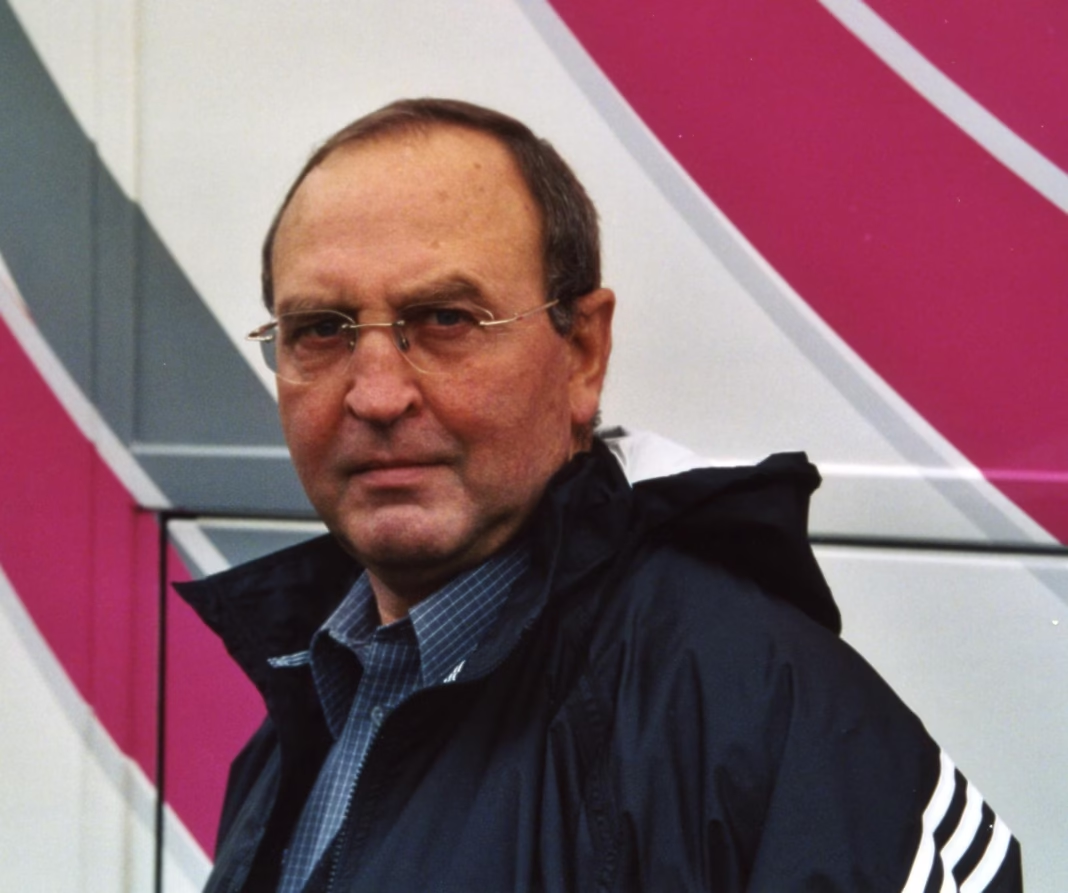
Telekom changed dramatically during his time in charge. What began as a German team with relatively modest international standing became one of the biggest operations in the peloton. Bjarne Riis won the Tour de France in 1996, Jan Ullrich followed in 1997 and Erik Zabel became a dominant presence in the Tour’s points competition and the spring Classics.
Godefroot’s management style was very different from the public role of a modern performance director. He belonged to a generation of team bosses shaped by racing itself, where authority was concentrated in the team car and decisions were often made by instinct, experience and an intimate understanding of the peloton.
For a wider account of the team’s rise and its place in German cycling, ProCyclingUK’s Telekom team history follows the squad from its growth in the 1990s through the controversies that later changed how that period was viewed.
Telekom’s success and a complicated legacy
The Telekom years cannot be separated from the doping history that emerged later. Riis, Zabel and other riders from the period subsequently admitted using banned substances, while former soigneur Jef d’Hont made allegations about a wider system around the team.
Godefroot denied organising, financing or encouraging systematic doping at Telekom and challenged allegations made against him. That distinction matters when assessing his role: the doping culture surrounding the team is well documented, but claims about exactly what Godefroot personally knew or directed were contested.
What is not in dispute is that the environment in which Telekom achieved its biggest successes was later exposed as heavily compromised. That has permanently changed the way the team’s Tour victories and Godefroot’s management years are discussed. His influence on the team’s sporting growth remains part of the record, but so does the context in which those results were achieved.
The rider behind the team-car reputation
For younger followers, Godefroot was often more familiar as the stern figure beside Telekom’s team car than as the rider who had once beaten the best Classics specialists of his generation. That later visibility can obscure the scale of the career that came first.
His record contained around 150 professional victories, depending on how criteriums and other events are counted. The headline results are clearer: four Monument wins across three different races, ten Tour de France stages, the 1970 green jersey, two Belgian road titles, Gent-Wevelgem and Olympic bronze.
Godefroot died on 1 September 2025 at the age of 82. The reaction in Belgium reflected both halves of his life in cycling, but the riding career deserves particular attention because of the era in which it happened. He was not simply a successful rider who happened to overlap with Merckx. He was one of the few Belgians consistently capable of taking major races from him and from the rest of an exceptionally strong generation.
The nickname “Bulldog of Flanders” suited the image of Godefroot grinding through cobbled races, but it only explains part of his success. He won because he could still sprint after everyone else had spent hours making the race hard. That combination carried him from Tokyo bronze to the Belgian title, from Liège to Roubaix, from Flanders to the Champs-Élysées and, eventually, into a second career that kept him near the centre of professional cycling for decades.
-
 Photo Credit: David Pintens / BELGA MAG/AFP via Getty Images
 -
Photo Credit: BELGA MAG/AFP via Getty Images