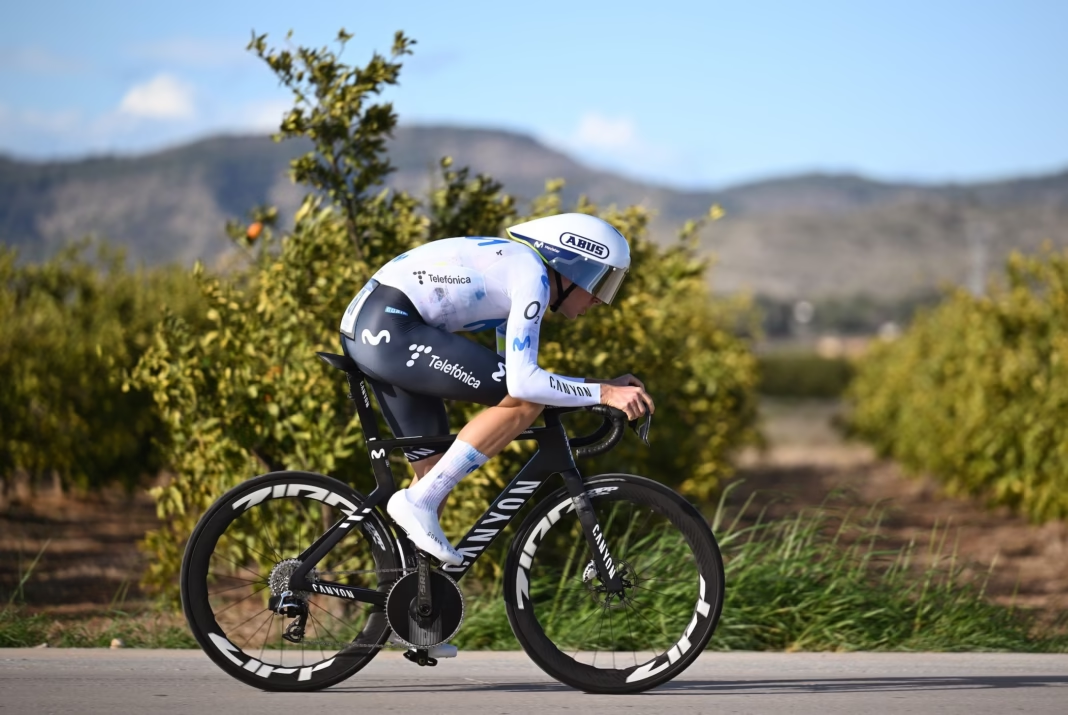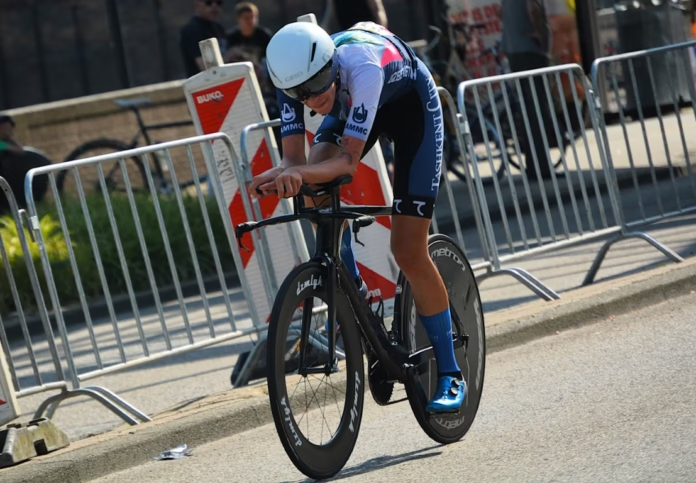
Yanina Kuskova says an anti-doping case opened after clenbuterol was detected in one of her September samples has been closed without an anti-doping rule violation, after investigators accepted contaminated meat eaten during a training camp in Mexico as the explanation for the finding.
The Uzbek rider addressed the case publicly after reports of the positive sample began circulating in Uzbek media. Kuskova said she had provided five doping samples across a three-week period, the first in Mexico and another four in Japan during the Asian Games.
According to Kuskova, the sample at the centre of the case was collected in Japan on 18 September. She said she was notified on 23 September that clenbuterol had been detected in her urine at a very low concentration.
Kuskova says case was closed on 29 September
Kuskova said the case was reviewed over the following days and that a decision was made on 29 September not to proceed with it as an anti-doping rule violation. She said the investigation concluded that the finding was consistent with contamination from meat consumed while she and the Uzbekistan squad were at a high-altitude training camp in Mexico.
“I would never intentionally take a prohibited substance,” Kuskova said, adding that the investigation had been a difficult experience as she waited for the circumstances to be assessed.
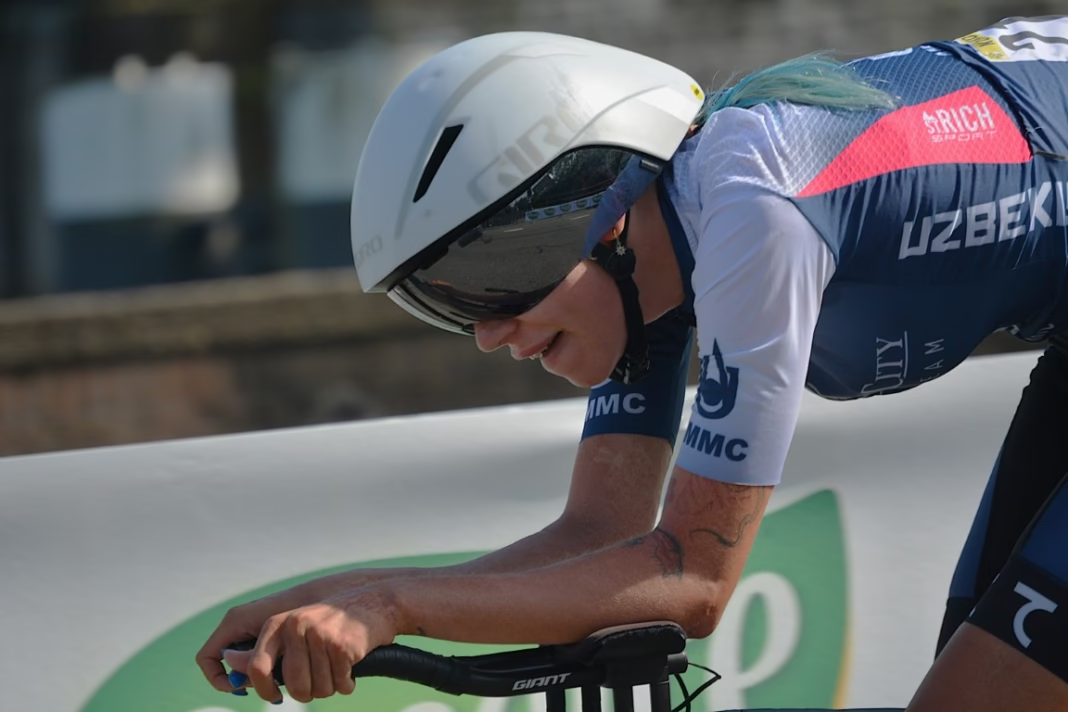
Uzbek anti-doping agency had already identified Mexican meat as likely source
The National Anti-Doping Agency of Uzbekistan had publicly confirmed on 29 September that out-of-competition samples from Kuskova and fellow cyclist Nafosat Koziyeva contained clenbuterol, which is prohibited in sport under the S1.2 category for other anabolic agents.
That statement also confirmed that both riders had been at a training camp in Mexico while preparing for the Asian Games. The agency said at the time that it was highly likely they had been exposed to clenbuterol through meat consumed in Mexico and that a period of ineligibility might not be imposed if the riders provided documentation confirming their presence there.
The public agency statement issued that day still described the cases as awaiting final decisions. Kuskova’s subsequent account says that her own case was then closed without an anti-doping rule violation once the contamination explanation had been accepted.
Why clenbuterol can lead to meat contamination cases
Clenbuterol is banned in sport, but anti-doping authorities have long recognised a separate contamination risk in countries where the substance has been used illegally as a livestock growth promoter. Mexico is one of the countries specifically identified in international anti-doping guidance because very low concentrations can appear in an athlete’s sample after contaminated meat is consumed.
Those cases are assessed individually, with the concentration detected, the athlete’s location, dietary history and other available evidence used to determine whether the finding is consistent with contamination rather than deliberate use.
Kuskova has spent much of 2026 racing with the Uzbekistan national set-up after leaving LABORAL Kutxa-Fundación Euskadi earlier in the season. She had previously raced for Tashkent City Women before the Uzbek team folded at the end of 2024.