Pablo Castrillo has extended his contract with Movistar Team through to the end of 2030, committing his future to the Spanish squad for another four seasons.
The 25-year-old joined Movistar at the start of 2025 after breaking through with two stage wins at the 2024 Vuelta a España. Since then, he has developed from a rider best known for aggressive climbing into a much broader WorldTour option, with strong performances against the clock and an increasingly important role in stage races.
Castrillo signs on through 2030
Movistar confirmed the new deal on 6 October, extending Castrillo’s stay well beyond the end of his current agreement and making him one of the team’s longer-term building blocks for the next cycle.
“I’m very happy to be able to continue for four more years with Movistar Team,” Castrillo said. He added that the confidence shown in him by the team had given him the stability to keep developing and taking further steps forward.
From Vuelta stage winner to more complete WorldTour rider
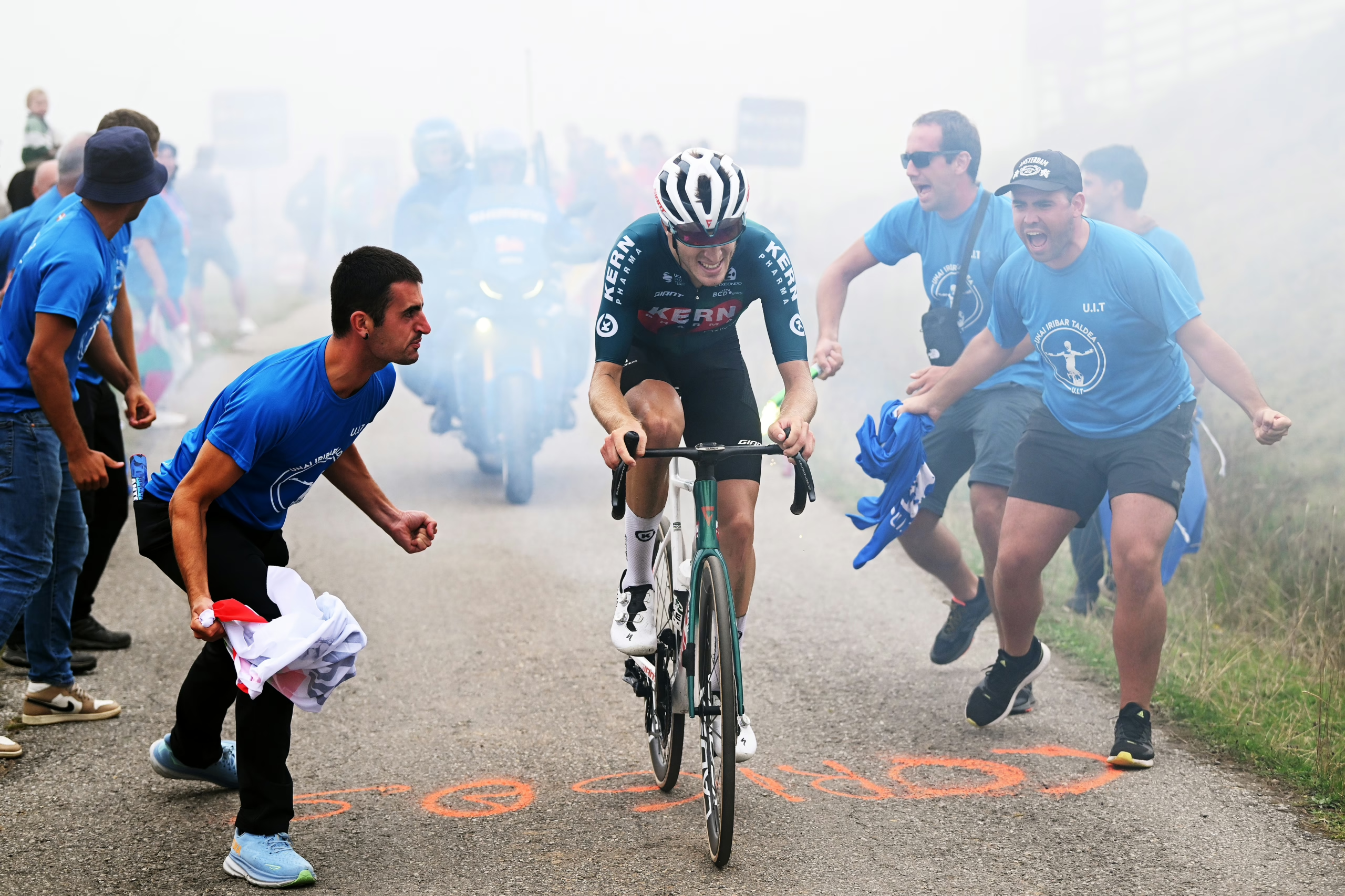
Castrillo arrived at Movistar with a reputation built largely around climbing and breakaway racing. His two victories at the 2024 Vuelta a España, including his second stage win on Cuitu Negru, established him as one of the most eye-catching Spanish riders of that season.
His first year with Movistar broadened that picture. Castrillo finished seventh overall at the UAE Tour and ninth at the Tour de Suisse in 2025, made his Tour de France debut and came close to another Vuelta stage win with second at Belagua.
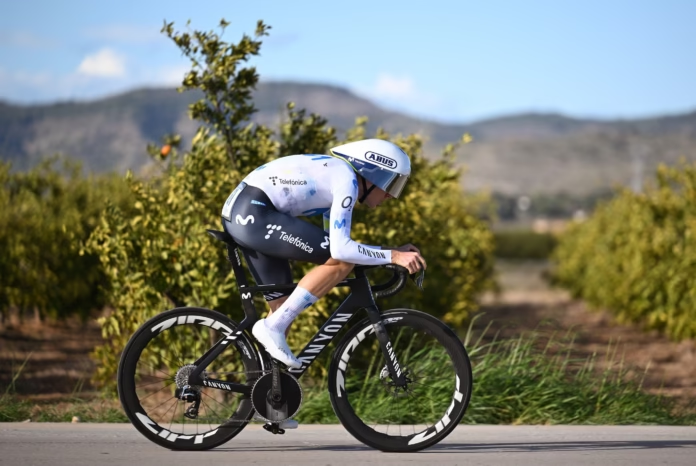
The bigger development came in 2026. Castrillo won the Spanish national time-trial title in June, then produced three stage top-10 finishes at the Tour de France. His ability against the clock has become an increasingly important part of his profile, giving Movistar more flexibility than they would have if he remained purely a mountain specialist.
An increasingly important role around Movistar’s stage-race leaders
Castrillo was also part of the Movistar team that helped Enric Mas win the 2026 Vuelta a España. His contribution across the race underlined the shift in his role: he is still dangerous when given freedom to attack, but he can now be used deeper into important stage-race plans rather than being treated only as a breakaway rider.
That versatility is likely to become more important over the next four years. Movistar already have a strong Spanish core developing around riders such as Iván Romeo and Javier Romo, while Castrillo’s climbing, time-trial ability and willingness to race aggressively give the team another rider who can contribute in both leadership and support roles.
With the new contract running through 2030, Movistar have moved early to secure a rider whose value has grown significantly since joining the team. Castrillo is still young enough to improve further, but already experienced enough to be trusted in Grand Tours and major stage races.