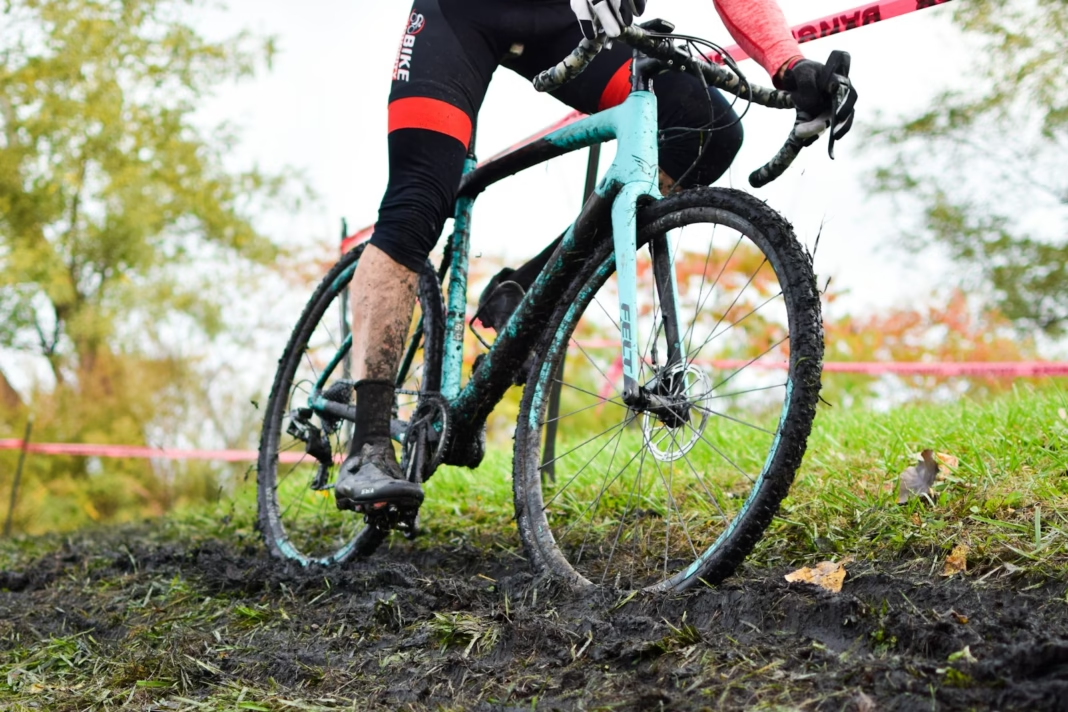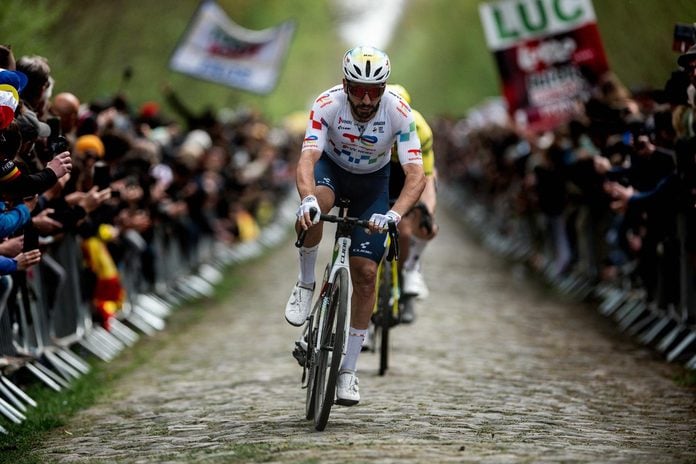
Strade Bianche and Paris-Roubaix both force road racers off smooth tarmac, but the similarities are less important than the differences. One takes place on the rolling white roads of Tuscany, with steep climbs and a finish in Siena. The other is built around the broken cobbles of northern France, where positioning, repeated impacts and the ability to keep a bike moving at speed can decide the result long before the velodrome.
Both are established spring Classics with men’s and women’s races, but they ask different questions of the peloton. Yet they reward different strengths, encourage different equipment choices and create very different tactical problems. A rider capable of winning on the gravel around Siena may also excel on the pavé of Roubaix, but there is no guarantee. The decisive question is not simply whether a rider can handle rough surfaces; it is what they can do after hours of riding them.
The routes in 2026 compared
The 2026 men’s Strade Bianche covered 201 kilometres, with 14 gravel sectors and roughly 64 kilometres of white roads according to the organiser’s launch information. The women’s race covered 131 kilometres with around 33 kilometres of gravel. Both finished in Siena after a sequence of steep, technical roads and the final ascent of Via Santa Caterina towards Piazza del Campo.
Paris-Roubaix was substantially longer for the men: 258.3 kilometres, including 54.8 kilometres of cobblestones across 30 sectors. The 2026 women’s edition covered 143.1 kilometres and 33.7 kilometres of pavé. That year the women’s race moved to the same Sunday as the men’s event and used a greater amount of cobbles than in 2025. The two events share the famous Roubaix velodrome finish, but their starting points and total distances are different.
The numbers alone do not tell you which race is harder. Strade Bianche has a larger share of gravel relative to its overall distance, especially in the men’s race, but much of the climbing between sectors is also decisive. Paris-Roubaix’s cobbled kilometres are concentrated into a succession of highly uneven farm roads. Their physical cost can be greater than the raw distance suggests, particularly when the race reaches the five-star sectors.
Neither course is static. Organisers adjust the route each year, sometimes removing sectors or changing the approach to a decisive climb. The 2026 Strade Bianche route reduced the amount of gravel from the previous edition, while Paris-Roubaix added an infrequently used cobbled sector near Briastre. Comparing specific editions is therefore more useful than repeating a fixed number for either race.
White roads versus pavé
The strade bianche are unsealed roads with a pale, loose surface that can change dramatically with weather and traffic. In dry conditions the gravel can be dusty and fast, with loose stones collecting on corners. After rain, some stretches become slick and rutted. Riders need to judge traction while braking, turning and accelerating, often on steep gradients where a small loss of rear-wheel grip can stall an attack.
Roubaix cobbles are a different kind of obstacle. The stones are uneven, sometimes separated by large gaps, and the fastest line may move across the width of a sector depending on wear and weather. Riding the crown can be quick but risky; the edges can be smoother in places yet blocked by spectators, mud or debris. Every choice has consequences for steering and puncture risk.
Gravel tends to reward smooth weight transfer and the ability to keep the bike tracking through corners without wasting speed. Cobbles punish hesitation and can reward riders who carry high speed over the roughest stretches. A Roubaix specialist must remain relaxed enough to absorb repeated impacts while still producing power. A Strade Bianche specialist needs that bike control too, but climbing ability is often a larger part of the winning equation.
They also produce different ways to lose a race. At Strade Bianche, a rider may lose contact after sliding wide on a dusty bend or spinning out on a steep gravel ramp. At Roubaix, a puncture or a crash in the wrong sector can remove a contender from the race even when their legs are strong. Team cars may struggle to reach riders quickly when the peloton has fractured across narrow roads.
Where the races are won and lost
Strade Bianche repeatedly puts riders under pressure on Monte Sante Marie, the long gravel sector that has become a launchpad for decisive attacks. The 2026 course retained the demanding finale through Colle Pinzuto and Le Tolfe, with steep ramps that make it difficult for a chase group to organise. The final approach to Siena adds another tactical complication: a rider arriving with a small gap still has to negotiate the steep streets and the climb into the square.
At Paris-Roubaix, the Trouée d’Arenberg, Mons-en-Pévèle and Carrefour de l’Arbre are the three five-star sectors that define the men’s race. Arenberg can break a peloton apart through crashes, punctures and sheer speed. Mons-en-Pévèle and Carrefour de l’Arbre often become the places where the strongest survivors make the final selection. A contender may need to be near the front before the sector even begins, because there is little room to recover position once the group hits the stones.
The women’s Roubaix route uses much of the same decisive finale, with its own distance and sector sequence. The 2026 route added Haveluy, a four-star stretch that made the approach to the later cobbles more demanding. By the time the riders reach the famous final sectors, the earlier pavé may already have decided who is capable of fighting for the win.
Strade Bianche is often decided by a rider who can turn a steep gravel climb into a sustained solo attack. Roubaix can reward a solo move too, but it is also a race of small groups, tactical alliances and decisions about whether to cooperate before the velodrome. The last kilometres can be a contest of nerve as much as power. Our report on Wout van Aert’s 2026 Paris-Roubaix victory shows how a final sprint can settle a race after hours of attrition.
What the bikes and tyres need to do
Both races are contested on road bikes rather than dedicated cyclocross machines. Large stretches of tarmac still reward the efficiency, gearing and position of a road race bike. Teams adapt the equipment for rough ground rather than changing discipline altogether.
At Strade Bianche, wider road tyres can provide extra comfort and grip on loose surfaces without imposing too much penalty on the fast paved sections. Tyre pressure must balance traction against rolling speed and the risk of damaging the wheel on stones. Riders may choose different tread and casing constructions, but a full gravel bike is not automatically faster because the course contains gravel.
Roubaix places even greater emphasis on impact resistance, wheel reliability and avoiding punctures. Modern road bikes have made wider tyres and tubeless setups more practical, allowing teams to find comfort without abandoning aerodynamics. A tyre that feels ideal on smooth tarmac may be too harsh over the pavé, but lowering pressure too far can increase the risk of rim damage or unstable handling.
The correct setup also depends on rider weight, wheel width, the forecast and the specific tyre. There is no universal Roubaix pressure, just as there is no single Strade Bianche setting. Reconnaissance is valuable because it lets riders and mechanics judge the actual surfaces rather than relying on the reputation of the race. A smooth-looking sector can still hide deep gaps, and a dry gravel road can become treacherous after one shower.
The different types of rider who can win
Strade Bianche has become a natural target for explosive climbers and powerful all-rounders. Its short, steep ramps reward repeated accelerations, and the final Siena climb suits riders who can produce a hard effort after a long, selective day. Tadej Pogačar’s long-range attacks have demonstrated how a rider with Grand Tour-level climbing power can turn the gravel sectors into a decisive advantage.
Roubaix has traditionally favoured heavier, powerful Classics riders who can hold speed across the cobbles and still sprint after a brutal distance. The modern peloton has made that old stereotype less reliable. Modern equipment and increasingly versatile riders have allowed climbers and stage-race contenders to compete, but the race still demands an unusually high level of positioning, resilience and confidence on rough ground.
The 2026 results underline the distinction without turning it into a rigid rule. Pogačar won the men’s Strade Bianche again, while Van Aert beat him in the Roubaix velodrome. One result does not prove that a rider is a gravel specialist or a cobbled specialist, but the different winning scenarios reveal how the races reward different tactical skills.
The women’s events make the same point. Strade Bianche Women 2026 was shaped by a dramatic finale and won by Elise Chabbey, while Paris-Roubaix Femmes demanded sustained control on a much longer sequence of pavé. The depth of the women’s Classics calendar means that a rider can target both races, but teams still have to decide how much to specialise in each course and which riders receive protection at the decisive moments.
History, prestige and what makes each race distinctive
Paris-Roubaix has a history stretching back to 1896 and belongs to cycling’s five Monuments. Its velodrome finish, the legendary sectors and the images of exhausted riders covered in dust or mud have built a reputation that goes beyond any one edition. Winning there can define a Classics career, even for riders who have already won major stage races and championships.
Strade Bianche is much younger, first held for men in 2007 and for women in 2015, but it has quickly become one of the most recognisable races on the calendar. The Tuscan landscape, white roads and Siena finish give it an identity that established races cannot simply copy. Its prestige has grown through the quality of the fields and the performances of riders who have used the gravel sectors to launch spectacular attacks.
The gap in age explains their different traditions; it does not make Siena an inferior contest. Strade Bianche has earned its place because its route creates compelling racing and asks a distinctive question of the peloton. Roubaix has more than a century of history and a Monument title; Siena has developed its own modern mythology in a fraction of that time. The two races are not competing to be the same kind of Classic.
Fans who want to understand the landscape behind the Italian race can also explore our guide to cycling Tuscany’s white roads and vineyard routes. For the northern French race, our Paris-Roubaix Femmes course preview explains how the sectors shape the women’s contest.