
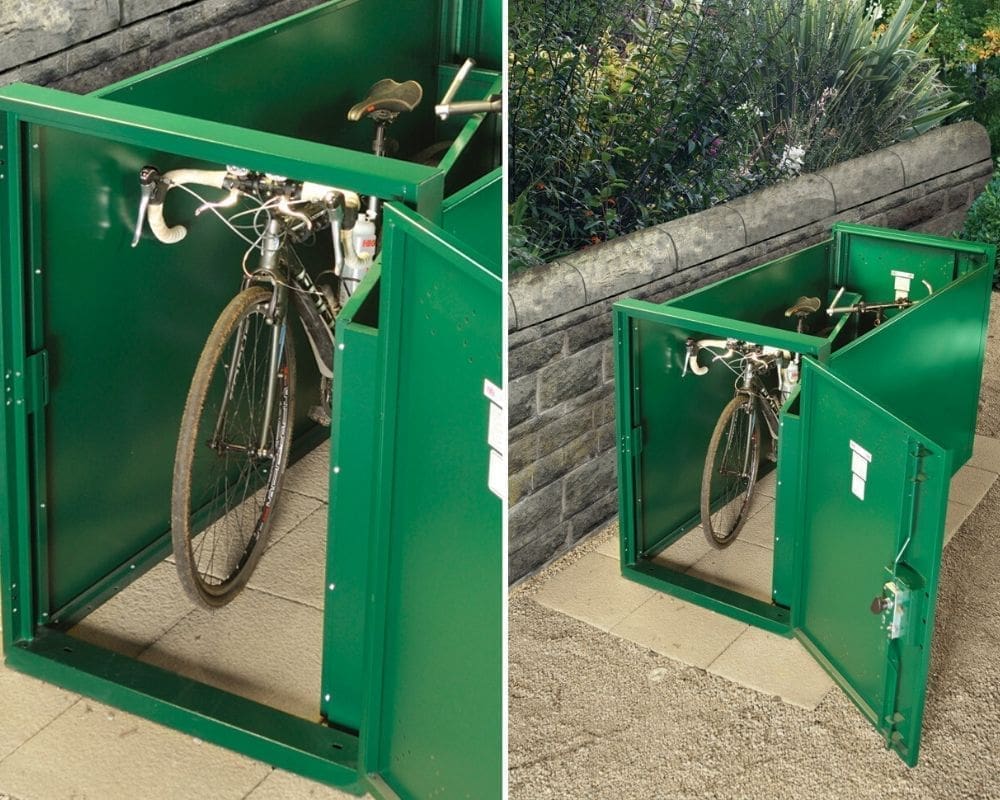
A bicycle locked inside a shed is not necessarily secure. If a thief can open the door and carry the bike away, the lock has achieved little. The same problem arises in a garage when an expensive bike is leaning against a wall with nothing securing it to the building.
For UK cyclists, home storage deserves as much thought as locking a bike outside a café. Sheds and garages can conceal theft attempts from view, contain useful tools and give an intruder more time to work. A good setup uses several layers: a properly secured building, a credible lock attached to a strong anchor, discreet storage and an insurance arrangement that actually covers the circumstances.

How to secure a bike in a shed or garage
The strongest straightforward method is to lock the bike’s frame to a properly installed ground or wall anchor inside a locked building. Choose a security-rated chain or D-lock that is appropriate for the bike’s value and the insurer’s conditions. Fix the anchor to a suitable structural surface, not a loose paving slab, thin sheet metal or easily removable wooden board.
Police.uk specifically recommends securing a bicycle to the ground or a lockable stand inside a shed or garage, alongside improving doors, hinges and windows. The Police Service of Northern Ireland gives similar advice, including a ground anchor and security-rated lock. Both approaches recognise that the outbuilding alone is not sufficient protection.
For a typical timber shed, the first question is whether the structure can support the anchor. Thin timber flooring or wall panels may be easy to defeat. Fixing into a substantial concrete base or appropriate masonry can be much stronger, but the correct installation depends on the anchor model and the construction. A secure steel storage cabinet can be an alternative where no suitable structural fixing is available.
Start with the shed or garage door
The bike lock is the second barrier; the door is usually the first. An exposed hasp secured with ordinary screws can undermine an otherwise decent padlock. Check that the hinges, locking points, frame and surrounding panels are as robust as the lock they carry. Suitable through-bolts or security fasteners may help, depending on the building.
On sheds, pay attention to windows, glazing and visibility from outside. Police advice recommends considering grilles or other protection for vulnerable windows and keeping valuable equipment out of view. If a thief can see several high-value road bikes through a window, the building advertises its contents before anyone touches the lock.
Garage doors vary considerably. An old up-and-over door may have weak locking points or gaps that allow an attacker to reach a mechanism. A replacement door should be selected for its actual security performance, not simply its appearance. Professional advice from a competent installer or locksmith is sensible where the structure or locking system is weak.
Choose an anchor that cannot simply be lifted away
A ground anchor gives the lock a fixed point. It is often installed in concrete, while some wall anchors are suitable for sound masonry. These are not interchangeable with decorative hooks or ordinary bicycle storage brackets. The fixings, substrate and surrounding structure are all part of the security system.
Follow the manufacturer’s fitting instructions and check that the surface can accept the specified fixings. For a timber shed on paving slabs, an apparently solid installation may still be vulnerable if the slab can be lifted or the whole shed moved. A permanent anchor into a proper base may be a more effective improvement than an additional padlock.
Ground anchors themselves can carry independent security ratings. Sold Secure maintains categories for anchors as well as bicycle locks. Check the current rating of the exact product rather than assuming that any thick steel loop is certified. If you rent your home or share a garage, obtain permission before drilling into concrete, walls or flooring.
Does your bike need a Sold Secure Gold or Diamond lock?
Sold Secure’s ratings progress from Bronze to Silver, Gold and Diamond. Diamond is the highest of these levels. The classification reflects testing against specified tools and attack methods, not a promise that theft is impossible. Ratings also depend on the product category, which matters for locks and anchors designed for different vehicles.
For higher-value bicycles, a robust independently rated lock is a sensible choice. The appropriate minimum, however, can be set by the insurer. Some policies have different approved-lock requirements depending on the bicycle’s insured value. Others impose additional conditions for overnight storage in an outbuilding.
Read the actual policy before buying a lock. Verify whether it requires a specified Sold Secure grade, the bike to be secured through the frame, a particular anchor or an outbuilding with certain door construction. A good lock cannot compensate for a policy condition that has not been met.
Our UK bike lock buying guide compares available designs, while our Litelok X3 review examines a high-security D-lock option. The best choice for home storage may differ from the light lock you are happy to carry on a training ride.
How to lock the frame and wheels inside an outbuilding
Pass the main lock or chain through a substantial part of the frame and the fixed anchor, leaving as little unnecessary slack as practical. If the anchor is low, avoid allowing a long chain to sit where it can be easily manipulated on the floor. Make sure wheels with quick releases or easily removed axles are also protected, either by the main lock’s route or with an additional security device.
Simply locking the front wheel to a stand can leave the frame vulnerable to being separated from it. Equally, locking the bike to another bicycle does not create a fixed point: both can be carried away together. When several bikes share one anchor, consider whether each frame is genuinely secured and whether the anchor and lock arrangement accommodate all of them.
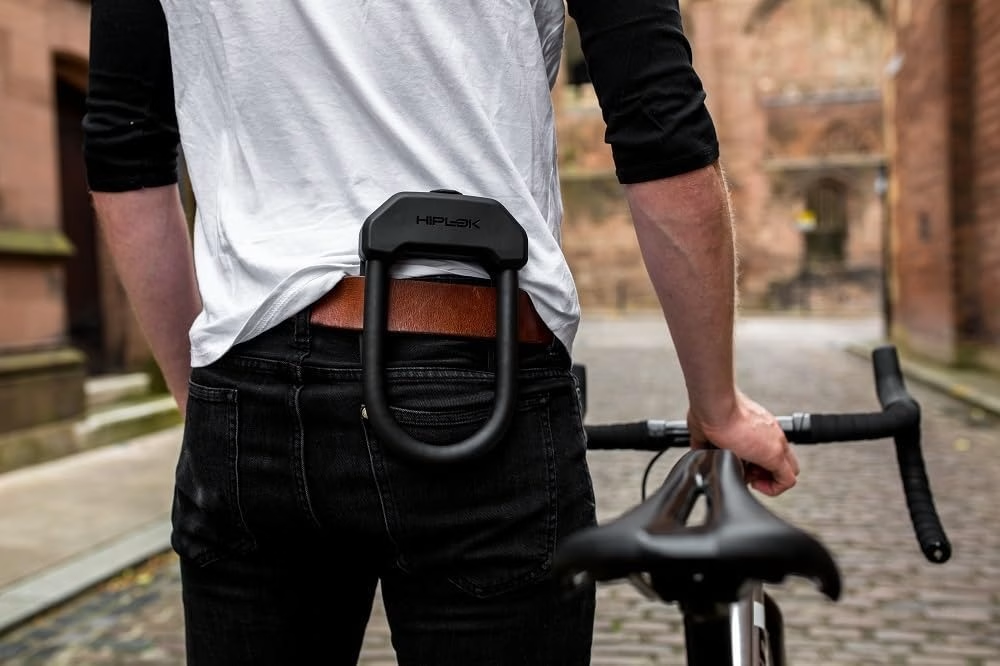
Different lock types can complement one another. A good D-lock may be excellent around a frame and immovable object but awkward in a cramped shed. A suitable hardened chain may be easier to route around multiple frame tubes and an anchor. Avoid relying on a thin cable as the main security device for a valuable bike.
Is a purpose-built metal bike shed worth considering?
A secure steel bike store can provide more resistance than a lightweight wooden shed, particularly if its panels, door, locking mechanism and foundation are designed as one system. Its security still depends on correct installation. A storage unit sitting loose on the ground is a different proposition from one securely anchored to an appropriate base.
Capacity deserves attention too. A store described as suitable for three bikes may be awkward with wider handlebars, gravel tyres and panniers. Check the internal dimensions, door opening, ease of access and the scope to lock individual frames inside. A secure enclosure should be convenient enough that its doors and locks actually get used on every occasion.
Our Asgard bike shed review offers a closer look at a purpose-built storage approach. It is worth comparing that with upgrading your existing garage or shed rather than assuming a new outbuilding is the only workable answer.
What about alarms, cameras and bike trackers?
A shed door alarm, garage alarm or motion-activated lighting can add useful warning and deterrence. The value depends on whether somebody will notice and respond. An alarm that is routinely triggered by pets or blown-open doors may eventually be ignored, while a camera recording a dark corner may offer limited identification.
Cameras and trackers should be treated as secondary layers. They may help establish what happened or locate a stolen bike, but they do not physically prevent the bike being moved. Take care with privacy when positioning cameras around shared paths or neighbouring property, and follow applicable data-protection guidance for the way you use the recordings.
If a tracker suggests that a stolen bicycle is at a particular address, report the information to the police rather than confronting anyone yourself. It is better to have frame numbers, dated photographs and evidence of ownership available before a theft than try to reconstruct them afterwards.
Register the frame number and check insurance before a theft
Police.uk recommends recording the frame number, marking the bicycle and registering it on an appropriate national database. Frame numbers are often found near the bottom bracket, although their position varies. Take clear photographs of the whole bike, the number and any distinguishing components or damage.
Check the insurance for each bicycle, particularly if you have multiple bikes or an e-bike. Household contents cover may contain limits for cycles, restrictions on outbuilding storage and lock conditions. Separate cycle insurance can have different requirements. You should not assume that a garage inside your property’s boundary automatically qualifies as secure indoor storage.
Consider documenting the locks and anchors as well as the bicycles. Receipts, photographs of the installation and proof of the approved security rating can be useful if an insurer asks how the bike was stored. Review the arrangement when you buy a more valuable bike, move house or change insurer.
The common shed-security mistakes that matter most
The most significant error is securing the building but leaving the bicycle free to be carried away. Next comes using a strong lock with a weak anchor or attaching a secure anchor to a surface that can easily be broken or removed. Visible bikes, accessible tools and unlocked side doors can undermine the layers around them.
For riders storing bikes after wet winter rides, ventilation also matters. A shed that is secure but constantly damp can promote corrosion and damage equipment. Keep the bike away from persistent standing water and allow wet kit to dry, without compromising the building’s security. Our broader UK cycling-to-work guide covers other everyday ownership considerations.
The sensible order of investment is to make the building difficult to enter, attach each valuable bike to a real fixed point, match the lock to the threat and insurance terms, and document what you own. A thief should encounter several separate obstacles, rather than discover that one weak door or portable stand is all that stands between the bike and the street.

