
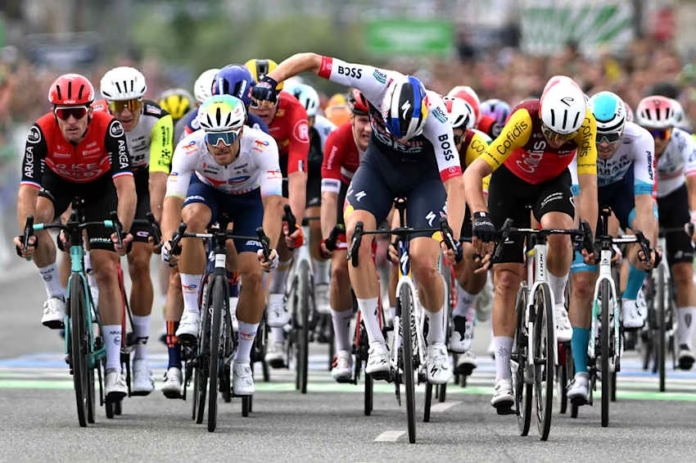
Copenhagen Sprint 2026 has one of the clearest identities on the WorldTour calendar. This is a race built for speed, control and lead-out strength, with the men’s event taking the peloton from Roskilde to Copenhagen before the city-centre finishing circuit outside the National Gallery of Denmark.
The profile points towards a sprint, but that does not make the race simple. Danish roads can be exposed, the approach to Copenhagen can become nervous, and the final circuit should keep the pressure high even if the race remains together. Teams with elite fast finishers will want control. Teams without a pure sprinter will need to disrupt that control before the final lap.
That gives the start list a very obvious tactical split. Some teams arrive with a single sprint leader and a full train. Others bring a mix of rouleurs, Classics riders and fast finishers who can survive a chaotic finale. The strongest squads are not only those with the quickest rider on paper, but those who can still organise themselves after more than 220km of high-speed racing.
For more route context, our Men’s Copenhagen Sprint 2026 route guide breaks down the Roskilde start, exposed roads and Copenhagen finishing laps, while our how to watch Copenhagen Sprint 2026 in the UK guide covers the live coverage options.
Red Bull-BORA-hansgrohe
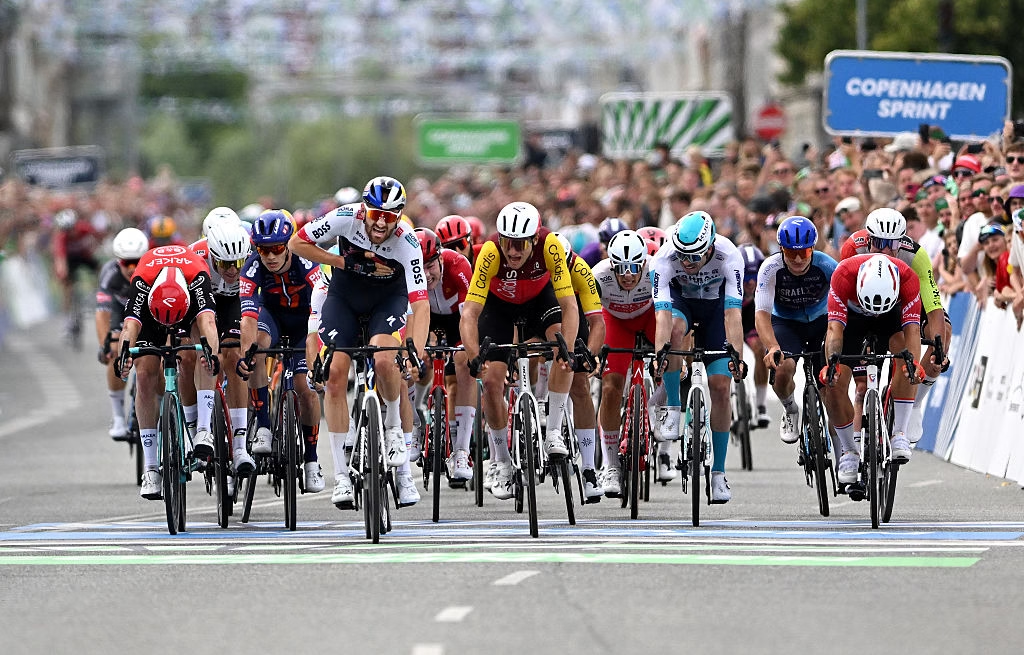
Red Bull-BORA-hansgrohe bring the defending winner in Jordi Meeus, which immediately gives their race a clear shape. Meeus won the first men’s Copenhagen Sprint in 2025, and a return to the same broad race format means he will be one of the most closely marked sprinters in the field.
The support is built sensibly around that aim. Danny van Poppel remains one of the most valuable lead-out riders in the peloton, and his presence gives Meeus the kind of late-race pilot who can make a technical finale feel manageable. Arne Marit adds sprint depth, while Mick van Dijke, Gianni Moscon, Mattia Cattaneo and Emil Herzog give the team enough strength to control positioning before the final circuit.
This is not a team that should need to improvise. If the race is heading towards a bunch sprint, they have the structure to be involved deep into the final kilometre. The challenge will be timing. Meeus will not get the same freedom as last year, and every other sprint team now knows exactly how dangerous he is on these roads.
Alpecin-Premier Tech
Alpecin-Premier Tech have Jasper Philipsen, which makes them one of the most important teams in the race. On a flat WorldTour one-day course with a likely sprint finish, Philipsen is an obvious favourite, and the team has been built to support him properly.
Jonas Rickaert is the key name in the lead-out, with Florian Sénéchal adding experience and power for the final hour. Johan Price-Pejtersen should be valuable on Danish roads, especially if the race becomes exposed or the pace needs to stay high before Copenhagen. Simon Dehairs, Sente Sentjens, Tim Marsman and Tobias Bayer give the team enough numbers to keep Philipsen protected before the final circuit.
Alpecin-Premier Tech should not be afraid of a controlled sprint. They have one of the fastest riders in the race and enough late-race strength to place him properly. The question is whether they allow other teams to carry the chase or take responsibility themselves. If Philipsen reaches the final 300 metres in position, he is one of the hardest riders here to beat.
 Photo Credit: Sprint Cycling Agency
Bahrain Victorious
Bahrain Victorious arrive without the same obvious top-tier sprint card as some of the bigger lead-out teams, so their race may need to be more opportunistic. Alberto Bruttomesso and Daniel Skerl look like the quickest options, while Robert Stannard gives them a rider who can handle a harder, more attritional version of the race.
Zak Eržen, Alessandro Borgo, Mathijs Paasschens and Oliver Stockwell add support, but this does not look like a squad built to dominate a full bunch sprint against Philipsen, Merlier, Milan, De Lie, Groenewegen and Meeus. That means Bahrain may need to look for moments where the race becomes more chaotic.
Their best chance may come if crosswinds or late attacks split the field before the final lap. Stannard is useful in that kind of situation, and Bruttomesso or Skerl could still be dangerous from a reduced group. In a clean sprint against the biggest trains, they will need everything to go perfectly.
Decathlon CMA CGM Team
Decathlon CMA CGM Team have a strong fast-finish profile through Tobias Lund Andresen, Pierre Gautherat and Tord Gudmestad. That gives them multiple options depending on how the race unfolds, which could be useful if the final hour becomes less predictable than the profile suggests.
Lund Andresen is the most interesting card. He has the speed to be relevant in a sprint and the durability to survive a long, fast one-day race. Gautherat gives the team another punchy fast finisher, while Gudmestad adds a strong sprint option if the team wants to keep more than one rider protected.
Oliver Naesen and Stan Dewulf bring valuable Classics experience and road control. Rasmus Søjberg Pedersen and Antoine L’Hote complete a squad that should be able to stay visible into Copenhagen. Decathlon may not have the absolute fastest sprinter in the race, but they have enough depth to be dangerous if the final becomes messy.
 Photo Credit: Getty
EF Education-EasyPost
EF Education-EasyPost bring one of the most interesting teams in the race because they can approach Copenhagen Sprint in more than one way. Kasper Asgreen, Mikkel Honoré and Michael Valgren give them Danish strength and local relevance, while Marijn van den Berg, Vincenzo Albanese, Madis Mihkels and Noah Hobbs add sprint and fast-finish options.
Van den Berg is likely the clearest sprint card if the race comes back together, but EF may not want to wait passively for a pure bunch finish. Asgreen is exactly the sort of rider who can make a race harder before the sprint trains are fully arranged, and Valgren’s experience on Danish roads could be valuable if the wind or positioning turns the race nervous.
Mihkels is another useful rider in a high-speed finish, while Hobbs gives them a developing sprint option. EF should be aggressive rather than purely defensive. A straight sprint against the biggest names is difficult, but a reduced group or late split could bring them fully into the race.
Groupama-FDJ United
Groupama-FDJ United have Paul Penhoët as their most obvious sprint option. He has the speed to contest this kind of finish, but he will need strong positioning because the final circuit is likely to be crowded with bigger lead-out trains.
Clément Russo, Olivier Le Gac and Cyril Barthe bring experience, while Titouan Fontaine, Axel Huens and Matteo Milan add support around the main objective. The team’s task is straightforward: keep Penhoët in the right place until the final lap, then try to find enough space to launch.
This may be a race where Groupama-FDJ United need to be clever rather than dominant. They are unlikely to control the final kilometres against Lidl-Trek, Soudal Quick-Step, Alpecin-Premier Tech and Red Bull-BORA-hansgrohe, but Penhoët can take advantage if those teams start watching each other.
Netcompany INEOS
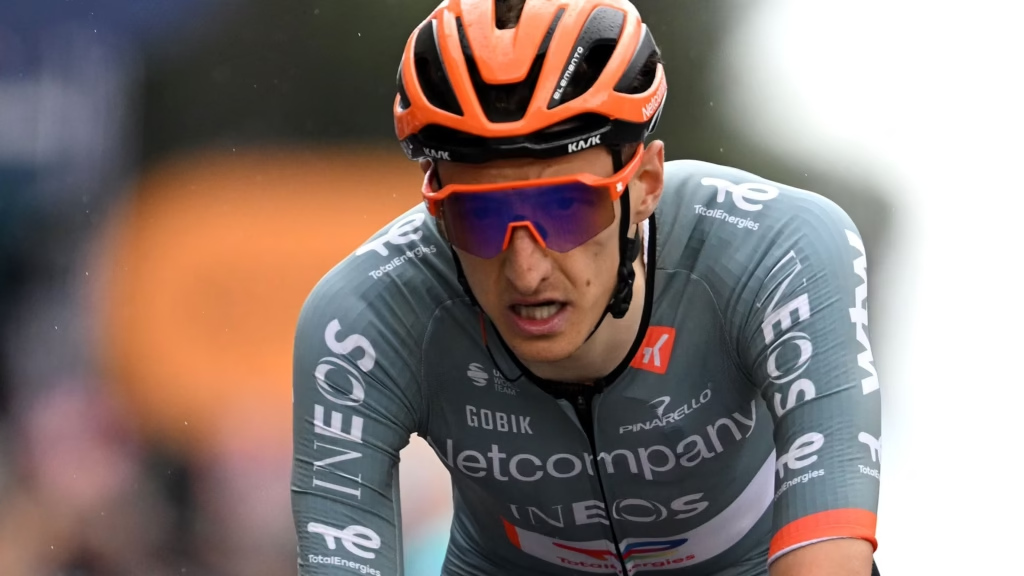
Netcompany INEOS do not bring a pure sprint team, but they do bring a powerful group for a fast, attritional race. Ben Turner looks like their best card for a hard finish, while Ben Swift and Connor Swift add experience and toughness. Tobias Foss, Bob Jungels, Lucas Hamilton and Kim Heiduk give the team a lot of engine room.
This is a squad more suited to disruption than a standard bunch sprint. Turner can finish quickly from a reduced group, but he will not want to be boxed into a pure drag race against Milan, Philipsen, Merlier or Groenewegen. That means Netcompany INEOS may need to help make the race harder before Copenhagen or use their strength to follow late moves.
Foss and Jungels are especially useful if the wind rises or if a dangerous move goes before the circuit. Their presence gives the team tactical weight, even if the route is not selective on paper. A podium would probably require a less controlled race, but they have the riders to make that possible.
Lidl-Trek
Lidl-Trek have Jonathan Milan and one of the most convincing sprint structures in the race. Milan’s top-end speed makes him one of the favourites, and the support around him is strong enough to challenge any lead-out here.
Simone Consonni is central to the sprint plan, while Søren Kragh Andersen, Mathias Norsgaard, Edward Theuns, Otto Vergaerde and Max Walscheid give Lidl-Trek a powerful line-up for the final 20km. Walscheid’s size and strength can be hugely valuable on fast Danish roads, and Norsgaard’s presence gives the team another rider well suited to local conditions.
The main challenge for Lidl-Trek will be avoiding being forced to chase too early. With Milan in the line-up, other teams may expect them to help control the race. If they can save enough support for the final circuit, Milan has the speed to win. Few teams here look better equipped for a full bunch finish.
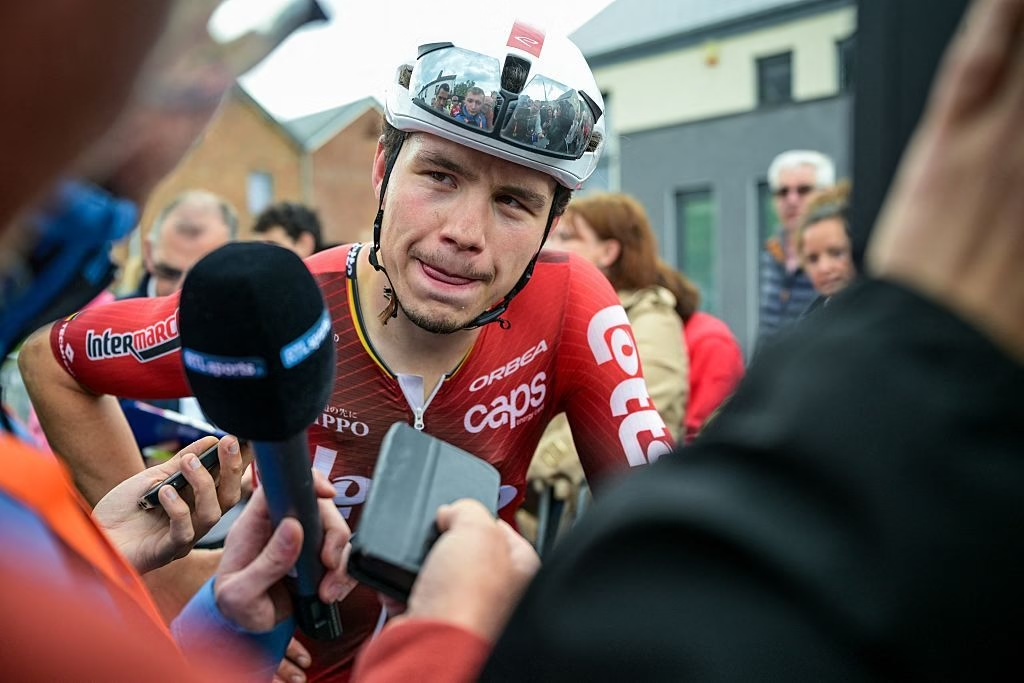 Photo Credit: Getty
Lotto-Intermarché
Lotto-Intermarché bring Arnaud De Lie, which gives them a rider who can win even if the final is not perfectly controlled. De Lie is powerful, fast and robust enough to handle a physical one-day race, making him a serious contender on this route.
The support includes Cédric Beullens, Sébastien Grignard, Taco van der Hoorn, Joshua Giddings, Matys Grisel and Felix Ørn-Kristoff. Van der Hoorn is particularly useful because he gives the team an attacking option if the race becomes tactical, while Beullens and Grignard can help position De Lie before the circuit.
De Lie may not need the most polished lead-out to win. He can surf wheels, survive contact and produce a strong sprint even when the finish is messy. That makes Lotto-Intermarché dangerous if the bigger trains begin to lose order in the final kilometres.
Movistar Team
Movistar Team have Iván García Cortina and Orluis Aular as their main fast-finish options. Both can survive harder races and both can sprint from reduced groups, but the challenge will be matching the pure speed of the elite sprinters if the full bunch arrives together.
Filip Maciejuk, Albert Torres, Manlio Moro, Natnael Tesfazion and Jon Barrenetxea give the team a useful mix of support and power. Torres’ track background can be valuable in a fast, technical finale, while Maciejuk gives them another strong engine for the approach to Copenhagen.
Movistar’s best chance may come if the final is selective through speed, stress or wind. García Cortina is often at his most dangerous when a race becomes physically demanding without becoming mountainous. A top 10 is realistic, but a win probably requires a reduced group or a perfectly timed late move.
 Photo Credit: Getty
NSN Cycling Team
NSN Cycling Team bring Ethan Vernon, which gives them one of the quicker finishers outside the most established WorldTour sprint blocks. Vernon has the speed to be relevant if he is delivered properly, but the level of sprint competition here is extremely high.
Ryan Mullen and Tom Van Asbroeck are important support riders. Mullen’s engine should be useful on exposed roads and in the chase, while Van Asbroeck brings experience and positioning skill. Itamar Einhorn adds another fast option, with Pier-André Côté, Oded Kogut and Moritz Kretschy completing the line-up.
The key issue is organisation. Vernon can sprint, but NSN must place him in the right wheels before the final kilometre. If they lose position to the bigger trains, it will be difficult to come back. If Vernon gets a clean run, he can outperform many expectations.
Soudal Quick-Step
Soudal Quick-Step have Tim Merlier, and that automatically puts them among the main favourites. Merlier has the raw speed to win a race like this, and Copenhagen Sprint is exactly the sort of profile where he should expect to be involved.
Bert Van Lerberghe is a crucial lead-out presence, while Yves Lampaert, Casper Pedersen, Fabio Van den Bossche, Jonathan Vervenne and Ayco Bastiaens give the team a strong blend of power and control. Pedersen also brings Danish relevance and should be valuable in reading local roads and positioning.
Quick-Step’s race should be simple in theory: control enough, protect Merlier, and deliver him late. In practice, the challenge is managing the number of rival trains. Lidl-Trek, Alpecin-Premier Tech, Red Bull-BORA-hansgrohe and others will all want the same road. If Quick-Step get Merlier to the final 200 metres cleanly, he can win.
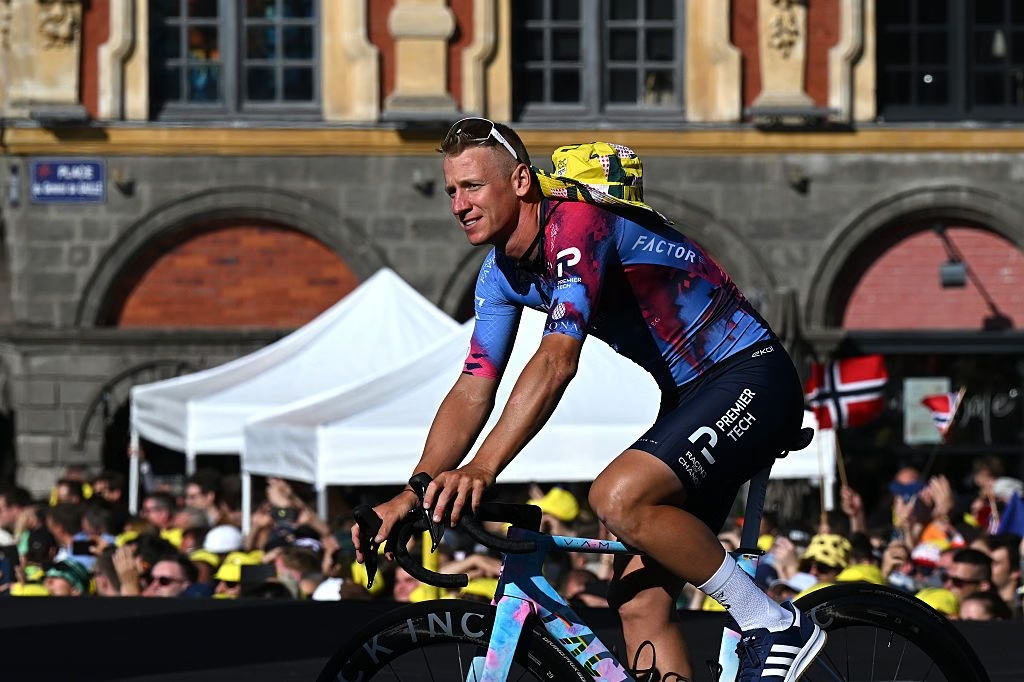 Photo Credit: Getty
Team Jayco-AlUla
Team Jayco-AlUla bring Pascal Ackermann as their sprint leader, with Luka Mezgec providing key lead-out experience. That combination makes them a credible sprint team, especially if the finale becomes slightly disordered and experience begins to matter.
Dries De Bondt and Christopher Juul-Jensen add strength for the approach, while Anders Foldager gives the team a Danish rider with local motivation. Robert Donaldson and Dries De Pooter complete a team that looks solid rather than overwhelming.
Ackermann is not the dominant sprint force he once was, but he remains dangerous if placed well. Jayco-AlUla may need to let the biggest sprint teams do much of the controlling and then use Mezgec to find the right wheels late. A podium is possible if the final opens up.
Team Picnic PostNL
Team Picnic PostNL have Fabio Jakobsen and Pavel Bittner, giving them two sprint cards with different profiles. Jakobsen is the proven high-speed finisher, while Bittner offers a younger, versatile option who can handle a harder race.
John Degenkolb brings experience and road sense, which could be especially useful in the final circuit. Niklas Märkl, Tim Naberman, Timo Roosen and Julius van den Berg provide the support structure. This is a team with sprint identity, but the question is whether Jakobsen has the positioning and confidence to match the very fastest riders in this field.
Bittner’s role will be interesting. If the race becomes chaotic or slightly more selective, he may become just as valuable as Jakobsen. Team Picnic PostNL have options, but they need clarity before the final lap. Hesitation between leaders would be costly.
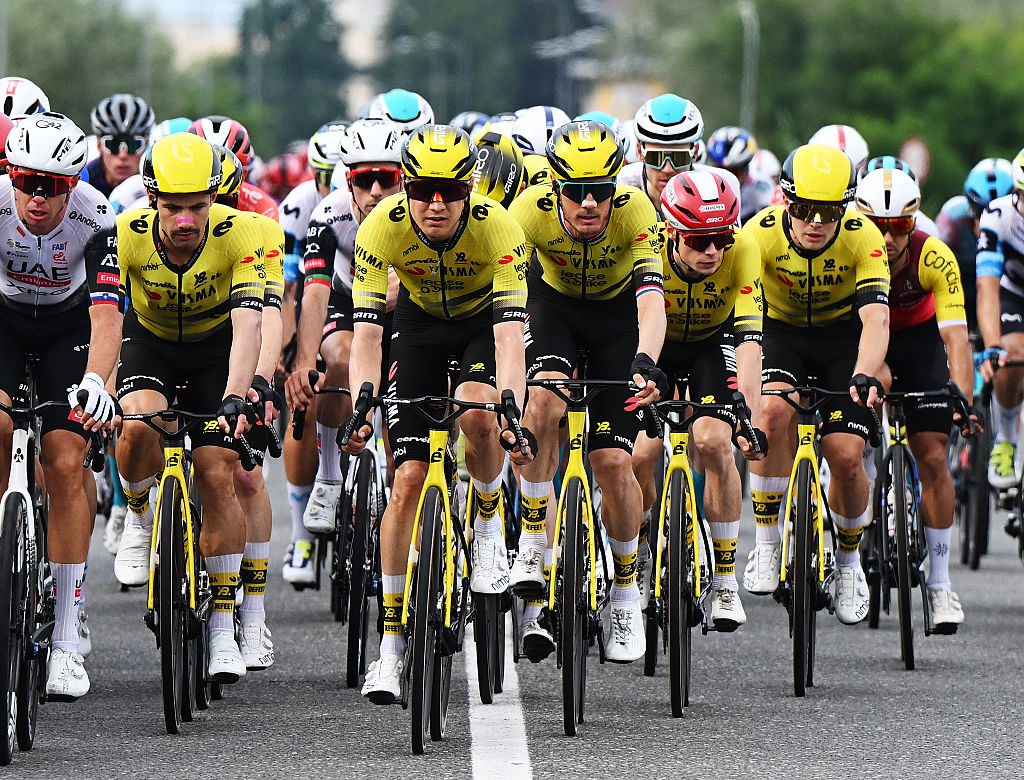 Photo Credit: Getty
Team Visma | Lease a Bike
Team Visma | Lease a Bike arrive without their biggest sprint names, but they still bring a team capable of influencing the race. Axel Zingle looks like the most obvious fast-finish option, while Filippo Fiorelli and Timo Kielich add useful support in a reduced or messy sprint.
Owain Doull gives experience and positioning strength, while Loe van Belle, Menno Huising and Pietro Mattio round out a squad that may need to be opportunistic. This is not a team built to control a pure bunch sprint against Milan, Philipsen, Merlier and the rest.
That means Team Visma | Lease a Bike may be better served by attacking the race late or following dangerous moves before the final circuit settles. Zingle can finish well from a reduced group, but he needs a harder, less predictable version of Copenhagen Sprint to have his best chance.
UAE Team Emirates-XRG
UAE Team Emirates-XRG have Sebastián Molano as their sprint leader, backed by a strong group of rouleurs. Molano is fast enough to be competitive in a bunch sprint, particularly if the biggest trains do not fully control the final kilometre.
Mikkel Bjerg, Julius Johansen, Vegard Stake Laengen and Rune Herregodts give UAE a serious amount of power for the approach to Copenhagen. Filippo Baroncini and Luca Giaimi add further depth. This team should be able to keep Molano protected and close to the front, especially if the race becomes exposed or stretched.
The question is whether Molano can beat the very top sprinters head-to-head. He is quick, but the field is stacked. UAE’s best route may be a slightly chaotic finale where their strong support riders keep Molano better positioned than rivals with more obvious pure speed.
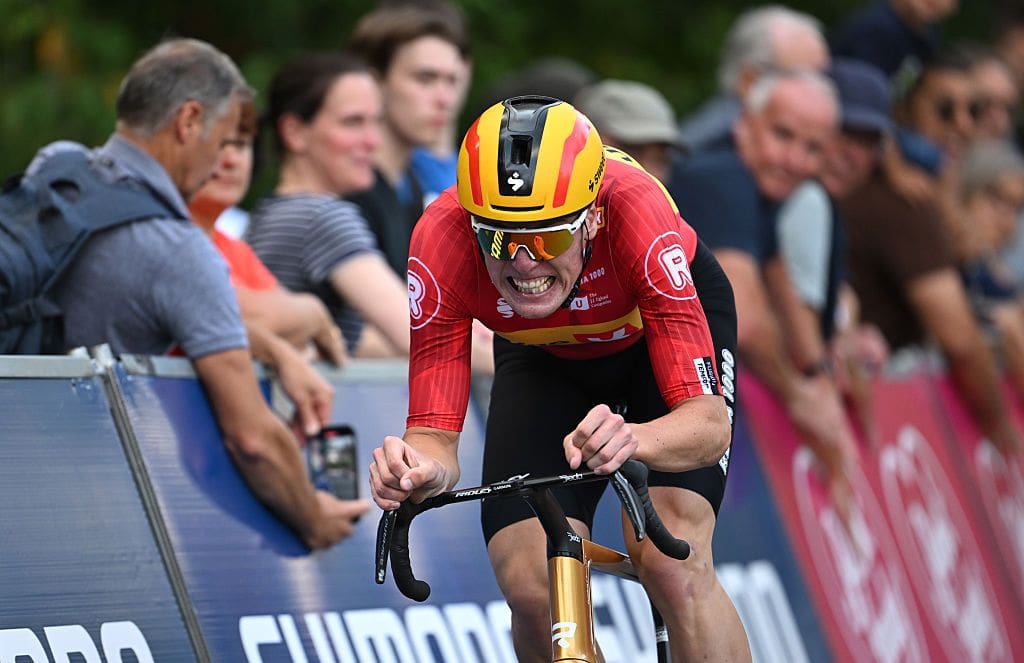 Photo Credit: Getty
Uno-X Mobility
Uno-X Mobility have Søren Wærenskjold, and that makes them one of the most interesting teams in the race. Wærenskjold is not just a sprinter. He is a powerful all-rounder who can handle a long day, survive high speed and produce a strong finish from a reduced or slightly messy group.
The support is strong and familiar for this kind of racing. Erlend Blikra and Stian Fredheim give the team additional fast options, while Carl-Frederik Bévort, William Blume Levy, Henrik Pedersen and Tobias Svarre provide Danish and Scandinavian strength around the core plan.
Wærenskjold may not want the cleanest possible sprint against Milan, Philipsen and Merlier. He may prefer a race where the wind, distance and positioning fight remove some polish from the bigger trains. If that happens, Uno-X Mobility can be very dangerous.
XDS Astana Team
XDS Astana Team have several sprint and fast-finish options, with Davide Ballerini, Matteo Malucelli and Gleb Syritsa all capable of influencing the finale. Malucelli is likely the purest sprint card, while Ballerini gives the team more experience in a hard, chaotic one-day race.
Aaron Gate is a valuable rider on a fast course, particularly if the race becomes more about power and positioning than pure lead-out structure. Yevgeniy Fedorov, Alessandro Romele and Su Haoyu give Astana enough support to stay present.
Astana’s best hope is probably not a perfectly organised bunch sprint. They need to place Malucelli well or use Ballerini in a more disruptive finale. If the favourites’ teams begin marking each other, Astana have enough fast riders to take advantage of hesitation.
Cofidis
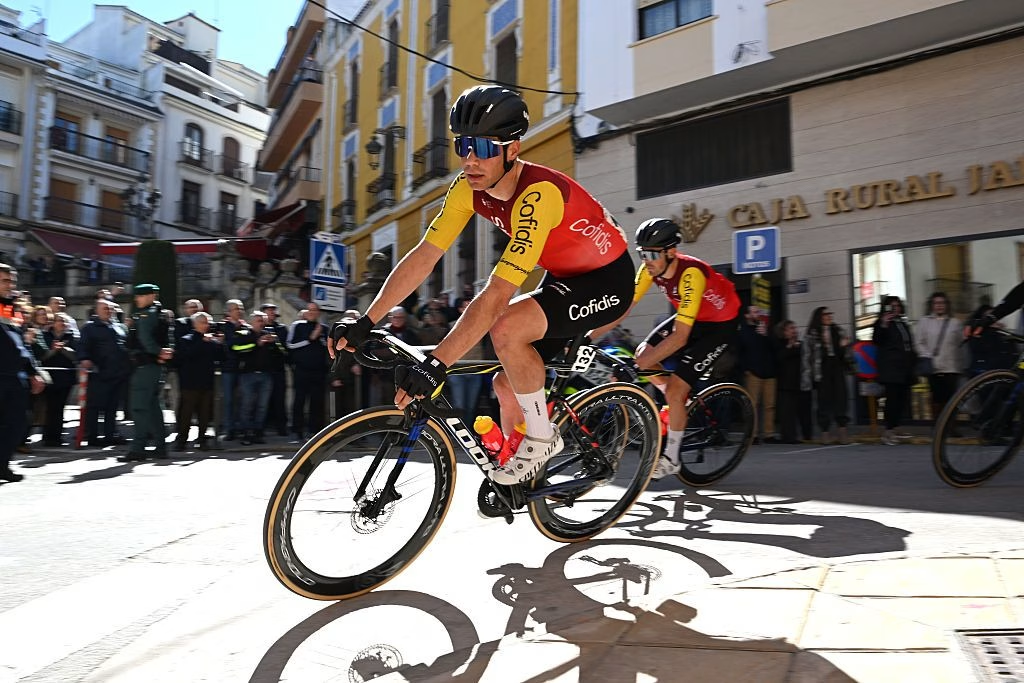
Cofidis bring Milan Fretin, who has the speed and momentum to be a serious outside contender. He is backed by a useful team including Piet Allegaert, Stanisław Aniołkowski, Jenthe Biermans, Alex Kirsch, Jan Maas and Camille Charret.
Fretin is the natural focal point. On a route like this, he should be protected deep into the final hour, especially because his sprint can be dangerous if he starts from a good position. Aniołkowski and Biermans provide additional fast-finish depth, while Kirsch gives the team experience and strength in the approach.
Cofidis may not have the most powerful lead-out in the race, but they have enough to make Fretin competitive. A top 10 should be well within reach. A podium would require excellent positioning and a little disorder among the bigger favourites.
Pinarello-Q36.5 Pro Cycling Team
Pinarello-Q36.5 Pro Cycling Team bring Sam Bennett, Matteo Moschetti and Nicolò Parisini, which gives them a clear sprint identity. Bennett is the headline name and remains one of the most experienced sprinters in the field.
The support includes Frederik Frison, David González, Emīls Liepiņš and Kamil Małecki. Liepiņš is especially useful in a fast finish, while Frison can help with positioning before the final circuit. Moschetti gives the team another sprint card if Bennett is not in position or if the race becomes more chaotic.
Bennett’s biggest task is matching the acceleration of the current top sprint names. He has the experience to find space and time his effort, but he needs a clean final kilometre. This is a strong opportunity for a high finish if the team can place him properly.
 Photo Credit: Getty
Tudor Pro Cycling Team
Tudor Pro Cycling Team bring Arvid de Kleijn and Luca Mozzato, giving them two credible routes into the finale. De Kleijn is the quicker pure sprinter, while Mozzato can be dangerous if the race becomes more physical or slightly reduced.
Fabian Lienhard, Maikel Zijlaard, Aivaras Mikutis, Robin Froidevaux and Sebastian Kolze Changizi give Tudor a balanced support group. Zijlaard is useful in a sprint train, while Lienhard brings experience and strength for the run-in.
This is a team that can realistically target a strong result without needing to control the race. De Kleijn can sprint with many of the best if delivered well, but Tudor will need to win the positioning battle against bigger squads. Mozzato also gives them a strong alternative if the finale becomes less straightforward.
Team Polti VisitMalta
Team Polti VisitMalta have Giovanni Lonardi as their main fast finisher, supported by a group that looks more suited to opportunism than controlling a WorldTour sprint. Mirco Maestri, Davide Bais, Mattia Bais, Dario Belletta, Gabriele Bessega and Tommaso Bessega complete the squad.
Lonardi has enough speed to be relevant if he finds the right wheels, but Polti are unlikely to dominate the final kilometres. That means their race may depend on positioning, patience and using other lead-outs rather than building their own full train.
Maestri and the Bais brothers also give the team breakaway possibilities. If the sprint teams hesitate early, Polti could try to get someone into the move and avoid depending entirely on a crowded final sprint.
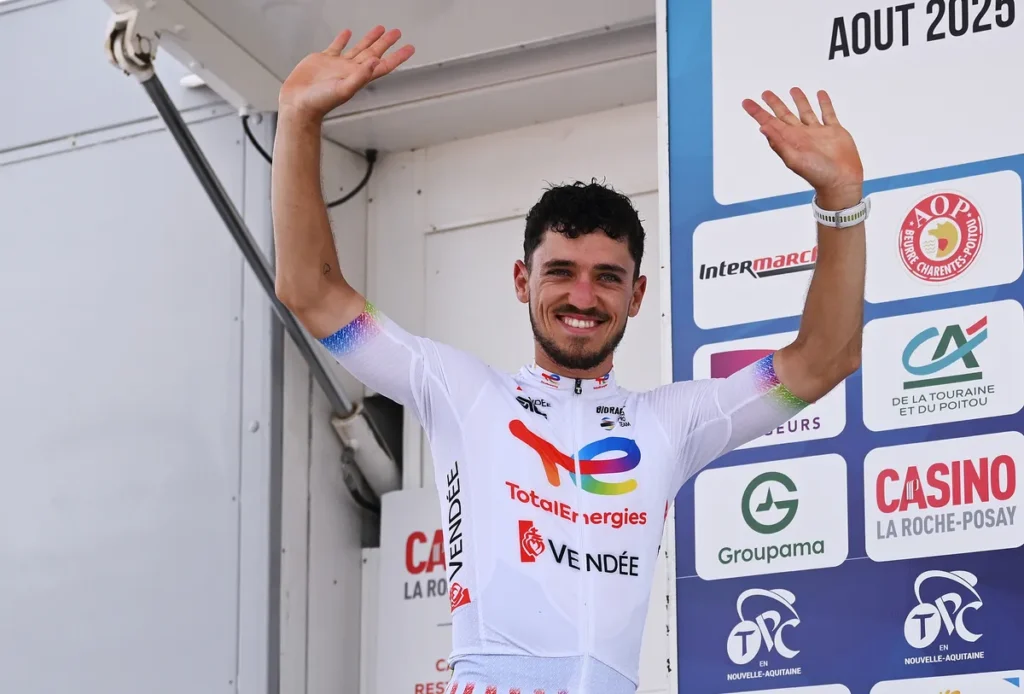 Photo Credit: Getty
Team TotalEnergies
Team TotalEnergies have Émilien Jeannière, who finished third in the 2025 edition and should take confidence from returning to a race that clearly suits him. That previous result makes him more than an outsider, even in a stronger sprint field.
Jason Tesson and Lorrenzo Manzin add further sprint options, while Anthony Turgis gives the team experience and a possible attacking card if the race becomes less controlled. Fabien Doubey, Théo Lévêque and Rayan Boulahoite complete a team with more depth than it may first appear.
Jeannière is the obvious leader because he has already proved he can handle the Copenhagen finale. The challenge is that he will be less of a surprise this time. Team TotalEnergies need to keep him hidden for as long as possible, then place him into the right sprint train late.
Unibet Rose Rockets
Unibet Rose Rockets bring Dylan Groenewegen, one of the most decorated pure sprinters in the race. If Copenhagen Sprint comes down to a straightforward bunch sprint, he has the top-end speed to win.
Elmar Reinders is an important support rider, while Rory Townsend, Abram Stockman, Karsten Feldmann, Niklas Larsen and Tobias Müller give the team enough strength to protect Groenewegen before the final circuit. Larsen also brings Danish relevance and track-honed speed, which could be useful in a high-pressure finale.
The key question is whether Groenewegen gets the same lead-out quality as some of his biggest rivals. If he has to start from too far back, the technical city circuit may make it hard to recover. If he is delivered into position, he remains one of the most dangerous sprinters in the race.
Denmark
The Danish national team gives the race an extra home-road layer. Alexander Salby is the most obvious fast finisher, while Sebastian Nielsen, Mads Andersen, Tobias Aagaard Hansen, Conrad Haugsted, Frederik Rodenberg and Rasmus Bøgh Wallin give the team a motivated local squad.
This group is unlikely to control the race against WorldTour lead-out trains, but it can still influence the day. Getting into the early break would make sense, especially on home roads and in front of Danish crowds. Salby may also be a useful option if the race becomes fractured and a reduced group reaches Copenhagen.
The national team’s presence adds atmosphere as much as tactics. Copenhagen Sprint is built around Danish cycling culture, and a visible home-team ride would help animate the race before the sprinters take over.
-
 Photo Credit: A.S.O./Billy Ceusters
Which teams look strongest?
On paper, Lidl-Trek, Alpecin-Premier Tech, Soudal Quick-Step and Red Bull-BORA-hansgrohe look like the strongest pure sprint teams. Milan, Philipsen, Merlier and Meeus all have the speed to win, and each has enough support to be positioned properly.
Lotto-Intermarché, Unibet Rose Rockets, Team Picnic PostNL, UAE Team Emirates-XRG, Team Jayco-AlUla and Pinarello-Q36.5 Pro Cycling Team also have serious sprint options through De Lie, Groenewegen, Jakobsen or Bittner, Molano, Ackermann and Bennett. Any of them could win if the top trains misfire.
The teams most likely to disrupt the race are EF Education-EasyPost, Netcompany INEOS, Uno-X Mobility, Movistar Team and possibly TotalEnergies. They have riders who can either attack, survive a harder race or take advantage if the wind and final circuit make the race less controlled.
Copenhagen Sprint 2026 team-by-team prediction
The race still points towards a sprint. The start list is packed with fast finishers, and too many teams have a strong reason to chase for the breakaway to be given easy freedom. Danish roads and the final circuit can complicate things, but the most likely winner still comes from one of the major sprint blocks.
Lidl-Trek look especially well built around Jonathan Milan, with Consonni, Walscheid, Theuns, Norsgaard and Kragh Andersen giving the team the power to control the final kilometres. Alpecin-Premier Tech have Jasper Philipsen and a proven sprint structure, while Soudal Quick-Step have Tim Merlier and the experience to execute under pressure. Red Bull-BORA-hansgrohe also deserve serious respect with defending winner Jordi Meeus and Danny van Poppel guiding the finale.
Prediction: Jonathan Milan to win Copenhagen Sprint 2026 from a high-speed bunch sprint, with Philipsen, Merlier, Meeus, De Lie and Groenewegen among the biggest threats if their teams deliver them cleanly into the final 300 metres.

