
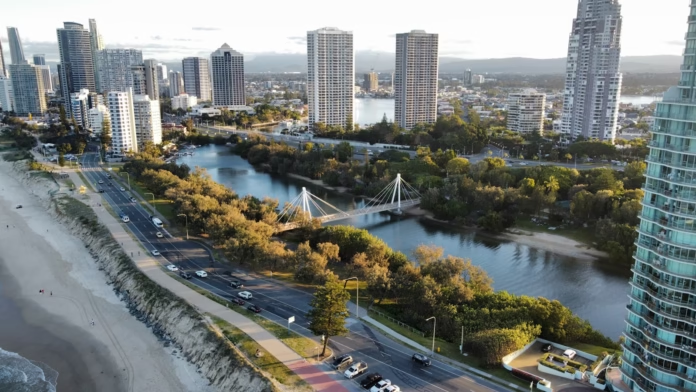
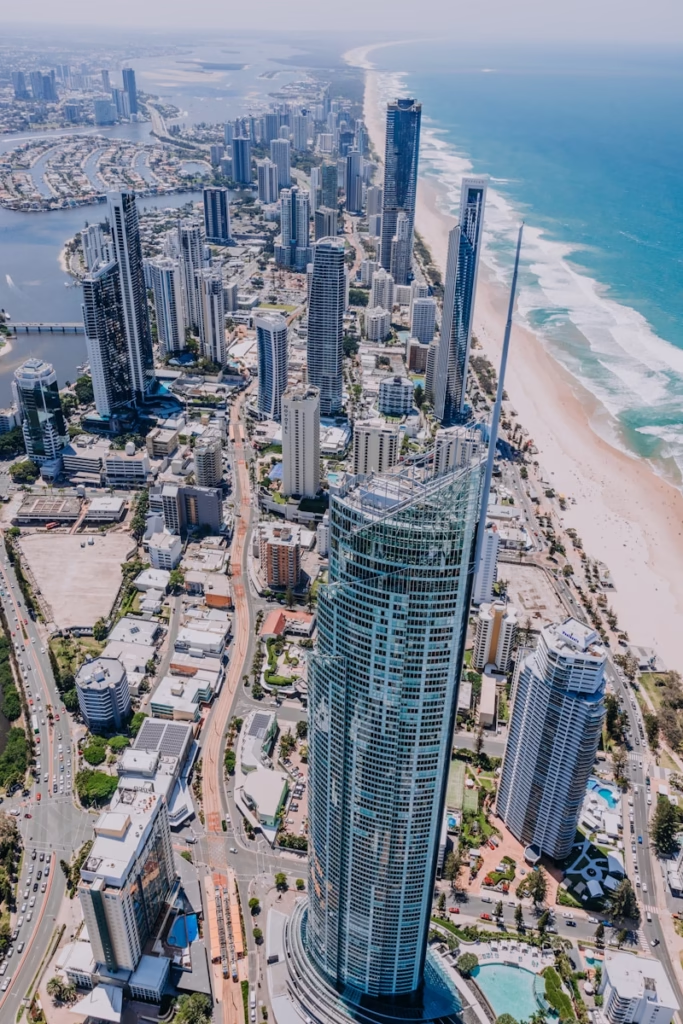
The first thing that surprises you about riding on the Gold Coast is how quickly the city disappears. One moment there is salt in the air, the flat glare of the Pacific beside you, morning runners on the esplanade and the glassy lift of Surfers Paradise catching the early sun. Then, barely half an hour later, the road has turned inland, the traffic has thinned, the air has cooled, and the hinterland begins to rise in green folds ahead.
That contrast is what makes the Gold Coast such a compelling cycling destination. It is not only a beach city with bike paths, although the coast gives you plenty of that. It is also a place where road riding can move from flat, fast, sea-level spinning to rainforest climbing, valley roads, reservoir views and quiet country lanes in a single ride. The hinterland is close enough to feel accessible, but different enough to feel like an escape.
For a rider coming from the UK, especially one used to stitching together decent climbs out of short lanes, the scale feels refreshing. The roads are longer, the light is sharper, and the green is deeper. The climbs are not Alpine in altitude, but they are serious enough to make you respect them, especially when humidity sits heavy in the valleys and the sun begins to press down through the trees.
This is why the Gold Coast and its hinterland deserve a place on your riding list. It gives you the easy pleasure of coastal riding, the reward of proper climbing, and the rare feeling that a ride can begin with the ocean and finish in ancient rainforest.
For more cycling travel inspiration, see our travel section and cycling travel guides, including routes through places such as Andermatt and the central Swiss passes, Briançon and Serre Chevalier and Aosta Valley.
The ride from coast to hinterland
The Gold Coast can look flat at first glance. That is the trick. Stand by the beach at dawn and it feels like a rider’s recovery day made physical: wide sky, long foreshore, warm air, the occasional whirr of freehubs rolling past cafés before breakfast. There are bikeways and coastal paths for easier spinning, and the city’s official walking and cycling maps make it possible to ride without immediately fighting your way through heavy traffic.
But the real appeal lies west of the beach.
Head inland from the coast and the landscape begins to rearrange itself. The suburbs soften into larger blocks, the roads begin to tilt, and the line of the hinterland grows darker ahead. You pass through places like Nerang, Mudgeeraba, Currumbin Valley or Tallebudgera Valley, each acting as a kind of threshold. After that, the riding changes. The route becomes quieter. The verges thicken. The sound of surf is replaced by insects, birds and the rustle of leaves.
It is this quick transition that gives the Gold Coast its cycling character. You do not need to choose between a beach trip and a climbing trip. The two are bound together. A morning ride can begin near the ocean, climb into rainforest, drop past open pasture, and return for coffee with salt still drying on your arms.
The region’s official tourism site frames the Gold Coast hinterland as a mix of national parks, rainforest, villages, wineries and outdoor routes, and that blend is exactly what makes it so useful for cyclists.
Why the hinterland feels different
The Gold Coast hinterland is not just the land behind the city. It is a different world.
Springbrook, Lamington, Binna Burra, O’Reilly’s, Tamborine Mountain, Beechmont, Canungra and Numinbah Valley all carry their own atmosphere. Some roads climb through rainforest, the canopy closing above you until the sunlight arrives in broken pieces across the tarmac. Others run through open country, with fences, paddocks, horses, cattle and distant ridgelines. Some are damp and cool even in warm weather, while others feel exposed enough to make you reach for the final sip in your bottle.
There is a particular smell to the hinterland after rain: wet bark, leaf litter, soil, eucalyptus and that almost sweet scent of rainforest breathing in the heat. On the bike, it reaches you in layers. First the damp road. Then the green of the gullies. Then, as you climb higher, the cleaner air of the ridgeline.
The roads can be demanding without feeling hostile. The gradients vary, and the climbs are often long enough to settle into a rhythm rather than just punch over. You are rarely dealing with a single famous ascent and nothing else. Instead, the hinterland works by accumulation: a valley road, a steady climb, a false flat, a descent, another ramp, a village, a lookout, a shaded bend where the temperature suddenly drops.
That is good cycling country.
It is also part of a broader protected landscape. Springbrook National Park and Lamington National Park are both part of the Gondwana Rainforests of Australia World Heritage Area, which gives the hinterland a depth that goes far beyond its cycling appeal.
Beechmont and the riding west of Nerang
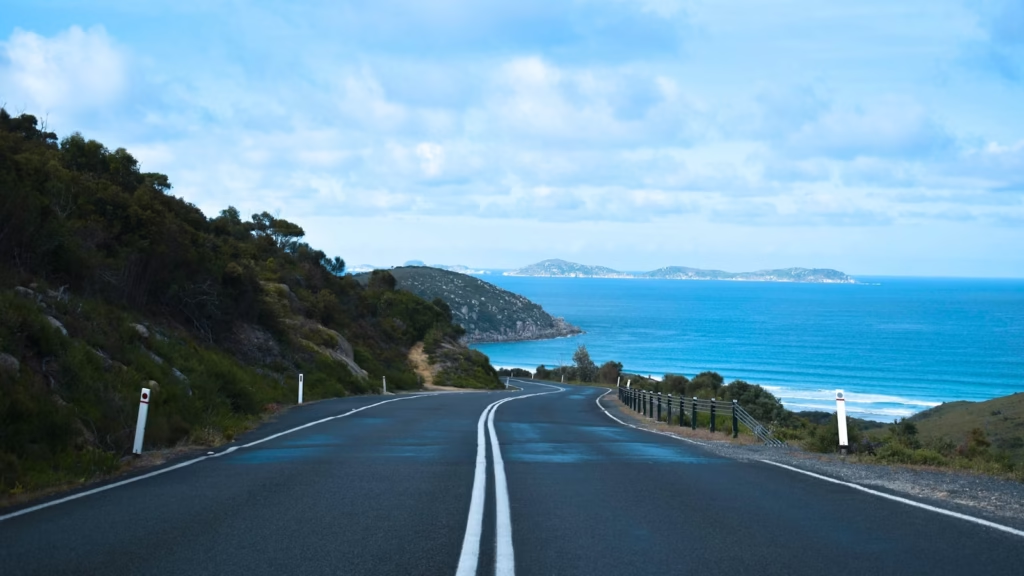
Beechmont is one of the names that comes up quickly when riders talk about the Gold Coast hinterland. It sits west of Nerang and gives you the sort of climbing that feels satisfying without needing to be dramatic. The road rises into a plateau landscape, with views back towards the coast on clear days and enough gradient to make the effort honest.
From Nerang, the route towards Lower Beechmont gives the ride a natural progression. The early kilometres allow the legs to warm, then the road begins to lift. The climb is not just about numbers. It is about the way the landscape changes as you rise. Houses thin out. Trees crowd the roadside. The air shifts. Behind you, the Gold Coast starts to flatten into a distant strip of towers, water and sand.
Beechmont also works well because it can be fitted into different ride lengths. You can make it a focused climbing ride, loop towards Canungra, or connect it with broader hinterland roads depending on fitness, weather and time. It suits visiting cyclists because it gives a clear taste of the hinterland without forcing you into a huge day.
For riders who like climbs that feel usable rather than showpiece, Beechmont is one of the best introductions to the area. It has also long been part of the local road-riding vocabulary, with Australian cycling media covering the Beechmont and hinterland roads in pieces such as Ride On’s Golden Peaks feature.
Springbrook and the rainforest climb
Springbrook is the ride that gives the hinterland its sense of age.
The road towards Springbrook National Park has a different feel from the open valley routes. It is greener, cooler and more enclosed. The climb carries you towards a landscape of waterfalls, ancient trees and rainforest that forms part of the Gondwana Rainforests of Australia World Heritage Area. That matters on the bike because you feel the environment changing around you. This is not just a climb with trees. It is a climb into a protected, prehistoric atmosphere.
The effort can feel strangely quiet. There are sections where the road seems to fold into the forest, where every breath feels damp and mineral, and where the sound of tyres against the road becomes the main rhythm. In places, the views open and remind you how close the coast still is. Then the canopy pulls you back in.
Springbrook is not a road to rush blindly. Weather can change. Rainforest shade can keep surfaces damp. Tourist traffic can appear suddenly near lookouts and waterfalls. The Queensland Parks page for Springbrook is useful for checking the wider park context before travelling, even if your plan is to ride rather than walk.
Ridden with respect, Springbrook is one of the area’s most memorable climbs. It is the sort of place where the physical effort becomes part of the experience rather than separate from it. You climb because the road asks you to, but also because you want to know what the forest feels like at the top.
Tamborine Mountain and the northern hinterland
Tamborine Mountain gives the Gold Coast hinterland a village feel. It is still climbing country, but the mood is different from Springbrook or Beechmont. There are cafés, galleries, viewpoints, rainforest walks, wineries and weekend visitors. It can feel busier, but it also gives a ride a clear destination.
The climb to Tamborine can be approached from different sides, and each has its own rhythm. Some routes feel more gradual, others more direct, but all of them remind you that this is not simply a scenic drive translated onto a bike. You earn the top. The reward is a cooler mountain atmosphere, the smell of coffee and food drifting from village streets, and views that stretch back across the coastal plain.
Tamborine suits a rider who wants the ride to have a social or café-stop element. It is less remote in feeling than Springbrook, but that can be part of the appeal. A good day here is not just about the climb. It is about sitting down at the top, shoes clicking on timber floors, jersey damp with sweat, hands wrapped around a coffee while the legs quietly hum under the table.
For visitors with non-riding partners or family, Tamborine also works well because it is a destination in itself. The official Queensland tourism guide to the Gold Coast hinterland is useful for adding non-cycling options around rides, especially if the trip needs to work for more than one type of traveller.
Tallebudgera, Currumbin and the southern valleys
The southern valleys are where the Gold Coast becomes softer and more intimate. Tallebudgera Valley and Currumbin Valley give you roads that feel less like a mission and more like an invitation. They are not always easy, but they have a gentler rhythm than the bigger hinterland climbs.
These roads suit the days when you want beauty without total commitment. The valleys are green, warm and full of small details: creek crossings, birdsong, houses set back from the road, banana plants, flashes of water, damp gullies, dogs barking from shaded verandas. The riding can be rolling, occasionally sharp, but it rarely loses its sense of pleasure.
For a visiting cyclist, these valleys are useful because they can be ridden when the bigger climbs feel too much. They offer moderate distance, enough elevation to feel rewarding, and easy access back towards the coast. They also make excellent early-morning routes, when the heat has not yet settled and the valley light is still soft.
There is something particularly satisfying about finishing one of these rides near Burleigh or Currumbin, moving from rainforest edge to ocean again, and feeling the whole shape of the Gold Coast in your legs.
If you want to keep the ride more urban or coastal, the City of Gold Coast’s cycling maps and guide are a useful starting point for linking easier paths and road sections.
Numinbah Valley and the road towards Canungra
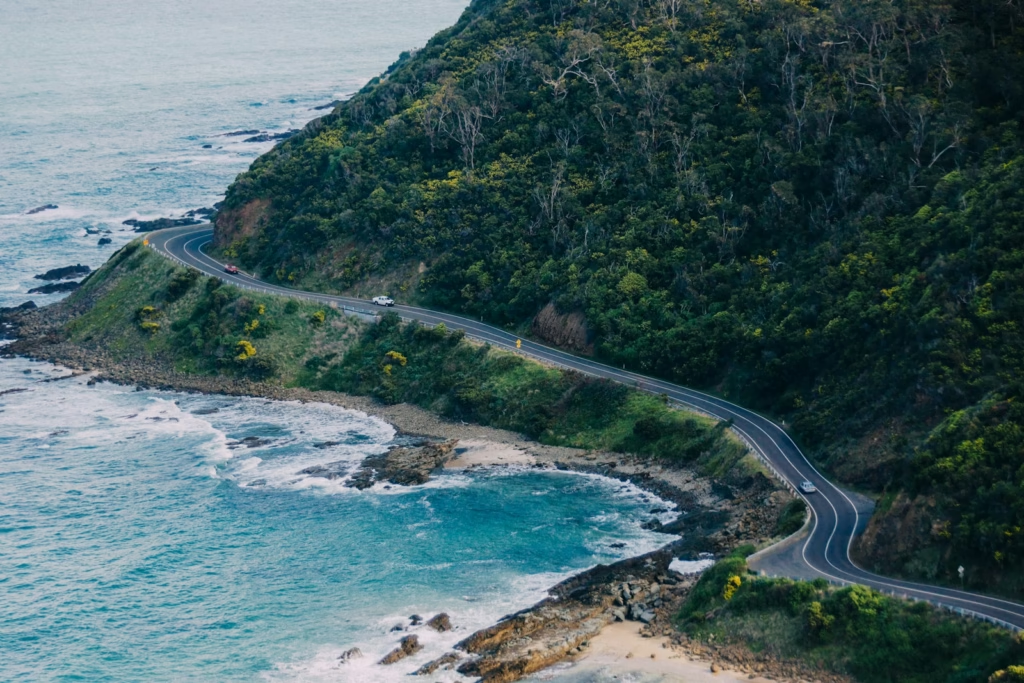
Numinbah Valley is one of the most atmospheric riding corridors in the region. It feels more rural, more enclosed, and more removed from the city than the short distance from the coast suggests. The road follows the valley through a landscape of forested slopes, pasture and deep green shade, often with the sense that the mountains are holding the road in place.
This is the type of riding that suits endurance cyclists. The climbs are part of a bigger journey rather than isolated efforts. You can link Numinbah with Springbrook, Natural Bridge, Canungra or longer loops depending on ambition. The rewards are not only in gradients and statistics, but in the feeling of moving through a landscape that keeps changing.
Canungra makes a natural refuelling point on many hinterland loops. It has that small-town ride-stop feeling, where cyclists gather outside cafés, bottles are refilled, and everyone quietly assesses whether the route home is going to be harder than expected.
The best thing about this part of the hinterland is that it encourages proper riding. Not just a climb and a descent, but a day with a beginning, middle and end. A ride where you return slightly dusty, slightly empty and fully convinced that the Gold Coast is far more than a beach destination.
Lamington, Binna Burra and O’Reilly’s
Lamington is one of the hinterland’s great names, and while not every road in the national park is a simple road-cycling target, the area matters because it gives the region much of its identity. Lamington National Park is part of the Gondwana Rainforests of Australia World Heritage Area, with lush rainforest, ancient trees, lookouts and a huge network of walking tracks.
For cyclists, Binna Burra and O’Reilly’s are often more about destination logic than pure training efficiency. These are roads and places that ask you to slow down, plan properly, and think about the ride as part of a wider day in the mountains. The climb, the forest, the weather, the views and the refuelling all become part of the appeal.
The Lamington walking tracks summary is useful if you want to combine riding with a short walk, especially around Binna Burra. O’Reilly’s Rainforest Retreat is another recognised reference point for the Lamington side of the hinterland, particularly for visitors planning a mixed riding and nature trip.
This is not the section of the Gold Coast to treat casually. Distances can feel longer than they look, weather can change, and once you are deep in the hinterland, services become more limited. But for riders who like a route to have atmosphere as well as effort, Lamington gives the area one of its strongest emotional anchors.
Why the Gold Coast works for road cyclists
The Gold Coast works because it offers variety without demanding complicated logistics.
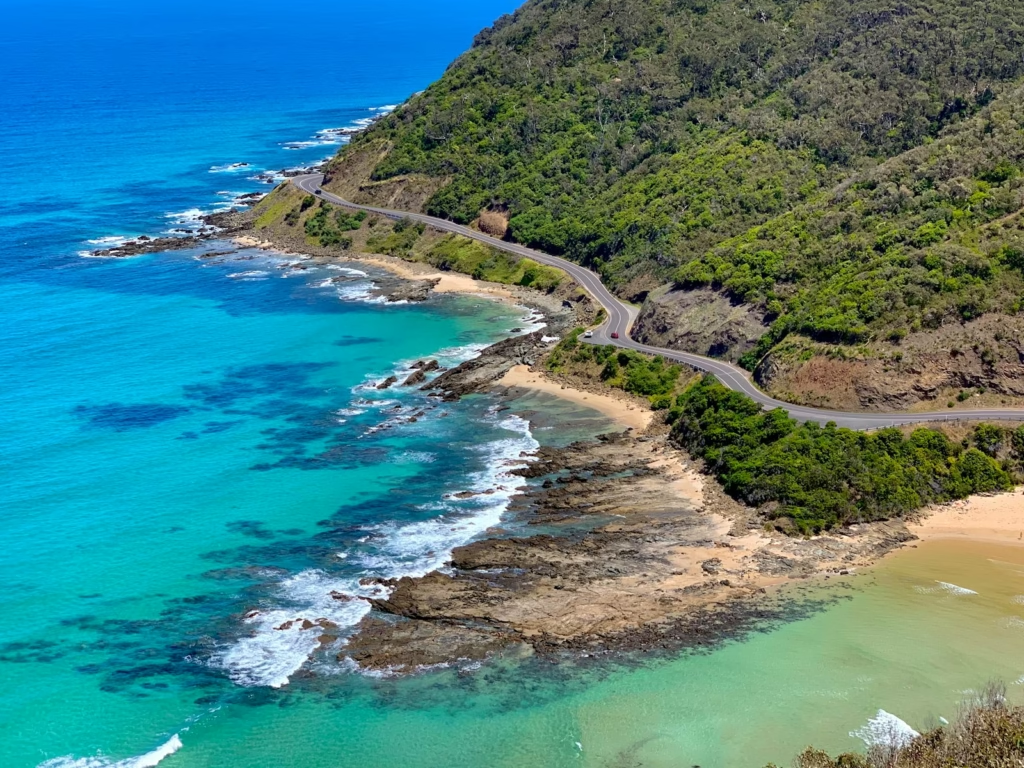
You can base yourself near the coast and still reach the climbs. You can ride flat if the legs are tired. You can ride hard if the mood takes you. You can use the urban network for easier spins, then head inland for proper elevation. You can build a week of riding that alternates between beach roads, valley loops, rainforest climbs and café days.
That is rare. Many cycling destinations make you choose. Stay in the mountains and accept that every ride is hard, or stay by the coast and accept that climbing is limited. The Gold Coast lets you have both.
It also works for mixed groups. Stronger riders can head inland for Beechmont, Springbrook or Tamborine, while others can ride the coast or valleys. Families and non-riders have beaches, walks, cafés, wildlife parks, waterfalls and hinterland villages. That makes it a practical cycling holiday rather than a pure training trip.
For UK riders travelling long-haul, that balance matters. You want the riding to justify the flight, but you also want the destination to hold together when you are off the bike. The Gold Coast does that easily.
That mix of serious riding and broader travel appeal is similar to why places such as Aosta Valley, Lake Annecy and Girona work so well for cycling trips.
Weather, light and the feel of riding in Queensland
Riding on the Gold Coast is a lesson in light.
Morning is best. The coast wakes early, and cyclists do too. Before the heat thickens, the air can feel almost perfect: warm enough for bare arms, fresh enough to breathe deeply, with the Pacific throwing silver light over the skyline. Head inland early and the valleys are still quiet, the road edges damp, the shadows long.
By midday, the ride can feel very different. Heat and humidity can build quickly, especially in summer. Climbs that felt steady in the morning can become draining in the afternoon. The rainforest offers shade, but it also holds moisture. You sweat differently here. Hydration matters more than you expect.
Winter and shoulder-season riding are often the most appealing for visitors from Britain. The temperatures are more manageable, the mornings still feel bright, and the hinterland roads can be ridden without the same sense of being slowly cooked from above.
The weather also changes the smell of the place. Dry days bring eucalyptus, dust and hot tarmac. Rainy days bring damp leaves, moss, bark and the mineral coolness of the gullies. Either way, the riding feels alive.
If you are planning routes into national park areas, check the latest Queensland Parks pages for Springbrook and Lamington before riding, as weather and access can affect the experience.
What makes it different from European cycling trips
The Gold Coast is not the Alps, the Pyrenees or the Dolomites. It should not be judged by that scale.
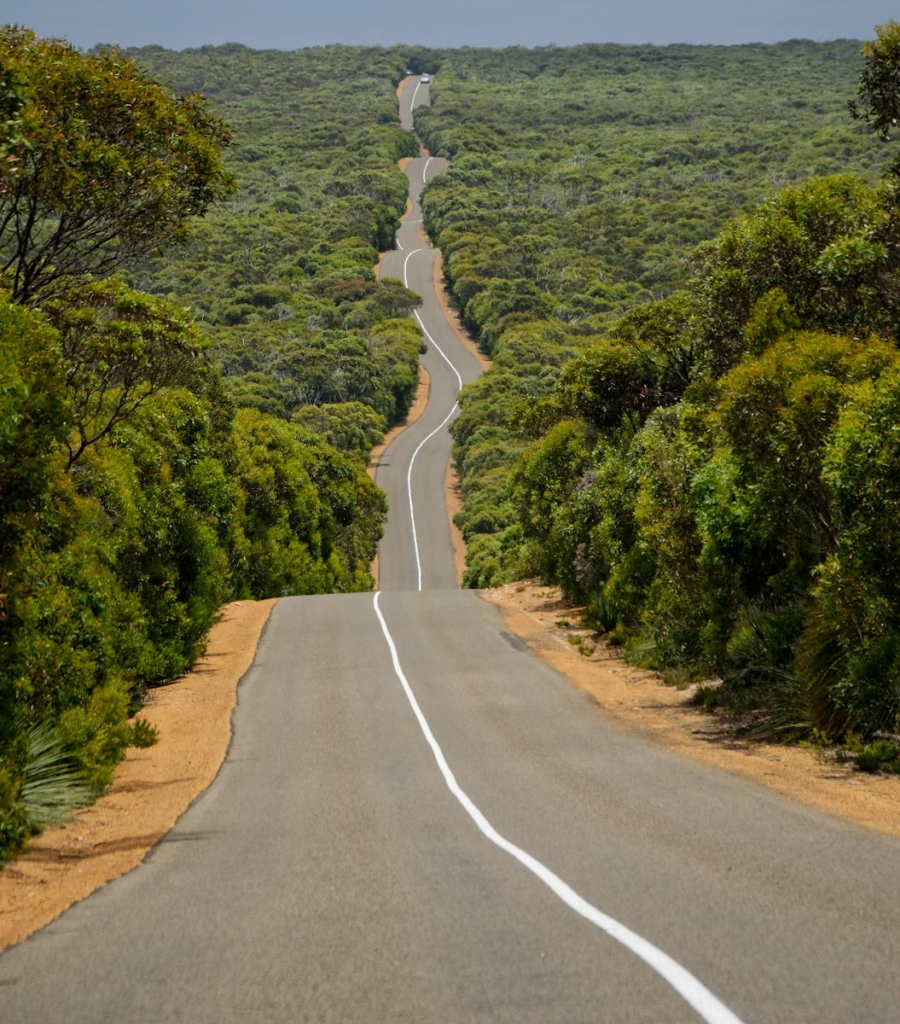
Its appeal is different. The climbs are lower. The roads are more varied. The atmosphere is subtropical rather than alpine. The wildlife, the forest, the light and the proximity of ocean to rainforest all make it feel unlike a European cycling trip.
In Europe, many famous cycling destinations are defined by history: Tour de France climbs, Giro passes, monuments, old race roads and café stops with decades of cycling mythology behind them. The Gold Coast is not like that. It feels less burdened by cycling history and more open to discovery.
That can be refreshing. You are not riding to tick off a name already known to every cyclist. You are riding because the landscape keeps inviting you onwards. A climb to Springbrook, a loop through Beechmont, a morning in Currumbin Valley, a ridge road near Tamborine, all of it builds a different kind of memory.
For riders who enjoy the sensory, exploratory side of cycling travel, that is a major part of the attraction. It has more in common with place-led cycling trips such as Queenstown and Central Otago or Asturias and Cantabria than with a simple climb-bagging holiday.
A sample riding week on the Gold Coast
A good riding week on the Gold Coast should not be built around one giant day. It is better treated as a series of contrasts.
Start with an easy coastal spin. Use it to settle into the climate, understand the city, and enjoy the simple pleasure of riding beside the Pacific. Keep it relaxed. Find a café. Let the travel leave your legs.
Then ride Beechmont or a Nerang hinterland loop. This gives you your first proper climbing day without overcommitting. You will feel the road tilt, get a view back to the coast, and understand why the hinterland matters.
Save Springbrook for a day when the weather looks stable and the legs are good. It deserves time. It is not just a climb, it is an experience. Take lights, food, enough water and respect the descent.
Use Tallebudgera or Currumbin Valley as a lighter day. These roads are ideal when you still want beauty but not a full mountain effort. They also keep you connected to the southern coast.
Finish with Tamborine Mountain or a longer Canungra and Numinbah loop if the body is ready. That gives the trip a proper final shape: coast, climbs, rainforest, village, valley and return.
By the end of the week, the Gold Coast should feel less like one destination and more like several layered on top of each other.
For more ideas on how to structure a cycling holiday, see ProCyclingUK’s travel features on Sierra Nevada and Granada, the Dolomites around Cortina d’Ampezzo and Auckland and the Hauraki Gulf.

Practical information
Location
The Gold Coast sits in south-east Queensland, south of Brisbane and north of the New South Wales border. The coastal strip includes areas such as Southport, Surfers Paradise, Broadbeach, Burleigh Heads, Currumbin and Coolangatta, while the hinterland rises inland towards Nerang, Mudgeeraba, Beechmont, Canungra, Springbrook, Tamborine Mountain and Lamington National Park.
The official Experience Gold Coast and Queensland tourism sites are useful for general trip planning, especially if the riding is part of a wider holiday.
Riding
The riding ranges from flat coastal paths and urban bikeways to serious hinterland climbs. Popular road-riding areas include Beechmont, Springbrook, Tamborine Mountain, Numinbah Valley, Tallebudgera Valley and Currumbin Valley. The city also has an extensive bikeway and pathway network, useful for easier days and linking coastal sections.
Bring low climbing gears if you plan to ride Springbrook, Beechmont or longer hinterland loops. Some roads can be narrow, shaded or damp, especially in rainforest areas, so descending carefully matters. Early starts are strongly recommended, particularly in warmer months.
The City of Gold Coast’s walking and cycling maps are the best official starting point for coastal and urban riding.
When to go
Winter and shoulder seasons are often best for visiting cyclists. Conditions are generally more manageable than peak summer, and early mornings can be ideal for longer rides. Summer can still be rideable, but heat, humidity and storms need to be taken seriously. Start early, carry more water than usual, and avoid being caught inland late in the day without supplies.
Before heading into national park areas, check current conditions through Queensland Parks for Springbrook National Park and Lamington National Park.
Accommodation
Coastal accommodation gives the best mix of riding and non-riding options. Burleigh Heads, Broadbeach, Southport and Coolangatta all work well depending on whether you want city access, beach atmosphere or easier southern valley riding. For a quieter stay, hinterland accommodation around Tamborine Mountain, Canungra or Springbrook gives a more immersive feel, but you will be climbing from the door more often.
For rainforest-based stays or mixed riding and walking trips, O’Reilly’s Rainforest Retreat and Binna Burra Lodge are useful reference points in and around Lamington National Park.
Food and coffee
The Gold Coast has a strong café culture, especially along the coast. Burleigh, Currumbin, Broadbeach and Southport are easy places to finish a ride with coffee or breakfast. In the hinterland, Canungra and Tamborine Mountain are natural refuelling points. Always plan food and water before longer rides into the valleys, as services can be more spaced out than they look on a map.
Bike hire and logistics
Road bike hire is available on the Gold Coast, but it is worth booking ahead if you need a specific size or a performance road bike. If bringing your own bike, check airline requirements carefully and allow time to rebuild before your first proper ride. A GPS route is strongly recommended for hinterland loops, especially if linking quieter roads.
For general visitor planning, Experience Gold Coast and Queensland’s official tourism site are useful starting points, while the Gold Coast cycling maps help with local riding links.
Why the Gold Coast deserves a place on your riding list
The Gold Coast deserves a place on your riding list because it gives cycling something that many destinations struggle to combine: ease and adventure.
You can wake beside the ocean, roll out on flat roads, climb into rainforest, stop in a mountain village, descend through a valley and finish the day back near the beach. The riding is varied enough for a week, beautiful enough for memory, and practical enough for a real holiday.
It is not a place that needs to compete with Europe’s famous climbs. It offers something else. A subtropical cycling trip with beaches at one edge, World Heritage rainforest at the other, and a chain of roads between them that feel made for curious riders.
The Gold Coast is often sold as surf, sun and skyline. That is true, but it is incomplete. For cyclists, the better story begins when you turn away from the beach and ride west. The towers shrink behind you, the air turns green, the climbs begin, and the hinterland quietly proves why it belongs on the list.
For more place-led cycling travel features, see ProCyclingUK’s travel hub, including guides to Girona, Aosta Valley and Queenstown and Central Otago.

