
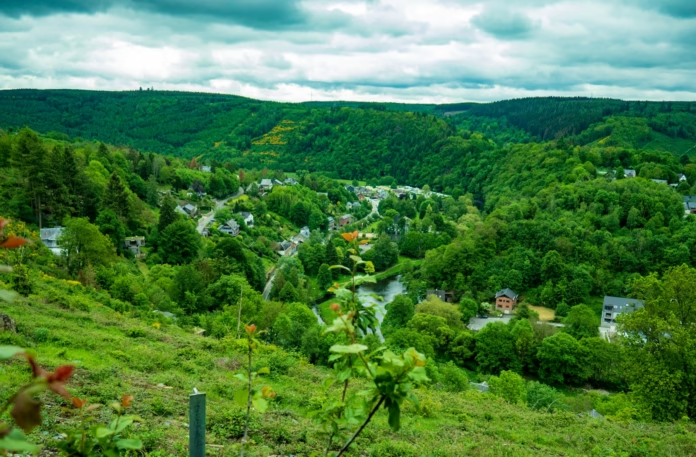
La Roche-en-Ardenne is one of the most useful road-cycling bases in southern Belgium because the climbing begins almost immediately. The town sits low in the Ourthe valley, with wooded ridges rising on every side, so even a modest loop quickly becomes a sequence of climbs, descents and short sections beside the river.
This is very different from riding the cobbled bergs of Flanders. The Ardennes around La Roche are about elevation, rhythm and accumulation. Roads can be smooth and flowing for several kilometres before suddenly pitching into double figures, and the repeated changes in gradient make 80km feel much harder than the same distance on flatter terrain.
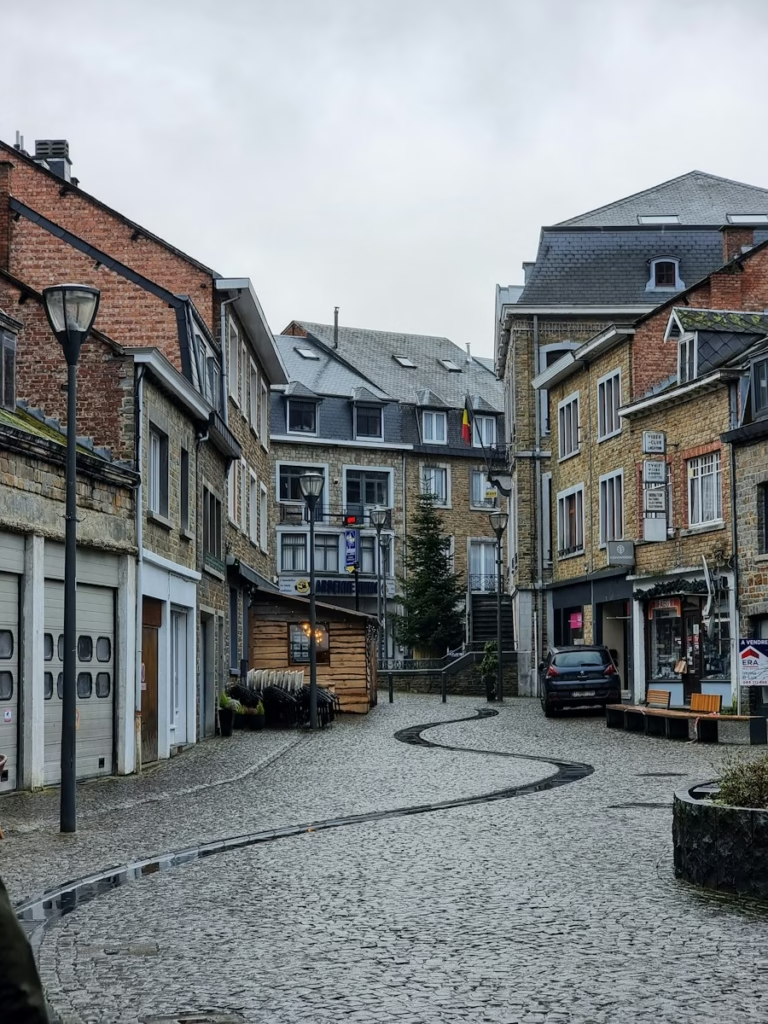
La Roche-en-Ardenne cycling at a glance
- Best base: La Roche-en-Ardenne
- Riding style: Repeated road climbs, wooded valleys and technical descents
- Bike: Road bike with low climbing gears
- Tyres: 28mm or 30mm suits the mixed Belgian road surfaces well
- Best period: May to September
- Signature climb: Col de Haussire
- Biggest planning issue: Elevation accumulates far faster than route distance suggests
- Ideal trip length: Three to five riding days
La Roche puts serious climbing directly outside the hotel
The strongest reason to stay in La Roche is efficiency. There is no long valley rollout before the meaningful terrain begins. Leave town in almost any direction and the road rises. That makes it possible to build a short recovery loop, a medium 70km day or a demanding century without spending much time on roads that feel like dead mileage.
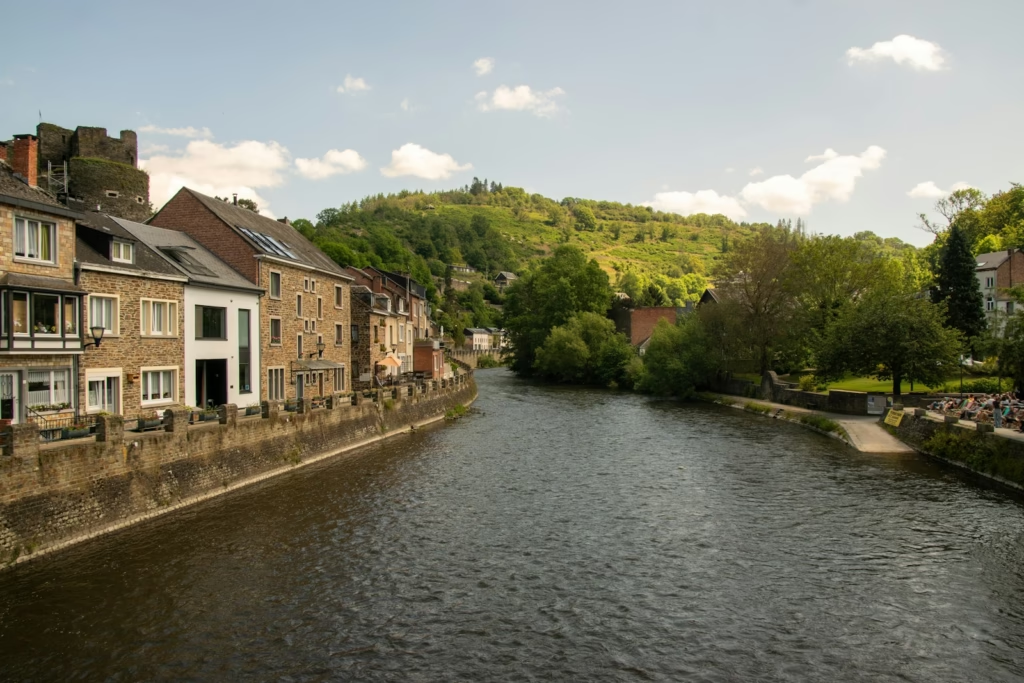
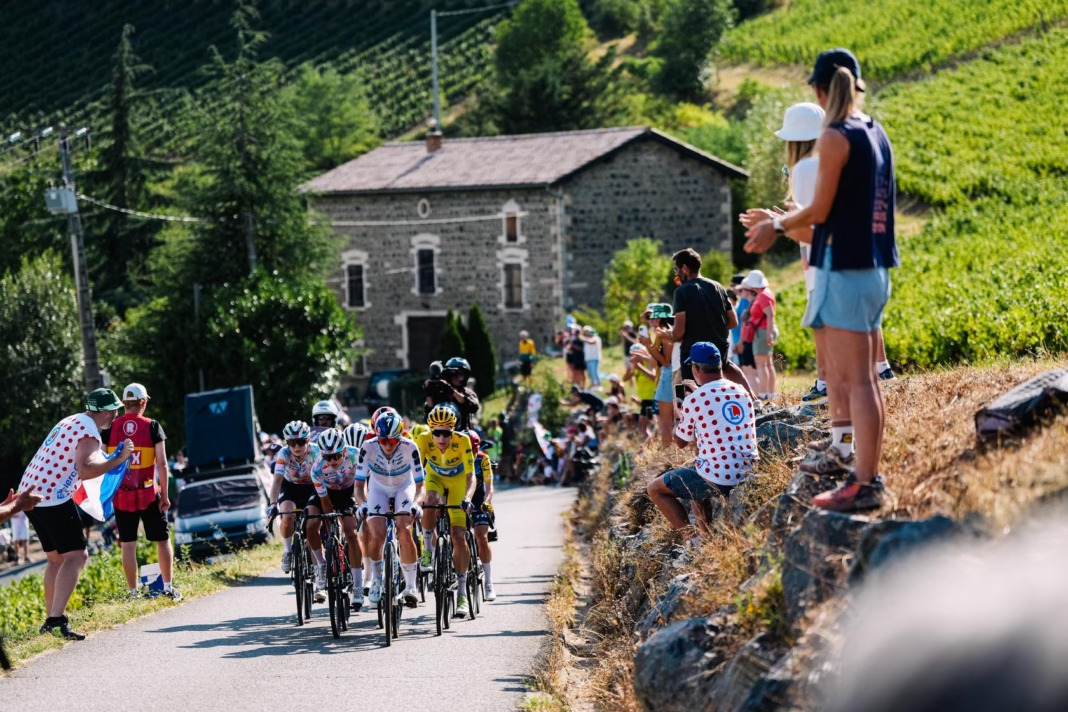
The Ourthe valley gives the area a natural route-planning spine. Following the river can provide brief relief between climbs, while roads towards Houffalize, Samrée, Dochamps and the higher plateaux repeatedly pull away from the valley floor. A loop may contain no Alpine-length ascent, but it can still collect well over 1,500 metres of climbing before reaching 100km. The important point is that the elevation rarely arrives in one obvious block. Riders descend back towards water, climb again almost immediately and repeat the process, so pacing the first hour matters far more than the raw distance suggests.
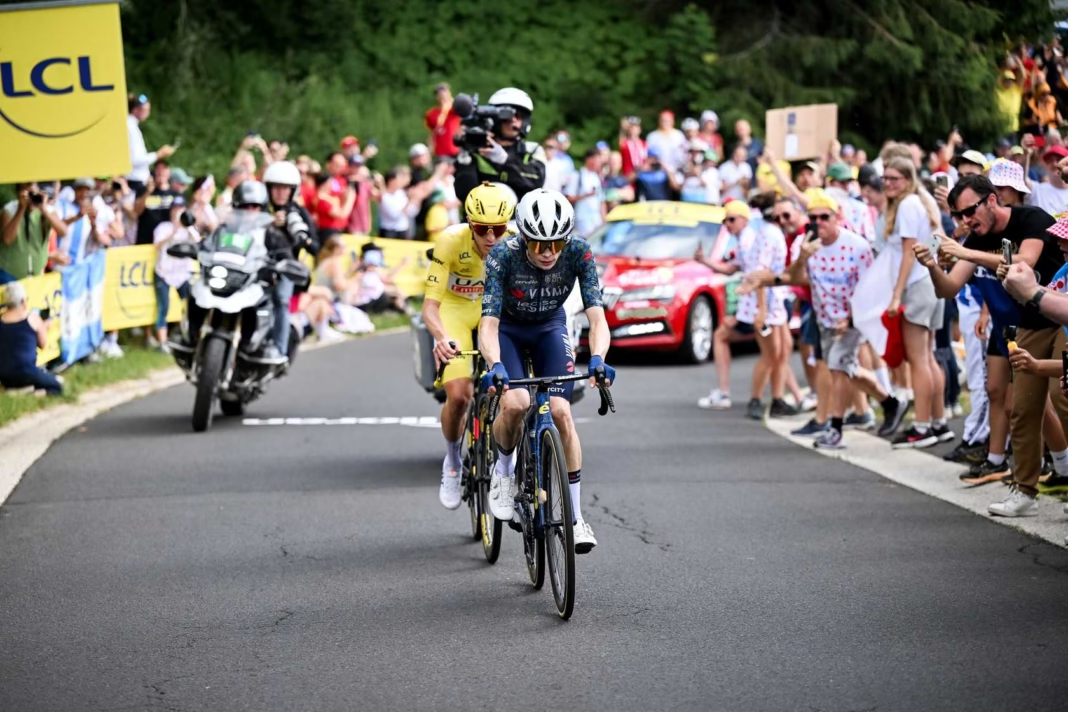
That pattern is close to the demands of the Ardennes Classics. Riders who have watched Liège-Bastogne-Liège will recognise the basic logic: climbs are short enough to attack hard, close enough together to prevent full recovery and numerous enough that strength disappears gradually across the day.
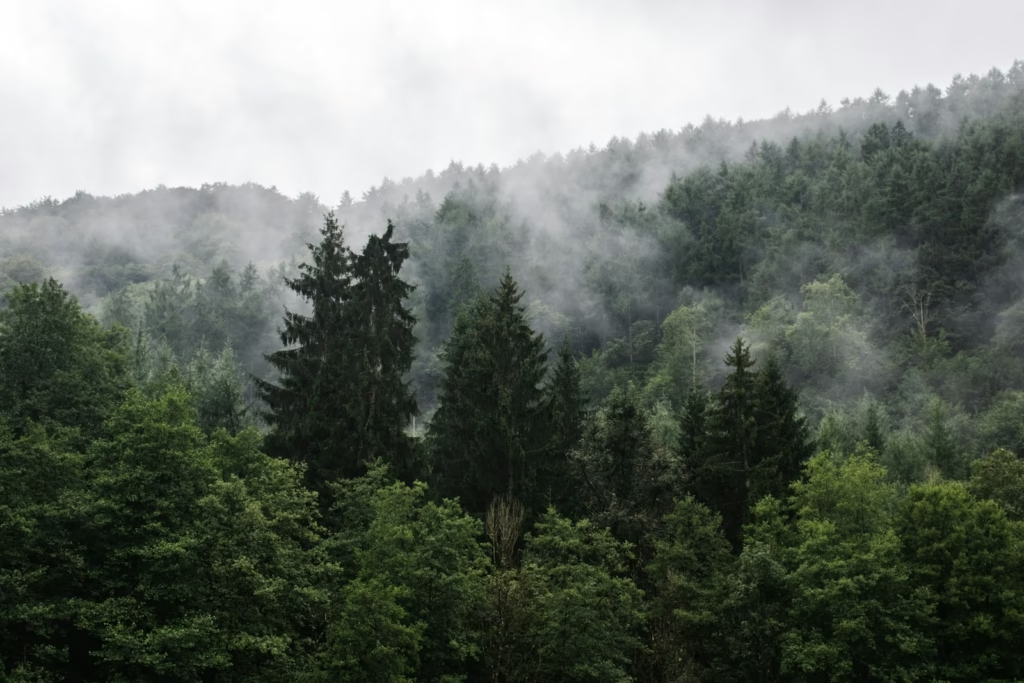
Col de Haussire is the local climb to build a ride around
The Col de Haussire is the climb most closely associated with La Roche-en-Ardenne. There are several ways up from the valley, and the most difficult approaches include sustained steep sections rather than one neat, constant gradient. It is the sort of climb that punishes riders who start too hard because the road keeps changing underneath them.
Its reputation comes less from absolute altitude than from severity. The summit is modest by mountain standards, but the climb begins close to the valley floor and gains height quickly. Steeper ramps push well into double figures, and the surrounding forest can make it difficult to judge how much climbing remains.
For a visiting rider, Haussire works best as part of a larger loop rather than a one-climb target. Continue towards Samrée or Houffalize, add secondary climbs and return along the Ourthe. That turns a famous local ascent into the centrepiece of a properly demanding Ardennes day.
Houffalize and Bastogne widen the route options
North-east of La Roche, Houffalize is a natural destination for longer rides. The roads between the two towns cross the same broken Ardennes landscape, and there are enough minor routes to avoid making every journey an out-and-back. Houffalize also has a strong cycling identity of its own, particularly through mountain biking.
Push farther south-east and Bastogne becomes possible for experienced riders prepared for a long day. The attraction is partly cultural: Bastogne sits at the heart of Liège-Bastogne-Liège history, even though the professional race does not simply follow one fixed tourist route. Linking it with La Roche creates a day where the cycling landscape and the sport’s history overlap naturally.
These longer loops should be planned conservatively. A route of 110km can become a much bigger day when nearly every valley crossing is followed by another climb. Low gearing matters, especially on day two or three of a trip when the repeated steep ramps begin to accumulate in the legs.
Road surfaces are usually good enough, but never completely predictable
Belgian Ardennes roads range from excellent resurfaced tarmac to rougher patched lanes, and winter weather can leave potholes or broken edges on quieter roads. A 28mm or 30mm tyre is a sensible default because it adds comfort and security without turning a road bike into something sluggish.
Descents deserve respect. Forest roads can stay damp long after rain has stopped, leaf litter builds in autumn and tight bends sometimes arrive immediately after faster open sections. There is little benefit in treating unfamiliar descents as a technical challenge to be won. The time lost by descending conservatively is irrelevant on a training holiday. A spare tube, pump and basic repair kit are essential.
Traffic is generally easier to manage on minor roads than around larger Belgian cities, but this is not a closed cycling playground. Tourist traffic can rise sharply at weekends, motorbikes use the same scenic roads and main connections can carry faster vehicles. A bright rear light and a route designed around secondary roads make the experience noticeably better. Food stops deserve similar planning: La Roche itself is well supplied, but longer loops can spend substantial time between reliable shops. Carrying enough food for the first half of a ride prevents a scenic detour or closed village shop from becoming a problem.
Weather can change the character of the same route
May through September gives the best chance of long road days, but the Ardennes are not reliably dry even in summer. Rain, low cloud and cooler temperatures can arrive quickly, while shaded valleys often feel several degrees colder than exposed higher ground. Carrying a light shell is sensible even when the forecast looks relatively settled.
Spring can be beautiful but changeable. Summer provides the longest daylight and warmest conditions, although busy weekends bring more tourist traffic. September is often excellent for riding, with cooler temperatures and quieter roads, but shorter days and wetter spells become more likely as autumn develops.
Winter road riding is possible during mild periods but is a poor basis for a dedicated trip. Frost, snow, road salt and persistent damp can all make the descents unpleasant. The area is at its best when the forest roads are fully open and the weather allows the climbing to be the challenge rather than simple survival. Even in summer, a cooler layer is worth carrying on longer rides because shaded descents can feel markedly colder than the exposed climbs that precede them.
-
 Photo Credit: A.S.O./Billy Ceusters

La Roche fits naturally into a wider Ardennes trip
La Roche is strong enough to support several days on its own, but it also works as one part of a Belgian climbing trip. Moving east towards Malmedy brings different terrain, higher exposed roads and the Hautes Fagnes. ProCyclingUK’s guide to cycling in Malmedy and the Hautes Fagnes covers that area in more detail.
Farther north, Liège and Spa offer closer contact with roads used by the professional Ardennes Classics. Our cycling guide to Liège and Spa is the better choice for riders who want the Côte de la Redoute, Côte de Stockeu-style race heritage and a busier urban base. La Roche is quieter and feels more like a pure riding destination.
The combination works particularly well for riders driving from the UK or northern Europe with their own bikes. Three days around La Roche followed by two or three around Malmedy or Liège gives a much broader picture of Belgian climbing than simply repeating the best-known professional race roads.
A three-day La Roche itinerary should build gradually
Use the first day to learn the valley and climb Haussire without turning the route into an endurance test. Around 60–75km is enough when nearly every turn away from the river introduces another climb. The purpose is to understand the road surfaces, gearing and how quickly elevation accumulates.
Day two can be the largest loop, heading towards Houffalize and adding the higher roads before returning to La Roche. Riders with strong endurance can extend towards Bastogne, but there is no need to chase a three-figure distance simply to make the day worthwhile. The terrain supplies difficulty without help.
Keep day three flexible. A shorter ride through the Ourthe valley works if the first two days have done enough damage, while fresh legs can take another climbing loop towards Dochamps or Samrée. That flexibility is one of La Roche’s strengths: hard riding begins so close to town that a good day does not depend on committing to a huge route. More destination guides are available through ProCyclingUK’s cycling travel hub.

