
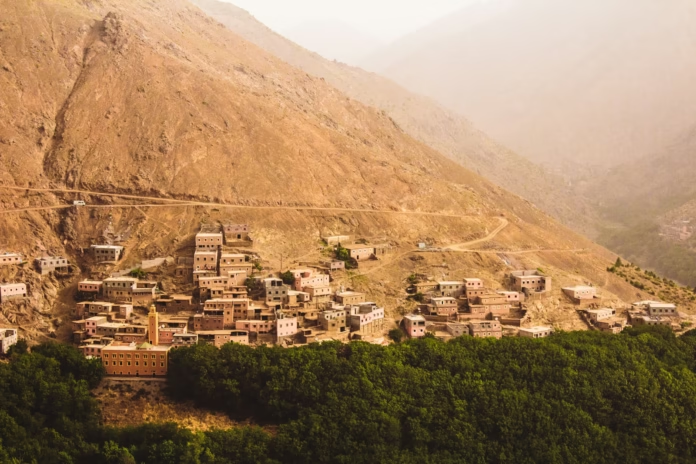
Marrakech is one of those cycling bases where the landscape changes faster than you expect.
Within an hour of leaving the city, the traffic and ochre walls give way to open foothills, increasingly empty roads and the first long gradients towards the High Atlas. Ride far enough south and the scale changes again, with deep valleys, exposed mountainsides and roads that seem to keep climbing long after they should have finished.
The appeal is not one famous ascent. It is the combination of altitude, dry mountain air, remote roads and the feeling that every ride takes you further away from the city and deeper into a completely different landscape.
For riders based in Marrakech, the High Atlas offers everything from steady foothill climbing to full mountain days that demand careful pacing, plenty of water and respect for the heat. If you like this style of riding, ProCyclingUK’s wider Travel & Riding Abroad hub is also worth bookmarking for other mountain bases and route ideas.
Why Marrakech works as a cycling base
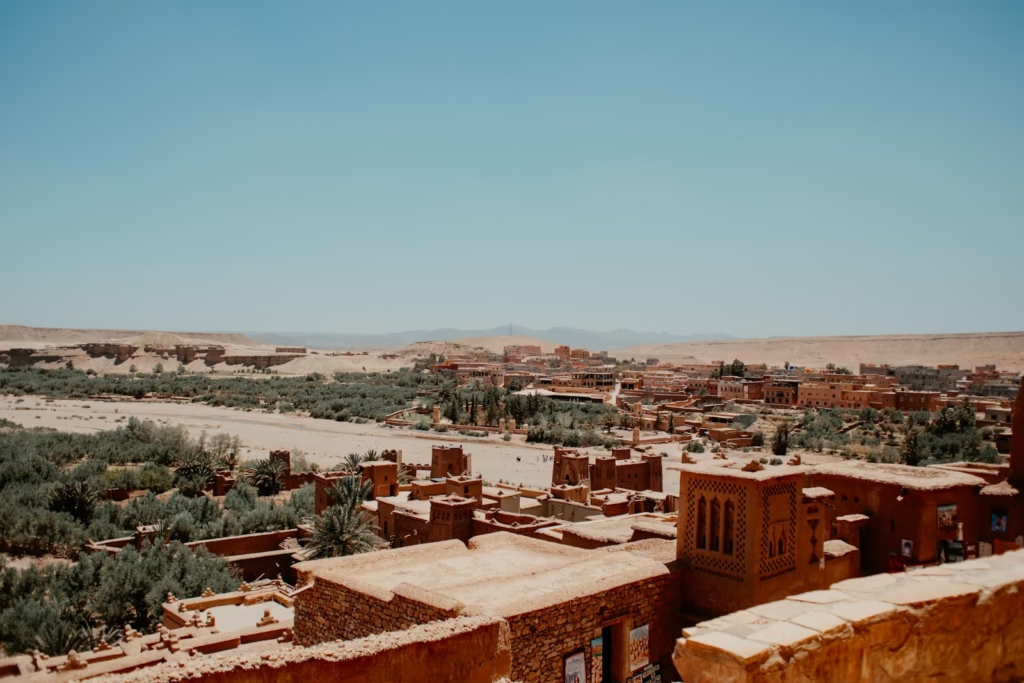
Marrakech is useful because it gives you a large city at the edge of serious mountains rather than somewhere buried inside them.
That makes logistics easier. You have hotels, restaurants, bike hire, transport options and all the usual comforts of a major tourist city, but the Atlas foothills are close enough that you do not need to relocate for every ride.
The downside is obvious. Getting out of Marrakech can be busy, particularly on the main roads south and south-east, so route choice matters far more here than in a compact Alpine town where every road immediately climbs into open countryside.
Once you are clear of the urban fringe, the riding improves rapidly. The roads open out, the horizon becomes dominated by the Atlas and the whole character of the day changes.
The climb towards Ourika Valley
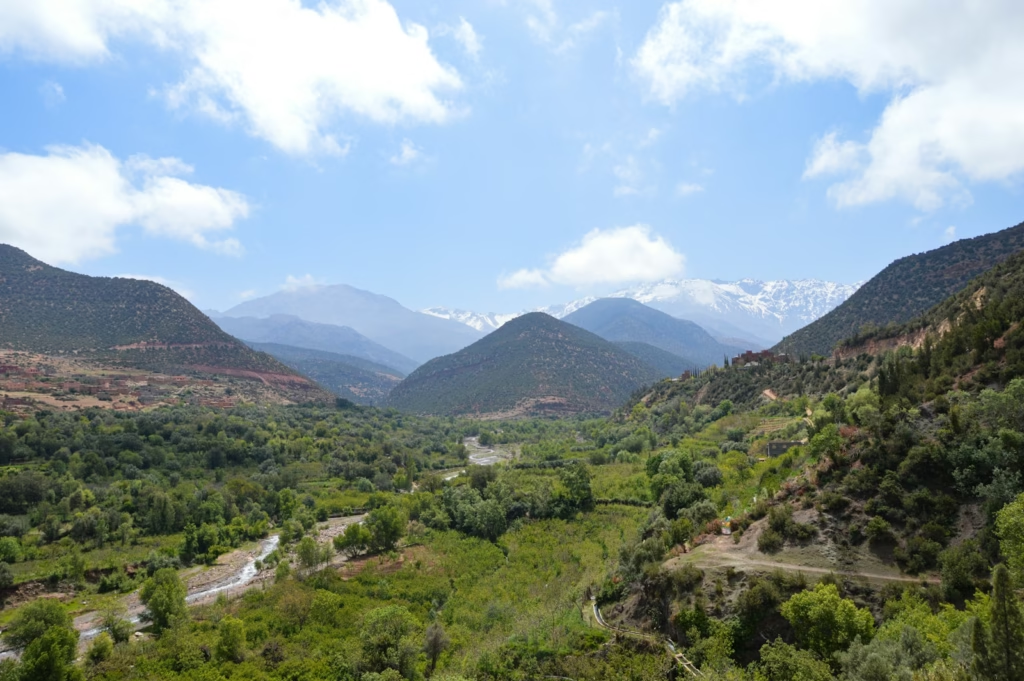
The Ourika Valley is one of the most accessible riding areas from Marrakech and one of the best introductions to the High Atlas without committing to an enormous mountain day.
The road south-east rises gradually from the plains towards the mountains rather than beginning with one obvious climb. That makes the ride deceptive, because the gradient is often gentle enough to feel almost flat while the elevation keeps accumulating.
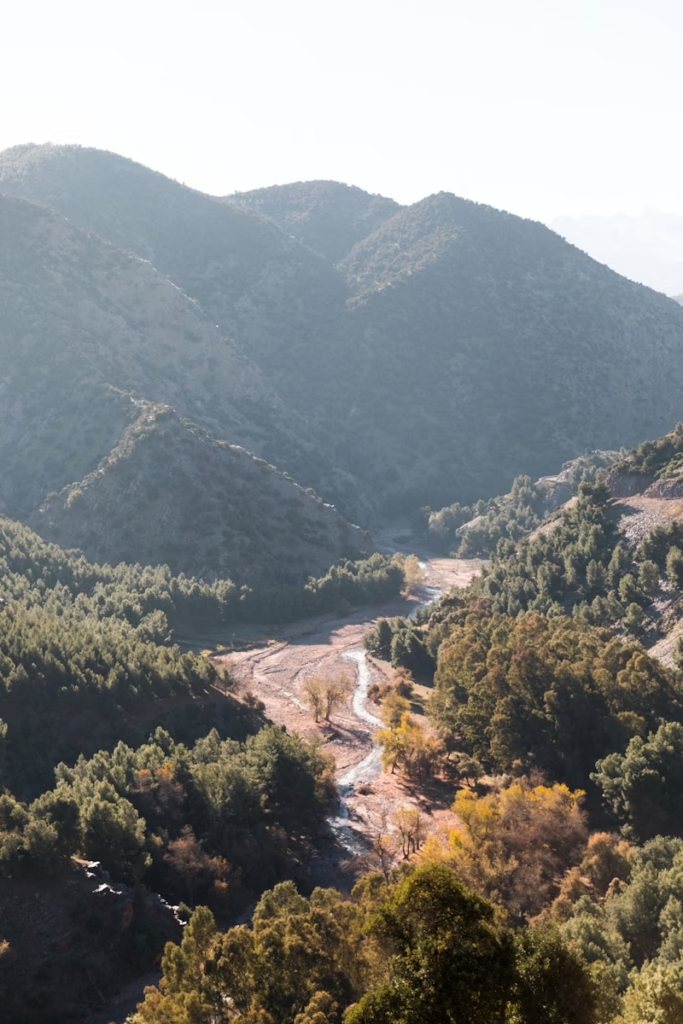
The scenery is the real attraction. Red and brown slopes rise on either side of the valley, villages sit close to the river and the higher peaks remain visible ahead for much of the ride. In spring, the contrast between greener valley vegetation and the dry surrounding mountains can be especially striking.
For a rider from the UK, it feels less like tackling one named pass and more like spending hours riding progressively deeper into a mountain system.
That is part of what makes it special.
Setti Fatma makes a natural turnaround point
Setti Fatma is the obvious destination for many riders heading up the Ourika Valley.
The road continues climbing into increasingly mountainous terrain, but the village works well as the point where a long outward ride becomes a manageable return to Marrakech.
The attraction is not simply reaching the village. The journey there provides the gradual transition from city to foothills to proper mountain scenery, and the return gives you the opposite experience with long sections of gently descending road.
It can therefore be a surprisingly quick ride back once the harder work has been completed.
Traffic can be heavier around popular tourist areas, particularly later in the day, so an early start helps. The valley is at its best before the roads fill with day trips from Marrakech.
Oukaïmeden is the serious climb
If there is one ascent near Marrakech that feels like a proper High Atlas cycling objective, it is the climb towards Oukaïmeden.
The road reaches one of Morocco’s main ski areas at well over 2,000 metres, which immediately gives the climb a different character from the lower valley roads.
This is where altitude begins to matter.
The climb is long enough that pacing becomes important from the beginning, and the higher sections become increasingly exposed. What starts as a mountain road through villages and cultivated land gradually turns into a much more barren high-altitude landscape.
The gradient is not the only difficulty. Heat lower down can be significant, while temperatures higher up can be much cooler, particularly outside midsummer. Wind can also become more noticeable as the road gains elevation and shelter disappears.
For riders used to Alpine climbing, Oukaïmeden offers a similar sense of sustained effort but in a very different environment. The colour palette is harsher, the settlements thinner and the sense of remoteness stronger.
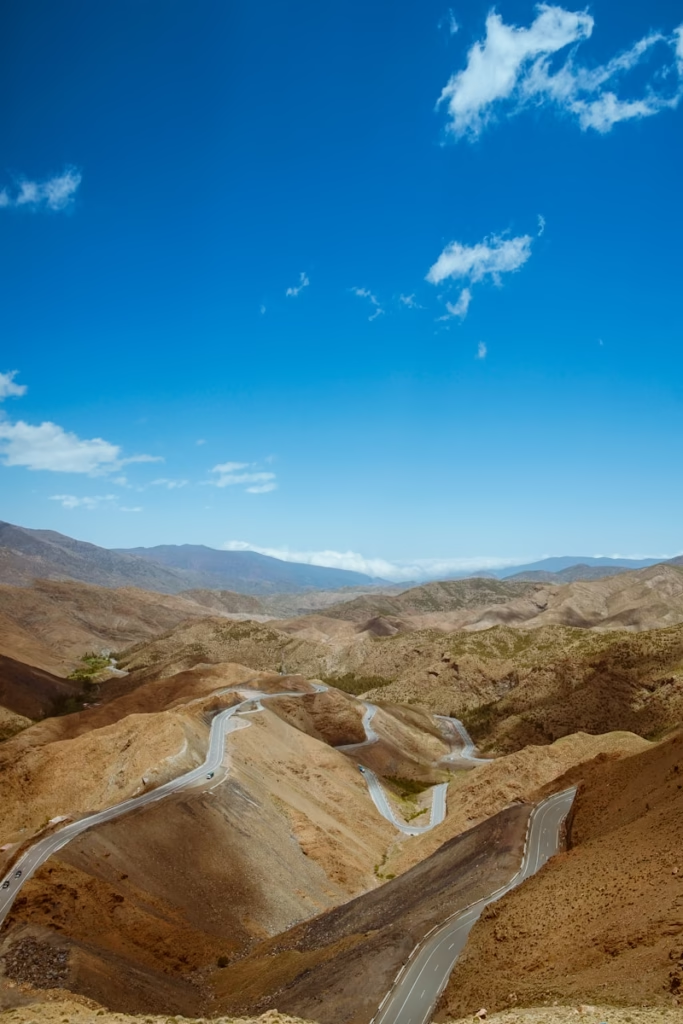
The road to Oukaïmeden rewards patience
Oukaïmeden is not a climb to attack from the bottom.
The High Atlas rewards riders who settle into a rhythm and let the road come to them. Long mountain ascents in Morocco can feel harder than the gradient suggests because the dry air, sun and altitude gradually add to the effort.
A rider who starts too hard in the lower sections can pay for it long before reaching the top.
That makes it ideal endurance climbing. You are not repeatedly sprinting out of hairpins, but riding at a sustained effort for a long time, learning to keep power under control and eating and drinking before you feel you need to.
The same principle applies in many high-mountain destinations. Our guide to cycling in Livigno explores a different kind of altitude riding, but the lesson is similar: pacing matters more than forcing the effort.
Tizi n’Test is one of Morocco’s great mountain roads
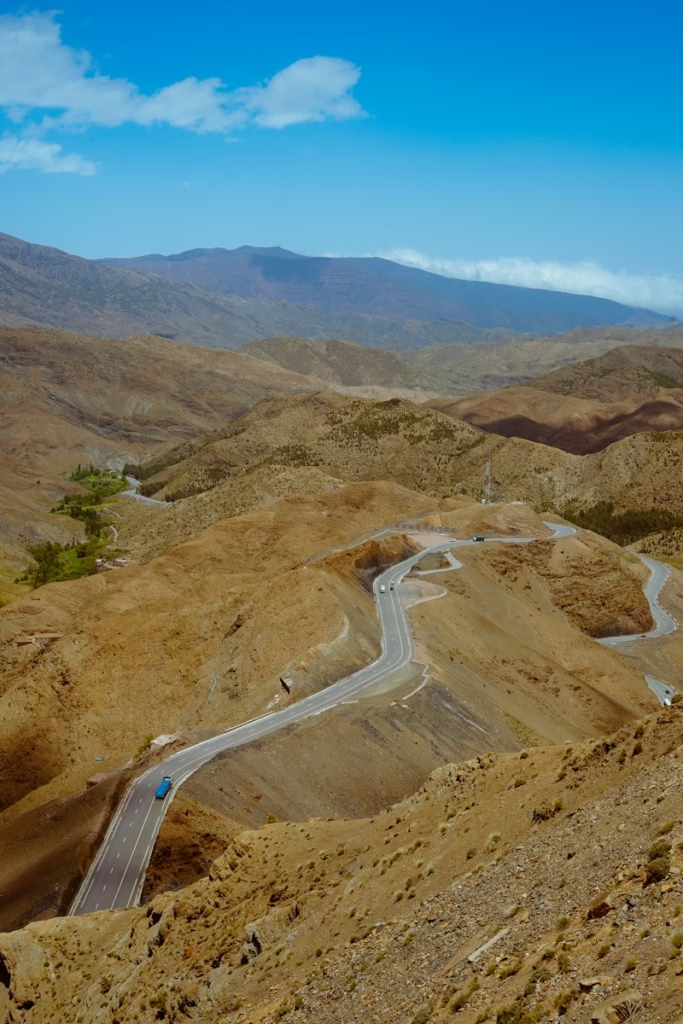
The Tizi n’Test is one of the most dramatic roads in the Atlas and one of the routes that makes cycling in Morocco feel genuinely adventurous.
The pass cuts through the mountains south-west of Marrakech and historically formed one of the major crossings towards the Souss region. The approach is long, and the upper sections have the kind of exposed mountain road that immediately demands concentration.
This is not the place to judge a ride only by elevation gain.
Road condition, traffic, heat, weather and the sheer remoteness of the route matter as much as the gradient itself.
The Tizi n’Test is best treated as a major day rather than a casual extension from Marrakech. For many riders, it makes more sense as part of a supported ride or point-to-point route rather than an out-and-back directly from the city.
But if you want the High Atlas at its most dramatic, this is the sort of road that defines it.
Tizi n’Tichka is famous but not always the best cycling choice
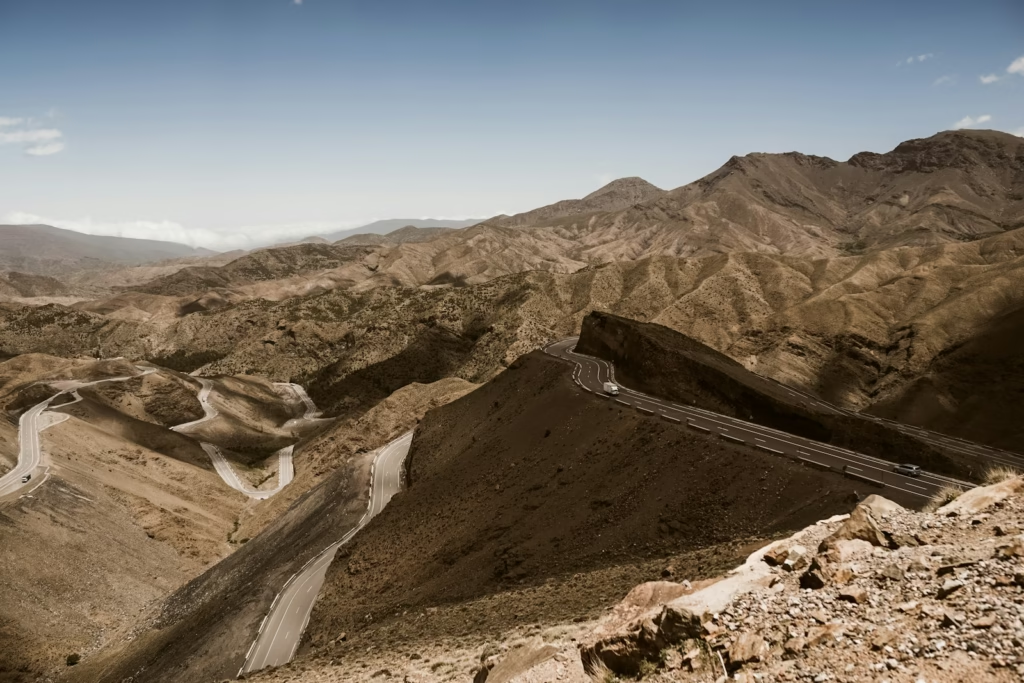
The Tizi n’Tichka is probably the best-known road crossing of the High Atlas from Marrakech, climbing towards the route to Ouarzazate.
It is spectacular.
It is also a major road.
That distinction matters for cyclists.
The scenery is huge, the altitude is significant and the road gives you a real sense of crossing the Atlas rather than simply riding into one valley. But it can also carry substantial traffic, including buses, lorries and tourist vehicles.
That makes it a route to approach carefully rather than automatically treating it as the best climb in the area.
For some riders, the experience will justify it. For others, the quieter roads around Ourika, Oukaïmeden or the western Atlas will be more enjoyable.
The High Atlas has enough riding that the most famous road does not need to be the first choice.
Asni and Imlil open up the western side of the mountains
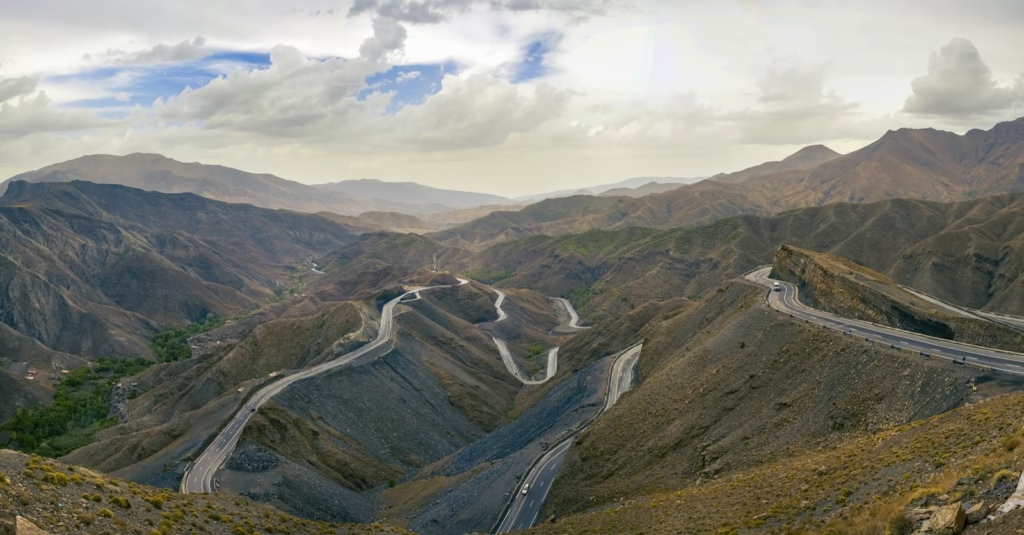
West of the Ourika Valley, the roads towards Asni and Imlil provide another strong cycling option.
This area sits beneath Jebel Toubkal, the highest mountain in North Africa, and the scenery becomes increasingly dramatic as you ride towards the high valleys.
Asni works as a useful gateway. From there, the roads towards Imlil and the surrounding villages climb deeper into the mountains, with steeper sections and tighter valleys than the more gradual approach through Ourika.
The riding here feels more enclosed. You are often surrounded by steep slopes and small settlements rather than riding across broad exposed plateaus.
That gives the area a completely different atmosphere.
The gradients can also feel more irregular, with sections where the road kicks up more sharply before easing again.
Imlil is better treated as a mountain destination than a summit
Imlil is not a traditional cycling pass.
It is a mountain village that acts as one of the main access points for Toubkal and the surrounding high peaks.
That makes the ride there feel more like climbing into a mountain basin than crossing over to the other side.
For cyclists, that can be appealing.
You have a clear destination, increasingly dramatic scenery and a natural point to stop before descending back towards the plains.
The traffic tends to become lighter as you climb away from the main roads, although tourism means the route is never completely empty.
The road can also become rougher and narrower in places, so this is not a ride where you want to assume perfect European mountain-road surfaces throughout.
The foothills are underrated
Not every ride from Marrakech needs to be a huge mountain day.
Some of the best cycling comes from the lower foothills, where the gradients are gentler but the roads are quieter and the landscape still feels unmistakably Atlas.
These rides are useful between harder climbing days.
You can link villages on minor roads, spend several hours rolling through dry hills and still accumulate a respectable amount of climbing without ever committing to one major ascent.
They also give you more chance to notice the landscape.
On the biggest climbs, attention inevitably narrows towards pacing, water and gradient. In the foothills, the riding becomes more relaxed and the atmosphere becomes the point.
For a week based in Marrakech, these easier days are what make the trip sustainable rather than simply impressive on paper.
The road surface can change quickly
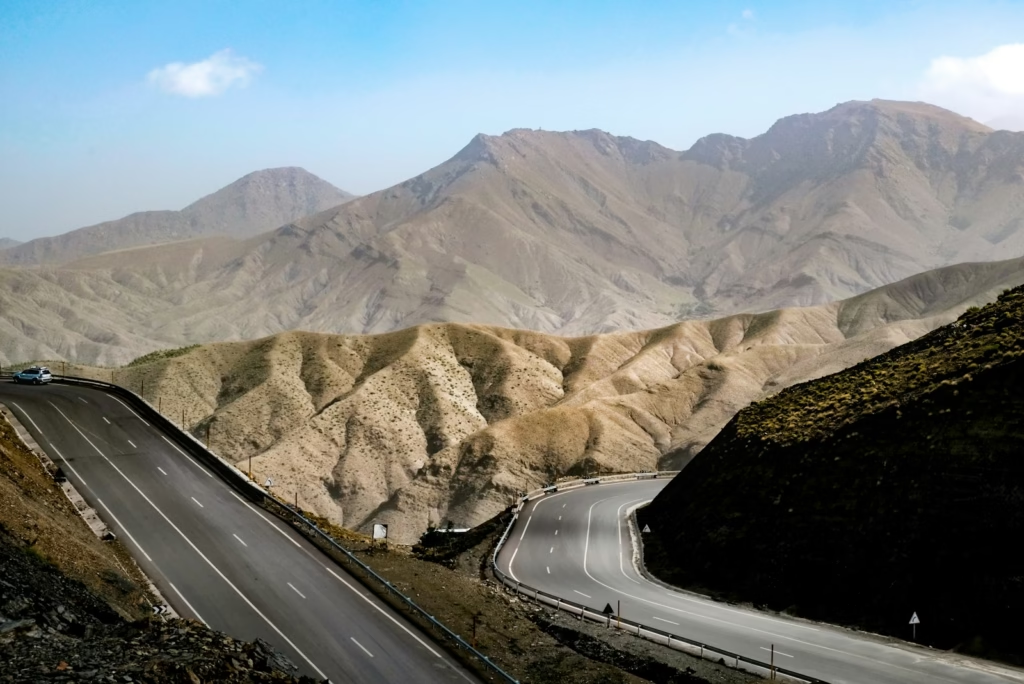
One of the biggest differences from riding in much of western Europe is that road quality is less predictable.
Major routes can be smooth and fast. Minor mountain roads can suddenly become rough, broken or covered with debris.
Heavy rain, construction and local traffic can all change conditions rapidly, particularly in mountainous areas.
That means route planning should allow more margin than a similar ride in the Alps or Pyrenees. A road that looks perfectly reasonable on a map may be considerably slower than expected.
Tyre choice matters too.
A slightly wider road tyre is a sensible choice for Morocco, giving more comfort and security without turning the ride into a gravel trip.
The High Atlas rewards equipment that can handle imperfect surfaces rather than chasing the lightest possible setup.
Descending requires more caution than climbing
The climbs get the attention, but the descents are where judgement matters most.
Long Atlas descents can be fast, exposed and unpredictable. Road surfaces may change suddenly, animals can appear on the road and local vehicles do not always behave in the way a visiting cyclist expects.
There may also be sand, gravel or small stones on corners, especially after bad weather or where the road cuts through unstable slopes.
The safest approach is to descend with margin.
You do not need to turn every mountain road into a timed Alpine descent.
The landscape is too good to rush through anyway.
Heat changes everything
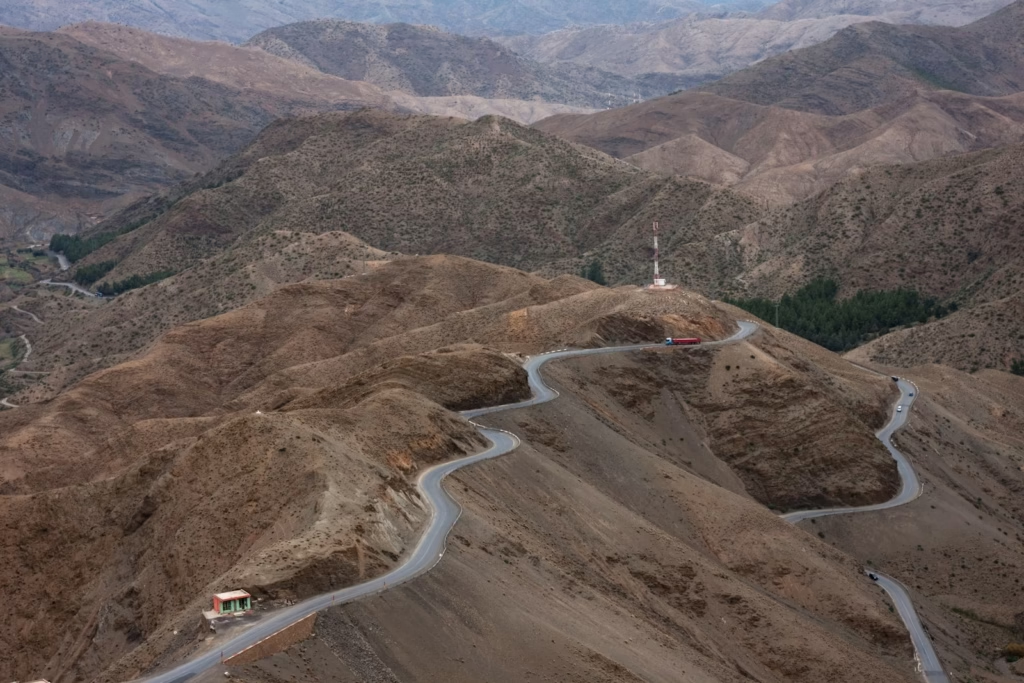
The High Atlas can be cool at altitude, but Marrakech itself can be extremely hot.
That makes timing one of the most important parts of route planning.
In warmer months, an early start is essential. You want to cover the exposed lower roads before the temperature rises significantly, particularly on days involving several hours of climbing.
The challenge is that a ride can begin warm, become cool at altitude and then return to intense heat on the descent towards Marrakech.
Layering therefore matters even when the forecast in the city looks straightforward.
A lightweight gilet or shell can be useful high in the mountains, while sun protection is essential almost everywhere.
Hydration needs to be treated seriously
Dry heat can disguise how much fluid you are losing.
You may not feel drenched in sweat in the same way as riding somewhere humid, but dehydration can build quickly during a long climb.
For a big mountain ride, carry more fluid capacity than you would on a similar ride at home. Do not assume every village will provide an easy refill at exactly the point you need it.
Buying water locally is usually straightforward in inhabited areas, but the gaps between opportunities increase as you move deeper into the mountains.
Electrolytes are useful, especially on hotter days.
The High Atlas is not somewhere to experiment with riding several hours on two small bottles.
Food is easier than water in many places
One of the pleasures of riding in Morocco is that food stops can become part of the day rather than an inconvenience.
Villages and roadside cafés can provide bread, omelettes, tagines, fruit and sweet tea, all of which can work well during a long ride if you are comfortable eating something more substantial than a standard cycling café stop.
The difficulty is predicting exactly where those options will appear.
That is why carrying your own basic ride food remains sensible even if you intend to stop.
Dates are an obvious local option and work remarkably well as cycling fuel. They are easy to carry, high in carbohydrate and widely available.
For a broader look at preparing for consecutive long days rather than one standalone ride, our guide on how to train for your first multi-day cycling holiday is relevant here.
Traffic is the main compromise
The biggest drawback of using Marrakech as a base is the traffic.
Leaving and returning to the city can be hectic.
Drivers are used to sharing the road with a wide range of vehicles, animals and pedestrians, but that does not automatically make every interaction comfortable from a cyclist’s perspective.
Major roads can also become unpleasant when traffic volumes rise.
The best rides are therefore often the ones that minimise time on the busiest arteries and use quieter roads as early as possible.
Starting early helps twice.
It reduces the heat and gets you through the urban sections before traffic builds.
Riding culture feels different
The High Atlas does not have the same cycling infrastructure as the Alps.
There are fewer bike-specific cafés, fewer signs celebrating famous climbs and less sense that the roads exist partly for visiting riders.
That is exactly why the experience feels different.
You are riding through working villages and ordinary transport routes rather than a landscape organised around cycling tourism.
Children may wave as you pass. People may stare at the lycra-clad visitor grinding slowly uphill. A café stop can feel much more like entering local daily life than joining another group of cyclists around an espresso machine.
That atmosphere is one of the strongest reasons to ride here.
If you prefer the more established European mountain-base model, guides such as cycling in Briançon and Serre-Chevalier show the contrast clearly: more cycling infrastructure, more famous passes and a completely different kind of mountain culture.
Marrakech gives the trip a different rhythm
Staying in Marrakech also means the cycling does not have to dominate every hour of the day.
You can ride into the Atlas in the morning and return to a city that feels completely different from the mountains you have just left.
The medina, souks and evening food scene create a strong contrast with the quiet roads and barren peaks.
That makes Marrakech particularly good for a cycling holiday involving riders and non-riders together.
The city has enough going on that a trip does not collapse if somebody decides they do not want to spend six hours climbing.
For riders, the contrast makes each mountain day feel more distinct.
What bike works best in the High Atlas?
A normal road bike is the obvious choice for the main paved climbs.
You do not need anything exotic.
What helps is gearing suitable for long climbs, reliable brakes and tyres wide enough to cope with rougher surfaces.
A compact chainset with a generous cassette is much more useful than pretending every climb needs to be ridden on racing gearing.
The gradients are only part of the equation. Long climbs at altitude and in heat become much harder once fatigue accumulates.
Having one or two easier gears available can make the difference between enjoying the final hour and simply surviving it.
For riders interested in exploring smaller roads and tracks, an all-road or gravel bike opens up far more possibilities.
But for Ourika, Oukaïmeden, Asni and most of the main mountain roads, a road bike is enough.
When is the best time to cycle around Marrakech?
Spring and autumn are the obvious windows.
The temperatures around Marrakech are more manageable, while the mountains remain accessible without the most extreme summer heat or winter conditions at altitude.
Winter can still work well for lower-level riding. Marrakech itself can be mild and pleasant, but the highest roads may be cold or affected by snow.
Summer is the difficult period.
The city and lower foothills can become brutally hot, making long exposed rides much more demanding than the elevation profile alone suggests.
If riding during hotter months, the day needs to start very early and the route should be planned around realistic water availability.
For comparison, cycling in Sierra Nevada and Granada offers some of the same combination of high mountains, dry heat and a major city base, but with a more familiar European road-cycling setup.
-
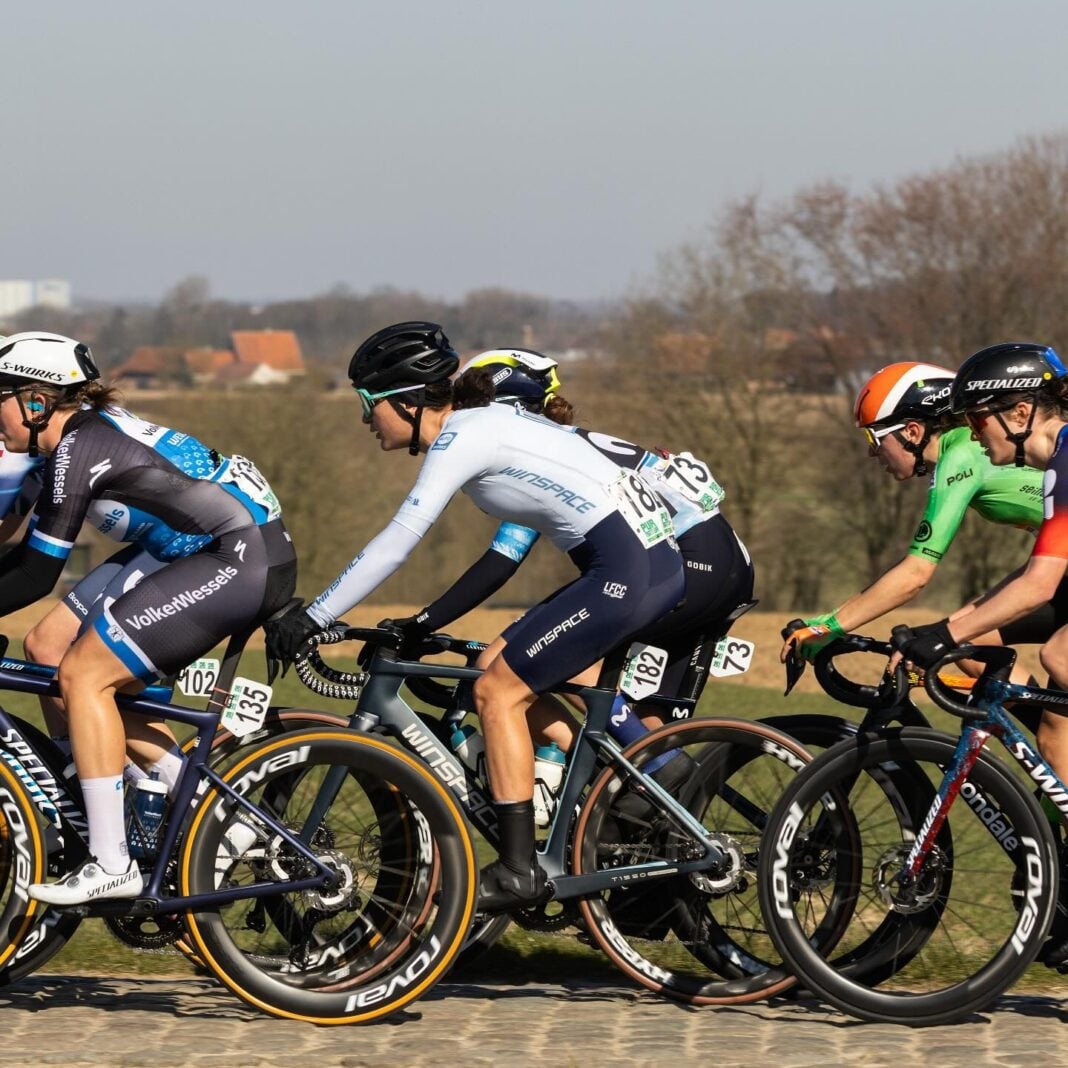
 Photo Credit: quentinphotographiebe
 -
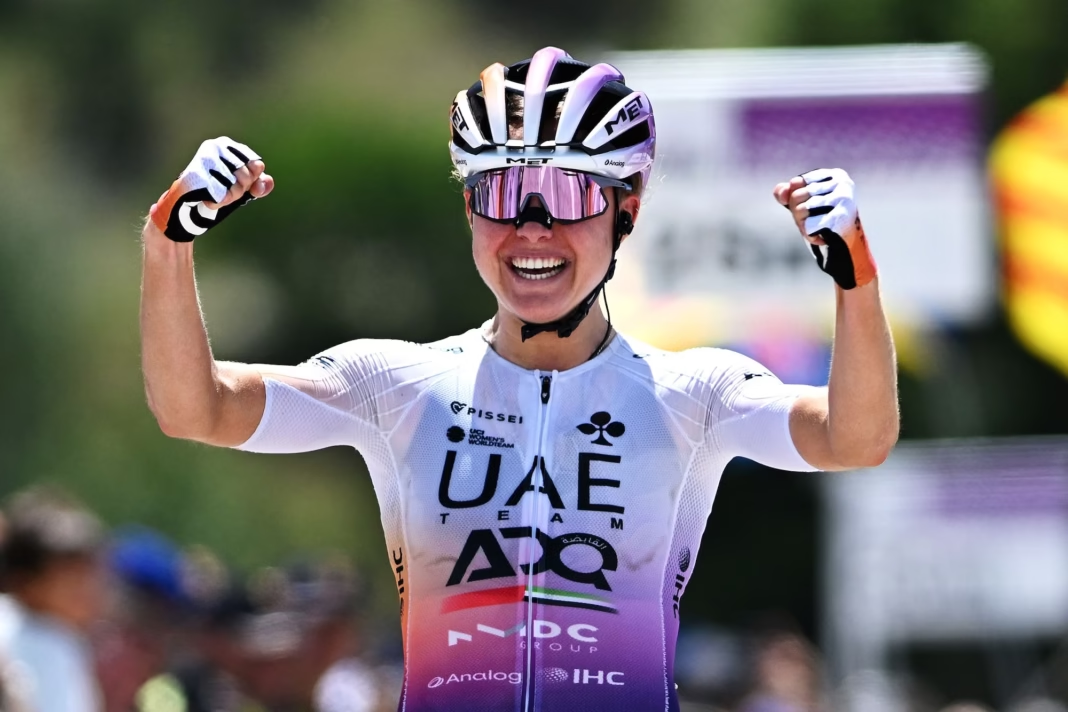
 Photo Credit: Getty

A good week based in Marrakech
A balanced week works better than attempting the biggest possible climb every day.
Start with a foothill ride to understand the roads, traffic and heat.
Use the Ourika Valley as the first longer mountain day, then ride towards Asni or Imlil for a different type of climbing before targeting Oukaïmeden once your legs and pacing have adjusted.
The largest passes can come later if conditions and fitness allow.
This gives the week some progression rather than turning the first two days into a recovery problem.
It also leaves space to explore Marrakech itself instead of treating the city purely as somewhere to sleep between rides.
Why the High Atlas deserves a cycling trip
The High Atlas does not offer the polished cycling experience of the French Alps.
That is part of the attraction.
There are fewer famous names, less cycling-specific infrastructure and more uncertainty about the road ahead. In return, the mountains feel bigger, quieter and less packaged.
Oukaïmeden gives you the long high-altitude challenge. Ourika provides a beautiful route into the mountains. Asni and Imlil put you beneath some of North Africa’s highest peaks, while the larger passes show the scale of the Atlas as a genuine mountain barrier rather than simply somewhere containing a few climbs.
Marrakech ties it together by providing a practical base and a completely different atmosphere once the riding stops.
For cyclists who want a trip to feel like travelling somewhere new rather than reproducing an Alpine training camp in another country, that difference is the reason to go.

