
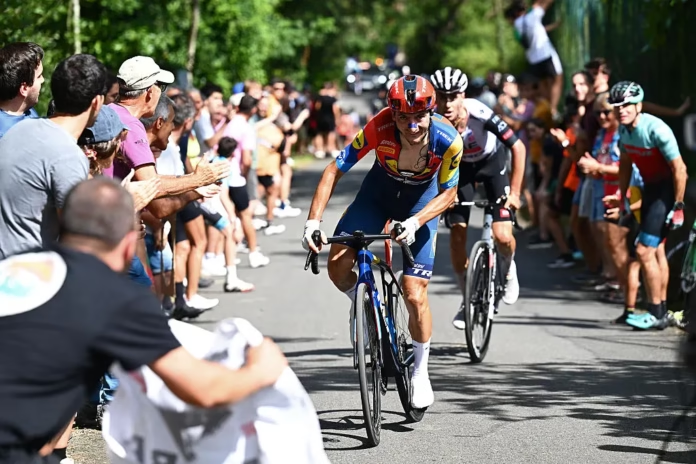
The 2026 Donostia San Sebastian Klasikoa returns on Saturday 1 August with a longer and harder route built around seven classified climbs and more than 4,150 metres of elevation gain.
The 45th edition covers 221.1km, beginning and ending on the Boulevard in central Donostia/San Sebastián. The route heads inland through Gipuzkoa before returning towards the coast for a decisive final sequence featuring Jaizkibel, Erlaitz and Murgil Tontorra.
Those final three climbs give the race its familiar structure. Jaizkibel reduces the field, Erlaitz creates the opportunity for a longer-range attack and Murgil Tontorra provides one final wall on which the strongest riders can separate themselves.
The winner will still need to descend confidently and negotiate the fast return into San Sebastián before reaching the Boulevard.
For an introduction to the event, its place on the calendar and the type of rider it rewards, see our beginner’s guide to the Men’s Donostia San Sebastian Klasikoa 2026.
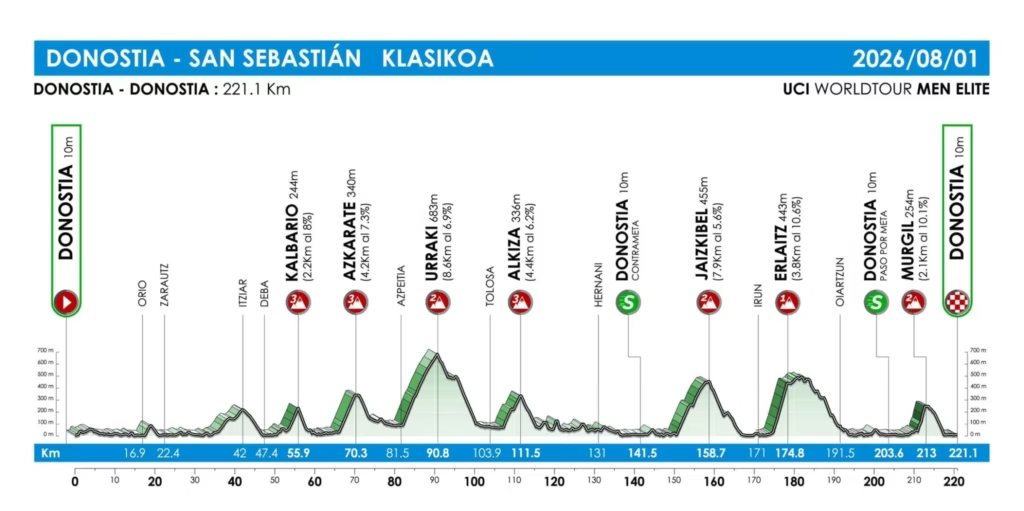
Donostia San Sebastian Klasikoa 2026 route at a glance
| Detail | Information |
|---|---|
| Date | Saturday 1 August 2026 |
| Start | Donostia/San Sebastián |
| Finish | Boulevard, Donostia/San Sebastián |
| Distance | 221.1km |
| Total climbing | More than 4,150 metres |
| Classified climbs | Seven |
| Intermediate sprints | Two |
| Key late climbs | Jaizkibel, Erlaitz and Murgil Tontorra |
| Best suited to | Climbers, punchy one-day riders and strong all-rounders |
| Defending champion | Giulio Ciccone |
The neutralised start is scheduled for 11:05 from Hernani Kalea after the morning sign-on outside Donostia City Hall.
The seven climbs of the 2026 Donostia Klasikoa
The route contains seven classified climbs:
- Kalbario
- Azkarate
- Urraki
- Alkiza
- Jaizkibel
- Erlaitz
- Murgil Tontorra
The order gives the race two distinct halves.
Kalbario, Azkarate, Urraki and Alkiza provide the accumulated difficulty. They create fatigue, encourage an early breakaway and gradually remove riders who cannot repeatedly recover between climbs.
Jaizkibel, Erlaitz and Murgil then decide the race.
That distinction matters because San Sebastián is rarely won through one isolated effort. The final attack may happen on Murgil, but its effectiveness depends on everything that has happened over the previous 200km.
The race’s evolution from a Jaizkibel-centred Classic into a more varied tactical contest is covered in our history of the Donostia San Sebastian Klasikoa.
The opening kilometres out of San Sebastián
The race begins from the Boulevard, close to the centre of San Sebastián and the city’s coastline.
The opening section takes the riders away from the finish and towards the interior of Gipuzkoa. The roads rarely remain flat for long, even before the first classified climb.
This is where the breakaway battle should develop.
The combination of a long race, repeated climbing and several opportunities for attacks means many teams will want representation at the front. Smaller teams can gain television exposure, while stronger squads may place a rider in the move to avoid responsibility for chasing.
The peloton will need to decide quickly whether the breakaway is harmless.
A move containing strong climbers or riders with proven one-day records cannot be given unlimited freedom. The route is hard enough for a well-balanced group to remain competitive deep into the finale.
Kalbario begins the climbing pattern
Kalbario is the first of the seven classified ascents.
It is not expected to decide the winner, but it introduces the repeated rhythm that defines the race. Riders climb, descend, reorganise briefly and then begin preparing for the next ascent.
The early climb also gives the breakaway an opportunity to establish its internal mountains competition.
Some riders will target the points, while others will save energy and concentrate on maintaining the gap. That can create disagreements within the move long before the favourites begin racing against one another.
For the peloton, Kalbario should be controlled rather than decisive.
The principal teams will want their leaders protected from crashes and sudden splits without committing too much energy this early in the race.
Azkarate adds a sharper test
Azkarate is approximately 4.2km long at an average gradient of around 7.3%.
That makes it shorter than several later climbs but steep enough to create a meaningful selection if the pace is high.
The approach and descent matter almost as much as the gradient.
Basque roads frequently change width and direction, while the succession of bends can stretch both the breakaway and peloton. A rider badly positioned at the bottom may be forced to close gaps before the climb has properly begun.
Azkarate should not remove the main favourites, but it can reduce their number of teammates.
Teams with several possible leaders will want to preserve that numerical strength for the final 70km.
Urraki is the first sustained climbing test
The Alto de Urraki is one of the most substantial climbs in the opening half of the race.
It measures approximately 8.6km at 6.9%, making it long enough for fatigue to become significant rather than simply rewarding one short acceleration.
Urraki should begin separating riders according to climbing ability.
Pure sprinters and heavier Classics riders are likely to struggle if the peloton sets a strong tempo. Domestiques who survive can remain valuable later, but those dropped here face a long chase over terrain that provides few easy kilometres.
The climb also gives teams an opportunity to increase the pressure without launching a full attack.
A sustained tempo can reduce the peloton while allowing leaders to remain sheltered. That creates a smaller and more manageable group before the race begins turning back towards San Sebastián.
Alkiza keeps the race uncomfortable
Alkiza is approximately 4.4km at 6.2%.
Its numbers are less intimidating than those of Erlaitz or Murgil, but its position after the longer Urraki climb makes it important.
The race will already have been climbing and descending for several hours. Riders who survived Urraki narrowly may not recover before Alkiza begins.
This is where the cumulative nature of the Klasikoa becomes obvious.
A rider does not need to be dropped decisively to lose control of the race. Repeatedly climbing near the limit uses energy that will be unavailable on Jaizkibel and Erlaitz.
Alkiza also offers an opportunity for teams to send a secondary leader or strong domestique up the road.
An attack here is unlikely to win the race directly, but it may force rival teams to begin working earlier than planned.

The race changes as it returns towards the coast
After the inland climbing, the route begins moving back towards the eastern side of San Sebastián.
There is a longer transitional period before Jaizkibel, but it should not be treated as a full recovery section.
Teams will use the roads before the climb to reorganise, collect bottles and position their leaders. The pace can become intense well before the gradient begins because everybody knows Jaizkibel marks the start of the decisive phase.
This is also where the breakaway’s prospects become clearer.
A large advantage may encourage the strongest riders at the front to begin attacking one another. A small gap allows the peloton to remain patient and prepare to make the catch on Jaizkibel or shortly afterwards.
The terrain favours teams with several riders still available.
A leader isolated before Jaizkibel may need to follow every dangerous move personally.
Jaizkibel remains the race’s great landmark
Jaizkibel is the climb most closely associated with the Donostia San Sebastian Klasikoa.
The 2026 ascent is approximately 7.9km at an average gradient of around 5.5%. Those numbers make it look relatively steady, but its exposure, changing rhythm and position after approximately 140km of racing give it greater importance.
Jaizkibel traditionally marks the point at which the contenders begin racing more directly.
The gradient is not always steep enough for one explosive attack to create a winning gap. Instead, teams can use the climb to reduce the field through sustained pressure.
The strongest squads may place several riders near the front and gradually remove the support available to rival leaders.
Jaizkibel can also suit a longer-range attacker.
A rider who crosses the summit with a small advantage may use the descent to extend it, particularly if the group behind hesitates or contains several leaders unwilling to work for one another.
The climb also appears regularly in other major Basque races. Its role in the region’s women’s calendar can be seen in our Itzulia Women 2026 full route guide.
Why Jaizkibel may not decide the winner
Jaizkibel’s role has changed as harder climbs have been introduced later in the race.
It remains an iconic and selective ascent, but riders know that Erlaitz and Murgil provide more obvious opportunities to create decisive gaps.
That can encourage tactical restraint.
The favourites may be willing to follow attacks without fully committing, allowing a reduced group to reach the descent together.
However, waiting carries risks.
A rider who reaches Erlaitz with too many strong rivals still present may find the final climbs harder to control. Teams with numerical superiority can launch repeated attacks, forcing isolated favourites to respond.
Jaizkibel may therefore decide the tactical balance even when it does not produce the eventual winning move.
Erlaitz is the hardest sustained climb of the finale
Erlaitz is approximately 3.9km at an average gradient of around 10.6%.
It is shorter than Jaizkibel but considerably steeper, making it one of the clearest points at which the race can split.
The gradient forces riders out of the controlled tempo that often defines Jaizkibel. Drafting becomes less valuable, team support disappears quickly and every acceleration creates an immediate physical cost.
Erlaitz should be the key climb for riders who do not want to wait for Murgil.
A strong climber can attack, establish a gap and then use the following roads to build an advantage before the final ascent.
It also provides the ideal launch point for teams with two leaders.
One rider can attack on the steep section while the other remains in the chasing group. Rivals must either work to close the move or risk allowing a major contender to reach Murgil with a head start.
The descent from Erlaitz creates another selection
The road after Erlaitz is not a simple neutral transition to Murgil.
Descending ability, positioning and tactical cooperation all become important.
A rider who crests alone may gain further time by descending aggressively. A small group can also extend its advantage if the riders cooperate immediately.
The chase is often more complicated.
A group containing fast finishers, pure climbers and riders protecting teammates may struggle to organise. Everyone knows that helping too much could weaken their own chances on Murgil.
Those moments of hesitation can decide the race.
An attack does not always succeed because the rider ahead is significantly stronger. It may succeed because the group behind cannot agree who should chase.
Murgil Tontorra is the final wall
Murgil Tontorra is the seventh and final classified climb.
It is approximately 2km long at an average gradient close to 10%, with steeper sections that force riders into an almost maximal effort. It comes with fewer than 10km remaining, leaving little time to repair any mistake.
Murgil is narrow, irregular and more explosive than Jaizkibel.
The climb rewards riders who can produce a hard acceleration after more than 200km of racing. It also punishes anyone who begins too far back.
Positioning at the foot is critical.
A rider entering the climb in 15th place may already be several seconds behind when the first attack is launched. Moving through gaps on a narrow, steep road is much more difficult than following the front wheels from the beginning.
The strongest riders will normally wait until the steepest section before committing fully.
Where the winning attack is most likely to happen
There are three obvious possibilities.
The first is a move on Erlaitz.
This suits a rider with strong climbing and descending ability who wants to avoid a direct contest on Murgil. It is especially dangerous if a teammate remains behind to disrupt the chase.
The second is an attack between Erlaitz and Murgil.
A rider may use a moment of hesitation after the descent, particularly if the favourites begin watching one another.
The third and most likely option is a direct attack on Murgil.
The climb is steep enough to create a gap and close enough to the finish for one strong rider to hold it.
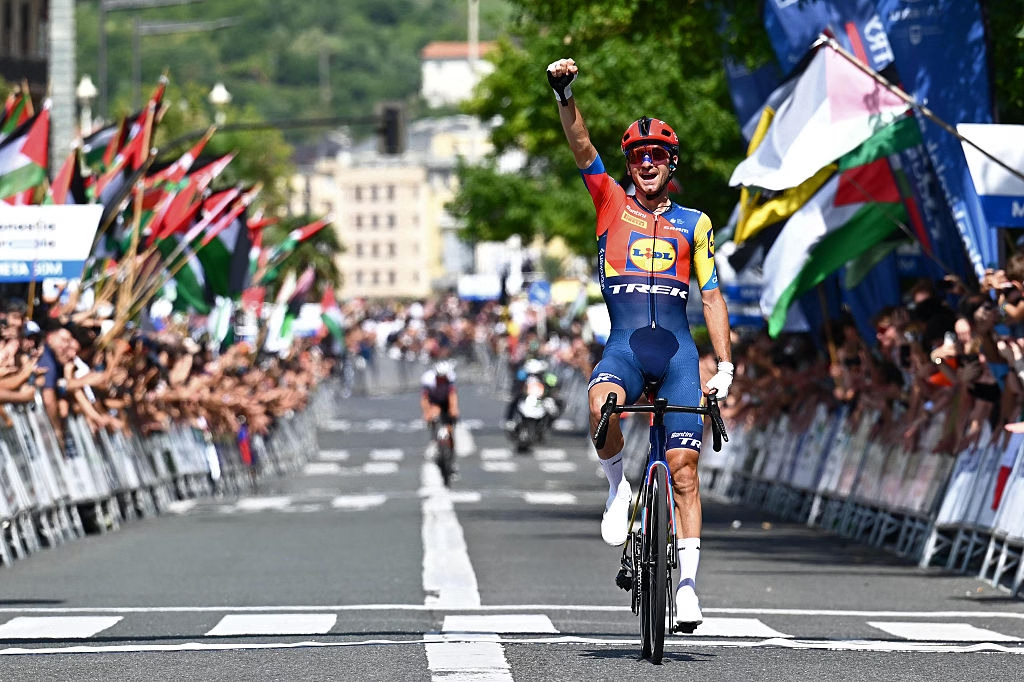
Giulio Ciccone used that approach to win in 2025, attacking on Murgil Tontorra and maintaining his advantage on the descent and run into San Sebastián.
Can the race still end in a sprint?
A sprint remains possible, but it should involve only a very small group of strong climbers and punchy all-rounders.
Murgil is difficult enough to separate most riders, yet the short distance between the summit and finish can encourage tactical racing.
If nobody creates a decisive gap, several riders may regroup on the descent.
That makes finishing speed valuable.
A contender with a strong reduced sprint does not necessarily need to attack on Murgil. They may instead follow the strongest climbers, survive the descent and trust their acceleration on the Boulevard.
The presence of a fast finisher can also change the tactics of everyone else.
Riders who know they cannot win a sprint must attack earlier and make the race harder.
The descent from Murgil demands commitment
Reaching the summit first does not guarantee victory.
The descent is fast and technical enough for a confident rider to gain time, but also demanding enough for a mistake to end the race.
An attacker must balance risk against the size of the gap.
A lead of only a few seconds requires full commitment. A larger advantage allows slightly more control, although slowing too much can bring a chasing group back into contention.
Riders behind face a different problem.
One strong descender may do most of the work while the others recover for the sprint. That creates an incentive not to lead, even when the group risks losing the race.
The tactical battle can continue through every corner.
-
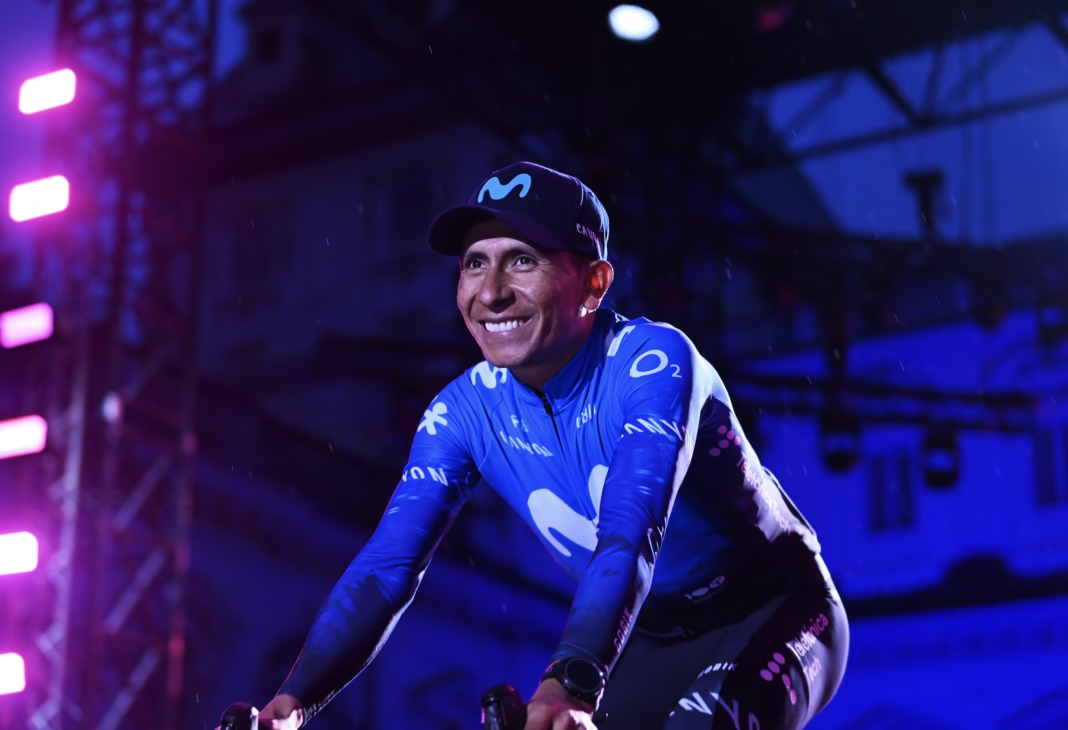
 Photo Credit: Getty


The final kilometres into San Sebastián
After the Murgil descent, the route returns towards the centre of San Sebastián.
The final section becomes flatter, but the race is unlikely to calm down.
A solo leader must maintain speed while repeatedly checking the gap. A chasing group must organise quickly before the wide urban roads begin favouring the rider ahead.
If several riders remain together, positioning becomes decisive.
The Boulevard provides a prestigious city-centre finish with enough space for a reduced sprint. Riders need to enter the final bends near the front without beginning their acceleration too early.
The winner may be a solo climber, an aggressive descender or the fastest rider from a small group.
The route allows all three scenarios.
For cyclists planning to ride in the area, our guide to why the Basque Country works so well for a cycling trip covers San Sebastián, Bilbao and the surrounding roads.
How does the 2026 route compare with 2025?
The 2026 edition is approximately 10km longer than the 211.4km route used in 2025.
It also contains seven classified climbs rather than six and exceeds 4,150 metres of total elevation gain. The final structure remains familiar, with Jaizkibel, Erlaitz and Murgil Tontorra again forming the decisive late sequence.
That continuity means teams already understand the likely shape of the finale.
The additional distance and climbing should make reaching it more difficult.
A rider who was capable of following the favourites in 2025 may begin Murgil with less energy in 2026. The longer route also increases the importance of eating, drinking and managing effort during the opening half.
The final climb remains explosive, but the race becomes more of an endurance test before reaching it.
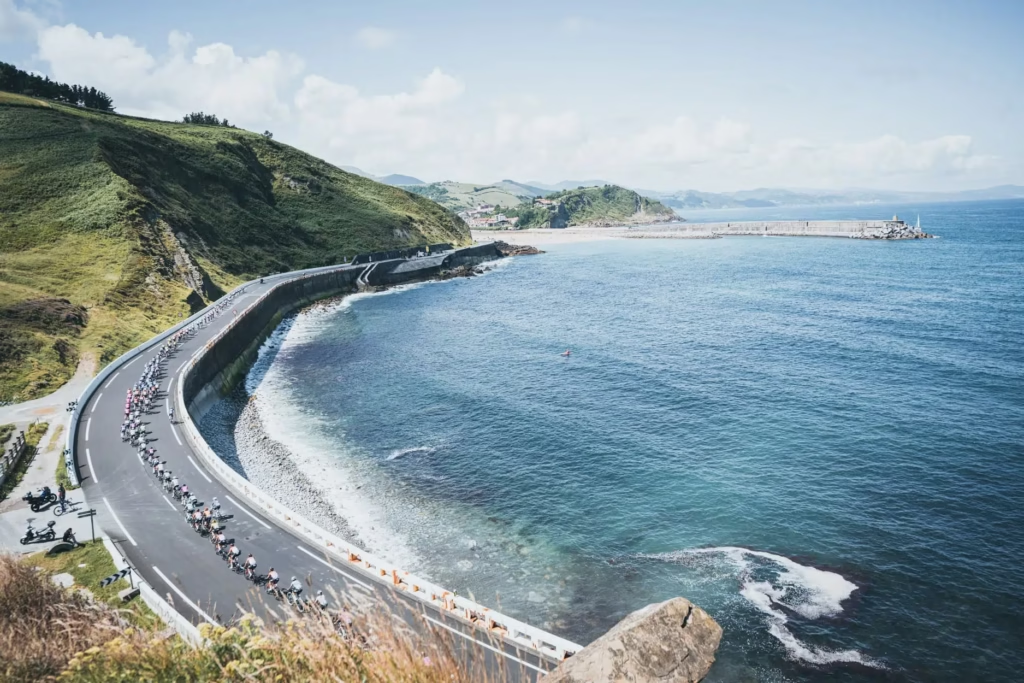
What kind of rider does the 2026 route suit?
The ideal winner is a strong climber with one-day racing instincts.
Pure Grand Tour climbers can succeed, but they need enough explosiveness to handle Murgil and enough technical confidence to descend aggressively.
Punchy Classics riders can also challenge if they survive Erlaitz.
The main qualities required are:
| Quality | Why it matters |
|---|---|
| Climbing endurance | The route contains more than 4,150 metres of elevation gain |
| Explosiveness | Murgil rewards short, powerful attacks |
| Descending | The race drops rapidly back towards San Sebastián |
| Positioning | Narrow climbs make moving forward difficult |
| Tactical awareness | Attacks can begin on Jaizkibel, Erlaitz or between climbs |
| Recovery after the Tour | Many contenders arrive directly from three weeks of racing |
| Small-group speed | Some editions finish with a reduced sprint |
A pure sprinter is unlikely to survive.
A heavy cobbled specialist may also struggle with the accumulated climbing, even if they can handle short steep gradients.
Why Tour de France form matters
The Klasikoa takes place six days after the Tour de France finishes in Paris.
That creates a distinctive start list.
Some riders arrive with exceptional form after three weeks of racing. Others are mentally and physically exhausted. Riders who missed the Tour may be fresher but lack the same depth of race fitness.
The effect is difficult to predict.
A Tour rider who completed the race in good condition can arrive with the endurance needed for a 221km Classic. A rider who spent the final week fighting illness, crashes or fatigue may struggle to recover in time.
The opening climbs often reveal who has adapted successfully.
Tour form is valuable only when enough recovery has taken place.
Where can the breakaway succeed?
The early breakaway has a difficult route to overcome, but it should not be dismissed automatically.
More than 4,150 metres of climbing gives strong riders opportunities to maintain their advantage after weaker companions are dropped.
A successful move would probably need several qualities:
- Strong climbers capable of surviving Urraki and Alkiza
- At least one rider comfortable on technical descents
- Representation from teams that would otherwise lead the chase
- Enough cooperation to reach Jaizkibel with a substantial gap
- Tactical discipline once the group begins breaking apart
The peloton will normally expect to catch the early move.
However, a break containing recognised one-day winners or high-level climbers cannot be allowed too much time.
The aggressive racing culture that makes those attacks possible is also central to the region’s other major event, explored in our history of Itzulia Basque Country.
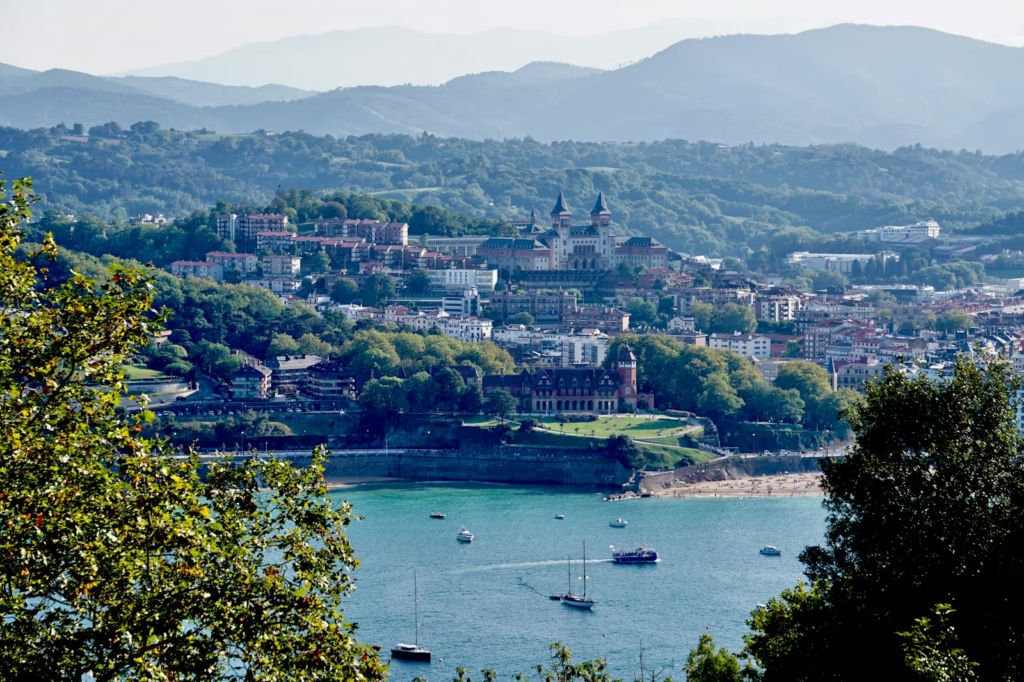
Which climb will decide the race?
Murgil Tontorra is the most likely location for the winning attack, but Erlaitz may decide who is still capable of making it.
Jaizkibel shapes the field.
Erlaitz exposes weakness.
Murgil delivers the final separation.
That sequence gives the Klasikoa its character.
A rider who waits for Murgil needs confidence in their explosiveness. A rider who lacks that acceleration must use Jaizkibel or Erlaitz to create a different race.
The strongest team may try to attack on all three.
Donostia San Sebastian Klasikoa 2026 route verdict
The 2026 Donostia San Sebastian Klasikoa route is longer than the previous edition and contains enough climbing to make the race a genuine endurance Classic.
The first four climbs should steadily weaken the peloton without revealing the eventual winner. Urraki and Alkiza are likely to remove domestiques and make the approach to the coast increasingly difficult.
Jaizkibel begins the decisive phase.
Erlaitz provides the best opportunity for a committed long-range attack, while Murgil Tontorra remains the final and most obvious launch point.
From there, the race becomes a test of descending, cooperation and nerve on the return to San Sebastián.
The route does not guarantee one tactical outcome.
A solo climber can win by attacking on Murgil. A stronger rouleur can move earlier on Erlaitz. A punchy rider can follow the attacks and wait for a reduced sprint on the Boulevard.
What the 2026 route does guarantee is that nobody will reach the finish without surviving more than 220km of relentless Basque climbing.

