The Garmin Edge 550 and Wahoo ELEMNT BOLT 3 are two compact, button-operated GPS computers aimed at riders who want reliable navigation and training data without a large touchscreen on the bars. Their UK list prices are £379.99 and £299.99 respectively. That £80 difference is substantial, but the choice is not simply about which screen looks better. Garmin offers a broader training and route-planning environment; Wahoo offers a simpler operating routine, a smaller unit and a longer quoted battery life.
Both can record rides, guide you along a route, show climb information and connect to the sensors most road cyclists use. They approach those jobs differently. This comparison draws on official specifications and independently published road tests rather than a controlled head-to-head test conducted by ProCyclingUK. Prices are UK reference listings checked for this guide, not guaranteed checkout offers.
Garmin Edge 550 vs Wahoo ELEMNT BOLT 3 at a glance
| Specification | Garmin Edge 550 | Wahoo ELEMNT BOLT 3 |
|---|---|---|
| UK manufacturer list price | £379.99 | £299.99 |
| Screen | 2.7in colour, 420 × 600 pixels | 2.3in colour, 480 × 720 pixels |
| Controls | Physical buttons, no touchscreen | Physical buttons, no touchscreen |
| Weight | 110g | Approximately 85g |
| Quoted battery | Up to 12h demanding use; 36h saver | Up to 20h on current UK product page |
| Positioning | Multi-band GNSS | Dual-band GNSS |
| Charging | USB-C | USB-C |
| Water resistance | IPX7 | IPX7 |
The headline specifications need context. A larger screen does not automatically make the Garmin easier to operate, and the battery figures are not laboratory results under identical settings. Wahoo has also used different battery estimates in some material, so the conservative 20-hour figure from its current UK product page is the useful reference here. Actual endurance depends on brightness, navigation, connected sensors and temperature.
What the £80 premium actually buys
At the stated list prices, the Edge 550 costs around 27 per cent more than the BOLT 3. Garmin’s extra money primarily buys access to its deeper performance tools, the Garmin Connect ecosystem and a larger, exceptionally bright display. It does not buy a touchscreen. For that, buyers need to move to the Edge 850, which changes the price calculation again.
The BOLT 3 can be cheaper still through a retailer. Tredz has listed the exact third-generation model at £275, with stock shown when checked, while Wahoo’s own UK product page gives £299.99. Discounts change quickly, especially approaching November. The important comparison is the delivered price of the exact BOLT 3 rather than an older BOLT 2 being cleared at a tempting figure.
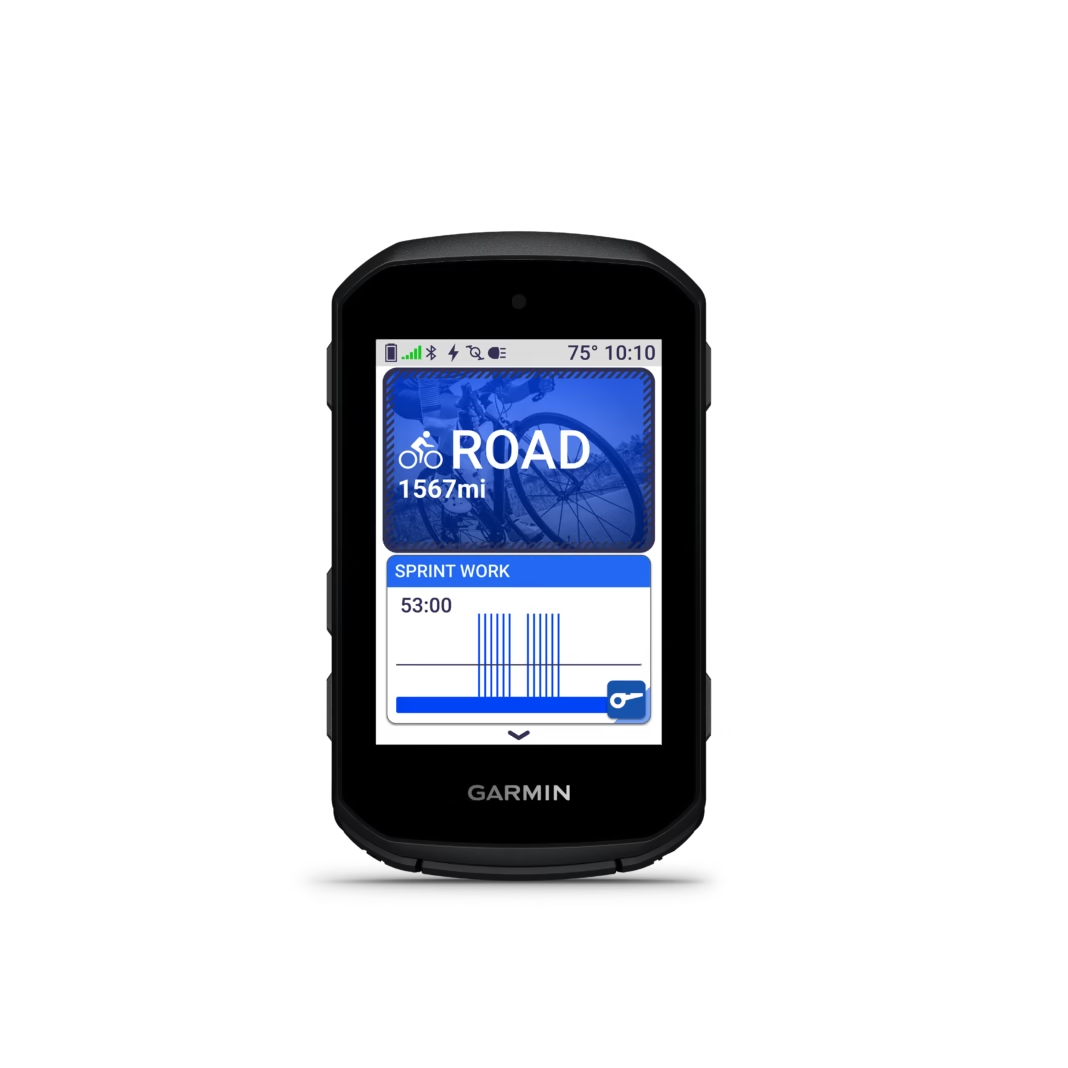 Photo Credit: Garmin
Screen readability and physical controls
Garmin’s 2.7-inch screen has more physical area for maps, turn instructions and multiple data fields. Independent testing by BikeRadar praised its brightness and improved legibility over earlier Edge generations. That is useful on wooded lanes, in low autumn light and when you need to glance at a route without lingering over the bars. The trade-off is power consumption: Garmin quotes only 12 hours in demanding use, a considerable step back from older endurance-focused Edge models.
The Edge 550’s control layout is the less convincing part. Its small, recessed buttons and layered menus require deliberate presses, particularly with thick winter gloves. BikeRadar found those controls fiddly despite the excellent display. A larger map is little consolation if changing a data field or exploring a menu demands too much attention while riding. Garmin Connect helps with configuration, but does not remove every on-device interaction.
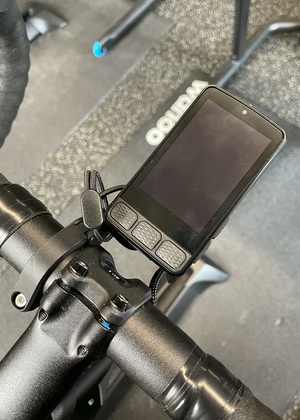
Wahoo keeps its screen smaller at 2.3 inches, yet the high pixel density and colour rendering make the most of the available space. Its front and side buttons are a familiar, direct interface. Road.cc found them effective and the display easy to read, although it also noted that the side buttons need a firm press. For racing and club rides, fewer menu decisions can be an advantage. For intricate maps with many junctions, the smaller display is a genuine limitation.
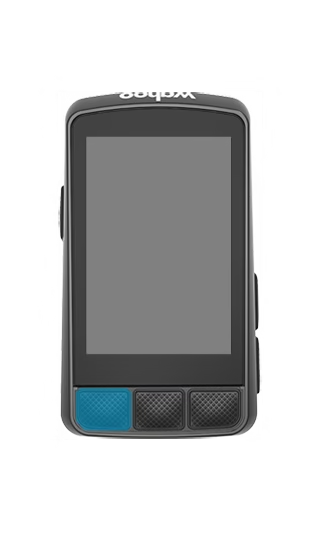 Photo Credit: Wahoo
Navigation is a difference in workflow, not just mapping
Both computers offer colour maps, turn-by-turn guidance and rerouting. Garmin’s attraction is the amount of route and training information integrated into the wider system. If you already build courses in Garmin Connect, analyse your training there and use compatible Garmin accessories, the Edge 550 fits into an established routine. The larger screen gives its mapping more room to breathe, although getting through the menus is not as quick as the specification sheet suggests.
The BOLT 3 leans on Wahoo’s phone app and connected services for setup and route management. It supports familiar routes from services such as Strava and Komoot, and its updated mapping includes road names and more detailed navigation than the previous generation. Road.cc praised GPS accuracy in its test but experienced occasional route-sync and ride-upload niggles. BikeRadar likewise found some navigation behaviour quirky. It would be misleading to call either unit faultless.
A practical distinction emerges when you miss a turning on a complicated urban route. Garmin gives you more ways to inspect and manage what is happening, but may require more button presses. Wahoo’s presentation is simpler until the smaller screen or a rerouting quirk becomes an obstacle. If navigation is the principal reason you are spending £300 or more, choose the workflow you can operate comfortably with gloves, not the computer with the longer feature list.
Training data and connected sensors
The Edge 550 is the stronger fit for riders who want their computer to do more than display power and heart rate. Garmin Connect provides a substantial library of performance analysis, structured training and historical trends. Some advanced metrics depend on pairing compatible power and heart-rate sensors. Buying the computer alone does not magically produce those measurements, and Garmin’s menus can make the sophistication feel less accessible than it should.
The BOLT 3 is perfectly capable of showing power, cadence, heart rate and other ride metrics from compatible sensors. It supports ANT+ and Bluetooth connectivity, and the Ready to Ride dashboard makes the basic pre-ride check straightforward. Its Summit climbing tools are useful for pacing on unfamiliar roads. What it lacks is an equally extensive native web-based route-building and post-ride analysis environment. Riders who already use TrainingPeaks, Strava or another training platform may not regard that as a serious sacrifice.
Battery life for long rides and winter use
This is Wahoo’s clearest paper advantage. The BOLT 3’s official UK listing claims up to 20 hours, against Garmin’s 12 hours in demanding use. Garmin quotes up to 36 hours in battery-saver mode, but that mode is not equivalent to leaving the display bright with full navigation and sensors throughout a long ride. Nor should the 20-hour Wahoo figure be treated as a guaranteed result in cold, wet conditions.
Independent road.cc testing found roughly 20 hours plausible for the BOLT 3 with a restrained backlight and several optional alerts disabled. The Edge 550’s bright screen can be valuable on a short training ride but imposes more charging discipline on an all-day outing. If you regularly ride 200km audaxes or take long café stops with the computer running, Wahoo offers a larger nominal margin. For a two-hour training ride, both are easily sufficient.
Mounts, weight and day-to-day ownership
At roughly 85g, the BOLT 3 is around 25g lighter than the Edge 550. That is not a meaningful performance saving for most riders, but the shorter unit looks neater on compact cockpits. Wahoo includes mounting hardware and uses USB-C charging. Its move to a unified app means setup is generally straightforward, though existing Wahoo owners should expect a slightly different software routine from earlier ELEMNT generations.
Garmin’s Edge 550 is also compact by the standards of modern GPS computers and uses USB-C. The ecosystem is a significant ownership consideration: familiar Garmin data screens, Garmin Connect history and accessory integration may outweigh the interface frustrations. Conversely, buying Garmin purely because you have always used Garmin can be an expensive habit if you mainly want speed, distance, route prompts and a dependable battery.
Which should a road cyclist buy?
Choose the Garmin Edge 550 if you genuinely use Garmin’s deeper training analysis, want the larger and brighter display, and are prepared to accept the fiddly buttons and shorter demanding-use battery estimate. It makes particular sense for riders with a mature Garmin Connect workflow who do not want to change their data and route habits. Read our Garmin Edge 550 review for the device’s individual strengths and weaknesses.
Choose the Wahoo ELEMNT BOLT 3 if you want a tidy, button-driven head unit that handles everyday training and navigation without turning setup into another task. Its longer quoted battery life, compact dimensions and lower price make it the more persuasive purchase for many club riders. The drawbacks are a smaller map, some reported sync quirks and less comprehensive built-in analysis. Our BOLT 3 review examines those compromises in more detail.
If neither feels quite right, our £250–£500 GPS computer buying guide places both alongside the Edge 850, ELEMNT ROAM 3 and Hammerhead Karoo. That is particularly useful if your real priority is a touchscreen or a larger map rather than choosing between these two button-only devices.
Check these details before ordering
Confirm the exact generation in the product title, whether an out-front mount is included, and the current delivered price. The Garmin Edge 550 manufacturer listing identifies part number 010-03022-01; the Wahoo BOLT 3 manufacturer listing is the third-generation model. Neither link is an affiliate link. Prices and stock can change after publication, so treat the figures above as a comparison point rather than a promise of availability.