Spending £250 to £500 on a GPS bike computer buys more than a coloured map. In this part of the market, the decision is about how easily you can follow a route, use training data and operate the unit when it is raining. The most expensive option is not necessarily the best: a rider who spends two hours racing on familiar roads needs a different screen and battery from someone navigating a 250km audax.
Five models make a useful comparison in October 2026: Garmin’s Edge 550 and 850, Wahoo’s ELEMNT BOLT 3 and ROAM 3, and the third-generation Hammerhead Karoo. They sit above the entry-level devices in our GPS computers under £250 guide, although seasonal discounts occasionally move the BOLT 3 below that boundary. The prices below are verified UK reference prices, not promises that a promotion will remain available.
This is an editorial comparison of exact specifications, UK listings and independent road tests, not a claim that ProCyclingUK has personally tested all five units together. We have prioritised the details that make a difference after several months of use: button and touchscreen behaviour, battery life with navigation, route handling, sensors and the wider software ecosystem.
Five GPS bike computers between £250 and £500
| Exact model | UK reference price | Controls | Claimed battery | Best suited to |
|---|---|---|---|---|
| Wahoo ELEMNT BOLT 3 | £299.99 RRP | 2.3in, buttons | Up to 20h | Compact training and racing |
| Garmin Edge 550 | £379.99 | 2.7in, buttons | Up to 12h demanding use | Training data, Garmin Connect |
| Wahoo ELEMNT ROAM 3 | £399.99 RRP | 2.8in, touch and buttons | Up to 25h | Navigation and longer rides |
| Hammerhead Karoo (third generation) | £359 at Sigma Sports | 3.2in, touch and buttons | Up to 15h standard | Mapping and SRAM AXS |
| Garmin Edge 850 | £439.99 at Tredz | 2.7in, touch and buttons | Up to 12h demanding use | Premium training and mapping |
Manufacturer battery claims use different test conditions. Garmin quotes its 12-hour figure for demanding use, while Wahoo’s longer figures are best-case claims. Brightness, multiband positioning, rerouting, connected sensors and cold weather can all change what you get. Check current retailer stock and pricing before ordering, particularly during the November sales period.
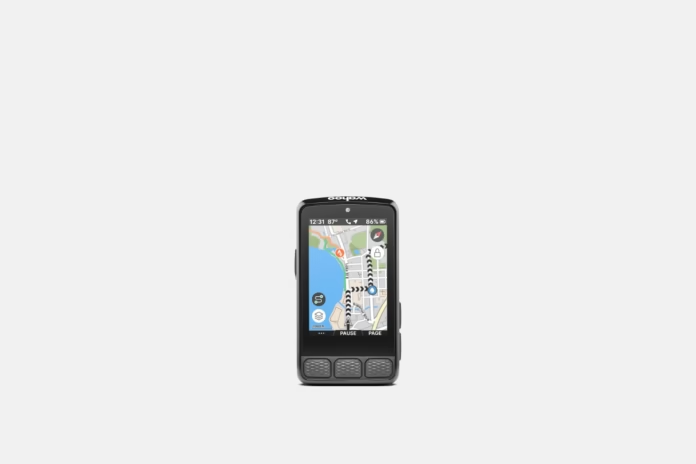
Wahoo ELEMNT BOLT 3: best for compact race-day simplicity
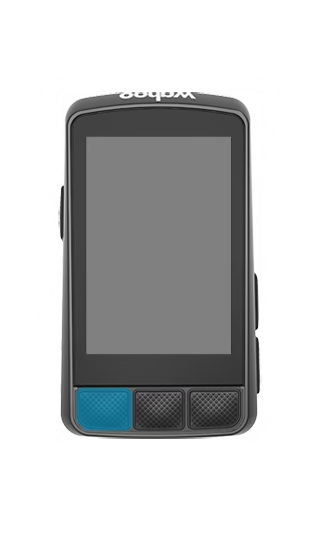 Photo Credit: Wahoo
At a £299.99 UK list price, the ELEMNT BOLT 3 is the least expensive of these five at regular pricing. Its 2.3-inch colour display is small, but the physical buttons are easy to learn and do not depend on wet-screen gestures. Dual-band GPS, USB-C charging, 32GB of storage and straightforward route synchronisation cover most road-riding needs. Wahoo’s main specification quotes up to 20 hours of battery life, although some updated support material quotes more, so treat any maximum as mode-dependent.
The BOLT’s advantage is also its limitation. It shows the important numbers without taking over the handlebars, but a complex junction or unfamiliar urban route can feel crowded on the smaller screen. Independent testing has praised the easy setup and accurate tracking while noting occasional navigation quirks and the need to use the Wahoo phone app for much of the configuration. That is an appealing trade for racing and training, less so if you want to explore maps on the unit itself.
For a closer look at the controls, read our Wahoo ELEMNT BOLT 3 review. It is also worth checking the precise generation before buying: older BOLT units are still sold, and the first generation does not share the latest mount compatibility.
Garmin Edge 550: more training depth, less convenient controls
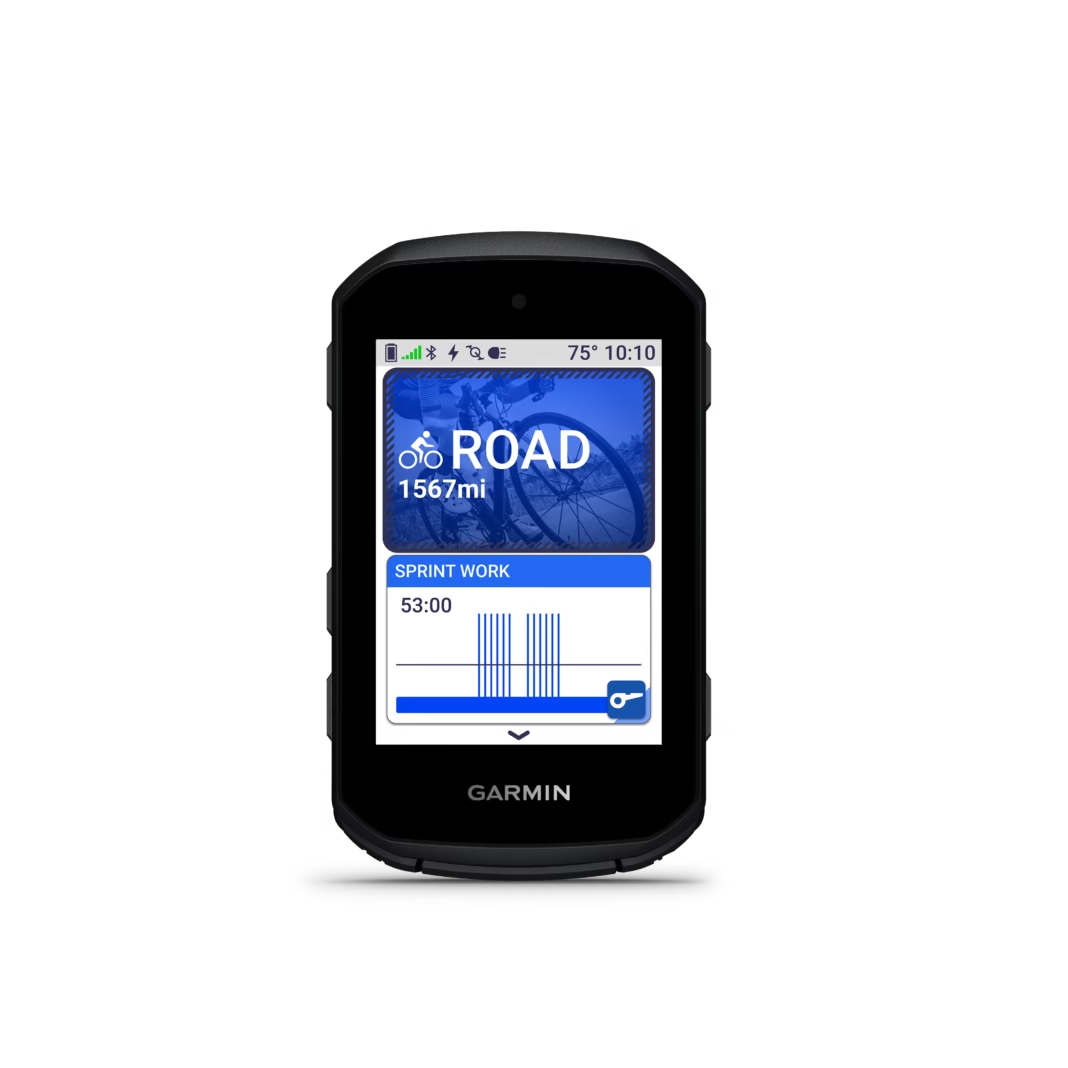 Photo Credit: Garmin
The Garmin Edge 550 is £379.99 from Garmin UK. Its vivid 2.7-inch display gives mapping and data pages more room than the BOLT 3, while Garmin Connect brings extensive training analysis, workout guidance and support for sensors, power meters and compatible rear radars. The Edge 550 uses buttons rather than a touchscreen, and its multiband satellite system is useful in built-up areas or under tree cover.
The difficult part is navigating Garmin’s deep menus with those buttons. Independent reviews have found the controls fiddly compared with the otherwise excellent display, particularly when moving around a map. The 12-hour claimed battery in demanding use is also a step backwards from older, more endurance-focused Garmin models. That does not make the 550 a poor training computer, but it means a rider who values straightforward interaction may be happier with the cheaper BOLT 3 or the touchscreen-equipped ROAM.
The full Edge 550 review explains why the screen is a clear improvement while the interface remains divisive. Its best audience is a Garmin Connect user who values training depth and is comfortable learning a button-led workflow.
Wahoo ELEMNT ROAM 3: the balanced choice for navigation
The ELEMNT ROAM 3 has a £399.99 UK list price, with periodic discounts available. The 2.8-inch touchscreen can be used alongside physical buttons, which matters when the weather changes during a ride. Wahoo claims up to 25 hours of battery life, and the 64GB of storage gives room for mapping without frequent housekeeping. Its built-in speaker can also provide audible navigation cues.
For many riders, this is the most sensible balance of price, controls and endurance in the group. The touchscreen makes it easier to inspect a map than on the BOLT 3, while the buttons remain available with winter gloves. Setup, route transfers and most personalisation are handled through the current Wahoo app, not the old ELEMNT Companion app. If you prefer adjusting everything directly on the device, that division of labour can become irritating.
Our ROAM 3 review examines its clearer navigation and improved controls. It is a particularly strong option for riders who frequently follow unfamiliar roads and want a useful screen without moving to the much larger Wahoo ACE.
Hammerhead Karoo: the mapping specialist for SRAM AXS users
The third-generation Hammerhead Karoo was listed in stock at Sigma Sports for £359 against a £450 RRP when checked. It has a 3.2-inch high-resolution touchscreen, responsive physical buttons, multiband satellite positioning, 64GB storage and a strong route-following interface. It is a different model from the older Karoo 2, so retailer listings need checking carefully.
The Karoo’s particular attraction is how it combines clear maps with SRAM AXS integration. Gear and battery information, controls and compatible SRAM accessories are woven into the software rather than feeling like an afterthought. Independent tests have praised the touchscreen, rerouting and automatic climb information. Regular software updates can add useful functions, although they can also interrupt a hurried departure if you have not updated the unit recently.
There are compromises. Standard battery life is around 15 hours claimed, with much longer figures dependent on battery-saving settings. Shimano Di2 integration has historically been less complete than SRAM support, so riders with Shimano groupsets should verify the exact functions they want before buying. For SRAM-equipped road and gravel riders, it is one of the most interesting alternatives to Garmin and Wahoo.
Garmin Edge 850: best for feature-rich training and touchscreen mapping
The Garmin Edge 850 was listed in stock at Tredz for £439.99, against a £469.99 RRP. It shares the Edge 550’s 2.7-inch bright screen and much of its training platform, but adds a touchscreen alongside the physical controls. That difference makes map exploration and menu navigation substantially more convenient, especially when following a new route rather than repeating familiar roads.
The Edge 850 also has a built-in speaker, digital bike bell, advanced navigation and extensive performance metrics. Independent testing has rated its mapping and screen highly, with the touchscreen responding well even in poor conditions. For a rider already using Garmin Connect, Garmin sensors or the wider Edge ecosystem, it offers an unusually complete package without moving to the large, expensive Edge 1050 or newer 1060.
Battery life remains its weak point. Garmin quotes 12 hours in demanding use, so someone who rides long events with a bright screen, multiband GPS and multiple sensors should plan charging carefully. It is also considerably more expensive than the BOLT 3. Our Edge 850 review covers why the touchscreen is worth the extra spend for some riders but unnecessary for others.
Which features matter most when choosing a GPS computer?
Screen size is not the same as usable mapping. A compact unit can be excellent for showing power, heart rate and a simple route line, while a larger touchscreen helps when you are trying to understand several junctions at once. The BOLT 3 is deliberately minimal; the Karoo and Edge 850 are better suited to examining unfamiliar routes on the device. A screen that is legible in sunlight also matters more than an impressive pixel count alone.
Battery life should be matched to your longest realistic ride, not the weekly average. A 12-hour figure may be perfectly adequate for two-hour training sessions, but less comfortable for a long sportive or bikepacking day. If you plan to use multiband GPS, a radar, a power meter and a bright screen together, leave a margin rather than expecting the headline number. The ROAM 3 is especially attractive here, while the Karoo’s battery-saving mode can extend its endurance at the cost of some functions.
Compatibility can decide the purchase before price does. Garmin Connect is powerful for training and structured workouts; Wahoo makes setup and route syncing straightforward through its phone app; Hammerhead integrates closely with SRAM AXS. All five can handle common ANT+ and Bluetooth sensors, but electronic shifting controls, third-party apps, radar overlays and mount compatibility vary. Check the exact device and firmware combination, especially if you are buying to replace an older head unit.
The mounting system deserves attention too. An out-front bracket may not fit integrated bars, and some computers use a proprietary mounting interface. Do not assume a bracket from an older Wahoo or Garmin will fit a new model without an adapter. Riders swapping computers between bikes should price the extra mounts before comparing the headline device costs.
The best GPS computer between £250 and £500 for your riding
For most riders who regularly navigate unfamiliar roads, the Wahoo ELEMNT ROAM 3 offers the best balance of screen, battery and controls. The Garmin Edge 850 is the stronger choice for riders deeply invested in Garmin training tools who will use its touchscreen and advanced features. The Hammerhead Karoo deserves serious consideration for SRAM AXS owners who put mapping quality first.
The Wahoo BOLT 3 is the value choice for racing and structured training, especially when discounted. Garmin’s Edge 550 offers more training depth than its simple appearance suggests, but its button-only menus and shorter battery life make it harder to recommend over the other four at its current price. None of these judgements relies on invented hands-on testing or an unverified affiliate deal; they reflect manufacturer specifications, current UK listings and independent assessments.
-
 Photo Credit: Lezyne
-
 Photo Credit: David Pintens / BELGA MAG/AFP via Getty Images