Disclosure: This article may contain affiliate links. If you buy through one, ProCyclingUK may earn a commission at no extra cost to you.
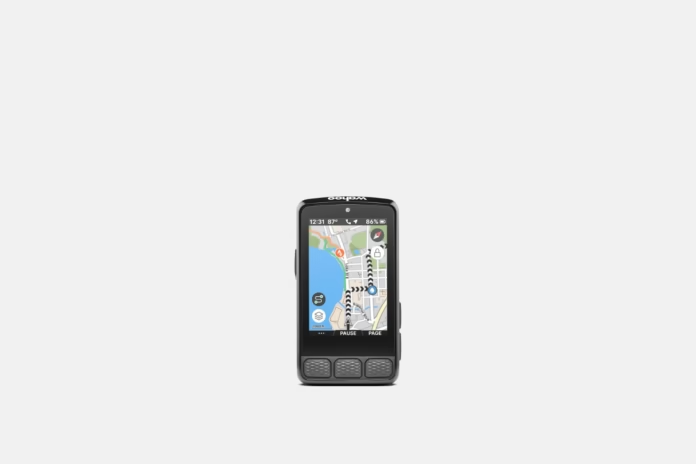
The Wahoo ELEMNT ROAM 3 sits in a particularly competitive part of the cycling computer market. It is expensive enough to demand convincing navigation and training tools, yet smaller and less imposing than Wahoo’s ELEMNT ACE. The third-generation ROAM makes its case with a 2.8-inch colour touchscreen, physical buttons, dual-band satellite positioning and a claimed 25-hour battery life. The important question is whether these changes make everyday riding simpler, rather than merely adding another screen to the handlebars.
For riders who regularly follow unfamiliar roads, navigate long events or switch between training and exploring, that combination is appealing. Wahoo has retained the clear page layouts associated with its earlier computers while making the map more useful at a glance. This assessment draws on Wahoo’s published specifications and independent road tests, rather than claiming a separate hands-on test by ProCyclingUK.
What has changed on the ROAM 3?
The headline improvement is the touchscreen. Previous ROAM models relied on buttons and a more limited colour display. The new unit offers a high-contrast 2.8-inch screen with richer colours and touch gestures for panning and zooming. Importantly, Wahoo has not removed its physical controls. There are still buttons for changing pages and managing a ride when gloves, rain or rough roads make touch input less convenient.
The hardware has also gained 64GB of storage, an integrated speaker for audible prompts, USB-C charging and a dual-band satellite receiver. These are practical upgrades for riders who want to load detailed maps, keep several routes available and hear a turn warning without repeatedly looking down. The casing measures 96 by 53 by 24mm and weighs approximately 109g without its mount.
Navigation is the main attraction
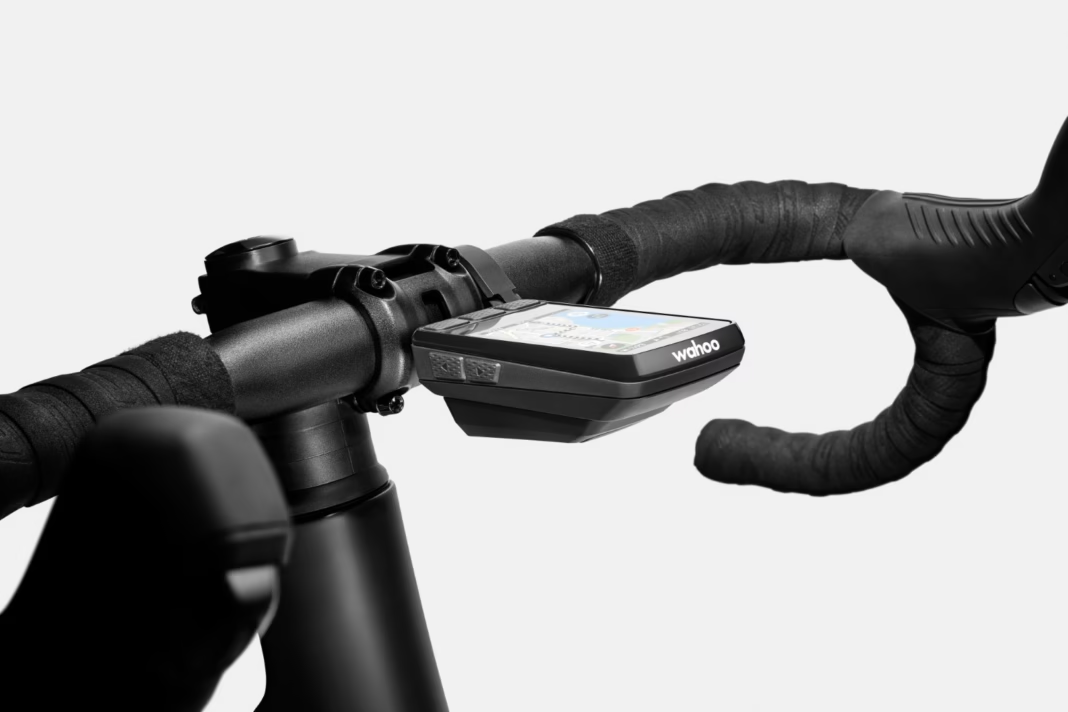
The ROAM 3 is designed around following routes rather than simply recording distance and speed. Turn-by-turn instructions appear on the screen and can be delivered through the speaker. When a rider leaves the planned course, the device can recalculate a route. Detailed offline maps also mean navigation does not depend on maintaining a mobile signal throughout the ride.
Independent testing offers useful context. BikeRadar praised the clarity of Wahoo’s map design and found its turn-by-turn directions easy to follow alongside the Garmin Edge 850. Its tester also reported effective rerouting when deliberately taking a wrong turn. That matters on British lanes where an apparently minor junction can turn into several kilometres of unnecessary climbing. The clearer route line is a meaningful benefit, even if it does not eliminate every mapping problem.
Wahoo’s Summit feature identifies upcoming climbs and presents information on gradients and remaining ascent. For sportive riders, that can be more useful than a screen full of performance numbers. Knowing whether a steep section lasts another 500 metres or five kilometres helps with pacing. Riders following unfamiliar routes will benefit most, although climb detection should still be treated as guidance rather than an infallible representation of every road.
Screen and controls
The larger colour display makes maps easier to interpret, particularly at complicated junctions. Touch gestures allow the rider to move around a map without repeatedly pressing buttons. Wahoo also keeps tactile controls, which is a sensible decision for winter riding. A touchscreen is convenient when stationary or riding gently, but a physical button remains easier to find when wearing thick gloves.
There are compromises. BikeRadar described the touchscreen as slightly laggy and found the unit slow to start. Cycling Weekly likewise noted occasional slow boot times and considered the screen less impressive than the displays on some competing computers. That distinction is worth making: the ROAM 3 screen is a substantial step forward for Wahoo, but it is not automatically the best display available at this price.
Battery life and long-distance use
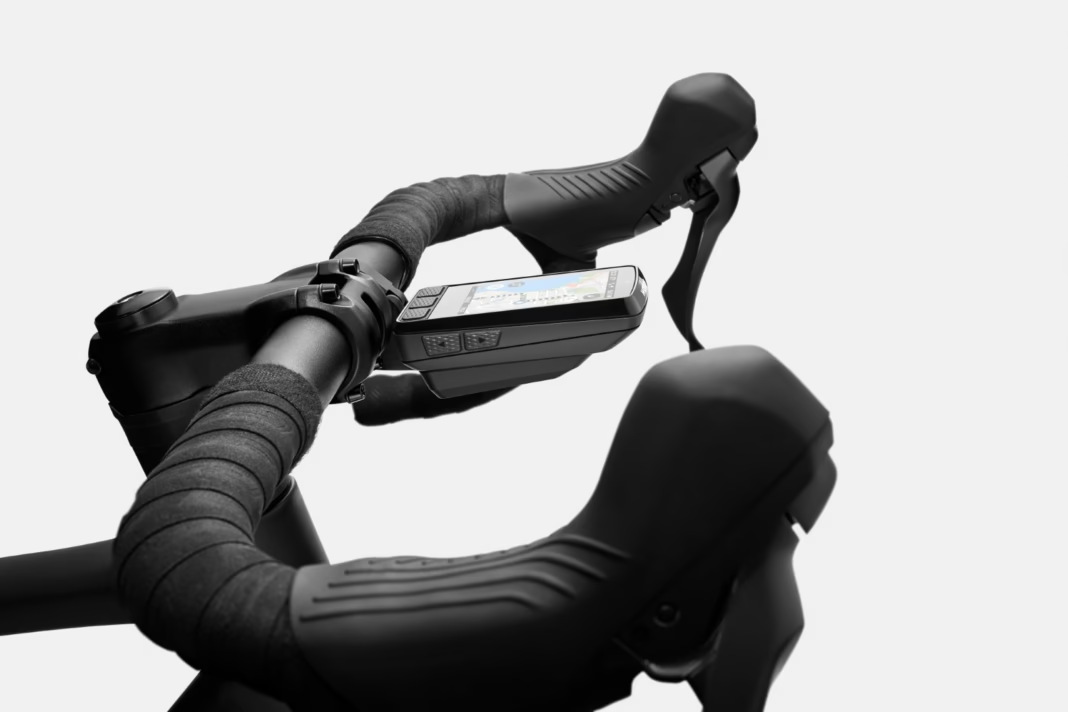
Wahoo claims up to 25 hours between charges. That should cover a long weekend ride, most sportives and many endurance events without the rider needing to attach a power bank. As with any GPS computer, the result depends on screen brightness, navigation, connected sensors and other settings. It would be misleading to treat the headline figure as a guaranteed duration under every condition.
BikeRadar reported approximately 18 hours with sensors connected and automatic brightness during its comparison test. Cycling Weekly also found the manufacturer’s claim optimistic. Those independent results still point to useful endurance, but riders planning overnight audaxes or consecutive long days should charge between outings or plan an external power source. Battery life is a strength relative to some rivals, not a reason to stop thinking about power management altogether.
Training, sensors and setup
The ROAM 3 supports ANT+, Bluetooth and Wi-Fi connections, making it suitable for use with heart-rate monitors, power meters and other compatible cycling accessories. Routes and workouts can be managed through Wahoo’s companion app, with integrations for popular route-planning services. For a rider already using Wahoo sensors or indoor-training equipment, that familiar environment may reduce setup time.
The Ready-To-Ride dashboard is intended to simplify the moments before departure, when a rider wants to choose a profile, select a route and begin recording. The interface generally favours straightforward presentation over layers of menus. That will suit people who prefer to configure their screens once and concentrate on the road. Those who enjoy changing detailed layouts and data fields directly on the device may find Garmin’s approach more flexible.
BikeRadar’s comparison noted that the ROAM 3 relies on the companion app for screen customisation, while the Edge 850 permits more changes directly on the computer. This is not necessarily a flaw for everyone. Many cyclists rarely alter their data pages after initial setup. However, it becomes more restrictive if you switch frequently between racing, commuting, gravel riding and structured training.
How does it compare with Garmin?
The Garmin Edge 850 is the obvious alternative for riders considering a premium mid-sized computer. Garmin offers a broad training and health ecosystem and more extensive on-device customisation. BikeRadar found its interface more polished overall, while praising the ROAM 3’s navigation and longer real-world battery life. The choice is therefore less about one computer being universally superior and more about the way each rider uses it.
A cyclist who spends most weekends following routes through unfamiliar countryside may appreciate Wahoo’s uncluttered maps and audible directions. Someone deeply invested in Garmin Connect, advanced training metrics and frequent data-screen changes may prefer staying with Garmin. Existing accessories, saved routes and personal familiarity also deserve more weight than a single specification comparison.
Value for money
Wahoo lists the ROAM 3 at a regular UK price of £399.99, although discounts can change its position against rivals considerably. At around £350 it becomes easier to recommend to riders prioritising navigation and battery life. At the full recommended price, the case is less clear-cut, because alternatives offer different advantages in display quality, training depth and interface flexibility.
The sensible approach is to compare the actual checkout price rather than assume that a particular retailer is cheapest. Check the Wahoo ELEMNT ROAM 3 price at Tredz (affiliate link; price and availability may change). Also consider what is included in the box: Wahoo supplies an out-front mount, a stem mount, a tether and a charging cable. That helps avoid the additional cost of a basic fitting kit, although riders with integrated cockpits should confirm mount compatibility before ordering.
Who should buy the Wahoo ELEMNT ROAM 3?
The ROAM 3 makes most sense for cyclists who want reliable route guidance without turning every ride into a technology exercise. It is particularly attractive for sportives, long club rides, touring and gravel routes where mapping is a central feature. The physical controls, speaker and generous storage are useful additions rather than headline features with little practical purpose.
It is harder to justify for riders who use a computer only to display speed, elapsed time and a handful of sensor readings. A smaller and cheaper device, including Wahoo’s BOLT 3, can meet those needs. Likewise, riders seeking the richest training ecosystem or the sharpest available display should compare Garmin and Hammerhead before committing.
Verdict
The Wahoo ELEMNT ROAM 3 is a thoughtful update that addresses important limitations of its predecessors. The touchscreen and improved colour mapping make navigation easier to read, while the retained buttons keep it practical in poor weather. Its battery life, offline mapping and clear interface form a convincing package for riders who explore unfamiliar roads.
There are genuine reservations: boot-up speed, occasional touch lag and less flexible on-device customisation. Independent tests also suggest that the 25-hour battery claim should not be treated as typical in every configuration. Even so, the overall balance is strong. For cyclists who put navigation first and want a computer that stays relatively uncomplicated, the ROAM 3 deserves a place near the top of the shortlist.