
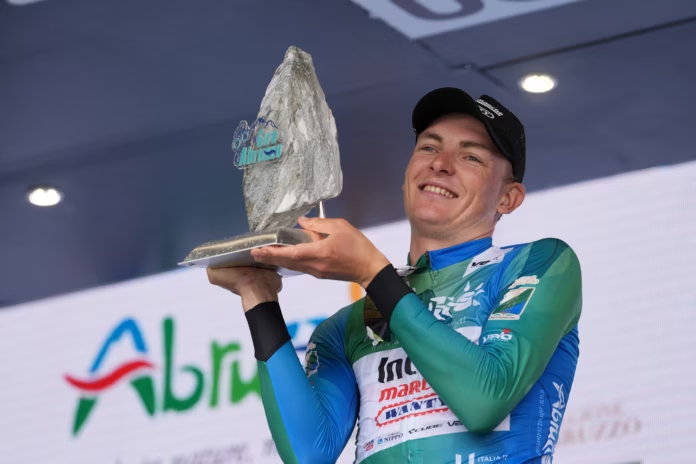
Kévin Vauquelin returns to racing for the first time since the Tour de France as the leading general classification contender at the 2026 Giro d’Abruzzo, but the four-day Italian stage race gives him very little time to rediscover race rhythm.
The race runs from 15 to 18 September, covering 639km between Cupello and Controguerra with around 8,200 metres of climbing. There is no equivalent of the long Prati di Tivo summit finish that shaped the 2024 edition, nor one obvious stage on which the entire GC should be decided. Instead, three of the four days contain opportunities to take time, beginning with a steep wall into Casalincontrada and ending with repeated short climbs around Controguerra.
That structure makes Vauquelin the logical favourite rather than an overwhelming one. Mathys Rondel returns after finishing fourth here in 2025 and has subsequently established himself as a serious stage racer, while Alessandro Fancellu and Ludovico Crescioli arrive with strong recent results. Diego Ulissi has the experience and finishing speed to exploit the punchier stages, with Wout Poels, Nicola Conci, Santiago Umba and Filippo Turconi among a deeper group of outsiders.
Netcompany INEOS also arrive with Dorian Godon, giving them one of the strongest stage hunters in the race alongside their GC leader. Fernando Gaviria should target the flatter third stage, while a collection of Italian Continental and development teams have enough quality to make the breakaway battle significant throughout the week.
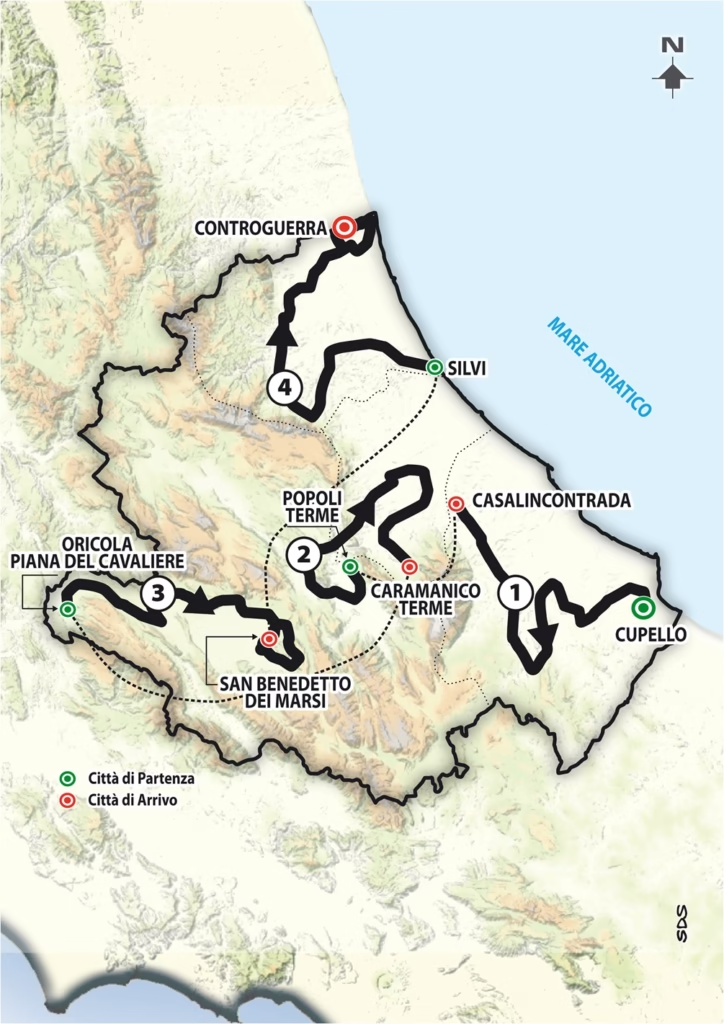
Giro d’Abruzzo 2026 at a glance
- Dates: 15-18 September 2026
- Stages: 4
- Total distance: 639km
- Total climbing: Around 8,200 metres
- Start: Cupello
- Finish: Controguerra
- Defending champion: Georg Zimmermann
- 2024 winner: Alexey Lutsenko
- Leading GC contenders: Kévin Vauquelin, Mathys Rondel, Alessandro Fancellu, Ludovico Crescioli, Diego Ulissi
- Stage hunters to watch: Dorian Godon, Fernando Gaviria, Luca Colnaghi, Tommaso Dati
The modern Giro d’Abruzzo returned in 2024 after a long absence from the international calendar, with Lutsenko taking overall victory ahead of Pavel Sivakov and George Bennett. Georg Zimmermann succeeded him in 2025 after making the decisive move towards Roccaraso, eventually winning by 11 seconds over David de la Cruz as Rondel finished fourth.
The 2026 edition should be less dependent on one major mountain performance. Bonus seconds, short gaps and positioning on the steep finishes could matter almost as much as outright climbing strength.
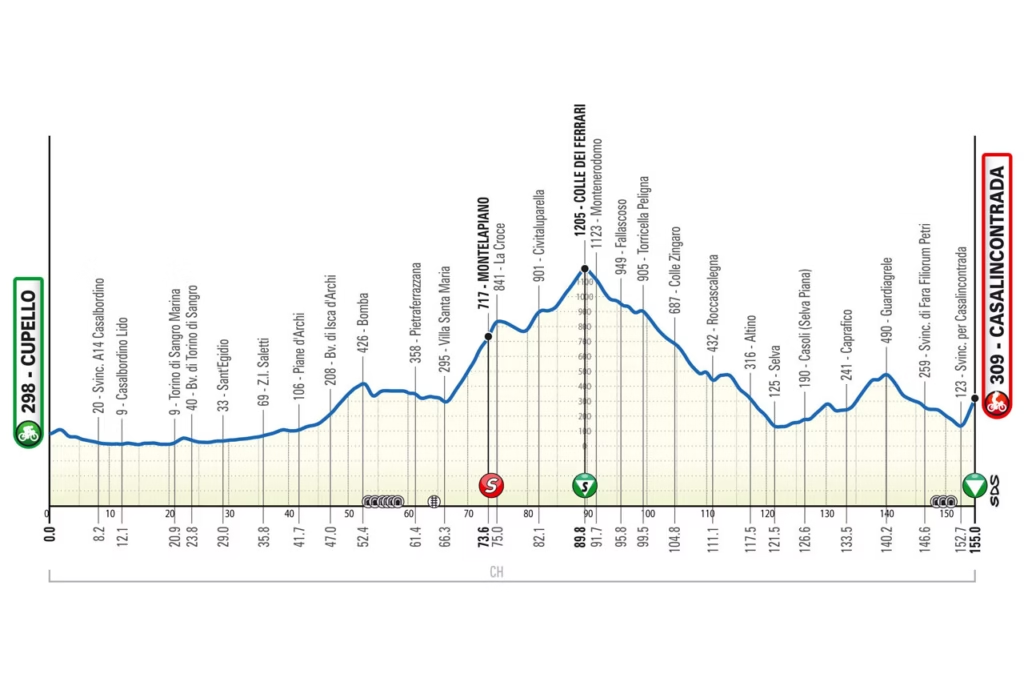
Stage 1 immediately puts the GC contenders under pressure
Tuesday 15 September: Cupello to Casalincontrada, 155km
There is no opening day for the sprinters to settle everyone into the race. Stage 1 heads north from Cupello, initially using faster roads towards the Adriatic coast before turning inland through increasingly rolling terrain around Bomba, Villa Santa Maria, Montelapiano and Colle dei Ferrari.
The decisive section comes after the descent from Guardiagrele. The road rises sharply towards Casalincontrada, with gradients exceeding 10% before the final corner and another slight rise continuing towards the line. It is not long enough to produce the sort of gaps associated with a true summit finish, but it is difficult enough for a rider caught badly positioned to lose several seconds before bonuses are even considered.
That immediately suits Godon and Ulissi, two riders capable of surviving a demanding day and still accelerating on a short uphill finish. Vauquelin has enough punch to race for the stage himself, which could prove useful if the race arrives largely together. Rondel, Fancellu and the more climbing-oriented contenders have a simpler requirement: arrive at the foot of the final wall near the front and make sure 10 seconds do not become 20.
For a race expected to remain close, the first afternoon could already establish the hierarchy.
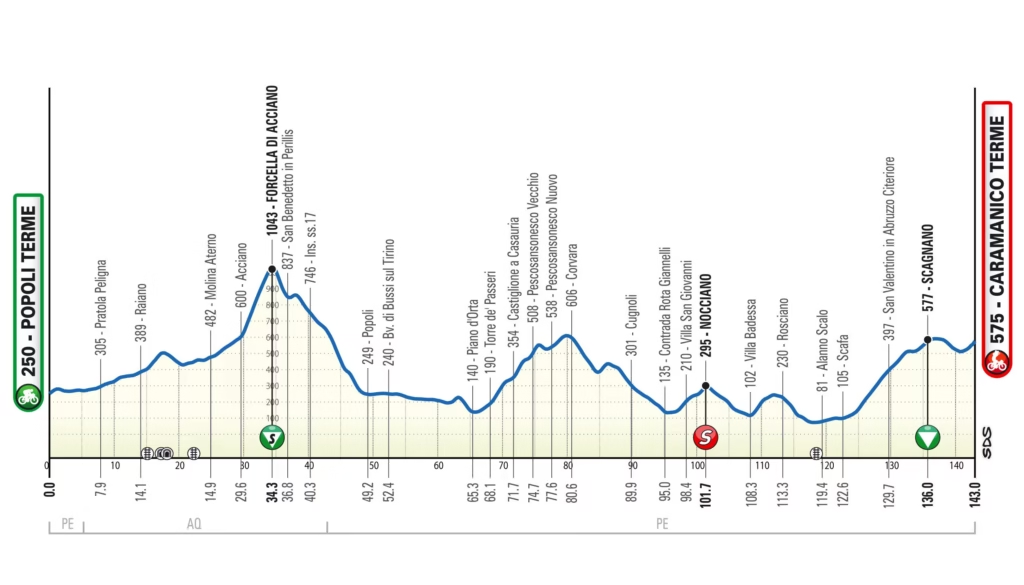
Stage 2 is the strongest opportunity for the climbers
Wednesday 16 September: Popoli Terme to Caramanico Terme, 143km
The second stage contains the most concentrated climbing of the race and looks like the most obvious place for Rondel, Fancellu and the other pure GC riders to test Vauquelin.
Forcella di Acciano comes soon after the start, followed by a long descent back towards Popoli Terme. The terrain then rarely settles as the route moves through Castiglione a Casauria, Pescosansonesco and Nocciano. That constant rise-and-fall structure should steadily reduce the value of team strength, particularly if the opening kilometres are raced aggressively.
The final 20km are predominantly uphill. The classified ascent towards Scagnano provides the hardest sustained section before the road continues over smaller rises and descents towards Caramanico Terme. There is another uphill run to the finish, complicated by a U-turn around a roundabout with roughly 500 metres remaining.
There may not be one point where the GC explodes. The danger is the accumulated cost of an hour spent repeatedly climbing and accelerating. A rider having a slightly poor day can lose contact almost without a single dramatic attack taking place.
Vauquelin’s level after his break from racing will become much clearer here. His 2026 stage-racing form makes him the strongest rider on paper, but nearly two months without competition can work both ways. He could arrive fresher than everyone else, or find the race intensity difficult when Stage 2 starts applying pressure.
Rondel should want the opposite. This is the day to make Vauquelin prove that his favourite status still matches his legs.
Stage 3 gives Fernando Gaviria his clearest opportunity
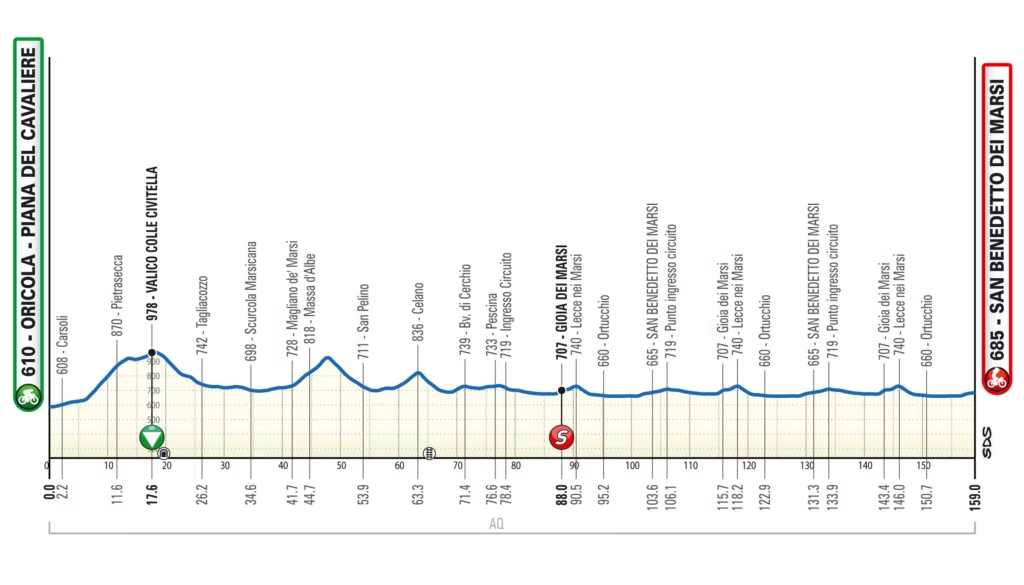
Thursday 17 September: Oricola-Piana del Cavaliere to San Benedetto dei Marsi, 159km
The third stage is the obvious interruption to the GC battle.
After a short climb early in the day, the route enters the Fucino Plain and becomes considerably easier through Magliano de’ Marsi, Celano and Gioia dei Marsi. The race eventually reaches San Benedetto dei Marsi for a 27.7km finishing circuit on largely wide, flatter roads.
There are enough turns through the town to make the final kilometres more complicated than the profile suggests, while the line itself comes on a slight rise. Even so, anything other than a reduced or full bunch sprint would represent a missed opportunity for the faster riders.
Gaviria is the most recognisable pure sprinter in the field and is still searching for his first victory of 2026. Caja Rural-Seguros RGA should therefore have little ambiguity about their plan. The difficulty will be finding enough teams willing to help control the break after two demanding opening stages.
Godon provides a different threat. He does not possess Gaviria’s outright sprint speed from a fresh peloton, but his ability to survive harder racing means Netcompany INEOS do not need the stage to remain straightforward. The Frenchman has been one of their most productive riders in 2026, including a Tour de Romandie prologue victory and another win against Tadej Pogačar on Stage 3 in Orbe.
Luca Colnaghi, Tommaso Dati, Nicolò Arrighetti and Riccardo Lorello are among the riders who can make the finale less predictable if the larger teams fail to control it cleanly.
The walls of Controguerra keep the race alive until Friday
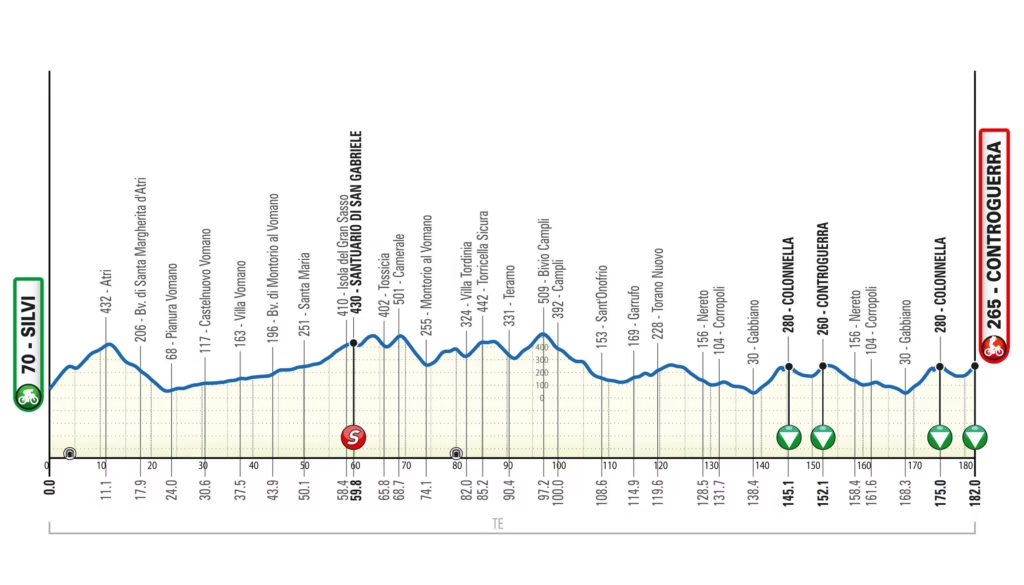
Friday 18 September: Silvi to Controguerra, 182km
The final stage is not ceremonial. It may be the most tactically interesting day of the entire race.
The riders leave Silvi on the Adriatic coast before turning inland towards the Sanctuary of San Gabriele at Isola del Gran Sasso. The roads through Torricella Sicura and Campli continue to add climbing before the race reaches a 29.9km finishing circuit containing the short ascents of Colonnella and Controguerra.
Colonnella is the sharper of the two, reaching double-digit gradients before twisting roads carry the riders towards the final climb. Controguerra averages around 5%, which is moderate enough for several different types of rider to remain involved but hard enough for a tired GC contender to lose time after almost 180km.
That combination matters. If the race leader starts Friday with only five or 10 seconds in hand, his team cannot simply wait for the final kilometre. Attacks on Colonnella can force an early chase, and riders with several team-mates remaining can create repeated pressure before the final ascent.
Crescioli and Ulissi should particularly appreciate that type of racing. Both can cope with repeated short climbs and are more dangerous when a stage becomes tactical than they would be on a long, high-altitude summit finish. Rondel and Fancellu may prefer to create more sustained pressure earlier, while Vauquelin has the versatility to respond to either scenario.
It is the sort of finale where the strongest rider and the rider wearing the leader’s jersey may not necessarily have the same interests.
Kévin Vauquelin returns as the clear favourite
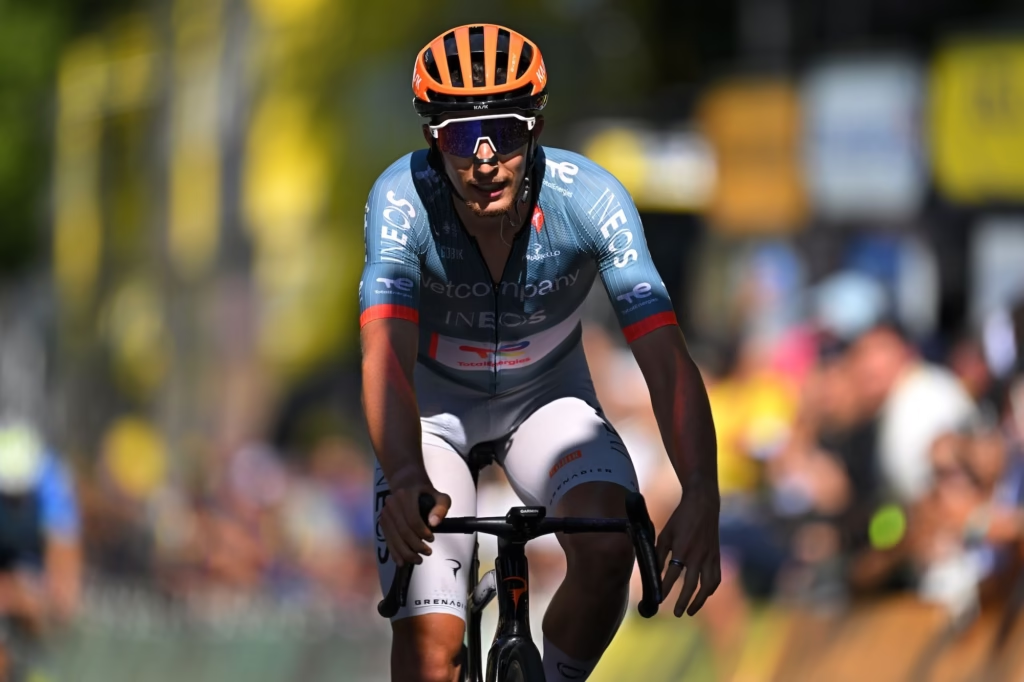
On ability, Vauquelin has the strongest case.
The Frenchman finished fourth at Paris-Nice and 10th at Itzulia Basque Country during the spring before carrying his form through to the Tour de France. His move to Netcompany INEOS had already been secured on a three-year contract beginning in 2026, and his first season with the British team has confirmed that he can operate as a genuine leader in major stage races.
His time trialling also strengthens his case even though there is no race against the clock in Abruzzo. Vauquelin was second behind Paul Seixas in the opening time trial at Itzulia Basque Country, another indication of how few obvious weaknesses he brings into shorter stage races.
Abruzzo should suit him particularly well because none of the climbs is extreme. Stage 2 is difficult enough to expose weaker riders without necessarily favouring a specialist climber, while the short uphill finishes on Stages 1 and 4 play to Vauquelin’s acceleration.
The unknown is freshness. This is his first race since the Tour de France, so he has no recent racing form to measure against Rondel or Fancellu. Stage 1 will reveal quickly whether the break has left him sharp enough to control a race immediately.
Godon’s presence reduces some of that pressure. Netcompany INEOS do not need Vauquelin to personally cover every dangerous move when they have another rider capable of winning several stages.
Mathys Rondel returns as a much stronger rider than in 2025
Rondel finished fourth at the Giro d’Abruzzo last year, 34 seconds behind Zimmermann. That would already make him relevant in 2026. What has happened since makes him one of the main favourites.
The Tudor Pro Cycling Team rider has developed into a consistent stage racer, with strong performances at Paris-Nice and the Tour of the Alps preceding a Giro d’Italia in which he finished just outside the top 10. The 2026 Giro d’Italia final classification showed a rider increasingly capable of surviving three-week racing rather than merely producing isolated climbing performances.
That development makes a four-day race like Abruzzo particularly interesting. Rondel does not need to find out whether he can last through the week. The question is whether he has enough explosiveness to turn his climbing strength into actual time gaps on this route.
Stage 2 looks like his clearest opportunity. If Tudor can make the final 20km difficult enough, Rondel can try to strip away the riders who might otherwise beat him for bonus seconds on the sharper finishes.
He also has the advantage of having raced the Giro d’Abruzzo before. Fourth place in 2025 means he already knows how quickly small differences can become decisive here.
Alessandro Fancellu arrives with form and unfinished business
Fancellu finished eighth overall last year and returns after a summer that has pushed him closer to the front of the contenders list.
The Italian has been particularly effective in shorter stage races, where his climbing consistency gives him repeated opportunities without requiring one huge mountain finish. That profile fits the 2026 Giro d’Abruzzo well. The opening wall should be manageable, Stage 2 provides enough sustained climbing to suit him and the final day gives MBH Bank Ballan Telecom Fort a chance to attack rather than simply defend.
His challenge is converting consistency into enough time to beat riders from stronger teams.
Vauquelin has Godon and the depth of Netcompany INEOS around him. Rondel has Tudor’s support. Fancellu may have to create his own opportunities more often, particularly if he reaches Controguerra within a few seconds of the lead.
That does not make him a secondary contender. The route is open enough for a rider in good form to overcome a team-strength disadvantage.
Ludovico Crescioli has the right qualities for this route
Crescioli may be the rider most likely to benefit if the overall is decided through repeated small gains rather than one major climbing performance.
The Team Polti VisitMalta rider has taken another step forward during 2026, producing strong results across hilly one-day races and stage races rather than being tied to one narrow speciality. He is comfortable when races become selective without turning into pure climbing contests, which is exactly where Stages 1 and 4 could end up.
Controguerra looks particularly attractive. If Crescioli reaches the final stage within 20 seconds of the lead, his ability to attack on shorter climbs gives him a legitimate route to victory.
Fernando Tercero provides Polti with another rider who can survive the harder days, making the team less dependent on protecting one position throughout the race. That could become important on Friday if several teams are still separated by only seconds.
Diego Ulissi can still punish anyone who brings him to the finish
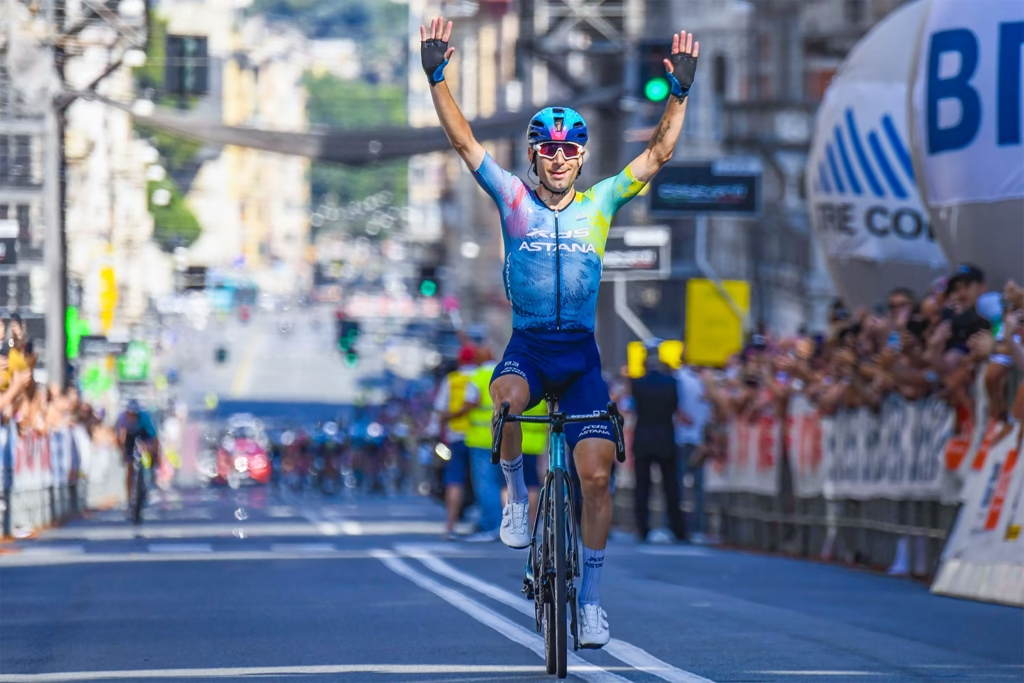
Ulissi is not the rider he was at his peak, but few competitors in the field have spent more time learning how to win on exactly the sort of roads Abruzzo offers this year.
The 37-year-old remains dangerous on short climbs followed by reduced finishes. Stage 1 is an obvious target, while the sequence of walls on Stage 4 gives him another chance if the overall contenders fail to create complete separation.
For the general classification, Stage 2 is the bigger question. Ulissi needs to stay close enough to the stronger climbers that his finishing speed remains relevant elsewhere.
Nicola Conci gives XDS Astana Development Team another experienced option, and their presence could become particularly important if Ulissi is sitting within bonus-second range of the lead. Other GC teams cannot afford to assume that every attack is simply preparation for an Ulissi finish.
His route to overall victory is narrow, but it is credible.
Wout Poels and Santiago Umba need Stage 2 to be properly difficult
Poels brings the strongest climbing pedigree among the older riders in the race, although the route is not perfectly designed for him.
There is no long summit finish where his ability to sustain a high climbing pace can automatically create separation. If Unibet Rose Rockets want to put Poels into the GC battle, Stage 2 needs to become harder than the profile alone guarantees. A selective race over Scagnano would remove some of the faster riders and make Friday’s tactical finale more manageable.
Umba has a similar interest but arrives from a very different point in his career. The Colombian is at his best when the road becomes steep and can use the second stage to establish himself among the front group before trying to survive the more explosive final day.
Domenico Pozzovivo provides Solution Tech-NIPPO-Rali with a remarkable amount of climbing experience around him. Pozzovivo is unlikely to need anyone to explain how to manage a four-day Italian stage race, and that knowledge can be valuable for a younger leader even when it does not translate into a personal result.
Dorian Godon may have more opportunities than anyone else
Godon could finish the Giro d’Abruzzo without seriously challenging for the overall and still be one of its defining riders.
Stage 1 suits his punch. Stage 3 suits his finishing speed. Stage 4 could suit both if the GC teams fail to make the walls sufficiently selective. Very few riders on the start list have three realistic opportunities.
That also makes him central to Vauquelin’s race. Netcompany INEOS can allow Godon into late attacks without weakening their GC position, and rival teams cannot simply ignore him because he has repeatedly shown during 2026 that he can finish those moves.
The more responsibility other teams spend chasing Godon, the easier Vauquelin’s race becomes.
That two-leader dynamic is one of the strongest arguments for putting Netcompany INEOS ahead of the other GC teams before Stage 1.
Fernando Gaviria has one day he cannot afford to waste
Gaviria’s target is considerably clearer.
Stage 3 should be his day.
The Colombian still has enough top-end speed to beat this field in a straightforward sprint, but he has gone through 2026 without a victory and the other three stages offer little incentive to expose himself unnecessarily.
Caja Rural-Seguros RGA should therefore spend the opening two days protecting him where possible before taking responsibility on the flatter road to San Benedetto dei Marsi. The final turns mean timing the lead-out will matter, particularly with Godon capable of using the slight uphill finish to challenge riders who have committed too early.
For Gaviria, opportunities this clean are becoming less frequent. Abruzzo gives him one.
Giro d’Abruzzo 2026 prediction
Vauquelin has the strongest combination of climbing ability, punch and team support. The route does not contain the sort of prolonged mountain finish where a lighter climber should automatically have an advantage, and his ability to contest the uphill finishes means bonus seconds can work for him rather than against him.
Rondel is the clearest challenger. He already finished fourth here last year and returns after a season that has strengthened his case as a GC rider. Fancellu brings the better recent racing rhythm, while Crescioli and Ulissi are particularly dangerous if the race reaches Friday with several riders still separated by less than half a minute.
Prediction: Kévin Vauquelin ahead of Mathys Rondel and Alessandro Fancellu.
The first indication should come quickly on the wall into Casalincontrada. Stage 2 offers the strongest climbing test, but the absence of a long time trial or one dominant summit finish means the race leader may still be vulnerable when the riders hit Colonnella for the final time on Friday.
That uncertainty is the strongest feature of the 2026 route. The Giro d’Abruzzo can be shaped on the climbs, but it may be won through four days of avoiding small mistakes.

