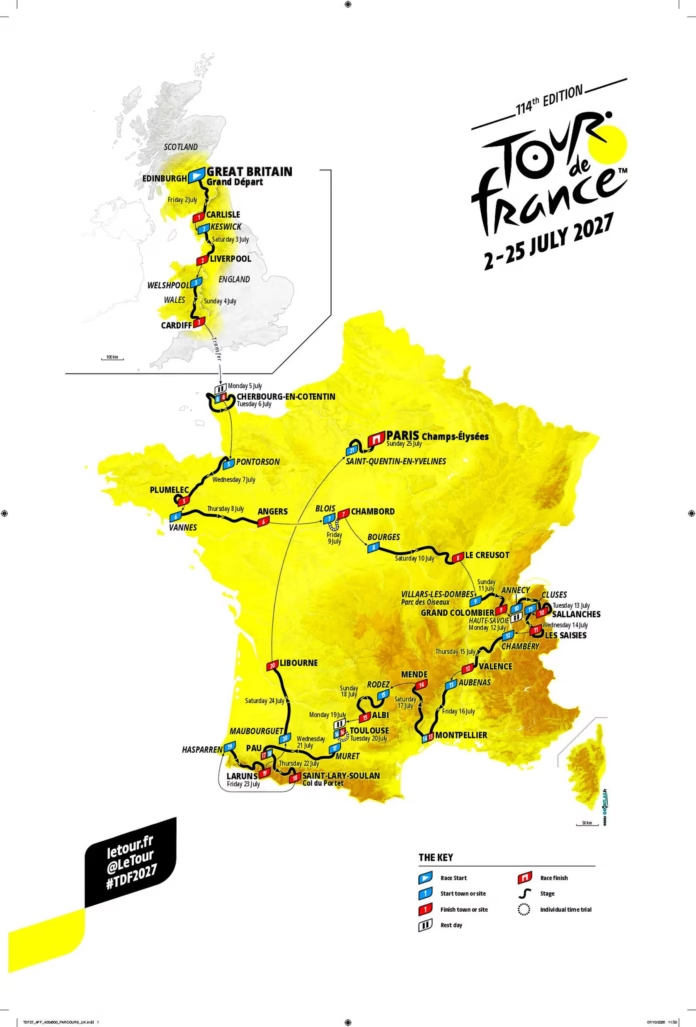
The 2027 Tour de France will start in Edinburgh on 2 July and finish in Paris on 25 July, after organisers revealed a 3,479km route that includes three stages in Britain, 71km of individual time trials and three mountain-top finishes. The 114th edition covers 53,450 metres of climbing, with the Grand Colombier, Les Saisies and Col du Portet among its defining tests.
The race makes its most northerly Grand Départ in history, visiting Scotland and Wales for the first time. A sprint finish in Carlisle is the likeliest opening scenario, but the next two days to Liverpool and Cardiff are considerably less predictable. The riders then have a rest day on 5 July to transfer across the Channel before racing resumes on the Normandy coast.
The general classification contenders face two unusually long time trials by recent Tour standards: 38km from Blois to Chambord on stage 7 and 33km around Toulouse on stage 16. Their combined 71km is the highest figure since 2012, a feature likely to put climbers who lose time against the clock under pressure to attack elsewhere.
There are six mountain stages, with the Jura and Alps preceding a difficult day to Mende and a final Pyrenean double-header. Stage 18 alone features 5,400m of climbing over the Soulor, Tourmalet, Hourquette d’Ancizan and Col du Portet. Unlike earlier rumours that suggested a straightforward Paris finish, the final stage includes the climb through Montmartre before the Champs-Élysées.
2027 Tour de France route: all 21 stages, dates and distances
The organiser classifies the route as seven flat stages, six hilly stages, six mountain stages and two individual time trials. The total distance remains subject to final homologation.
| Stage | Date | Start | Finish | Distance | Type |
|---|---|---|---|---|---|
| 1 | Fri 2 July | Edinburgh | Carlisle | 185km | Flat |
| 2 | Sat 3 July | Keswick | Liverpool | 223km | Hilly |
| 3 | Sun 4 July | Welshpool | Cardiff | 223km | Hilly |
| 4 | Tue 6 July | Cherbourg-en-Cotentin | Cherbourg-en-Cotentin | 171km | Hilly |
| 5 | Wed 7 July | Pontorson | Plumelec | 178km | Hilly |
| 6 | Thu 8 July | Vannes | Angers | 193km | Flat |
| 7 | Fri 9 July | Blois | Chambord | 38km | Individual time trial |
| 8 | Sat 10 July | Bourges | Le Creusot | 224km | Hilly |
| 9 | Sun 11 July | Villars-les-Dombes (Parc des Oiseaux) | Grand Colombier | 162km | Mountain |
| 10 | Tue 13 July | Annecy | Sallanches | 171km | Mountain |
| 11 | Wed 14 July | Cluses | Les Saisies | 150km | Mountain |
| 12 | Thu 15 July | Chambéry | Valence | 162km | Flat |
| 13 | Fri 16 July | Aubenas | Montpellier | 164km | Flat |
| 14 | Sat 17 July | Montpellier | Mende | 199km | Mountain |
| 15 | Sun 18 July | Rodez | Albi | 169km | Hilly |
| 16 | Tue 20 July | Toulouse | Toulouse | 33km | Individual time trial |
| 17 | Wed 21 July | Muret | Pau | 186km | Flat |
| 18 | Thu 22 July | Pau | Saint-Lary-Soulan (Col du Portet) | 174km | Mountain |
| 19 | Fri 23 July | Hasparren | Laruns | 160km | Mountain |
| 20 | Sat 24 July | Maubourguet | Libourne | 198km | Flat |
| 21 | Sun 25 July | Saint-Quentin-en-Yvelines | Paris (Champs-Élysées) | 116km | Flat |
Rest days fall on Monday 5 July in Cherbourg-en-Cotentin, Monday 12 July in Haute-Savoie and Monday 19 July in Toulouse. Each road stage will award 10, six and four bonus seconds to its first three finishers, with an intermediate sprint on every road stage.
Tour de France 2027 stage-by-stage route analysis
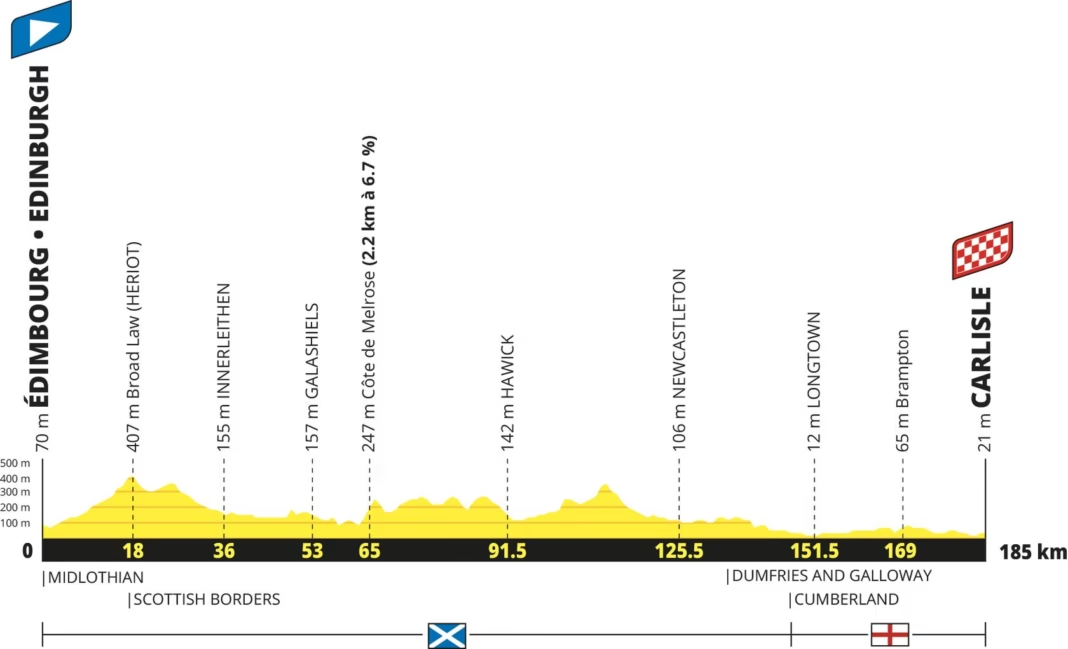
Stage 1: Edinburgh to Carlisle, 185km | Friday 2 July
The most northerly Grand Départ in Tour history begins in the Scottish capital and passes through the Scottish Borders before crossing into Cumbria. The Côte de Melrose provides the day’s only categorised climb and an early chance to wear the polka-dot jersey. After that, the roads become much friendlier to the sprint teams. A likely bunch finish near Carlisle Castle should decide the race’s first yellow jersey, although the opening day will still demand careful positioning.
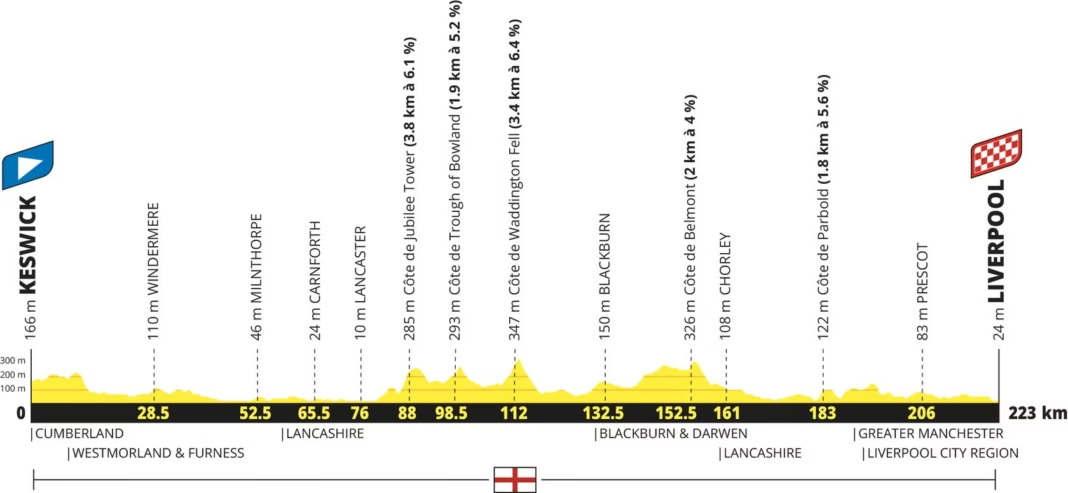
Stage 2: Keswick to Liverpool, 223km | Saturday 3 July
Five categorised climbs make this a very different prospect from the opening stage. The route passes through the Lake District, beside Thirlmere, Grasmere and Windermere, before reaching the Lancashire hills and the Côte de Jubilee Tower. Wind along the coast could make controlling the breakaway harder still. Strong sprinters may survive and contest the finish in Liverpool, but the climbs and length of the stage give attackers room to make the race much less orderly.
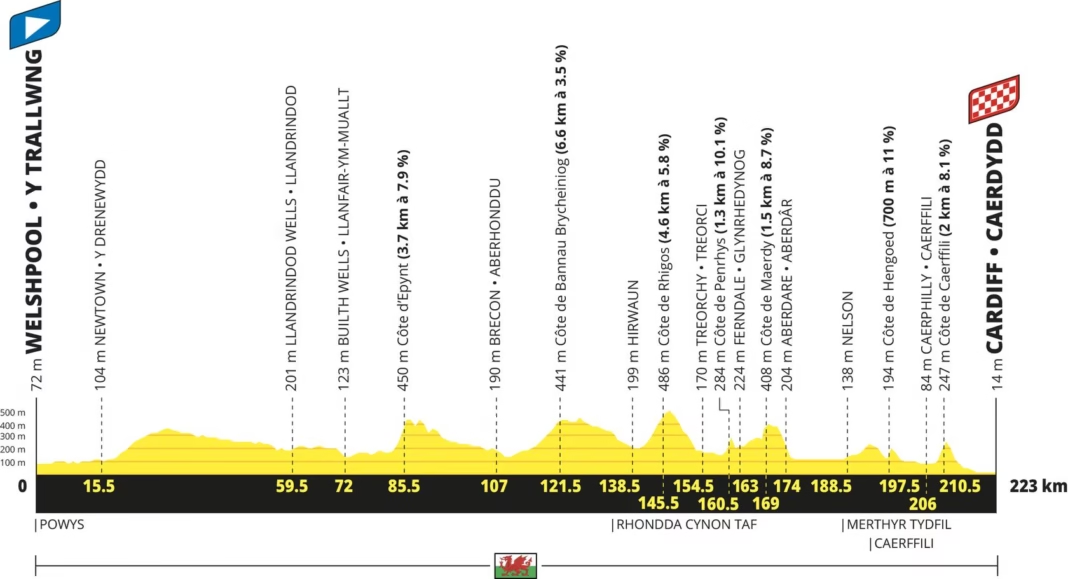
Stage 3: Welshpool to Cardiff, 223km | Sunday 4 July
The Tour’s first Welsh stage could change the overall classification before the peloton reaches France. A succession of steep climbs brings repeated attacks into play, culminating in the Côte de Caerphilly, 2km at approximately 8.2%, with around 12km left to race. The ramps near Cardiff should favour puncheurs rather than pure sprinters, and a badly positioned yellow jersey contender could lose precious seconds. The opening British block ends with far more than a ceremonial ride into the capital.
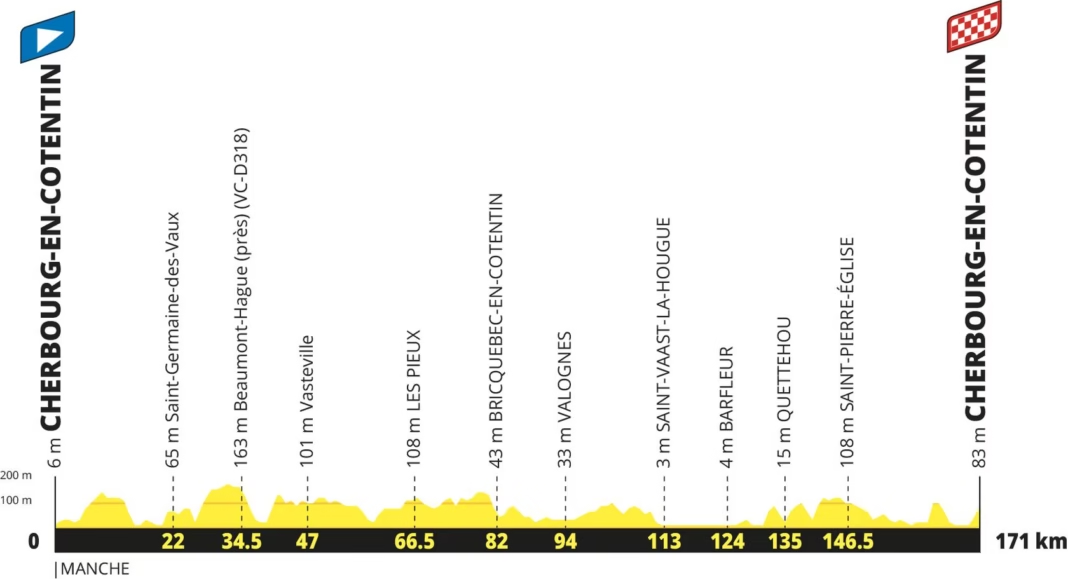
Stage 4: Cherbourg-en-Cotentin to Cherbourg-en-Cotentin, 171km | Tuesday 6 July
After the first rest day and Channel transfer, the Tour begins a loop around the Cotentin peninsula. Long stretches along the coast are exposed to crosswinds, while the winding approach makes positioning important. The steep Côte du Becquet arrives inside the final 10km before an uphill finish in Cherbourg. This is a day where a powerful sprinter might hold on, but a late move by a puncheur could prove just as effective if the wind has already split the peloton.
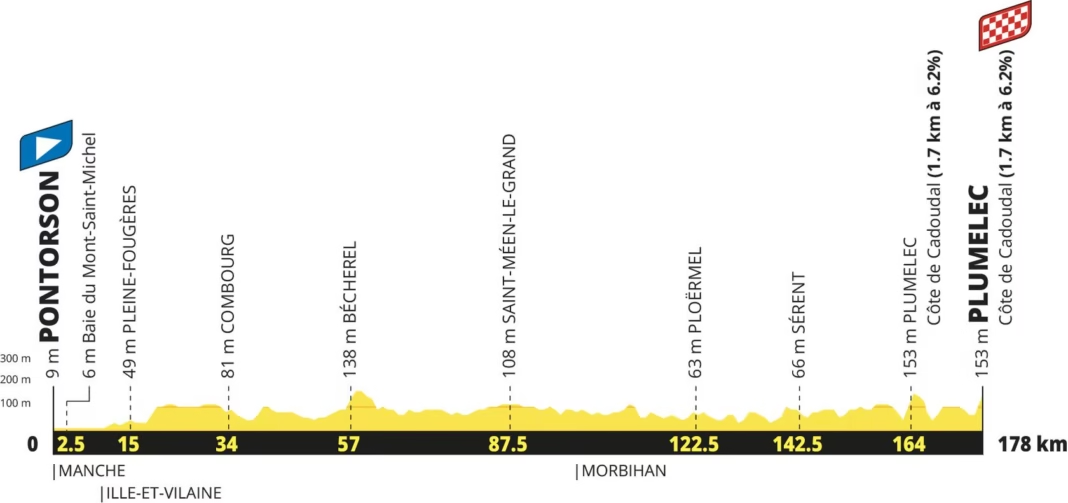
Stage 5: Pontorson to Plumelec, 178km | Wednesday 7 July
The riders leave near Mont-Saint-Michel and travel towards Brittany, but the decisive terrain is saved for the finishing circuit at Plumelec. The Côte de Cadoudal, 1.7km at 6.2%, is climbed twice, including at the finish. The repeated effort rewards riders with the acceleration to attack on a three-minute ascent after nearly 180km of racing. It will be difficult for conventional sprint trains to control the finale if a select group forms on the first passage.
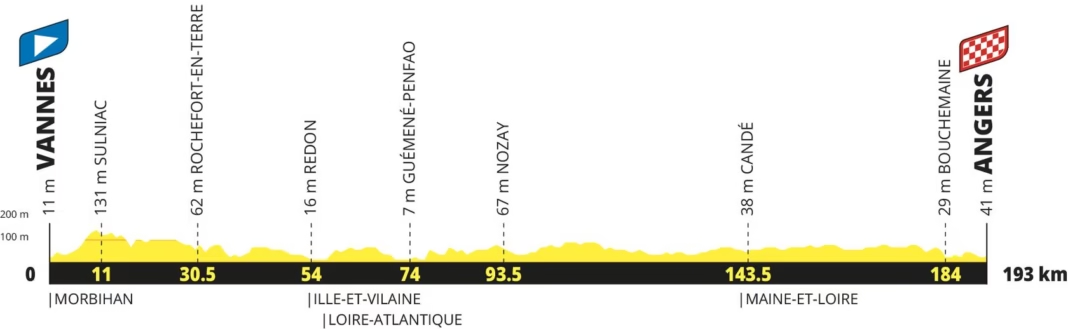
Stage 6: Vannes to Angers, 193km | Thursday 8 July
After several difficult finales, the sprinters should welcome a largely flat stage from the Gulf of Morbihan into Anjou. The longer straight sections offer opportunities for wind-driven attacks, but there is little sustained climbing to remove the fastest riders. The run into Angers contains several bends before a rising false-flat finish, making the last few kilometres important for lead-outs. It is the clearest opportunity for a full bunch sprint before the first time trial.
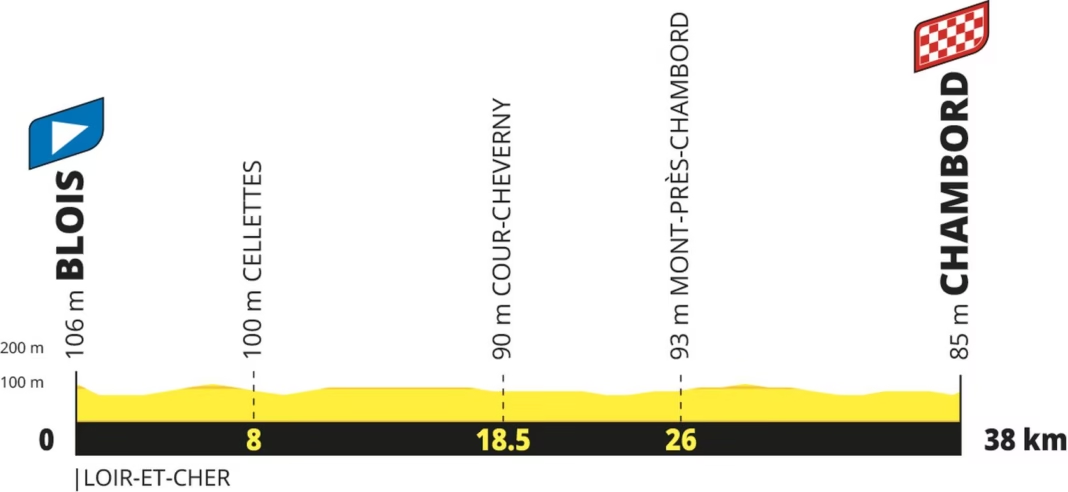
Stage 7: Blois to Chambord individual time trial, 38km | Friday 9 July
The first major test against the clock follows an undulating rather than highly technical course through the Loire Valley. The route passes near Cheverny before its last three kilometres in the grounds of Château de Chambord. At 38km, this is long enough to produce meaningful gaps between the best time triallists and the pure climbers. Any contender losing a minute or more may be forced to race aggressively in the Jura and Alps rather than rely on one mountain-top finish.
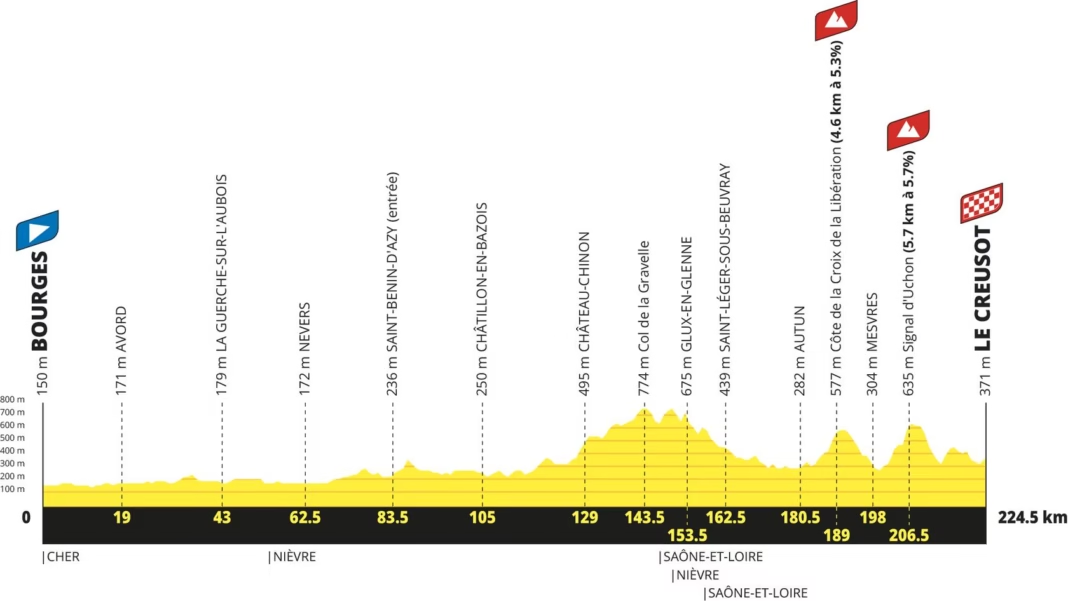
Stage 8: Bourges to Le Creusot, 224km | Saturday 10 July
At 224km, this is the longest stage of the Tour, and the Morvan terrain gives teams little reason to expect an easy day. The Signal d’Uchon rises for 5.7km at 5.7% near the finish, including much steeper ramps that can break a group apart. The area produced aggressive racing at the 2021 Tour, when leading riders struggled to control the attacks. A breakaway is an obvious candidate for the stage, but the general classification teams must remain alert to a race that could fragment unexpectedly.
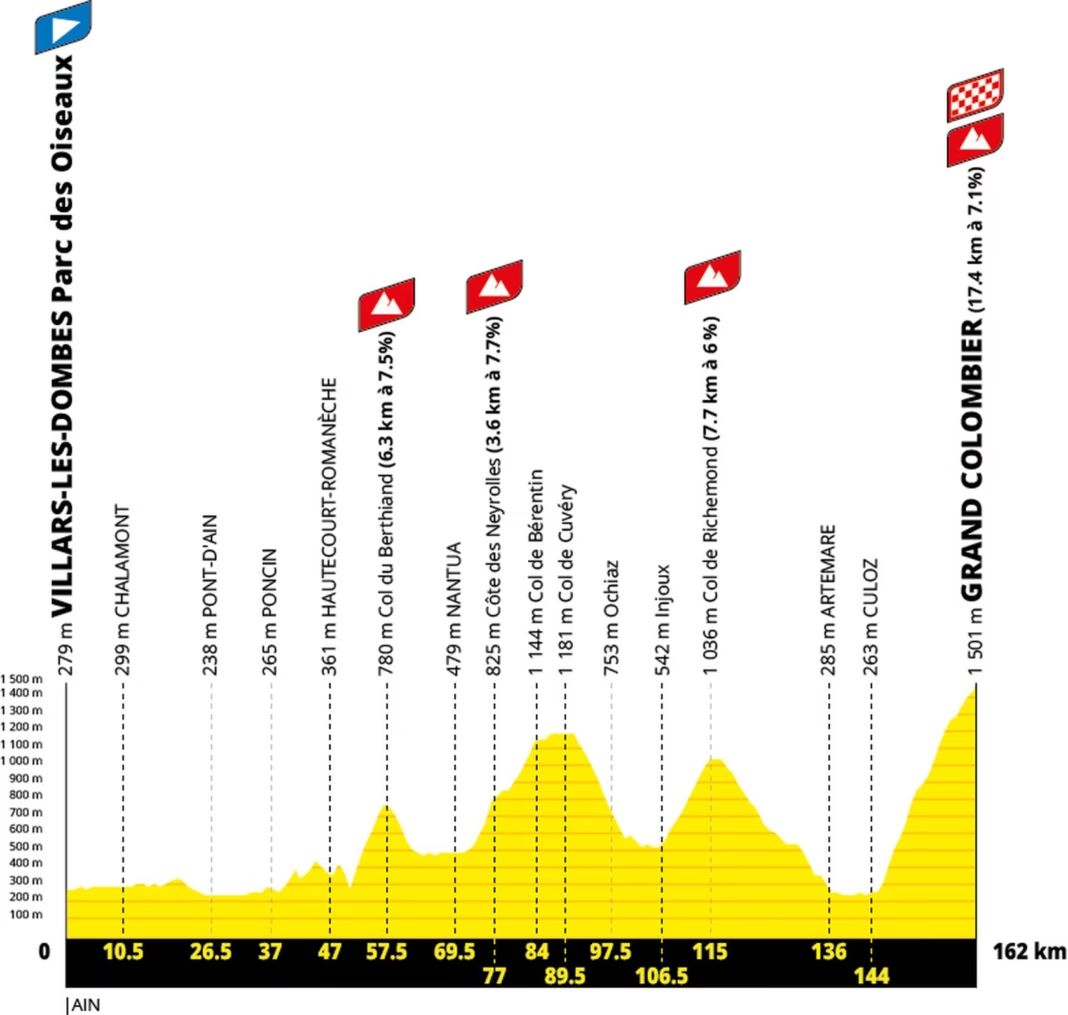
Stage 9: Villars-les-Dombes to Grand Colombier, 162km | Sunday 11 July
The opening week concludes with the first major mountain summit finish. After the early flatter kilometres, five categorised climbs lead into the Jura, including the Col du Berthiand and Col de Richemond, before the ascent of the Grand Colombier from Culoz. With approximately 3,750m of elevation gain, this is the first chance for the strongest climbers to gain significant time. The following rest day means there is less reason for contenders to conserve energy on the final ascent.
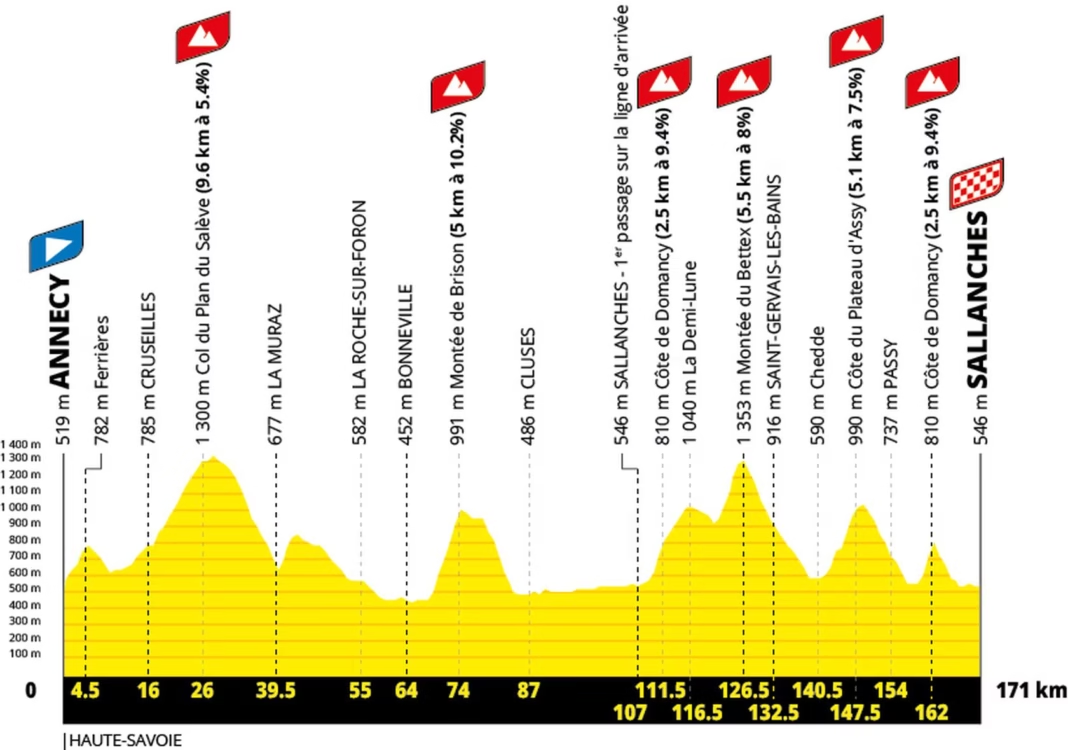
Stage 10: Annecy to Sallanches, 171km | Tuesday 13 July
The Tour enters Haute-Savoie with a mountainous stage through roads linked to Bernard Hinault’s 1980 world championship victory. Climbs include the Col du Plan du Salève and Montée de Brison before a testing circuit around Sallanches. The Côte de Domancy, 2.5km at 9.4%, is tackled twice, with the second passage providing a late opportunity to attack. The stage carries around 3,750m of climbing and favours riders able to withstand repeated steep accelerations rather than simply set a steady pace on one long ascent.
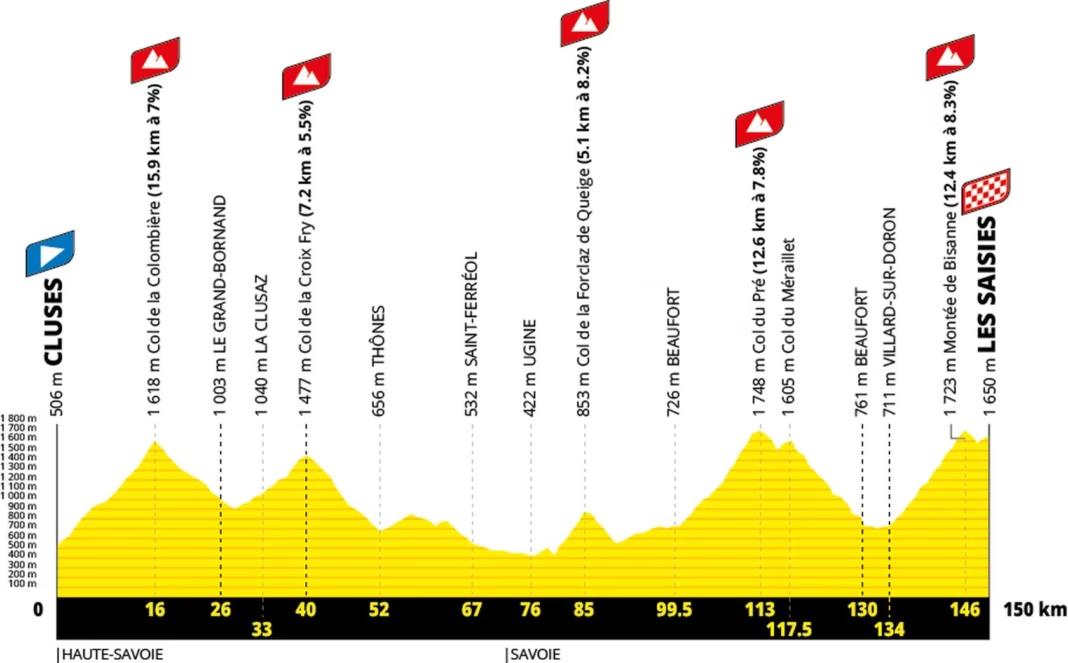
Stage 11: Cluses to Les Saisies, 150km | Wednesday 14 July
Bastille Day brings the toughest Alpine stage, packing approximately 4,750m of ascent into only 150km. The Col de la Colombière, Col de la Croix Fry and Col de la Forclaz de Queige lead towards the Col du Pré and Montée de Bisanne. Those final climbs together provide around 25km of climbing at roughly 8% within the last 50km. A technical descent follows before the short final rise to Les Saisies. This is the sort of terrain where a team can isolate a rival well before the finish.
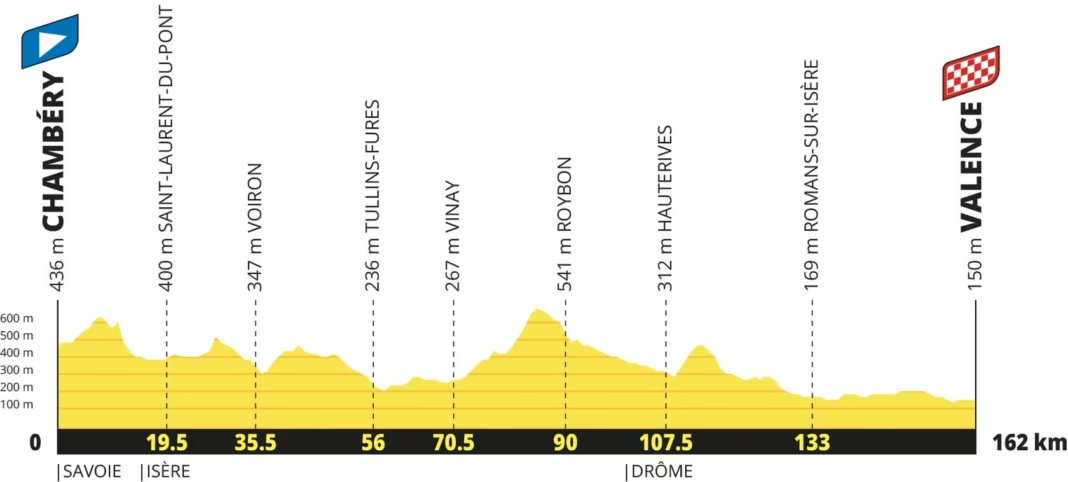
Stage 12: Chambéry to Valence, 162km | Thursday 15 July
A less mountainous day follows the Alpine double-header, giving the sprinters hope of returning to the front. The route contains a few smaller climbs, but the principal tactical concern is the Rhône Valley. The last 25km are exposed to wind, and a change of direction around 10km from the finish could create echelons. General classification riders who survived the high mountains will still need to avoid losing time through poor positioning on the flat.
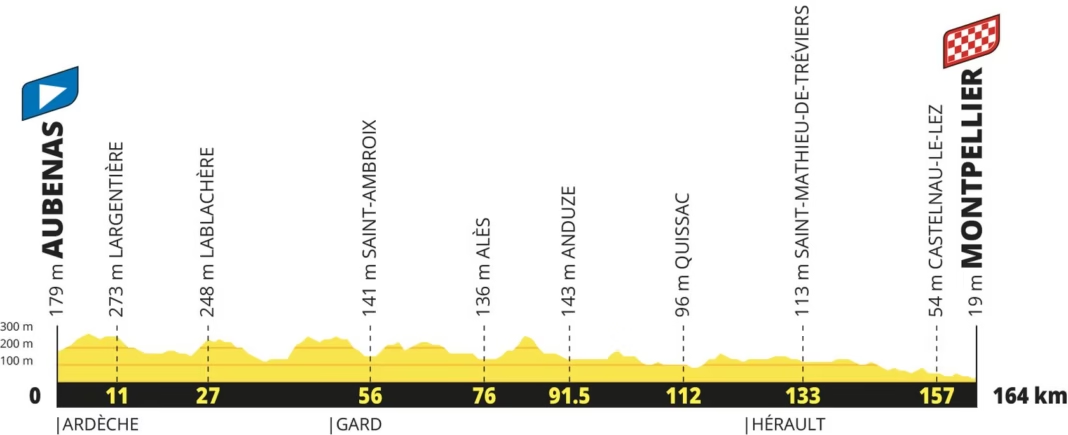
Stage 13: Aubenas to Montpellier, 164km | Friday 16 July
Another opportunity for the fastest riders arrives on a mostly flat run south towards Montpellier. Few climbs interrupt the route, so bringing back the day’s breakaway should be possible. The real danger is the weather: both the Mistral and Tramontane winds can turn a routine sprint stage into a fight for position. With a new city-centre finish, the lead-out trains will also have to judge the final kilometres carefully before a difficult weekend in the Massif Central.
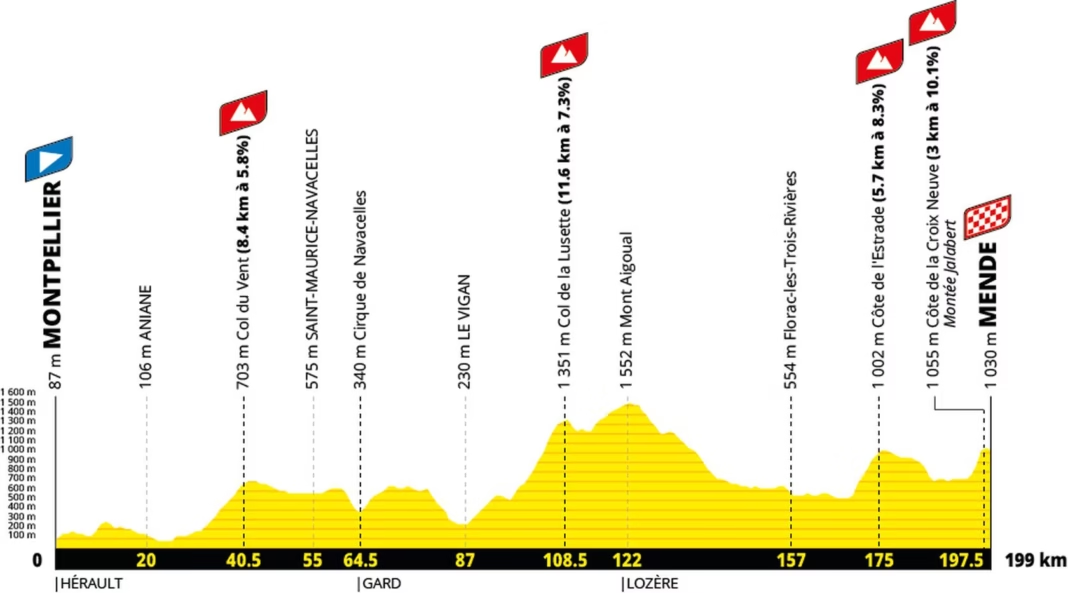
Stage 14: Montpellier to Mende, 199km | Saturday 17 July
This is one of the route’s most deceptive days, featuring around 4,300m of climbing despite the absence of a high Alpine summit. The route heads through the Cévennes via the Col du Vent, Cirque de Navacelles and Col de la Lusette, before finishing in Mende with the steep Côte de la Croix Neuve. The accumulation of climbing and sharp gradients could favour a successful breakaway, but aggressive general classification contenders may also find space to attack long before the final ramp.
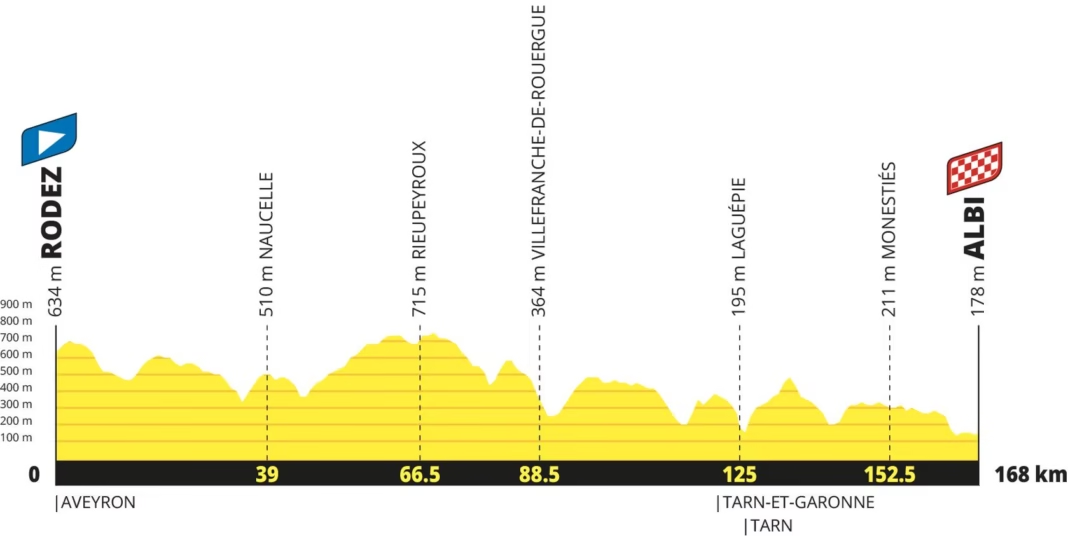
Stage 15: Rodez to Albi, 169km | Sunday 18 July
Eight categorised climbs make the last stage before the third rest day an inviting prospect for attackers. The constant rises and descents create repeated chances to escape, with the last classified summit under 25km from Albi. A downhill approach takes the race to within roughly five kilometres of the finish before the road rises on a false flat. Teams with a rider in the breakaway could save considerable work, while sprinters may find the changing gradients increasingly hard to manage after two weeks of racing.
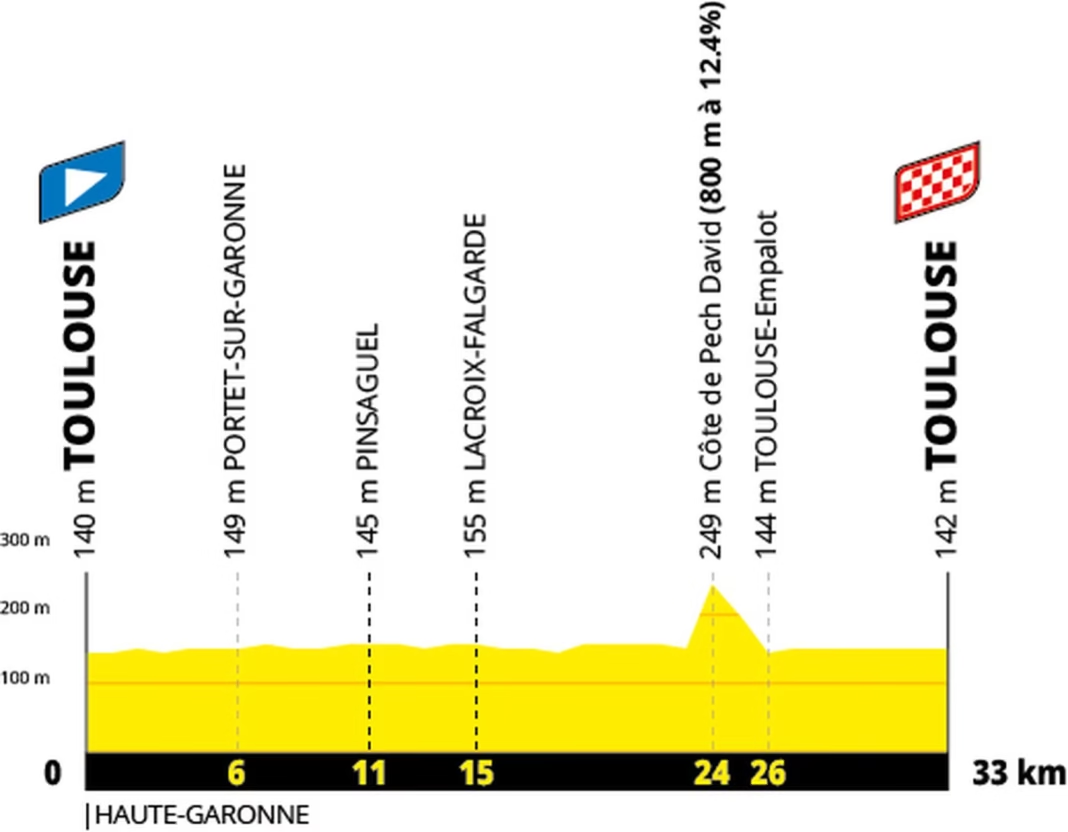
Stage 16: Toulouse individual time trial, 33km | Tuesday 20 July
The final week begins with the Tour’s second individual time trial, bringing the combined distance raced against the clock to 71km. A long out-and-back section along the Garonne favours powerful specialists before the Côte de Pech-David interrupts the rhythm. Although the climb is just 800m at 12.4% on average, it includes ramps around 20% and may make equipment choices important. A rider who has already lost time in Chambord could be forced to take even greater risks in the Pyrenees.
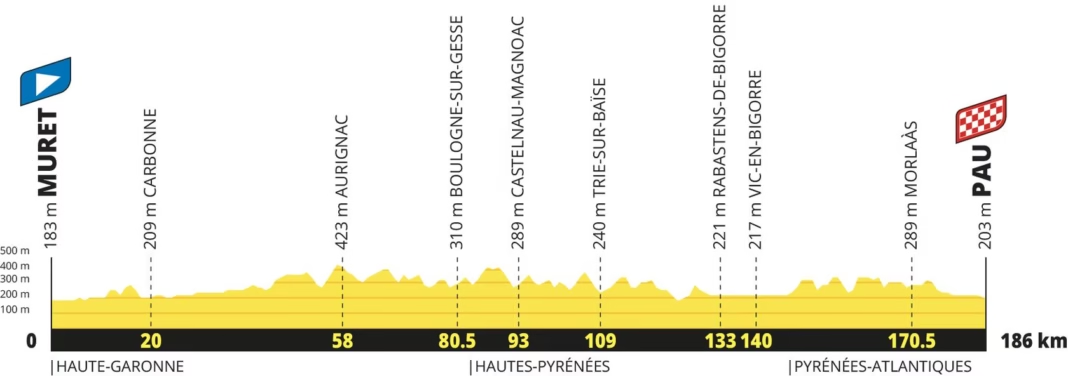
Stage 17: Muret to Pau, 186km | Wednesday 21 July
The last clear sprint opportunity before the Pyrenean mountains starts in Muret and heads towards Pau over mostly manageable terrain. The Côte de Baleix offers a late chance to disturb a tired peloton, but organised teams should still be able to contest the finish. With a mountain summit finish the next day, general classification squads will try to use as little energy as possible and keep their leaders clear of crashes or splits in the closing kilometres.
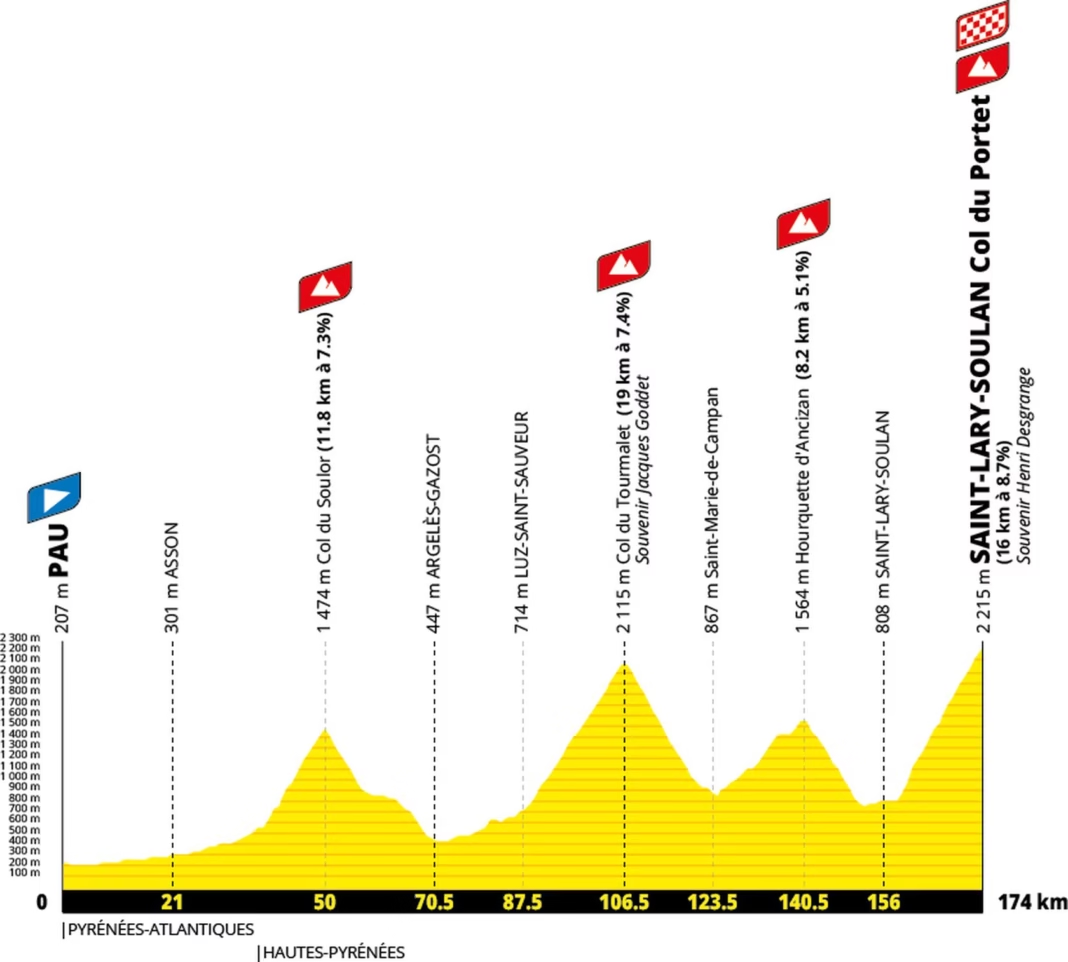
Stage 18: Pau to Col du Portet, 174km | Thursday 22 July
This is the queen stage, with roughly 5,400m of climbing and four major ascents. The Col du Soulor (11.8km at 7.3%) comes before the Col du Tourmalet from Luz-Saint-Sauveur (19km at 7.4%), the Hourquette d’Ancizan and the final ascent of the Col du Portet (16km at 8.7%). The finish sits at 2,215m, the highest point of the 2027 race. A rider who attacks early may turn the stage into a long-range contest, while the relentlessly steep final ascent leaves little room to disguise fatigue.
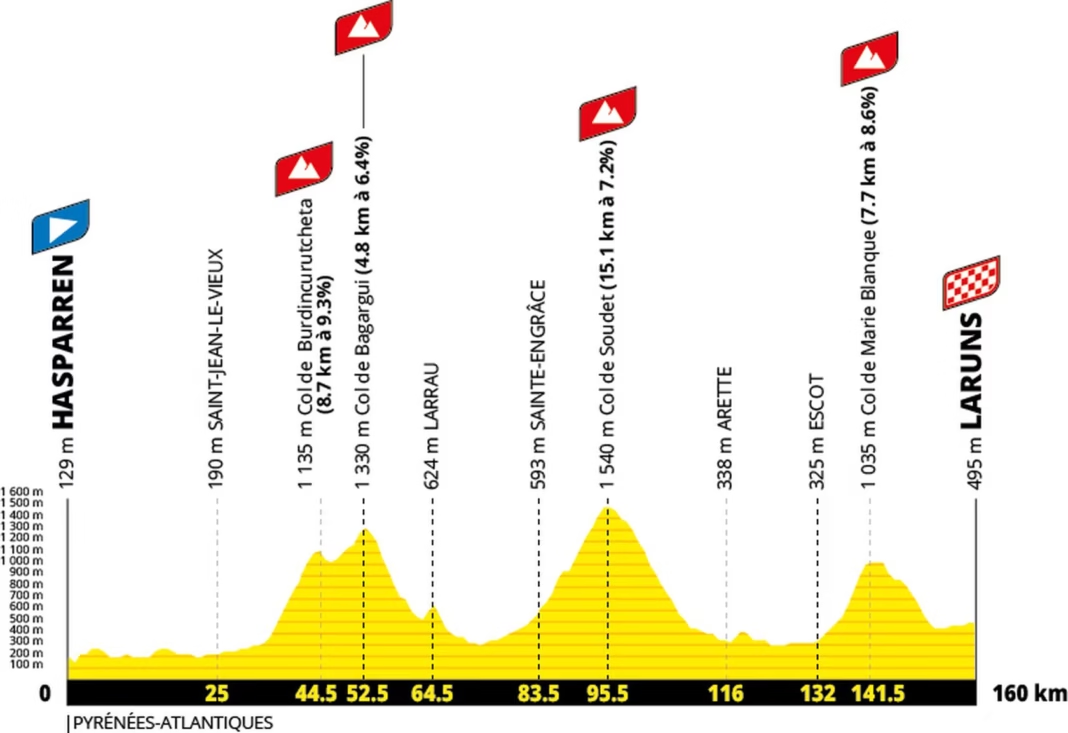
Stage 19: Hasparren to Laruns, 160km | Friday 23 July
The Tour’s final major mountain stage crosses the Basque Country and the western Pyrenees, with around 4,300m of climbing. The Col de Burdincurutcheta, 8.7km at 9.3%, includes ramps at 15%, and is followed by the Col de Bagargui before the Col de Soudet and Col de Marie Blanque. The descent towards Laruns replaces a summit finish, which could encourage a rider to attack on one of the earlier climbs. After the Col du Portet the previous day, the strongest team might not be the one that started the final week in control.
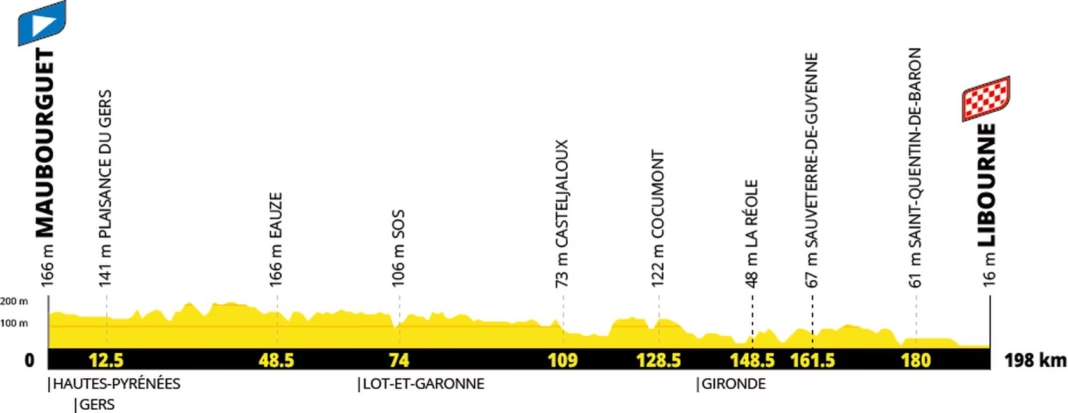
Stage 20: Maubourguet to Libourne, 198km | Saturday 24 July
A relatively gentler road stage leads away from the Pyrenees, but its rolling and twisting roads leave a breakaway with a realistic chance. The finish in Libourne uses a long straight of around six kilometres, which should favour sprint teams if they can close the gap. Three weeks of accumulated fatigue could instead make controlling the escape difficult. For the overall contenders, the priority will be avoiding a last surprise before the Paris finale.
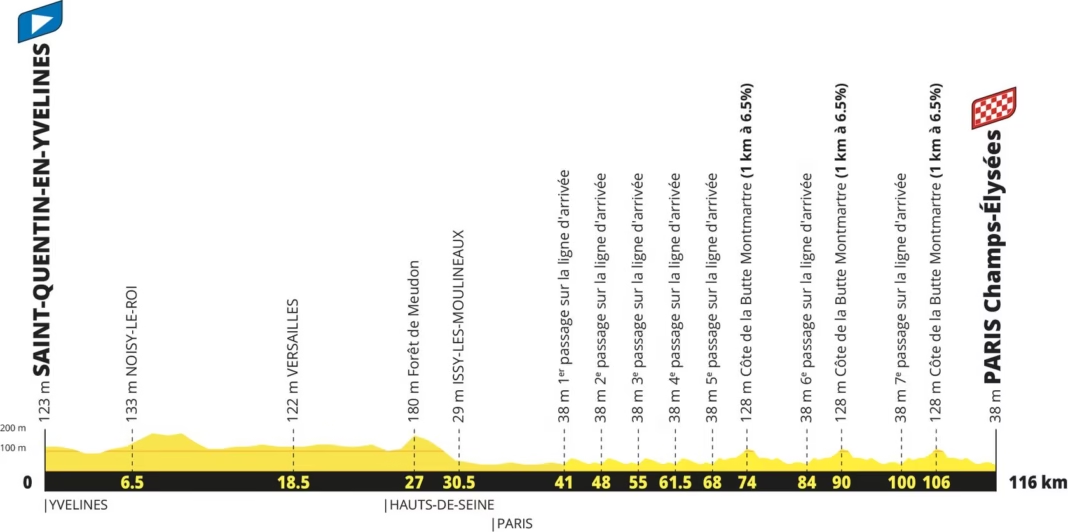
Stage 21: Saint-Quentin-en-Yvelines to Paris, 116km | Sunday 25 July
The traditional procession towards the capital leads into a more competitive finale than the Tour once offered on the Champs-Élysées alone. The route includes Rue Lepic and the climb to Montmartre before returning to the famous avenue. Those ramps give one-day specialists a launchpad and mean the last stage should not be regarded as an automatic bunch sprint. The general classification is normally settled by this point, but the final stage victory could be fought over by sprinters and Classics riders alike.
Where will the 2027 Tour de France be decided?
The two time trials make this route different from many recent editions. Over 71km against the clock, an outright climbing specialist could concede enough time to need attacks in the mountains. Stage 9 on the Grand Colombier presents the first obvious opening, before two very hard Alpine stages around Sallanches and Les Saisies. The downhill sections on both days also invite tactical racing rather than a simple waiting game for the final summit.
The Tour’s middle section may prove just as important. Stage 14 to Mende puts more than 4,000m of climbing into a route dominated by shorter, repeated ascents, creating opportunities to isolate a leader far from the finish. When racing resumes in Toulouse after the final rest day, a second time trial could change the balance again with only two major mountain days left.
The deciding sequence is the Pyrenean double-header on stages 18 and 19. The Col du Portet brings the highest altitude of the Tour, reached after the Soulor, Tourmalet and Hourquette d’Ancizan, while the next day through the Basque Country offers a final chance for long-range attacks before Laruns. With no further high mountains after stage 19, any rider still behind in the general classification will have few realistic opportunities to recover time.
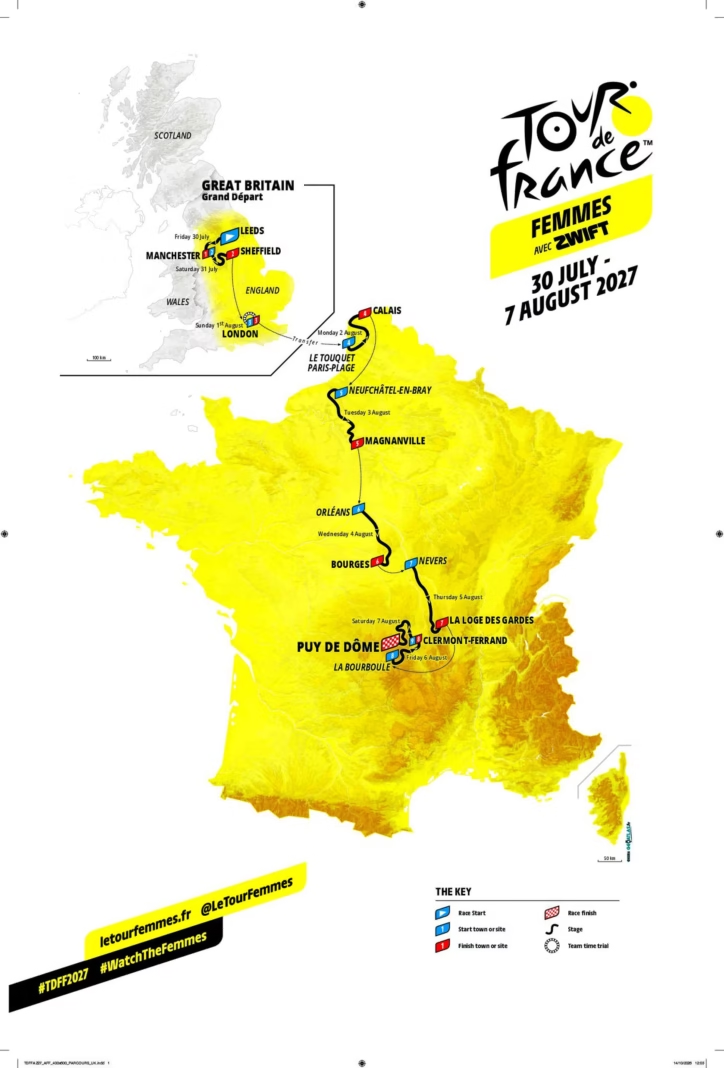
The return to Britain gives the race an early sporting focus too. Three stages across Scotland, England and Wales precede the route in France, where another 18 stages eventually bring the peloton to Paris. The UK will also host the 2027 Tour de France Femmes Grand Départ later in July, making it an unusual summer for British cycling fans.