
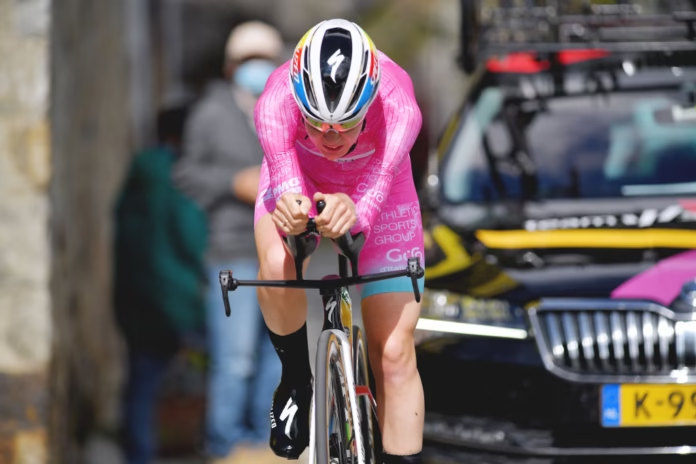
The Giro d’Italia Women 2026 reaches its first clear general classification checkpoint on stage 4, with a 12.7km individual time trial from Belluno to Nevegal. After an opening weekend controlled by the sprinters and a more awkward stage 3 to Buja, the maglia rosa battle now moves into something much more precise: one rider, one climb, one pacing plan.
This is not a long time trial by Grand Tour standards, but it does not need to be. The road to Nevegal is steep enough to create meaningful separation, and the short distance makes the effort especially awkward. Riders cannot settle into a conservative rhythm for half an hour and hope to limit the damage. They will need to judge the climb almost perfectly, because a fast start can quickly become expensive once the gradient begins to bite.
Elisa Balsamo arrived at this point of the Giro d’Italia Women with the early race very much in her control. After inheriting stage 1 following Lorena Wiebes’ disqualification, she backed that up by winning stage 2 in Caorle and extending her lead in both the general classification and points classification. Stage 3 to Buja was always expected to begin changing the texture of the race, but stage 4 is the first day where the GC riders have no hiding place.
The race now shifts away from the finishes that have suited Balsamo and the sprinters so well. The uphill time trial to Nevegal begins the transition into the harder central phase of the Giro d’Italia Women 2026 route, before stage 5 takes the race deeper into the mountains from Longarone to Santo Stefano di Cadore.

What’s on offer on stage 4?
- Stage: Stage 4
- Date: Tuesday 2nd June
- Route: Belluno to Nevegal
- Distance: 12.7km
- Stage type: uphill individual time trial
- Key feature: sustained climbing after the early kilometres
- Maximum gradient: around 14 per cent
- GC importance: first major time gaps expected
- UK live coverage: TNT Sports and HBO Max
The route is short, but severe enough to change the direction of the race. The opening section out of Belluno gives riders a little time to build into the effort, but the stage quickly becomes a climbing time trial rather than a conventional test against the clock. The Caleipo intermediate check comes after the gentler early kilometres, before the switchbacks and steeper gradients make the second half much harder.
The crucial part of the course comes once the road starts to bite properly. A steep section of around 2km includes gradients reaching 14 per cent, followed by several more kilometres where the road remains demanding. Only late on does the gradient ease towards the finish in Nevegal. That shape makes pacing absolutely central. Riders who go too deep too early may pay for it before the summit, while those who start too cautiously could lose too much before the hardest part has even begun.
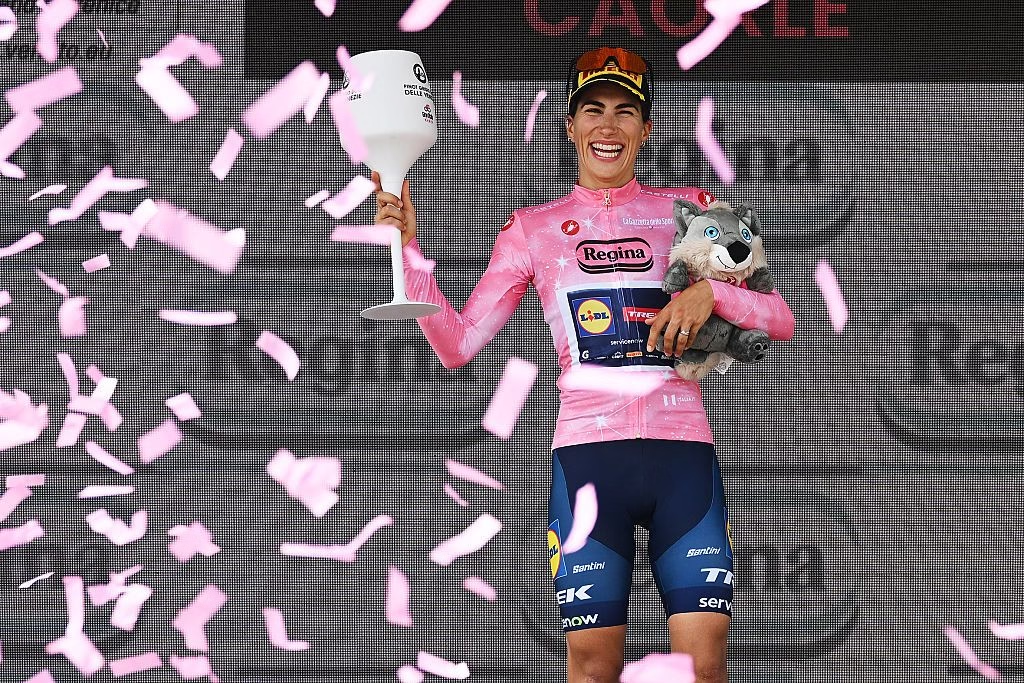 Photo Credit: Getty
Why Nevegal could reshape the maglia rosa battle
The Giro d’Italia Women has opened with racing that suited Balsamo, Lara Gillespie, Chiara Consonni and the other fast finishers. The route to Buja on stage 3 added more difficulty, but stage 4 is the first day designed to expose the difference between riders who can win stages and riders who can win the whole race.
That distinction matters. Balsamo used the first two stages superbly, but the climb to Nevegal belongs to a different type of rider. The maglia rosa could change hands here, or at the very least become much more vulnerable. A sprinter in pink can defend bravely on rolling terrain, but an uphill time trial removes most of the tools that make that possible.
The stage should also create the first serious GC hierarchy before the harder mountain stages arrive. Stage 5 to Santo Stefano di Cadore follows immediately after this test, while the final weekend brings the Sestriere stage over the Colle delle Finestre and the final mountain stage around Saluzzo. That means any time lost on Nevegal will shape how aggressively riders need to race later in the week.
A rider who gains 30 to 45 seconds here can begin stage 5 with options. A rider who loses more than a minute may already be forced into attack mode before the Giro reaches its most famous climbs.
What kind of rider can win stage 4?
The stage favours the complete uphill time-trialist. That means the obvious contenders are not simply the pure climbers, nor the flat time-trial specialists. The ideal rider is someone who can climb at sustained intensity while still pacing with the discipline of a rider against the clock.
Demi Vollering fits that description better than almost anyone in the race. She has the climbing ability, the time-trial quality and the ability to handle high-pressure GC days. A stage like this should suit her because it rewards smooth power and a clear understanding of effort. If she is at her best, Nevegal gives her a chance to put the first major stamp on the race.
Elisa Longo Borghini also has a strong case. She has the durability, experience and tactical intelligence to handle an uphill time trial, and she understands better than most how to manage a Grand Tour through its decisive middle phase. If the course is steep enough to reduce the pure aerodynamic advantage, her climbing strength and race craft become especially valuable.
Marlen Reusser is another rider to watch closely. On a flatter course, she would be one of the natural favourites, but Nevegal’s climbing makes the equation more complicated. Even so, her ability to sustain power against the clock makes her dangerous. If she can keep the effort controlled through the steepest section, she could still take a major result and gain time on several GC rivals.
Kristen Faulkner is interesting for similar reasons. She has the engine for time-trial efforts and the resilience for hard stage-race terrain. The question is whether the steeper parts of the climb place the stage slightly more in favour of lighter climbers. If she can stay composed, she should be capable of a strong ride.
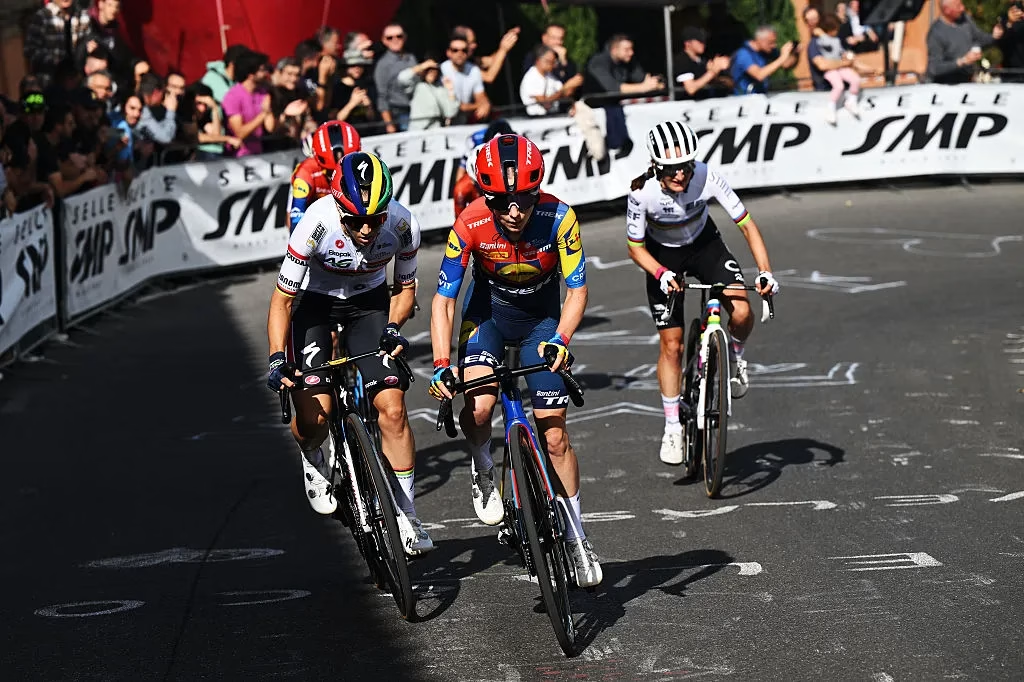 Photo Credit: Getty
The climbers with a chance to gain time
The short, steep nature of the stage gives the climbers a major opportunity. Riders such as Niamh Fisher-Black, Antonia Niedermaier, Urška Žigart, Monica Trinca Colonel and Isabella Holmgren should all see this as a chance to move into the GC picture before the Dolomite and Alpine stages.
The challenge for those riders is pacing. An uphill time trial looks simple from the outside, but it can be psychologically brutal. There is no peloton rhythm and no direct wheel to follow. Each rider has to judge the effort alone, often with changing gradients and limited visual reference points. Climbers who rely on accelerations in a group may find that harder than riders who are naturally strong at sustained efforts.
Still, Nevegal should be a better platform for them than any flat time trial. It reduces the penalty of body size, increases the value of climbing efficiency, and puts the emphasis on power-to-weight rather than pure aerodynamics.
For younger riders or less established GC contenders, this is also a chance to prove their level without needing to attack a major mountain stage. A strong ride here could put a rider into the top 10 overall and change how her team approaches the rest of the race.
What does stage 4 mean for Balsamo?
Balsamo’s opening to the Giro d’Italia Women 2026 has been exceptional. The race has suited her ability to survive controlled chaos, read sprint finishes and finish with authority. Stage 4 is different. This is no longer about positioning in the final kilometre or using a lead-out to stay protected. It is about how much time she can limit on the climb.
Her task is likely defensive. The aim will be to ride a controlled effort, avoid a collapse on the steeper ramps and keep the time loss respectable enough to remain relevant in the overall picture. Even if she loses pink, her Giro has already been successful. But the way she rides Nevegal will still matter, because the points classification and stage opportunities later in the race may depend on how much energy she spends defending the jersey.
For Lidl-Trek, the stage brings a broader question too. The team has Balsamo in pink after stage 2, but the GC picture may shift towards its climbers and all-rounders from here. Stage 4 is the day where the Giro begins to separate short-term race leadership from long-term overall ambition.
The wider state of the classifications after the opening weekend is covered in our GC and jerseys after Giro d’Italia Women 2026 stage 2 update.
Where the stage can be won or lost
The decisive section should come once the climb begins to steepen and the early freshness fades. On an uphill time trial, the first few kilometres are dangerous because adrenaline can disguise the effort. The rider who feels excellent at the bottom can suddenly find the road asking much harder questions near the top.
The most important factors will be:
- pacing the opening kilometres without overreaching
- staying seated and efficient on sustained gradients
- handling the steepest sections without losing rhythm
- choosing equipment that balances climbing weight and time-trial efficiency
- finishing strongly rather than fading in the final part of the climb
Equipment choice may become part of the story. On an uphill course of this length, teams will need to decide how much they value time-trial aerodynamics compared with climbing comfort and weight. Some riders may favour a lighter road-bike setup with extensions, while others may still choose a time-trial bike if the early part of the course allows them to gain enough speed. The fastest solution may not be the same for every rider.
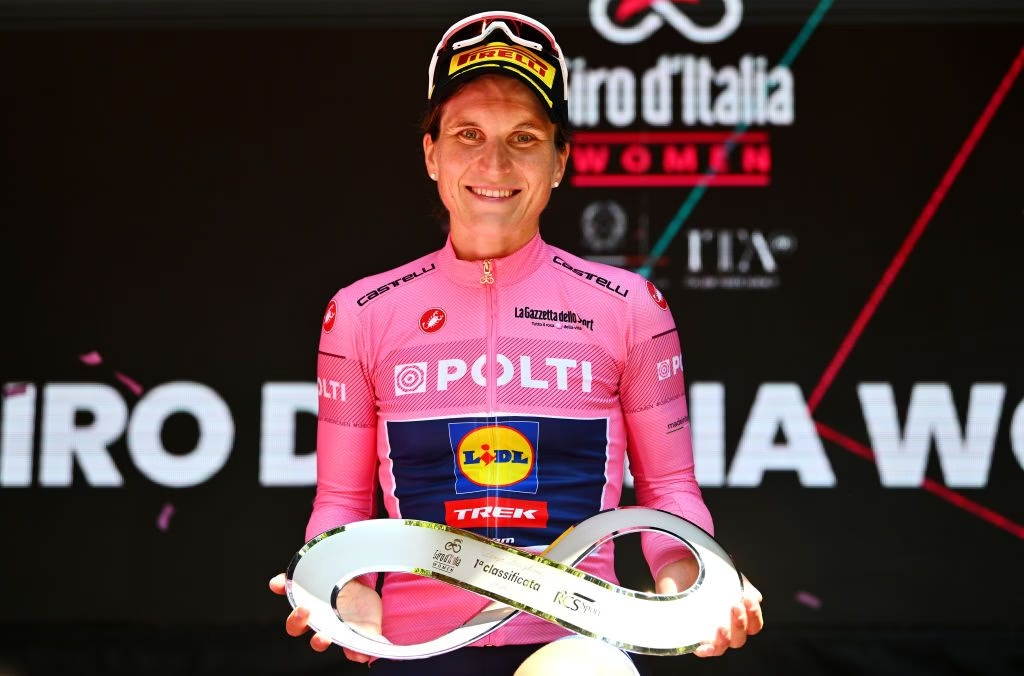 Photo Credit: Getty
How stage 4 fits into the Giro d’Italia Women route
Stage 4 is the first major pivot point of the race. The opening stages have been about sprint control, bonus seconds and avoiding damage, while stage 3 from Bibione to Buja adds the first hilly test. The Nevegal time trial is different because the gaps will be individual and unavoidable.
That makes it a natural bridge between the fast opening phase and the harder mountain racing still to come. Stage 5 from Longarone to Santo Stefano di Cadore should give the climbers another opportunity almost immediately, and the final weekend then brings the Colle delle Finestre, Sestriere and the last stage around Saluzzo.
For riders aiming at the podium, Nevegal is unlikely to decide everything, but it may decide who gets to ride the rest of the Giro from a position of strength. It should also reveal which riders have the form to challenge Vollering, Longo Borghini and the other major GC names when the race moves into its decisive mountain stages.
For the broader race context, our Giro d’Italia Women 2026 full route guide breaks down all nine stages, while our stage 3 preview from Bibione to Buja looks at the final road stage before the uphill time trial.
How to watch stage 4 in the UK
The Giro d’Italia Women 2026 is being shown live in the UK on TNT Sports and HBO Max, with stage 4 one of the most important viewing days of the race. The uphill time trial to Nevegal should be especially useful for live coverage because the gaps will be visible rider by rider, rather than hidden within a large peloton.
Full UK broadcast information for the race is available in our guide on how to watch the Giro d’Italia Women 2026 in the UK.
-
 Photo Credit: quentinphotographiebe
Giro d’Italia Women 2026 stage 4 prediction
Demi Vollering looks the strongest pick for stage 4. The climb to Nevegal should suit a rider who can combine high-end climbing ability with controlled pacing, and Vollering has the profile to turn this from a stage win opportunity into a GC statement.
Elisa Longo Borghini and Marlen Reusser should both be close, albeit in different ways. Longo Borghini has the climbing resilience and race intelligence to produce a measured ride, while Reusser has the pure time-trial engine to remain dangerous if the gradients allow her to hold rhythm. Faulkner, Niedermaier and Fisher-Black are all credible podium threats on the day.
The pink jersey may not be decided permanently on Nevegal, but the first serious shape of the Giro should appear here. After the opening sprint and reduced-sprint tension, stage 4 is where the climbers and GC riders finally get the race they have been waiting for.

