
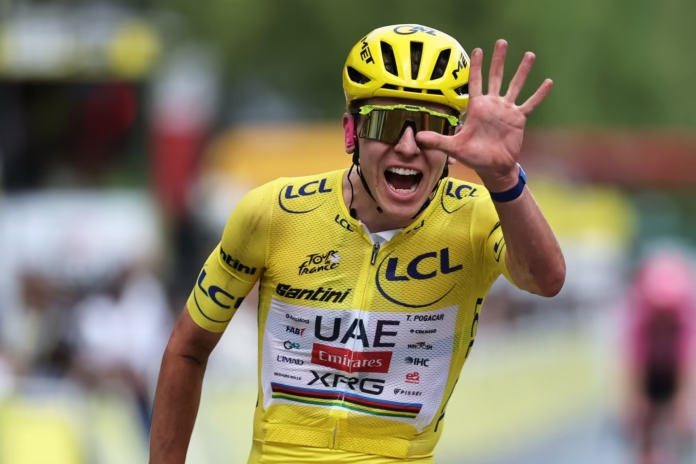
The Tour de France 2026 began in Barcelona with Jonas Vingegaard in yellow, reached its first rest day with Tadej Pogačar already 2:42 clear, lost Vingegaard entirely to a crash on Stage 15 and ended three weeks later with Mathieu van der Poel somehow holding off the peloton on the Champs-Élysées.
In between came one of the stranger Tours of the modern era.
Pogačar won five stages and became a five-time Tour de France champion at 27. Remco Evenepoel recovered from a difficult middle section to finish second and won twice in three race days. Isaac del Toro finished third on his Tour debut and beat Paul Seixas in a white jersey battle that survived until the final mountain stage. Mads Pedersen turned the green jersey into a competition of endurance as much as sprinting, eventually sealing it by attacking for points on one of the hardest mountain stages of the race.
Richard Carapaz transformed his Tour in the final week, first winning at Orcières-Merlette and then again on Alpe d’Huez while securing the polka-dot jersey. Sepp Kuss looked set to deny him that second stage before crashing twice on the descent from the Col de Sarenne. Pogačar had finally added Alpe d’Huez to his palmarès a day earlier, producing a climb around 73 seconds faster than the commonly used Marco Pantani benchmark from 1995.
Even the route refused to finish as planned. Wildfires elsewhere in France forced security resources away from the Tour on the final weekend, cutting Stage 21 from 133km to 89km and removing the original approach through Yvelines and Hauts-de-Seine. Montmartre survived, and that decision ultimately gave Van der Poel the terrain to produce one final extraordinary moment.
The final Tour de France 2026 results and classification winners will permanently show Pogačar in yellow, Pedersen in green, Carapaz in polka dots and del Toro in white.
The full race contained much more than the final classifications can show.
Barcelona immediately made the Tour feel different
The race opened with a format the Tour had never quite used in this way before.
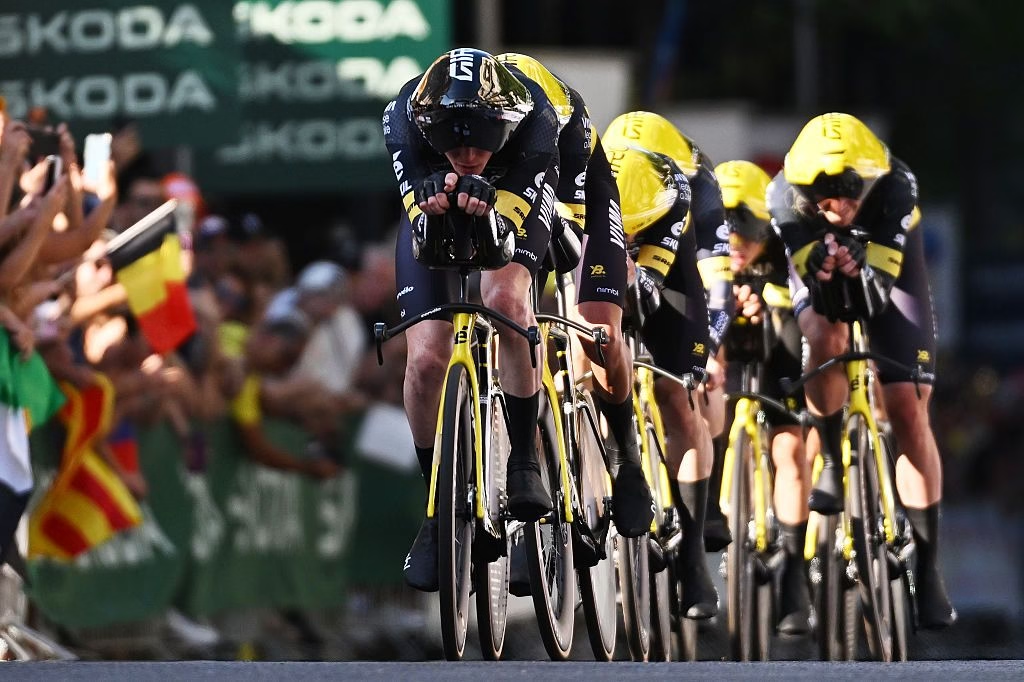
Stage 1 in Barcelona was a team time trial, but riders received individual GC times rather than a single time applied across the team. Team Visma | Lease a Bike won, with Vingegaard riding away from his remaining teammates on Montjuïc to cross the line first and take yellow.
That gave Visma the ideal beginning. Vingegaard led Pogačar by 12 seconds after a single stage, and after so much pre-race focus on whether anyone could stop the Slovenian, the first answer belonged to his biggest rival.
It lasted one day before UAE responded.
Stage 2 from Tarragona to Barcelona introduced Isaac del Toro properly to the Tour. UAE used the Montjuïc circuit aggressively before the Mexican finished off the work, taking his first Tour stage victory and immediately establishing himself as more than another rider there to support Pogačar.
By Paris, del Toro would be standing on the overall podium.
Les Angles suggested another Pogačar versus Vingegaard Tour
The first summit finish arrived on Stage 3 to Les Angles, much earlier than riders are often asked to show their full climbing level at the Tour.
Pogačar won ahead of Vingegaard and Richard Carapaz, taking yellow and wiping out the advantage Visma had created in Barcelona.
At that point the race looked familiar. Pogačar and Vingegaard were level on time after three days, the Tour apparently setting itself up for another three-week duel between the two men who had defined the yellow jersey contest since 2021.
Then Stage 4 changed the shape of the race without either favourite losing a second to the other.
Mads Pedersen won in Foix as Torstein Træen took yellow, with UAE allowing a large breakaway enough freedom to completely rearrange the general classification.
Pogačar and Vingegaard suddenly sat 7:53 behind Træen.
Nothing had gone wrong. Both finished together in the peloton. They had simply allowed the yellow jersey to move temporarily up the road, as explained at the time in why Pogačar and Vingegaard were 7:53 down.
Stage 4 became important for another reason too. Pedersen took control of the points competition and began laying the foundations for a green jersey campaign that would eventually become one of the defining stories of the Tour.
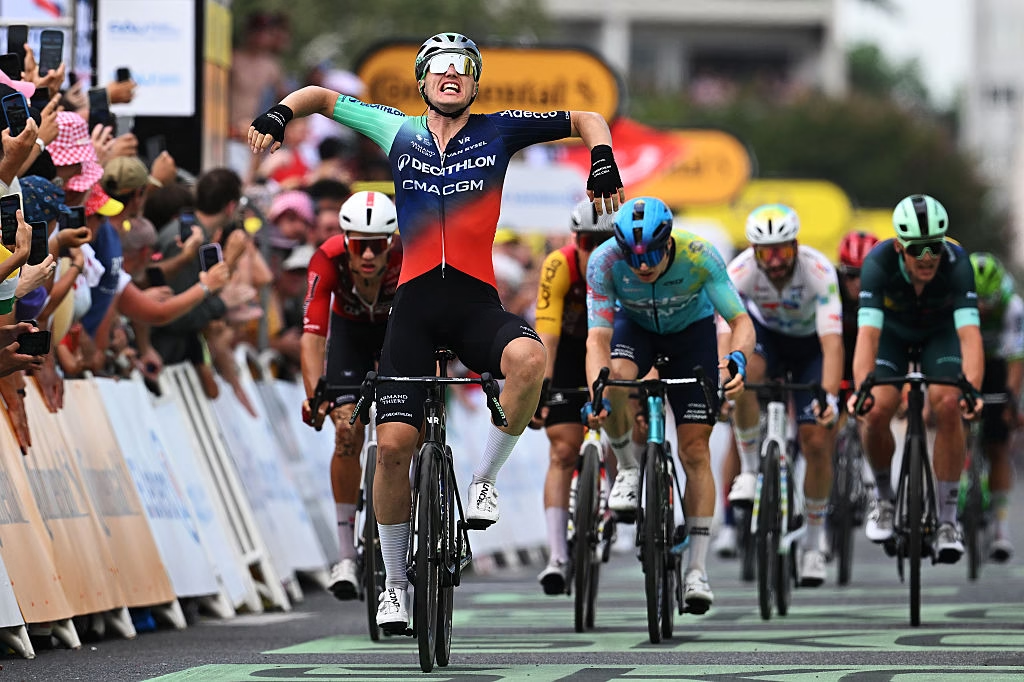 Photo Credit: Getty
Kooij changed the sprint picture before Pogačar changed the whole race
Stage 5 into Pau looked like the first proper opportunity for the pure sprinters, but even that did not unfold cleanly.
A late crash split the peloton, leaving Olav Kooij to win from a reduced group ahead of Max Kanter and Tim Merlier.
For Kooij, it was a major breakthrough. For the established sprint names, it created immediate pressure. Jasper Philipsen and Merlier had arrived among the obvious benchmarks, but neither had won the first genuine sprint opportunity.
The more important development came the next day.
Stage 6 to Gavarnie-Gèdre was the first day that fundamentally altered the Tour.
UAE ripped the GC group apart on the Tourmalet. Del Toro launched Pogačar, who attacked with 43km still remaining and simply disappeared.
Vingegaard chased.
He lost 2:38.
By the finish, Pogačar was back in yellow and led Vingegaard by 2:42.
The race had moved from a contest measured in seconds to a significant GC advantage in one afternoon.
The Tourmalet changed who had to make the race
The significance of Stage 6 was not simply the gap.
It changed the obligation.
Before Gavarnie-Gèdre, Pogačar and Vingegaard could both choose moments to attack. Afterwards, Vingegaard needed the race to become difficult enough to recover minutes rather than seconds.
Pogačar could follow.
Visma had to create.
That distinction followed the Tour through the rest of its first half.
The sprinters had their opportunities in between. Tim Merlier won Stage 7 in Bordeaux and then repeated the result on Stage 8 in Bergerac.
Pedersen kept accumulating points, however, increasingly showing that he was racing a different kind of green jersey campaign. He did not need to be the fastest finisher if he could keep scoring on terrain the pure sprinters could not handle.
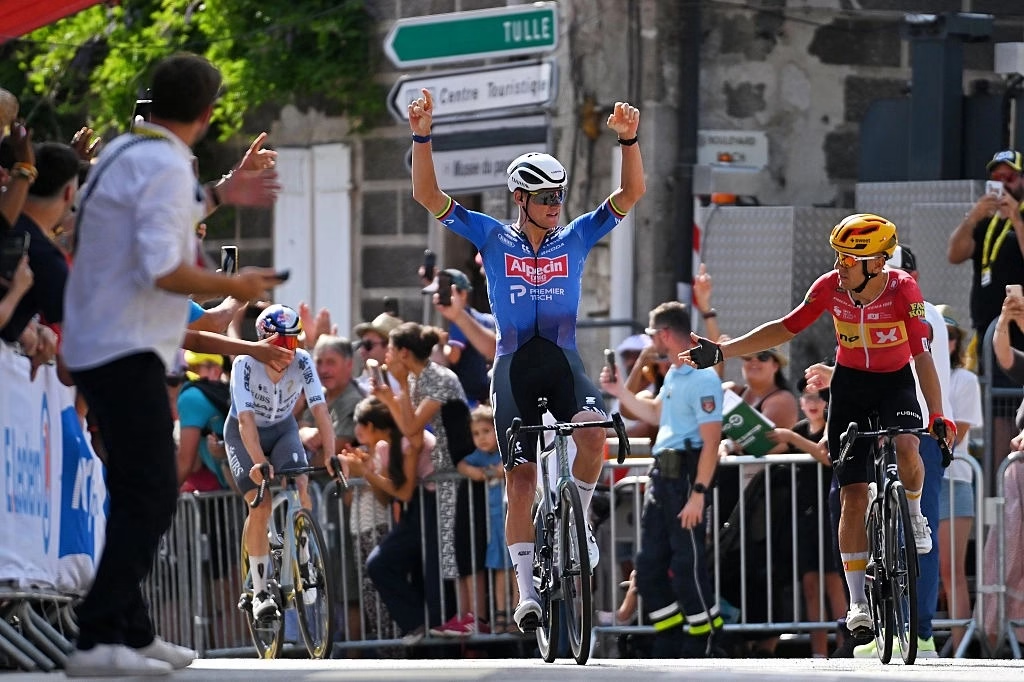 Photo Credit: Getty
Heat changed Stage 9 but not Van der Poel’s instinct to attack
The first week ended with another reminder that the 2026 Tour was being raced against the conditions as much as the route.
Stage 9 was shortened because Corrèze was placed under a red heat alert, reducing the planned distance as temperatures pushed into the high 30s.
The shorter route did not make the stage gentle.
Mathieu van der Poel won Stage 9 in Ussel from a four-rider move after a relentless afternoon, beating Tobias Halland Johannessen, Tom Pidcock and Alex Baudin.
Behind, Pogačar and the other main GC riders finished together.
He reached the first rest day 2:42 ahead of Vingegaard.
That was close enough to keep the Tour theoretically alive, but large enough that Visma needed more than one good stage to turn it around.
Le Lioran made Vingegaard’s problem harder
The race restarted after the first rest day with one of its best-designed stages.
Stage 10 to Le Lioran contained seven categorised climbs and almost no obvious place to settle into a rhythm.
Pogačar attacked on the Col de Pertus with just over 15km remaining, caught Carapaz and rode alone through the final section of the Massif Central.
It was his third stage victory.
More importantly, it was another day where Vingegaard needed to create time and instead lost more.
This became the central problem of his Tour. Vingegaard was not riding badly. He remained one of the strongest climbers in the race.
Pogačar was simply better often enough that the deficit kept moving in the wrong direction.
Stage 11 showed how fast this Tour could become
The next day produced a completely different type of record.
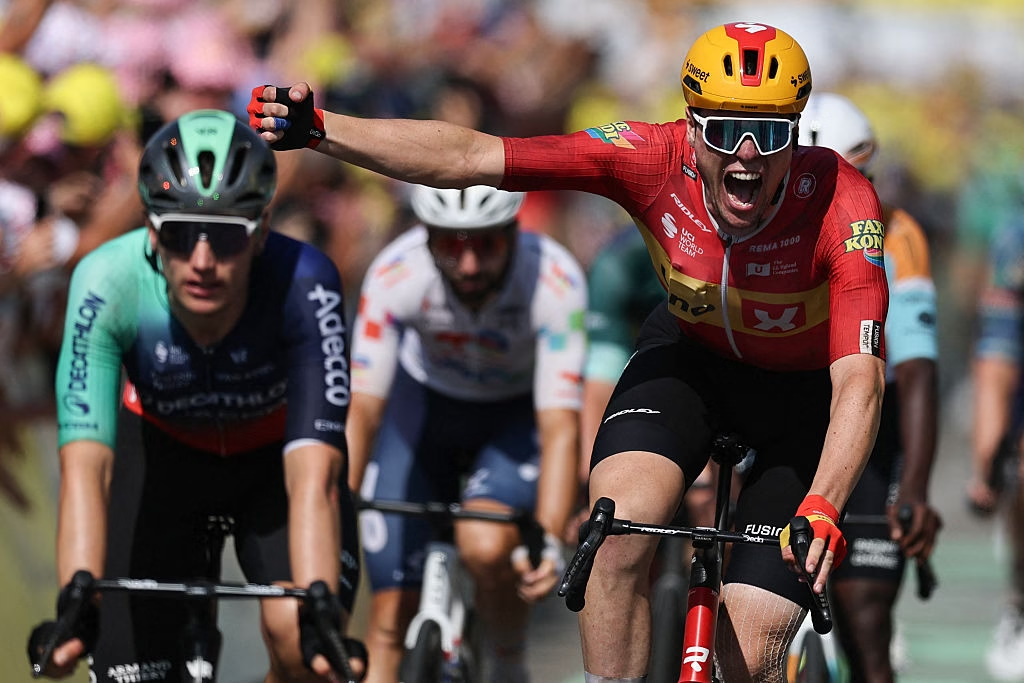
Søren Wærenskjold won Stage 11 in Nevers after 161.3km covered at an average of 50.951km/h, making it the fastest road stage in Tour de France history.
A tailwind helped, but the number also reflected the way the race had changed. The breakaway never received much freedom, sprint teams wanted the stage and Pedersen wanted intermediate points.
The reasons behind the record are covered in why Tour de France Stage 11 was so fast.
Wærenskjold beat Kooij and Philipsen, giving Uno-X Mobility another important result after Træen’s spell in yellow.
Then Merlier returned.
Stage 12 into Chalon-sur-Saône gave the Belgian his third victory, making him the most successful pure sprinter of the 2026 Tour.
Even with three stage wins, though, Merlier was never truly controlling green.
Pedersen was racing beyond the finish-line sprints.
Pidcock turned Belfort into a podium story
Stage 13 into Belfort belonged to Mauro Schmid, but Tom Pidcock produced the bigger general classification story.
A huge breakaway dominated the longest stage of the Tour. Schmid and Harold Tejada eventually separated before the Swiss rider won the two-up sprint.
Pidcock finished third.
More importantly, he gained enough time to jump to fourth overall.
That briefly changed the shape of the podium conversation. Pidcock was no longer simply a stage hunter. He had used the freedom of the breakaway to force himself into the overall battle.
It was exactly the sort of situation that makes a Grand Tour difficult to control. A rider previously far enough behind to attack can suddenly become too dangerous to ignore.
Pidcock would eventually pay for those efforts in the Alps, but Belfort added another subplot to the final week.
Le Markstein moved Pogačar another step towards five
The yellow jersey battle returned on Stage 14 at Le Markstein.
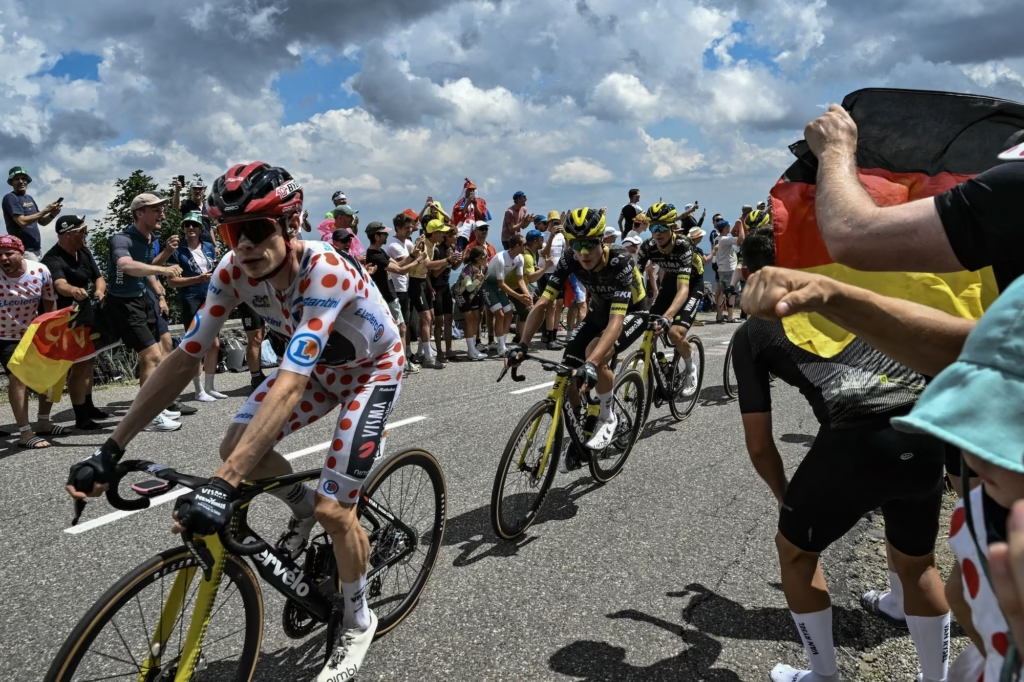
Pogačar attacked near the top of the Col du Haag and took his fourth stage victory.
Vingegaard limited his losses far better than on the Tourmalet, but that had become the fundamental problem. Limiting losses was not enough.
Evenepoel, meanwhile, remained involved in a complicated podium battle alongside Seixas, Juan Ayuso, del Toro and Pidcock. The individual time trial still offered him a clear route to gain time later in the race, giving him a reason to avoid panic whenever the pure climbers attacked.
Nobody knew that Stage 15 would remove Vingegaard from the Tour completely.
Vingegaard’s crash ended the rivalry rather than Pogačar finishing it
Stage 15 to Plateau de Solaison should have been another major mountain test between Pogačar and Vingegaard.
Instead, Vingegaard never reached the final climb.
With around 20km remaining, the Visma leader crashed in Bonneville during the approach to Solaison. Kuss, del Toro and Brandon McNulty were also involved, but they remounted.
Vingegaard stayed down.
He was treated at the roadside, his right arm was placed in a sling and he was taken away in a medical vehicle. Later assessment confirmed a collarbone injury requiring surgery.
The crash changed almost every major tactical question in the race.
Visma no longer had a yellow jersey campaign. Pogačar no longer had the rider most capable of forcing him into a sustained three-week defensive battle. Evenepoel moved into the role of nearest challenger, while Kuss and the rest of Visma suddenly had much more freedom to chase stages.
The sporting cruelty was that Vingegaard had not been comprehensively ridden out of the Tour.
He was removed from it.
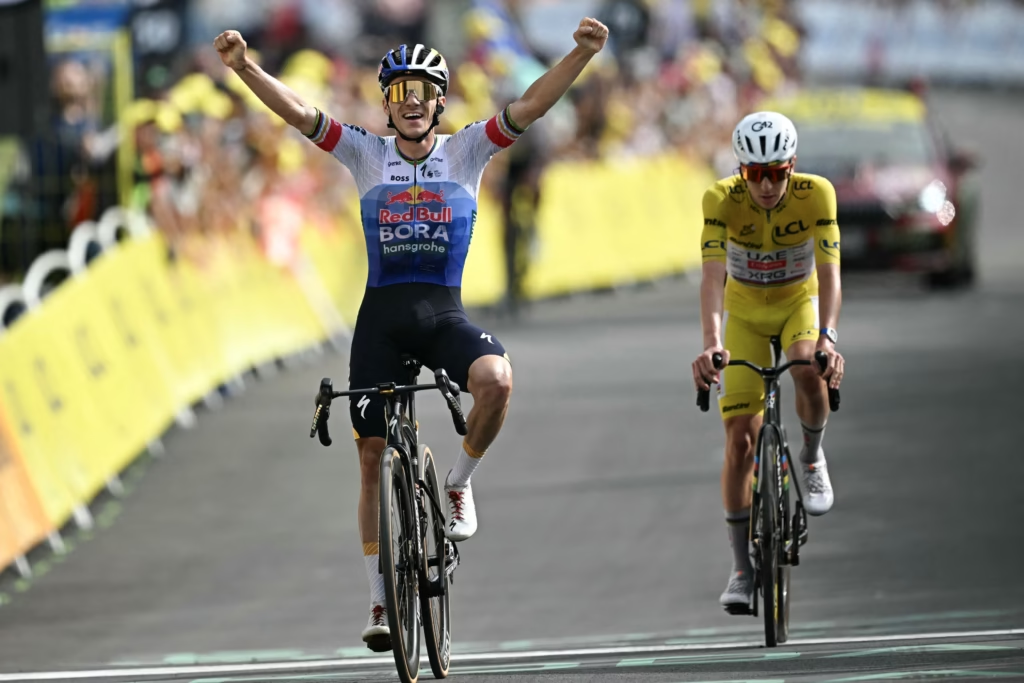 Photo Credit: Getty
Evenepoel seized the opening immediately
Stage 15 continued, and Evenepoel won on Plateau de Solaison.
That victory mattered. The Belgian had been under pressure in the mountains and needed a result that reminded everyone what his best level looked like.
Two race days later he reinforced it.
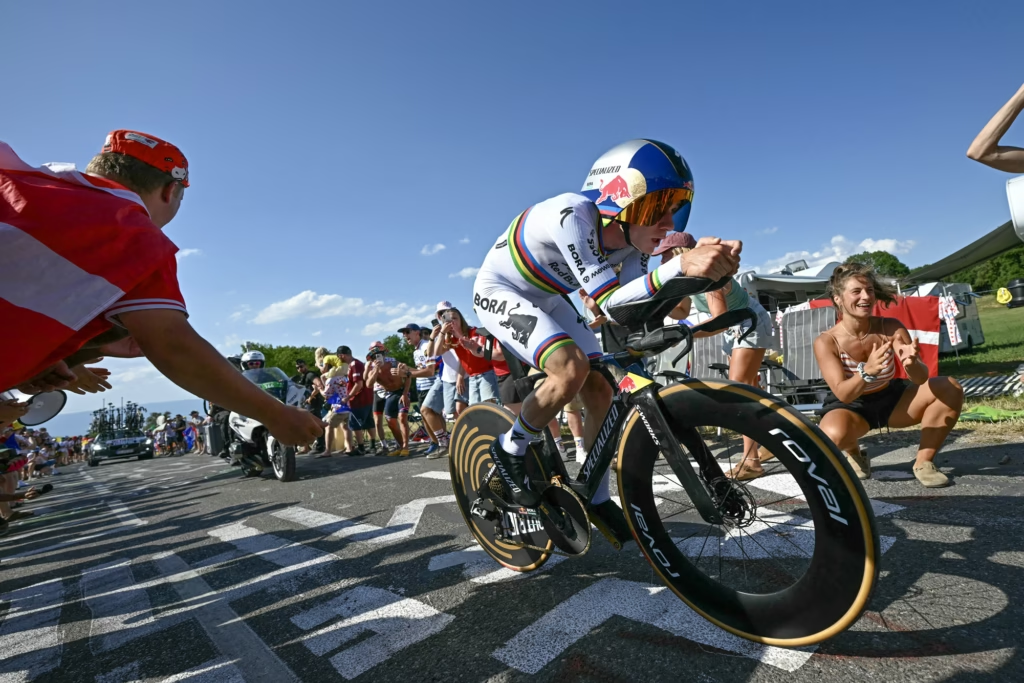
Stage 16 from Évian-les-Bains to Thonon-les-Bains was the only individual time trial of the Tour, a 26.1km course containing the Côte de Larringes before a descent and faster run towards Lake Geneva.
Evenepoel was superb.
He beat Pogačar by 28 seconds, won his second stage in three race days and strengthened his grip on second overall.
The result did not reopen the yellow jersey contest in any meaningful way, but it confirmed that Evenepoel was the best time triallist in the Tour and turned the fight behind Pogačar in his favour. The wider significance is explored in Evenepoel wins the time trial, but the Tour podium is the real story.
Philipsen finally won and turned green into a contest again
By Stage 17, the remaining sprinters knew Voiron was probably their last conventional opportunity before Paris.
It barely looked conventional.
Stage 17 to Voiron began with difficult terrain, repeated attacks and a large breakaway fight. Van der Poel was aggressive, Pedersen attacked for points and the stage repeatedly looked as though it would escape the control of the sprint teams.
Alpecin-Premier Tech somehow rebuilt it.
Van der Poel eventually delivered Philipsen, who won his first stage of the Tour.
The result reduced Pedersen’s points advantage to only seven points, as shown in the GC and jerseys after Stage 17.
For the first time in a while, green looked genuinely vulnerable.
Pedersen’s response over the next three stages became one of the best individual stories of the Tour.
Orcières-Merlette transformed both Carapaz and Pedersen’s Tours
There is an important distinction to make about Richard Carapaz’s final week.
He won twice, but only one of those victories came on Alpe d’Huez.
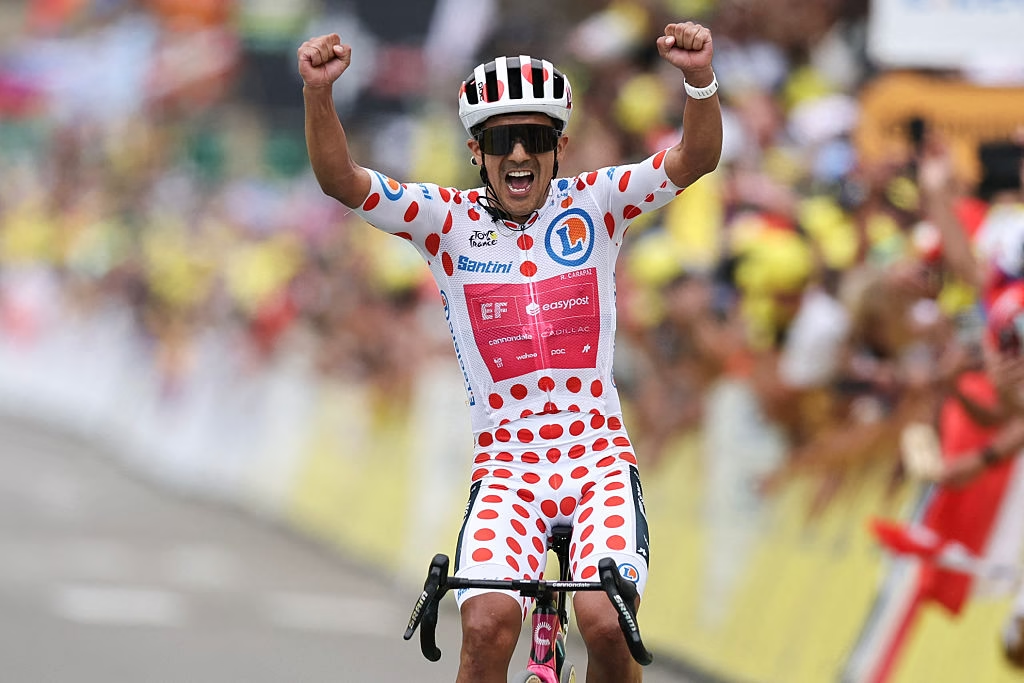
His first came on Stage 18 at Orcières-Merlette.
Carapaz went into the breakaway, survived the repeated attacks and then moved clear with 3.5km remaining on the final climb. Mauro Schmid finished 45 seconds behind.
It was exactly the sort of victory Carapaz has built his career around: aggressive, repeated attempts rather than waiting for one predetermined attack.
The stage also brought him back into the mountains classification, with the post-Stage 18 jersey standings showing how compressed the KOM fight had become.
Pedersen was doing something equally important earlier in the stage.
After Philipsen had reduced his green jersey advantage to seven points in Voiron, Pedersen joined the break and took the intermediate sprint. By the end of the day, he had put useful distance back into the points competition.
A mountain stage had become a green jersey stage because Pedersen was willing to make it one.
Pogačar finally conquered Alpe d’Huez
The first of the back-to-back Alpe d’Huez finishes came on Stage 19.
Pogačar entered the day 4:32 ahead of Evenepoel and with no requirement to attack, but Alpe d’Huez remained one of the obvious gaps in his palmarès. Our pre-stage analysis asked whether Pogačar would finally win on Alpe d’Huez.
He did.
Pogačar attacked the GC group on the final ascent, spent much of the climb chasing the breakaway alone and eventually passed the remaining leaders before accelerating again to take his fifth stage victory of the race.
The climbing time made the performance historically significant.
Pogačar covered the commonly compared Alpe d’Huez segment in roughly 35 minutes 27 seconds. Pantani’s widely used 1995 benchmark is around 36:40, although historical comparisons vary slightly depending on precisely where timing begins and ends.
That means Pogačar improved the commonly cited record by approximately 1 minute 13 seconds, not the more than two minutes that circulated in some immediate reaction.
Even with the necessary caveats around timing methodology, equipment, conditions and race context, it was an extraordinary performance.
He had arrived at the 2026 Tour without an Alpe d’Huez stage win.
He left the mountain with one of its defining records.
 Photo Credit: Getty
Del Toro and Seixas gave the final mountains a race within the race
Pogačar’s yellow jersey increasingly looked secure, but the Tour still had one genuinely unresolved GC contest.
Del Toro and Seixas were separated by only seconds in the fight for third overall and the white jersey.
Both were riding their first Tour.
Both were trying to reach the Paris podium at an age when most riders are still being spoken about as future prospects.
After Stage 19, del Toro held a 24-second advantage.
That meant the final mountain stage could not be treated as a victory procession for UAE. Pogačar might have had yellow under control, but his teammate still had everything to lose.
The stakes are captured in Del Toro vs Seixas: 24 seconds heading into the final mountain stage.
The second Alpe d’Huez day would settle it.
Stage 20 somehow contained four different races
The final mountain stage from Le Bourg-d’Oisans contained around 5,450 metres of climbing across the Croix de Fer, Télégraphe, Galibier and Col de Sarenne before the finish at Alpe d’Huez.
It became several races layered on top of each other.
Carapaz was racing for the polka-dot jersey.
Kuss was racing for Visma’s first individual stage victory of the Tour.
Del Toro and Seixas were racing for third overall and white.
Pedersen, improbably, was still racing for green.
Carapaz attacked early because his mountains lead was too narrow to defend passively. He collected maximum points across the key climbs and had already put the jersey beyond reach by the time he crossed the Galibier.
The arithmetic is covered in Richard Carapaz mathematically secures the Tour de France 2026 polka-dot jersey.
That alone would have made the stage a success.
Then the stage victory came back into play.
 Photo Credit: Getty
Kuss was kilometres from changing the entire Stage 20 story
With Vingegaard gone, Kuss had the freedom to ride for himself.
Stage 20 was ideal terrain. Long climbs, huge elevation gain and an aggressive breakaway reduced the importance of explosive acceleration and rewarded his ability to sustain a mountain effort deep into a stage.
Late in the race, Kuss managed to drop Carapaz.
He reached the Sarenne descent alone at the front and looked increasingly likely to give Visma its first individual stage victory of the Tour.
Then he crashed.
He remounted quickly enough to continue.
Then he crashed again.
The second incident, with around 5.8km remaining, was far more frightening. Kuss ran wide, struck the roadside protection and was thrown towards the outside of the mountain road. The barrier prevented what could have become a considerably more serious fall.
The full sequence is covered in Sepp Kuss suffers remarkable save after second crash costs him Stage 20 chance.
Kuss got up again.
The stage was gone.
Carapaz passed him, continued towards Alpe d’Huez and completed his second victory in three stages.
Carapaz rewrote his entire Tour in the final week
Carapaz entered the last Alpine block without a stage victory and outside the central story of the race.
He reached Paris with two wins, the polka-dot jersey, eighth overall and the Super Combativity award.
That transformation is why his Tour cannot be reduced to benefiting from Kuss’s crashes.
At Orcières-Merlette, he attacked repeatedly until the break finally cracked.
On Stage 19, he continued fighting for mountain points.
On Stage 20, he attacked from early in the day because there was no viable defensive way to win polka dots.
When Kuss went clear, Carapaz kept chasing. When the opportunity returned, he was still close enough to take it.
His final week is covered in full in Richard Carapaz: two stage wins and the polka-dot jersey in a Tour de France to remember.
He finished the mountains competition on 156 points.
The final week had turned a respectable Tour into one of the most memorable of his career.

Pedersen sealing green in the mountains summed up his entire race
Carapaz was not the only rider doing something unusual on Stage 20.
Pedersen began the day with green increasingly safe, but still needing to remove the remaining mathematical possibility of Philipsen overturning him in Paris.
The obvious approach would have been survival.
Pedersen went forward instead.
He stayed involved through the early mountain terrain long enough to reach the intermediate sprint at the front and collect another decisive points haul.
On a stage containing the Croix de Fer, Télégraphe, Galibier and Sarenne, the eventual green jersey winner was attacking for sprint points.
That moved him to 527 points, 82 ahead of Philipsen, more than could be recovered on the final stage.
Green was his.
It was the perfect conclusion to the way Pedersen had raced the classification. He won in Foix, scored in bunch sprints, attacked for intermediates and went into mountain breakaways when the faster sprinters could not.
His pre-race case had always depended on difficult days as much as conventional sprints, as explored in Mads Pedersen at the Tour de France 2026: stages, green jersey and hard days.
He did not win green by becoming the fastest sprinter in the race.
He won it by being the most complete points hunter.
Del Toro finally broke Seixas on the final mountain day
Behind the breakaway, the white jersey battle reached its conclusion.
Del Toro began Stage 20 only 24 seconds ahead of Seixas.
By the end of it, the gap was 2:14.
The Mexican handled the second consecutive Alpine stage considerably better, staying close enough to Pogačar while Seixas finally began losing ground after surviving almost everything the Tour had thrown at him.
Del Toro reached Paris third overall at 9:42.
Seixas finished fourth at 11:56.
For UAE, it completed an extraordinary result: Pogačar first, del Toro third, yellow and white.
For France, Seixas finishing fourth at 19 years old hardly felt like a failure. The scale of expectation around him had changed because he had spent the final week fighting for the podium, but fourth on debut remained one of the breakthrough performances of the race.
The final GC and jersey standings after Stage 20 showed that the decisive competitive work of the Tour was effectively complete.
Paris still had one final surprise.
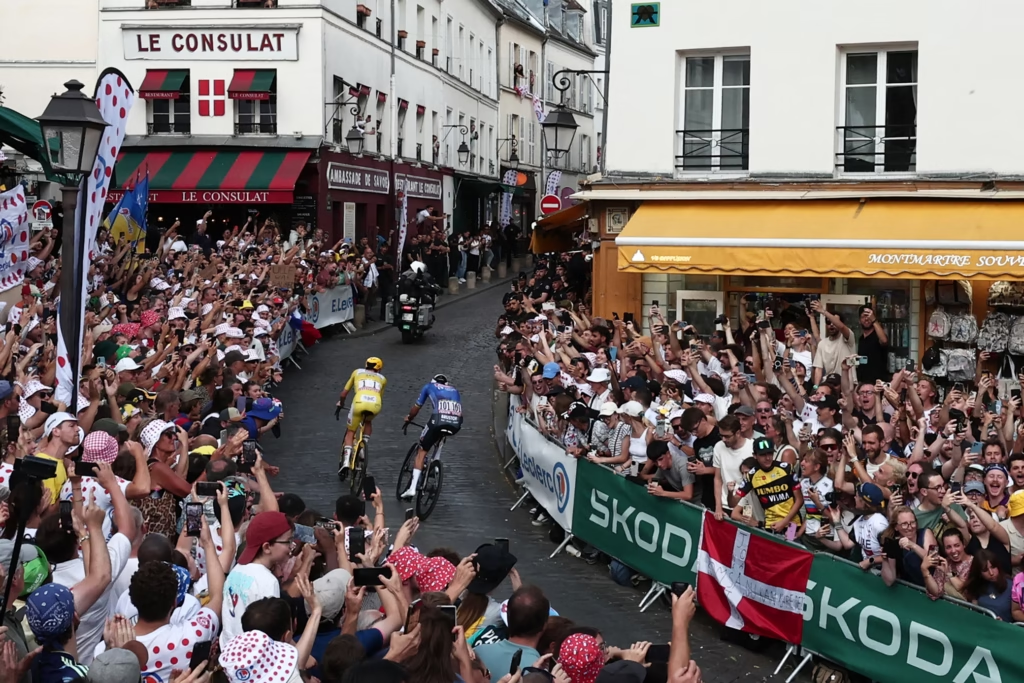 Photo Credit: Getty
The wildfires rewrote the Tour’s final stage
On Saturday 25 July, organisers announced that Stage 21 could no longer take place on its planned route into Paris.
The issue was not fire reaching the course itself.
It was emergency resources.
Police and security personnel originally assigned to the Tour were needed for the wider wildfire response, making the planned race through Yvelines, Hauts-de-Seine and Paris impossible to justify.
The stage was cut from 133km to 89km.
Thoiry retained ceremonial elements, but the riders travelled into Paris before racing began.
The full background is covered in how the France wildfires changed the Tour de France 2026 final stage.
Crucially, the three Montmartre passages survived.
That preserved the sporting identity of the finale and ultimately created one of the defining images of the race.
Van der Poel and Pogačar refused to make Paris ceremonial
The shortened finale meant there was little room for the traditional hours of champagne, photographs and relaxed riding before the Tour reached the Champs-Élysées.
Once the GC times had been taken before the competitive Montmartre section, Stage 21 became a short one-day race.
Pogačar attacked.
Van der Poel followed.
Pedersen and Evenepoel became involved before the peloton eventually came back.
On the final Montmartre ascent, Van der Poel attacked again and Pogačar went with him.
The Tour winner and one of the great Classics riders of the modern era began a two-man time trial towards the Champs-Élysées while the sprint teams chased behind.
The gap disappeared.
Pogačar was caught.
Van der Poel was not.
He found one last acceleration and survived the peloton by roughly a bike length, with teammate Philipsen arriving immediately behind.
It was Van der Poel’s second victory of the race and fourth Tour stage win of his career.
It also completed another piece of family history. His father Adrie had finished second on the Champs-Élysées in 1982 but never won there.
Forty-four years later, Mathieu did.
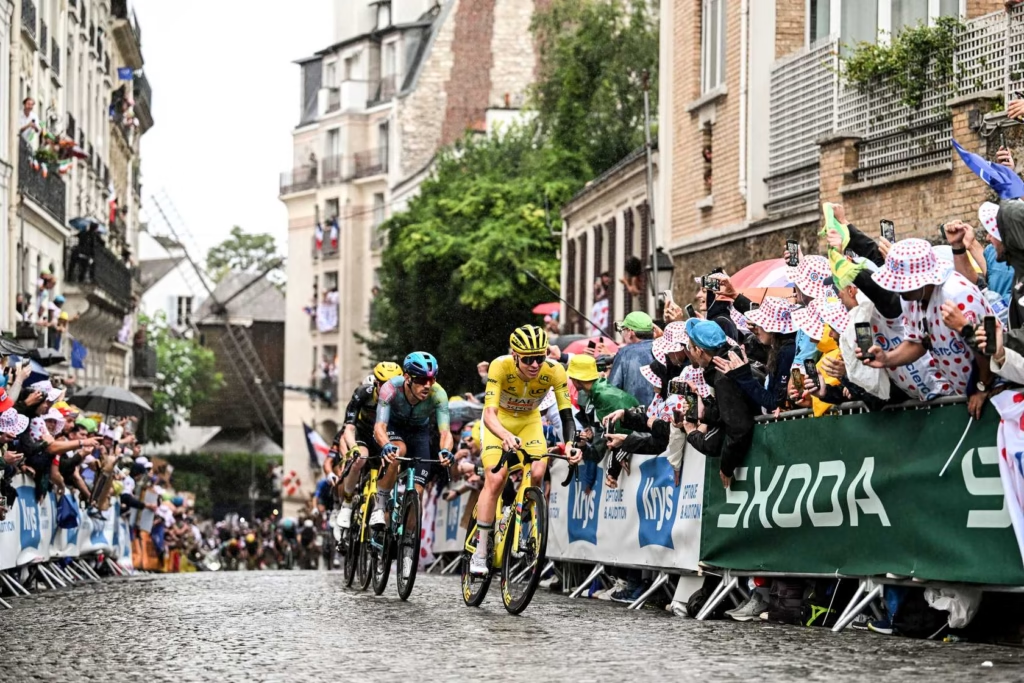 Photo Credit: A.S.O./Charly López
Pogačar’s fifth Tour was dominant without ever feeling routine
The final result can make the race appear simpler than it was.
Pogačar won by 6:26.
He won five stages.
He controlled yellow from Stage 6 onwards.
On paper, that looks like a Tour where the strongest rider established his superiority and spent three weeks confirming it.
The race itself was more complicated.
Visma beat UAE in Barcelona.
Vingegaard was level with Pogačar after Les Angles.
Træen took yellow and put both nearly eight minutes behind him.
Pogačar had to produce the Tourmalet attack that fundamentally changed the GC.
UAE lost McNulty and had illness concerns around other mountain support riders late in the race.
Vingegaard’s crash removed the rivalry rather than Pogačar conclusively finishing it on the road.
Evenepoel then beat Pogačar by 28 seconds in the individual time trial.
Pogačar still had to survive the two Alpe d’Huez stages while simultaneously helping del Toro protect his podium position.
The eventual margin was comfortable.
The path to it was not passive.
Five stages made Pogačar’s Tour bigger than the yellow jersey alone
Pogačar won at Les Angles, Gavarnie-Gèdre, Le Lioran, Le Markstein and Alpe d’Huez.
Those victories came through different versions of mountain racing.
Les Angles was a controlled summit finish.
Gavarnie-Gèdre came after the long Tourmalet attack.
Le Lioran rewarded an acceleration before the final sequence of climbs.
Le Markstein came from another late mountain move.
Alpe d’Huez became the historical victory, closing down the breakaway and setting the fastest widely compared ascent time in the climb’s Tour history.
By Paris, the question was no longer whether Pogačar had won convincingly.
It was what a fifth Tour victory at 27 did to his place alongside Merckx, Hinault, Induráin and Anquetil.
That argument is explored in Tadej Pogačar: will he become the greatest Tour de France rider of all time?.
If he returns looking for six, the conversation becomes even more difficult to avoid.
Evenepoel’s second place was more important than the final gap suggests
Evenepoel finished 6:26 behind Pogačar, a margin large enough to show there was no genuine final-week fight for yellow.
His Tour should not be reduced to that gap.
He won at Plateau de Solaison.
He dominated the individual time trial two days later.
He survived the final Alpine block and finished second overall.
Vingegaard’s withdrawal unquestionably changed the structure of the podium fight, but Evenepoel still had to convert the opportunity. Del Toro, Seixas and the riders around them had been close enough to make second vulnerable before Solaison.
Instead, Evenepoel strengthened as the Tour reached its final week.
He left Paris clearly beaten by Pogačar but clearly ahead of everyone else.
Del Toro and Seixas may be the story that matters most in future Tours
The Tour podium contained an established five-time champion, a rider already expected to challenge for Grand Tours and a Mexican making his debut.
Del Toro finishing third was extraordinary.
So was Seixas finishing fourth.
Their white jersey battle gave the final week urgency after Pogačar’s yellow jersey advantage had become increasingly difficult to overturn.
Del Toro had already won in Barcelona.
Seixas had finished fourth at Les Angles.
Both then spent three weeks proving those early performances were not simply the product of fresh legs and favourable stages.
By Alpe d’Huez they were fighting for a Tour podium.
Whatever happens next in their careers, the 2026 race will be remembered as the Tour where both stopped looking like riders for the future.
They were already part of the present.
Pedersen turned green into something bigger than a sprint classification
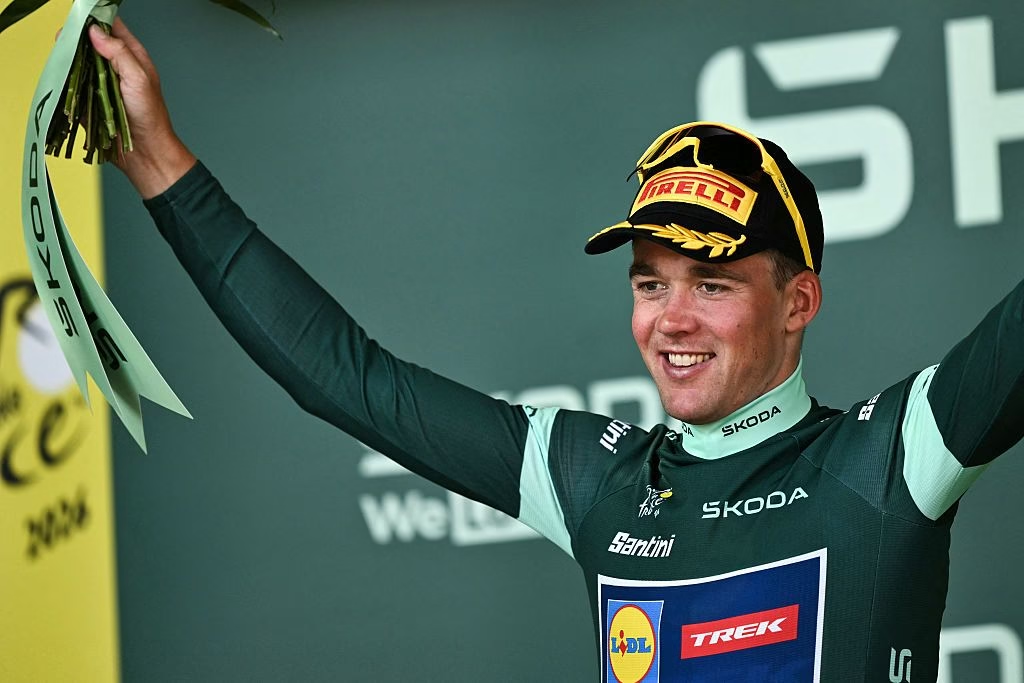
Pedersen’s eventual 82-point advantage over Philipsen looks comfortable.
It did not feel comfortable until Stage 20.
Philipsen came within seven points after Voiron. Merlier had won three stages. Kooij and Wærenskjold had also won sprints.
Pedersen beat them by treating almost every type of stage as an opportunity.
Foix gave him the stage win and the initial advantage.
He repeatedly won intermediate sprints.
He joined breakaways on mountain days.
He survived enough climbing to score when the pure sprinters could not.
Then he sealed the jersey on the hardest mountain stage of the Tour.
It was less a sprint campaign than a three-week points hunt.
That made green one of the strongest secondary stories of the race.
The 2026 Tour contained almost every version of a stage race
There was an opening team time trial, an early summit finish and a yellow jersey deliberately handed to a breakaway.
There was Pogačar’s long-range Tourmalet attack, three Merlier sprint wins, the fastest road stage in Tour history and a stage shortened because of extreme heat.
There was Vingegaard’s crash and abandonment, then Evenepoel winning both a summit finish and the individual time trial.
The Tour finished with three consecutive Alpine stages, including two days at Alpe d’Huez, Pogačar breaking the long-standing climbing benchmark, Carapaz winning twice in three days and Kuss crashing twice while apparently on course for victory.
Pedersen effectively sealed green from a mountain breakaway.
Del Toro and Seixas fought over white and the final podium place until the last mountain stage.
Then wildfires forced a major route change less than a day before Paris, only for the shortened final stage to produce Pogačar and Van der Poel attacking each other over Montmartre before Van der Poel held off the sprint on the Champs-Élysées.
Pogačar was the constant through almost all of it.
The race around him rarely stayed still.
-
 Photo Credit: A.S.O./Gaëtan Flamme

Tour de France 2026 stage-by-stage race reports
Every ProCyclingUK race report from the 2026 Tour is collected below as a permanent stage-by-stage reference.
The classifications tell only part of the 2026 Tour
Pogačar won yellow.
Pedersen won green.
Carapaz won polka dots.
Del Toro won white.
Lidl-Trek won the team classification.
Those are the results that will sit permanently in the record books, alongside Pogačar’s final 6:26 advantage over Evenepoel and del Toro’s third place.
They are not quite the whole race.
The Tour began with Vingegaard beating Pogačar in Barcelona and ended without Vingegaard in the peloton. It produced a Mexican podium finisher and a 19-year-old Frenchman within reach of the same result. Carapaz went from supporting character to one of the stars of the final week. Pedersen made mountain stages part of a green jersey campaign. Evenepoel found his strongest form only after the route had already put him under pressure.
Pogačar arrived in Paris as the fifth five-time Tour champion.
That is the result around which the 2026 edition will always be organised.
But remembering this Tour will mean remembering more than five yellow jerseys. It will mean the Tourmalet attack, Vingegaard sitting on the roadside at Bonneville, Evenepoel flying beside Lake Geneva, Pedersen chasing sprint points across the Alps, Pogačar passing the breakaway on Alpe d’Huez, Kuss being caught by the safety barrier above the mountain road, Carapaz coming back through to win and Van der Poel finding one last sprint with the whole peloton almost on his wheel in Paris.
Pogačar won the Tour de France 2026.
The race around him gave us almost everything else.

