
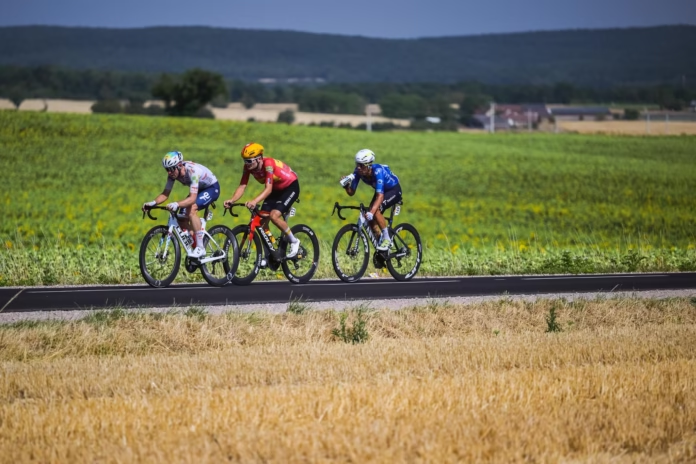
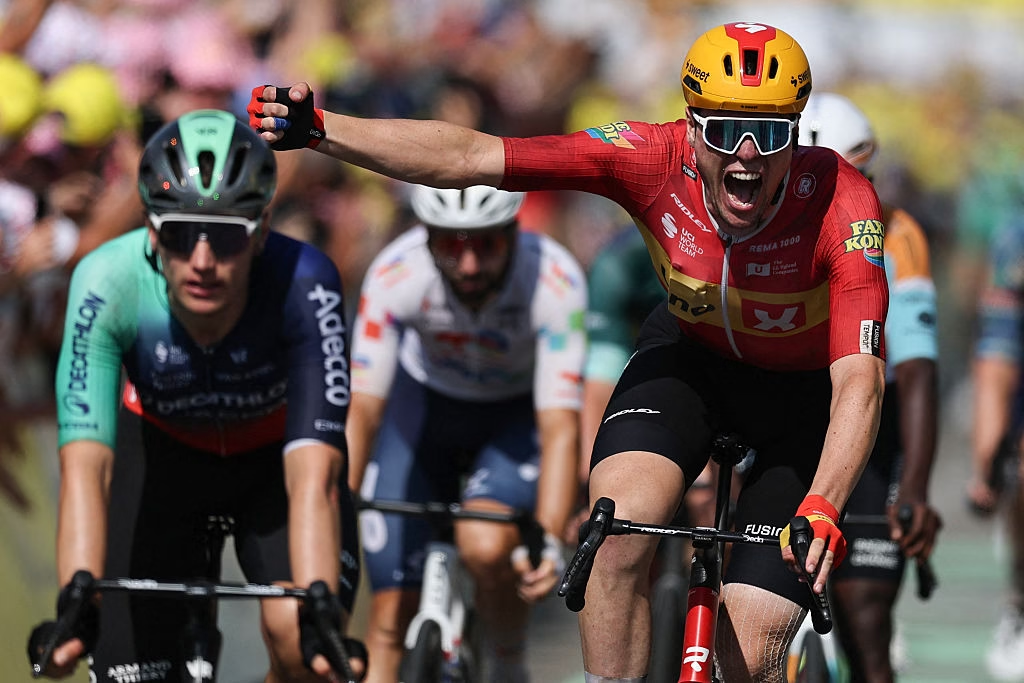
Tour de France stage 11 from Vichy to Nevers became the fastest road stage in the race’s history, with Søren Wærenskjold winning after 161.3km covered at an average speed of 50.951km/h.
That speed was not produced by one extraordinary attack or a peloton riding at maximum power from the first kilometre to the last.
It came from the structure of the race.
A favourable wind pushed the riders north towards Nevers. The relatively flat route contained few places where the pace had to fall sharply. The breakaway was strong enough to keep moving quickly but never received enough freedom to allow the peloton to relax.
Behind, several sprint teams shared the chase because each believed it had a realistic chance of winning. The gap remained manageable, which meant the peloton continued riding at a high but sustainable speed for almost the entire stage.
Modern equipment, nutrition and training helped turn those conditions into a record. They were part of the explanation rather than the explanation on their own.
Stage 11 was so fast because nearly every tactical element encouraged the race to keep moving.
The full stage 11 report and results cover Wærenskjold’s victory and the late catch in Nevers.
Tour de France stage 11 speed record at a glance
| Detail | Information |
|---|---|
| Route | Vichy to Nevers |
| Distance | 161.3km |
| Winner | Søren Wærenskjold |
| Winning average speed | 50.951km/h |
| Approximate stage duration | 3 hours 10 minutes |
| Previous record | 50.355km/h |
| Previous record holder | Mario Cipollini |
| Previous record stage | Laval to Blois, 1999 |
| Main breakaway | Julian Alaphilippe, Mathis Le Berre, Nelson Oliveira and Anthon Charmig |
| Breakaway caught | Inside the final 6km |
| Main weather influence | Favourable tailwind |
Wærenskjold’s average surpassed the 50.355km/h recorded when Mario Cipollini won the 194.5km stage from Laval to Blois in 1999.
The short answer
Stage 11 became the fastest Tour road stage because a slight tailwind, a relatively flat and direct route, an early fight for the breakaway and committed sprint-team chasing kept the speed high for almost the entire 161.3km.
The four-rider escape never built a large enough advantage for the peloton to sit up. The sprint teams continued applying pressure, while the roads provided long stretches on which the bunch could use its aerodynamic advantage.
The result was not repeated bursts of extreme power separated by long pauses.
It was more than three hours without a meaningful slowdown.
For a wider comparison of flat, mountain, descending and sprint speeds, see our guide to how fast Tour de France riders go.
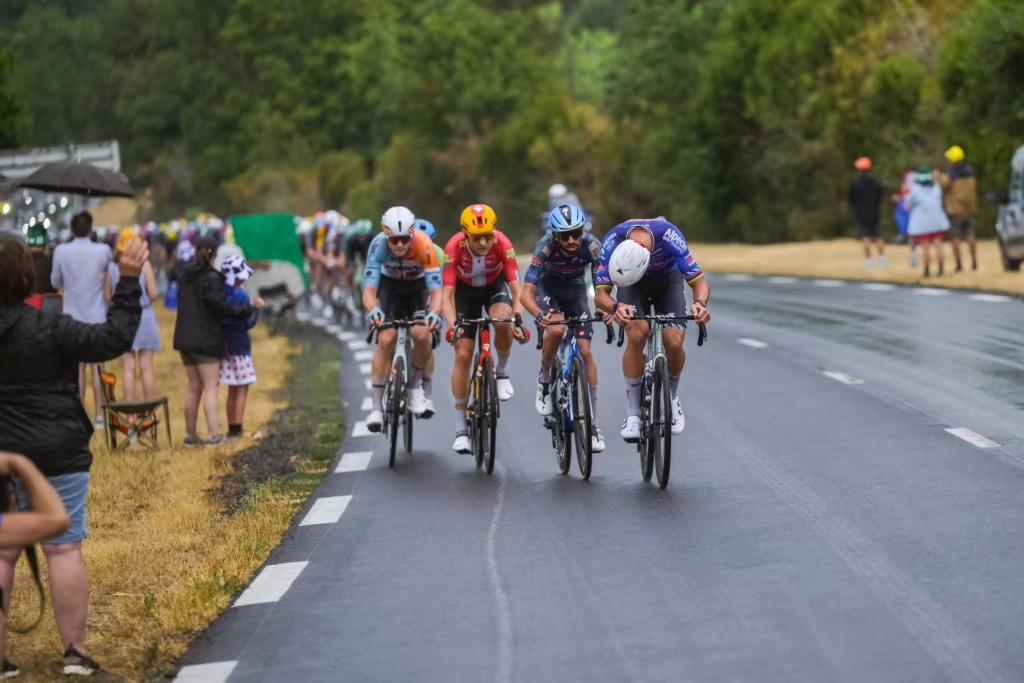 Photo Credit: A.S.O./Charly López
The stage was fast before the breakaway formed
A record average becomes much easier when the stage starts quickly.
That happened around Vichy, where early attacks took place on wet roads before Alaphilippe, Le Berre, Oliveira and Charmig established the main four-rider escape.
The opening phase of a flat Tour stage can sometimes be surprisingly slow. When most teams expect a bunch sprint, only a handful of riders may be interested in joining the break. The move forms almost immediately, the peloton sits up and the gap grows without resistance.
Stage 11 did not follow that pattern.
The early fight forced the peloton to accelerate before the day’s tactical structure had settled. Riders attempting to escape had to produce repeated efforts, while teams protecting their sprint and points-classification interests remained attentive behind.
The intermediate sprint at Saint-Pourçain-sur-Sioule came after only 27.9km, giving Mads Pedersen and his green jersey rivals another reason not to allow the opening kilometres to become neutralised.
That early sprint had already been identified as an important tactical point in the Tour de France 2026 stage 11 preview.
By the time the breakaway had been established, the stage was already moving at a speed consistent with a record attempt.
Nobody had planned to break the record.
The race had simply failed to slow down.
The tailwind turned effort into speed
The stage travelled broadly north from Vichy towards Nevers, with a favourable wind helping the riders along much of the route.
A tailwind does not mean riders can produce a record average without working.
It changes what their effort produces.
At the same power, a rider travels faster with the wind than against it. Inside a large peloton, the effect combines with drafting. Riders sheltered within the bunch can maintain very high speeds while using considerably less energy than the cyclists riding on the front.
The breakaway also benefits, but not to the same degree.
Four riders can rotate smoothly and share the workload. They cannot reproduce the shelter available within a peloton containing more than 170 riders.
That difference allowed the bunch to remain close while still moving at exceptional speed.
The wind did not make the race easy. Riders who stopped, suffered a mechanical problem or lost contact still faced a difficult chase.
That is typical of a fast tailwind stage.
The speed can feel manageable while sitting inside the group. The moment a rider loses the shelter, the true pace becomes obvious.
The breakaway never received full freedom
The most important tactical reason for the record was the size of the gap.
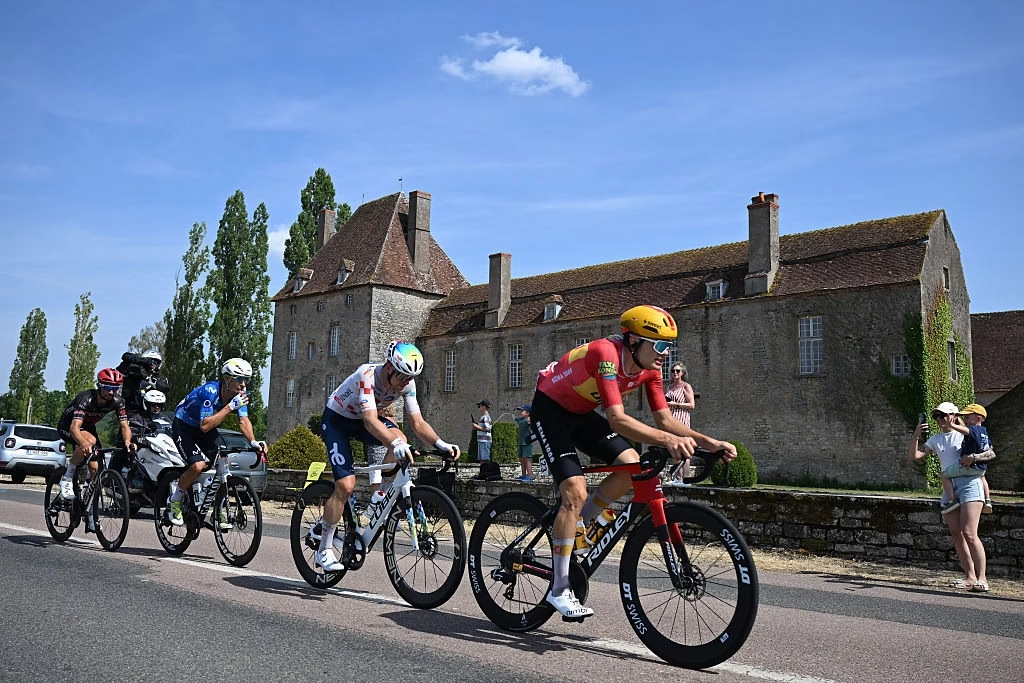
Alaphilippe, Le Berre, Oliveira and Charmig formed a credible breakaway. They were strong enough to ride quickly, maintain a consistent rotation and force the sprint teams to take them seriously.
They were not allowed the large advantage commonly given to an escape on a sprint stage.
A breakaway taking six or seven minutes can sometimes reduce the speed of the peloton. The chasing teams know they have hours to make the catch and can ride at a controlled tempo before increasing the pace later.
Stage 11 remained in the uncomfortable middle ground.
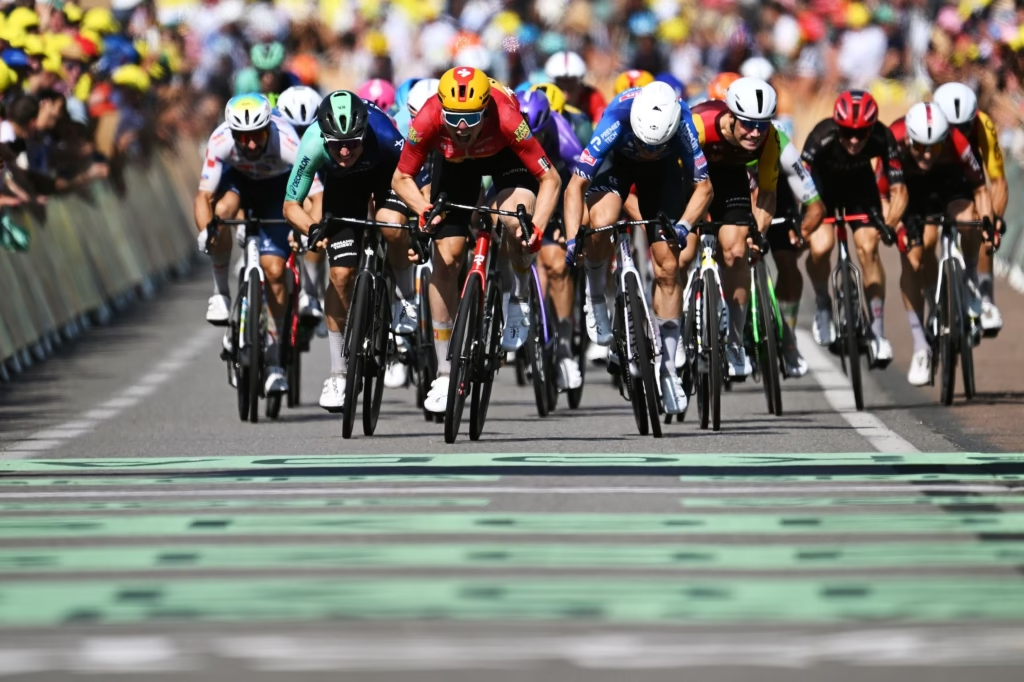
The escape was far enough ahead to require work but close enough that the peloton could keep it under control. Teams backing Biniam Girmay, Tim Merlier, Max Kanter, Jasper Philipsen and Olav Kooij all had reasons to contribute.
That prevented the familiar mid-stage lull.
The breakaway continued riding hard because victory remained possible. The peloton continued riding hard because allowing the gap to increase would make the catch more expensive later.
Both groups reinforced the pace of the other.
The escape was finally caught inside the last six kilometres, showing how carefully the gap had been managed.
Our explainer on what a breakaway is in the Tour de France covers how riders escape, why the peloton sometimes allows them to gain time and how sprint teams calculate the chase.
Why a controlled breakaway can produce a faster stage
It may seem strange that a breakaway contributes to a speed record.
Surely the stage would be faster if the entire peloton simply rode together?
Not necessarily.
Without an escape, sprint teams have little reason to set a sustained pace. Riders can spread across the road, talk to team cars, collect bottles and wait for the finale.
A manageable breakaway creates a permanent target.
The peloton does not have to ride at maximum effort, but it must keep enough riders working to ensure the gap does not become dangerous. That produces a stable, high speed rather than a series of accelerations and slowdowns.
The stage 11 escape contained experienced and powerful riders.
Oliveira is an accomplished rouleur. Charmig remained committed enough to collect both mountains points, while Le Berre took the intermediate sprint. Alaphilippe added further quality before losing contact later in the stage.
The sprint teams could not dismiss that group as a symbolic television breakaway.
They had to keep chasing.
Too many sprint teams wanted the same stage
The number of interested teams prevented tactical hesitation.
Merlier had already won two sprint stages and had an opportunity to complete a hat-trick. Kooij, Girmay, Philipsen and Kanter all had realistic chances, while Wærenskjold and several outsiders offered their teams another reason to support the chase.
When only one team wants a sprint, the breakaway can exploit the situation. That squad must decide how many riders it is willing to sacrifice while rivals refuse to help.
Stage 11 produced a broader coalition.
The teams did not need to cooperate formally. Each could contribute a rider for part of the chase, withdraw once that domestique had completed his turn and allow another squad to take over.
No single team had to control all 161.3km.
Together, they prevented the speed from falling.
The different roles within that chase are explained in our guide to how Tour de France teams work. The stage winner may receive the attention, but hours of work from domestiques make a controlled sprint possible.
The green jersey battle accelerated the opening hour
Stage 11 was not only about the stage victory.
Pedersen began the day leading the points classification, with Girmay, Merlier, Philipsen and Kanter all needing to score whenever opportunities appeared.
The early intermediate sprint encouraged Lidl-Trek to remain active rather than allowing the breakaway to collect the points uncontested.
Le Berre won the intermediate sprint from the escape, but Pedersen still finished ahead of his main classification rivals and strengthened his position.
This added another layer to the stage’s structure.
A team might normally be happy to allow a breakaway to form during the first 20km and begin chasing much later. The points battle created an incentive to control which riders escaped and how quickly they reached the sprint.
Once the intermediate sprint had passed, the stage was already moving too quickly to settle into a conventional procession.
The pace had become self-sustaining.
Pedersen’s ability to score during several different types of stage is central to our analysis of whether Mads Pedersen can win the Tour de France green jersey.
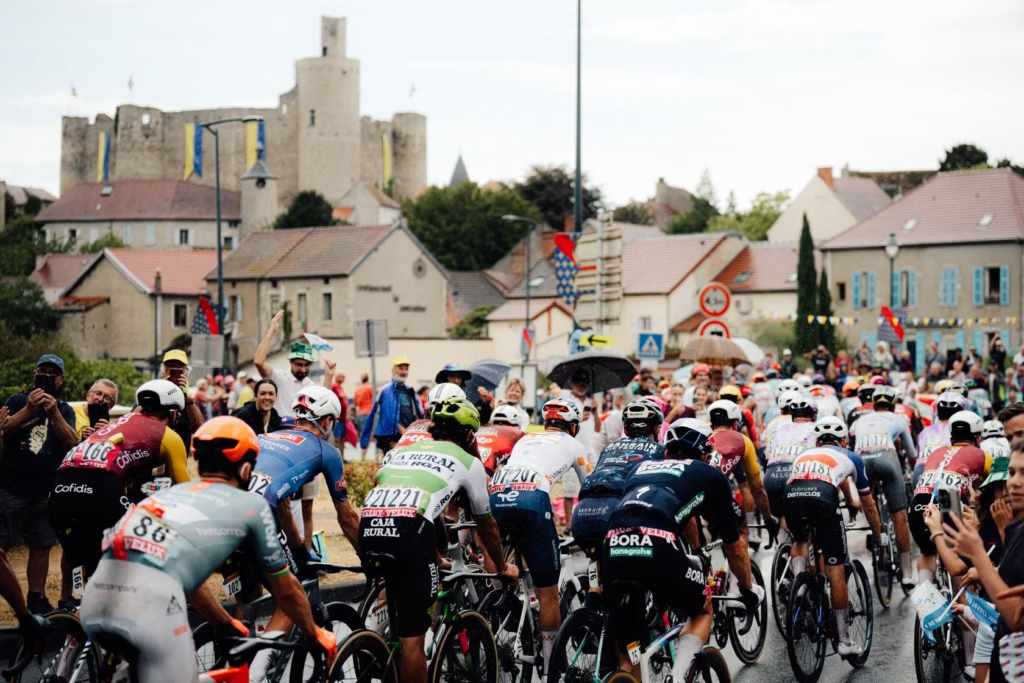 Photo Credit: A.S.O./Thomas Maheux
The route allowed the peloton to stay aerodynamic
The 161.3km stage was officially classified as flat and contained around 1,400 metres of climbing.
Two category-four ascents interrupted the route, but neither was long or steep enough to divide the peloton or force the sprinters into survival mode.
The stage also ran relatively directly between Vichy and Nevers.
There were no major mountain passes, prolonged technical descents or repeated urban circuits forcing the peloton to brake and accelerate. Long stretches of open road allowed riders to maintain momentum.
That matters when calculating average speed.
A peloton can lose considerable time through villages, roundabouts, sharp corners and narrow roads even when the physical intensity remains high. Every braking point requires another acceleration, but those extra watts do not necessarily produce a faster average.
Stage 11 offered enough road space for the group to stretch out and travel efficiently.
The route did contain smaller rises and approximately 1,400 metres of total elevation. The favourable wind and race structure made that climbing much less significant than it would have been on a more technical course.
The stage distance helped
At 161.3km, stage 11 was not exceptionally short, but it was considerably shorter than many traditional Tour transition stages.
That reduced the amount of time riders needed to conserve energy.
A 220km stage encourages caution. Teams know that chasing hard during the opening hour can create a serious cost later, especially during the second week of a Grand Tour.
Over approximately three hours and ten minutes, a high tempo is more sustainable.
The riders were also competing on the first flat stage after the rest day and the Bastille Day mountain stage to Le Lioran.
The general classification contenders had no reason to create another battle. Tadej Pogačar held a comfortable yellow jersey advantage, while the teams of Jonas Vingegaard, Remco Evenepoel and the other leading riders were happy to reach Nevers safely.
That left the sprint teams in control of the stage’s rhythm.
The GC squads did not slow the race, attack or force the peloton into a more complicated pattern. They largely occupied protected positions while allowing the chase to continue.
The rest day still played a role
Stage 11 did not come immediately after the first rest day. The riders had already completed the difficult stage to Le Lioran.
The rest day still mattered.
The peloton entered this part of the Tour with some of the accumulated fatigue from the opening week reduced. Many sprint-team domestiques had ridden stage 10 with the aim of reaching the finish inside the time limit rather than contesting the mountain finale.
That did not mean they were fresh in the normal sense.
It meant the teams still had enough riders capable of contributing to a sustained chase.
A speed record depends heavily on the workers available. The sprinter may receive the victory, but the average is built by domestiques rotating at the front for hours.
Stage 11 arrived early enough after the rest day for those riders to perform that work, but late enough in the race for the number of remaining sprint opportunities to feel limited.
Teams were unwilling to waste one.
Our guide to the Tour de France 2026 rest days explains why riders still train lightly during a rest day and how the pause affects the stages that follow.
Modern equipment amplified the conditions
Bikes, clothing and tyres are faster than they were when Cipollini set the previous record in 1999.
Modern Tour riders use extensively tested aerodynamic frames, integrated cockpits, deep-section wheels, optimised helmets and close-fitting clothing. Faster tyres and lower rolling resistance allow more of the rider’s power to become forward motion.
Positioning has also become more scientific.
Teams use wind-tunnel testing, aerodynamic modelling and individual bike fitting to reduce drag. Nutrition strategies make it easier for riders to consume carbohydrate throughout a fast stage without waiting for long periods of lower intensity.
These developments matter most when the race already provides favourable conditions.
A modern aero bike cannot turn a mountain stage into a 50km/h race. On a relatively flat route with a tailwind and a large peloton, small improvements accumulate across every kilometre.
The comparison with 1999 should still be treated carefully.
Cipollini’s record was set across 194.5km, more than 30km longer than stage 11. Route direction, wind, elevation and tactical conditions were also different.
The average-speed table compares outcomes rather than identical tests.
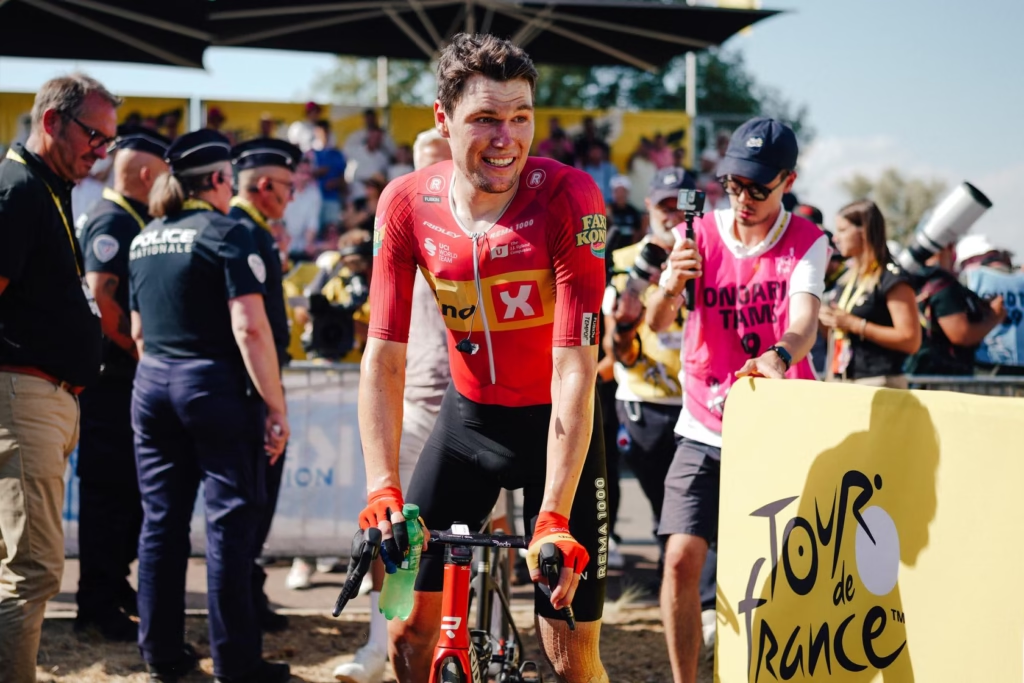 Photo Credit: A.S.O./Thomas Maheux
It was not simply a day of enormous watts
The fastest stage in Tour history does not automatically mean riders produced the highest power figures ever recorded.
Speed and power are related, but they are not interchangeable.
A rider travelling at 51km/h inside a tightly packed peloton with a tailwind may be producing less power than someone riding at 43km/h alone into a headwind.
Drafting is the central advantage.
The riders at the front perform much more work. Those behind benefit from reduced air resistance, allowing the entire group to travel quickly without every member sustaining an extreme effort.
The record was therefore collective.
Breakaway riders produced sustained power to remain clear. Domestiques worked on the front of the peloton. Protected sprinters and GC leaders used the shelter behind them.
The Tour’s fastest stage was created by different riders performing different jobs within the same high-speed structure.
Reducing it to watts misses why the record happened.
The lead-out riders also had to work earlier
Sprint support is normally discussed only during the final five kilometres.
Stage 11 required some of those riders to contribute much earlier.
Teams needed domestiques to control the escape, position their leaders and still retain enough structure for the approach to Nevers. The constant speed reduced the opportunities to recover after a turn on the front.
That placed unusual pressure on the sprint trains.
A rider could spend significant energy helping with the chase and then be expected to return during the final kilometres to guide the sprinter through the bunch.
The teams with several strong rouleurs were better equipped to divide that workload.
Our ranking of the best lead-out riders at the Tour de France 2026 shows why sprint success depends on far more than the speed of the protected finisher.
Did the final sprint create the record?
The sprint helped preserve the average but did not create it.
By the final 20km, the race was already on course to establish a new record unless the approach became unusually slow.
The pace briefly eased when the breakaway was caught.
That is common. Once the chase has completed its task, teams reorganise, riders spread across the road and sprint trains wait before beginning the final positioning battle.
The average remained high because the earlier pace had created enough of a buffer.
Wærenskjold’s long acceleration completed the stage in dramatic fashion, but the record had been built over the previous three hours.
Why the 50.951km/h figure needs context
Average speed is one of cycling’s simplest statistics and one of its easiest to misread.
Stage 11 was faster than every previous Tour road stage by the recorded average. That does not make it the hardest stage in the race’s history.
A mountain stage completed at 41km/h can require considerably more physiological work. A cobbled or crosswind stage may be slower while creating far more repeated accelerations and muscular damage.
The record instead describes how efficiently the peloton moved between two points.
Stage 11 combined:
- A short and relatively flat route
- A favourable wind direction
- A fast opening
- An early intermediate sprint
- A strong but controlled breakaway
- Several motivated sprint teams
- Long sections of open road
- Modern aerodynamic equipment
- No general classification battle requiring the race to change shape
Remove one or two of those elements and the average probably falls below the previous record.
Together, they produced 50.951km/h.
-
 Photo Credit: Cs-wolves / Wikimedia Commons, CC BY-SA 4.0
Could the Tour speed record be broken again soon?
Yes.
The record moved only slightly above Cipollini’s previous mark, from 50.355km/h to 50.951km/h.
Another short flat stage with a strong tailwind could go faster, particularly if crosswind fears or an intense points-classification fight force the peloton to race throughout.
Stage 12 to Chalon-sur-Saône provides another fast opportunity, although its rolling profile and three category-four climbs make a second consecutive record less likely.
Future records will continue to depend more on conditions and tactics than on a sudden increase in human performance.
The fastest possible stage requires the wind, route and peloton to point in the same direction.
That happened between Vichy and Nevers.
Why stage 11 really broke the record
The breakaway never received enough time for the peloton to relax.
The sprint teams never became confident enough to stop chasing.
The route never became difficult or technical enough to force a sustained reduction in speed.
The tailwind turned that constant pressure into forward momentum.
Modern cycling supplied the final gains through equipment, nutrition and deeper sprint trains, but the record was built by the way the stage was raced.
Stage 11 was not the fastest Tour road stage because everyone rode flat out all day.
It was the fastest because nobody was given a reason to slow down.

