
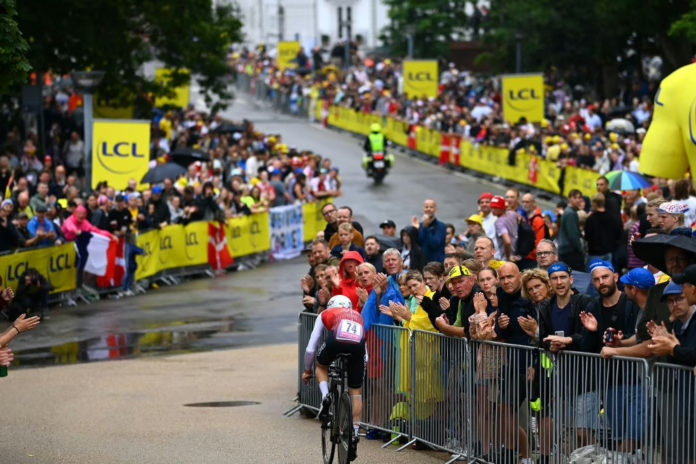
The Tour de France has started outside France 27 times, including the 2026 Grand Départ in Barcelona. The first foreign start came in 1954, when Amsterdam hosted the opening of the race. Since then, the Tour has increasingly used foreign Grand Départs to turn the opening days into a major international event, with starts in the Netherlands, Belgium, Germany, Spain, the UK, Ireland, Denmark, Italy, Luxembourg, Switzerland and Monaco.
Barcelona 2026 continues that tradition. It will be the third time the Tour has started in Spain, following San Sebastián in 1992 and Bilbao in 2023, and it gives the race another high-profile foreign launch before the route heads back into France. For the full route context, our Tour de France 2026 full route guide explains how the Barcelona Grand Départ connects to the Pyrenees, Massif Central, Vosges, Jura and Alps.
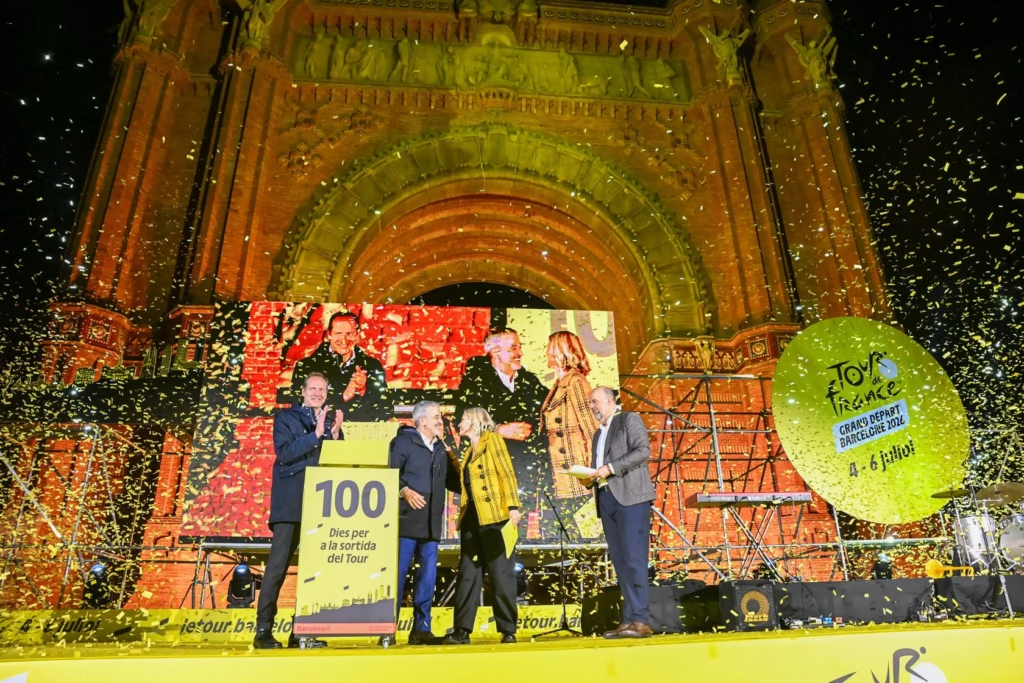 Photo Credit: A.S.O./Barcelona Ciry Council
Tour de France foreign starts at a glance
| Question | Answer |
|---|---|
| How many times has the Tour de France started outside France? | 27 times, including Barcelona 2026 |
| When was the first foreign Grand Départ? | 1954, in Amsterdam |
| Which country has hosted the most foreign starts? | The Netherlands has hosted several, including Amsterdam, Scheveningen, Leiden, ’s-Hertogenbosch, Rotterdam and Utrecht |
| How many times has Spain hosted the Tour start? | Three times, including Barcelona 2026 |
| When did the Tour last start outside France before Barcelona? | Florence, Italy, in 2024 |
| Where will the Tour start in 2026? | Barcelona, Spain |
| Where will the Tour start in 2027? | Edinburgh, Scotland |
What is a Grand Départ?
The Grand Départ is the official start of the Tour de France. It includes the build-up, team presentation, opening stage and wider host-city programme around the first days of the race. Although the Tour remains a French race, its start has often moved beyond France to take the race into neighbouring countries and, more recently, major European cities with strong sporting identities.
The Grand Départ matters because it sets the tone of the Tour. A flat prologue, team time-trial, city circuit or hilly opening road stage can immediately influence the yellow jersey fight. It also gives the host city a global showcase, with the Tour’s enormous television audience focused on one location before the race begins its three-week journey.
For 2026, that opening stage will be a Barcelona team time-trial, making the Grand Départ more than a ceremonial launch. Our Tour de France 2026 team time-trial explained feature looks at why that stage could create real general classification gaps on day one.
Every Tour de France Grand Départ outside France
| Year | Host city / area | Country |
|---|---|---|
| 1954 | Amsterdam | Netherlands |
| 1958 | Brussels | Belgium |
| 1965 | Cologne | West Germany |
| 1973 | Scheveningen | Netherlands |
| 1975 | Charleroi | Belgium |
| 1978 | Leiden | Netherlands |
| 1980 | Frankfurt | West Germany |
| 1982 | Basel | Switzerland |
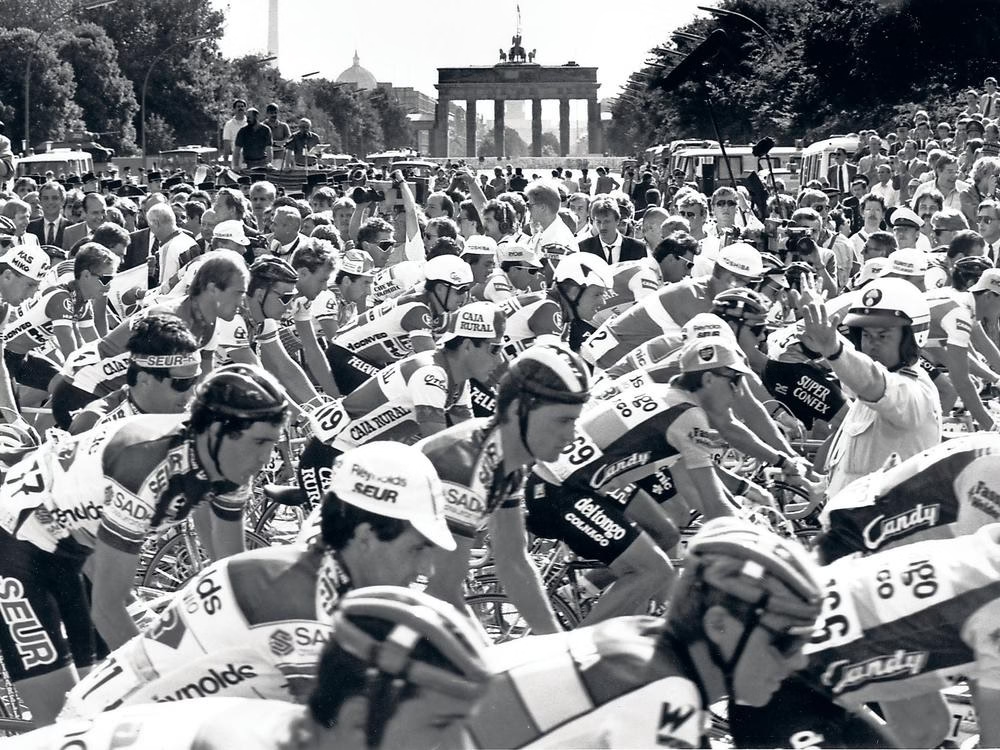
| 1987 | West Berlin | West Germany |
| 1989 | Luxembourg City | Luxembourg |
| 1992 | San Sebastián | Spain |
| 1996 | ’s-Hertogenbosch | Netherlands |
| 1998 | Dublin | Ireland |
| 2002 | Luxembourg City | Luxembourg |
| 2004 | Liège | Belgium |
| 2007 | London | United Kingdom |
| 2009 | Monaco | Monaco |
| 2010 | Rotterdam | Netherlands |
| 2012 | Liège | Belgium |
| 2014 | Leeds / Yorkshire | United Kingdom |
| 2015 | Utrecht | Netherlands |
| 2017 | Düsseldorf | Germany |
| 2019 | Brussels | Belgium |
| 2022 | Copenhagen | Denmark |
| 2023 | Bilbao | Spain |
| 2024 | Florence | Italy |
| 2026 | Barcelona | Spain |
Why does the Tour de France start abroad?
The Tour de France starts abroad because the race is both a French institution and a global sporting event. Foreign Grand Départs allow the Tour to reach major cycling audiences, strengthen links with neighbouring countries, and create opening weekends that feel like standalone occasions.
The earliest foreign starts were close to France’s borders and cycling heartlands. Amsterdam in 1954, Brussels in 1958 and Cologne in 1965 all made sense because they took the Tour into countries with strong cycling cultures and realistic logistics. Belgium and the Netherlands, in particular, became natural hosts because cycling already had deep public support there.
Over time, the Grand Départ became more ambitious. London in 2007, Yorkshire in 2014, Copenhagen in 2022, Bilbao in 2023 and Florence in 2024 were not just route choices. They were civic events, with host cities and regions using the Tour to present themselves to an international audience.
Barcelona 2026 follows that modern model. The city already has a strong sporting profile, a clear cycling culture and a route opening that uses Montjuïc as part of the first two stages. Our Tour de France 2026 Grand Départ guide covers how the Catalan start is structured across Barcelona, Tarragona and Granollers.
Which countries have hosted the most Tour de France starts?
The foreign Grand Départ has been dominated by countries close to France, especially the Netherlands and Belgium. That is partly geography, partly cycling culture, and partly logistics. These countries can host the race, generate huge roadside crowds and allow the Tour to return to France without an awkward transfer.
| Country | Foreign Grand Départs |
|---|---|
| Netherlands | Amsterdam, Scheveningen, Leiden, ’s-Hertogenbosch, Rotterdam, Utrecht |
| Belgium | Brussels, Charleroi, Liège |
| Germany / West Germany | Cologne, Frankfurt, West Berlin, Düsseldorf |
| Spain | San Sebastián, Bilbao, Barcelona |
| Luxembourg | Luxembourg City |
| United Kingdom | London, Leeds / Yorkshire |
| Switzerland | Basel |
| Ireland | Dublin |
| Monaco | Monaco |
| Denmark | Copenhagen |
| Italy | Florence |
Spain’s role has grown in the modern era. San Sebastián in 1992 took the Tour to the Basque Country, Bilbao in 2023 gave the race one of its most intense recent foreign starts, and Barcelona in 2026 brings the Grand Départ to Catalonia for the first time.
For fans planning to see the race in person, our guide to how to visit the Tour de France 2026 Grand Départ in Barcelona covers the practical travel side of the opening weekend.
The first foreign Grand Départ: Amsterdam 1954
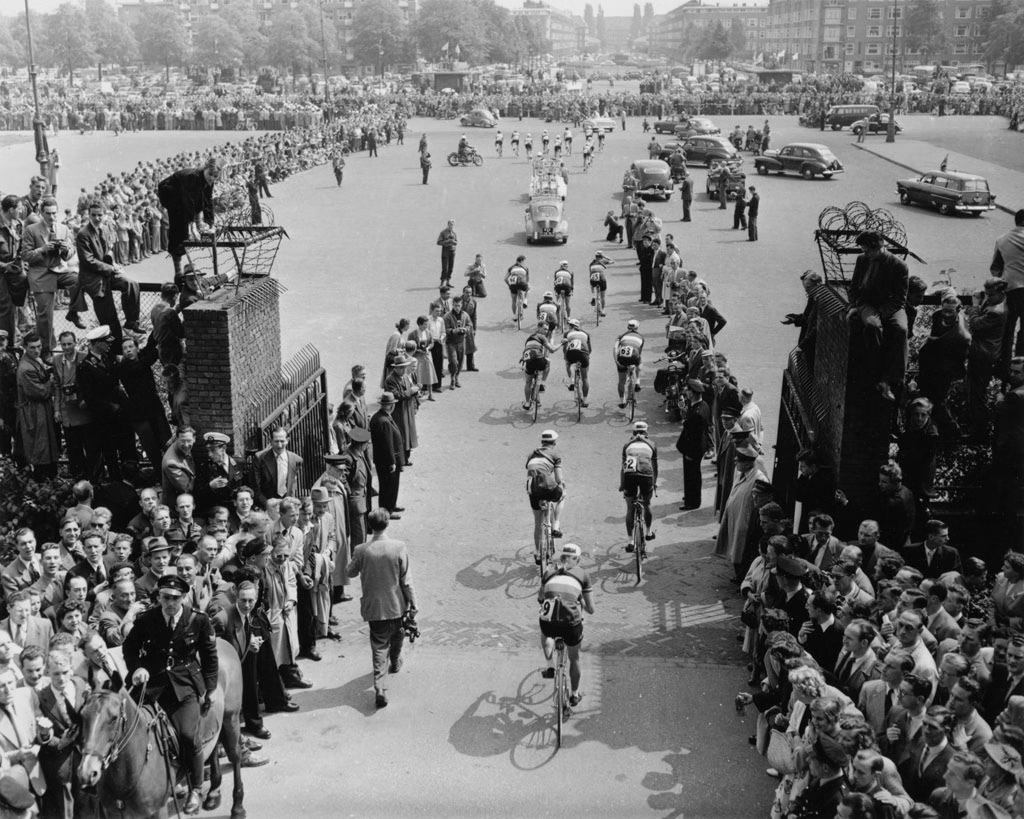
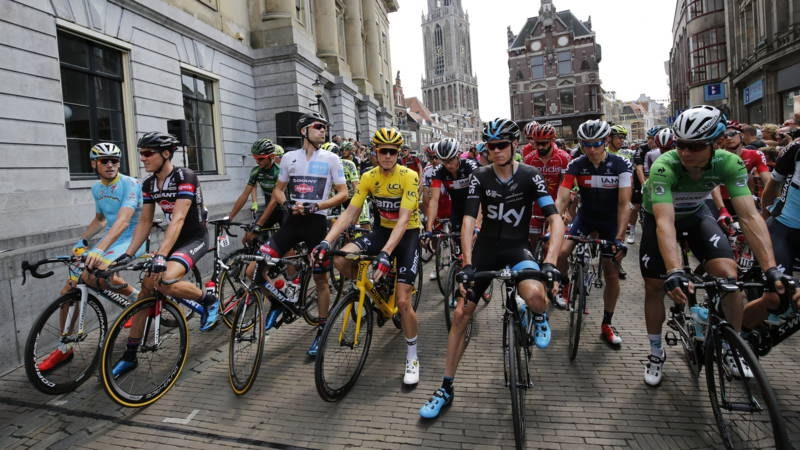
The first time the Tour de France started outside France was in 1954, when the race began in Amsterdam. That was a major change in the Tour’s identity. The race had crossed borders before, but beginning abroad gave the opening days a different meaning.
Amsterdam was a natural choice. The Netherlands had a strong everyday cycling culture, passionate spectators and roads that could host a large international race. It also created a template for later foreign starts: choose somewhere close enough to work logistically, but distinctive enough to give the Tour a new backdrop.
The success of Amsterdam made future foreign starts easier to imagine. Brussels followed in 1958, Cologne in 1965, then the list gradually expanded across western Europe.
Why the Low Countries became so important
The Netherlands and Belgium have played a central role in the history of Tour de France foreign starts. They are close to France, easy for the race convoy to reach, and deeply connected to cycling culture.
A Dutch Grand Départ often brings flat roads, huge crowds and a strong time-trial or sprint-stage feel. Amsterdam, Leiden, Rotterdam and Utrecht all fitted that pattern in different ways. These starts tend to feel fast, polished and public, with a dense cycling audience that understands the spectacle.
Belgium adds a different texture. Brussels, Charleroi and Liège brought the Tour into one of cycling’s most passionate countries. Belgian starts often carry Classics undertones, with punchier roads, famous cycling regions and a crowd culture that treats bike racing as part of everyday life.
That is why the Tour keeps returning to nearby cycling countries. A foreign start works best when it does not feel like a gimmick. Belgium and the Netherlands make the Tour feel international without making it feel displaced.
The UK and the Tour de France Grand Départ
The United Kingdom has hosted the men’s Tour de France Grand Départ twice so far. London hosted the start in 2007, while Leeds and Yorkshire hosted the start in 2014. Both left strong memories, but in different ways.
London 2007 gave the Tour a major capital-city launch, with a polished prologue and huge crowds. Yorkshire 2014 was more regional, more expansive and arguably more emotionally powerful. The scale of support across Yorkshire changed the way many people thought about the Tour’s appeal in Britain.
The Tour will return to the UK in 2027, with the men’s race due to begin in Edinburgh. That will make Scotland a Grand Départ host for the first time. It will also come alongside a British Grand Départ for the Tour de France Femmes, making 2027 an especially important moment for the race’s relationship with the UK.
For a broader look at future Tour planning, our Tour de France hub brings together route guides, start-list updates, viewing information and race explainers.

Why Barcelona 2026 matters
Barcelona 2026 is significant because it continues the Tour’s recent pattern of using foreign starts to create high-impact opening weekends. Copenhagen in 2022, Bilbao in 2023 and Florence in 2024 all gave the Tour very different identities before the race returned to France. Barcelona should do the same.
The city has hosted Tour stages before, but never the Grand Départ. That distinction matters. A passing stage is one moment in the race. A Grand Départ gives the host city the opening ceremony, team presentation, global build-up and the first yellow jersey.
Sportingly, Barcelona also gives the race a meaningful start. Stage 1 is a team time-trial. Stage 2 returns from Tarragona to Barcelona with a hilly Montjuïc finale. Stage 3 heads from Granollers towards Les Angles, carrying the race north and towards the French border. That means the Catalan start should shape the race rather than simply decorate it.
Our Tour de France 2026 route analysis explains why the early route could already create pressure before the race reaches its biggest mountain stages.
Does the Tour still feel French when it starts abroad?
Yes. The Tour de France remains French because its identity is built around France’s geography, culture, road network and race history. The finish in Paris, the mountain ranges, the yellow jersey, the villages, the roadside traditions and the rhythm of July all keep it rooted in France.
Foreign starts do not remove that identity. They extend it. The Tour begins in another country, absorbs that atmosphere for a few days, then carries it back into France. The best foreign Grand Départs work because they add something without overpowering the race.
That is why Amsterdam, London, Yorkshire, Copenhagen, Bilbao and Florence all feel distinct in Tour history. Each one gave the race a different opening flavour, but the Tour still became itself once the race unfolded over three weeks.
For newer fans, our beginner’s guide to Men’s Tour de France 2026 explains the wider structure of the race, including the jerseys, stages and classifications that continue once the Grand Départ has passed.
-
 Photo Credit: Billy Ceusters / Getty Images


Tour de France foreign Grand Départ FAQ
How many times has the Tour de France started outside France?
The Tour de France has started outside France 27 times, including the 2026 Grand Départ in Barcelona.
When did the Tour de France first start outside France?
The first Tour de France start outside France came in 1954, when Amsterdam hosted the Grand Départ.
Where does the Tour de France start in 2026?
The Tour de France 2026 starts in Barcelona, Spain, on Saturday, 4th July. The opening stage is a team time-trial in the city.
How many times has the Tour de France started in Spain?
Including Barcelona 2026, the Tour de France has started in Spain three times. The previous Spanish starts were San Sebastián in 1992 and Bilbao in 2023.
Has the Tour de France ever started in the UK?
Yes. The men’s Tour de France started in London in 2007 and Leeds / Yorkshire in 2014. It is also due to start in Edinburgh in 2027.
Which country has hosted the most foreign Tour de France starts?
The Netherlands has hosted the most foreign Grand Départs, with starts in Amsterdam, Scheveningen, Leiden, ’s-Hertogenbosch, Rotterdam and Utrecht.
Why does the Tour de France start outside France?
The Tour starts outside France to reach international cycling audiences, create major host-city events, strengthen links with neighbouring countries and give each edition a distinctive opening identity.
Will the Tour de France start abroad again after 2026?
Yes. The men’s Tour de France is due to start in Edinburgh in 2027, with the race returning to the UK for another foreign Grand Départ.
Why foreign starts have become part of Tour history
Foreign Grand Départs are no longer unusual side notes in Tour de France history. They are part of the race’s modern identity. They show how the Tour can be both deeply French and unmistakably international.
Amsterdam in 1954 opened the door. Brussels, Cologne, San Sebastián, London, Copenhagen, Bilbao, Florence and Barcelona all widened the idea of what the Tour’s opening weekend could be. Some starts have leaned on cycling heritage. Others have leaned on civic spectacle. The best have done both.
That is why the answer to how often the Tour has started outside France is more than a number. It is 27 times by Barcelona 2026, but it is also a story of the race expanding its stage without losing its centre. The Tour still belongs to France. The Grand Départ shows how far its pull extends.

