In modern men’s road cycling, it is increasingly rare for a rider to even attempt a season that spans all five Monuments and all three Grand Tours. The physical demands are wildly different, from the repeated anaerobic violence of the cobbled Classics to the sustained climbing and recovery required across three-week stage races. As the sport has professionalised and specialisation deepened, most riders have been funnelled into ever-narrower lanes.
History underlines just how exceptional true breadth is. Eddy Merckx remains the only rider to have won all five Monuments and all three Grand Tours across a career. Only Roger De Vlaeminck and Rik Van Looy have matched Merckx’s Monument sweep, while the exclusive list of men to have won all three Grand Tours consists of Jacques Anquetil, Felice Gimondi, Bernard Hinault, Alberto Contador, Vincenzo Nibali and Chris Froome. On the women’s side, Annemiek van Vleuten achieved the same Grand Tour treble.
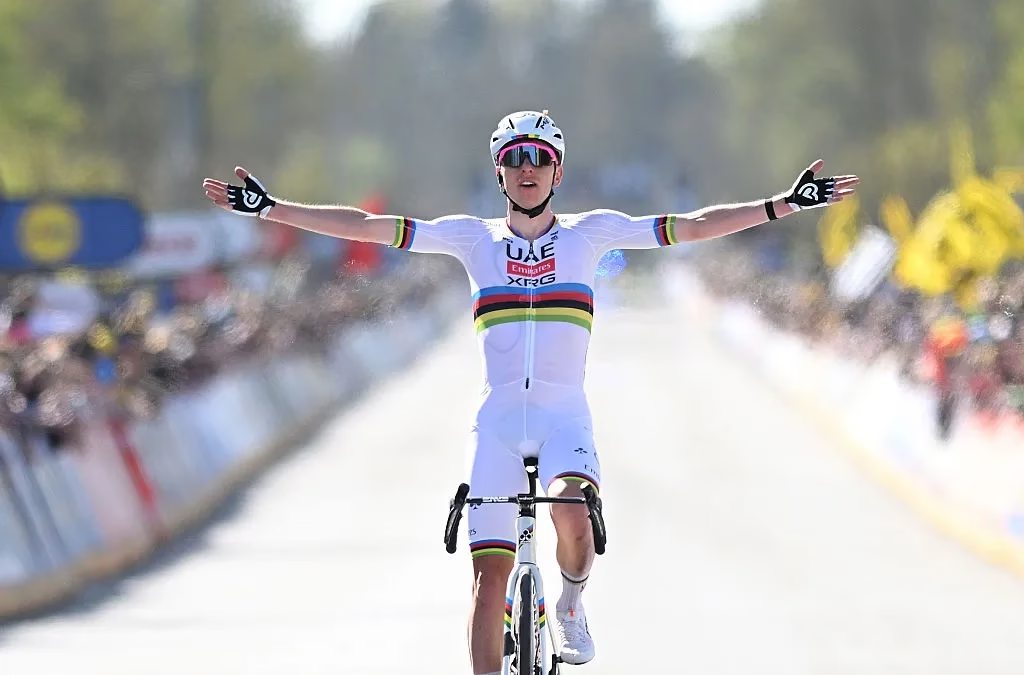
Against that backdrop, riders such as Tadej Pogacar are not simply targeting individual races. They are openly shaping careers around legacy, history and completeness, even if doing everything in a single season remains the exception rather than the rule.
What follows is a race-by-race look at which riders have already indicated they will line up for each Monument and Grand Tour in 2026, based on statements attributed to teams, riders and media reports. Read this less as a prediction of form, and more as a map of intent.
 Photo Credit: LaPresse
Milan-San Remo: endurance first, explosiveness last
Milan-San Remo is cycling’s longest professional one-day race and one of its most enigmatic. Nearly 300 kilometres of racing gradually compress into a handful of decisive moments on the Cipressa and the Poggio, where positioning, restraint and nerve often matter more than outright strength. It is a Monument that has resisted domination, rewarding riders who can read a race as well as endure it.
For 2026, the following riders have indicated their intention to start La Primavera.
Tadej Pogacar is again expected to line up, with his presence referenced from within the peloton. His repeated Poggio attacks in recent editions have reshaped the race’s modern identity, even if the final step onto the top of the podium has so far escaped him.
Isaac del Toro is linked to Milan-San Remo via Bicisport. For a rider still expanding his one-day race profile, San Remo offers a demanding but controlled introduction to Monument racing.
Mads Pedersen appears on the list, with confirmation attributed to Domestique. Pedersen’s durability and ability to handle long, attritional races explain why San Remo remains a fixture in his spring ambitions.
 Photo Credit: Sprint Cycling Agency
Jonathan Milan is listed through bici.pro. His continued inclusion reflects how his development has pushed beyond pure sprinting, with San Remo acting as a proving ground for whether his climbing progression is sufficient to survive the Poggio.
Filippo Ganna is again linked, cited by Ciro. Few riders possess Ganna’s blend of endurance, power and composure, and Milan-San Remo remains one of the Monuments where those traits could align most naturally.
Michael Matthews is confirmed via IDL. His long-standing relationship with this race, built on consistency rather than singular moments, makes him one of the most reliable references points whenever San Remo approaches.
Magnus Cort appears with confirmation from Feltet. His endurance and tactical opportunism suit a race where hesitation and uncertainty often create unexpected openings.
Danny van Poppel is included, cited by WielerFlits. His experience across long Classics and chaotic finales makes him a useful presence in a race that rarely follows a fixed script.
Maxim van Gils completes the San Remo list, also cited by Ciro. While better known for Ardennes-style terrain, his endurance and improving Classics exposure explain why San Remo has entered his long-term planning.
Tour of Flanders: attrition, repetition and identity
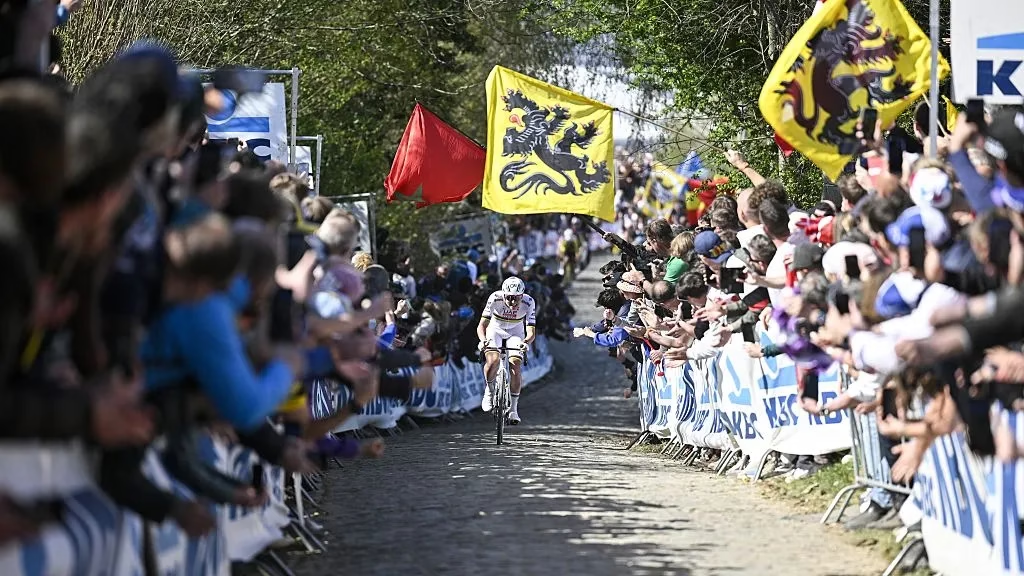
The Tour of Flanders is built on repetition. Cobbled climbs, narrow roads and relentless changes of pace gradually expose weakness, rewarding riders who can repeatedly produce force under fatigue. It is a Monument where positioning is inseparable from power, and where experience often counts as much as raw ability.
For 2026, only four riders from the table have indicated their intention to start De Ronde.
Tadej Pogacar is again listed, with his participation sourced from within the peloton. His 2nd place in 2023 fundamentally altered perceptions of what a GC rider could achieve on these roads, and Flanders remains one of the defining challenges in his pursuit of a complete Monument career.
Mads Pedersen is included, with confirmation from Domestique. Few riders are as naturally suited to Flanders’ demands. His resilience, cobbled handling and ability to sprint after long attritional racing keep him firmly in the conversation whenever he starts.
Michael Matthews is again linked, cited by IDL. While not a prototype Flanders rider, his endurance and race intelligence allow him to remain competitive when the race becomes tactical rather than explosive.
Tiesj Benoot rounds out the group, with confirmation from WielerFlits. Flanders is a cornerstone of Benoot’s season, a race whose terrain and rhythm align closely with his strengths and experience.
Paris-Roubaix: endurance without disguise
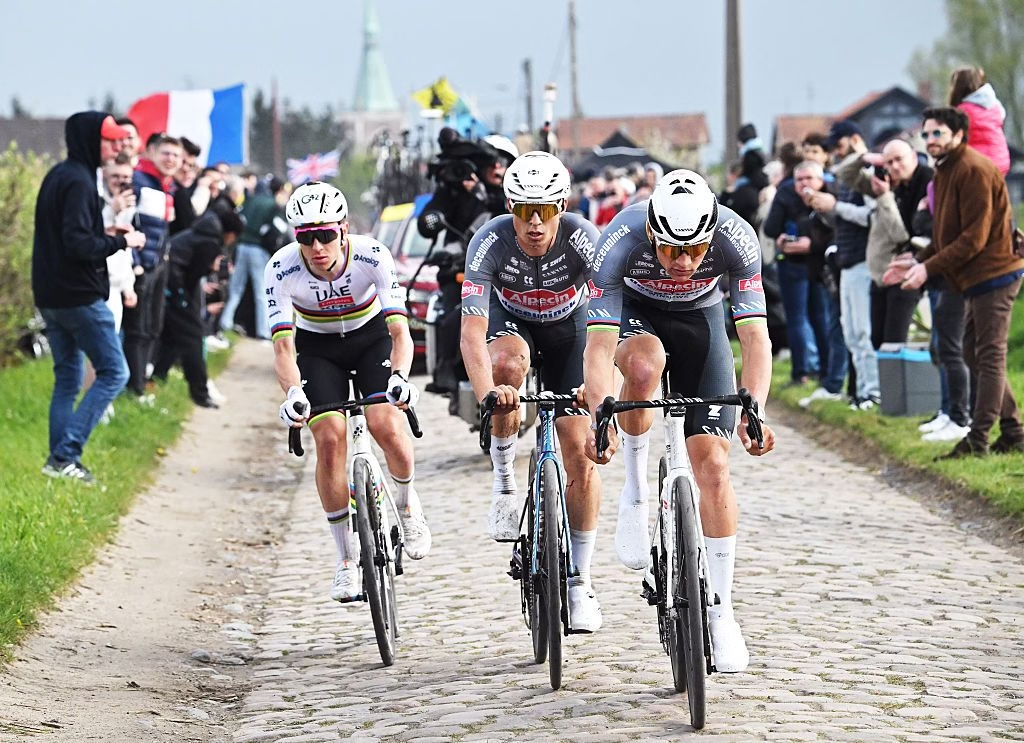
Paris-Roubaix is cycling at its most unforgiving. There is no climb to select the race and no descent to recover on. Instead, sectors of pavé relentlessly punish positioning errors, technical mistakes and physical weakness. Roubaix rewards riders who can combine power, composure and resilience under constant stress.
For 2026, four riders have been linked to the Hell of the North.
Tadej Pogacar is listed once more, with his participation referenced from within the peloton. Roubaix remains the most alien Monument in his programme, but his willingness to target it reflects ambition rooted in legacy rather than comfort.
Mads Pedersen appears again, cited by Domestique. Roubaix suits his physiology and racing mentality, built around toughness and survival. His continued presence here underlines unfinished business on the pavé.
Jonathan Milan is included via bici.pro. His raw power and improving Classics experience make Roubaix a logical, if demanding, extension of his spring ambitions.
Filippo Ganna completes the group, with confirmation attributed to La Gazzetta dello Sport. Among this quartet, Ganna remains the most naturally suited on paper, with his sustained power, bike handling and calmness under pressure making Roubaix one of his most realistic Monument opportunities.
Liège-Bastogne-Liège: climbing at speed and sustained pressure
Liège-Bastogne-Liège is the oldest of the five Monuments and, in many ways, the one that most closely resembles a one-day Grand Tour stage. Rather than cobbles or long flat kilometres, the race is defined by repeated climbs taken at high intensity, often late in the day, when fatigue has already settled deep into the legs. The Ardennes terrain offers little respite, and the decisive moves are usually made not through surprise, but through sustained pressure.
Victory at Liège has traditionally favoured riders with strong aerobic engines, explosive climbing ability and the capacity to recover quickly between efforts. It is no coincidence that Grand Tour contenders and riders with stage-race pedigrees have often dominated the race.
For 2026, the table points to a large and diverse group of riders who have already indicated their intention to line up at La Doyenne.
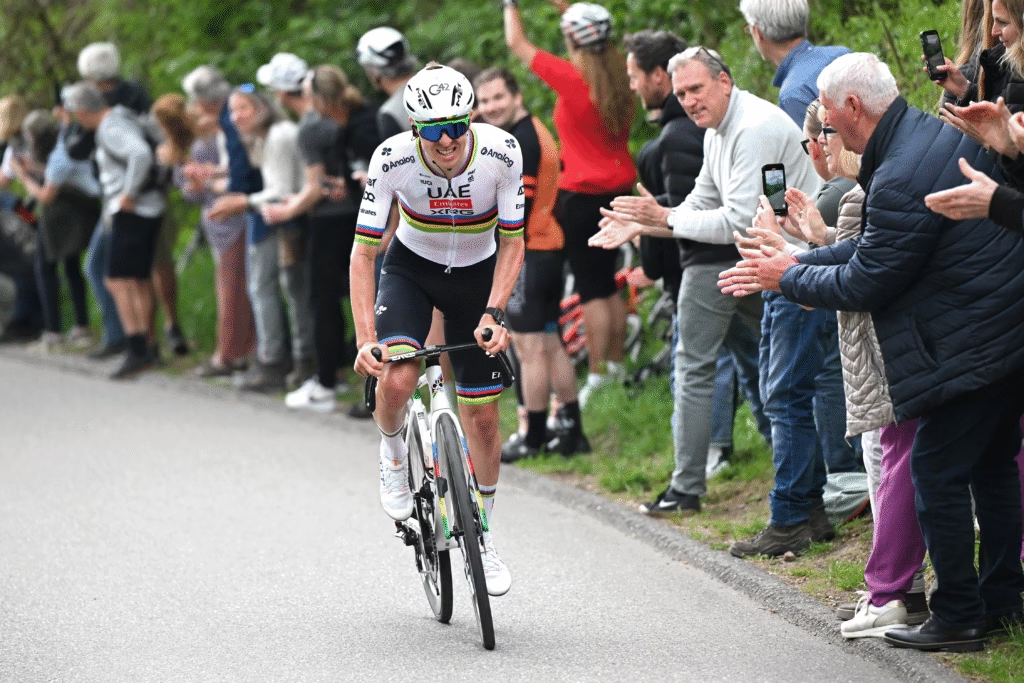
Tadej Pogacar is once again central, with confirmation attributed to Feltet. Already a multiple winner of Liège-Bastogne-Liège, Pogacar has repeatedly demonstrated that this race fits his skillset almost perfectly. His ability to accelerate on steep gradients late in the race has made him the defining rider of recent editions.
Remco Evenepoel is confirmed via CyclingFlash. Few riders have imposed themselves on Liège as decisively as Evenepoel when at his best. His long-range attacks and willingness to race from distance have delivered emphatic victories here, reinforcing Liège as a cornerstone of his one-day ambitions.
Mattias Skjelmose is also listed, with confirmation from CyclingFlash. His measured racing style and efficiency on short, sharp climbs have already produced strong Ardennes results. Liège represents a natural progression of his development as a rider capable of competing against the very best on this terrain.
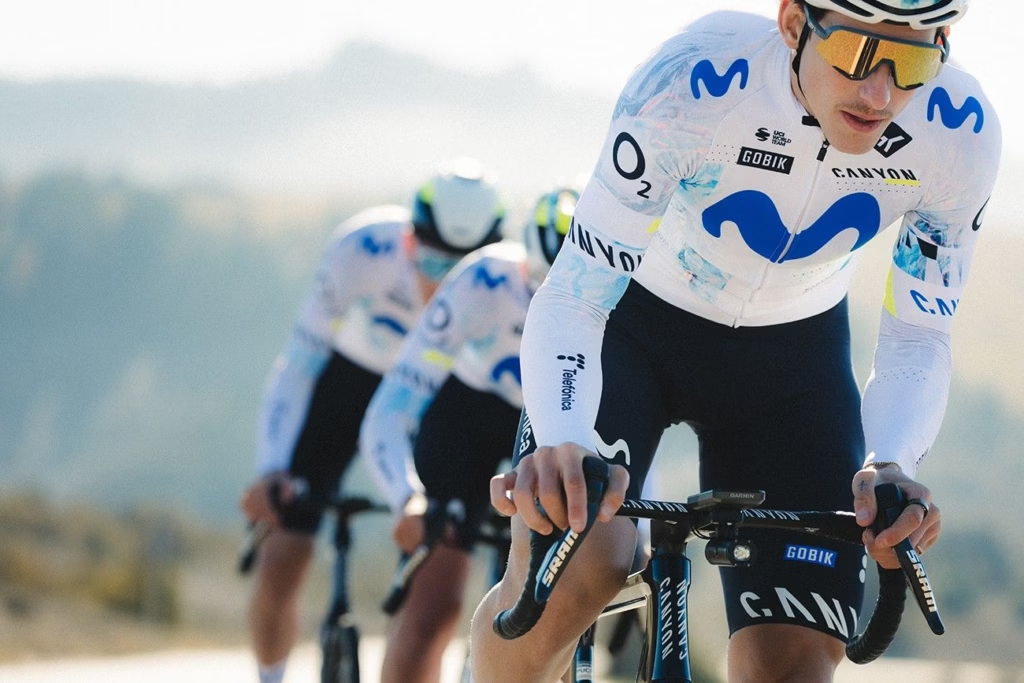
Cian Uijtdebroeks appears on the list, again cited by CyclingFlash. While still early in his career, Liège suits his climbing profile and growing confidence in one-day racing. For Uijtdebroeks, participation here is as much about learning race dynamics as chasing immediate results.
Romain Grégoire is confirmed via Cyclismactu. Grégoire’s punchy climbing ability and comfort on irregular gradients make Liège an attractive target. His inclusion reflects a gradual shift from shorter Ardennes races towards the most demanding one-day event in the region.
Antonio Tiberi also appears, cited by Cyclismactu. A rider whose strengths lie in sustained climbing and controlled efforts, Liège offers terrain that aligns closely with his long-term stage-race ambitions while still allowing room for one-day success.
Michael Matthews is again listed, with confirmation from IDL. While Liège is not traditionally his strongest Monument, Matthews’ endurance and ability to survive selective racing have allowed him to remain competitive here across multiple seasons.
Juan Ayuso is included, also via IDL. His presence underlines how Liège continues to attract elite GC talents looking to test themselves in a one-day environment that closely mirrors high-mountain racing, without the cumulative fatigue of a three-week race.
Magnus Cort appears once more, with confirmation from Feltet. Though better known for opportunistic racing and stage wins, Cort’s endurance and ability to handle repeated efforts make him a rider capable of influencing how the race unfolds.
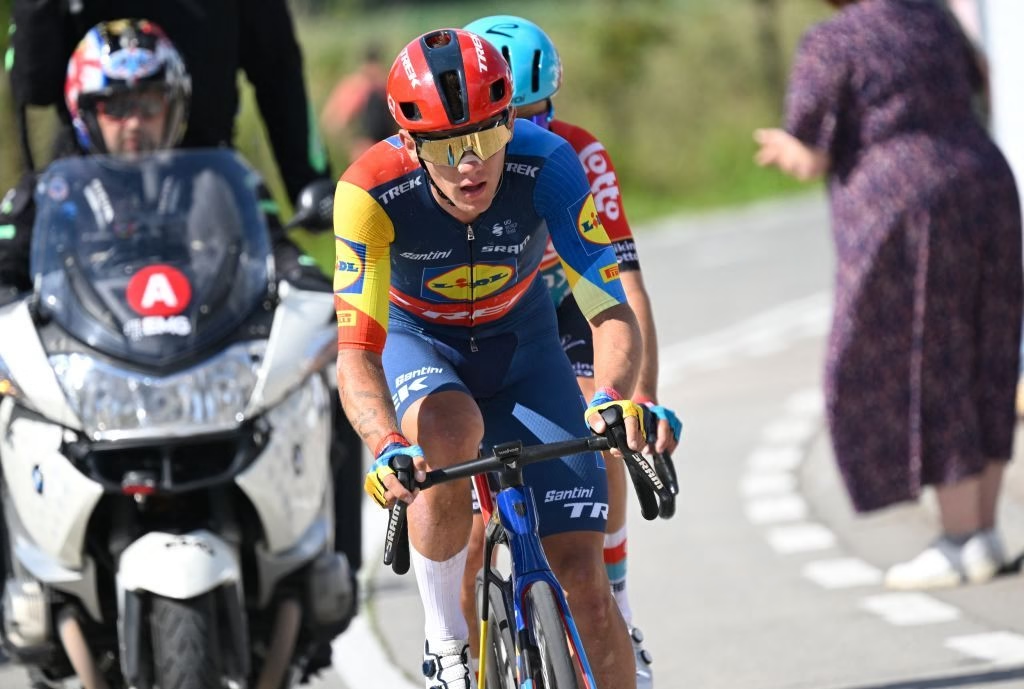
Thibau Nys is listed via IDL. His explosive climbing and growing confidence at WorldTour level make Liège an important reference point in his transition from cyclo-cross and shorter road races to longer, more demanding Monuments.
Paul Seixas is included, cited by L’Équipe. For a young rider still shaping his professional identity, Liège offers a valuable benchmark against the sport’s most complete climbers.
Jarno Widar is confirmed through Het Laatste Nieuws. His inclusion highlights Liège’s role as a proving ground for emerging climbers from the Belgian system, even if expectations remain measured at this stage.
Tiesj Benoot rounds out the list, with confirmation from WielerFlits. Benoot’s consistency across hilly one-day races and his deep familiarity with Ardennes terrain make Liège a logical and recurring target.
Oscar Onley is listed as a possible starter, with his participation described as “maybe” by Cycling News. His climbing development and improving endurance suggest Liège could suit him well, even if final confirmation is still pending.
Il Lombardia: endurance, elevation and legacy
Il Lombardia closes the European road season and has long been regarded as the climbers’ Monument. Set against the backdrop of northern Italy’s lakes and alpine foothills, the race rewards riders who can sustain high power deep into a long, demanding day, often after an already full season of racing. More than any other Monument, Lombardia tends to crown riders whose form has endured rather than peaked briefly.
With its repeated long climbs, technical descents and an unforgiving finale, the race has become a natural reference point for legacy. It is no coincidence that many of the sport’s greatest climbers have used Lombardia to underline their place in history.
For 2026, the table identifies a small but telling group of riders who have already indicated their intention to line up at the season’s final Monument.
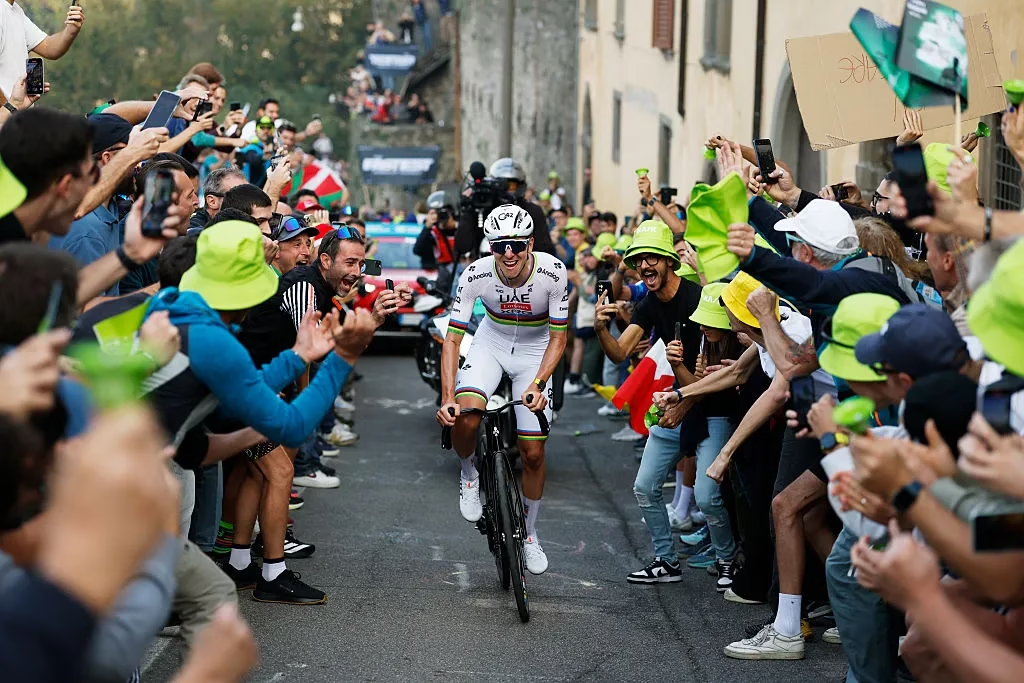
Tadej Pogacar is once again central, with confirmation attributed to Feltet. Already a multiple winner of Il Lombardia, Pogacar has come to define the modern era of the race. His ability to combine sustained climbing with explosive accelerations late in the day has repeatedly proved decisive on Lombardia’s long ascents. For a rider openly chasing historical completeness, this race remains one of his most reliable opportunities.
Jarno Widar is also listed, with confirmation coming from Het Laatste Nieuws. For a young climber, Lombardia represents both an opportunity and a test. Its length, elevation and late-season timing offer a clear benchmark against the sport’s most established stage-race riders.
Lorenzo Fortunato completes the group, cited by Legia Ciclismo Prof. Few riders in the peloton are as closely associated with Italian climbing terrain as Fortunato. His aptitude for long ascents and his comfort racing aggressively in mountainous landscapes make Lombardia a natural target, particularly in a race that often rewards persistence as much as outright dominance.
Giro d’Italia: ambition, opportunity and three weeks of uncertainty
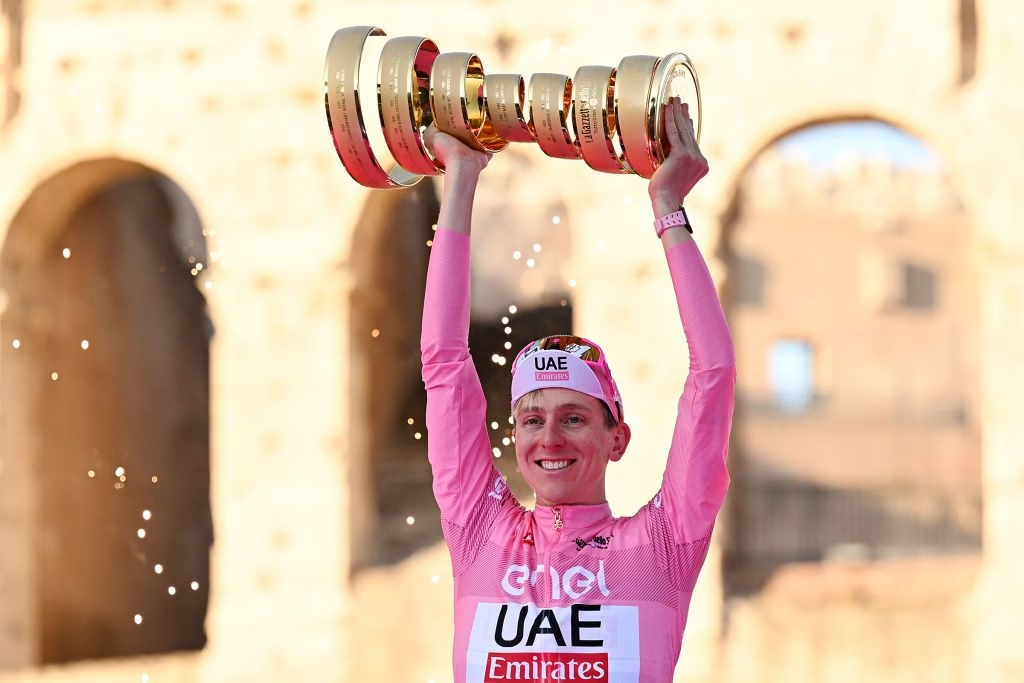
The Giro d’Italia occupies a distinctive place in the Grand Tour calendar. Its position early in the season, combined with a long-standing willingness to embrace aggressive route design, has made it the most fluid of the three-week races. Snowbound mountain stages, long time trials and transitional days that invite chaos all contribute to a race where hierarchy is often disrupted and opportunity is more evenly distributed.
For 2026, the picture emerging from this list suggests a Giro shaped less by rigid leadership structures and more by overlapping ambitions, with several teams committing depth rather than a single, immovable plan.
UAE Team Emirates
UAE Team Emirates look set to arrive in Italy with one of the deepest squads in the race.
João Almeida anchors their Giro ambitions. His steady, damage-limiting approach to stage racing continues to suit the Giro’s rhythm, where consistency across three weeks is often more decisive than explosive brilliance on a single day.
Alongside him, Jay Vine offers a contrasting profile. His climbing ability and willingness to attack from distance make him particularly effective on Giro mountain stages, where breakaways are given space and initiative is rewarded. Florian Vermeersch adds durability and Classics toughness to the Giro field. His inclusion reflects how teams increasingly value resilience and versatility across three weeks, even from riders not traditionally associated with stage racing.
INEOS Grenadiers
INEOS Grenadiers again appear poised to commit heavily to the Giro.
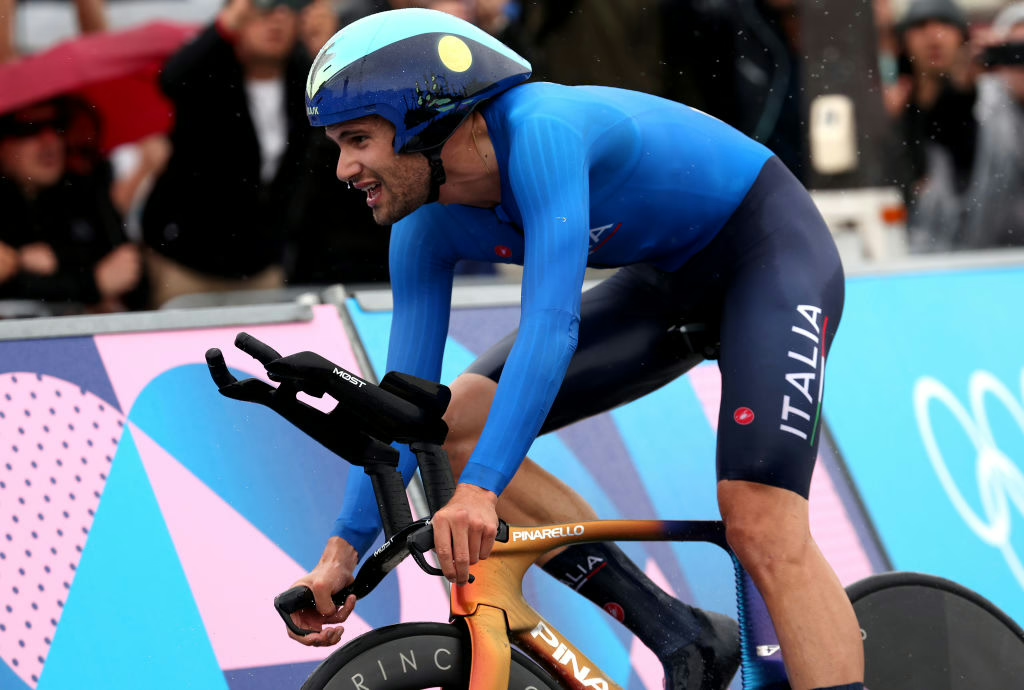
Filippo Ganna remains central to their plans. The Giro continues to offer him a unique mix of time trials, transitional stages and leadership opportunities that play directly to his strengths, particularly in a race where individual power can still shape outcomes.
Thymen Arensman brings clear GC credentials. His ability to combine climbing with time trialling suits Giro-style parcours that reward balance rather than pure specialisation.
Egan Bernal completes the group. A former winner of the race, his presence inevitably carries narrative weight, whether he targets the overall classification or uses the Giro as a platform to build form and confidence across three weeks of demanding terrain.
Lidl-Trek
Italian racing remains central to Lidl-Trek’s Giro identity. Giulio Ciccone is once again a natural reference point. Few riders race the Giro with the same instinctive aggression, and his ability to animate mountain stages and target classification jerseys makes him a constant factor in how the race unfolds.
Jonathan Milan leads the team’s sprint ambitions. The Giro has played a significant role in his rise, and its sprint-friendly design, combined with selective terrain, suits his power and improving endurance particularly well.
Thibau Nys appears as a possible starter. A Giro debut would represent a major step in his evolution, offering a first real test of how his explosive skillset translates to a three-week race environment.

Red Bull–BORA–hansgrohe
Red Bull–BORA–hansgrohe are represented by riders with strong Giro pedigrees. Jai Hindley’s relationship with the Giro is already established. As a former winner, any return immediately places him among the race’s GC reference points, regardless of how the team ultimately structures leadership.
Aleksandr Vlasov complements that ambition with consistency and versatility. His ability to perform across all terrains keeps him relevant in Giro-style racing, where cumulative fatigue often exposes specialists. Danny van Poppel rounds out the list. His inclusion reinforces the Giro’s appeal to riders whose value lies beyond pure leadership, where sprint opportunities, lead-out responsibilities and transitional stages all play a role.
Decathlon CMA CGM Team
Felix Gall anchors Decathlon’s Giro interest. His climbing ability and calm approach to long mountain stages align naturally with the Giro’s most demanding days, particularly where pacing and endurance outweigh explosive accelerations.
Movistar Team
Movistar’s Giro focus is centred on climbing depth.
Enric Mas remains listed as to be confirmed, but a Giro start would represent a notable strategic shift for a rider historically associated with the Vuelta a España. The Giro’s different rhythm could offer him a clearer pathway to GC relevance. Einer Rubio adds further climbing strength. His ability to animate mountain stages and race aggressively from breakaways fits neatly with the Giro’s freer racing style.
Astana Qazaqstan Team
Lorenzo Fortunato remains closely associated with the Giro’s mountainous terrain. His climbing pedigree and comfort racing on long ascents make him a natural stage hunter whenever the race heads high into the mountains.
Uno-X Mobility
Johannes Kulset is listed as part of Uno-X’s Giro plans. For a young rider, the Giro offers a demanding but comparatively open environment to gain Grand Tour experience without the relentless scrutiny that accompanies July.
Soudal Quick-Step
Paul Magnier appears as a longer-term project rather than an immediate leader. His Giro involvement would reflect preparation and adaptation rather than outright expectation, using the race as a developmental step.
Tour de France: hierarchy, pressure and the narrowest margins
The Tour de France remains the race that imposes order more ruthlessly than any other. Team structures harden, leadership is rarely ambiguous, and opportunities must be earned rather than found. For riders capable of influencing multiple race types, July still represents the ultimate test of adaptability and restraint.
For 2026, the Tour picture emerging from this list reflects a blend of outright GC ambition, carefully managed development and teams arriving with layered objectives rather than a single rigid plan.
UAE Team Emirates
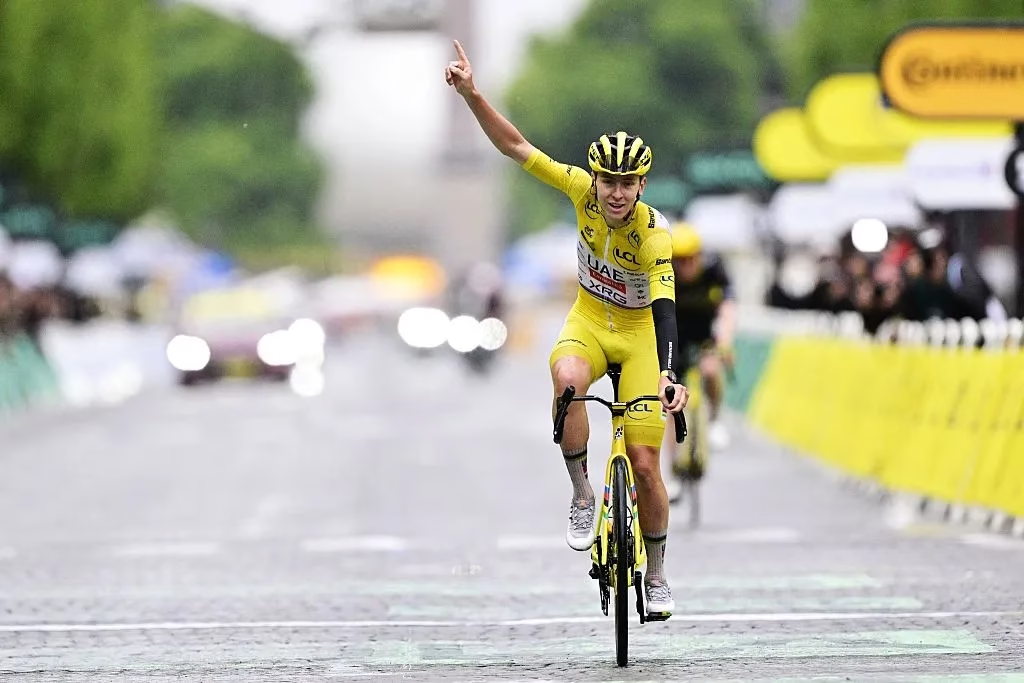
UAE Team Emirates again centres its Tour around Tadej Pogacar, whose presence defines the race’s competitive baseline. Multiple overall victories have already shaped his legacy, and his continued commitment to the Tour underlines its role as the primary reference point in his pursuit of historical completeness.
Alongside him, Juan Ayuso features as a key climbing asset. Whether riding in a secondary GC role or with defined freedom on selected stages, his presence strengthens UAE’s ability to control mountain days while retaining tactical flexibility.
Isaac del Toro completes the UAE trio. For a rider still early in his Grand Tour career, the Tour environment offers a different kind of education, one built around positioning, endurance and survival rather than immediate results.
Lidl-Trek
Lidl-Trek approaches the Tour with one of the most balanced profiles in the peloton.
Giulio Ciccone remains a central mountain figure. His aggressive climbing style and comfort racing from breakaways make him a constant stage threat whenever the race opens up.
Mads Pedersen brings durability rather than pure sprinting focus. The Tour suits him best when stages become selective, where strength and resilience matter more than top-end speed.
Mattias Skjelmose continues his progression towards high-level stage racing. The Tour’s mountain stages offer a demanding but logical next step for a rider whose climbing efficiency has steadily improved.
Red Bull–BORA–hansgrohe
Red Bull–BORA–hansgrohe arrive with clear GC intent.
Remco Evenepoel represents the centrepiece of that ambition. The Tour remains the final Grand Tour frontier in his career, and his presence brings a more aggressive, time trial-led approach to GC racing.
Florian Lipowitz is positioned as an important climbing support figure. His growing consistency over longer stage races makes him a natural fit within a Tour-focused GC structure.
Movistar Team
Movistar’s Tour interest is shaped around climbing depth rather than outright hierarchy.
Cian Uijtdebroeks steps into a new phase of his career with a Tour programme aligned to long-term GC development. The race offers a demanding but appropriate platform to test his endurance and resilience over three weeks.
Einer Rubio complements that approach as a pure climber, well-suited to breakaway-driven mountain stages and opportunistic racing when GC structures loosen.
Decathlon CMA CGM
Decathlon CMA CGM bring a clearly defined Tour project built around speed and support.
Olav Kooij anchors the sprint ambitions. His progression has positioned him as a rider capable of handling the Tour’s intensity while still contesting the fastest finishes. Tiesj Benoot adds experience and versatility. His value lies in surviving the Tour’s hardest transitional days while contributing across terrain types.
Tobias Lund Andresen strengthens the sprint structure further, offering depth and tactical flexibility around Kooij. Paul Seixas features as a possible Tour starter. His programme remains flexible, reflecting a careful approach to balancing exposure and long-term development.
INEOS Grenadiers
INEOS Grenadiers’ Tour presence centres on versatility rather than hierarchy.
Filippo Ganna continues to occupy a unique role. Whether through time trials, breakaways or controlling hard transitional stages, the Tour remains a race where his sustained power can be decisive in non-traditional ways.
 Photo Credit: Getty
Bahrain Victorious
Bahrain Victorious bring climbing ambition rather than rigid GC leadership.
Antonio Tiberi fits naturally into that approach, with steady climbing and improving consistency across longer stage races.
Lenny Martinez arrives as one of the most closely watched young climbers. The Tour provides an uncompromising reference point, even if expectations are carefully managed.
Team Jayco-AlUla
Michael Matthews continues his long association with the Tour de France. His experience, tactical awareness and endurance make him most effective on selective stages rather than pure sprint finishes.
Uno-X Mobility
Magnus Cort completes the list. The Tour suits his opportunistic style, particularly on stages where race control loosens and initiative is rewarded.
Possible
Oscar Onley appears as a possible entry. Another strong Tour result in 2026 would represent a significant step in his evolution as a stage racer, with the race offering both opportunity and severe examination.

Vuelta a España: opportunity, fatigue and late-season freedom
The Vuelta a España has long been the most elastic of the three Grand Tours. Positioned late in the season, it attracts riders arriving from very different physical and mental states, from those chasing redemption to others still carrying form towards the World Championships. Its terrain, built around short, steep climbs and constant changes of rhythm, often rewards aggression over restraint.
For 2026, the riders linked to the Vuelta suggest a race shaped by climbing depth, flexible leadership and late-season ambition, rather than rigid hierarchy.
UAE Team Emirates
UAE Team Emirates are again central to the conversation.
João Almeida is confirmed for the Vuelta and remains one of the most reliable GC riders in this terrain. His ability to limit losses on bad days and steadily accumulate time on uphill finishes suits the Vuelta’s stop-start rhythm.
Tadej Pogacar appears as a possible starter. While not yet confirmed, the Vuelta represents a logical late-season option for a rider whose ambitions increasingly extend beyond individual race targets.
Decathlon CMA CGM Team
Decathlon CMA CGM Team feature prominently.
Paul Seixas again appears with a flexible programme. His Grand Tour choice remains open, but the Vuelta’s shorter stages and explosive climbing could offer a more natural introduction to three-week racing.
Felix Gall is also listed as part of Decathlon’s Vuelta plans. His climbing ability and calm approach to stage racing make him well suited to a race where GC pressure is often more diffuse than in July.
Matthew Riccitello completes the team’s presence. His climbing-focused profile aligns closely with the Vuelta’s frequent uphill finishes, offering opportunities for both stage results and sustained classification ambition.
 Photo Credit: Getty
Movistar Team
Movistar’s Vuelta interest remains anchored in climbing strength.
Enric Mas is listed as to be confirmed, but the Vuelta has long been his natural home. Its terrain and race dynamics align closely with his strengths, and any appearance would likely place him among the primary GC reference points.
Einer Rubio complements that approach. His willingness to animate mountain stages and attack from breakaways fits neatly into the Vuelta’s freer tactical landscape.
Lidl-Trek
Mattias Skjelmose is confirmed for the Vuelta. The race offers him a platform that sits between one-day racing and full GC responsibility, allowing him to test his consistency across three weeks without the structural pressure of the Tour.
Uno-X Mobility
Magnus Cort is listed as a confirmed starter. Few riders suit the Vuelta’s unpredictability better, with an opportunistic racing style that thrives when stages fragment and control loosens.
Lotto-Intermarché
Jarno Widar appears as part of Lotto-Intermarché’s Vuelta plans. For a young climber, the race offers an uncompromising but valuable test, particularly on steep finishes where raw climbing ability is exposed.
Red Bull–BORA–hansgrohe
Primoz Roglic completes the list and remains one of the defining figures of the Vuelta in the modern era. Multiple overall victories have established his authority on this terrain, and any return immediately frames the race around his presence.