
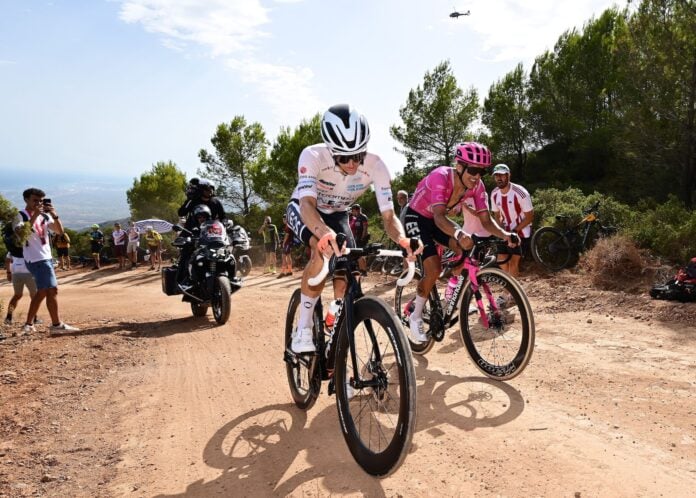
Oscar Onley’s second week at the Vuelta a España was not as convincing as his first. The more important point is that he has reached the second rest day still fifth overall.
Onley sits 5:44 behind race leader Enric Mas, with Richard Carapaz 1:20 ahead of him in fourth. Behind, Jakob Omrzel is only 30 seconds away in sixth, followed by Mattias Skjelmose and Cristian Rodríguez.
The podium opportunity that emerged after Alto de Aitana has become much more difficult. Primož Roglič is now 3:34 ahead of Onley in third, meaning the British rider needs more than one good climb to get back into that fight.
But after Calar Alto and Sierra de La Pandera exposed most of the serious GC contenders, fifth place remains significant. Onley is still there, still leading the young rider classification and still has a 32km individual time trial that could strengthen his position before the final mountain block.
For a rider contesting his first Vuelta as a genuine Grand Tour leader, there is still plenty to race for.
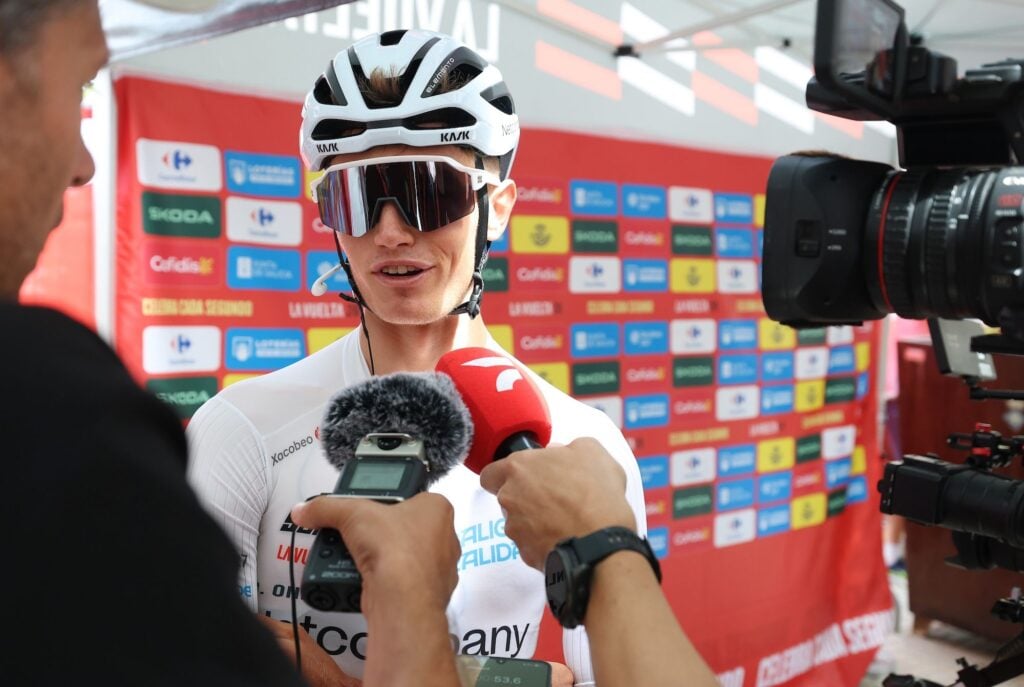
Aitana changed what looked possible for Onley
Expectations around Onley’s Vuelta shifted sharply on Stage 9.
When Mas attacked on Alto de Aitana, Onley was the only rider capable of following. Roglič could not go with the move. Felix Gall could not. Carapaz had already spent energy attacking earlier on the climb.
Onley finished alongside Mas and moved into fourth overall, only 41 seconds from the podium.
That performance prompted our closer look at Onley’s emerging Vuelta podium challenge, because the target had clearly changed. A top-10 finish was no longer the most ambitious realistic outcome. Onley had ridden himself directly into the fight with the established Grand Tour contenders.
Week two has not undone that performance, but it has shown how difficult repeating it over three weeks can be.
Calar Alto was the setback
Stage 12 was where Onley’s position changed.
He crashed early on the road to Calar Alto, remounted and returned to the race, but could not follow when Decathlon CMA CGM increased the pressure on the final climb and Gall attacked.
Mas eventually rode away from the other GC favourites, while Onley settled into his own pace and limited what he could.
He finished the day fifth overall at 4:29, more than two minutes further behind Mas than he had been at the start.
The Calar Alto race report also brought another problem into view. Omrzel won the stage from the breakaway and moved into sixth overall, just 30 seconds behind Onley.
The British rider suddenly had to look backwards as well as towards the podium.
La Pandera confirmed the podium had moved away
Sierra de La Pandera offered the next opportunity to judge whether Calar Alto had been an isolated bad day.
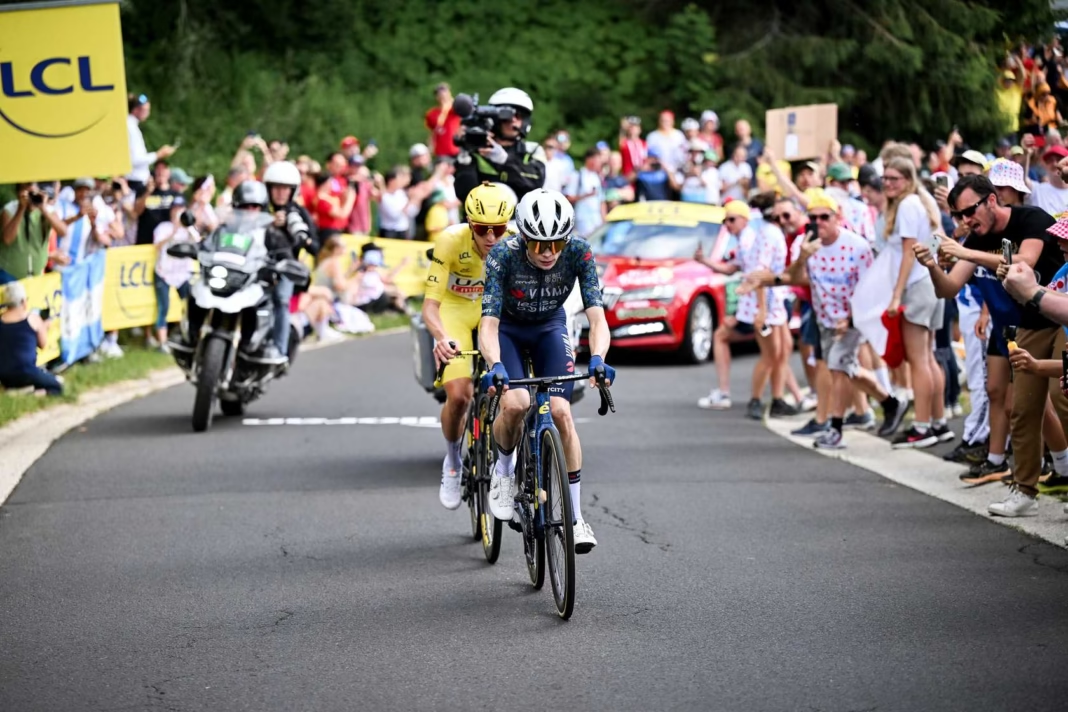
Onley was better placed through much of the stage, but when the decisive attacks came he could not stay with Mas, Gall, Roglič and Carapaz.
Gall and Mas eventually rode clear together, taking 25 seconds from Roglič and putting a little more time into the rest. Onley finished far enough back for his deficit to Mas to increase to 5:44.
The Stage 14 race report showed where the hierarchy now stands.
Mas and Gall were strongest.
Roglič lost some ground but remains firmly in the podium battle.
Carapaz stayed fourth.
Onley remained fifth.
That last part matters. He has lost contact with the immediate podium fight, but he has not fallen through the classification after two difficult mountain stages.
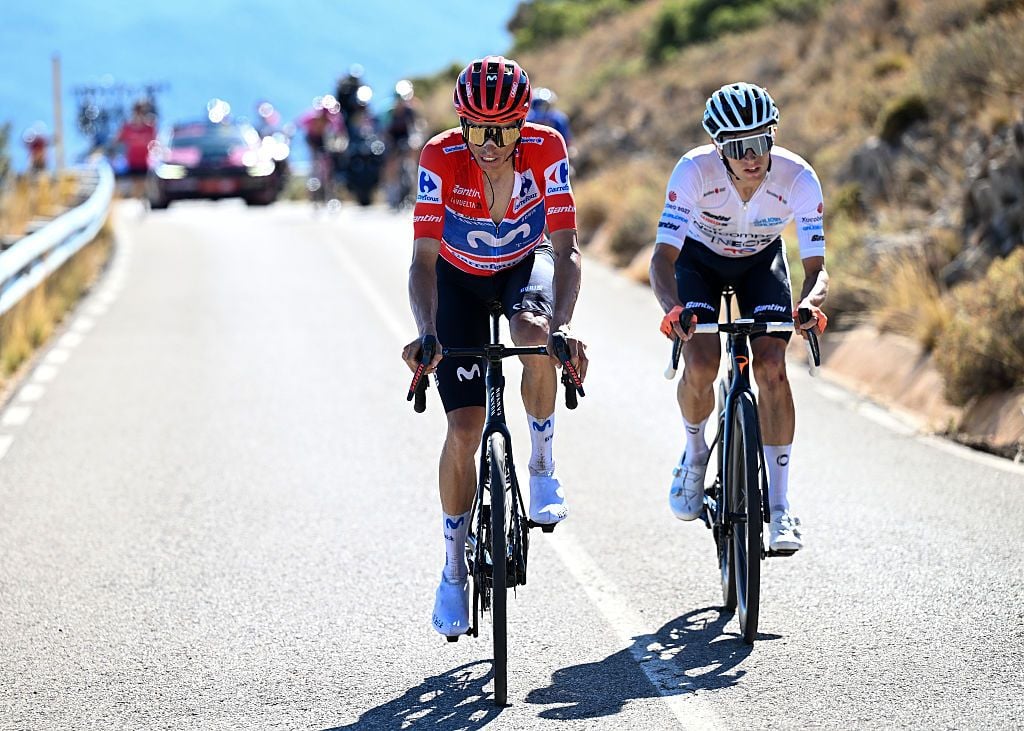 Photo Credit: Getty
Fifth is now a position worth defending
Onley entered the Vuelta with GC responsibility, but there was no guarantee he would reach the final week sitting ahead of riders such as Skjelmose, Rodríguez and Sepp Kuss.
He has.
Fifth overall would already represent a major result.
The challenge is that the margins behind him are not comfortable.
Omrzel is only 30 seconds back. Skjelmose is at 6:49 overall, leaving Onley 1:05 ahead of the Dane, while Rodríguez is another 12 seconds behind.
One difficult mountain stage could therefore cost several positions.
Onley cannot simply protect fifth by riding conservatively for six days. He needs to find something closer to his Aitana level again.
His own assessment after Stage 15 was straightforward:
“I’m trying to get back to the level that I had this time last week.”
That is probably the clearest summary of his final-week task.
Jerez gives Onley a chance to create some space
The first two stages after the rest day should not require Onley to race aggressively.
Tuesday’s Stage 16 from Cortegana to La Rábida is aimed more towards the sprinters and breakaway riders, while Wednesday’s run into Sevilla should again leave the GC contenders concentrating on staying safe.
Thursday is different.
The individual time trial from El Puerto de Santa María to Jerez de la Frontera is around 32km and could reshape several parts of the top 10.
Most attention will be on Roglič trying to recover time from Mas and Gall. For Onley, the more relevant comparison is Omrzel.
The time trial gives him a chance to increase that 30-second advantage before the race returns to terrain where the young Slovenian has already shown how dangerous he can be.
Onley can also look towards Carapaz.
A 1:20 deficit is significant, but reducing it in Jerez would at least make fourth place relevant again before the mountains.
Peñas Blancas will show whether week two was temporary
The real examination comes immediately afterwards.
Stage 19 finishes on Peñas Blancas after a final climb approaching 19km. The following day is considerably harder again, with the Sierra Nevada stage to Collado del Alguacil forming the last major GC battle of the race.
The full sequence is set out in the Vuelta a España 2026 route guide.
Those two stages should tell us more about Onley’s condition than the raw losses at Calar Alto and La Pandera.
If the crash played a major part in his difficult Stage 12 and he recovers fully during the rest day and flatter stages, a return towards his Aitana climbing level remains possible.
If the losses were more about accumulating fatigue, the final mountain weekend becomes a defensive exercise against Omrzel and Skjelmose.
There is little room between those outcomes.
-
 Photo Credit: A.S.O./Billy Ceusters
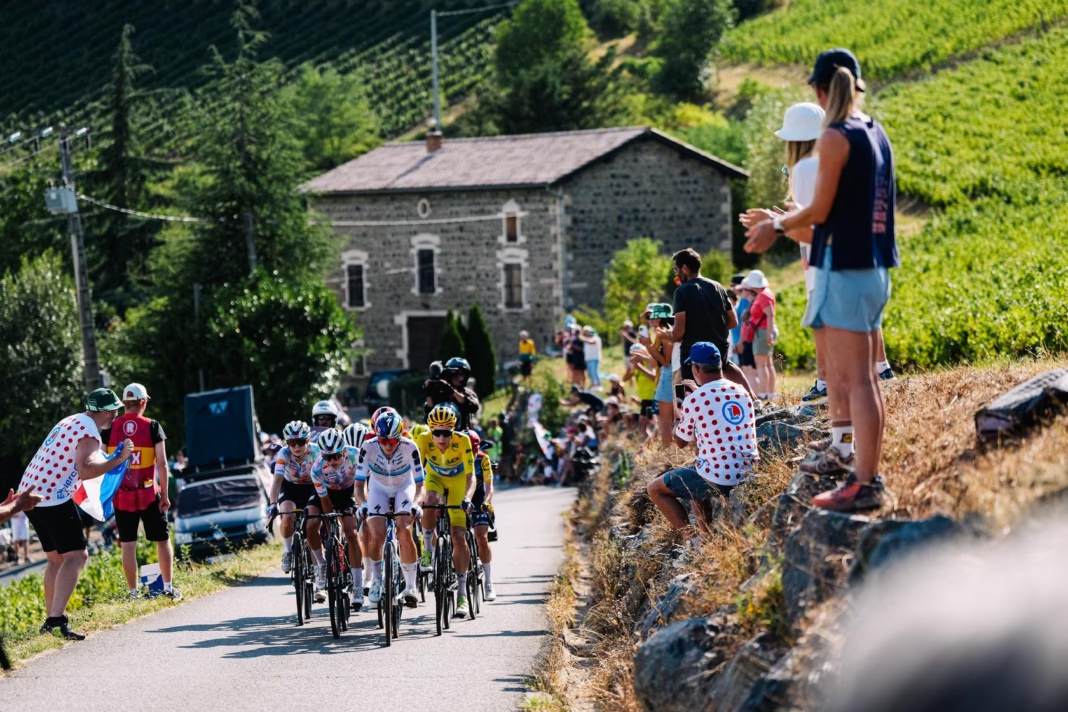
The white jersey has become a real contest
After Aitana, the young rider classification looked secondary to Onley’s podium ambitions.
It matters more now.
Omrzel is only 30 seconds behind and has already shown his climbing strength with victory on Calar Alto.
That should make Thursday particularly important. Any time Onley can gain against Omrzel in Jerez becomes protection for the two mountain stages that follow.
The white jersey is not the same prize as a Vuelta podium, but combining it with a top-five finish would give Onley’s race a very different complexion from simply hanging onto fifth after fading through the final week.
He still has the stronger position.
He now needs to defend it.
The British GC storyline is still alive
The second week has changed Onley’s Vuelta without ruining it.
After Aitana, the question was whether he could reach the podium.
After Calar Alto and La Pandera, the more immediate question is whether he can consolidate a top-five finish and protect the white jersey while recovering enough climbing form to look forward again.
That may sound like a reduced ambition, but fifth overall remains an excellent position with six stages left.
Onley has already survived the hardest sustained GC terrain of the race so far. He has been the only rider able to follow Mas on one major summit finish, absorbed a crash on another and reached the second rest day ahead of most of the riders who started the Vuelta with top-10 ambitions.
The podium now needs something exceptional.
Fifth place does not.
It needs Onley to recover, make the Jerez time trial count and get through Peñas Blancas and the Sierra Nevada without another Calar Alto.
For the British storyline at this Vuelta, that is more than enough to keep watching.

