Team Flanders-Baloise will cease operations at the end of the 2026 season, bringing one of professional cycling’s longest-running development projects to a close after 33 years.
The Belgian ProTeam confirmed the decision on Tuesday 4 August after failing to secure the financial support required to continue beyond the withdrawal of the Flemish Government as its principal partner.
The government announced in 2025 that it would end its backing after a final transition season in 2026. Team management subsequently searched for replacement funding but has now accepted that the project cannot be maintained on a sustainable and competitive basis.
The closure will leave the team’s riders and staff seeking new positions for 2027 while removing one of the most established routes from the Flemish development system into the professional peloton.
“A team comes to an end. A legacy lives on,” general manager Christophe Sercu said as the organisation confirmed its final campaign.
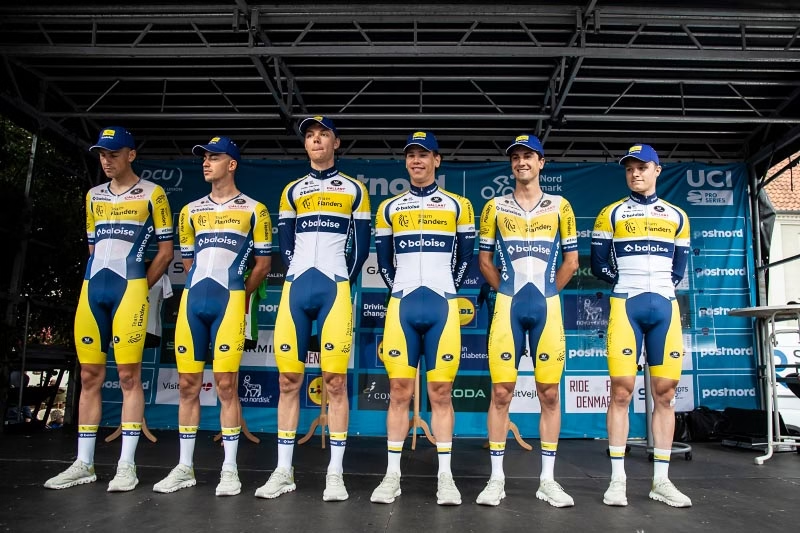
A 33-year Flemish development project ends
The project was established in 1994 with the specific purpose of identifying and developing riders from Flanders.
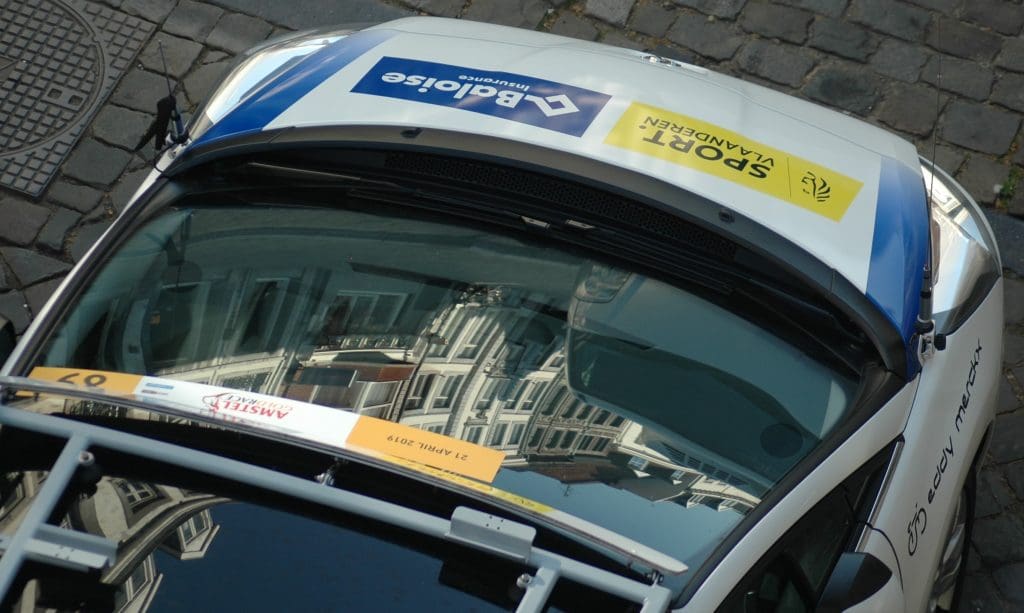
It has competed under several identities, including Vlaanderen 2002, Chocolade Jacques-Topsport Vlaanderen, Topsport Vlaanderen-Baloise, Sport Vlaanderen-Baloise and its current Team Flanders-Baloise name.
Unlike conventional professional teams built primarily around commercial exposure and immediate results, the Flemish project maintained a defined development role. Young riders were given professional contracts, access to an international race programme and time to develop before moving to larger teams.
According to the organisation, 218 Flemish riders have represented the team during its 33 seasons. Of those, 111 subsequently progressed to another team within cycling’s top two professional divisions, with 87 joining WorldTeams and another 24 moving to ProTeams.
Those figures explain why the closure matters beyond the disappearance of one name from the results sheet. Team Flanders-Baloise operated as a bridge between Belgium’s club and development structures and the highest levels of professional racing.
More than half of its riders progressed further
The team’s success was rarely measured by retaining its strongest riders for their entire careers.
Its purpose was to prepare them for the next level.
That often meant losing riders just as they became capable of producing their strongest results, but it also gave the project a clear measure of achievement. More than half of the 218 Flemish riders to pass through the team subsequently earned contracts elsewhere in the top two professional tiers.
The organisation became associated with developing riders suited to the Belgian racing environment: rouleurs, Classics specialists, sprinters and breakaway riders accustomed to exposed roads, cobbles and aggressive one-day racing.
Former riders include Tom Steels, Stijn Devolder, Sep Vanmarcke, Yves Lampaert, Tim Declercq, Jasper Philipsen and Dries De Bondt, alongside a much wider group who built substantial professional careers after leaving the programme.
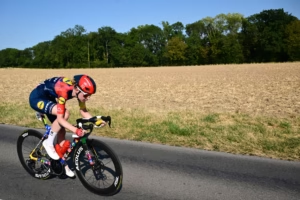
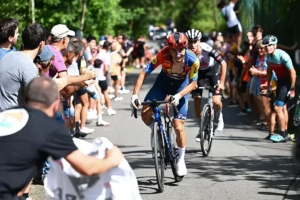
That development role remained visible in the team’s racing. At events such as the 2026 Tour of Flanders, Team Flanders-Baloise continued to provide young Belgian riders with access to the sport’s biggest home races against the strongest squads in the world.
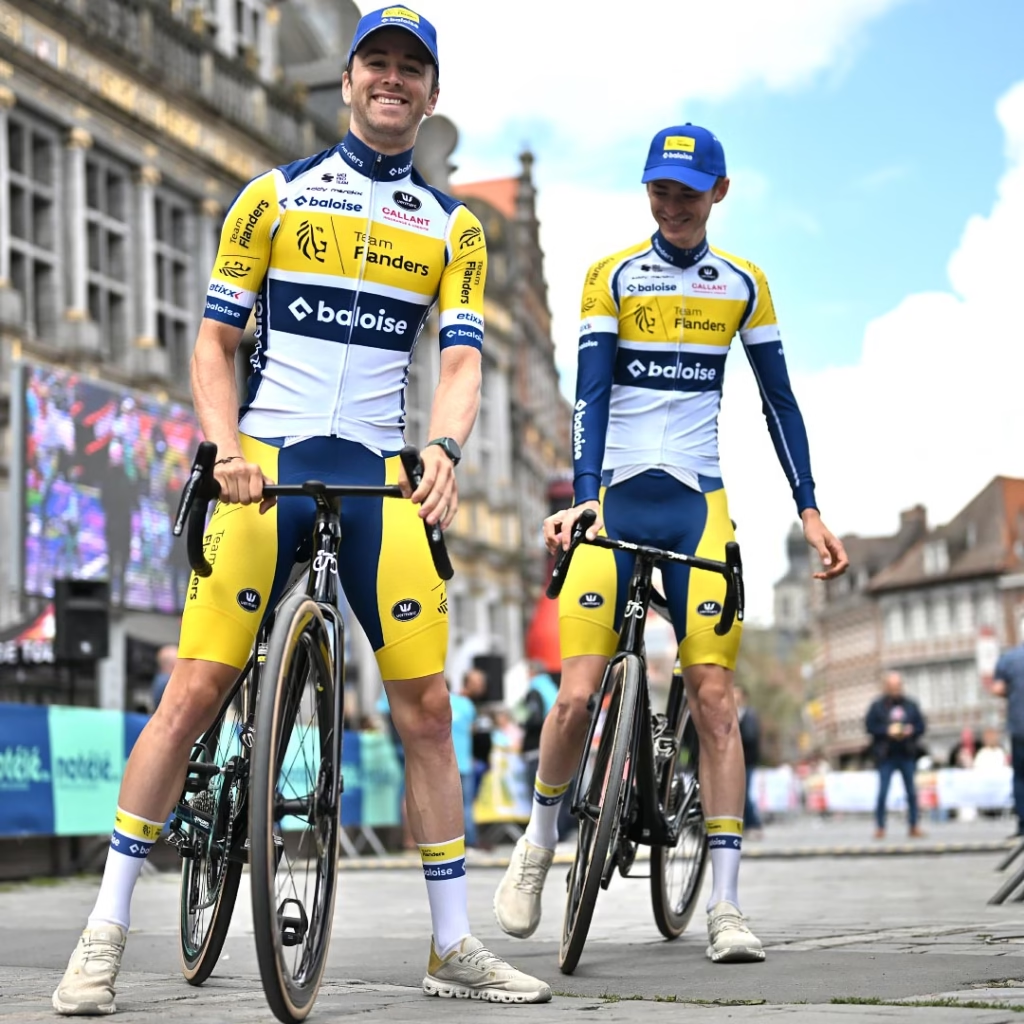 Photo Credit: Getty
Flemish Government withdrawal leaves an unsustainable gap
The closure follows the Flemish Government’s decision to end its structural financial support from 2027.
Team management was given a final transition season to find new partners capable of replacing that funding. Sercu said every possible effort had been made to secure the resources required, but no sustainable solution was found.
The challenge was not simply raising enough money to register a team.
Remaining competitive as a ProTeam requires investment in rider salaries, staff, equipment, travel, medical support and the wider performance infrastructure expected within modern professional cycling. Any replacement project also needed sufficient long-term stability to offer credible contracts rather than surviving one season at a time.
Without that funding, the team will complete its scheduled 2026 programme before closing.
The organisation thanked the Flemish Government, Baloise and its other partners, alongside the sports directors, coaches, doctors, mechanics, soigneurs, administrative staff, race organisers and riders who supported the project.
Riders and staff enter a difficult transfer market
The announcement places the current Team Flanders-Baloise squad on the market for 2027.
The team expects several riders to follow the route taken by many of their predecessors and secure places with WorldTeams or other ProTeams. The timing of the announcement gives them several months to negotiate contracts, but many rival squads are already well advanced with their recruitment for next season.
The closure also removes an entire set of professional rider places from a market that has become increasingly competitive.
Young riders from the Belgian development system will be competing with the existing Team Flanders-Baloise roster, professionals released by other squads and the next group attempting to step up from Continental or under-23 racing.
Staff members face the same uncertainty. Sports directors, mechanics, soigneurs, coaches, doctors and administrative employees must seek positions within a relatively small professional employment market.
The human cost of a team closure extends far beyond the riders listed on the start sheet.
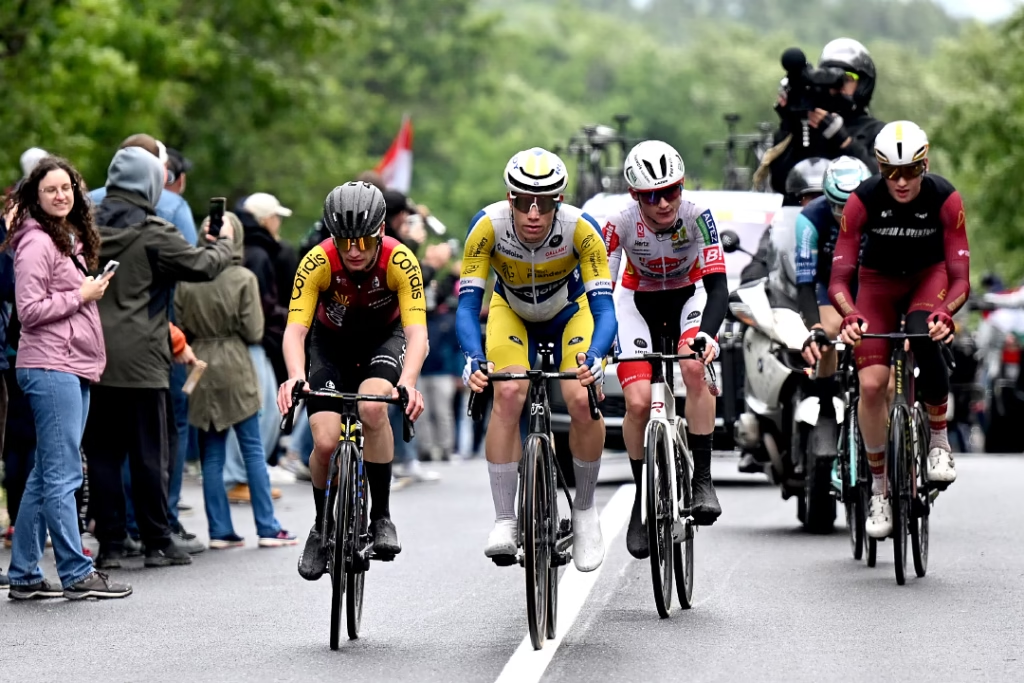 Photo Credit: Getty
A final Tour of Britain appearance
Team Flanders-Baloise’s story does not end with the announcement.
The squad still has several months of racing ahead and has been confirmed among the 18 teams selected for the 2026 Lloyds Tour of Britain Men.
It will be the team’s 13th appearance at the modern race, continuing a relationship that stretches back to the event’s early editions after its 2004 revival.
Victor Vercouillie won the mountains classification for Team Flanders-Baloise in 2025, while the squad has regularly used the British race to place young riders in breakaways and expose them to WorldTour opposition.
The September appearance will now become part of the farewell programme for a team closely connected to the modern history of the Tour of Britain.
Team management has promised to continue racing with the same professionalism until its final event. The organisation also described 2026 as one of its strongest recent sporting seasons, making the failure to secure its future particularly difficult.
The wider problem facing cycling’s second tier
Team Flanders-Baloise used its closure announcement to raise concerns about the financial health of the ProTeam level.
The organisation said the number of men’s ProTeams worldwide had fallen from 27 in 2018 to 16 in 2026.
That contraction matters because the second division performs several functions that WorldTour teams cannot absorb alone. ProTeams provide professional contracts, compete for wildcard places at major races and give riders a route into the highest level without requiring an immediate WorldTour position.
They also give organisers access to squads with strong regional identities and an incentive to race aggressively for visibility.
Without a healthy second tier, the distance between Continental racing and the WorldTour becomes wider. Young riders have fewer places in which to develop, experienced professionals have fewer opportunities to rebuild their careers and organisers become increasingly dependent on a smaller group of wealthy teams.
The changing structure of the professional divisions was already visible when the 2026 to 2028 WorldTour licences were confirmed. Team Flanders-Baloise’s closure shows that the pressure extends beyond the top tier.

A development model cycling may struggle to replace
The disappearance of Team Flanders-Baloise does not mean Flemish cycling will stop producing talent.
Belgium retains a deep club system, established development teams and a racing calendar capable of preparing young riders for professional competition. WorldTour organisations are also investing increasingly heavily in junior and under-23 programmes.
What is being lost is a specific intermediate environment.
Team Flanders-Baloise allowed riders to develop as professionals without immediately facing the results pressure attached to a major WorldTour contract. Its calendar exposed them to the cobbled Classics, stage races and international competition while accepting that the strongest would eventually leave.
That patience is difficult to reproduce within a purely commercial model.
A conventional sponsor wants successful riders retained and visible in its colours. The Flemish Government-backed structure could treat a rider earning a contract with a stronger organisation as evidence that the project had fulfilled its purpose.
The record of 111 riders progressing into the top two divisions suggests that approach was highly productive.
Team Flanders-Baloise leaves a lasting mark
The final months of 2026 will carry an unavoidable farewell narrative, but the team’s legacy is already secure.
It survived repeated changes in sponsorship, regulation and professional cycling’s financial structure while maintaining the same essential purpose. Across 33 years, it gave 218 Flemish riders a professional opportunity and helped more than half of them progress further.
It also gave race organisers an attacking team with a clear regional identity, particularly suited to the cobbles, crosswinds and tactical uncertainty of northern European cycling.
Sercu and his staff will now attempt to bring the project to an appropriate sporting finish. The riders still have results to pursue, contracts to earn and several months in which to represent the jersey before it disappears.
Team Flanders-Baloise will leave the peloton because the finances no longer support its continuation. Its wider achievement was proving for more than three decades how much a patient, purpose-built development team could contribute to professional cycling.