The Tour of Guangxi reaches its longest stage on Thursday 15 October, with the peloton travelling from Jingxi to Bama through the hills of western Guangxi. For viewers in Britain, this is another early start: the race takes place seven hours ahead of British Summer Time, and the live pictures are scheduled for the morning rather than the usual European afternoon slot.
Stage 3 is a difficult day to classify. The finish is flat enough for a sprint, but the road is considerably less straightforward than Tuesday’s opening stage in Chongzuo. A succession of smaller climbs, a long distance and a rolling final hour all increase the cost of controlling the race. A strong sprinter can win in Bama, provided their team still has enough riders to organise the chase.
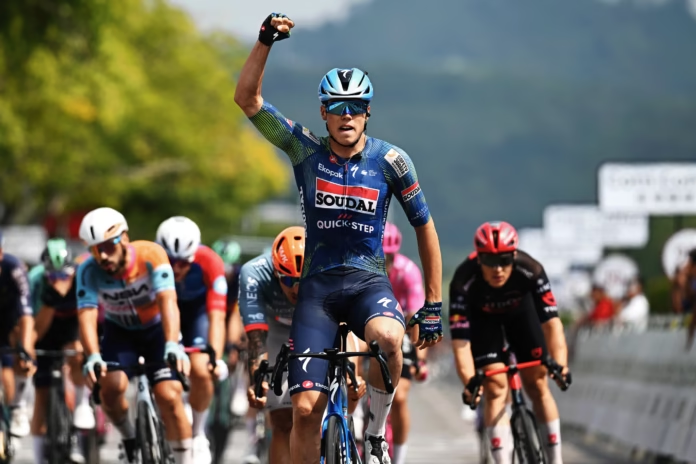
Wednesday’s second stage already showed how the sprinters can be challenged without a mountain finish. Frits Biesterbos won in Jingxi after Paul Magnier had taken the opening stage. The question for Thursday is whether another group can exploit the tired legs of the lead-out trains, or whether the quickest finishers can bring the race back together.
What time is Tour of Guangxi Stage 3 in the UK?
TNT Sports lists Thursday’s Stage 3 start at 04:12 BST. This is the scheduled race start, not a guarantee that live television coverage will begin at the same time. That is the race start, not necessarily the beginning of the live television broadcast. The stage runs from Jingxi to Bama and is listed at around 212km, although published race calendars differ slightly on the final distance. For planning purposes, it is a long stage likely to occupy much of the British morning.
The finish is expected during the British morning, although published timetable estimates differ, although wind, attacks and the speed of the peloton can shift the actual arrival. It is sensible to check the broadcaster’s live event listing shortly before the start rather than rely on a fixed finish prediction. For those who cannot watch the full stage, the final hour should contain the most relevant racing.
China is seven hours ahead of the UK during this edition because Britain remains on BST until later in October. A local start at 11:00 in Guangxi therefore corresponds to 04:00 BST, with small differences between published neutralised and official start times accounting for the variation in listings. The clocks do not change during the six-day race.
Where to watch the race live
UK coverage of the Tour of Guangxi is available through TNT Sports and HBO Max. The event is listed in the cycling schedule, although the precise start of the live broadcast and the selected television channel can vary by stage. Viewers using the streaming service should search for Tour of Guangxi Stage 3 and check the programme listing for Thursday 15 October.
HBO Max now carries the streaming service associated with TNT Sports cycling in Britain, replacing the old Discovery+ route for these broadcasts. Anyone returning to the race after watching previous editions should be aware of that change. A TNT Sports television subscription may also provide access through the relevant provider, subject to the package held.
The distinction between race start and television coverage matters particularly on a day this long. Live pictures may begin after the flag drops, meaning the initial formation of the breakaway is not necessarily shown. The broadcast is most useful for understanding whether the escape has built a manageable lead, which teams are chasing and how many domestiques remain with the sprinters.
For a broader look at the six mornings of racing, ProCyclingUK has a Tour of Guangxi UK television guide. That page covers the overall broadcast arrangements; this guide concentrates on the particular route and tactical possibilities for Thursday.
Stage 3 route: Jingxi to Bama
The route takes the riders north-east from Jingxi towards Bama, passing through the distinctive limestone landscape of western Guangxi. Published route figures range from approximately 211 to 212km, making it the longest stage of the 2026 race. The repeated changes in elevation are more important than any single headline climb, with roughly 1,670 metres of ascent indicated by one stage-profile provider.
Rather than a sustained mountain pass, the course uses rolling roads and short rises that repeatedly interrupt the rhythm. A climb of about 2.7km at 4.7 per cent and another short rise around 800 metres at 5 per cent feature in the later part of the race according to published previews. Those gradients do not automatically rule out a bunch sprint, but they can be damaging after several hours of racing.
The final approach to Bama is comparatively flat. That creates an interesting tactical balance: a small group might attack over the later hills, yet a sizeable bunch that survives the climbs has enough road to organise a chase. The chances of the escape depend heavily on its composition. Two or three riders are much easier to bring back than a strong move containing representatives of several leading teams.
Previous versions of the Jingxi to Bama stage have rewarded riders able to cope with a succession of modest climbs before sprinting. The 2026 route is broadly familiar, although the precise published distances have been updated. Our full Tour of Guangxi route guide explains how the longer Bama stage fits into the redesigned six-day race.
Who can win and what to watch tactically
Paul Magnier entered the race among the strongest sprint contenders and immediately justified that status with victory on Stage 1. His ability to finish quickly is established, but the more interesting test on Thursday is the condition of his lead-out after a long day in rolling terrain. Teams cannot simply assume that their usual final-kilometre organisation will survive intact.
Olav Kooij, Jordi Meeus, Sam Welsford, Kaden Groves and Max Kanter are among the fast riders who could benefit from a reduced sprint. Their prospects depend on how the peloton races the final hills. A steady tempo allows the heavier sprinters to remain sheltered; repeated accelerations favour riders who can follow hard efforts and still produce a sprint afterwards.
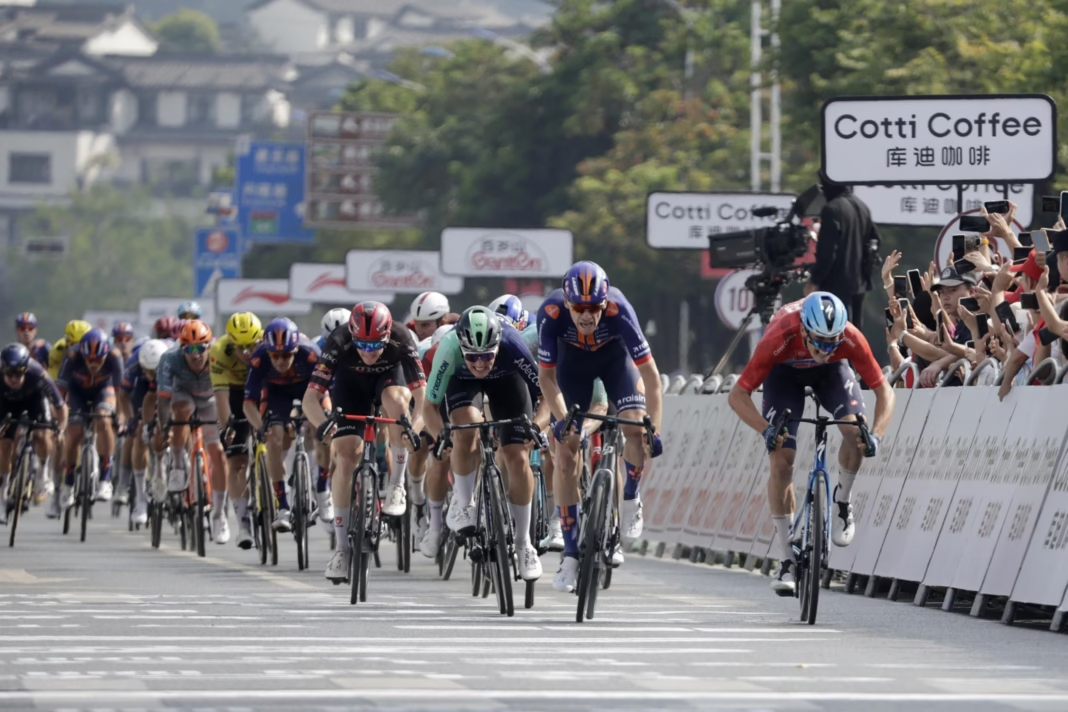
The breakaway is another credible outcome. With more selective roads towards Tian’e and the final Nongla climb still to come, some general-classification teams may prefer to conserve energy rather than chase a non-threatening escape all morning. That leaves the responsibility with the sprint squads, and a long stage can expose disagreements about which team should do the work.
Watch the positioning before the last significant rises. A team with several riders near the front can force the pace and put isolated sprinters under pressure. If a gap opens over the crest, the descent and subsequent flat roads may favour the attackers, particularly if the chasing teams have already used their strongest helpers.
For the general-classification contenders, the calculation is different. Tom Pidcock and Kévin Vauquelin are among the riders expected to shape the battle later in the week. They do not need to force the race to win on Thursday, but losing time through a split or mechanical problem would complicate their approach to the mountainous fourth stage and Sunday’s summit finish.
How Stage 3 shapes the rest of the Tour of Guangxi
Friday’s route from Bama to Tian’e brings more climbing and a less predictable finale. Saturday then continues through the hilly interior before the race ends on Sunday at Nongla. That sequencing means the long journey to Bama may matter as much for fatigue as for the stage result itself. Riders who spend Thursday chasing attacks could pay for the effort over the following two days.
The red jersey is unlikely to be decided outright in Bama unless a major split develops, but the day can still change the balance between teams. A sprint squad that wins again will be rewarded for investing resources early in the week. A successful breakaway could leave several major teams frustrated, especially those that allowed the gap to grow before committing to the chase.
British viewers wanting the most concentrated action should aim for the final 60 to 90 minutes of the stage, while checking the live listing for any change in the broadcast window. With the race beginning before dawn in the UK, catching the closing kilometres is a practical way to follow the decisive moves without needing to watch every kilometre.